

Journalist

CHOI KO BONG
kbchoi@ajunews.com
-
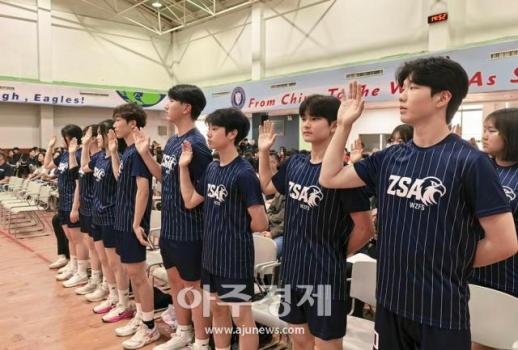 New Volleyball Program at Weihai International School Aims to Develop Global Talent Weihai International School, located in Shandong Province, China, has garnered attention for launching a volleyball program that integrates sports, education, and global career development. The school held an inauguration ceremony for its volleyball team on May 22, marking the beginning of its operations. Founded in 2006 and approved by the Chinese Ministry of Education, Weihai International School has been dedicated to providing international and language education to Korean students, fostering global talent. The creation of the volleyball team is notable for its potential to offer diverse career paths in sports, extending beyond just training athletes. The school plans to develop a curriculum that not only prepares students for professional sports but also opens pathways to careers as international referees, sports agents, and other roles within the sports industry. The school has established a system that allows students to pursue both English and Chinese language education alongside their regular studies and sports training, supporting their athletic skills and global competitiveness. The initiative is being developed as Korea's first volleyball study abroad system. Members of the new volleyball team have expressed high satisfaction, noting the positive environment that allows them to interact with international peers while improving their English and Chinese skills, all while balancing sports and academics. Some students are also cultivating aspirations for careers as international referees and sports agents. Moody Lee, the school's founder, stated, "I want to help students look beyond the singular path of being an athlete and explore diverse possibilities on the global stage. We will continue to strive to nurture talent equipped with global sensibilities and character." In light of the current shortage of international referees and sports agents in the domestic volleyball scene, Weihai International School's initiative is seen as a meaningful attempt to provide students with new career options. There is growing interest in how this new model, which combines sports, education, and internationalization, will yield future results.* This article has been translated by AI. 2026-06-01 10:57:00
 -
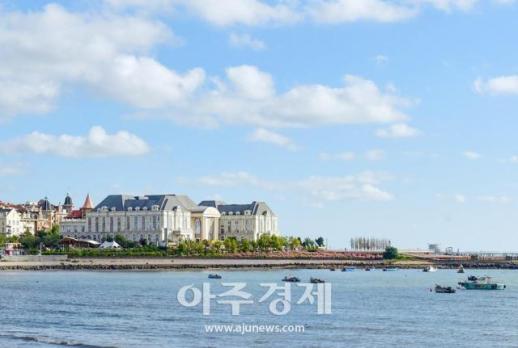 Yantai Promotes Global Tourism with 'City of Immortals' Brand Yantai has long been known as the "City of Immortals," establishing itself as a premier tourist destination in China. Bongrae, mentioned by the Tang Dynasty poet Li Bai, is a symbolic landmark of Yantai. The mystical phenomena surrounding Bongraegak provide visitors with enchanting experiences. The region is also rich in mountain tourism resources, including Gunyu Mountain and Yunbong Mountain. Its coastal scenery, featuring a blend of shorelines and islands, is regarded as among the best in Northeast Asia. Recently, Yantai has gained attention as a "photogenic city" on social media platforms. The city is leveraging this trend to enhance its global tourism branding. Various international tourism campaigns are being launched alongside ongoing improvements to services for foreign tourists.* This article has been translated by AI. 2026-06-01 10:57:00
 -
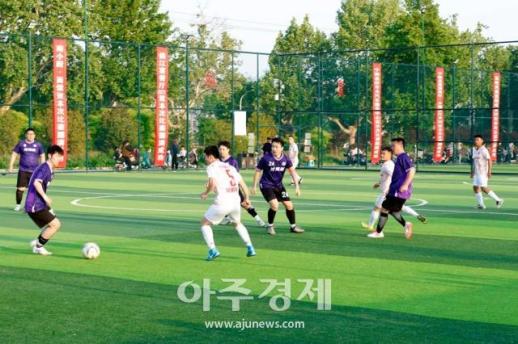 Ningyang's Gongcho League Revitalizes Local Economy Through Sports The second Gongcho soccer and basketball league, held in Ningyang County, Tai'an City, Shandong Province, is gaining attention as a new regional sports model that combines sports with culture, tourism, and consumption. The event is seen as more than just a sports competition; it connects local culture and tourism resources while serving as a platform for revitalizing the local economy. A total of 34 teams, comprising over 530 employees, are participating in the league, with matches taking place every weekend during the evening over a span of nine weeks. Participants from various professions, including industrial workers, teachers, and self-employed individuals, are engaging in this accessible community sports league, attracting significant interest from local citizens. The opening ceremony featured traditional music performances, cultural displays, a fashion show showcasing national styles, and youth drum performances, creating a unique atmosphere distinct from typical sports events. Culturally themed performances combined with sports competitions have become a hallmark of the Ningyang Gongcho League. To facilitate participation, the league organizers have scheduled all matches on weekends and evenings, allowing participants to join freely after work and fostering camaraderie and networking. In actual matches, teams from the Ningyang County Education and Sports Bureau faced off against local business teams in spirited contests. One teacher remarked, "In the classroom, I teach for 45 minutes, but on the field, I have to endure for 60 minutes," sharing a laugh about the experience. The league is also being broadcast live online, enabling residents who cannot attend in person to watch the games in real time. This initiative has helped enhance community spirit and a sense of belonging among local residents. Outside the venues, exhibition and experience booths showcased local specialties, traditional handicrafts, and cultural products. Citizens participated in both watching the games and engaging in consumption and experiential activities, illustrating how sports events can stimulate local tourism and economic activity. A representative from the Ningyang County General Association stated, "The core of this event is to connect sports and culture with tourism and consumption, enriching the cultural lives of employees while injecting new vitality into the local economy." Looking ahead, Ningyang County plans to expand its series of Gongcho tournaments beyond soccer and basketball to include table tennis and badminton, aiming to foster a regional community sports brand.* This article has been translated by AI. 2026-05-14 12:37:01
 -
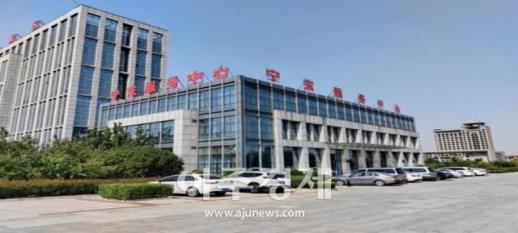 Ningyang County Accelerates Chemical Projects Through Industrial Chain Reform Ningyang County in Tai'an City, Shandong Province, is enhancing the administrative efficiency of high-end chemical industry projects through industrial chain integration reform, aiming to strengthen local industrial competitiveness. Recently, the diverse biological potassium carbonate project in Ningyang County completed 14 key administrative procedures, including site approval, environmental assessment, and construction permits, in just 18 business days, marking the start of full-scale construction. Previously, these procedures took over 60 days, indicating a significant improvement in administrative speed. This year, Ningyang County is promoting a 'one-stop integrated reform' in the high-end chemical industry sector, leveraging the advantages of its provincial chemical industrial park. To facilitate this, a dedicated service team composed of specialized personnel has been established, implementing a 'project manager + parallel pre-review' system to provide close support throughout the entire process for key projects. In particular, for related industrial projects, the administrative team participates from the investment attraction stage to design customized approval processes, conducting simultaneous document pre-reviews and administrative guidance. This approach minimizes gaps between investment attraction and licensing procedures. Ningyang County has also transitioned from a sequential review process to a parallel one, introducing a 'conditional approval + post-completion' system that has reduced administrative processing times by over 60%. Additionally, the county is providing integrated support in policy funding, financial assistance, talent acquisition, and housing support, enhancing tailored assistance for businesses. Locally, this reform is being recognized as a practical model that reduces institutional burdens on companies and promotes early project commencement and production operations.* This article has been translated by AI. 2026-05-14 12:34:12
 -
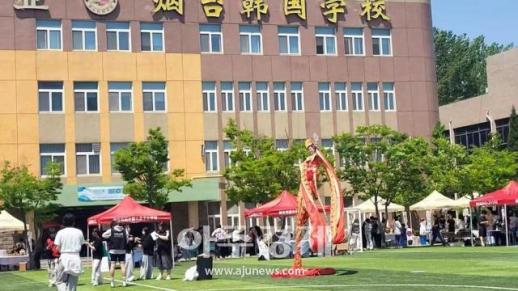 Students and Businesses Collaborate at Yantai Korean International School's Global Science Festival Yantai Korean International School, led by Foundation Chairman Kim Jeong-gu and Principal Lee Nak-jong, successfully held a large-scale international integrated festival, demonstrating new possibilities for future global education models. On May 9, the school hosted the '2026 Global Science Festival KISY' across its campus. The event garnered significant attention as an international educational platform that integrates science, culture, and industry, receiving enthusiastic responses from students, parents, and business representatives. Notably, the festival was characterized as a 'student-led experiential event,' where students actively participated in planning and operations. They designed and managed 13 science experience booths in physics, chemistry, and life sciences, explaining and demonstrating scientific principles to visitors. The festival showcased a global perspective typical of an international school. The playground and gym featured experience zones for advanced Chinese ICT technologies, including drones, robots, unmanned fire trucks, and thermal cameras. Huawei's corporate exhibition and various future industry content attracted students' attention. Additionally, the 'Korean Business Pavilion,' featuring companies such as Hyundai Infracore, Atomy, Idotech, and Eastar Jet, provided students with an indirect experience of real industrial environments for career exploration. AgriTech Global Danford, led by Chairman Kim Jeong-gu, presented the most eye-catching booth, attracting considerable interest from students and parents. The exhibition content, which integrated life sciences and future industries, was praised for enhancing the event's atmosphere. The K-Culture zone also emerged as a popular area at the festival. Activities included hanbok experiences, K-beauty, diary decorating, and tarot card readings, along with an oral examination program from a leading Korean dental implant clinic, drawing many students and parents. The event was attended by key figures from Korea and China, including Ryu Chang-soo, Consul General of the Republic of Korea in Qingdao, Chai Jianwei, Deputy Director of Laishan District in Yantai, Kim Jeong-gu, Chairman of Yantai Korean International School, Kim Jeong-ho, President of the Yantai Korean Chamber of Commerce, and Gong Dimun, Deputy Director of the Sino-Korean Industrial Technology Research Institute, adding significance to the international exchange educational festival. Principal Lee Nak-jong stated, "This festival was a process where students went beyond simply learning science to explaining and connecting concepts themselves. I hope this event, involving Korean and Chinese businesses, inspires students to dream bigger and broaden their horizons toward the world." Vice Principal Ji Eun-gyeong, who oversaw the event, remarked, "It was impressive to see students at the center of operations, solving problems and collaborating. This event confirmed the potential for the school to establish itself as an international educational platform connected to the local community." Student Council President Kim Chae-eun added, "Preparing the booths taught us the importance of collaboration and communication. It was a special time to experience the diverse cultures and technologies of Korea and China in one place." Looking ahead, Yantai Korean International School plans to further expand its student-led integrated education and corporate collaboration models to foster global future talent.* This article has been translated by AI. 2026-05-11 03:33:53
 -
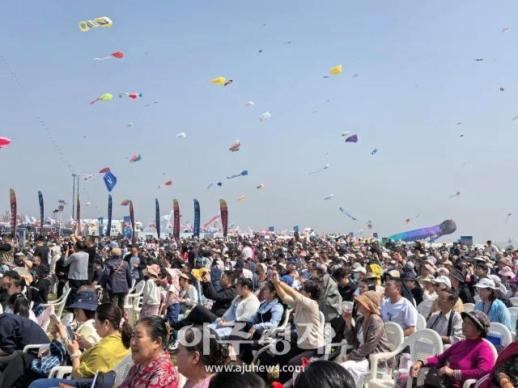 43rd Weifang International Kite Festival Opens in Shandong, Expands as Culture-Tourism Event The 43rd Weifang International Kite Flying Competition and the 2026 Weifang Kite Festival opened April 18 in Weifang, a city in China’s Shandong Province. Organizers described the event as a key program in the city’s tourism-themed year. Tourists and other participants from around the world attended the spring festival. First held in 1984, the Weifang competition has expanded beyond a traditional event into a global platform that includes cultural exchange and friendship cooperation, as well as economic exchange. This year’s festival is themed, “Leaping beyond mountains and seas, moving toward a trillion-yuan city.” It features 56 programs that combine kite culture with tourism, sports, the economy and consumer activity, aiming to promote a new consumption model that integrates culture, tourism, sports and commerce. Weifang officials said the event is intended to boost the local economy and advance the city’s goal of becoming a “trillion-yuan city,” while strengthening its standing as a regional hub.* This article has been translated by AI. 2026-04-22 16:08:52
 -
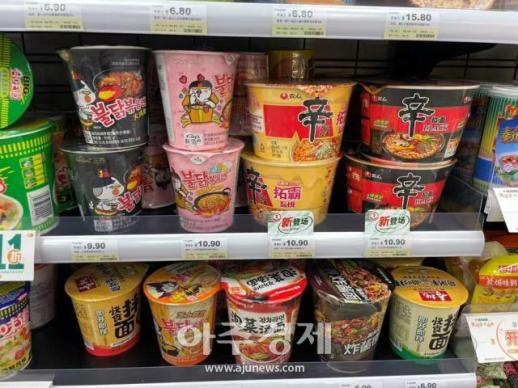 K-food finds lasting appeal in China through social media, localization SEOUL, January 08 (AJP) - Walking through university districts and busy shopping streets in major Chinese cities, signs for Korean-style food are increasingly hard to miss. Advertisements for “Korean-style lunch boxes,” “Korean fried chicken” and rabokki — ramyeon cooked with tteokbokki rice cakes — line storefronts catering to young consumers. Convenience stores prominently stock Shin Ramyun and Buldak Bokkeum Myun with Chinese-language labels, while dormitory shops sell Choco Pie and Pepero as everyday snacks. On Xiaohongshu, a popular Chinese social media platform, thousands of videos recreating Korean foods are uploaded daily. The content has helped introduce K-food even to consumers who have never visited South Korea, making its flavors and dishes widely recognizable. Unlike in the past, when Korean cuisine spread mainly through restaurants, K-food is now expanding rapidly via social media, television dramas, variety shows and food delivery platforms. Li Mingzi, a 23-year-old university student, said her interest began with street-food scenes in Korean dramas. “After that, I came across many kinds of Korean food through recommended videos on Bilibili and Xiaohongshu,” she said. Industry observers say a key factor behind K-food’s success in China is localisation tailored to local tastes. Chen, a chef at a Korean-style restaurant, said dishes are often adapted by toning down the heat of traditional gochujang and adding flavors familiar to young Chinese diners, such as mala-style spice or sweet soy-based sauces. At the same time, restaurants try to preserve defining elements of the cuisine, he said, such as mixing bibimbap before eating and maintaining the fermented kimchi flavor in kimchi stew. A survey of 100 Chinese respondents showed broad awareness of Korean food, with 93 percent saying they had at least some familiarity. Of those, 45 percent said they knew “basic information,” suggesting a sizable potential consumer base. Social media emerged as the main point of contact, cited by 78 percent of respondents, followed by Korean dramas, variety shows and films at 65 percent, and food delivery apps at 55 percent. Some 88 percent said they believe K-food is likely to move beyond a short-lived trend and become a lasting part of China’s food culture. As Korean food becomes part of everyday life in China, it is increasingly seen as a starting point for deeper interaction between Chinese and South Korean culinary traditions, reflecting a broader, two-way cultural exchange. 2026-01-08 14:00:31