

Journalist

Kim Hee-su
khs@ajuapress.com
-
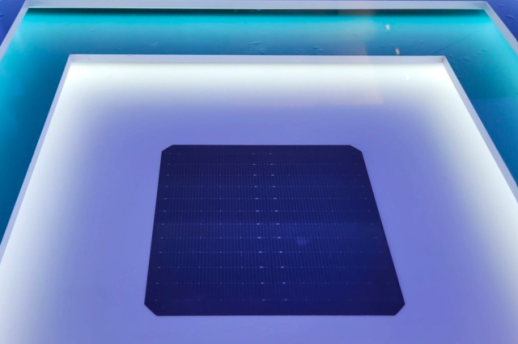 Hanwha Qcells to supply tandem solar cells for NASA-funded lunar experiment SEOUL, June 09 (AJP) - Hanwha Qcells will supply its next-generation tandem solar cells for a lunar surface solar power demonstration project, the company said Tuesday, as it seeks to test the technology’s potential use in space environments. Hanwha Q CELLS GmbH, the company’s German unit, will provide samples of its perovskite-based tandem cells for the Space Science & Technology Evaluation Facility – First Flight Lunar In-Situ Solar Cell Experiment, or SSTEF-1, a project funded by NASA and led by U.S.-based Aegis Aerospace Inc. The Georgia Tech Research Institute, a nonprofit applied research unit under the Georgia Institute of Technology, selected Hanwha Qcells’ tandem cells for the demonstration mission to evaluate solar cell performance in space. The samples will be installed on the surface of a lunar lander and exposed to the space environment to collect data under conditions different from those on Earth, including vacuum, extreme temperature fluctuations, ultraviolet radiation and cosmic radiation. The research will be led by W. Jud Ready, principal research engineer at GTRI and director of Georgia Tech’s Space Research Institute. Hanwha Qcells said it plans to use data from the project to shape its research and development roadmap for highly reliable space solar power technologies. Tandem technology, seen as a potential game changer for the future terrestrial solar market, uses a perovskite top cell and a silicon bottom cell to capture different wavelengths of light. The company said the technology could also offer advantages for space applications by achieving high efficiency while reducing weight compared with conventional solar cells with the same installed capacity. Hanwha Qcells is aiming to commercialize tandem products for terrestrial use by 2029, while also expanding the technology into the space solar power sector. Hanwha Qcells said it is also testing its tandem modules outdoors at its Thalheim R&D center and a third-party site, where they have maintained stable power generation for about one year and six months, respectively. “Space solar power is not only a future energy source that can effectively respond to rapidly growing electricity demand beyond the limits of terrestrial solar power, but also a platform industry with major ripple effects across key industries closely linked to security, including AI data centers, defense and communications,” said Park Seung-deok, CEO of Hanwha Qcells. “Based on the technological capabilities and market competitiveness we have built in solar manufacturing, Hanwha Qcells will leap forward as a global renewable energy solutions company opening the era of space solar power,” he said. “This project will be an important turning point in expanding the potential of sustainable energy into space.” 2026-06-09 11:28:14
 -
 South Korea at odds with Japan as allies seek broader security ties SEOUL, June 8 (AJP) - South Korea is increasingly seen as a security partner as U.S. allies look to strengthen ties amid doubts growing about how reliable Washington's broader defense commitments really are. But President Lee Jae Myung appears reluctant to deepen military cooperation with Japan, casting uncertainty on how far Seoul is willing to go. During a press conference in Seoul on Monday marking his first anniversary in office, President Lee Jae Myung was asked about pursuing an Acquisition and Cross-Servicing Agreement (ACSA) with Japan, which simplifies logistical support and supplies. He said he had told Japanese Prime Minister Sanae Takaichi that it would be difficult for South Korea to accept such an arrangement at this stage due to public sentiment. "I believe there is a practical need," Lee said. "But if I say this, I will get in trouble. Please understand our position." His remarks came as Europe searches for new security umbrellas in the face of Russia's continued threat, the war in Ukraine and concerns that U.S. President Donald Trump could scale back its military presence in Europe. The debate has gained attention after Italian Defense Minister Guido Crosetto called for NATO to expand beyond Europe and North America to include countries such as Australia, Brazil, India, Japan, and South Korea. In an interview with the New York Times, Crosetto said NATO should seek new members beyond its traditional geographic boundaries because "the world has evolved." He also said the alliance should no longer remain a "club for the elites of the global north," arguing that a broader organization is needed to provide security and stability across the world. The same anxiety has also revived interest in joining the European Union. Nine countries currently have EU candidate status including Albania, Bosnia-Herzegovina, Georgia, Moldova, Montenegro, North Macedonia, Serbia, Turkey and Ukraine. Moldova and Ukraine applied for EU membership soon after Russia's invasion of Ukraine, while several Western Balkan countries are seeking to speed up accession talks. In northern Europe, Iceland is set to hold a referendum in August on whether to resume EU accession negotiations, and calls for another debate on EU membership have also resurfaced in Norway. The trend reflects a broader shift in Europe, where the EU is increasingly seen not only as an economic bloc but also as a security umbrella at a time when U.S. commitments appear less predictable. For South Korea, such discussions carry both opportunity and burden. South Korea's growing defense exports and its role in the Indo-Pacific have made it a more visible player in discussions about global security. But Seoul's approach to Japan shows that broader security cooperation is constrained not only by strategy, but also by domestic sentiment, historical disputes and distrust over Japan's expanding military role. Japan has repeatedly raised the issue of an ACSA in recent defense consultations with South Korea, but Seoul has effectively dismissed the idea, saying it is not considering such an agreement. An ACSA is not a mutual defense treaty or a combat pact. It is a logistics-sharing arrangement that allows militaries to exchange supplies and services such as fuel, food, transportation, maintenance and medical support during joint drills, peacekeeping operations, disaster relief missions or other contingencies. Such agreements are common among allies and friendly countries and are meant to make joint operations more efficient by allowing forces to share supplies and services. Ban Gil-joo, a professor of international security at the Korea National Diplomatic Academy, said an ACSA itself is not unusual, as such logistics-sharing agreements can be signed not only between allies but also between friendly countries. But he said an ACSA between the two neighboring countries carries a different meaning because they are geographically close and their military cooperation cannot be separated from their shared history. He said such an agreement could allow the two countries to use each other's ports and exchange supplies when necessary, which may appear natural in peacetime. But in a wartime context, it could create room for Japan to become involved on the Korean Peninsula. "If a second Korean War breaks out on the Korean Peninsula, Japan could provide logistics support under the agreement, which would mean Japan becoming involved," Ban said. "That would create an uncomfortable point when viewed in light of the history between South Korea and Japan." He also warned that the agreement could create risks in the opposite direction, as South Korea could face pressure to support Japan in a conflict, potentially drawing Seoul indirectly into a Taiwan contingency. The concern has become more politically charged as Japan moves beyond the security limits it adopted after World War II and seeks to become a more "normal" military power. Tokyo has revised its defense export rules to allow the transfer of lethal weapons, expanded defense spending and acquired counterstrike capabilities, steps that signal a shift toward active combat readiness. Ban said South Korea does not need to completely shut the door on discussing an ACSA with Japan. But he said moving directly to such an agreement at the early stage of renewed shuttle diplomacy between Seoul and Tokyo would be premature. Military cooperation, he said, should proceed gradually, starting with less sensitive areas such as search and rescue exercises. One example is the SAREX drill conducted by the South Korean Navy and Japan Maritime Self-Defense Force in international waters southeast of Jeju on Sunday for the first time in nine years. Such steps could help Seoul and Tokyo build trust before moving toward more institutionalized military cooperation. Ban said South Korea should also review whether the risks surrounding an ACSA can be reduced before deciding whether to move forward. Lee also said South Korea and Japan should continue managing areas where cooperation is possible, despite disputes over history and territory. But he added that military cooperation between South Korea and Japan, as well as trilateral military cooperation among South Korea, the U.S. and Japan, remains a unique and sensitive issue. "In the long term, I believe Northeast Asia's security should move toward a complex multilateral security system," Lee said. "But there are aspects we need to be careful about for now." Still, Ban said trilateral cooperation among South Korea, the U.S. and Japan could gain more leverage if NATO weakens under growing uncertainty over U.S. commitments. He said such cooperation is important not only for regional stability and deterrence against North Korean threats, but also for managing alliance with Washington. The challenge for Seoul is how to strengthen such cooperation without moving too quickly on politically sensitive military arrangements with Japan. 2026-06-08 16:57:58
 -
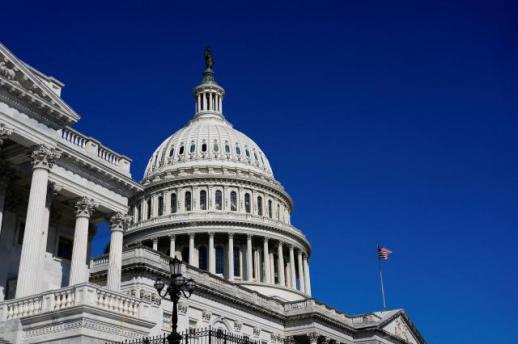 US House panel passes defense bill provision barring foreign construction of Navy warships SEOUL, June 08 (AJP) - A U.S. House committee has approved a provision in the fiscal 2027 defense policy bill that would prohibit the Navy from using funds to build warships at foreign shipyards, a move that could complicate Washington’s recent push to tap allied shipbuilding capacity, including South Korean yards. Rep. Jared Golden, a Democrat from Maine, said in a press release on Friday that the House Armed Services Committee had adopted his amendment to the fiscal 2027 National Defense Authorization Act, or NDAA, saying, “Under a provision in the NDAA approved by the House Armed Services Committee early this morning, the U.S. Navy will have to scrap plans to send shipbuilding jobs overseas.” The NDAA is an annual bill that authorizes defense spending and sets policy priorities for the Pentagon. It must still pass both the House and Senate and be signed by the president before taking effect. The House Armed Services Committee passed the fiscal 2027 NDAA on June 5 in a 44-12 vote after considering a series of amendments. Golden said two of his amendments were approved by the committee, including one aimed at blocking what he called the Navy’s outsourcing plan. According to his office, the amendment states that none of the funds authorized for the Navy in fiscal 2027 may be obligated or spent to enter into a procurement plan for a battle force ship that would be built in a foreign shipyard. “American military spending should support American jobs,” Golden said. “The idea that any part of our surface fleet would be built on foreign soil, by foreign labor, is unacceptable.” He added that the plan posed a threat to U.S. industry, jobs and national security. The provision is not final, as the bill still needs approval from the full House and must be reconciled with the Senate’s version. Still, if the restriction survives the legislative process, it could affect recent Pentagon discussions on using allied shipyards to help procure next-generation naval vessels. South Korean shipbuilders have been seen as possible partners as Washington seeks to address delays, cost overruns and limited capacity in its own naval shipbuilding sector. The move could also weigh on broader South Korea-U.S. shipbuilding cooperation under the MASGA initiative, short for “Make American Shipbuilding Great Again,” which has been promoted as part of efforts to strengthen U.S. maritime industrial capacity through cooperation with allies. Breaking Defense reported last month that the Pentagon had requested $1.85 billion to study and potentially procure future Navy ships from allied shipbuilders, including yards in South Korea and Japan. South Korean shipbuilders have expanded their presence in the U.S. shipbuilding and maintenance market in recent years, while Seoul and Washington have discussed ways to link Korea’s shipbuilding capacity with U.S. efforts to rebuild its maritime industrial base. 2026-06-08 11:22:19
 -
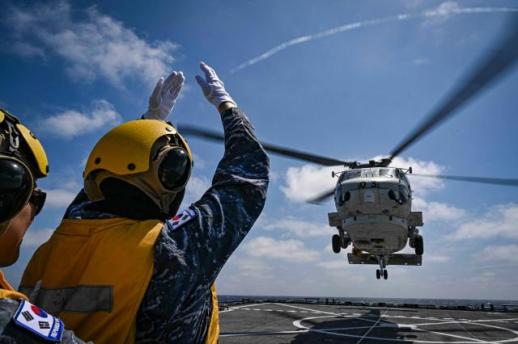 Seoul, Tokyo hold first rescue drill in 9 years SEOUL, June 08 (AJP) - South Korea and Japan held a bilateral search and rescue exercise in international waters southeast of Jeju Island on Sunday, marking the first such drill between the two countries in nine years amid efforts to rebuild defense ties. The maritime exercise, known as SAREX, is designed to rehearse joint procedures for responding to maritime emergencies involving distressed vessels and was held for the first time since December 2017. The South Korean Navy deployed the 4,900-ton Cheonjabong landing ship tank (LST-II), while Japan’s Maritime Self-Defense Force participated with the 7,250-ton Aegis destroyer Kongo and an SH-60K maritime helicopter. During the exercise, the two sides conducted joint firefighting drills simulating a fire aboard a distressed vessel, while the Japanese SH-60K helicopter carried out takeoff and landing operations on the flight deck of the Cheonjabong. South Korea and Japan launched the search and rescue exercise program in 1999 and had conducted 10 rounds of drills every two years through 2017. The exercise was suspended after bilateral defense ties deteriorated over Japan’s rising sun flag, a symbol many Koreans view as a reminder of Japan’s wartime militarism, during a 2018 fleet review hosted by South Korea, followed by a patrol aircraft dispute. The two sides agreed in January during defense ministerial talks in Japan to resume the exercise and had since coordinated its timing. The schedule was officially confirmed during a bilateral defense ministers’ meeting held on the sidelines of the Shangri-La Dialogue security forum in Singapore on May 30. Defense Minister Ahn Gyu-back said during the meeting that resuming the exercise carried “symbolic and declaratory significance,” adding that the two countries should further deepen and develop what he described as a valuable achievement of bilateral cooperation. 2026-06-08 10:19:30
 -
 Jensen Huang swaps AI chips for K-pop moves on Korean TV show SEOUL, June 06 (AJP) - Nvidia CEO Jensen Huang was spotted dancing during a taping of tvN’s popular talk show “You Quiz on the Block,” drawing playful reactions from Korean fans online. On Saturday, the show’s official social media account released photos from the filming, along with a witty caption that read, “The third-round karaoke session we missed yesterday has come to You Quiz.” In the photos, Huang appeared in his signature black leather jacket and black pants against the backdrop of a traditional Korean hanok. He was seen dancing to “Golden,” a song from the soundtrack of Netflix’s “KPop Demon Hunters,” showing off his easygoing charm. Fans reacted with comments such as, “Is this real, not AI?” “The chairman is working hard,” and “Even Jensen Huang is living this diligently.” Another photo showed Huang sitting next to host Yoo Jae-suk with a bright smile. The two appeared to share a relaxed conversation during the shoot, creating a warm atmosphere on set. This marks Huang’s first appearance on a variety show, both in Korea and overseas, raising interest in what stories he will share on the program. The appearance came during Huang’s latest visit to South Korea. On his first day in Seoul, the Nvidia chief experienced a Korean-style Friday night company dinner in Hongdae, dining on pork belly and soju with SK Group Chairman Chey Tae-won, LG Group Chairman Koo Kwang-mo and Naver founder Lee Hae-jin before moving to a fried chicken restaurant for a second round. The gathering lasted about three and a half hours and focused on strengthening cooperation. Huang has often drawn attention during his visits to Korea for actively engaging with local fans. During his visit last October, his first trip to Korea in 15 years, he made headlines for a surprise “chimaek” gathering at Kkanbu Chicken with Samsung Electronics Chairman Lee Jae-yong and Hyundai Motor Group Executive Chair Chung Eui-sun. About seven months later, Huang is again drawing attention for his casual interactions with Korean fans during his latest visit. The episode of “You Quiz on the Block” featuring Huang is scheduled to air on Wednesday at 8:45 p.m. 2026-06-06 17:35:29
 -
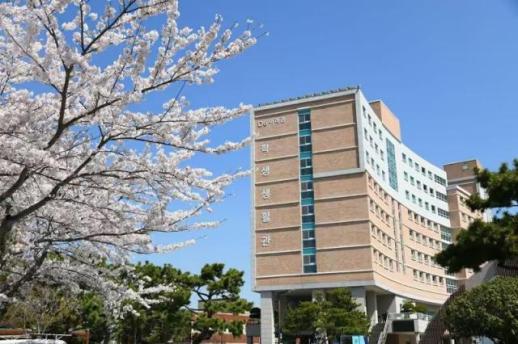 Korea Maritime and Ocean University opens guesthouse for BTS concertgoers in Busan SEOUL, June 06 (AJP) - Korea Maritime and Ocean University will open part of its campus guesthouse to visitors traveling to Busan for BTS’ upcoming concerts, joining the city’s campaign to provide fair and affordable accommodation during major events. The university said Saturday it will participate in Busan Metropolitan City’s “Fair Accommodation Challenge” ahead of BTS World Tour ‘Arirang’ in Busan, scheduled for June 12 and 13 at Busan Asiad Main Stadium. The concerts are expected to draw a large number of fans from across South Korea and overseas, prompting local authorities to step up efforts to curb unlicensed lodging and excessive price hikes during the event period. Under the plan, the university will temporarily operate 14 rooms at its Ara Hall guesthouse in Yeongdo District as accommodation for concertgoers. The rooms include one single room and 13 double rooms, allowing up to 27 domestic visitors to stay for 50,000 won ($32) per night. The Fair Accommodation Challenge is a public-private campaign led by Busan City to provide visitors with transparent and reasonably priced lodging during large-scale international and cultural events. Local universities, religious groups and public institutions have joined the initiative by opening unused lodging facilities or offering rooms at free or discounted rates. The campaign comes as Busan prepares citywide programs for the BTS concerts, including welcome events, tourism programs and fan-oriented activities across major transport hubs, tourist sites and public venues. The university said it decided to share its campus infrastructure, including guesthouse facilities overlooking the sea, to support Busan’s efforts to strengthen its appeal as a cultural and tourism city. “As a national university, we have a responsibility to support the local community,” President Ryoo Dong-keun said. “We will continue to fulfill our social responsibility beyond the boundaries of the campus.” 2026-06-06 15:06:35
 -
 Kim Jong-un inspects sea trial of destroyer ahead of Xi visit SEOUL, June 06 (AJP) - North Korean leader Kim Jong-un inspected a sea trial of the Kang Kon, a new 5,000-ton destroyer that was once damaged during a ceremony, and called for strengthening naval forces as part of the country’s nuclear war deterrent, state media reported Saturday. The Korean Central News Agency said Kim visited the destroyer on Thursday as it began operational tests and observed its navigation test. Photos released by North Korean state media showed Kim accompanied by his daughter, Ju-ae. Kim boarded the Kang Kon and inspected its combat duty areas, including the command center, while reviewing its sea trial plan and schedule for testing onboard weapons systems, according to KCNA. He praised the crew’s ability to operate the vessel and expressed satisfaction with its maneuverability, saying its cruising and high-speed operation systems were “very good” and capable of meeting operational requirements. “We can deter war and defend peace only when we possess strong and practical military power capable of responsibly exercising military sovereignty in any space on land, at sea and in the air,” Kim was quoted as saying by KCNA. “This is the unchanging position of our party and national defense policy.” Kim said strengthening the navy as a force capable of supporting the country’s nuclear deterrent and striking enemies at sea and underwater was a core task under the party’s new five-year defense policy. He also referred to plans under a five-year naval modernization program approved at the ninth party congress earlier this year, including the development and production of what North Korea called “underwater secret weapons” and the construction of a new 10,000-ton destroyer. The reference marked an apparent expansion of North Korea’s naval ambitions. In March, Kim mentioned plans for an 8,000-ton destroyer while inspecting another new 5,000-ton destroyer, the Choe Hyon, but this time he pointed to a larger 10,000-ton-class vessel. South Korea’s newest Aegis destroyer, the Jeongjo the Great-class, has a displacement of 8,200 tons. Kim urged officials and technicians involved in naval weapons development to commission the Choe Hyon and Kang Kon into the navy “as soon as possible.” The latest naval display came just days before Chinese President Xi Jinping is set to make a state visit to North Korea from June 8 to 9 for talks with Kim, in what would be Xi’s first trip to Pyongyang in nearly seven years. The timing suggests Pyongyang may be seeking to showcase its expanding military capabilities ahead of the summit with its key ally. The Kang Kon was damaged during a launch ceremony in May last year after the vessel tilted and ran aground while being moved into the water. Kim, who witnessed the accident on site, denounced it as a “serious accident and a criminal act” and ordered punishment for those responsible. North Korea salvaged the vessel and held another launch ceremony just 22 days after the accident, but questions had persisted over whether the ship was fully operational. The latest photos released by North Korean media showed the Kang Kon sailing at sea about a year after its relaunch. 2026-06-06 14:09:29
 -
 Lee calls for honoring sacrifice, punishing betrayal in Memorial Day speech SEOUL, June 06 (AJP) - President Lee Jae Myung said that South Korea must honor those who sacrificed for the nation while holding accountable those who betrayed it, speaking at the Memorial Day ceremony on Saturday. During the 71st Memorial Day ceremony at Seoul National Cemetery, Lee said the country has a responsibility not only to honor those who defended it, but also to punish those who betrayed the community for their own interests. “Only when dedication is honored and betrayal is punished can just unity be achieved for the continuity and development of the national community,” Lee said in his memorial address. The ceremony was held with some 3,000 people in attendance, including veterans, bereaved families, government officials and uniformed service members. Lee specifically referred to the Pro-Japanese Property Reversion Act, promulgated on June 2, saying the government would investigate and recover assets unfairly amassed by pro-Japanese collaborators accused of anti-national acts during Japan’s colonial rule. “We will hold them accountable and set an example to prevent such acts from recurring,” he said. Lee also pledged stronger support for veterans, their families and uniformed personnel, saying extraordinary sacrifices made for the public good deserve corresponding compensation. “We will make promises we can keep, and once we make a promise, we will keep it,” he said. “We will repay the noble sacrifices made for all of us.” The president said Memorial Day is a time to remember and record the spirit of those who gave their lives for the country and to fulfill the state’s responsibility toward them. “We stand today on all the tomorrows they gave up,” Lee said. He stressed that properly honoring patriots and fallen service members is a social responsibility of those living today and a driving force that sustains the national community. Calling soldiers, firefighters, police officers and coast guard personnel “citizens in uniform” who protect the present, Lee said the government would provide sufficient support so they can focus on their duties for the nation and the public. Lee also said South Korea is once again facing a wave of crises, citing the economic impact of the Middle East war and efforts to restore the country after domestic turmoil. “But the strength of the Korean people, who have always united in times of national hardship, will allow us to overcome any crisis,” he said. “Building a proud Republic of Korea where peace and prosperity are shared by all is the true way to honor the sacrifices of fallen patriots and war heroes and carry forward their noble spirit,” he said. 2026-06-06 10:59:55
 -
 Seoul, Ottawa hold joint naval drills off Canadian coast SEOUL, June 06 (AJP) - The South Korean and Canadian navies conducted joint maritime drills off Canada’s western coast from June 3 to 4, involving submarines, warships, and maritime aircraft from both countries, the South Korean Navy said Saturday. The exercises involved the South Korean Navy’s 3,000-ton Dosan Ahn Chang-ho submarine, the 3,100-ton frigate Daejeon and an AW-159 maritime helicopter. Canada deployed the 2,200-ton submarine Corner Brook, the 4,000-ton frigate Ottawa, a CH-148 maritime helicopter and a CP-140 maritime patrol aircraft. According to the Navy, the two sides carried out anti-surface warfare drills, anti-submarine exercises and helicopter deck landing operations aimed at strengthening interoperability and combined operational capabilities. Six Canadian submariners, including Capt. Benjamin Hong, boarded the Dosan Ahn Chang-ho and participated in the drills alongside South Korean sailors. The six crew members are expected to remain aboard the submarine after the exercise and sail with the South Korean Navy to Hawaii for the upcoming Rim of the Pacific Exercise, or RIMPAC, the world’s largest multinational maritime exercise. Col. Kim Ki-beom, commander of South Korea’s Task Flotilla 73, which led the Korean naval forces during the exercise, said the two countries would continue strengthening cooperation to maintain maritime security in the Indo-Pacific region. “Based on the strong cooperation between South Korea and Canada, we will continue maintaining readiness to protect maritime security in the Indo-Pacific region and respond strongly to any threats,” Kim said. The Dosan Ahn Chang-ho submarine and Daejeon frigate are scheduled to participate in RIMPAC, which begins on June 24. 2026-06-06 09:41:20
 -
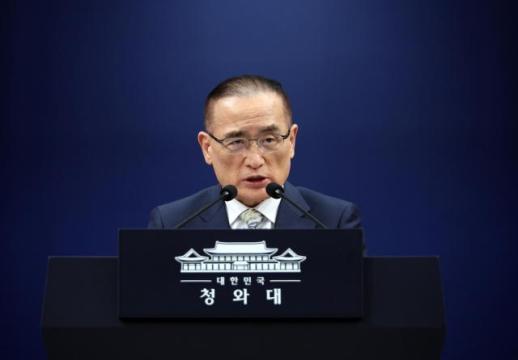 Seoul stands firm on building nuclear submarines domestically SEOUL, June 05 (AJP) - South Korea’s presidential office said Friday there has been no major change to plans to build nuclear-powered submarines domestically, as Seoul and Washington seek to make tangible progress in related talks by the end of the year. A senior presidential official told reporters that South Korea and the U.S. held productive discussions on nuclear-powered submarines, uranium enrichment and spent fuel reprocessing. “Representatives from various sectors came and discussed enrichment and reprocessing issues as well as nuclear submarine issues,” the official said. “We have not set a specific deadline, but we want to move forward quickly.” The official stressed that South Korea’s plan to build nuclear-powered submarines at home remains largely unchanged, while noting that new agreements are needed for enrichment and reprocessing, as well as to prevent proliferation. The official said discussions on enrichment and reprocessing have only recently begun in earnest, adding that they are based on South Korea’s nonproliferation commitment and trust in that pledge. “We must keep that commitment, and on that basis, we will seek further coordination and cooperation with the U.S.,” the official said. Asked about coordination with Washington over the timeline for the transfer of wartime operational control (OPCON), the official said differences between the allies are not as large as many believe. “Contrary to what many of you may think, South Korea and the U.S. do not have major differences over OPCON,” the official said. The official said efforts to meet the conditions for the transfer have continued for more than a decade, adding that there had been an assessment several years ago that more than 90 percent of the conditions had been met. The official also said the gap over timing is limited. “There is not a big difference over the timing either. There is a gap of about a year, or a little more than a year, and I do not see that as impossible to narrow,” the official said. South Korea has been seeking to regain wartime operational control by 2028, while U.S. Forces Korea Commander Gen. Xavier Brunson presented the first quarter of 2029 as the target timeline during a House Armed Services Committee hearing in April. The official said Seoul and Washington will continue coordinating the final stage of conditions and timing, while ensuring that the allies’ combined defense capabilities are not weakened. 2026-06-05 17:23:58