
Journalist

Abraham Kwak
khs@ajunews.com
-
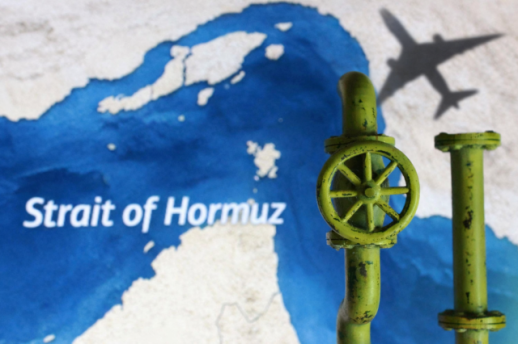 Flying for South Koreans is now a luxury as fuel surcharge triples SEOUL, April 01 (AJP) - Flying out of South Korea is fast becoming a luxury, as airlines this month slapped on fuel surcharges up to three times higher, passing on the surge in jet fuel prices driven by Middle East conflicts. For long-haul routes to the United States and beyond, passengers now face up to 600,000 won ($398) in additional round-trip costs from fuel surcharges alone. With oil prices still climbing, further increases are expected as early as next month. Industry data released Wednesday showed April surcharges are based on the average MOPS benchmark for jet fuel in the Asia-Pacific region between Feb. 16 and March 15. Airlines price fuel into 33 tiers and reset surcharges monthly on the 16th. The average price during the period hit 326.71 cents per gallon, placing it at level 18 — a sharp jump from level 6 the previous month and the steepest monthly increase since the current system was introduced in 2016. Fuel surcharges are additional fees applied to airfares to offset rising fuel costs. Under South Korea’s distance-based system, airlines determine surcharges monthly, based on ticket issuance date rather than travel date. Korean Air raised its international fuel surcharge from 13,500 won to 99,000 won per one-way ticket in March to between 42,000 won and 303,000 won in April, depending on the route. For the longest routes — including flights from Incheon to New York, Chicago, Atlanta, Washington and Toronto — the surcharge rose to 303,000 won per one-way ticket, a 3.1-fold increase from last month. For round-trip tickets departing from South Korea, passengers could face up to 606,000 won in fuel surcharges, about 408,000 won higher than in March. Other carriers followed suit. Asiana Airlines raised its surcharge range from 14,600–78,600 won in March to 43,900–251,900 won this month. Cargo surcharges also rose sharply. Korean Air, which sets separate fuel surcharges for cargo, announced it would impose surcharges of 2,190 won per kilogram for long-haul routes, 2,060 won for mid-haul routes and 1,960 won for short-haul routes — more than four times higher than last month’s 450 to 510 won. Long-haul routes refer to International Air Transport Association Traffic Conference (TC) area 1 – the Americas, Caribbean, and Greenland – and area 2 (Europe, Africa, the Middle East, and West Asia. Mid-haul routes cover TC3 destinations such as Southeast Asia, while short-haul routes refer to cities within an average flight time of two hours from Korea, including Japan and parts of China. Further increases are expected as jet fuel prices continue to climb. Fuel surcharges for May will be determined based on the average Singapore jet fuel price between March 16 and April 15. As of March 31, the Asian jet fuel benchmark reached 522.08 cents per gallon — already exceeding the highest surcharge threshold of 470 cents, which corresponds to level 33. If the trend continues, May surcharges could reach the maximum level for the first time. In such a scenario, fuel surcharges on U.S. routes could rise from the current 300,000 won range to more than 500,000 won per one-way ticket, while short-haul routes could approach 100,000 won. Unlike liquefied natural gas (LNG), which is typically purchased through long-term contracts lasting 10 to 20 years, aviation fuel is largely sourced through mid- to short-term supply agreements with refiners, supplemented by financial hedging such as futures and options. After airlines suffered significant losses during past oil price downturns due to hedging contracts, many global carriers have reduced or discontinued long-term hedging. As a result, airlines are more directly exposed to fuel price volatility, leading to rapid adjustments in fuel surcharges. “It’s not as short-term as gas contracts, but we don’t hold as much fuel reserves as people might assume,” a Korean Air official said. “We do maintain some stock, but not enough to cover operations for months. While airlines try to hedge fuel costs and apply surcharges, they typically rely on shorter-term procurement rather than long-term reserves.” Airlines also face limits on how much of the rising fuel costs can be passed on to passengers. As fuel prices rise further, carriers may instead reduce flight operations to manage costs, industry sources said. A weaker Korean won is also contributing to rising surcharges. Fuel surcharges are calculated in U.S. dollars and converted to Korean won using the average exchange rate. The won-dollar exchange rate surpassed 1,501 won during intraday trading on Wednesday, approaching levels seen during the 2009 global financial crisis. 2026-04-01 17:05:51
 -
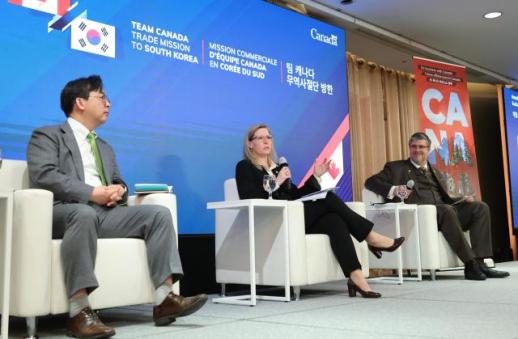 Submarine deal looms large over Canada's high-profile trade mission to Korea SEOUL, March 31 (AJP) - Canada’s trade delegation to South Korea this week has been heavily layered with the hot-button deal — Canada’s largest-ever defense procurement to replace its aging submarines, worth an estimated $40 billion, now being weighed between Korean and European bidders. The visit by the Team Canada Trade Mission, led by International Trade Minister Maninder Sidhu, comes as Ottawa moves to diversify trade and deepen ties with trusted partners, with defense and supply chains increasingly intertwined. Canadian officials are holding meetings with major Korean shipbuilders Hanwha Ocean and HD Hyundai Heavy Industries, alongside a visit to HD Hyundai’s Global R&D Center in Seongnam, industry sources said. Additional engagements are taking place around the Canada–Korea Business Forum in Seoul and events hosted by the Federation of Korean Industries. Officially, the delegation — comprising more than 180 participants from over 110 companies across sectors including ICT, aerospace and defense, and clean energy — is focused on expanding economic cooperation and strengthening supply chain resilience. The visit runs from March 30 to April 2. But the submarine program looms large. Korean bidders Hanwha Ocean and HD Hyundai Heavy Industries are competing against Germany’s thyssenkrupp Marine Systems (TKMS) for the contract, with final submissions made earlier this month. Industry observers say the race is evolving beyond technical specifications into a broader contest over industrial partnerships, technology transfer and long-term maintenance capabilities. Hanwha Ocean has stepped up its bid by signing agreements with five Canadian firms — OSI Maritime Systems, EMCS Industries, Techsol Marine, Jastram Technologies and Curtiss-Wright — spanning navigation, power systems, maintenance and sonar. The strategy underscores a push to offer full lifecycle support, including maintenance, repair and overhaul. The timing of the visit also reflects mounting concern over global supply chain disruptions tied to the tensions in the Middle East. “Supply chain stability can never be taken for granted,” said Park Jung-sung, South Korea’s deputy trade minister, pointing to complementarities between Canada’s resource base and Korea’s manufacturing strength. Sidhu echoed the need for closer coordination among “trusted middle powers,” as Canada accelerates efforts under Prime Minister Mark Carney to reduce reliance on traditional markets and expand trade routes. “We are moving very fast to improve trade flows,” said Sara Wilshaw, Canada’s chief trade commissioner. “We need to get across that divide,” she added, referring to Canada’s long-standing dependence on the United States. Germany, meanwhile, has sought to bolster its bid with broader industrial proposals, reportedly linking the submarine deal to investments in autos and batteries, though Volkswagen has distanced itself from such arrangements. Against this backdrop, Canada’s Seoul visit is widely seen as part of a broader assessment of industrial cooperation frameworks ahead of a final contractor decision — one that will carry implications not just for defense procurement, but for the next phase of global supply chain alignment. 2026-03-31 15:31:37
 -
 Houthi entry into Gulf conflict adds to Seoul shipping woes SEOUL, March 30 (AJP) - South Korea is closely watching the developments in the Gulf in fear of losing another core chokepoint after Yemen’s Iran-backed Houthi rebels declared that they had joined with Iran against America and Israel. Analysts warn that any renewed blockade in the Red Sea or escalation in attacks could send shockwaves through global supply chains and deepen existing logistics disruptions. Houthis carried out their “first military operation” targeting Israeli military objectives using missiles, group spokesman Yahya Saree said, adding that the operation was coordinated with Iranian forces and Lebanon’s Hezbollah. The Houthis, part of Iran’s so-called “Axis of Resistance,” previously launched dozens of attacks on commercial vessels transiting the critical Bab el-Mandeb Strait during the Gaza war in 2023, targeting ships linked to Israel and its allies. The Bab el-Mandeb Strait a 29-32 km wide chokepoint separating Yemen and Djibouti and Eritrea in the Horn of Africa, connecting the Red Sea to the Gulf of Aden and the Indian Ocean. Roughly 15 percent of global seaborne oil trade passes through the corridor. If the terrorist group deploys missiles, drones, or naval mines again against vessels in the strait, global shipping disruptions could worsen significantly. Such developments would complicate access to the Suez Canal and potentially disrupt oil shipments, including flows through Saudi Arabia’s Yanbu port, which has recently been viewed as an alternative route to bypass the Strait of Hormuz. Shipping in the region was already under strain from late 2023, when Houthi attacks prompted major container lines and tanker operators to divert vessels away from the Red Sea and Suez Canal, rerouting them around the Cape of Good Hope at the southern tip of Africa. Despite tentative plans by some carriers to resume Red Sea operations in recent months, analysts warn that renewed hostilities could halt those efforts. “The repercussions of the joint military operation will see the further weaponization of trade and shatter hopes of a large-scale return of container shipping to the Red Sea in 2026,” said Peter Sand, chief analyst at freight intelligence platform Xeneta, through Lloyd's of London. The Red Sea and Suez Canal together handle roughly 15 percent of global maritime trade and nearly 30 percent of container traffic, making the route a critical artery for Asia-Europe shipping. As vessels reroute around Africa, the impact on Korean exporters is becoming increasingly pronounced. A typical voyage from Busan to Rotterdam via the Suez Canal spans roughly 20,000 kilometers and takes three to four weeks. The Cape route adds 3,000 to 4,000 nautical miles, extending transit times by 10 to 14 days. War-risk insurance premiums have also surged from around 0.1 percent to as high as 1 percent. Freight rates are already reflecting the strain. As of late March 2026, the Shanghai Containerized Freight Index (SCFI) rose 7 percent to 1,826.77, driven by continued Red Sea disruptions and rerouting around the Cape of Good Hope. Asia-Europe and Mediterranean routes saw particularly sharp increases. Adding to the pressure, 2026 marks the first year of full implementation of the European Union’s Emissions Trading System (EU ETS) for maritime transport. Following a phased rollout — 40 percent in 2024 and 70 percent in 2025 — shipping lines must now cover 100 percent of verified emissions, with voyages from non-EU ports such as Busan to Europe subject to carbon costs for 50 percent of total emissions. The longer detour routes increase fuel consumption by 30 to 40 percent, while many carriers have adopted high-speed “full steaming” to mitigate delays, further driving up emissions. The combined effect of longer voyages and full ETS obligations is creating a new wave of carbon-related surcharges. Industry experts warn that these additional costs could weigh heavily on South Korea’s key export sectors, including automobiles and batteries, potentially eroding their price competitiveness in the European market and adding further uncertainty to global trade already strained by geopolitical tensions. 2026-03-30 17:48:34
 -
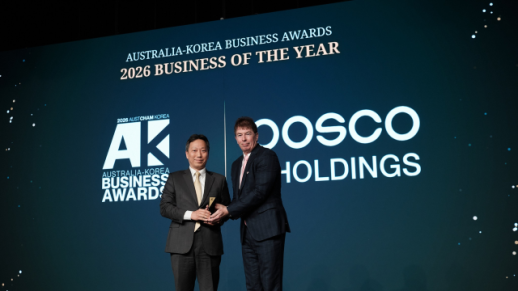 POSCO Holdings named Business of the Year at 2026 Australia–Korea Business Awards SEOUL, March 30 (AJP) - POSCO Holdings was named Business of the Year at the 2026 Australia–Korea Business Awards (AKBA) in Seoul on Friday, according to the Australian Chamber of Commerce in Korea (AustCham Korea). This year’s recognition of POSCO Holdings highlights the company’s long-standing investment in Australia’s resources sector and its growing role in future-facing industries shaping the bilateral partnership, including critical minerals, battery materials, and clean energy supply chains. “At a time of increasing uncertainty in global supply chains, the Australia–Korea economic relationship is taking on renewed strategic importance,” said Ross Gregory, Chaiman of AustCham Korea. The elevation of bilateral ties to a Comprehensive Strategic Partnership in December 2021 reflects this shift, establishing a framework for closer cooperation across strategic, economic, and technological domains. “Within this context, deepening trade, investment, and industrial collaboration between Australia and Korea plays a critical role in reinforcing supply chain resilience and supporting the long-term stability of key industries,” Gregory said. The Australia–Korea Business Awards is a flagship event hosted by AustCham Korea, recognizing companies and individuals that have contributed to trade, investment and industrial cooperation between the two countries. Since 2010, the awards have served as a key platform highlighting the strength of the bilateral economic partnership. Winners are selected based on an evaluation of the achievements and success stories of nominated companies. The ceremony was attended by senior government officials and business leaders from both countries, including Australian Ambassador to Korea Jeff Robinson and the Republic of Korea’s Deputy Minister for Trade Park Jung-sung. Their participation underscores the growing strategic dimension of the Australia–Korea relationship. “Long-standing business cooperation between Korea and Australia is something we see as highly meaningful,” Gregory said. “This year’s awards celebrate the fact that collaboration between the two countries is expanding into a broader range of future industries.” “POSCO Holdings, as this year’s Business of the Year, has helped underpin key industrial supply chains through its investments and partnerships across Australia’s mining and resources sectors,” he said. “These efforts demonstrate how collaboration between our two economies continues to evolve into new sectors,” he added. This year’s awards recognized companies and individuals across a wide range of industries, reflecting the continued expansion of bilateral economic cooperation. While collaboration has traditionally been centered on resources, financial services and technology, it has increasingly diversified into areas such as biotechnology, education, food and beverage, energy transition, healthcare, and tourism. 2026-03-30 16:20:36
 -
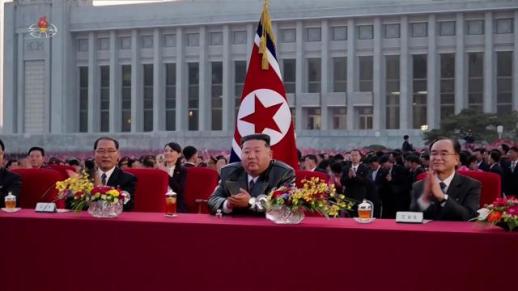 Kim Jong-un reaffirms closer ties with Beijing in message to Xi SEOUL, March 28 (AJP) - North Korean leader Kim Jong-un sent a message to Chinese President Xi Jinping reaffirming Pyongyang’s commitment to strengthening bilateral ties, state media reported Saturday. According to the Korean Central News Agency (KCNA), Kim sent a reply on Friday to Xi, who had congratulated him on his reappointment as chairman of North Korea’s State Affairs Commission. Kim expressed “deep thanks,” saying he felt the “invariable support and emotion of friendship” from Xi and the Chinese government toward him, his party and North Korea’s government. Referring to what he described as key agreements reached during a North Korea-China summit held last September on the sidelines of China’s 80th Victory Day parade, Kim said he was pleased that the “traditional DPRK-China relations are being put on a new high stage in keeping with the aspiration and desire of the two parties and the peoples of the two countries.” He also stressed that North Korea’s position remains firm in continuing to deepen and develop bilateral cooperation centered on socialism. Kim further expressed confidence that China, under Xi’s leadership, would achieve “fresh progress” in building a modern socialist state. North Korea’s Supreme People’s Assembly, the country’s parliament, reappointed Kim as chairman of the State Affairs Commission on March 22. Xi sent a congratulatory message on Thursday, saying that safeguarding, consolidating and developing China–North Korea relations is a consistent and unwavering policy of the Communist Party of China and the government. 2026-03-28 17:14:39
 -
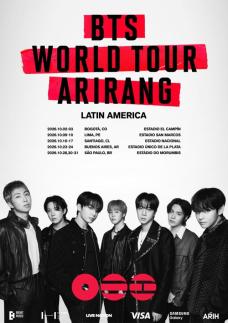 BTS sets Latin America tour across five cities in October SEOUL, March 28 (AJP) - BTS will embark on a Latin America leg of its world tour in October, performing across five cities, the group’s agency said Saturday. Big Hit Music released detailed schedules for the “Arirang” world tour in Latin America, with concerts set to begin in Bogotá on Oct. 2–3. The tour will then continue to Lima on Oct. 9–10, Santiago on Oct. 16–17, Buenos Aires on Oct. 23–24, and São Paulo on Oct. 28 and 30–31, for a total of 11 shows. The concerts will mark BTS’s first full-group performances in Colombia, Peru and Argentina. Member Jin previously appeared as a guest during Coldplay’s world tour concert in Buenos Aires in 2022. The world tour will kick off on April 9 at Goyang Stadium in Goyang. According to the agency, all 46 shows across South Korea, Japan, North America and Europe have already sold out. BTS returned as a full group on March 21 after nearly four years. The group held a special comeback performance at Seoul’s Gwanghwamun Square the following day, drawing about 22,000 fans. 2026-03-28 15:43:45
 -
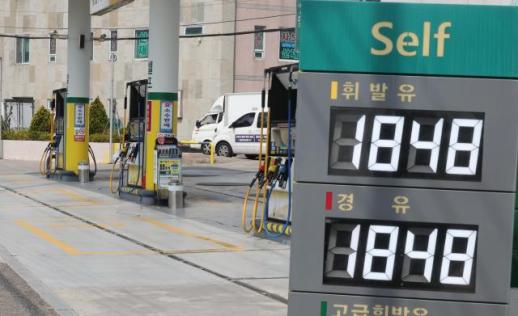 Fuel prices near 1,900 won in Seoul as price cap raised SEOUL, March 28 (AJP) - Fuel prices at gas stations across South Korea continued to rise for a second consecutive day after the government raised oil price caps. According to Opinet, the state-run fuel price information system, the nationwide average price of gasoline stood at 1,849.7 won ($1.23) per liter as of 9 a.m. on Saturday, up 10.9 won from the previous day. Diesel prices also climbed 9.6 won to 1,844.1 won per liter, extending the upward trend in fuel costs. The increase was particularly pronounced in Seoul. The average gasoline price in the capital surged 24.9 won in a single day to 1,890.5 won per liter, while diesel rose 18.6 won to 1,872.1 won. Prices had already jumped sharply on Friday, the first day of the price cap. The nationwide average gasoline price rose 19.4 won to 1,838.8 won, while diesel increased 18.8 won to 1,834.6 won. The government set the new price ceilings at 1,934 won per liter for regular gasoline, 1,923 won for diesel used in vehicles and ships, and 1,530 won for kerosene. The caps were raised by 210 won across all fuel types from the previous caps introduced in July. Market observers say the higher caps are feeding directly into retail prices at gas stations. When the earlier price cap was introduced in July, pump prices were about 100 won higher than refinery supply prices, raising the possibility that the nationwide average gasoline price could soon exceed 2,000 won per liter if the current trend continues. The record-high weekly average gasoline price nationwide was 2,137.7 won per liter, recorded in the fifth week of June 2022. Given the recent upward momentum and inflationary pressures, analysts say the record could be challenged again. 2026-03-28 14:32:19
 -
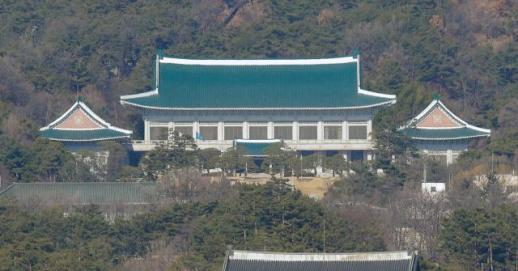 S. Korea considering participation after France invites Lee to June G7 summit SEOUL, March 28 (AJP) - South Korea is considering whether President Lee Jae Myung will attend the Group of Seven (G7) summit in June hosted by France, the presidential office said Friday. A presidential official said Seoul is “considering participation while taking into account diplomatic schedules and domestic and international circumstances.” “France conveyed its intention to invite South Korea to this year’s G7 summit during close consultations between the two sides,” the official said. France, which holds the rotating G7 presidency this year, plans to host the summit in Evian in June and has invited leaders from South Korea, India, Brazil and Kenya, according to local media reports including AFP, citing a statement from the French presidency released Thursday. The G7 comprises the United States, the United Kingdom, Germany, France, Italy, Japan and Canada, with the presidency rotating annually among member states. The chair country can invite non-member nations and international organizations to expanded sessions. South Korea has previously been invited to G7 meetings hosted by the United Kingdom in 2021, Japan in 2023 and Canada last year. French officials also said Paris had initially planned to invite China to the summit, but Beijing declined the invitation. France is expected to engage with China separately. France had planned to focus on global economic imbalances, but the Iran conflict could reshape the agenda, officials said, adding that the situation remained uncertain. It remains unclear whether U.S. President Donald Trump will attend the summit. Meanwhile, South Africa claimed it had been excluded from the summit due to U.S. pressure. Vincent Magwenya, spokesperson for South Africa’s presidency, said France had withdrawn an invitation following “sustained pressure.” Magwenya said South Africa would not attend the summit. Trump has criticized South Africa over its land expropriation law, calling it discriminatory against white farmers. He also skipped the G20 summit there last November and called for the country’s removal from the grouping. 2026-03-28 11:35:30
 -
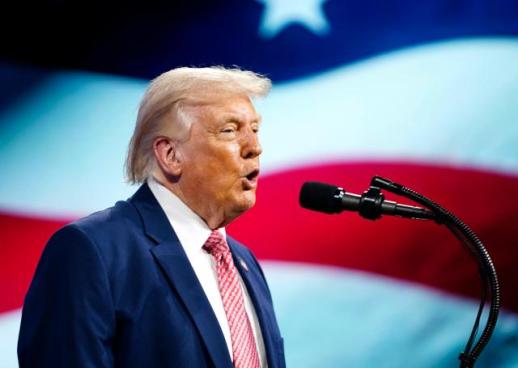 Trump hints at NATO split over Hormuz deployment, says 'Cuba could be next' SEOUL, March 28 (AJP) - U.S. President Donald Trump on Thursday suggested the possibility of withdrawing from NATO after criticizing member states for failing to send naval forces to the Strait of Hormuz, warning that future military action could target Cuba. Speaking at the Future Investment Initiative (FII) Institute hosted by Saudi Arabia’s sovereign wealth fund in Miami, Florida, Trump expressed frustration with NATO allies’ reluctance to respond to Washington’s call for military support in the Gulf. “Hundreds of protecting them and we would have always been there for them. But now based on their actions, I guess we don't have to be, do we?” Trump said. He specifically criticized European NATO allies for not deploying naval assets to the Strait of Hormuz, calling their decision “a terrible mistake.” The United States has been urging allies, including South Korea, Japan and European countries, since March 14 to dispatch naval forces to help secure shipping routes after Iran’s strategy of restricting transit through the Strait of Hormuz disrupted maritime traffic. However, no country has readily agreed to deploy forces, prompting Trump to escalate criticism of NATO allies and raise the prospect of distancing the United States from the alliance. NATO, formed in 1949, comprises 32 member states from North America and Europe. Its core principle of collective defense treats an attack on one member as an attack on all, and the alliance has long played a central role in deterring Russian threats in Europe. Trump has repeatedly criticized NATO members for what he describes as “free-riding” under the U.S. security umbrella, citing low defense spending by European allies. Trump’s criticism could also extend beyond Europe. Trump previously complained that despite the presence of tens of thousands of U.S. troops stationed in South Korea and Japan, Washington had received little support from those allies in the Iran conflict. Trump also suggested that Cuba could become the next target of U.S. military action after the Iran conflict ends. “I built this great military. I said you'll never have to use it. But sometimes you have to use it. And Cuba's next, by the way,” he said. The Trump administration has been increasing pressure on Cuba as part of its broader effort to expand U.S. influence in the Western Hemisphere. Following the removal of Venezuelan President Nicolás Maduro in January, Washington tightened restrictions on oil supplies to Cuba while negotiations led by Secretary of State Marco Rubio continue, U.S. officials have also kept open the possibility of military action. 2026-03-28 10:31:10
 -
 Gulf Crisis, One Month On: Asia learns to wean itself off US Editor's Note: One month into the Iran war, a conflict that began in the Middle East is rapidly evolving into a broader economic and strategic shock for Asia, and in this special series, AJP examines those spillovers in full — from a comprehensive overview of Asia-wide shocks to industrial realignments, the mounting risk of a third oil shock, and rising security tensions — as the central question shifts from how the war unfolds in the Middle East to how deeply its consequences will be embedded across Asia. SEOUL, March 27 (AJP) - For decades, the American security umbrella underpinned stability in Asia. But in the first month of the U.S.-Iran war, that foundation has begun to shift. Amid a global surge in military spending, Asia’s leading economies are no longer waiting for Washington — they are bracing for a future where self-reliance is the only reliable guarantee of security. Since the late-February U.S.-Israel offensive, the conflict has reached a grim milestone: more than 3,000 dead, 15,000 targets struck, and a near-total paralysis of the Strait of Hormuz. Costs have climbed rapidly, surpassing an estimated $18 billion and rising by roughly $500 million a day. This anxiety is reflected in global arms flows. According to the Stockholm International Peace Research Institute (SIPRI), the volume of major arms transfers between 2021 and 2025 rose 9.2 percent from the previous five-year period, marking the sharpest increase in a decade. “It is common sense that the momentum of military buildup will persist long after the conflict ends,” said In Nam-sik, professor at the Korea National Diplomatic Academy. “For Gulf nations, no amount of economic prosperity can compensate for a collapse in national security. That existential fear drives them to spare no expense.” While the Middle East confronts immediate threats, East Asia is responding with more measured but accelerating adjustments. Long accustomed to chronic tensions, the region is now reassessing the durability of its alliances. “In East Asia, we are not seeing a sudden spike, but a steady and broad intensification of defense spending,” In said. “The key variable is the United States. Countries are beginning to internalize that American involvement may not be as steadfast as before. Preparation for reduced dependency is now essential.” That reassessment has been sharpened by Washington itself. As the United States presses allies for greater burden-sharing — including naval participation in securing the Strait of Hormuz — its latest 2026 National Defense Strategy signals a shift toward prioritizing homeland defense and Indo-Pacific deterrence, with partners expected to assume greater responsibility elsewhere. Recent rhetoric has reinforced that perception. President Donald Trump, in an Oval Office briefing, openly questioned allied “enthusiasm” for joint deployments, underscoring a more transactional approach to security commitments. In South Korea, this shift is accelerating long-standing debates over military sovereignty. President Lee Jae Myung has reiterated the need for “self-reliant defense,” including the transfer of wartime operational control (OPCON), currently held by the United States, by 2028. The urgency became tangible during the early weeks of the Iran conflict, when key U.S. assets — including THAAD batteries and ATACMS systems — were reportedly redeployed from the Korean Peninsula to the Middle East, exposing what officials described as a temporary “hardware gap.” “There is no better strategic location for the U.S. than South Korea to keep China and Russia in check,” said Koh Yu-hwan, former president of the Korea Institute for National Unification, pointing to Seoul’s leverage even as it seeks greater autonomy. Japan is undergoing a similarly profound shift. Tokyo has approved a record 9 trillion yen ($56.4 billion) defense budget for fiscal 2026, part of a five-year plan that would make it the world’s third-largest defense spender. Its growing investment in long-range strike capabilities marks the most significant military pivot since World War II. China, meanwhile, has avoided direct entanglement, opting instead for strategic patience. Analysts say Beijing views U.S. involvement in the Middle East as an opportunity to consolidate its position in the Indo-Pacific, particularly around Taiwan. India is moving along a parallel path. Facing persistent tensions with China and Pakistan, New Delhi is accelerating its push for defense self-reliance, with calls to raise military spending to 2.5 percent of GDP. “From Ukraine to the Middle East, we are witnessing a chain reaction of global instability,” said Air Marshal Anil Chopra, former Director-General of the Center for Air Power Studies in New Delhi. “These crises are a wake-up call for regional powers to expand defense spending and fast-track self-reliance.” Across the Indo-Pacific, the conclusion is increasingly clear: there is little time left to wait for stability elsewhere. Asia is emerging simultaneously as a major arms supplier and a primary arena for military buildup. China and South Korea now rank among the world’s top 10 arms exporters, while regional demand continues to surge. Japan’s arms imports have jumped 76 percent, and India remains the world’s second-largest importer. At the same time, dependence on foreign weapons is declining. Imports by China, South Korea and India have all fallen, reflecting growing domestic production capacity and a structural shift toward self-sufficiency. What was once a strategic preference is becoming a necessity. In a world where security guarantees are no longer absolute, Asia is no longer waiting. 2026-03-27 15:45:01