

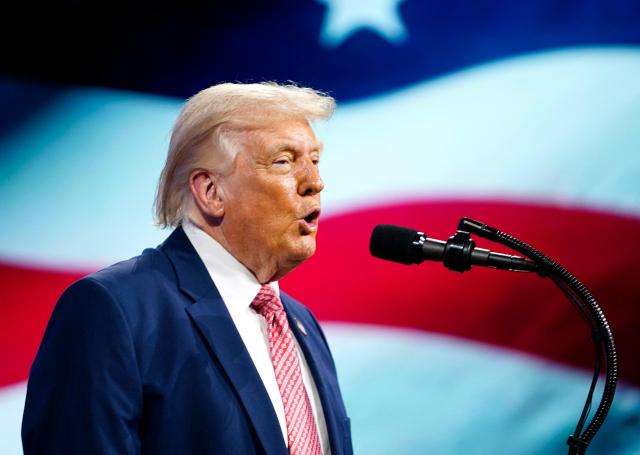
Speaking at the Future Investment Initiative (FII) Institute hosted by Saudi Arabia’s sovereign wealth fund in Miami, Florida, Trump expressed frustration with NATO allies’ reluctance to respond to Washington’s call for military support in the Gulf.
“Hundreds of protecting them and we would have always been there for them. But now based on their actions, I guess we don't have to be, do we?” Trump said.
He specifically criticized European NATO allies for not deploying naval assets to the Strait of Hormuz, calling their decision “a terrible mistake.”
The United States has been urging allies, including South Korea, Japan and European countries, since March 14 to dispatch naval forces to help secure shipping routes after Iran’s strategy of restricting transit through the Strait of Hormuz disrupted maritime traffic.
However, no country has readily agreed to deploy forces, prompting Trump to escalate criticism of NATO allies and raise the prospect of distancing the United States from the alliance.
NATO, formed in 1949, comprises 32 member states from North America and Europe. Its core principle of collective defense treats an attack on one member as an attack on all, and the alliance has long played a central role in deterring Russian threats in Europe.
Trump has repeatedly criticized NATO members for what he describes as “free-riding” under the U.S. security umbrella, citing low defense spending by European allies.
Trump’s criticism could also extend beyond Europe. Trump previously complained that despite the presence of tens of thousands of U.S. troops stationed in South Korea and Japan, Washington had received little support from those allies in the Iran conflict.
Trump also suggested that Cuba could become the next target of U.S. military action after the Iran conflict ends.
“I built this great military. I said you'll never have to use it. But sometimes you have to use it. And Cuba's next, by the way,” he said.
The Trump administration has been increasing pressure on Cuba as part of its broader effort to expand U.S. influence in the Western Hemisphere. Following the removal of Venezuelan President Nicolás Maduro in January, Washington tightened restrictions on oil supplies to Cuba while negotiations led by Secretary of State Marco Rubio continue, U.S. officials have also kept open the possibility of military action.

Copyright ⓒ Aju Press All rights reserved.
