

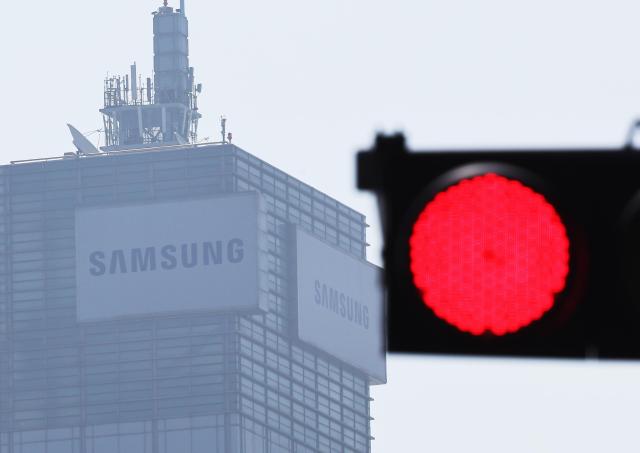
SEOUL, May 13 (AJP) - Chips are responsible for fueling the South Korean economy against the Middle East headwinds and historic stock rally, which explains why policy chiefs from the president to cabinet ministers are going all-out to prevent full-fledged walkouts by chipmakers and even flag the option of a rarely used emergency power to disallow a strike.
The debate intensified after mediation talks between Samsung Electronics and its labor unions collapsed Wednesday dawn, pushing the National Samsung Electronics Union (NSEU) toward an 18-day strike scheduled to begin May 21.
The presidential office sought to cool speculation over immediate intervention, saying there was still time before the planned strike date and that the government would continue supporting dialogue between labor and management.
Under South Korean labor law, the labor minister can invoke emergency arbitration when a strike is deemed to threaten public welfare or cause “serious harm” to the broader economy.
If the measure is invoked, unions must immediately suspend all strike activity for 30 days while the National Labor Relations Commission oversees mediation and possible compulsory arbitration.
The measure has rarely been invoked and is generally reserved for disputes authorities believe could seriously disrupt the economy or public life.

Concerns are growing over Samsung’s labor dispute because of the semiconductor industry’s outsized role in the South Korean economy.
Chips account for roughly 35 percent of the country’s exports, while Samsung Electronics alone represents about 25.7 percent of the benchmark KOSPI’s total market capitalization.
The union estimated that a prolonged strike running from May 21 to June 7 could trigger economic losses exceeding 40 trillion won, while also risking supply chain disruptions and customer defections during a global semiconductor boom.
According to the Korea Development Institute, a 10 percent decline in semiconductor exports could reduce South Korea’s gross domestic product by approximately 0.78 percent, underscoring the economy’s heavy dependence on the chip industry.
The standoff has also spilled into court. A hearing over Samsung Electronics’ request for an injunction against what it described as illegal strike actions concluded Wednesday at Suwon District Court, with the court expected to decide before the planned walkout whether to grant the injunction.
Union officials argued during the hearing that the planned strike would remain within legal boundaries and would not involve violence or occupation of production facilities.
“We emphasized to the court that there would be no illegal labor action, intimidation, violence or occupation of production facilities,” NSEU leader Choi Seung-ho told reporters after the hearing.
The union also rejected Samsung’s warning that work stoppages could damage wafers in semiconductor production lines, saying there are multiple technical measures available to prevent contamination and losses during a strike.
Union lawyers additionally accused Samsung management of unfair compensation practices.
Attorney Hong Ji-na, representing the union, claimed workers accepted zero bonuses in 2024 after management cited weak semiconductor market conditions, only to later discover executives had shared roughly 388 billion won in bonuses among themselves.
She also warned that Samsung’s competitiveness could weaken if high turnover and declining recruitment continue in the semiconductor division, where retaining skilled engineers is increasingly critical.
Still, some economists oppose direct government intervention despite the scale of the potential fallout.
“This is not an issue tied to the survival of the country,” said Kim Jin-young, an economics professor at Korea University.
“Government intervention would only increase uncertainty for both labor and management and distort their decision-making process.”
Kim argued wage disputes should ultimately be resolved through negotiations between companies and workers rather than state intervention, warning that repeated government involvement could weaken incentives for compromise and innovation over the long term.
The risks are heightened by the nature of semiconductor manufacturing itself.
Chip fabrication plants operate continuously in ultra-clean environments with tightly controlled temperature and humidity conditions, unlike traditional industries such as automobiles or home appliances that rely on segmented production lines. Industry experts say restarting halted semiconductor production can cause disproportionately larger losses than in conventional manufacturing.
The structure of the industry has also fueled debate over whether traditional labor union models fit semiconductor manufacturing. Major global chipmakers such as Intel and TSMC do not house powerful unions, while Samsung itself remained effectively union-free until 2020.

Copyright ⓒ Aju Press All rights reserved.
