National Security Adviser Wi Sung-lac on Wednesday said that Seoul is reviewing participation in the U.S.-led maritime security initiative aimed at ensuring freedom of navigation in the Strait of Hormuz.
“The United States has proposed the Maritime Freedom Initiative and a plan called ‘Project Freedom,’” Wi told a press conference with the Korea News Editors' Association. “Like other forms of international cooperation, we are reviewing the maritime freedom initiative as well.”
Wi added that President Lee Jae Myung had already expressed willingness to make “practical contributions” during a recent virtual conference led by Britain and France and said Seoul is actively participating in multinational military and diplomatic cooperation efforts related to the Middle East conflict.
The comments came as Defense Minister Ahn Gyu-back, currently visiting Washington, disclosed that he had informed U.S. Defense Secretary Pete Hegseth that Seoul is considering phased contributions to restoring safe passage through the strategic waterway.
“Basically, I said we would participate as a responsible member of the international community and review ways to contribute in stages,” Ahn told reporters at the South Korean Embassy in Washington.
Ahn said possible forms of support could include diplomatic backing, personnel dispatch, intelligence sharing and the provision of military assets, while stressing that any decision would be made after considering international law and domestic legal procedures.
Hegseth, during the opening remarks of his meeting with Ahn earlier this week, emphasized the importance of alliances and said Washington expects its partners to stand “shoulder to shoulder” with the United States amid the escalating confrontation with Iran.
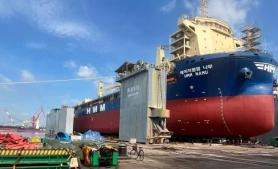
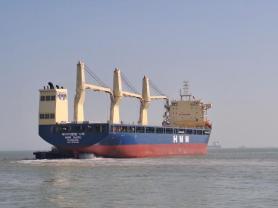
At the center of the debate is the Namu, a South Korean vessel that caught fire in the Strait of Hormuz on May 4.
The South Korean government initially stopped short of attributing the incident to an external attack.
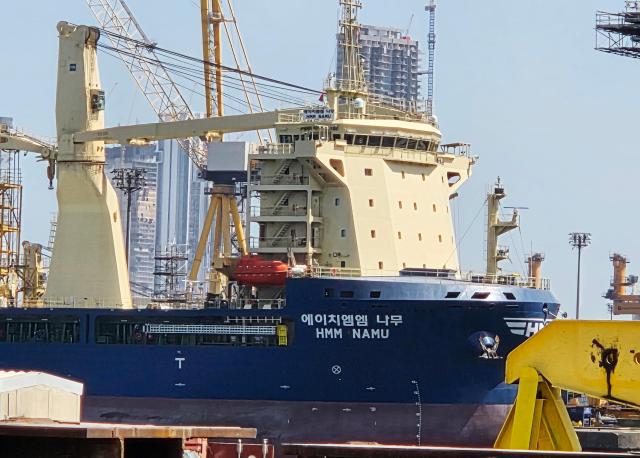
The vessel’s labor union also disputed U.S. President Donald Trump’s earlier claim that the ship had been independently transiting the Strait at the time, saying it had actually been anchored alongside other vessels.
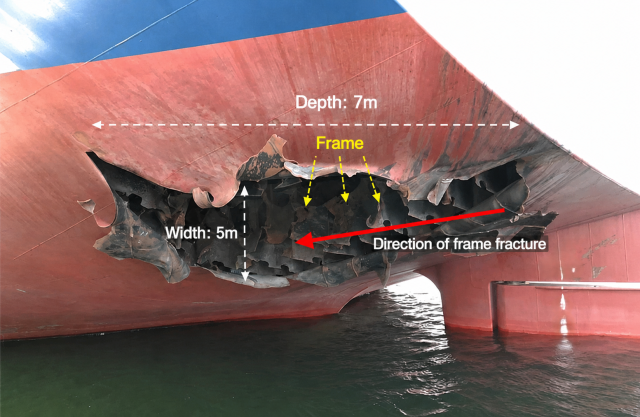
However, after a joint government investigation team inspected the vessel in Dubai, Seoul announced on May 10 that the fire had been caused by an external impact.
The Foreign Ministry said the ship had been struck twice near the stern about one minute apart, and CCTV footage showed two unidentified flying objects approaching the vessel. Officials said they still could not determine the origin, size or type of the objects.
The shift in Seoul’s assessment has raised questions among maritime and military experts.
Some analysts point out that if the external damage was clear enough for government investigators to confirm through visual inspection, it remains unclear why the crew, HMM or foreign maritime security firms failed to identify such evidence immediately after the incident.
British maritime security company Vanguard had earlier raised the possibility of an underwater drone or drifting mine while noting that no external penetration holes had been confirmed at the time.
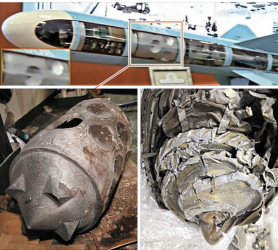
Experts also said the size and shape of the damaged area suggest the vessel was more likely hit by a drone or a small anti-ship missile than by a conventional cruise missile designed to sink a warship. The damaged section, reportedly measuring about 5 meters by 7 meters, appeared relatively limited compared with the destruction expected from a larger missile strike.
The suspected entry hole, estimated at around 50 centimeters, has led some observers to point to the possibility of a Shahed-series suicide drone, although Seoul has so far avoided publicly identifying either the weapon or the attacker.
“We do not yet have grounds to definitively conclude that it was a drone,” Wi said Wednesday, adding that missiles and other possibilities remain open pending further investigation.
Foreign Minister Cho Hyun also stressed caution.
“It is difficult to specify that at this point,” Cho said Wednesday. “Even within Iran, there could be several possible actors. Militias could also be involved.”
Several experts said the unresolved questions surrounding the Namu incident could complicate Seoul’s deliberations over how far it should go in supporting U.S.-led maritime security efforts.
Treating the incident as an external attack on a South Korean civilian vessel could provide Seoul with a stronger rationale for participating in operations aimed at securing the Strait of Hormuz, allowing the government to frame involvement as protecting Korean ships, citizens and energy supply routes rather than simply responding to U.S. pressure.
At the same time, analysts warn that any premature attribution could heighten tensions with Iran or expose South Korea to additional security risks in a waterway where Korean commercial vessels continue to operate.

Copyright ⓒ Aju Press All rights reserved.