
Journalist

Kim Hee-su
khs@ajupres.com
-
 US approves $4 billion arms sales to South Korea SEOUL, May 19 (AJP) - The U.S. State Department has approved potential arms sales to South Korea worth over $4 billion, including upgrade programs for Apache attack helicopters. The department’s Bureau of Political-Military Affairs said Monday that it approved a possible Foreign Military Sale requested by the South Korean government for 24 MH-60R helicopters, along with related weapons and equipment. The estimated cost of the helicopter package is $3 billion. The State Department said the proposed sale would improve South Korea’s capability “to meet current and future threats” by strengthening “the multi-mission helicopter capability of its Navy.” It separately approved a $1.2 billion AH-64E Apache upgrade program, saying it would strengthen the South Korean Army’s attack helicopter capability. The department said the proposed sales would support U.S. foreign policy and national security objectives by improving the security of a major ally that is “a force for political stability and economic progress in the Indo-Pacific region.” It added that the sales would not alter the basic military balance in the region and would have no adverse impact on U.S. defense readiness. The approvals do not mean final contracts have been signed. Under the U.S. Foreign Military Sales process, the proposed sales must go through congressional notification procedures before any deal is finalized. The approvals also come days after Trump left open questions over U.S. arms sales to Taiwan following his recent summit with Chinese President Xi Jinping last week. 2026-05-19 11:35:58
 -
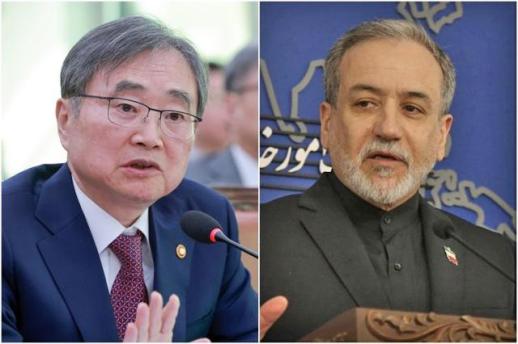 Iran stays silent on HMM Namu in call with Seoul SEOUL, May 18 (AJP) - Iran’s foreign minister blamed the U.S. and Israel for instability in the Middle East during a phone call with South Korean Foreign Minister Cho Hyun, while Tehran made no mention of a recent attack on a Korean vessel in the Strait of Hormuz, according to Iran’s foreign ministry. The call, reportedly requested by Seoul, was the first between Cho and Iranian Foreign Minister Abbas Araghchi since the HMM Namu was attacked near the Strait of Hormuz in early May. It marked their fourth phone conversation since the U.S.-Iran war broke out in February. Iran’s Foreign Ministry said on Sunday via its official Telegram account that Araghchi held talks with Cho and explained Tehran’s view of the situation in the Persian Gulf and the Strait of Hormuz. The ministry said Araghchi referred to the history of friendly relations between the two countries and stressed the importance of developing bilateral ties. It also said Araghchi briefed Cho on current conditions in the Persian Gulf and the Strait of Hormuz, arguing that instability imposed on the Middle East and its global consequences were caused by what it called acts of aggression by the U.S. and the “Zionist regime,” referring to Israel. South Korea’s Foreign Ministry said earlier that Cho asked Iran to state its position on the recent attack on the HMM Namu in the Strait of Hormuz. Cho also explained that Seoul is conducting an additional investigation into the incident and emphasized the importance of the safety of all vessels, including Korean ships, and freedom of navigation in the strait. The HMM Namu had been anchored near the Strait of Hormuz in early May when two unidentified flying objects struck the port side near the stern of the vessel twice, about one minute apart, according to South Korean authorities. Debris from the flying objects that struck the HMM Namu later arrived in South Korea from Dubai last Friday for additional examination. Iran’s Embassy in Seoul has denied involvement in the incident. 2026-05-18 18:10:52
 -
 HD Hyundai Marine Solution to maintain power engines for US data center SEOUL, May 18 (AJP) - HD Hyundai Marine Solution is entering the North American data center power market. The company said Monday that it recently signed a memorandum of understanding with Aperion Energy Group, or AEG, a U.S. energy infrastructure developer, to provide maintenance services for power engines used at a data center. Under the agreement, the two companies will cooperate for the long-term maintenance and operation of 33 power engines at a data center AEG is building in Texas. HD Hyundai Heavy Industries previously signed a contract with AEG in April to supply 684 megawatts of data center equipment based on 20-megawatt HiMSEN engines. As the rapid development of artificial intelligence drives up electricity consumption at data centers, the reliability of backup and primary power supply systems has become a key factor in ensuring efficient data center operations. HD Hyundai Marine Solution plans to use its cooperation with AEG as an opportunity to expand its presence in North America by highlighting the proven performance of HiMSEN engines and its engine maintenance capabilities. The company said the partnership is expected to go beyond engine supply and lead to long-term service agreements, as well as operation and maintenance contracts. “Through this cooperation, we aim to capture new demand in the North American data center market,” an HD Hyundai Marine Solution official said. 2026-05-18 17:20:27
 -
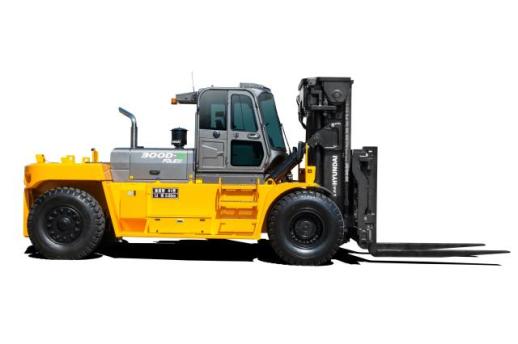 HD Hyundai XiteSolution secures forklift orders in Africa, Middle East SEOUL, May 18 (AJP) - HD Hyundai XiteSolution has secured a series of forklift contracts in Africa and the Middle East, expanding its presence in emerging industrial markets. The company said it recently signed a 37 billion won ($25 million) contract with the Algerian government to supply 316 industrial vehicles. The equipment will be delivered to Algeria in stages by August this year. It said it won the large-scale order by proposing equipment suited to Algeria’s local operating environment and highlighting its stable parts supply and service capabilities. The order includes 10-ton, 25-ton and 30-ton forklifts used for loading and transporting heavy cargo at large construction sites, shipyards and ports. The company said the high share of large and ultra-large models is expected to help improve both sales and profitability. The company has also signed forklift supply contracts worth 4 billion won in the Middle East. HD Hyundai XiteSolution received an order for about 50 small and midsized forklifts from an auto parts company in the United Arab Emirates, as well as an order for about 40 units from a logistics operator in Syria. The company said it is expanding its sales channels by targeting major customers in emerging markets with growing infrastructure needs. “This order reflects not only our product competitiveness but also our ability to carry out projects tailored to customer needs,” said Oh Byung-soo, head of HD Hyundai XiteSolution’s industrial vehicle division. “We will continue to secure additional large-scale order opportunities from key global customers.” 2026-05-18 16:45:23
 -
 Flights to Southeast Asia hit hardest as fuel costs force LCCs to cut routes SEOUL, May 18 (AJP) - South Korean low-cost carriers are cutting more international flights, particularly on Southeast Asian routes, even as fuel surcharges for June eased slightly from their peak, raising concerns over passenger inconvenience and limited compensation. Since the outbreak of the Middle East war, domestic low-cost carriers (LCCs) and mid-tier carriers have reduced more than 1,100 round-trip international flights, with Southeast Asian routes accounting for a large portion of the cuts, according to industry officials. The benchmark Singapore jet fuel price used to calculate June fuel surcharges stood at 410.02 cents per gallon, down about 20 percent from 511.21 cents per gallon for May. Accordingly, international fuel surcharges fell to level 27 from the highest level of 33. Still, industry officials say fuel costs remain high compared with prewar levels. Even in July and August 2022, when global fuel prices surged following Russia’s invasion of Ukraine, international fuel surcharges stood at level 22. Airlines usually decide which flights to reduce based on various factors, including profitability, passenger demand and alternative flight options. This time, routes with weaker demand and lower margins have been targeted first. Southeast Asian routes have been hit especially hard because they had been over-supplied amid fierce competition among LCCs. Vietnam routes, in particular, have become a major target for cuts as demand for Southeast Asian travel has weakened relatively compared to Japan and China. “Southeast Asian routes have seen softer demand compared with Japan routes,” an official from South Korean LCC Jin Air said. “Japan remains relatively resilient, supported by favorable exchange-rate conditions, while travel to Southeast Asia tends to be more affected by higher overall trip costs.” The official added that travelers to some Southeast Asian countries often face higher costs because they exchange money through the U.S. dollar first before converting it again locally. “Those extra costs appear to have affected demand,” the official said. “That is why many of the reductions have been concentrated on Southeast Asian routes.” Southeast Asian routes are often regarded as “mid-haul” routes that sit between short-haul and long-haul services. They require more fuel than flights to Japan or China, but airlines cannot charge fares as high as those on long-haul routes. Jin Air has cut 176 round-trip flights through this month due to the burden of higher fuel costs. The carrier canceled 45 round-trip flights on eight routes, including Guam, last month and 131 round-trip flights on 14 routes, including Phu Quoc, this month. The number could rise further once its June schedule is finalized. Jeju Air reduced flights from Incheon to Phu Quoc, Da Nang, Bangkok and Singapore from seven times a week to three or four times a week from May 8 to June 30. It also cut its Incheon-Hanoi service from seven times a week to four times a week from May 12 and suspended its Vientiane route for two months from April 29. Airportal data also shows that the cuts were concentrated in Southeast Asia even when all Korean carriers are included. Flights to Vietnam, the Philippines and Thailand fell far more sharply than the overall 7.9 percent decline in international flights from January to April. The Philippines posted the steepest percentage drop among the listed countries, down 43.8 percent, followed by Thailand at 38.7 percent and Vietnam at 31.3 percent. By contrast, Japan routes slipped only 5 percent, while China and U.S. routes increased. For passengers, however, the main issue is not just the number of flights being cut. Even if overall reductions remain limited, passengers whose flights are affected can face major disruptions to travel plans. “I’m planning to travel in July, but I think I’ll take my time and book only refundable accommodation because flight schedules seem uncertain,” one user wrote on an online travel community. The transport ministry said the cuts remain below the level that could lead to penalties. Airlines could lose route rights or airport slots if they cancel 20 percent or more of their approved flights, but no carrier has reached that threshold so far. 2026-05-18 15:47:32
 -
 T'way Air gains license to change name to Trinity Air SEOUL, May 18 (AJP) - South Korean low-cost carrier T'way Air is moving ahead with its transition to Trinity Air after receiving approval from the Ministry of Land, Infrastructure and Transport for its new corporate name. T'way Air said Monday that it received a revised license from the ministry on May 15 to change its name to Trinity Air. The new name, Trinity, comes from the Latin word “Trinitas,” meaning the unity of three. The company said the name reflects its plan to expand beyond air travel by combining aviation, accommodation and travel services to offer a more integrated customer experience. The license change follows the company’s decision to adopt the new name at its annual shareholders’ meeting on March 31. However, the airline will not begin operating under the new name immediately. As an international air carrier, T'way Air must complete approval procedures with foreign aviation authorities before launching services under the Trinity Air name. The transport ministry approved the license change on condition that the airline take measures to prevent consumer confusion, maintain its safety management system and complete necessary approvals from overseas aviation authorities. Until all related procedures are completed, the airline will continue to operate under the T'way Air name. Its airline code, TW, and flight numbers will also remain unchanged. Passengers with existing reservations can use their tickets without any additional changes. “This license approval marks an important first step in our transition to Trinity Air,” a T'way Air official said. 2026-05-18 11:15:26
 -
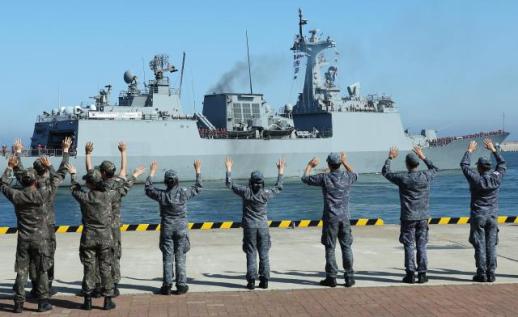 Korea's Cheonghae Unit departs for Gulf of Aden amid Hormuz tensions SEOUL, May 15 (AJP) - The South Korean Navy’s destroyer Wang Geon departed from Busan on Friday to replace the Cheonghae Unit currently operating in the Gulf of Aden, amid speculation that the unit could be deployed near the Strait of Hormuz depending on regional developments. The 4,400-ton Wang Geon, a Chungmugong Yi Sun-sin-class destroyer, left Busan Naval Base at 4 p.m. after a send-off ceremony attended by service members and their families. The 48th rotation of the Cheonghae Unit consists of about 260 personnel, including the ship’s crew, command staff, a UDT/SEAL boarding team, an aviation unit operating a Lynx maritime helicopter, and Marine Corps, medical and maintenance support personnel. The Navy said about 80 members, or roughly 30 percent of the unit, have previous experience serving with the Cheonghae Unit. The unit will carry out anti-piracy operations in the Gulf of Aden, escort vessels and support safe navigation. It is also tasked with protecting South Korean nationals in emergencies and participating in maritime security operations led by the Combined Maritime Forces and the European Union Naval Force Somalia. Under the deployment approval passed by the National Assembly, the Cheonghae Unit’s operational area is limited to waters around the Gulf of Aden. However, speculation has grown that the unit’s mission area could be expanded to the Strait of Hormuz if Seoul decides to join U.S.-proposed military cooperation efforts aimed at reopening the key waterway. Such a move would require parliamentary approval. The 48th rotation has strengthened its counter-drone defense system, reflecting concerns over threats such as explosive drones used during the Iran war. A Navy official said the upgrade was not made with a possible Hormuz deployment in mind, but was intended to prepare for various threats that could arise during the unit’s mission. The currently deployed Dae Jo-yeong destroyer is also known to have established communication channels with South Korean vessels near the Strait of Hormuz and has been checking their safety conditions. The Cheonghae Unit is expected to take three to four weeks to reach the Gulf of Aden and replace the 47th rotation next month. At the ceremony, Navy Chief of Staff Adm. Kim Kyung-ryul said the Cheonghae Unit “symbolizes the strong naval power of the Republic of Korea” and shows the country’s role as a responsible global state. Col. Ahn Woo-jin, commander of the 48th rotation, said the unit would work as “one team” to complete its mission. Oceans Minister Hwang Jong-woo asked the unit to protect South Korean vessels, saying ships flying the Korean flag are “our territory moving across the world.” Launched in March 2009, the Cheonghae Unit has escorted more than 2,400 vessels and supported the safe navigation of about 39,000 ships over the past 17 years. 2026-05-15 17:43:31
 -
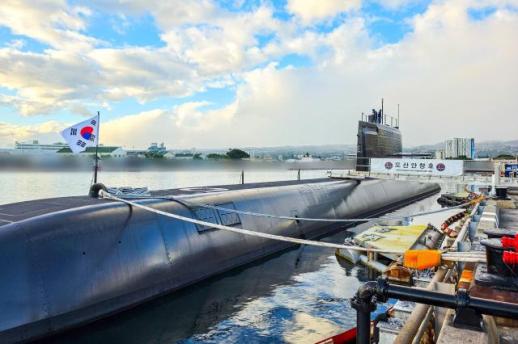 Seoul offers Canadians a real undersea ride in last stretch of submarine race SEOUL, May 15 (AJP) - A South Korean flag-bearing submarine will surface at the Port of Victoria, off Canada's western coast, later this month after a two-month journey with Canadian crew members aboard — sailing from Jinhae in southern Korea in a symbolic outreach as Ottawa weighs Team Korea against Europe for a multibillion-dollar submarine contract. The bid to supply Canada with up to 12 next-generation submarines has narrowed to consortia led by Korea's Hanwha Ocean and Germany's Thyssenkrupp Marine Systems (TKMS). Canadian Prime Minister Mark Carney has said Ottawa aims to decide on a supplier for the Canadian Patrol Submarine Project by the end of next month. As Ottawa seeks to replace its aging Victoria-class fleet, analysts cited by Canadian media estimate the total cost at between 60 billion and 120 billion Canadian dollars over the submarines' life cycle, including roughly 24 billion to 30 billion for the initial purchase. Hanwha Ocean is offering a variant of South Korea's KSS-III Batch-II submarine, while TKMS is proposing the Type 212CD, jointly procured by Germany and Norway. Both are conventionally powered diesel-electric submarines. Seoul has mounted an unusually aggressive campaign. The Republic of Korea Navy's Dosan Ahn Chang-ho, a KSS-III-class vessel, left Jinhae Naval Base on March 25 on a 14,000-kilometer trans-Pacific voyage. The submarine is expected to arrive at CFB Esquimalt in Victoria, British Columbia, before participating in joint exercises with the Royal Canadian Navy in June. During a stop in Hawaii on May 7, two Canadian submarine crew members boarded the vessel to observe its operations firsthand. "The South Korean Navy has friendly ties with Canada," a South Korean Navy official said. "There have been several maritime exercises before, but this is the first time a South Korean submarine has gone there." The June exercise is expected to involve one submarine and one surface vessel from each side. The voyage allows South Korea to demonstrate both the submarine's capabilities and its ability to operate the platform across the Pacific — a pointed argument to Ottawa about operational reach. Diplomatic efforts are also intensifying. According to sources familiar with the matter, Seoul is considering sending a high-level government delegation, potentially including presidential chief of staff Kang Hoon-sik, to Ottawa. Canada extended the bidding process in early April, giving the two remaining contenders more time to revise their proposals — a move widely seen as a signal that Ottawa wanted stronger economic and industrial benefits before making a final decision. Hanwha Ocean has since raised the value of its proposed economic benefits from 60 billion to about 70 billion Canadian dollars, and added a plan to produce military and industrial vehicles in Canada using local parts and labor. Germany is making an equally aggressive late push. German Defense Minister Boris Pistorius is expected to return to Ottawa in late May for CANSEC, Canada's largest defense industry exhibition. Earlier this month, German Vice Chancellor and Finance Minister Lars Klingbeil also visited Canada to champion TKMS' bid. TKMS has emphasized industrial cooperation with Canadian companies, including Bombardier, framing its proposal as a long-term partnership rather than a traditional arms purchase. The geopolitical backdrop has added another layer of complexity. Trade pressure from the Trump administration has reinforced calls in Canada to reduce dependence on the United States and deepen strategic ties with Europe and Asia — a current that both bidders are trying to ride. Canada has not ordered a new submarine since the Cold War era and has never sought to acquire 12 at once. Its current fleet of four secondhand Victoria-class submarines has been plagued by persistent readiness problems, with reportedly only one vessel available for operations at times. On paper, TKMS holds a clear export advantage, having supplied submarines to navies around the world. Hanwha Ocean, by contrast, counts only one overseas submarine contract — with Indonesia. But Seoul is betting that a submarine arriving under its own power on Canada's doorstep, crewed in part by Canadians, makes an argument that no brochure can. The opportunity comes as South Korea pursues an ambitious goal of becoming one of the world's four largest defense exporters. According to the Stockholm International Peace Research Institute, South Korea ranked among the world's top ten arms exporters from 2020 to 2024, with systems including the K9 self-propelled howitzer, Chunmoo multiple rocket launcher and FA-50 light attack aircraft expanding Seoul's footprint in NATO markets. 2026-05-15 16:49:55
 -
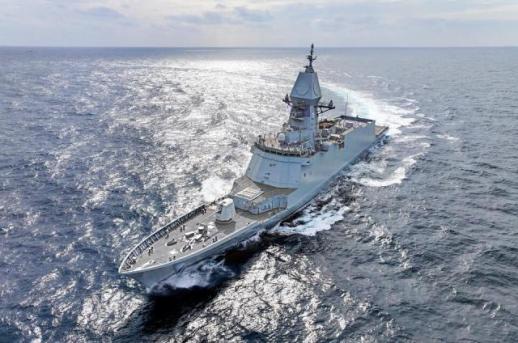 HD Hyundai Heavy skips first KDDX bid, expected to join second round SEOUL, May 15 (AJP) - HD Hyundai Heavy Industries did not participate in the first round of bidding for ships for South Korea’s next-generation destroyer project, but is expected to join the second round. According to the Defense Acquisition Program Administration and industry officials on Friday, HD Hyundai Heavy did not complete preliminary registration for the designated competitive bidding process for the Korean Destroyer Next Generation, or KDDX, by Thursday’s deadline. However, the company said it is preparing to take part in the bidding process, signaling that it is likely to participate in the second round. With HD Hyundai Heavy absent from the first round, Hanwha Ocean was the sole bidder, meaning the bid effectively failed to meet the required conditions. DAPA is expected to issue a second bidding notice later this month to move the long-delayed project forward. “We are currently preparing to participate in the bidding,” an HD Hyundai Heavy official said. “But we need more time to comprehensively review the relevant conditions.” The KDDX project, worth 7.04 trillion won ($5 billion), aims to build six 6,000-ton-class destroyers, often referred to as “mini-Aegis” ships. Naval shipbuilding projects typically move from concept and basic planning to detailed engineering, construction and follow-on vessels. The KDDX contract is expected to be awarded through a competitive bidding process between HD Hyundai Heavy and Hanwha Ocean. DAPA had planned to select the final contractor within the first half of this year after issuing the bidding notice in March and completing proposal evaluations and negotiations. The agency aims to deliver the lead ship to the Navy by 2032. But with the bidding process for the detailed design and lead ship construction delayed, the final selection of the contractor is also expected to be pushed back. “As the project has already been delayed for a long time, we will promptly issue a rebid notice and proceed with the project without further setbacks,” a DAPA official said. 2026-05-15 16:26:32
 -
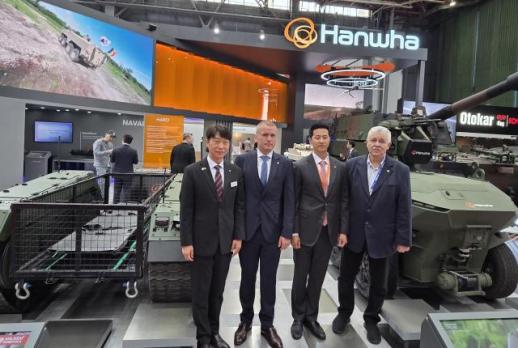 Hanwha signs teaming agreement with Milrem Robotics for Romanian UGV program SEOUL, May 15 (AJP) - Hanwha Aerospace has signed a teaming agreement with Estonia’s Milrem Robotics to jointly pursue Romania’s unmanned ground vehicle program, as the South Korean defense firm seeks to expand its presence in the European market. The agreement was signed during the Black Sea Defense & Aerospace, or BSDA 2026, exhibition in Bucharest by Hanwha Aerospace, its Romanian subsidiary Hanwha Aerospace Romania and Milrem Robotics, Hanwha Aerospace said Friday. Under the agreement, Hanwha Aerospace Romania is expected to serve as the prime contractor and lead local production, offering wheeled UGV platforms based on Hanwha’s Arion-SMET and the upgraded GRUNT variant. Milrem Robotics will provide its THeMIS tracked UGV platform and related technologies as part of Hanwha’s integrated proposal. Hanwha said the partnership is aimed at delivering a flexible and scalable unmanned solution tailored to Romania’s operational needs, while strengthening local industrial capabilities and broader European cooperation. “We are pleased to mark this collaboration at BSDA 2026, which represents an important step in bringing advanced unmanned capabilities into Romania through localized production and industrial cooperation,” said Lino Lim, CEO of Hanwha Aerospace Romania. Kuldar Väärsi, CEO of Milrem Robotics, said the company sees strong potential to expand manufacturing capabilities to Romania in cooperation with Hanwha. Ahead of the exhibition, Hanwha Aerospace and Milrem Robotics also conducted a live manned-unmanned teaming demonstration near Bucharest on May 12. 2026-05-15 15:25:27