
Journalist

Kim Hee-su, Han Jun-gu
khs@ajupress.com
-
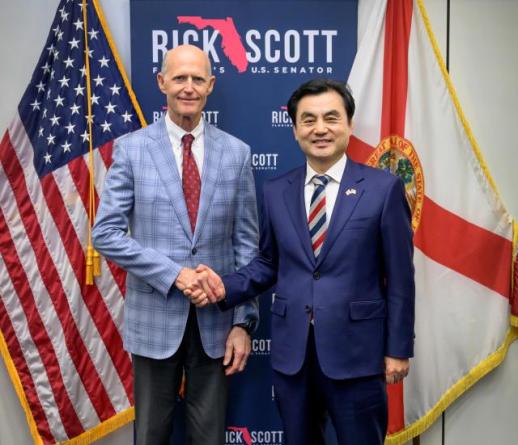 Seoul to unveil nuclear-powered submarine roadmap as early as this month SEOUL, May 15 (AJP) - South Korea is expected to unveil a roadmap for its nuclear-powered submarine program as early as the end of this month, government sources said Friday. The move is seen as an attempt by Seoul to present its own timeline for the long-sought project, as follow-up talks with Washington have been slow. The Ministry of National Defense, which leads an interagency task force on the issue, is expected to announce the plan, though the exact timing has yet to be finalized. The basic plan is expected to outline the mission and role of the submarines, including their defensive nature, as well as Seoul’s commitment to complying with the Treaty on the Non-Proliferation of Nuclear Weapons (NPT). During a visit to Seoul in April, International Atomic Energy Agency (IAEA) Director General Rafael Grossi said South Korea would need a separate safeguards arrangement with the agency if it moves ahead with nuclear-powered submarines, noting that “the nuclear material is not continuously accessible to inspectors” because of the nature of such vessels. He stressed the need for “technically sound arrangements” to verify that the material is used only for propulsion and does not contribute to nuclear proliferation. Nuclear-powered submarines have long been a priority for South Korea’s military, with discussions dating back to the Kim Young-sam administration. After years of failed attempts, the project gained momentum after South Korea and the United States agreed on the issue during their summit on the sidelines of last year’s APEC summit in Gyeongju. Defense Minister Ahn Gyu-back recently discussed cooperation on South Korea’s nuclear-powered submarine program during his visit to the U.S., where he met with U.S. Defense Secretary Pete Hegseth, the acting secretary of the Navy and key members of Congress. Powered by small nuclear reactors, nuclear-powered submarines can theoretically remain submerged for months and travel much faster than conventional diesel-electric submarines, making them a strategic asset. South Korea’s military has reviewed plans to build at least four nuclear-powered submarines with a displacement of 5,000 tons or more after the mid-2030s. As the project would mark the first domestic use of a nuclear reactor on a submarine, the government is also seeking to enact a special law on nuclear-powered submarines to establish a management framework for military nuclear energy. 2026-05-15 11:27:10
 -
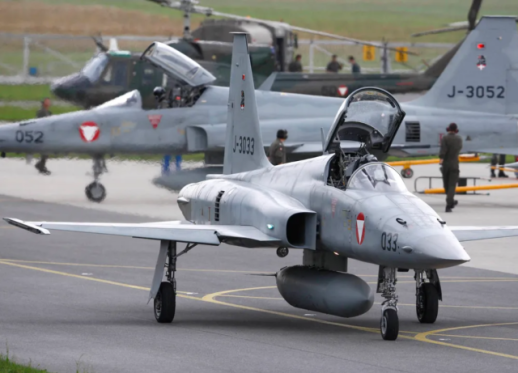 Air Force chief to accelerate F-5 phaseout, prepare manned-unmanned combat systems SEOUL, May 14 (AJP) - Air Force Chief of Staff Gen. Son Seok-rak said South Korea will accelerate the phaseout of its aging F-5 fighter jets from 2030 to 2027, as the Air Force prepares to shift toward manned-unmanned combat systems. “We are preparing to withdraw the F-5 fighter jets from service before the end of next year,” Son said during a meeting with defense ministry correspondents in Seongnam, Gyeonggi Province, on Wednesday. The F-5 has long served as one of the Republic of Korea Air Force’s key light fighter jets. Introduced in the 1970s and later produced locally as the KF-5, the aircraft helped expand South Korea’s fighter fleet at a time when the country was strengthening its independent air defense capabilities. Son said the Air Force is also pushing to introduce low-cost unmanned assets such as LUCAS by the early 2030s, which could be deployed in large numbers during the initial stage of a war. “We are aiming to develop AI pilots by the 2040s and further prepare for a transition to unmanned combat squadrons,” he said. Son said the KF-21 alone would not be enough to meet future operational needs, stressing the need to speed up the development of unmanned attack aircraft and unmanned combat aircraft. “We will complete a manned-unmanned teaming system and connect it to a sixth-generation fighter system in the 2040s and 2050s,” he said. He added that unmanned systems are not intended to replace humans, but to enhance combat power. “The judgment and expertise of pilots will become even more important,” Son said. The Air Force is also stepping up efforts to build AI-based command and operational systems. Son said the Air Force is currently operating “Air Wars,” a generative AI platform developed in-house. “We have established the military’s first AI-based work management system,” he said. “The Air Force is also taking part in designing generative AI platforms for the defense ministry and the defense acquisition sector.” 2026-05-14 18:09:28
 -
 Korean arms gain strategic role as Southeast Asia balances US-China rivalry SEOUL, May 14 (AJP) - Southeast Asian countries are increasingly turning to South Korean weapons as they seek to modernize their militaries while navigating the intensifying rivalry between the United States and China. The trend is drawing growing attention as Washington expands its Indo-Pacific security operations beyond the Korean Peninsula and Japan, while Southeast Asian nations continue pursuing flexible defense ties with both major powers. According to industry sources, some U.S. Forces Korea units recently took part in multinational drills in the Philippines, an unusual move that underscored how U.S. assets stationed in South Korea could be used more flexibly for regional contingencies. The deployment followed remarks last month by Gen. Xavier Brunson, commander of the South Korea-U.S. Combined Forces Command and U.S. Forces Korea, who proposed a “kill web” concept linking South Korea, Japan and the Philippines through a cyber-based network for intelligence sharing and joint military operations during a contingency. At the same time, Thailand has moved to deepen military engagement with China while maintaining its long-standing defense relationship with the United States. China’s defense ministry said it would hold the “Assault 2026” joint exercise in Thailand this month, focusing on operations in mountainous and jungle terrain. The drills come as Thailand continues to participate in Cobra Gold, one of the region’s largest U.S.-led multinational exercises. A report by the Asan Institute for Policy Studies said South Korea’s advanced technology, its status as a “non-threatening power,” and its relatively neutral image have made it an attractive partner for Southeast Asian countries seeking to modernize their militaries. In that environment, South Korean weapons are emerging as a practical option for countries seeking advanced but relatively affordable systems that are not directly tied to either Washington or Beijing. Indonesia has been South Korea’s largest customer in Southeast Asia, accounting for 55 percent of defense exports to the region over the past two decades, according to an analysis by the International Institute for Strategic Studies. Jakarta has imported Korean-made T-50 and KT-1 trainer aircraft, as well as Jang Bogo-class submarines, while also participating in the KF-21 fighter development program. The relationship has evolved beyond simple arms purchases into broader technology cooperation and joint development. Philippines has also emerged as one of Seoul’s key defense partners, particularly as Manila seeks to strengthen its air and maritime capabilities amid tensions in the South China Sea. The Philippine military operates FA-50PH light attack aircraft and has moved to expand its fleet, with Korea Aerospace Industries signing a deal in 2025 to supply 12 additional FA-50 jets after its initial contract for 12 aircraft in 2014. South Korea has also supplied frigates and corvettes to the Philippine Navy, making Korean weapons a major component of Manila’s military modernization efforts. Thailand, while carefully balancing ties between the United States and China, has likewise adopted Korean-made defense systems. The Royal Thai Air Force operates the T-50TH, a Thai variant of South Korea’s T-50 advanced trainer and light attack aircraft, while the country has also acquired Korean-built naval assets. The reported use of Korean-made guided munitions during Thailand’s border clashes with Cambodia in 2025 highlighted how Korean weapons are no longer merely procurement items, but could increasingly become part of real-world regional security dynamics. Malaysia has expanded its purchases of Korean defense systems from aircraft to naval air defense platforms. Kuala Lumpur signed a deal in 2023 to acquire 18 FA-50M light combat aircraft from Korea Aerospace Industries, strengthening South Korea’s role in Malaysia’s air force modernization program. In April 2026, Malaysia also signed a contract worth about $94 million with LIG Defense & Aerospace to purchase the Haegung, or K-SAAM, ship-launched surface-to-air missile system, which is expected to be installed on three Malaysian Navy vessels. The agreement marked the first overseas sale of the Haegung system. IISS senior fellow Thomas Daniel said developing countries have long sought defense equipment compatible with Western systems, a demand that “the major players have overlooked.” However, he also pointed to a potential challenge for Seoul as global demand for Korean weapons rises, questioning whether Southeast Asian buyers, which typically place smaller orders, could be pushed “to the back of the line.” Vietnam has recently emerged as a new market for South Korean ground weapons, with bilateral defense cooperation reaching a symbolic turning point through the K9 deal. In 2025, Hanwha Aerospace signed a deal worth about $250 million to supply 20 K9 self-propelled howitzers to Vietnam, marking South Korea’s first arms export to the country. The deal is significant not only because Vietnam has long relied heavily on Russian weapons, but also because it reflects how two countries that were once adversaries during the Vietnam War are now moving toward a strategic defense partnership. Vietnam’s purchase of the K9 is also seen as part of a broader effort to diversify defense procurement sources amid growing uncertainty surrounding Russian supply chains. Ian Storey of Singapore’s ISEAS-Yusof Ishak Institute said South Korea has become an attractive option for Southeast Asian countries because Seoul offers advanced weapons at lower prices than Western suppliers and is more willing to transfer technology to support local defense industries. “South Korean arms are hi-tech and cheaper than Western defense equipment,” he said. Prashanth Parameswaran, a regional security analyst, said South Korea’s expanding security ties with ASEAN countries have created opportunities for Seoul but also pose challenges. While deeper defense cooperation gives South Korea room to expand its role as a regional security partner, it also exposes Seoul to the political risks of becoming more directly involved in Southeast Asia’s disputes and broader great-power competition. For Seoul, the question is whether it can remain primarily an arms supplier or whether growing demand for Korean weapons will push it toward a broader strategic role in Asia’s security order. As more Southeast Asian countries integrate Korean systems into their military modernization programs, defense exports may become increasingly difficult to separate from diplomacy and regional security politics. 2026-05-14 17:58:52
 -
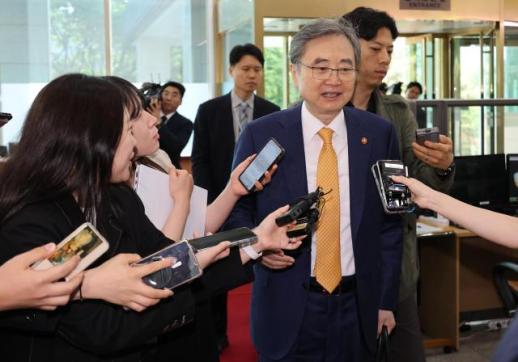 Foreign minister vows follow-up response over attack on HMM vessel Namu SEOUL, May 14 (AJP) - Foreign Minister Cho Hyun said Thursday that South Korea will take necessary follow-up measures over the recent attack on the HMM cargo vessel Namu after conducting an additional government investigation. “Based on the position that attacks on civilian vessels, including the Namu, cannot be justified or tolerated under any circumstances, we will continue consultations with relevant countries,” Cho said during a press briefing at the Foreign Ministry in central Seoul. Cho said the government will carry out an additional investigation into the attack and “take necessary response measures accordingly.” A senior Foreign Ministry official said debris from the incident, which had initially been kept at the South Korean Consulate General in Dubai, has been moved to the South Korean Embassy in Abu Dhabi and will be brought to Korea “as soon as possible.” “Once the debris is brought in, I believe our Defense Ministry’s expert investigative agency will conduct a thorough examination and uncover various details,” the official said. Regarding CCTV footage from the Namu that reportedly captured an aerial object, the official said the shipowner has so far declined to release the video, citing several reasons. “I have not seen it yet either,” the official said. “There are differences in views at the moment, but we will try to persuade them so that the CCTV footage can be disclosed and examined as part of the investigation.” Cho also said the Foreign Ministry is closely monitoring the course of the Middle East war and possible changes in the international order after the conflict ends, while preparing for any impact on South Korean nationals and national interests. “We will make swift and multifaceted efforts to turn various crises into opportunities,” Cho said. He added that the ministry is maintaining close cooperation and communication with major countries to ensure the free passage of vessels and the safety of South Korean seafarers, while upholding the principles of international maritime law and freedom of navigation. 2026-05-14 17:01:36
 -
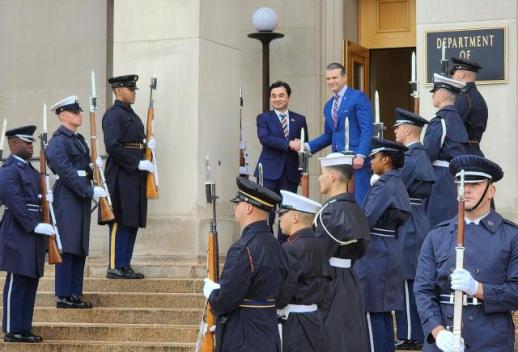 S. Korea, US defense officials discuss alliance goals without OPCON details SEOUL, May 14 (AJP) - South Korea and the U.S. held senior-level defense talks in Washington this week to discuss the future direction of their alliance, as the two sides appear to remain divided over key issues, including the transfer of wartime operational control. South Korea’s defense ministry said Thursday that the Korea-U.S. Integrated Defense Dialogue, or KIDD, was held in Washington from Tuesday to Wednesday, led by Kim Hong-cheol, Seoul’s deputy minister for defense policy, John Noh, U.S. assistant secretary of war for Indo-Pacific security affairs, and James Finch, acting deputy assistant secretary for East Asia. Senior officials from the defense and foreign affairs ministries of both countries also attended. During the meeting, the two sides agreed to step up cooperation to carry out defense-related commitments from last November’s leaders’ joint fact sheet and the joint statement adopted at the 57th Security Consultative Meeting, or SCM. The joint fact sheet included cooperation on South Korea’s plan to build nuclear-powered submarines, while last year’s SCM statement said the two sides would set a target year for the transfer of wartime operational control, or OPCON, by the end of this year. The latest KIDD talks are believed to have included efforts to narrow differences over pending alliance issues, including OPCON transfer. But the ministry’s announcement did not include any specific mention of discussions on the issue. Ahead of the KIDD session, South Korean Defense Minister Ahn Gyu-back met U.S. Secretary of War Pete Hegseth in Washington on Monday. Ahn said the two sides shared the view that OPCON should be transferred at an early date, but added that “there are some areas where the U.S. side has slightly different views.” Other pending issues, including cooperation on nuclear-powered submarines and a proposal for divided management of the Demilitarized Zone, currently overseen by the U.N. Command, are also believed to have been discussed. But the ministry did not disclose details on whether or how those issues were addressed. Still, the reference to implementing the leaders’ joint fact sheet and last year’s SCM outcome suggests the two countries intend to keep seeking progress on the pending issues. Launched in 2011, the KIDD is a senior-level consultative body designed to support timely and effective security coordination between Seoul and Washington. The talks are held once or twice a year, alternately in South Korea and the U.S. This week’s meeting also served as part of preparations for this year’s SCM between the defense chiefs of the two countries, which is expected to be held later this year. 2026-05-14 11:03:40
 -
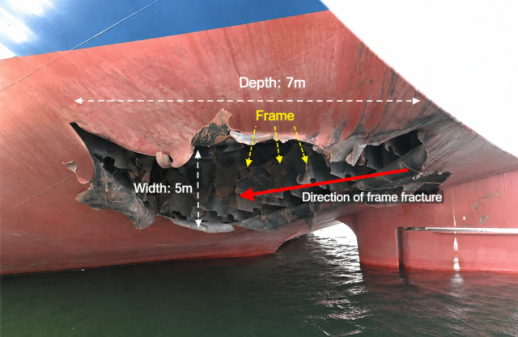 Seoul mulls US-led Hormuz mission amid questions over Namu findings SEOUL, May 13 (AJP) - South Korea is facing growing questions over its investigation into the recent attack on an HMM vessel Namu, as the case becomes increasingly intertwined with Washington’s call for Seoul to play a larger role in securing the Strait of Hormuz. National Security Adviser Wi Sung-lac on Wednesday said that Seoul is reviewing participation in the U.S.-led maritime security initiative aimed at ensuring freedom of navigation in the Strait of Hormuz. “The United States has proposed the Maritime Freedom Initiative and a plan called ‘Project Freedom,’” Wi told a press conference with the Korea News Editors' Association. “Like other forms of international cooperation, we are reviewing the maritime freedom initiative as well.” Wi added that President Lee Jae Myung had already expressed willingness to make “practical contributions” during a recent virtual conference led by Britain and France and said Seoul is actively participating in multinational military and diplomatic cooperation efforts related to the Middle East conflict. The comments came as Defense Minister Ahn Gyu-back, currently visiting Washington, disclosed that he had informed U.S. Defense Secretary Pete Hegseth that Seoul is considering phased contributions to restoring safe passage through the strategic waterway. “Basically, I said we would participate as a responsible member of the international community and review ways to contribute in stages,” Ahn told reporters at the South Korean Embassy in Washington. Ahn said possible forms of support could include diplomatic backing, personnel dispatch, intelligence sharing and the provision of military assets, while stressing that any decision would be made after considering international law and domestic legal procedures. Hegseth, during the opening remarks of his meeting with Ahn earlier this week, emphasized the importance of alliances and said Washington expects its partners to stand “shoulder to shoulder” with the United States amid the escalating confrontation with Iran. At the center of the debate is the Namu, a South Korean vessel that caught fire in the Strait of Hormuz on May 4. The South Korean government initially stopped short of attributing the incident to an external attack. Early assessments found no clear signs of external impact, while HMM officials said there were no visible cracks or fractures because no seawater had leaked into the ship. The vessel’s labor union also disputed U.S. President Donald Trump’s earlier claim that the ship had been independently transiting the Strait at the time, saying it had actually been anchored alongside other vessels. However, after a joint government investigation team inspected the vessel in Dubai, Seoul announced on May 10 that the fire had been caused by an external impact. The Foreign Ministry said the ship had been struck twice near the stern about one minute apart, and CCTV footage showed two unidentified flying objects approaching the vessel. Officials said they still could not determine the origin, size or type of the objects. The shift in Seoul’s assessment has raised questions among maritime and military experts. Some analysts point out that if the external damage was clear enough for government investigators to confirm through visual inspection, it remains unclear why the crew, HMM or foreign maritime security firms failed to identify such evidence immediately after the incident. British maritime security company Vanguard had earlier raised the possibility of an underwater drone or drifting mine while noting that no external penetration holes had been confirmed at the time. Experts also said the size and shape of the damaged area suggest the vessel was more likely hit by a drone or a small anti-ship missile than by a conventional cruise missile designed to sink a warship. The damaged section, reportedly measuring about 5 meters by 7 meters, appeared relatively limited compared with the destruction expected from a larger missile strike. The suspected entry hole, estimated at around 50 centimeters, has led some observers to point to the possibility of a Shahed-series suicide drone, although Seoul has so far avoided publicly identifying either the weapon or the attacker. “We do not yet have grounds to definitively conclude that it was a drone,” Wi said Wednesday, adding that missiles and other possibilities remain open pending further investigation. Foreign Minister Cho Hyun also stressed caution. “It is difficult to specify that at this point,” Cho said Wednesday. “Even within Iran, there could be several possible actors. Militias could also be involved.” Iran has denied involvement. The Iranian Embassy in Seoul said shortly after the incident that Iranian forces were not responsible, and Tehran is understood to have maintained that position even after Seoul disclosed photographs showing external impact marks on the vessel. Several experts said the unresolved questions surrounding the Namu incident could complicate Seoul’s deliberations over how far it should go in supporting U.S.-led maritime security efforts. Treating the incident as an external attack on a South Korean civilian vessel could provide Seoul with a stronger rationale for participating in operations aimed at securing the Strait of Hormuz, allowing the government to frame involvement as protecting Korean ships, citizens and energy supply routes rather than simply responding to U.S. pressure. At the same time, analysts warn that any premature attribution could heighten tensions with Iran or expose South Korea to additional security risks in a waterway where Korean commercial vessels continue to operate. 2026-05-13 17:30:06
 -
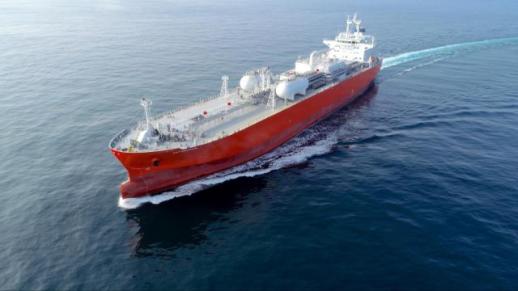 HD Hyundai posts record quarterly profit on broad profitability gains SEOUL, May 13 (AJP) - HD Hyundai posted its highest-ever quarterly operating profit, supported by broad growth across its shipbuilding, power equipment and energy businesses. The results have raised expectations that the group is on track to achieve its goal of reaching 100 trillion won ($67.2 billion) in annual sales by 2030, as its selective order strategy focused on eco-friendly vessels and growing demand for power infrastructure in North America begin to translate into stronger profitability. HD Hyundai said Wednesday in a regulatory filing that it logged 19.6 trillion won in consolidated sales and 2.83 trillion won in operating profit in the first quarter. Sales rose 14.7 percent from a year earlier, while operating profit surged 120.4 percent. It marked the group’s largest quarterly operating profit since its transition to a holding company structure in 2017. The shipbuilding division remained the biggest driver of earnings, accounting for 64 percent of the group’s total operating profit. HD Korea Shipbuilding & Offshore Engineering, the group’s shipbuilding subholding company, posted 8.14 trillion won in sales and 1.36 trillion won in operating profit, with an operating margin of 16.7 percent. Sales increased 20.2 percent from a year earlier, while operating profit rose 57.8 percent, helped by a higher share of high-priced vessels such as liquefied natural gas carriers and increased delivery volumes through improved production efficiency. HD Hyundai Marine Solution also reported solid growth, backed by its core aftermarket business and higher sales from its bunkering operations. Sales rose 18.3 percent year-on-year to 574.6 billion won, while operating profit climbed 12.5 percent to 93.4 billion won. Its operating margin stood at 16.3 percent. HD Hyundai Electric, the group’s power equipment unit, continued to benefit from growing investment in power grids in North America. The company recorded 1.04 trillion won in sales and 258.3 billion won in operating profit. HD Hyundai expects growth momentum to strengthen further once expansion work at its Ulsan plant and North American production subsidiary is completed. HD Hyundai Site Solutions, the group’s construction machinery unit, posted 2.38 trillion won in sales and 207.5 billion won in operating profit, up 21.2 percent and 72.8 percent, respectively, from a year earlier. The gains were driven by a recovery in global demand and accelerated growth in its industrial engine business. In the energy sector, HD Hyundai Oilbank reported 7.72 trillion won in sales and 933.5 billion won in operating profit for the first quarter, despite an uncertain business environment marked by greater oil price volatility amid deepening geopolitical risks. Market watchers said the latest results reflect the group’s selective strategy focused on high-margin businesses under Chairman Chung Ki-sun’s leadership. Since Chung took the helm, HD Hyundai has been strengthening its future business portfolio, with those efforts now beginning to produce visible results. “Profitability improved across all business areas, driving strong earnings,” an HD Hyundai official said. “We will continue to make every effort to expand profitability through selective orders, technology development and process optimization.” 2026-05-13 16:42:14
 -
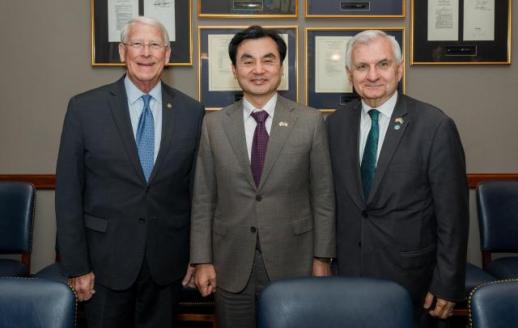 Defense minister seeks US support for Korea's nuclear-powered submarine plan SEOUL, May 13 (AJP) - Defense Minister Ahn Gyu-back has asked senior U.S. Navy and congressional officials to support South Korea’s push to acquire nuclear-powered submarines, the Ministry of National Defense said Wednesday. Ahn, who is visiting the U.S. for the first time since taking office, met with Hung Cao, acting secretary of the U.S. Navy, in Washington on Tuesday morning to discuss key alliance issues, according to the ministry. During the meeting, Ahn stressed that South Korea is an ideal partner for shipbuilding cooperation with the U.S., citing its advanced shipbuilding capabilities and the enactment of a special law providing a legal basis for investment in the U.S. He also said South Korea’s acquisition of nuclear-powered submarines would contribute to shared security interests between Seoul and Washington and mark an important milestone in upgrading the bilateral alliance. Ahn asked for active support from the U.S. Navy Department, the ministry said. The two sides agreed to continue close cooperation, the ministry said. The leaders of South Korea and the U.S. agreed in a joint fact sheet last year to cooperate on South Korea’s construction of nuclear-powered submarines as part of Seoul’s broader $350 billion investment package for the U.S., but follow-up negotiations have made little progress. Ahn also met with key U.S. lawmakers on Monday and Tuesday to discuss alliance issues, including the transfer of wartime operational control, or OPCON, from Washington to Seoul. They included Senate Armed Services Committee Chairman Roger Wicker, ranking member Jack Reed and Sen. Rick Scott, chairman of the Senate Armed Services Subcommittee on Seapower. Ahn thanked Congress for its longstanding support for the alliance and asked for bipartisan cooperation to help develop the alliance in a future-oriented and mutually beneficial way. Ahn also visited Arlington National Cemetery on Monday and the Korean War Veterans Memorial on Tuesday to lay wreaths. 2026-05-13 10:50:55
 -
 Cockpit feud poses stumbling block in final-leg race toward Dec. 17 Korean Air-Asiana merger SEOUL, May 12 (AJP) - Korean Air and Asiana Airlines are entering the final-leg race toward their Dec. 17 integration deadline, but a growing feud over cockpit hierarchy poses as a major stumbling block to a smooth merger. The Korean Air Pilots’ Union held a closed-door meeting in Seoul on Tuesday, bringing together about 200 members to discuss how pilot seniority should be managed after the merger, according to union officials. “This meeting was not convened to call for a strike,” a KAL pilot told AJP during a brief break in the meeting. “But the seniority issue is not only part of the buildup toward a possible strike, but also one of the most fundamental reasons behind it.” Although the two airlines have cleared major regulatory hurdles for their business combination, several structural issues remain unresolved. One of the most sensitive is the seniority system, which affects pilots’ order of promotion, pay structure and career progression. According to the Korean Air pilots’ union, it held 12 rounds of renewed talks with management over about five months from last October, but the negotiations eventually broke down. The union argues that Korean Air’s existing seniority system should be maintained after the integration. Management, however, is understood to support establishing a new standard for the combined airline. The main point of contention is the criteria for promotion from first officer to captain. Korean Air first officers must meet requirements under the company’s Flight Operations Administration Manual, or FOAM, before becoming eligible for captain upgrade screening. These include five years after appointment as a first officer, 2,500 to 3,000 flight hours after joining the company and at least 350 landings. Korean Air also requires at least 1,000 flight hours at the hiring stage for first officers, while its probationary and training periods are known to be relatively longer. By contrast, Asiana Airlines is said to require around 300 flight hours for first officer recruitment and to have a shorter probationary period. The Korean Air pilots’ union argues that because the two carriers have operated under different recruitment, training and promotion standards, simply merging seniority based on entry dates or military discharge dates could push back the promotion order of existing Korean Air first officers. Asiana pilots, however, have disputed the union’s claims, saying the concerns are overstated. They argue that among some 800 Asiana first officers, only three to four have yet to meet requirements such as the required number of landings, and that those pilots are already undergoing the necessary procedures before promotion. Asiana pilots say the seniority issue should not be treated merely as a post-merger personnel placement matter, but as a question of how to fairly recognize the career histories and flight experience of pilots from both airlines. The Korean Air pilots’ union passed a strike vote at its regular general meeting last month, with 57.6 percent of all members voting in favor of industrial action. Since then, the union has been discussing possible response scenarios, including a strike. However, a full-scale strike remains difficult under the current essential services agreement, as the aviation industry is classified as an essential public service. Even during a strike, airlines are required to maintain a certain level of operations. The key issue is how the number of essential workers is calculated. Pilots do not work on a fixed daily schedule, but rotate between flights, rest periods, standby duty, training and other assignments. Under the current method, if the required workforce is calculated based on the airline’s entire monthly flight schedule, the figure may include not only pilots actively operating flights but also those on legally required rest, standby duty or post-long-haul rest. The union argues that this significantly reduces the number of pilots who can take part in industrial action, weakening the practical impact of a strike. If the essential workforce is instead calculated based on actual daily flight operations, the number of pilots required to maintain minimum operations would be lower, allowing more pilots to join a strike and increasing the union’s leverage. With Korean Air and Asiana Airlines seeking to complete their integration as early as the end of this year, tensions between the unions and management are expected to intensify. The Korean Air pilots’ union is expected to seek the right to take industrial action through a labor relations commission mediation process. Before that, however, it appears to be pushing for revisions to the essential services agreement as part of efforts to make any potential strike more effective. 2026-05-12 17:12:39
 -
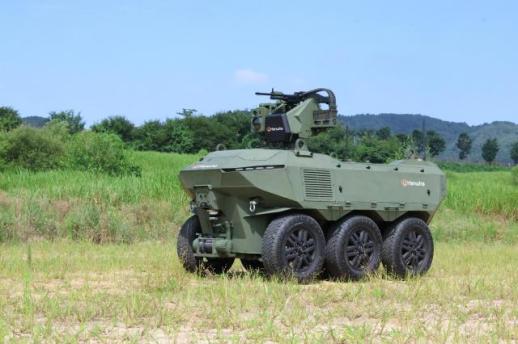 Hanwha highlights unmanned, AI defense systems in Romania SEOUL, May 12 (AJP) - Hanwha Group will showcase next-generation unmanned and artificial intelligence-based military systems at a defense exhibition in Romania this week, as it seeks to deepen partnerships in Europe and expand its presence across EU and NATO markets. Hanwha said Tuesday that its key defense affiliates will participate in the Black Sea Defense & Aerospace, or BSDA 2026, which will take place from Wednesday to Friday at ROMAERO in Bucharest. The biennial event is one of the largest defense exhibitions in the Balkans. Under the theme “Built with Romania, Ready for NATO,” Hanwha Aerospace will present its unmanned ground vehicle portfolio, including the GRUNT wheeled platform and the THeMIS-K tracked system, along with land and air defense solutions. GRUNT is an upgraded version of Hanwha Aerospace’s Arion-SMET 6x6 wheeled unmanned ground vehicle. It can carry more than 900 kilograms and travel about 290 kilometers, supporting missions such as logistics transport, casualty evacuation, reconnaissance and combat support. THeMIS-K is a tracked unmanned ground vehicle based on a platform developed by Estonia’s Milrem Robotics. It can carry up to 1,200 kilograms and be equipped with weapons, surveillance equipment or logistics modules. Hanwha said it is working with Milrem Robotics to develop localized UGV models tailored to Korean and Romanian military needs, including systems that combine wheeled and tracked platforms for manned-unmanned teaming operations. Hanwha Systems will showcase AI-based satellite analytics, along with its Smart Battleship concept and next-generation mine countermeasure solutions for the Black Sea region. The two companies will also present a broader lineup of defense systems, including the K9A1 self-propelled howitzer, Redback infantry fighting vehicle, TIGON wheeled armored vehicle and Chunmoo multiple rocket launcher system. Hanwha Aerospace said the exhibition comes as European armed forces are increasingly prioritizing unmanned systems as force multipliers amid rising security concerns and rearmament efforts across the region. “As Europe accelerates rearmament and adapts to evolving security challenges, Hanwha Aerospace aims to support this transformation through localized production, integrated systems, and future-ready technologies — enhancing interoperability and supply chain resilience across the EU and NATO,” said Lino Lim, CEO of Hanwha Aerospace Romania. Hanwha Aerospace has been expanding its defense partnerships in Europe, including in Romania, Poland, Norway, Finland, Estonia and Spain. 2026-05-12 12:03:17