
Journalist

Park Ki-rock
kirock@ajunews.com
-
 South Korea to Tax and Regulate Synthetic-Nicotine E-Cigarette Liquids as Tobacco Starting April 24 Starting on the 24th, liquid e-cigarettes made with synthetic nicotine will be officially recognized as “tobacco,” bringing them under full taxation and distribution and health regulations. The government said it aims to close a legal loophole by bringing the products into the regulatory system to improve tax fairness and strengthen public health protections. The Ministry of Economy and Finance said on the 23rd that, under the revised Tobacco Business Act, the legal definition of tobacco will expand from products made from “tobacco leaves” to products made using “tobacco or nicotine (including natural and synthetic)” as a raw material. As a result, liquid e-cigarettes using synthetic nicotine will be subject to the Tobacco Business Act and related tax laws. Manufacturers and importers will be required to pay tobacco-related taxes and charges — including individual consumption tax, tobacco consumption tax, local education tax and the National Health Promotion Charge — when products leave a factory or when imports are declared. To limit market disruption at the start of the system, those taxes will be cut by 50% for two years on a temporary basis. Manufacturers and importers must obtain approval from the finance minister and register with provincial and metropolitan governments. Packaging must carry mandatory warnings and images and list ingredients such as nicotine content. Products must undergo a harmfulness test every two years, and labeling of flavoring substances will be restricted. Retail sales will require designation as a tobacco retailer by local governments. Online sales and sales to minors will be banned. Reselling products after opening them to add other substances or alter the contents will also be prohibited. User restrictions will match those for conventional cigarettes. Synthetic-nicotine e-cigarettes will be banned in no-smoking areas, as other tobacco products are. To reduce confusion early in the rollout, the government will introduce a product identification system. For products made or imported after the effective date, packaging will be required to print identification wording on the front and at the opening area indicating whether tax obligations have been met, so consumers can more easily confirm legal distribution. Inventory produced before the law takes effect will be managed separately. The government said it will set standards that include requiring harmfulness testing, recommending limits on sales of products kept in circulation for long periods, and notifying consumers. It also said it will conduct harmfulness assessments of “nicotine-like” products with chemical structures similar to nicotine and review future management measures.* This article has been translated by AI. 2026-04-23 16:05:41
 -
 South Korea Adds 50 Billion Won to Expand Farm Product Discounts, Including Melons and Tomatoes South Korea’s Ministry of Agriculture, Food and Rural Affairs said Thursday it will put 50 billion won in supplementary budget funds into a discount program for agricultural and livestock products to counter rising prices driven by high oil prices and a weaker won linked to the war in the Middle East. With the added funding, the program’s total budget will rise to 158 billion won from 108 billion won. The government said it aims to ease household grocery costs while also boosting consumption. It plans to expand discounted items from five — including carrots, cabbage and onions — to nine in May by adding greenhouse-grown vegetables such as Korean melons, tomatoes and bell peppers. Discount support will continue for chicken and eggs, where prices have kept climbing. Separate discount events for Korean beef and pork will be held using industry-funded promotion money. To improve distribution and access, the ministry said it will raise the share of support going to smaller retail channels — including traditional markets, small and midsize supermarkets and local-food direct sales outlets — to 58% from 55%. The ministry also said it will broaden where government-backed farm discount vouchers can be used, expanding beyond traditional markets to include specialty farm-product retailers. The discount rate, however, will be lowered to 20% from 30% to prevent excessive demand from concentrating in a single channel. Suh Jun-han, the ministry’s director general for distribution and consumer policy, said, “In an unstable environment due to the war in the Middle East and other factors, we will further strengthen discount support for agricultural and livestock products so that this supplementary budget can help ease consumers’ burden from rising prices.”* This article has been translated by AI. 2026-04-23 14:38:19
 -
 South Korea Proposes Tax Breaks for National Growth Fund, Including 40% Deduction The government is moving to spell out tax support for a public-participation “National Growth Fund,” offering up to a 40% income deduction and a separate 9% low tax rate on eligible investments. The Ministry of Economy and Finance said on the 23rd it will issue a legislative notice for amendments to subordinate regulations, including the Enforcement Decree of the Restriction of Special Taxation Act, to introduce a tax preference for the fund. The notice period runs from April 24 to May 15. The ministry said the revisions are expected to be promulgated and take effect in May after the notice process and a Cabinet meeting. Under the proposal, tax benefits would apply when a resident age 19 or older — or age 15 or older with earned income — invests through a dedicated account in the National Growth Fund for at least three years. Eligible investments would receive an income deduction of up to 40% and be subject to separate taxation at about 9%. The fund is designed as a publicly offered fund-of-funds with private-fund features that restrict redemptions. It would invest in stocks, equity stakes and bonds of companies in advanced strategic industries and related firms. At least 60% of total assets must be invested in those areas, and the allocation must be met within 30 months. Investments would be made through a dedicated account. Contributions could be withdrawn early, and the contribution limit would be restored after a withdrawal. Workers age 15 or older would have to submit documents proving earned income, such as an income amount certificate. If an investor redeems or transfers the investment before completing the mandatory three-year holding period, the tax benefits would be clawed back. Exceptions would be allowed for unavoidable reasons such as retirement, business closure or illness. The ministry also said it will issue a legislative notice the same day for amendments to the Enforcement Decree of the Income Tax Act to require submission of documentation for the National Growth Fund income deduction. Under the change, related savings products would be added to the list of items required to submit deduction-supporting data to the National Tax Service. * This article has been translated by AI. 2026-04-23 14:04:45
 -
 South Korea’s tax agency to pilot AI chatbot for income tax, tax credits The National Tax Service will begin a pilot program next month for a tax-focused artificial intelligence chatbot designed to help taxpayers with comprehensive income tax filings and applications for tax credits. The agency said April 23 it will introduce a “generative AI chatbot” service starting May 1, offering interactive, conversational guidance. The rollout expands AI-based assistance beyond value-added tax filings and year-end tax settlement to include comprehensive income tax and the earned income and child tax credits. Through HomeTax and Mobile HomeTax, taxpayers will be able to ask in real time whether they need to file, how to file, and what requirements apply for deductions and tax relief during the filing process. With the addition of mobile access, users can receive help regardless of time and location. The chatbot will generate answers based on consultation cases and filing manuals verified by the tax agency. The NTS said it will quickly reflect newly revised tax laws and administrative interpretations to provide information that is more accurate and consistent than general-purpose AI. The agency said it has also applied safety measures, or guardrails, to block questions unrelated to tax law and prevent inaccurate responses. The chatbot screen will also provide practical resources, including sample return-writing cases, a tax credit simulation calculator and videos explaining electronic filing. The NTS previously operated an AI chatbot in the VAT and year-end settlement areas in January and February. It said users increased by about 20% and the number of questions per user fell, indicating improved efficiency. The agency said it will use the pilot to build AI consultation infrastructure and later develop tailored tax guidance linked to each taxpayer’s assessment information. Over the longer term, it plans to expand functions to include AI-assisted e-filing and an AI tax consultant to improve taxpayer convenience. * This article has been translated by AI. 2026-04-23 12:05:28
 -
 South Korea cites chip boom, policy support for Q1 GDP surge; warns Q2 slowdown likely The government said Thursday that South Korea’s stronger-than-expected first-quarter gross domestic product growth reflected a combination of a semiconductor-led upswing, policy support and a swift response to the Middle East war. It cautioned, however, that a second-quarter slowdown is likely as base effects fade and war-related risks intensify. The Bank of Korea said real GDP grew 1.7% in the first quarter from the previous quarter, a preliminary estimate. That was well above the central bank’s February forecast of 0.9%. A Finance and Economy Ministry official said the first-quarter figure was the highest since the third quarter of 2020 and that growth momentum that had been building since the second half of last year accelerated further in the first quarter. The government pointed to a recovery in exports led by semiconductors and the impact of policy measures as key drivers. The official said improved conditions in semiconductors and other IT sectors outperformed earlier expectations, boosting exports and equipment investment. He added that measures including a supplementary budget passed last July, stronger electric-vehicle subsidies and policies to invigorate capital markets helped support a rebound in domestic demand. The official also highlighted a private-sector-led pattern. Private consumption rose 0.5% from the previous quarter. Equipment investment climbed 4.8% on semiconductor equipment spending and increased purchases of corporate vehicles and aircraft. Construction investment rose 2.8% on more groundbreaking for semiconductor plants and higher housing supply. Exports increased 5.1%, supported by strong semiconductor shipments and more foreign tourists. The government assessed the Middle East war’s impact as limited in the first quarter. The official said the war began in late February, leaving little time for effects to be reflected, and that steps such as an oil price cap helped prevent a sharp pullback in consumption. He said early indicators, including March credit card approvals, also showed a solid trend. From the second quarter, he said, conditions could change. The official said quarter-on-quarter growth would likely be adjusted lower as base effects from the strong first quarter combine with tighter supplies of construction materials and higher oil prices as the war’s impact is more fully reflected. He said the semiconductor upturn and government policies could provide some cushion, but uncertainty remains high. On the full-year outlook, the official said the government has set a goal of 2% growth this year, but that the annual path needs closer monitoring given rising external uncertainty, including how the Middle East situation develops. The government said it will seek to limit downside risks by quickly executing the supplementary budget and preparing additional measures to support consumption. The official said more than 85% of supplementary budget projects will be executed in the first half, alongside Middle East-related response steps to ease negative effects. He added that the government also plans to speed up work on structural reforms and longer-term growth strategies. * This article has been translated by AI. 2026-04-23 11:04:33
 -
 22 South Korean Public Agencies Rated Below Satisfactory in Customer Satisfaction Survey Korea Electric Power Corp. and SR were among 22 public agencies rated “insufficient” or worse in a customer satisfaction survey for last year. The government said it will require the agencies to analyze the causes of weak service and draw up specific improvement plans. The Finance and Economy Ministry on Tuesday released results of its “2025 public-agency customer satisfaction survey” covering 186 public institutions. The overall composite score was 89.2, up 1.3 points from 87.9 a year earlier. By type, quasi-government agencies scored highest at 91.4, followed by state-run enterprises at 89.2 and other public institutions at 88.1. The government said broader customer-tailored service channels and more active efforts to address complaints helped lift satisfaction overall. The survey also replaced the previous three-tier system (excellent, average, insufficient) with five grades: very excellent, excellent, average, insufficient and very insufficient. Under the new scale, 77 agencies — 41.4% of the total — were rated “excellent” or higher. Twenty-two agencies, or 11.8%, were rated “insufficient” or below, down 12.9 percentage points from the previous year. Among state-run enterprises, Korea Electric Power was rated “insufficient,” while SR was rated “very insufficient.” In the quasi-government category, the Health Insurance Review and Assessment Service, the Korea Sports Promotion Foundation, the Small Enterprise and Market Service, and the Korea Internet & Security Agency were rated “insufficient.” In the other public-institution category, Public Home Shopping, the Korea Legal Aid Corp., the Independence Hall of Korea, the Korea Creative Content Agency, and the Korea Health Personnel Licensing Examination Institute were rated “insufficient” or below. Twelve agencies were rated “very excellent.” In the state-run enterprise group, the Jeju Free International City Development Center, Korea Gas Corp., the Korea Broadcast Advertising Corp., and Korea Water Resources Corp. made the list. In the quasi-government group, the Korea Trade-Investment Promotion Agency, the Korea Institute for Animal Products Quality Evaluation, and the Korea Environment Corp. were included. Forty agencies, including the Korea Land and Geospatial Informatix Corp. (LX), maintained an “excellent” or higher rating for at least two consecutive years. The Korea Trade-Investment Promotion Agency and the Korea Institute for Animal Products Quality Evaluation were selected as excellent agencies for a seventh straight year. The ministry said it also tightened rules to improve fairness and credibility. To better reflect differences in agency operations, it introduced target scores across 13 detailed categories linked to management evaluation standards. For agencies found to have engaged in misconduct during the survey, it said they must adopt measures to prevent recurrence and will be barred for two years from participating in the survey as contractors, among other steps. The results will be reflected in the 2025 management performance evaluation of public agencies and will be disclosed through the public agency management information system, ALIO. Starting next year, the government plans to fully apply a next-generation evaluation index, the “PCSI 3.0 model,” designed for a digital administrative environment.* This article has been translated by AI. 2026-04-22 10:04:52
 -
 Budget Minister Park Hong-geun Says 'Vision 2045' Plan Due by Year’s End; Second Supplementary Budget Unclear Park Hong-geun, minister of the Ministry of Planning and Budget, said the government plans to report to the public by the end of this year on “Vision 2045,” a long-term national development strategy. On whether a second supplementary budget will be drafted, he said it was “too early to prejudge,” signaling caution. Speaking April 21 at the Government Complex Sejong in his first briefing with reporters since taking office, Park said he would prepare “a roadmap on a timeline” that would allow the government to present the 2045 plan within the year. “It is important to set a national vision early in an administration and, based on that vision, establish a medium-term fiscal strategy as well,” he said. Park was appointed March 25. It was his first official meeting with the press corps. The ministry passed its 100th day since its April 11 launch, but faced a leadership vacuum after its first minister-designate, Lee Hye-hoon, withdrew amid controversies. Park outlined three core agendas for the ministry: establishing a mid- to long-term national development strategy; strategic budgeting and allocation of financial resources; and fiscal management aimed at delivering tangible improvements in people’s lives. “We will set bold visions and goals, but push strategy based on concrete plans and the ability to execute,” he said. On Vision 2045, being prepared through a mid- to long-term strategy committee, Park said it differs from the 2006 “Vision 2030,” which he said was created near the end of the Roh Moo-hyun administration. This time, he said, work began early in the new government. He also said the effort is meaningful because it involves not only the government but also ministries, the National Assembly, private research institutions and the public. Park drew a line on the likelihood of a second supplementary budget for now. “This is the time to focus on swiftly executing the supplementary budget that was put together with difficulty, to maximize results and efficiency,” he said. Using a metaphor, he added, “The meal has been cooked and set on the table, but we haven’t even picked up the spoon yet. It’s not time to talk about the next meal.” Still, he did not rule it out entirely, saying that if an unexpected prolonged situation or worsening conditions occur, “it would be difficult for anyone to judge.” For next year’s budget, Park signaled aggressive spending cuts and restructuring. “We will boldly restructure unnecessary and non-urgent spending, and put the secured resources where they are needed for key state tasks and priority policies,” he said. He pledged to ensure that targets in the budget guidelines — a 15% cut in discretionary spending and a 10% cut in mandatory spending — do not end as “a flash in the pan.” He said he would consult with other ministries and pursue public discussion to carry out what he called an unprecedented restructuring. Park cautioned against excessive concern over the International Monetary Fund’s warning that South Korea’s national debt-to-GDP ratio could exceed 60% by 2030. “It’s not just whether the debt ratio is high or low; we also need to look at whether we have the capacity to bear it,” he said. He added that the IMF projection is only a forecast and has often overestimated outcomes, arguing that economic conditions, fiscal circumstances, policy responses and timing should be considered together. At the same time, Park acknowledged the need to manage the pace of debt growth. He said this year’s spending restructuring was the largest on record, and that the plan to cut mandatory spending by 10% next year reflects an intent to manage public finances strictly. He said it is important to create a virtuous cycle — as in Sweden or the Netherlands — by raising growth to expand GDP and, as a result, lower the debt ratio.* This article has been translated by AI. 2026-04-21 17:48:23
 -
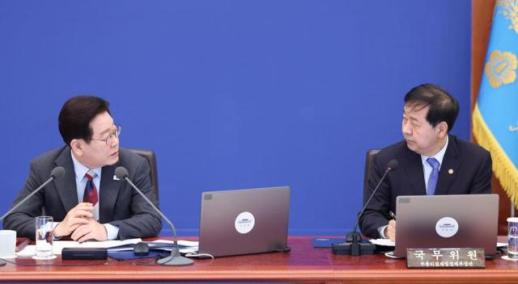 South Korea to crack down fuel price collusion amid Middle East tensions SEOUL, March 5 (AJP) - The government will crack down on price collusion and other unfair practices, and strict measures will be taken against any violations, Deputy Prime Minister and Finance Minister Koo Yoon-cheol said on Thursday. His remarks came as domestic fuel prices were already surging even before the impact of escalating tensions in the Middle East caused by last week's U.S.-led airstrikes against Iran under the military operation dubbed "Operation Epic Fury" was fully felt in the local market. Speaking at an emergency Cabinet meeting chaired by President Lee Jae Myung at Cheong Wa Dae, Koo said "We are seeing an excessive hike in gasoline and other petroleum prices," vowing to conduct intensive inspections to punish any collusion and implement corrective measures in cooperation with relevant industries. Koo said energy prices had climbed approximately 13 percent as of early Thursday morning, outlining contingency measures that include securing energy supplies beyond the Middle East, exercising pre-emptive purchase rights and tapping strategic oil reserves if necessary. Turning to the broader economic fallout, Koo said that about 49 small and medium-sized exporters had reported difficulties including shipping disruptions, delayed payments, and rising logistics costs. To support them, the government plans to provide 20.3 trillion Korean won (US$14 billion) in funding through interest rate cuts and expanded loans, along with tax relief measures for affected firms. Lee then ordered the immediate injection of 100 trillion won ($68.3 billion) into capital and financial markets to counter the fallout from the Middle East conflict. "Our first priority must be to actively address the increased market volatility across financial sectors, including equities and exchange rates," he said. If the Middle East conflict drags on and disrupts oil shipments through the Strait of Hormuz, a critical chokepoint for roughly one‑fifth of the world's oil supply, the government will help cover rising freight costs and deploy emergency response teams to monitor supply chains for goods heavily dependent on the perennially volatile region. Some 38 South Korean vessels are currently operating in and around the strategically vital waterway including 26 within the strait itself, with no incidents or damage reported so far. Meanwhile, Foreign Minister Cho Hyun said that a total of 18,472 South Korean nationals including some 4,935 short-term visitors, are currently in 14 Middle Eastern countries. Regarding their safety, Cho said, "There have been no casualties among our nationals so far," adding that evacuations to neighboring countries have been carried out with support from local diplomatic missions. Lee urged ministers to respond swiftly and thoroughly, stressing that the safety of South Korean nationals overseas should be treated as a matter of utmost priority. 2026-03-05 15:01:16
 -
 Another case of foot-and-mouth disease detected in Goyang SEOUL, February 20 (AJP) - Another case of foot-and-mouth disease has been reported in Goyang, Gyeonggi province, health authorities said on Friday. It was detected at a farm raising 133 cattle, prompting quarantine officials to expand containment measures to nearby areas including Gimpo, Paju and Yangju, as well as Seoul. All cattle on the farm are set to be culled, and a 24-hour standstill order has been issued for workers and vehicles at livestock-related facilities, remaining in effect until early Saturday. Quarantine officials will also carry out clinical inspections and provide emergency vaccinations at some 1,092 farms raising cloven-hoofed animals in the affected areas. The latest case comes about three weeks after the first case this year was detected in Ganghwa, Incheon in late January. 2026-02-20 14:56:28
 -
 Overseas outlets of Korean dining brands jump 25 percent in 5 years SEOUL, February 05 (AJP) - South Korean dining brands have increased their overseas store count by nearly 25 percent over the past five years, a government survey showed on Thursday. According to the survey, released by the Ministry of Agriculture, Food and Rural Affairs and the Korea Agro-Fisheries & Food Trade Corp. (aT), Korean dining companies operated 4,644 stores across 56 countries last year, up from 3,722 outlets in 48 countries in 2020. Over the same period, the number of companies operating overseas fell to 122 from 134, while the number of brands slipped to 139 from 147. The survey suggests companies are concentrating resources in key markets rather than expanding broadly, with many respondents reporting higher overseas sales over the past year. The United States was the largest market, accounting for 1,106 stores, or 23.8 percent of the total, more than double the 528 outlets recorded in 2020. China ranked second with 830 stores, down sharply from 1,368 five years earlier. Vietnam remained the largest base in Southeast Asia with 634 outlets, followed by the Philippines with 294, Thailand with 231 and Taiwan with 196 stores. By sector, chicken chains remained dominant, accounting for 39 percent of overseas outlets, followed by bakery brands at 25.5 percent. Together they made up nearly two-thirds of all stores abroad. The ministry said it plans to strengthen tailored support at each stage of overseas expansion, link restaurant operators with Korean food ingredient exporters and provide more detailed market information by country and region. "Overseas expansion has become an important pillar in boosting the global competitiveness of Korean cuisine and the broader food industry," said ministry official Jeong Gyeong-seok. * This article, published by Aju Business Daily, was translated by AI and edited by AJP. 2026-02-05 13:58:34