
Journalist

Park ki rock
kirock@ajunews.com
-
 Government Plans to Adjust Tax Benefits for Rental Property Owners The government has assessed that the real estate market is transitioning to a focus on actual residents, prompting a review of tax benefits for rental property owners. Deputy Prime Minister and Minister of Economy and Finance Koo Yun-cheol stated on May 8 during a meeting at the Government Complex in Seoul that, "The recent real estate market is moving away from overheating and is being restructured around actual residents." He noted that loan regulations and land transaction permits are effectively curbing speculative purchases, while expectations for rising housing prices are diminishing. The government aims to enhance housing supply in Seoul and the surrounding metropolitan area while blocking speculative demand and fostering a trading environment centered on actual residents. With the recent passage of the 'Land Compensation Act' in the National Assembly, the government plans to focus on generating tangible supply outcomes that citizens can feel. Additionally, in response to concerns about a potential inventory freeze following the expiration of the capital gains tax exemption for multiple homeowners on May 9, various measures are under consideration. This includes reviewing the appropriateness of tax benefits for rental property owners in designated adjustment areas. On the same day, Koo emphasized the resilience of the economy, referencing the Bank of Korea's report on the current account balance for March, which recorded a historic surplus of $37.3 billion. He noted that exports exceeded $800 billion for two consecutive months, indicating strong fundamentals. However, he acknowledged that the prolonged conflict in the Middle East is exacerbating economic pressures, including high oil prices and supply chain disruptions. He assured that the government would maintain a firm response until uncertainties are fully resolved. The government also reported that the supply of key items like NAFTA, syringes, and trash bags is stabilizing, and consumer prices remain lower than in major countries. Nonetheless, it remains vigilant about supply chain uncertainties and is committed to alleviating the burden on citizens. Furthermore, the government plans to continue implementing price stabilization measures, including the fifth round of the oil price cap and addressing supply chain issues for essential items like syringes.* This article has been translated by AI. 2026-05-08 08:54:28
 -
 Finance Minister Koo to Announce Fifth Oil Price Cap at 7 p.m.; Anti-Hoarding Ban Extended to July Deputy Prime Minister and Finance and Economy Minister Koo Yun-cheol said the government will announce the fifth round of a cap on petroleum product prices at 7 p.m. on May 7, ahead of its application starting May 8. He also said the ban on hoarding petroleum products will be extended by two months, through July, and that the government will move to strengthen the system, including introducing administrative fines. Koo made the remarks while chairing the eighth meeting of the interagency task force on special management of consumer prices at the Government Complex in Sejong on May 7. He said the fifth price cap, to take effect from 12 a.m. on May 8, will be set after considering international oil price trends, petroleum consumption, and the fiscal and household burden. “To block misconduct such as refusing to sell under the pretext of the price cap, we will extend the notice banning hoarding of petroleum products through July,” Koo said. He added, “We will also prepare improvement measures, including creating administrative fines and using reward programs, to increase the effectiveness of price-stabilization steps.” On recent price conditions, Koo said that despite the fallout from the Middle East war, the April consumer price inflation rate held at about 2.6% due to the price cap and expanded shipments of agricultural products. He said the price cap, along with steps such as fuel tax cuts, helped reduce the rise in prices by about 1.2 percentage points. Koo also said South Korea’s inflation has been relatively stable compared with other countries. With consumer prices in major economies such as the United States and the United Kingdom running above 3%, he said, South Korea has maintained inflation in the low-to-mid 2% range. The government said it will intensify efforts to manage consumer prices. It will conduct daily checks on key items closely tied to household spending, including petroleum products, agricultural goods, processed foods and daily necessities, and will work with the food industry to promote discount events for about 4,300 items throughout May. As follow-up steps to improve the tariff-rate quota system, the government plans to strengthen inspections across the distribution process, considering the price-stabilization effect of imported agricultural and fisheries products. It also plans to pursue legal revisions, including imposing additional taxes and creating orders to remove goods from circulation. The government will also expand customs clearance support for items affected by the Middle East war. It will strengthen screening for key imports such as petroleum products and naphtha and support diversification of import sources. It said it will simplify procedures to apply preferential tariff rates to Canadian crude oil, seeking to secure up to 33 million barrels a year. To stabilize supplies of medical products, the government said it will conduct special crackdowns on hoarding of essential medical items such as syringes and strengthen responses by prioritizing supply to essential areas such as hemodialysis. “Uncertainty is high as the Middle East war drags on, but we will build a breakwater for the people’s economy,” Koo said. “We will make every effort to stabilize prices and supplies of essential items such as energy and food.”* This article has been translated by AI. 2026-05-07 09:52:13
 -
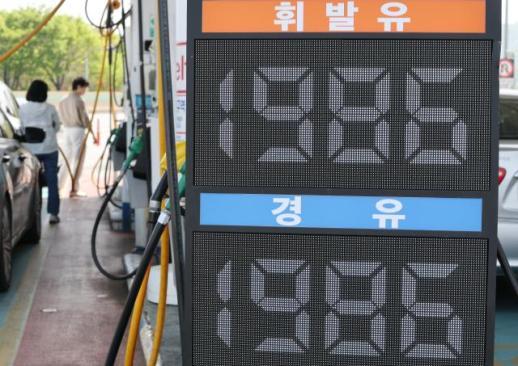 South Korea Weighs Fines for Fuel Hoarding, Says Diesel Could Have Hit 2,800 Won a Liter The government said it estimates diesel prices could have surged to about 2,800 won per liter without a cap on petroleum product prices, and it is considering introducing administrative fines to punish market disruptions such as hoarding. Officials said the risk of further inflation remains high as higher global oil prices, driven by uncertainty from the Middle East war, could feed into domestic prices with a lag. The government discussed its assessment and response plan at a meeting of the “Special Task Force of Related Ministers for Livelihood Price Management,” chaired by Deputy Prime Minister and Minister of Finance and Economy Koo Yun-cheol, held on the 7th at the Government Complex Sejong. The government said April consumer inflation came in at 2.6%, with a sharp rise in petroleum-related prices leading the increase after the Middle East war. Petroleum product inflation jumped to 21.9% in April from 9.9% in March, while inflation excluding petroleum products stayed around 1.8%. Officials said policy measures such as the price cap and fuel tax cuts absorbed much of the upward pressure. They estimated that without the price cap, overall inflation would have been 2.8% in March and 3.8% in April — 0.6 percentage points and 1.2 points higher than the official figures. A finance ministry official said figures presented by the Energy and Oil Market Monitoring Team suggest gasoline could have risen into the 2,200-won-per-liter range and diesel to more than 2,800 won per liter without government controls. The government also said Korea’s inflation has been relatively stable compared with major countries, noting that many advanced economies have recorded inflation in the mid-2% to low-3% range and that domestic oil prices have risen more slowly than in key peers. Japan, Hungary and Poland are using tougher measures such as price ceilings or subsidies for refiners, while major European countries are combining fuel tax cuts with market inspections, the government said. Going forward, officials said they will focus on stabilizing petroleum prices by stepping up on-site inspections at gas stations and crackdowns on hoarding, while also managing supply and demand through steps such as securing alternative crude supplies and rotating vehicle use at public institutions. The government said it will also swiftly execute 6.1 trillion won in high-oil-price relief funds and fuel-cost support for agriculture, fisheries and transportation, and expand measures to ease household costs, including discounts of up to 50% on farm, livestock and fishery products and broader discounts on processed foods. To strengthen market order, officials said illegal acts such as hoarding can be punished by up to three years in prison or a fine of up to 100 million won, along with confiscation and forfeiture, and that the government will review introducing administrative fines to enable faster penalties. A finance ministry official said the law already provides a basis to confiscate or forfeit related goods in hoarding cases, and added that the government will quickly review the administrative-fine measure mentioned by the president at a Cabinet meeting. * This article has been translated by AI. 2026-05-07 09:07:01
 -
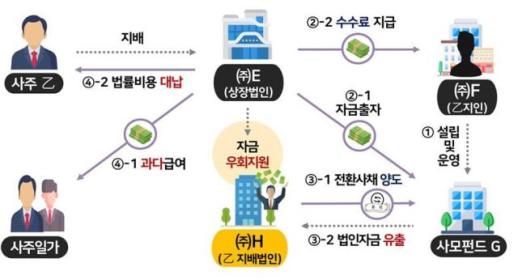 South Korea Tax Agency Probes 31 Firms for Stock Manipulation, Tunneling and Tax Evasion The National Tax Service has launched tax audits of 31 companies accused of unfair, tax-evasive practices in the stock market, including stock price manipulation and “tunneling,” a method of siphoning off assets and profits. The move marks a second round of audits following an investigation of 27 companies announced in July last year. The agency said it aims to curb unfair trading and help establish a “Korea premium.” The NTS said the targets include 11 companies that profited through stock manipulation and accounting fraud; 15 owner families accused of tunneling profits and assets out of companies; and five illegal “stock tip rooms” accused of swindling money from financially vulnerable investors. In the stock manipulation cases, the NTS said companies boosted share prices with false information and inflated performance, then offloaded their holdings onto small shareholders. Some also used accounting fraud, including issuing and receiving fake tax invoices to inflate sales and booking fictitious costs. The agency also cited cases in which listed-company funds were diverted for private use, including transferring corporate assets to a CEO for free or siphoning off tens of billions of won disguised as loans. More than half of the listed firms under audit have had trading suspended after external auditors refused to issue audit opinions, the NTS said. In some cases, share prices plunged to as little as one-tenth of prior levels, it said, deepening investor losses. In tunneling cases, the NTS said the methods have grown more sophisticated. It cited repeated instances of steering business to owner-controlled or related companies, or inserting them into supply chains to collect what it described as “toll” profits. Some companies allegedly paid personal legal fees and luxury purchases for controlling shareholders. Others invested hundreds of billions of won in funds managed by acquaintances with no investment experience, then routed the money to troubled companies controlled by the owners, the NTS said. The agency also said it found cases in which business opportunities or key assets were transferred to companies owned by controlling families, stripping future growth engines and leaving losses to small shareholders. The illegal tip-room operators allegedly lured investors with false or exaggerated ads such as “guaranteed high returns in a short period,” then dumped shares they had accumulated onto members to pocket trading gains. The NTS said they earned profits of tens of billions of won and evaded taxes by booking fake expenses. The NTS said such practices distort the allocation of corporate resources and erode investor trust, contributing to falling share prices and market disruption. It said it will closely verify those involved and the full scope of transactions through the audits. If it finds criminal conduct such as destruction of evidence or concealment of assets, the agency said it will file complaints with investigative authorities and seek criminal punishment. An NTS official said the agency will “firmly establish the understanding that not a single won can be gained from unfair trading in the stock market,” adding it will respond strictly so a “Korea premium” can take hold based on transparency and trust.* This article has been translated by AI. 2026-05-06 12:03:44
 -
 No Public Agency Earns Top Safety Rating; Korea Coal Corp. Rated Very Poor No public agency earned an “excellent” (Grade 1) rating in last year’s government safety management assessment, officials said. Korea Coal Corp. was the only agency rated “very poor” (Grade 5), while Korea Expressway Corp., Korea East-West Power Co. and Korea Land and Housing Corp. (LH) were among those rated “poor” (Grade 4). The Finance and Economy Ministry said it confirmed the results on Tuesday at the fifth meeting of the Public Institutions Steering Committee, chaired by Vice Finance and Economy Minister Heo Jang, approving the “2025 Public Institutions Safety Management Rating Review Results.” Reflecting measures announced in September to strengthen safety management at public institutions, the government expanded the review 대상 from 73 agencies a year earlier to 104 and tightened evaluations of construction sites, where fatal accidents account for a large share, the ministry said. In the assessment of last year’s safety performance, none of the 104 agencies received Grade 1. A total of 21 received Grade 2, 77 received Grade 3, five received Grade 4 and one received Grade 5, the ministry said. Korea Coal Corp. ranked last with a “very poor” rating, with officials citing weaknesses across its safety management system. The “poor” group included state-run companies such as Korea Expressway Corp., Korea East-West Power and LH. As in the previous year, no agency received Grade 1. Compared with a year earlier, the number of Grade 2 agencies rose by one, Grade 3 agencies increased by 26, and agencies rated Grade 4 or below rose by four, leaving most clustered in the middle. Since the safety rating system was introduced in 2020, the share of agencies in the mid-to-upper tiers (Grades 2 and 3) has increased to 94.2% of all institutions, the ministry said. The government said agencies rated Grades 4 and 5 must complete consulting and training from safety 전문기관 and report improvement results quarterly to their supervising ministries. “The safety management rating review system is strengthening accountability among public institution management and helping establish a safety culture,” Heo said. “But public concerns about safety persist, so we will continue to develop the system.”* This article has been translated by AI. 2026-05-06 10:06:32
 -
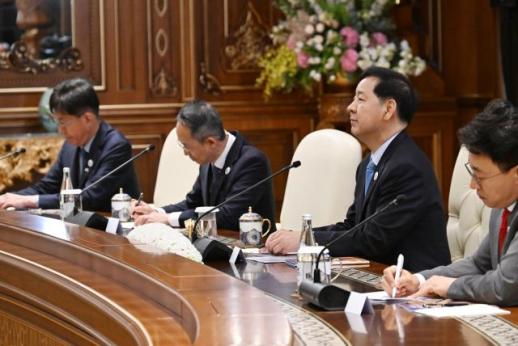 Koo Yun-cheol Signs MOU With ADB to Set Up AI Innovation Center in South Korea Deputy Prime Minister and Minister of Economy and Finance Koo Yun-cheol signed a memorandum of understanding with the Asian Development Bank to establish an artificial intelligence innovation and development center in South Korea and agreed to expand cooperation on critical-mineral supply chains. The Ministry of Economy and Finance said Monday that Koo, visiting Samarkand, Uzbekistan, on the sidelines of the ADB annual meeting, met with ADB President Masato Kanda and signed the MOU to set up the center. The AI Innovation and Development Center, known as CAID, is to be established in South Korea as a cooperation hub to apply AI to ADB programs supporting developing countries and to help strengthen AI capabilities in those countries. During the meeting, Koo said, “Through cooperation in the AI field, we will pursue mutually beneficial development cooperation that helps all countries,” and presented South Korea’s vision of a “global AI hub” that would bring together AI-related organizations under multilateral development banks and the United Nations. The two sides also agreed to broaden cooperation on critical-mineral supply chains. Koo voiced support for ADB’s policy to diversify critical-mineral supply chains in the region and stressed the importance of building stable supply chains through cooperation among member countries. Koo also met the same day with Indranee Thurai Rajah, Singapore’s second minister for finance, to discuss cooperation as co-chairs of the next ASEAN+3 finance ministers and central bank governors meeting. They agreed to sustain cooperation momentum based on the outcome of the South Korea-Singapore summit and to continue consultations to identify agenda items that provide practical help to ASEAN+3 countries. Koo introduced his “global AI hub” initiative to Rajah and proposed that Singapore join South Korea’s efforts to share the benefits of AI with the global community.* This article has been translated by AI. 2026-05-04 17:03:19
 -
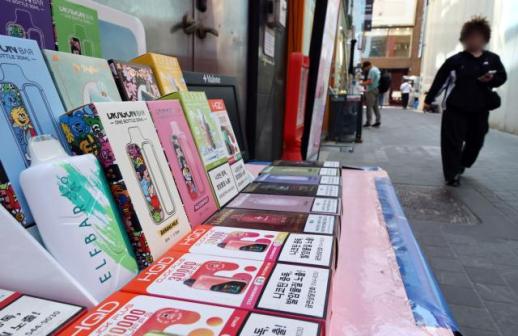 Finance Ministry Refers Three Online Sellers of High-Strength Nicotine Solution for Investigation The Ministry of Economy and Finance said it has identified three companies that sold high-strength nicotine solution online and has asked investigators to look into the cases. The ministry said Monday it requested investigations by the Daejeon Metropolitan Police Agency and the Gyeonggi Nambu Provincial Police Agency into three firms that advertised and sold high-concentration nicotine solution through online sites after the revised Tobacco Business Act took effect April 24. Officials said they confirmed indications the companies sold nicotine solution and flavorings for making e-liquid on the same sites and encouraged customers to mix them for use in e-cigarettes. Under the revised law, the definition of tobacco ingredients was expanded from “tobacco leaves” to “tobacco or nicotine.” As a result, products made for inhalation using nicotine as an ingredient are treated as tobacco, and manufacturers must obtain government approval. The law also makes it punishable to sell tobacco to consumers without being designated as a tobacco retailer, and it bars even authorized retailers from selling tobacco online or by mail. The ministry said the move aims to stop online distribution of high-strength nicotine solution that consumers can easily use for e-cigarettes. It warned that handling high-concentration nicotine solution without protective equipment poses a high risk of accidents, including skin contact or accidental ingestion. The ministry said it will continue to monitor online distribution with relevant agencies and will take strict action, including filing complaints with investigative authorities when violations are suspected.* This article has been translated by AI. 2026-05-04 16:21:09
 -
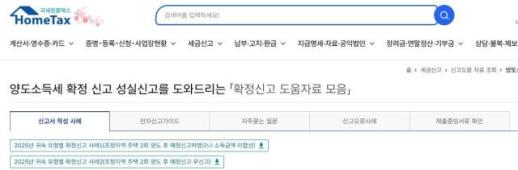 South Korea Tax Agency Alerts 220,000 to File Capital Gains Tax Returns by June 1 Taxpayers who traded real estate, stocks or other assets must file their final capital gains tax return by June 1, South Korea’s National Tax Service said. The agency has sent filing notices to about 220,000 people and is expanding support for simplified online filing through Hometax. The NTS said it began sending mobile notices on the 4th to about 220,000 taxpayers required to file final capital gains tax returns for 2025 income. Those include people who sold real estate, stocks or other assets last year but did not file a preliminary return; those who made two or more transactions but did not file a combined return; and traders of overseas stocks and derivatives. Returns are due by June 1 and can be filed electronically via Hometax (PC) or Sontax (mobile), or by visiting a tax office or filing by mail. Payments can be made by bank transfer, credit card or simple payment services, and taxpayers owing more than 10 million won may pay in installments. To make filing easier, the NTS said it strengthened Hometax assistance tools, including a “pre-fill” function that automatically loads preliminary filing data and a “tax rate selection helper” that applies rates based on entered information and provides step-by-step guidance. The agency also provides electronic filing guides, videos, sample filings and common error examples. Supporting documents can be submitted by photographing them with a smartphone or sending them through a virtual fax service. The NTS said it continues to find a range of tax evasion cases amid recent changes in the real estate market. Common methods include using false contract prices, inflating deductible expenses, improperly applying tax exemptions and conducting low-price transactions between related parties. The agency said it has uncovered cases such as reporting a lower-than-actual price when reselling subscription rights for new apartments, exaggerating interior renovation costs to reduce capital gains, and claiming the one-household, one-home exemption despite effectively owning two homes. An NTS official said the agency will work with related institutions, including the Real Estate Market Monitoring Task Force, to closely analyze real transaction data and money flows, and will “track down transactions with suspected evasion to the end and collect unpaid taxes without exception.” The official added that the NTS will “thoroughly verify” cases involving intentional misreporting or irregular transactions through intensive tax audits. * This article has been translated by AI. 2026-05-04 12:04:53
 -
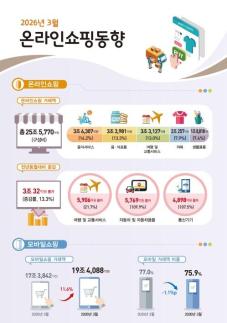 March Online Shopping in Korea Hits Record 25.6 Trillion Won, Led by Travel and Autos March online shopping transactions topped 25 trillion won, the highest monthly total since the statistics series began. The National Data Agency said Monday in its “March 2026 Online Shopping Trends” report that online shopping transactions totaled 25.577 trillion won, up 13.3% from a year earlier. It was the largest monthly figure since tracking began in 2017. Growth was driven by travel and transportation services, automobiles, and communications devices. Auto and auto-related products surged 109.9% from a year earlier, communications devices jumped 107.5%, and travel and transportation services rose 21.7%. By category, food services accounted for the largest share of online shopping transactions at 14.2%, followed by food and beverages at 13.3% and travel and transportation services at 13.0%. Mobile shopping transactions increased 11.6% to 19.4088 trillion won. Mobile purchases made up 75.9% of total online shopping, down 1.1 percentage points from a year earlier. In mobile shopping, food services led with an 18.5% share, followed by food and beverages at 14.3% and travel and transportation services at 11.6%. By product range, transactions at general online malls rose 6.7% to 13.472 trillion won, while specialized malls climbed 21.7% to 12.105 trillion won. By operating type, online-only malls posted 19.2494 trillion won in transactions, up 9.6%, while retailers running both online and offline channels recorded 6.3276 trillion won, up 26.5%. In the first quarter, direct overseas sales totaled 1.0599 trillion won, up 24.4%, while direct overseas purchases rose 1.2% to 1.9789 trillion won. The agency attributed the gap to a higher won-dollar exchange rate raising the burden of buying foreign products, while improving the price competitiveness of South Korean companies and boosting overseas sales. 2026-05-04 12:04:05
 -
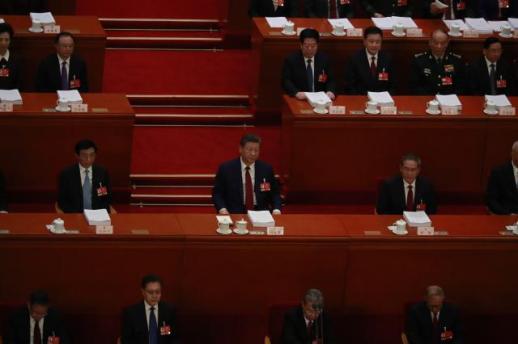 Report: Middle East war could boost China’s renewable energy edge despite oil shock Energy supply shocks triggered by the Middle East war are rattling the global economy, but China could emerge as a medium- to long-term beneficiary in renewables despite near-term pain, a report said. According to the International Finance Center’s report, titled “China’s windfall gains from the Middle East war,” the conflict has exposed vulnerabilities in global energy supply chains, prompting governments and businesses to accelerate adoption and conversion to renewable energy. With instability in the Strait of Hormuz — a route for 20% to 30% of global crude oil shipments — becoming a reality, international oil prices have jumped more than 50% from prewar levels, rapidly increasing the burden on countries heavily dependent on energy imports. China is also expected to face a short-term hit. As the world’s largest crude importer, accounting for 19.3% of global oil imports, higher oil prices could quickly raise manufacturing costs and add pressure for slower growth. The report also warned that rising raw material prices could lift production costs and weaken export competitiveness. Still, the crisis may speed up the shift in energy systems. The more supply-chain instability repeats, the more countries are likely to reduce reliance on fossil fuels and expand investment in renewables. The report said China’s advanced renewable energy industry is likely to benefit. In recent years, production of electric vehicles, solar power equipment and batteries has surged. As of last year, output was up from 2019 by 1,080% for EVs, 340% for solar and 240% for batteries. China’s global dominance in these markets is also strong. As of 2024, China’s share of global production of solar, wind and batteries was about 80%, reinforcing its role as a central hub in renewable energy supply chains, the report said. Renewables have already become a growth driver for China’s economy. One analysis cited in the report said that without the sector, China’s economic growth rate last year would have been about 3.5%, making it difficult to reach the 5% target. The report concluded that while China is bearing the burden of high oil prices in the short term, the war is creating an “asymmetric benefit structure” in which China can absorb rising demand for energy transition over the medium to long term. It also cautioned that if the United States and Europe intensify supply-chain restructuring and efforts to reduce dependence on China, China’s renewable energy lead could face trade restrictions. Kim Woo-jin, a senior researcher at the International Finance Center, said rising global demand for renewables is expected to help ease oversupply problems as well as boost China’s exports. But he added that policymakers in major countries including the U.S. and Europe are wary of growing reliance on China, citing concerns that Chinese-made solar panels and EVs with wireless connectivity could be remotely disabled.* This article has been translated by AI. 2026-05-04 10:28:13