
Journalist

HYE YOUNG KO
kohy0321@ajunews.com
-
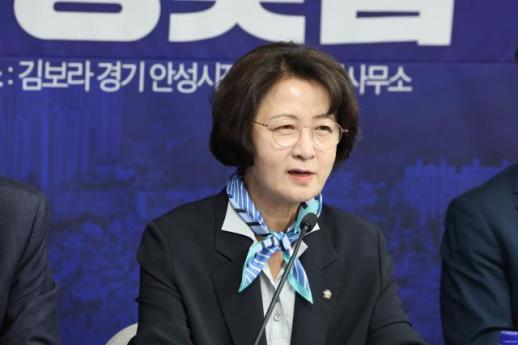 Choo Mi-ae Questions Jang Dong-hyuk’s Conduct as a Former Judge Choo Mi-ae, the Democratic Party candidate for Gyeonggi governor, criticized Jang Dong-hyuk, the leader of the People Power Party, on the 4th, saying it was “puzzling” that he is a former judge. Choo made the remarks during a morning appearance on the radio program “Kim Eo-jun’s Humility Is Hard, News Factory,” responding to a host’s question about how she views Jang. “Judges are used to hearing both sides. They don’t speak after making quick assumptions,” she said. Choo, who said she is also a former judge, recalled that when she first joined her party as a deputy spokesperson, she was told she was slow. “They told me, ‘Say our argument quickly,’ but shouldn’t you first listen to see whether our argument is right or not?” she said. She also accused Jang of “pouring out nonsense on his own,” adding that he “creates confusion both in the United States and here.” Asked about the possibility of a unified candidacy between her rivals — People Power Party candidate Yang Hyang-ja and Reform New Party candidate Cho Eung-cheon — Choo said it did not appear likely. She said that with a general election two years away, they would not “easily” unify if they are considering their political standing. Choo cited “a major transformation for Gyeonggi” as a key theme of the race. She said the Democratic Party should win in all 31 cities and counties in the province, calling it “a rare chance to change Gyeonggi dramatically.” * This article has been translated by AI. 2026-05-04 10:04:20
 -
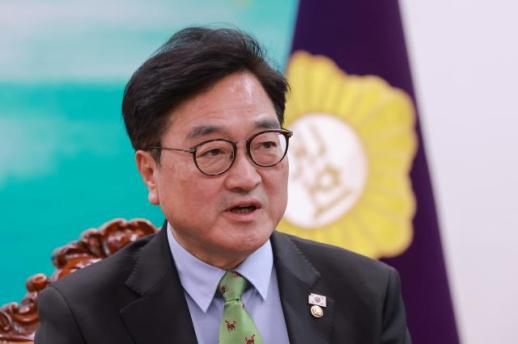 National Assembly Speaker Woo Won-shik urges People Power Party to back constitutional amendment vote Woo Won-shik, the speaker of South Korea's National Assembly, said Saturday that a plenary vote on a constitutional amendment bill jointly introduced by 187 lawmakers was expected within days, and urged the People Power Party to take part in the vote. In a Facebook post, Woo said the bill's passage remained uncertain because the People Power Party opposes it as a party line. He again asked the party to lift its opposition and participate in the vote. Addressing the party, Woo said it was "deeply regrettable" that it opposed an amendment meant to ensure that an illegal imposition of martial law could not even be contemplated, despite what he described as an apology over martial law and efforts to sever ties with Yoon Suk Yeol. He urged the party to join what he called his proposal to "cross the river of insurrection" together by backing the amendment. Woo also stressed that the core of the amendment was preventing a "second Yoon Suk Yeol." He said it could not be guaranteed that there would never again be a second or third Yoon with "extreme thinking," and called for changing the National Assembly's constitutional power to lift martial law into a power to approve it, and for immediately suspending the effect of martial law once the Assembly votes, to prevent any attempt at illegal martial law. On April 3, floor leaders of six parties, excluding the People Power Party, submitted the amendment bill to the National Assembly under the names of 187 lawmakers. The People Power Party has opposed it, calling it a rushed, election-driven amendment.* This article has been translated by AI. 2026-05-03 17:09:15
 -
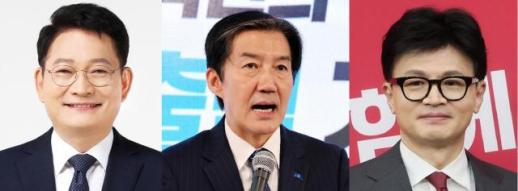 High-Profile By-Elections Ahead of June 3 Local Vote Seen as ‘Mini General Election’ With parties entering the final stretch of nominations ahead of the June 3 local elections, attention is intensifying on the by-elections and re-elections, which some observers say have grown into a “mini general election” as heavyweight figures enter the race. Political circles said May 3 that 14 constituencies have been confirmed for the contests. Re-elections will be held in two districts: Gyeonggi Province’s Pyeongtaek-eul and North Jeolla Province’s Gunsan-Gimje-Buan-gap. By-elections will be held in 12 districts: Busan Buk-gap, Daegu Dalseong, Incheon Yeonsu-gap, Incheon Gyeyang-eul, Gwangju Gwangsan-eul, Ulsan Nam-gap, Gyeonggi Ansan-gap, Gyeonggi Hanam-gap, South Chungcheong Gongju-Buyeo-Cheongyang, South Chungcheong Asan-eul, North Jeolla Gunsan-Gimje-Buan-eul, and Jeju Seogwipo. Several prominent politicians are seeking seats, adding to the stakes. They include Han Dong-hoon, former leader of the People Power Party, in Busan Buk-gap; Song Young-gil, former leader of the Democratic Party, in Incheon Yeonsu-gap; Lee Kwang-jae, former Gangwon governor, in Gyeonggi Hanam-gap; Cho Kuk, leader of the Rebuilding Korea Party, in Gyeonggi Pyeongtaek-eul; and Lee Jin-sook, former chair of the Korea Communications Commission, in Daegu Dalseong. If Song wins, he would become a six-term lawmaker. Pyeongtaek-eul, where Cho is running, has emerged as the most closely watched battleground. The field is expected to be a five-way race including Kim Yong-nam of the Democratic Party, Yoo Eui-dong of the People Power Party, Kim Jae-yeon of the Progressive Party and Hwang Kyo-ahn of the Liberty and Solidarity Party. Cho wrote on social media that he would “trust only the public sentiment” and “fight with everything” to win “by three votes.” Some observers also warned that if Cho fails to return to the National Assembly, the party would face an unavoidable blow. Busan Buk-gap, where Han is running, is also drawing heavy attention. Han is campaigning as an independent, while the Democratic Party has countered with a strategic nomination of Ha Jung-woo, former senior presidential secretary for AI and future planning. Ha chose Gupo Market for his first campaign stop, saying it was right to meet residents of his hometown first and greet them as “the son of Buk-gu has returned.” The People Power Party is set to hold a primary between former Patriots and Veterans Affairs Minister Park Min-sik and former KBS reporter Lee Young-pung. With multi-candidate races taking shape in key districts, whether camps move toward candidate unification is expected to influence outcomes. In Busan Buk-gap, the race could shift to a three-way or a two-way contest depending on whether Han and the People Power Party nominee unify. In Pyeongtaek-eul, if one side consolidates behind a single candidate, the other side risks a split vote. Overall, the outlook remains unclear. Cho Won-bin, president of the Korean Association of Party Studies, told Ajunews by phone that it is “too early to pin down the direction of the race,” adding that depending on how competitive Cho and Han prove to be, discussions on unification could accelerate based on opinion polls. In other districts, analysts said party alignment may matter more than individual candidates. Cho said the opposition is struggling in some areas to field sufficiently competitive contenders, and that under the single-member district system, races are likely to converge around the two major parties. 2026-05-03 15:30:19
 -
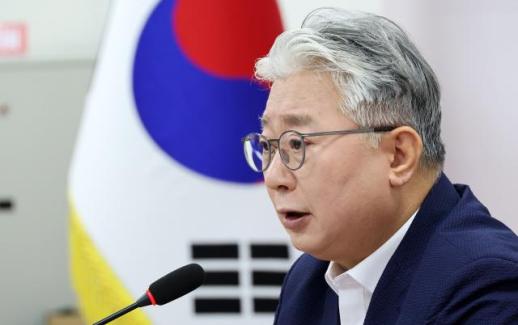 Reform Party’s Cho Eung-cheon calls Seoul-area candidates meeting over special counsel bill Cho Eung-cheon, the Reform Party’s candidate for Gyeonggi governor, on May 3 criticized a Democratic Party-backed bill to appoint a special counsel to probe alleged “fabricated indictments,” calling it “a special counsel bill to cancel indictments” and “a bill to erase crimes” aimed at covering up “all of President Lee Jae-myung’s offenses.” He proposed an emergency joint meeting of Seoul-area candidates for metropolitan government posts. Speaking at a morning news conference at the National Assembly, Cho said candidates who agree the country is in an emergency should meet at 3 p.m. to coordinate a response. The Democratic Party on April 30 introduced a special counsel bill to investigate allegations that prosecutors under the Yoon Suk Yeol administration fabricated indictments in cases including the Ssangbangwool remittances to North Korea case and the Daejang-dong case. Cho singled out Choo Mi-ae, the Democratic Party’s candidate for Gyeonggi governor, as the starting point of the controversy. “At the beginning of all this is candidate Choo, who is excited about her dream of becoming Gyeonggi governor,” he said, adding that as the previous chair of the National Assembly’s Legislation and Judiciary Committee she pushed “all kinds of strange special counsel bills” and led what he called a “monstrous” bill. He also criticized Choo for, in his words, giving up her committee post to Rep. Seo Young-kyo after deciding to run for governor and then offering no explanation “as if she has nothing to do with it.” He urged her to “stop hiding” and state clearly, “as a lawyer,” whether the bill has problems. Cho encouraged participation by People Power Party Seoul mayoral candidate Oh Se-hoon and Gyeonggi gubernatorial candidate Yang Hyang-ja. “I’m waiting for a response from Seoul-area candidates for metropolitan government posts, including candidate Oh Se-hoon, who is a lawyer,” he said, adding that it would carry weight if they gathered across party lines to speak with one voice. Asked whether the meeting had been coordinated in advance and whether it might fall through, Cho said there had been no prior coordination. If the meeting cannot be held due to time constraints, he said, he could ask to have his name included if a joint statement is issued.* This article has been translated by AI. 2026-05-03 11:34:01
 -
 Rep. Lee Hoon-gi to Introduce Bill Naming K-Content a National Strategic Industry Rep. Lee Hoon-gi of the Democratic Party said April 29 he will introduce a bill next month to designate K-content as a national strategic industry. Lee made the remarks at a forum titled “Policies and Strategies to Strengthen the Global Competitiveness of the K-Media Content Industry,” co-hosted with the Korea Broadcasters Association at the National Assembly Members’ Office Building. He said the current governance structure is limited because responsibilities are split among the Korea Communications Commission, the Ministry of Science and ICT, and the Ministry of Culture, Sports and Tourism. The forum was organized to assess what participants called a structural disconnect in which K-content’s global success has not translated into growth for South Korea’s domestic media industry, and to explore policy directions. “We need to look back at what we were doing while the world was going wild over ‘K-pop Demon Hunters,’” Lee said, adding that laws and policies supporting K-content’s global competitiveness remain weak. Korea Broadcasters Association President Bang Moon-shin also said the belief that the K-culture boom is leading to industrial growth is “an illusion,” and argued that asymmetric regulation is constraining content production. The forum included a presentation by Kyung Hee University professor Lee Sang-won and drew experts from academia and industry. Participants shared concerns about a broader industry downturn, citing falling terrestrial broadcasters’ revenue, fewer drama slots and a loss-making structure for over-the-top streaming services. * This article has been translated by AI. 2026-04-29 17:51:49
 -
 PPP Floor Leader Says Calling North Korea 'Joseon' Is Unconstitutional, Urges Unification Minister’s Dismissal Song Eon-seok, floor leader of the People Power Party, said on the 29th that Unification Minister Jeong Dong-young’s suggestion of calling North Korea “Joseon” is “clearly unconstitutional.” In a Facebook post that afternoon, Song wrote, “That’s one more reason Jeong should be dismissed.” Song said Jeong had previously used the North’s official name, the “Democratic People’s Republic of Korea,” and that a Unification Ministry official has now issued an official position on whether to refer to North Korea as “Joseon,” saying it would be decided “after public discussion through various channels.” Song argued that calling North Korea “Joseon” would mean recognizing it as a separate, equal state under the North’s “two states” theory. He said that would violate Article 3 of the Constitution, which defines the nation’s territory, and Article 4, which states unification as a national goal. The People Power Party introduced a motion on April 24 urging Jeong’s dismissal and reported it to a plenary session the previous day. The motion was automatically discarded after it was not put to a vote before the deadline. In another Facebook post the previous day, Song criticized the ruling party, writing, “What is a 60-seat majority ruling party so afraid of that it can’t even vote on a dismissal motion?” He added, “If you want to reject it, then reject it—what are you worried about that you use this kind of trick to let it lapse?”* This article has been translated by AI. 2026-04-29 16:18:02
 -
 Reform Party floor leader urges budget support for Jeonnam-Gwangju integration, state-backed legal aid for teachers Cheon Ha-ram, floor leader of the Reform Party, on the 29th proposed central government budget support for the Jeonnam-Gwangju integration and a state-backed system to handle lawsuits involving teachers. Speaking at a luncheon meeting at Cheong Wa Dae that morning hosted by President Lee Jae-myung for lawmakers from non-negotiating parties and independents, Cheon said that during the review of a supplementary budget, 57.3 billion won in “essential” funding for the Jeonnam-Gwangju integration was cut in full. He said the money was needed for steps such as integrating administrative networks and updating building registers. “President Lee Jae-myung arranged the marriage between Jeonnam and Gwangju, but it’s not right to tell them to cover the wedding costs on their own,” Cheon said, arguing that the central government should fund the procedures required for the integration. On a state responsibility system for teacher lawsuits, Cheon said the problem lies in the current setup. He said frontline teachers are expected to handle malicious complaints and then fend for themselves when those disputes escalate into criminal complaints, accusations or civil suits. Calling it a system that leaves teachers to shoulder the burden alone, Cheon urged the government to pursue a policy so that, when incidents occur, teachers do not have to spend time going to police stations and courts.* This article has been translated by AI. 2026-04-29 14:20:46
 -
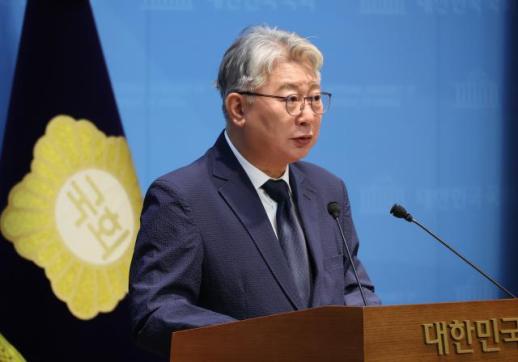 Gyeonggi governor candidate Cho Eung-cheon says Choo Mi-ae has 'no attack points' against him Cho Eung-cheon, the Reform Party’s candidate for Gyeonggi governor, said Tuesday that Democratic Party candidate Choo Mi-ae would be “the easiest” opponent and “not uncomfortable,” adding that she would have “no attack points” against him. Cho made the remarks on YTN Radio’s “Jang Seong-cheol’s News Myeongdang” when asked whether he found Choo a difficult rival. Cho said the key question was whether a candidate had given serious thought to Gyeonggi Province, and said that when he watched the Democratic Party’s primary debate, Choo appeared to turn to talk of prosecutorial reform when she was stuck. He criticized her as having focused on political fights in national politics during her time in the legislature. He also questioned her motives for running, saying it seemed she needed the position rather than having a plan for what to do as governor. He said he suspected she was using the race as a steppingstone to “a bigger place” in four years. Asked about the People Power Party’s primary for the Gyeonggi governor nomination, Cho said he did not know much about it and that party members would decide, but added that “there seems to be no answer” no matter who wins. The People Power Party will hold its primary from April 30 through May 1, and will announce its final nominee on May 2 from among Ham Jin-gyu, a former lawmaker; Supreme Council member Yang Hyang-ja; and former MBC announcer Lee Seong-bae. Asked whether he would consider aligning with the People Power Party nominee, Cho said he had “no intention at all.” Cho also criticized party leader Jang Dong-hyeok, saying he changed sharply after becoming leader and suggesting he had “sold his soul” to the “Yoon Again” forces for a presidential bid and his own political ambitions.* This article has been translated by AI. 2026-04-29 09:30:17
 -
 Democratic Party’s Jeong Won-oh Blasts Oh Se-hoon Over Reversal on Seoul Land-Trade Rule Democratic Party Seoul mayoral candidate Jeong Won-oh on April 28 opened his first public campaign committee meeting and stepped up attacks on People Power Party candidate Oh Se-hoon. Speaking at the meeting in central Seoul, Jeong said Oh “impulsively” lifted Seoul’s land transaction permit system and then reversed course 35 days later, “creating confusion in the market.” He said it “doesn’t add up” for Oh to now shift responsibility to the government. Jeong also accused Oh of repeatedly raising tax issues during elections to stoke anxiety and deepen real estate conflict, saying Oh remains stuck in an “outdated 2022 frame.” On the long-term holding deduction, Jeong reiterated his position, saying he has already said the current rights of owner-occupiers with one home must be protected “without exception.” He accused Oh of “deliberately distorting facts” by talking about abolition and “manufacturing conflict with false claims.” Lawmakers Jeon Hyeon-hui and Park Joo-min, who previously competed in the party’s primary race, attended the meeting. Jeon called Oh an “unqualified” mayoral candidate, accusing him of siding with and defending what she described as “insurrection forces,” and labeled him the “core figure” of “Yoon-again” forces. Park said Oh has done nothing and has no plan on bread-and-butter issues such as housing and on Seoul’s future growth engines, urging the party to win back the city. Rep. Kim Young-bae criticized Oh’s decision the previous day to wear a red jacket, saying it had been known he would wear white until just before a news conference. Kim said the switch showed Oh’s intention to run for party leader because he expects to lose the Seoul mayoral race. Kim also challenged Oh’s record, asking what he had done over the past 10 years and questioning his “basic conscience.” The campaign also set up a separate “Oh Se-hoon 10-year Judgment Headquarters,” raising the intensity of its attacks. Rep. Ko Min-jung, a co-head of the unit, raised suspicions about possible links between political donations and personnel appointments. She asked whether board seats at affiliated agencies under the Oh administration were being treated as bargaining chips for money, and called on Oh to clarify whether appointments were made after solicitations or as a quid pro quo for large donations, noting that people he had said were unrelated were later found to be major donors.* This article has been translated by AI. 2026-04-28 10:51:09
 -
 Seoul Mayor Oh Blames Past Halt in Rainwater Tunnel Plan for 2022 Flood Damage Seoul Mayor Oh Se-hoon said April 24 that delays in the city’s deep underground rainwater tunnel program contributed to flood damage in 2022, blaming a previous mayor for halting most of the plan. “Only one was completed in Sinwol-dong, and the rest of the plan was all stopped,” Oh said after visiting the Gwanghwamun tunnel construction site earlier in the day to check progress. He said a plan set in 2010 was not carried out, leading to the 2022 flood damage. The deep underground rainwater storage and drainage tunnel project is part of a comprehensive storm and flood response plan Oh prepared in 2011 after casualties in a landslide on Umyeonsan in Seoul’s Seocho district. The plan called for building 20 kilometers of deep drainage tunnels at seven flood-prone areas in Seoul, including Gwanghwamun. During the tenure of former Mayor Park Won-soon, six of the seven sites were scrapped, with Sinwol-dong the exception. Oh also acknowledged criticism that the project is costly. “It’s a project that requires significant funding,” he said, adding that if it had proceeded as planned in 2010, “we wouldn’t have had to spend 3 billion won, 5 billion won at a time.” He said views can differ because the project is meant as a precaution, but stressed that steady investment is needed over the next five to six years, with completion targeted for the first half of 2030. Seoul is pursuing six deep tunnel sites in two phases: Phase 1 covering the Gangnam Station, Gwanghwamun and Dorimcheon areas, and Phase 2 covering the Sadang Station, Hangang-ro and Gil-dong areas. Oh also said he plans to register as a preliminary candidate for Seoul mayor on April 27 and begin a full-scale campaign.* This article has been translated by AI. 2026-04-24 16:54:29