A Grand Asian Journey Toward Civilization, Religion, Humanity and the Future
Humanity in the 21st century stands at the threshold of a profound civilizational transformation. Artificial intelligence has begun to learn human language and patterns of thought. Robots and algorithms are steadily replacing large portions of human labor and judgment. Never before has mankind enjoyed such material abundance, and yet never before has it entered such a deep psychological unease.
Economies continue to expand, but communities weaken. Technology advances at astonishing speed, yet human sensitivity and moral depth appear increasingly fragile. Across the world, a quiet anxiety is spreading — the fear that while civilization grows more sophisticated, humanity itself may be gradually diminishing.
Wars have not disappeared. In the Middle East and Eastern Europe, human lives are still collapsing under the weight of violence and geopolitical conflict. Climate change and ecological destruction now threaten the stability of civilization itself. Extremism, hatred, isolation and depression spread across both developed and developing societies alike.
At this point, humanity is returning once more to its oldest questions.
What is a human being?
Where does civilization go after technology?
How can the value of life and the human soul be preserved?
And increasingly, the world is turning its eyes back toward Asia.
Asia is not merely the factory of the world, nor simply a vast economic marketplace. Asia is one of the great spiritual birthplaces of human civilization. Across this continent, over thousands of years, human beings explored the relationship between humanity and the cosmos, nature and community, heaven and life itself.
Hinduism, Buddhism, Confucianism, Taoism and Islam, together with Korea’s indigenous traditions such as Cheondoism , Daejonggyo, Won Buddhism and Jeungsanism, all emerged from a shared civilizational effort to understand the meaning of life, the order of nature and the place of humanity within the universe.
It is within this intellectual and spiritual context that Aju Korea Daily and ajupress.com launch the series Spiritual Asia.
This is not merely a series introducing religions. It is a civilizational and humanistic project that asks where humanity itself should move in the age after artificial intelligence. More importantly, it seeks to reinterpret Asia’s spiritual heritage in the language of the present and connect it to the future of global civilization.
Much of today’s global media remains dominated by politics, markets, war and power. Yet human beings do not live by economics alone. Humanity searches for meaning, asks why life exists, and wonders what lies beyond death. Ultimately, civilization is defined by what human beings choose to regard as sacred.
And for centuries, Asia’s religions and philosophies have explored questions of life, harmony, community and the inner world of the human spirit.
Hinduism
Hinduism is among the oldest living religions in human history. Built upon the Vedas and the Upanishads, Hindu philosophy contains a profound insight: that the origin of humanity and the universe is ultimately one. Brahman represents the supreme cosmic principle, while Atman refers to the soul within the individual. The famous idea that “Atman is Brahman” expresses a worldview in which humanity and the cosmos are fundamentally inseparable. The concepts of reincarnation and karma understand life not as a single isolated event, but as part of a vast cosmic process. The worldwide spread of yoga and meditation culture today is deeply connected to the spiritual depth of Hindu civilization.
Buddhism
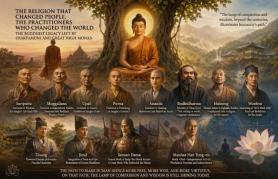
Buddhism began in the sixth century BCE with the enlightenment of Siddhartha Gautama. At its core lies the belief that human suffering originates from greed and attachment. The Four Noble Truths, the Noble Eightfold Path, compassion and the Middle Way evolved into far more than religious doctrines; they became an enduring philosophy for healing the human mind. Buddhism spread from India across China, Korea, Japan and Southeast Asia, becoming one of Asia’s great civilizational pillars. In modern times, Zen Buddhism has deeply influenced Western psychology, spirituality and meditation culture. As the age of AI deepens, Buddhist ideas such as mindfulness and compassion are once again emerging as important alternatives for restoring humanity.
Confucianism
Confucianism developed from the teachings of Confucius and became the ethical foundation of East Asian civilization. Its core values are benevolence, ritual propriety, filial duty and communal order. Confucianism is less a religion in the conventional sense than a philosophy of how to build a humane society. Human beings, it teaches, exist not in isolation but within relationships. Confucian ideals profoundly shaped the political and educational systems of Korea, China and Japan. Even today, traces of Confucian tradition remain deeply embedded within Korean society’s emphasis on education, family and collective responsibility.
Taoism
Taoism emerged from the philosophies of Laozi and Zhuangzi and centers on harmony with nature. Its core principle, wu wei — often translated as “effortless action” or “non-coercive living” — teaches that humanity should not violently resist the natural order of the universe. Taoism profoundly influenced Chinese medicine, martial arts, feng shui and longevity culture. In an era increasingly threatened by climate crisis and ecological collapse, Taoist philosophy is being rediscovered as a possible foundation for a more sustainable civilization.
Islam
Islam began in the Middle East, but in many respects it became one of Asia’s great civilizational systems. Stretching across the Middle East, Central Asia, India and Southeast Asia, Islamic civilization formed a vast intellectual and cultural network. At its heart lies humility before one God. The Qur’an emphasizes justice, communal responsibility, charity and restraint. During the medieval period, Islamic civilization achieved extraordinary advances in mathematics, astronomy, medicine and philosophy, helping shape the intellectual foundations of the later European Renaissance. To reduce Islam merely to images of conflict is to misunderstand one of the world’s deepest spiritual traditions.
Cheondoism
Cheondoism emerged from Korea’s Donghak movement and became a major spiritual force within modern Korean history. Its central teaching — “Human beings are Heaven” — affirms the sacred dignity of every person. This philosophy became one of the moral foundations of Korea’s democratic and popular movements. The Donghak Peasant Revolution itself was not simply a rural uprising, but a profound cry for human equality and dignity.
Daejonggyo
Daejonggyo, centered on the spirit of Dangun and the philosophy of Hongik Ingan — “to broadly benefit humanity” — became deeply connected to Korea’s independence movement during Japanese colonial rule. Its spiritual nationalism remains an important moral legacy within Korean society.
Won Buddhism
Won Buddhism sought to reinterpret Buddhist philosophy for the modern industrial age. Founded by Sotaesan Park Jung-bin, it emphasized spiritual cultivation within everyday life and sought harmony between material progress and spiritual awakening. In many ways, it represented one of Korea’s earliest efforts to reconcile religion with modernity.
Jeungsanism
Jeungsanism developed around the teachings of Kang Jeungsan and emphasized the philosophy of sangsaeng — mutual life-giving coexistence. It teaches that humanity, nature and the spiritual world are deeply interconnected. In a time increasingly defined by conflict and competition, its philosophy of coexistence has gained renewed relevance.
Shinto
Shinto, Japan’s indigenous faith, believes that spiritual presence resides within mountains, rivers, trees and ancestors. Japan’s aesthetic sensitivity toward nature and communal harmony remains deeply shaped by Shinto tradition.
Sikhism
Sikhism, born in India’s Punjab region, emphasizes equality, labor and communal service. Sikhs are renowned for their discipline, solidarity and humanitarian spirit, and continue to play important roles within global Indian diaspora communities.
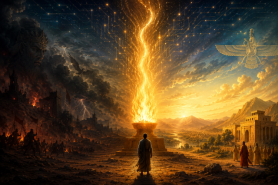
Zoroastrianism
Zoroastrianism, which originated in ancient Persia, developed a worldview centered on the struggle between light and darkness, good and evil. Though small in numbers today, it exerted significant influence upon later Abrahamic traditions including Judaism, Christianity and Islam.
Despite their differences, Asia’s religions and philosophies share a common insight: human beings are not merely material entities. Humanity is connected to the cosmos, and life exists within relationships rather than isolation.
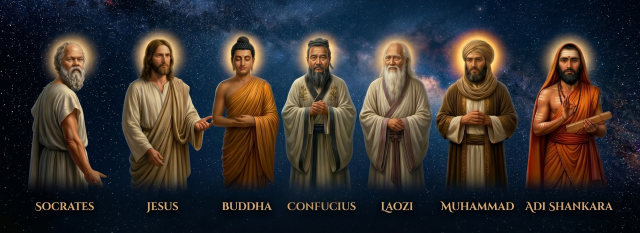
Korean philosopher Ryu Young-mo explored Eastern and Western religions deeply and often remarked, “Truth is one, though the paths are many.” He did not place the Bible against Buddhist sutras, nor Laozi against Confucius, nor Jesus against the Buddha. Rather, he believed that humanity, life and truth ultimately flow from the same great source.
This perspective also resonates with Korea’s ancient philosophy of Cheon-Ji-In — Heaven, Earth and Humanity — which understands the universe as an interconnected living order.
Today, the world once again stands at a civilizational crossroads. Artificial intelligence and technological revolution may make life more efficient and convenient. Yet technology alone cannot heal loneliness, hatred, war or greed.
That is why humanity has begun searching once again for spirituality.
And at the center of that search stands the ancient wisdom of Asia.
Spiritual Asia is not a series about old religions. It is a civilizational project asking why human beings must remain human in the age after artificial intelligence. And ultimately, this is not merely Asia’s question.
It is humanity’s question.
[This Column piece was written by AJP Special News Team consists of Abe Kwak, Joseph Kwak, and Park Sae-jin]
Copyright ⓒ Aju Press All rights reserved.