


Latest by
-
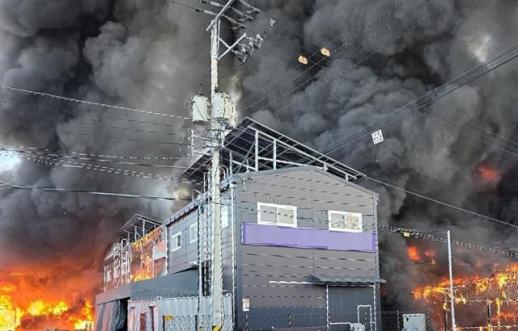 Fire at Shoe Warehouse in Gimpo Extinguished After 9 Hours, 70 Evacuated A fire at a shoe warehouse in Gimpo, South Korea, was extinguished after approximately nine hours, affecting 17 buildings across eight companies. According to Yonhap News and the Gimpo Fire Department, the blaze broke out at around 2:45 p.m. on June 23 at a 331-square-meter shoe storage facility in Unyang-dong, consisting of three steel-structured buildings. The fire completely destroyed 12 buildings belonging to four companies and partially damaged five buildings from another four companies. About 70 people, including warehouse staff, evacuated on their own. Fortunately, there were no reported injuries. Gimpo Fire Department's Fire Prevention Division Chief Kwak Seong-wook held a briefing near the fire site, stating, "A large quantity of shoes was stored inside the warehouse," and noted that the affected buildings included both warehouses and factories. After receiving reports from warehouse personnel about the fire, the fire department issued a 'Level 1 Response' alarm just 21 minutes after the fire started due to concerns about its spread. Twenty minutes later, the response was escalated to 'Level 2' to mobilize personnel and equipment from five to six neighboring fire stations. The fire was completely extinguished at 11:49 p.m., nine hours and four minutes after it began. Authorities are investigating the cause of the fire and the extent of the damage, based on reports that a warehouse employee discovered flames at a location where waste was stored.* This article has been translated by AI. 2026-06-24 07:16:00
 -
 Typhoons Mekala and Higgos: Current Locations and Paths Interest is growing among netizens regarding Typhoon Higgos, the eighth typhoon named after the fig in the U.S. submission. According to the Korea Meteorological Administration, as of 9 a.m. on June 23, Typhoon Higgos was located approximately 210 kilometers northeast of Guam, with a central pressure of 1004 hPa and maximum wind speeds of 18 m/s, moving westward. Typhoon Higgos is expected to reach waters about 260 kilometers northwest of Guam by 9 p.m. on June 23. By 9 a.m. on June 24, it will be approximately 460 kilometers northwest of Guam, and by 9 p.m. that day, it will be about 730 kilometers northwest of the island. Subsequently, Typhoon Higgos is projected to enter waters about 990 kilometers northwest of Guam by 9 a.m. on June 25 and reach approximately 810 kilometers southeast of Okinawa, Japan, by 9 a.m. on June 26. Typhoon Mekala, the seventh typhoon named after the angel of thunder from a submission in Thailand, was located about 650 kilometers northeast of Manila, Philippines, as of 9 a.m. on June 23, with a central pressure of 930 hPa and maximum wind speeds of 50 m/s, moving northwest. Typhoon Mekala is expected to reach waters about 680 kilometers southeast of Taipei, Taiwan, by 9 p.m. on June 23. By 9 a.m. on June 24, it will be approximately 600 kilometers southeast of Taipei, and by 9 p.m. that day, it will be about 520 kilometers southeast of the city.* This article has been translated by AI. 2026-06-24 07:16:00
 -
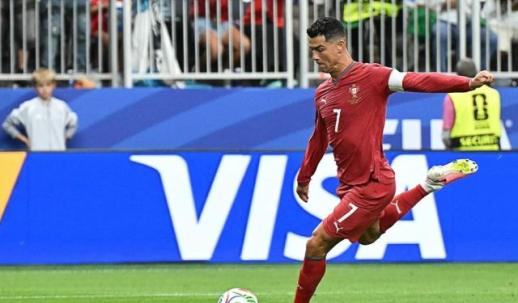 Cristiano Ronaldo Scores in Six World Cups as Portugal Defeats Uzbekistan 5-0 Cristiano Ronaldo of Al Nassr made history by scoring in his sixth World Cup, leading Portugal to a 5-0 victory over Uzbekistan in their second group stage match of the 2026 North American World Cup. On June 24, according to Yonhap News, Portugal triumphed at the Houston Stadium in Texas, with Ronaldo netting two goals. Ronaldo opened the scoring in the sixth minute, finishing a low cross from João Cancelo with a one-touch shot. With this goal, Ronaldo became the first player in World Cup history to score in six tournaments. He also set a record for the second-oldest goal scorer in World Cup history at 41 years and 138 days, following Cameroon’s Roger Milla, who scored at 42 years and 39 days. Ronaldo celebrated with his signature 'Siu' gesture. Portugal took full control of the match when Mendes scored from a free kick in the 17th minute, extending their lead. Uzbekistan seemed to threaten with a long-range shot from Azizjon Ganiev in the 29th minute, but the goal was disallowed due to a foul by Abduvaqid Nematov on Cancelo. Ronaldo struck again in the 39th minute, calmly shooting into the opposite corner after the goalkeeper came off his line, making it 3-0. In the 60th minute, a corner kick led to an own goal by Uzbekistan's goalkeeper Nematov, sealing the match for Portugal. Rafael Leão added a fifth goal in the 87th minute. Portugal will face Colombia in their final group stage match on June 28.* This article has been translated by AI. 2026-06-24 07:04:00
 -
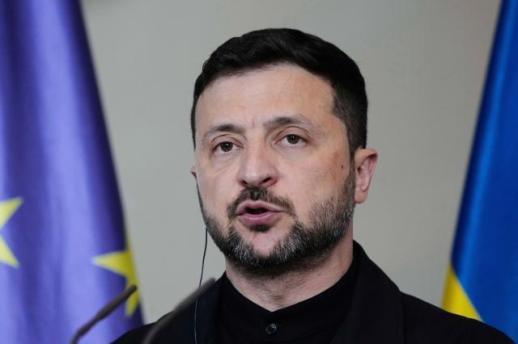 Zelensky to Skip Ukraine Reconstruction Conference Amid Historical Tensions with Poland Volodymyr Zelensky, the President of Ukraine, will not attend the Ukraine Reconstruction Conference in Poland, reflecting the impact of historical tensions between Ukraine and Poland on high-level diplomatic engagements. According to reports from Reuters and AFP on June 23, Ukrainian Prime Minister Yulia Svyrydenko announced plans to lead a delegation to the conference scheduled for June 25-26 in Gdansk, Poland. President Zelensky will not be present at the meeting. His absence is seen as a consequence of ongoing disputes related to the Ukrainian Insurgent Army (UPA), a nationalist armed group from World War II. Last month, President Zelensky awarded the title of 'Heroes of UPA' to a Ukrainian military unit at the Northern Independent Special Operations Center. While the UPA is viewed as a symbol of anti-Soviet resistance in Ukraine, it is regarded in Poland as an organization involved in the mass killings of Poles in the Volhynia and Eastern Galicia regions during 1943-1944. This issue remains one of the most sensitive historical matters between the two nations. In response to Zelensky's actions, Polish President Karol Nawrocki announced plans to revoke a medal he had previously awarded to Zelensky. Following this, Zelensky voluntarily returned the medal. The Ukraine Reconstruction Conference aims to discuss international support for the recovery and rebuilding of Ukraine, which has been devastated by the Russian invasion. This year's agenda will focus on recovery assistance and investment strategies in sectors heavily impacted by the war, including energy and critical infrastructure. As the tensions between the two countries escalate publicly, the European Union has expressed concern. Paola Pinu, chief spokesperson for the EU Commission, warned in an interview with the European media outlet Euronews, "Only the aggressor would take pleasure in this situation," adding that disputes undermining unity between Ukraine and EU member states only benefit Russia. Poland has been a key ally in supporting Ukraine since the Russian invasion. However, the resurfacing of historical tensions surrounding the Volhynia massacre suggests that political strains between the two countries may persist for the foreseeable future.* This article has been translated by AI. 2026-06-24 06:56:00
 -
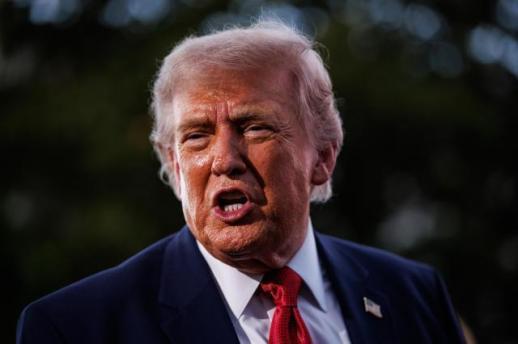 Public Opinion Turns Cold on Trump Amid Iran War Agreement Although the United States and Iran have signed a memorandum of understanding (MOU) effectively ending the war, public opinion in the U.S. is largely critical of the Trump administration's military actions and the resulting agreement. According to a poll released on June 23 by Reuters and Ipsos, only 24% of respondents believed that U.S. military actions against Iran were worth the costs and benefits. In contrast, 52% felt that the actions were not justified. The survey, conducted from June 18 to 22 among 1,262 American adults, has a margin of error of plus or minus 3 percentage points. Views on the U.S. position following the war were also limited, with only 23% of respondents believing that the U.S. is in a stronger position against Iran than before the conflict. Meanwhile, 35% felt that the U.S. is now weaker. There is significant skepticism regarding the durability of the agreement with Iran. A total of 63% of respondents expressed doubt that the preliminary agreement would lead to lasting peace between the two nations, while only 18% believed it was likely. The decline in public sentiment poses challenges for President Trump, whose approval rating stands at 34%, matching the lowest level recorded during his second term in April. As the November midterm elections approach, concerns are rising for the Republican Party. Among independent voters, only 17% indicated they would vote for the Republican candidate if elections were held today, compared to 34% who would support the Democratic candidate.* This article has been translated by AI. 2026-06-24 06:52:00
 -
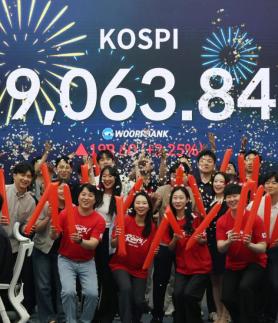 Korean Stock Market Misses MSCI Developed Market Inclusion Again Due to Currency Issues Korea's inclusion in the Morgan Stanley Capital International (MSCI) developed market index has once again failed. Despite government efforts to improve the foreign exchange market and resume short selling, MSCI assessed that the market accessibility for foreign investors still does not meet developed market standards. On June 23, MSCI announced its annual market classification results for 2026, stating that Korea would not be included in the watchlist for developed market status. As a result, Korea remains classified as an emerging market alongside China and India. While MSCI acknowledged the regulatory improvements made by Korean market authorities, it noted that global institutional investors believe fundamental issues have not been fully resolved. The primary obstacle is the issue of won trading. MSCI pointed out that the won is not traded in a physical delivery manner in offshore markets, making it difficult to settle transactions in the international foreign exchange market. Currently, the won is mainly traded in the form of non-deliverable forward (NDF) contracts. The extension of trading hours in the domestic foreign exchange market was also not seen as a sufficient improvement. MSCI stated, "The lack of liquidity for won trading during nighttime hours still limits the operational flexibility for index fund managers and other investors tracking the index." Regarding the resumption of short selling, MSCI's evaluation was cautious. It stated, "Market participants are experiencing significant operational burdens under the newly introduced compliance and monitoring system." The use of omnibus accounts and the physical transfer system was deemed 'limited.' MSCI emphasized that discussions on Korea's market reclassification should only begin once all identified issues are resolved and reform measures are fully implemented. It also noted that market participants need sufficient time to verify the effects of these regulatory changes. MSCI classifies global stock markets into developed, emerging, frontier, and standalone markets. Market classification serves as a benchmark for global passive investment funds, meaning the decision on Korea's inclusion in the developed market index will impact foreign capital inflows and the evaluation of the domestic stock market. Korea was included in the MSCI emerging market index in 1992. It was placed on the watchlist for potential inclusion in the developed market index in 2008 but failed to achieve this status due to currency exchange restrictions and market accessibility issues. It was removed from the watchlist in 2014. With this announcement, discussions regarding Korea's inclusion in the developed market index will be postponed at least until the next annual market classification.* This article has been translated by AI. 2026-06-24 06:48:00
 -
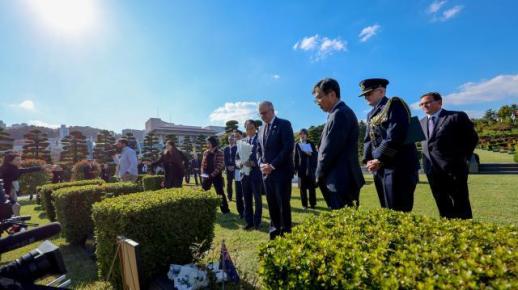 Comprehensive Support for Veterans and Their Families The special sacrifices of veterans deserve appropriate compensation and respect. In June, the month dedicated to national defense and veterans, Aju Business Daily has prepared a three-part series on the treatment of veterans. As of May, there are 25,040 surviving veterans of the Korean War and 159,540 veterans of the Vietnam War. Given that many of these veterans are in their 80s and 90s, strengthening veterans' policies is an urgent issue. The treatment of veterans extends beyond individual compensation; it reflects a societal responsibility towards those who sacrificed for the nation and their families. Professor Noh Seung-yong of Seoul Women's University stated on the 23rd, "Countries like the U.S., U.K., Canada, and Australia operate various family support programs in areas such as healthcare, caregiving, education, housing, and employment, beyond just veterans' benefits. South Korea also needs to prioritize expanding medical support and long-term care services for spouses of veterans." In the U.S., veterans' compensation benefits are comprehensive, including disability compensation, survivor benefits, retirement pensions, and special monthly compensation for severe disabilities. The U.K. emphasizes universal welfare over cash compensation, while Canada has strengthened support for survivors and families. Australia issues a lifetime 'Gold Card' for medical support to spouses, and all survivor benefits are tax-exempt. The South Korean government is also expanding healthcare, welfare, and housing support for a healthy retirement. Veterans over 65 without dependents can receive support at the Suwon Veterans Affairs Center, while those assessed for long-term care can access services at eight veterans' nursing homes nationwide (Suwon, Gwangju, Gimhae, Daegu, Daejeon, Namyangju, Wonju, Jeonju). For veterans using facilities or home care services, the government covers 60% of their out-of-pocket expenses. Additionally, tailored care services are provided to over 3,200 veterans aged 65 and older, as well as their spouses, who have difficulty with daily activities due to age-related illnesses or disabilities. Care workers visit these veterans 1 to 3 times a week to offer health and household support, as well as dementia prevention services. To assist homeless veterans, the government operates a housing priority supply system, ensuring that a certain number of newly constructed homes are allocated to them. In 2024, 110 veterans benefited from this program, followed by 108 in 2025. Furthermore, through the 'Honor House' initiative launched in 2023 in collaboration with the Korea Housing Finance Corporation, housing improvements were made for 20 veteran families (7 billion won), with plans to support 10 more families this year at a cost of 300 million won for a healthier living environment. Ensuring the sustainability of veterans' organizations is also crucial. Following the approval of amendments to the National Veterans Organization Act and the Veterans Affairs Act in February, which took effect in May, the membership criteria for the Korean War Veterans Association and the Vietnam War Veterans Association have been expanded to include one family member of each veteran, allowing for the continued legacy of their history and honor. Since 2014, the government has been conducting a project to identify and register veterans who passed away without being registered. To date, over 84,000 unregistered individuals have been identified, and efforts have been made to register them as veterans, award them certificates from the president, and facilitate their burial in national cemeteries. The government also ensures that veterans receive proper honors in their final moments. Veterans are buried alongside their spouses at the National Cemetery, while those awarded military honors are interred at the National Memorial Cemetery. Applications for burial at the national cemetery can be submitted through the National Cemetery Burial Application System. For veterans aged 75 and older with problematic military records or those who have received a prison sentence of one year or more, as well as veterans with health-related issues, the government provides pre-approval for burial at the national cemetery through a living burial review process, facilitating their funeral arrangements. Additionally, upon the death of a veteran, a permanent flag and a condolence flag signed by the president are presented, along with a certificate of merit and a funeral assistance payment of 200,000 won. For those who qualify as basic livelihood recipients or have no relatives, funeral services, including personnel and supplies, are provided. Balancing policies for 'livelihood security' and 'honor promotion' is also essential. Ryu Hyun-sook, a senior researcher at the Korea Institute of Public Administration, noted, "While the honorarium and veterans' benefits for veterans are not insignificant compared to advanced countries, support for spouses in terms of medical and livelihood assistance is only 5-8% of what is offered in those countries. A culture of respect for veterans and their families needs to be fostered throughout society." * This article has been translated by AI. 2026-06-24 06:04:00
 -
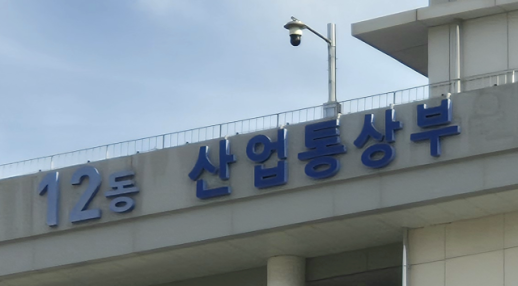 South Korea and China Expand Trade Cooperation into Services Sector South Korea and China are set to enhance their trade cooperation beyond manufacturing to include the services sector. This initiative aims to expand market access in areas such as medical tourism, intellectual property rights, and digital trade. On June 24, the Ministry of Trade, Industry and Energy held the "1st Korea-China Service Trade Cooperation Council" in Beijing, with Bae Jun-hyung, Director of the Trade Cooperation Bureau, and Gong Dejun, Director of the Service Trade and Commerce Services Department of the Chinese Ministry of Commerce, leading their respective delegations. This meeting follows a memorandum of understanding signed during the Korea-China summit in November 2025, where both countries agreed to explore practical cooperation tasks to expand their trade structure from goods to services. Historically, economic cooperation between South Korea and China has focused on intermediate goods and manufacturing. However, as both economies evolve and digital transformation accelerates, non-goods sectors are emerging as new areas for collaboration. During the council, the two nations discussed practical cooperation tasks in the service trade sector. With the continuous increase in Chinese tourists visiting South Korea for medical tourism, they agreed to enhance access to information related to medical services. They also acknowledged the need to create a safe and reliable environment for medical tourism. South Korea has a competitive edge in medical tourism, while China is a geographically close and high-demand market. Expanding cooperation in this area could have a ripple effect on related service industries such as tourism, accommodation, interpretation, and payment services. Intellectual property rights were also a key agenda item. The South Korean side proposed strengthening cooperation on intellectual property protection between the two countries. Discussions included measures to preemptively block counterfeit products online using artificial intelligence (AI) technology and collaboration on secondary creations based on intellectual property. This is particularly relevant as issues related to counterfeit products and unauthorized use of K-brands and K-content have been repeatedly raised with the growth of China's online platforms and e-commerce market. China also proposed initiatives for digital trade, exhibitions, and cooperation between local governments. Both sides discussed ways to strengthen exchanges in the digital trade sector and promote joint research on innovative business models, statistics, standards, and regulations. Additionally, they agreed to support each other's participation in major exhibitions to broaden cooperation in the exhibition and convention sectors. They also discussed establishing a permanent cooperation system between local governments to assist service companies in entering overseas markets. Bae Jun-hyung stated, "At this point, where both economies are advancing and digital transformation is accelerating, service trade will become a new growth engine for Korea-China economic cooperation. We will strive to create results that both countries' businesses and citizens can feel."* This article has been translated by AI. 2026-06-24 06:04:00
 -
 U.S. Senate Passes Resolution to Limit Trump's Military Actions Against Iran The U.S. Senate has passed a war powers resolution aimed at restricting President Donald Trump's military actions against Iran. While the resolution is not legally binding, it reflects growing dissent within Congress, including among some Republicans, regarding the administration's approach to Iran. On June 23, the Senate voted 50-48 in favor of the resolution, which prevents Trump from continuing military actions against Iran without congressional approval. According to reports from the Wall Street Journal and The Guardian, four Republican senators—Susan Collins of Maine, Bill Cassidy of Louisiana, Lisa Murkowski of Alaska, and Rand Paul of Kentucky—voted in favor of the measure. Only one Democrat, John Fetterman of Pennsylvania, opposed it. The absence of two Republican senators, including Mitch McConnell of Kentucky, also influenced the outcome. The resolution calls for a halt to military actions against Iran unless Congress grants separate approval, except in cases of imminent attack. The House of Representatives had passed a similar resolution earlier this month. However, this resolution is not a law that requires the president's signature; it is a concurrent resolution passed by both chambers of Congress. As such, it does not impose any direct legal obligations on President Trump. Nevertheless, the passage of the resolution by both the House and Senate serves as a public warning to the White House regarding military actions against Iran. Republican leadership opposed the resolution. Senate Foreign Relations Committee Chairman James Risch stated before the vote that the resolution could undermine U.S. negotiating power with Iran, arguing that if passed, Iran would simply walk away from negotiations. Democrats criticized Trump for expanding military actions without congressional approval. Senate Minority Leader Chuck Schumer remarked that Republican senators had sided with Trump over the American people, emphasizing that the costs of the conflict with Iran are being borne by U.S. citizens. This vote comes as President Trump has entered into a memorandum of understanding (MOU) with Iran and is engaged in subsequent negotiations. There is growing dissatisfaction within the Republican Party regarding what some perceive as excessive concessions to Iran. The negative sentiment in Congress could also impact discussions about the costs of war. The U.S. Department of Defense has indicated a need for approximately $80 billion in additional budget support, citing costs related to the conflict with Iran.* This article has been translated by AI. 2026-06-24 06:04:00
 -
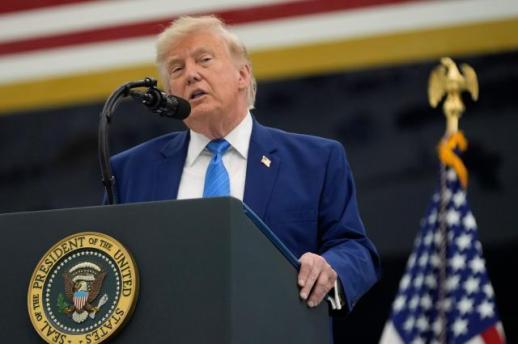 Trump to Attend 2026 World Cup Final and Present Trophy Donald Trump is expected to attend the final match of the 2026 FIFA North America World Cup and present the trophy to the winning team. FIFA President Gianni Infantino announced on June 23 during an appearance on Fox News' "Fox & Friends" that he will enjoy the final alongside Trump and hand over the trophy to the champions. The final will take place on July 19 at MetLife Stadium in East Rutherford, New Jersey, which FIFA officially refers to as the "New York New Jersey Stadium." This World Cup is jointly hosted by the United States, Canada, and Mexico. The U.S. team has won all its group stage matches, but Trump has not yet made an appearance at any World Cup venue. On June 12, Secretary of State Marco Rubio led the U.S. government delegation at the team's first match in Los Angeles. Trump previously attended the 2025 FIFA Club World Cup final at the same stadium last July, where Chelsea defeated Paris Saint-Germain 3-0, and he presented the championship trophy. During that event, he received both boos and cheers from the crowd when he appeared on the scoreboard or went down to the field for the award ceremony. His attendance at the World Cup final is expected to coincide with significant political symbolism at a major sporting event.* This article has been translated by AI. 2026-06-24 05:48:00