
Journalist

Lee Dong Geon
ldg920210@ajunews.com
-
 Winning Attitude Leads to Lottery Success: 314th Pension Lottery Results "I always think positively, and when I buy a lottery ticket, I believe, 'This time, something good will happen!'" On May 7, attention is focused on the results of the 314th Pension Lottery 720+, while stories of winners from the 291st round are trending. Recently, a winner shared their experience on the Donghaeng Lottery winners' board, stating, "I buy lottery tickets weekly as a hobby. I always think positively, and when I buy a ticket, I believe, 'This time, something good will happen!'" The winner recalled, "A few weeks ago, I checked the ticket with my spouse. I was overjoyed when I realized I had won the first prize. My first thought was, 'Now my retirement planning is complete!' I appreciate that the winnings are paid out monthly, unlike the lotto." Reflecting on their luck, the winner said, "I think my positive mindset attracted this fortune." They purchased the ticket at a lottery retailer in Gangnam, Seoul, and when asked about their usual lottery choices, they replied, "I mainly buy Lotto and Pension Lottery tickets." Regarding their plans for the winnings, the winner stated, "Since the prize is paid out over 20 years, I plan to use it for retirement and loan repayment." Meanwhile, the winning numbers for the 314th Pension Lottery 720+ will be available after 7:05 PM today.* This article has been translated by AI. 2026-05-07 23:35:05
 -
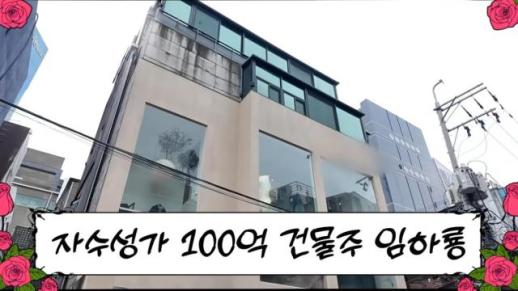 Comedian-Actor Im Ha-ryong’s Cheongdam-dong Property Grows From $500,000 Home to 10 Billion-Won Building Comedian and actor Im Ha-ryong’s real estate story has drawn wide attention online. A video posted April 30 on the YouTube channel 'Sunpung Sunwoo Yong-yeo' titled “First reveal of Sunwoo Yong-yeo’s 40-year friend Im Ha-ryong’s 10 billion-won Cheongdam-dong building” sparked strong reactions. In the video, Im said he bought a two-story detached home in Seoul’s Cheongdam-dong in 1991 for about 500 million won, including taxes. He said that in the 2000s he sold an apartment in Mok-dong and put about 600 million won into expanding the property into a five-story building. Im said the purchase was not solely for investment. “I started it to set up a cafe for my wife and live together,” he said, adding that he planned to place his wife’s cafe on the first floor and live upstairs. The building is now said to be worth in the 10 billion-won range. By simple calculation, that is more than nine times the roughly 1.1 billion won he said he initially put in, combining the purchase price and construction costs. His approach to rent also drew notice. Im said he still charges the same rent as “26 years ago,” raising only part of the first-floor rent. “Celebrities can’t raise it carelessly. You could get criticized,” he added. Real estate industry officials view the case as an example of long-term holding in a prime Gangnam-area location. They said areas like Cheongdam-dong, where both retail activity and residential demand have strengthened, tend to become more scarce over time. One industry official said it is often treated as a celebrity building investment story, but “in reality it is closer to a long-term holding case that stayed put for more than 30 years.”* This article has been translated by AI. 2026-05-07 14:55:07
 -
 Kwon Dong-chil, footwear innovator, built 300 billion won-a-year business from poverty A TV program has spotlighted the life of Kwon Dong-chil, a self-made footwear entrepreneur who overcame poverty and at one point posted annual sales of up to 300 billion won. EBS aired an episode Tuesday of "Seo Jang-hoon's Next-Door Millionaire" featuring Kwon as a "shoe inventor" known for improving military footwear. Kwon, widely described as obsessed with shoes, produces footwear for soldiers, police and firefighters and supplies 500,000 to 600,000 pairs a year to the state. The program said he helped replace heavy, rigid combat boots with lighter, more comfortable versions. The broadcast also introduced a range of his designs, including a so-called "spider shoe" inspired by the structure of a spider’s feet. The product was scrapped just before launch after reports said fugitive Shin Chang-won climbed building exteriors while on the run, raising concerns that shoes designed to grip walls could be misused for crime. Kwon drew attention by reading Seo Jang-hoon’s habits from his shoes. Kwon asked, "You don’t like putting shoes on and taking them off, do you?" Seo replied that during his playing days he had to tie his laces so tightly that his hands developed calluses, and that he now wears slippers whenever possible. Kwon linked his drive to a difficult childhood. "During school breaks, I couldn’t even eat three proper meals a day, and I had only one pair of shoes," he said. He joined a shoe company before graduating college to earn money, handled contract manufacturing for major overseas brands and rose to head of overseas sales in his 20s. Backed by investment from an overseas buyer who noticed his work ethic and skills, Kwon started his own business in 1988. In 1994, he launched a private label with the goal of building a Korean homegrown brand. In 1998, he drew industry attention by developing what the program described as the world’s first 290-gram ultralight hiking boot, about the weight of four eggs, a product it said helped change perceptions of hiking boots and fueled the brand’s growth. The program said the success came with heavy research and development costs. "Because I kept trying to make new, creative products, I spent hundreds of billions of won just on development," Kwon said, adding that he even heard people say, "You’ll go bankrupt developing shoes." When Seo asked whether using that money on a high-profile celebrity model might have brought in more profit, Kwon said investing in products rather than stars was his way of repaying consumers. Kwon also described a recent major crisis. He said European exports plunged due to the fallout from the Russia-Ukraine war, dealing a severe blow that forced him to sell the company building. After the news spread, the program said residents in Busan began buying products voluntarily to support what they called a local company, with lines forming outside stores. Veterans who had worn his combat boots during service also voiced support, saying the company should not fail. The broadcast said Kwon has given back as well. When large wildfires hit the Yeongnam region in 2024, he donated thousands of pairs of shoes to displaced residents. It also cited his support for mountaineers and a "lifetime A/S" service. Near the end of the program, Kwon said his dream was for a Korean shoe brand to surpass global brands and become No. 1 worldwide.* This article has been translated by AI. 2026-05-07 08:25:13
 -
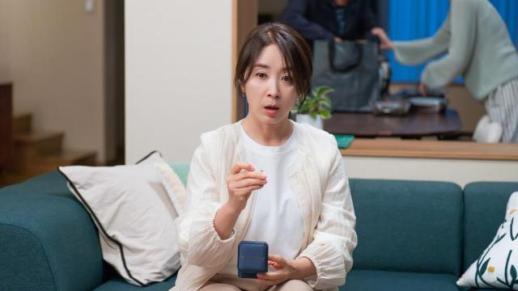 Actress Yoon Yu-seon Caps 'Yumi's Cells' Season 3, Continues Busy OTT Run Actress Yoon Yu-seon appeared in the final episode of TVING’s original series “Yumi’s Cells” Season 3, adding warmth to the drama’s closing. Yoon played Yeong-sim, the mother of Yumi (Kim Go-eun), in the last episode of the recently concluded season. “Yumi’s Cells” Season 3 follows Yumi, now a star writer, as she meets an unexpected figure, Sun-rok (Kim Jae-won), and falls in love again. In the series, Yeong-sim is a steady presence by Yumi’s side and looks on Sun-rok with kindness. Though her screen time was brief, Yoon delivered a calm, gentle performance that reinforced the character’s warmth. Returning as part of Yumi’s family after Seasons 1 and 2, she helped bring a familiar tone to the finale. The cameo also aligns with Yoon’s recent run of projects. She returned last month in Netflix’s “Bloodhounds” Season 2 as Yoon So-yeon, the mother of Geon-woo (Woo Do-hwan). The action series, starring Woo and Lee Sang-yi as they take on an illegal boxing league, rose to No. 1 in Netflix’s non-English TV category after its release. In “Bloodhounds” Season 2, Yoon portrayed a mother determined to protect her son from injustice, using restrained emotion and a firm gaze to add weight to the story. Her role helped anchor the characters’ emotional arc amid the high-tension action. Yoon has also expanded her work beyond acting into variety shows and hosting. She recently appeared on an entertainment program with her husband, attorney Lee Seong-ho, sharing their daily life as a couple. She also took on her first solo MC role on Channel A’s “The Body Geniuses,” a tailored health-solution program offering information for healthier living, meeting viewers with a steady, approachable hosting style. With steady work across dramas, streaming series, variety programs and hosting, Yoon continues to broaden her range, with attention on what she will do next. 2026-05-06 10:11:09
 -
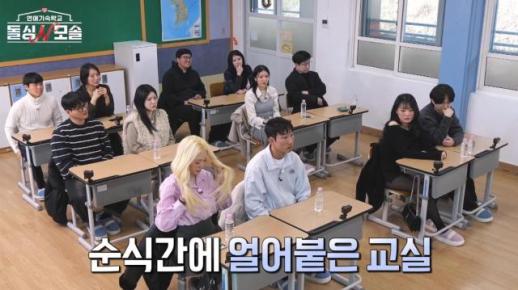 Dating Show Sparks Ethics Debate After Delaying Disclosure of Children A dating reality show can build its story around feelings, but critics say it should not do so by withholding basic facts about participants' lives. MBC Every1 and E Channel's "Love Dorm School: Divorced and Never-Dated" has drawn questions about production ethics after it held introductions without disclosing whether divorced participants have children. In the episode aired May 5, the divorced women introduced themselves, sharing their ages, jobs and views on dating. Their occupations included an English academy director, hair designer, beauty shop owner, nurse, home-shopping host and editorial designer. The introductions shifted the interest levels of the men, who are portrayed as having no dating experience. The segment did not include whether participants have children or the reasons for their divorces. Producers may have concluded that delaying those details would help cast members get to know each other without preconceptions. In similar shows, relationships have often cooled sharply after a participant reveals they have children, and the program may have sought to avoid reducing someone to a single condition. Still, the article argues that the rationale does not settle the ethical question. Whether someone has children is not routine biographical detail, it said, but a key factor in relationships that could lead to marriage. Because the show centers on divorced women seeking to date again and men with no dating experience, the article said the information should be shared before feelings deepen, not saved as a twist. The article said dating programs often delay core disclosures in the name of "emotional storytelling," but emotions should not be built by obscuring reality. A late reveal may create drama for viewers, it said, while placing pressure on participants who must reconcile growing feelings with practical decisions. It also said parents on the show risk having a central part of their lives treated as a test or plot device. Delaying disclosure may encourage people to see each other as individuals rather than checklists, the article said, but it can also postpone necessary judgment until after emotions take hold. It said the risk is higher for the "never-dated" men, who may be more likely to treat early feelings as absolute and underestimate the responsibilities involved. The article cited the sentiment "I'll raise them with love" as something that can sound appealing, while noting that parenting and family relationships cannot be handled by emotion alone. The article stressed that dating someone with children is not impossible and that having children is not disqualifying. Precisely for that reason, it said, the issue should be handled with greater care. Children are not a weakness or a "reversal" for television, it said, but a deeply connected part of a person's life and a factor that requires real responsibility and consideration from a partner. When and how that information is shared reflects how producers treat participants, not just an editing choice. It also described the show's premise as risky from the start: placing people who have experienced the end of love together with those who have not experienced its beginning, and watching the gap. That structure, it said, calls for stronger safeguards. In that context, delaying disclosure about children functions less as protection and more as a device to heighten emotional swings, the article said. The article said the appeal of dating shows should not depend on hiding information. Deeper stories can emerge, it argued, when participants choose despite knowing each other's realities. Disclosing whether someone has children does not erase emotion, it said; it can instead show the real choices people make, including approaching, hesitating or stepping back honestly. Producer Kim Jae-hoon has said he wanted to make a program that breaks prejudice. The article said doing that requires design that helps viewers see people in full even with the facts, not by concealing them. If the show aims to move beyond bias, it said, it should not treat participants' realities as obstacles to the story. Whether someone has children is not a "dopamine" bomb, it said, but part of a life and information that deserves respect in any decision about a relationship. It concluded that programs that help people understand one another differ from those that turn people into dramatic consumption, and said the show must prove it knows the difference. 2026-05-06 08:57:17
 -
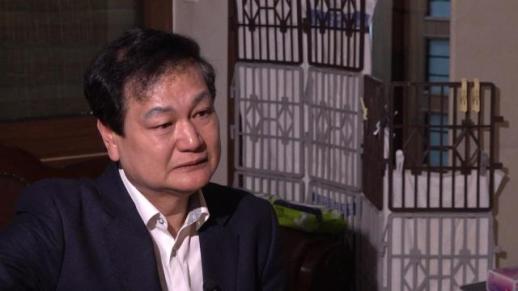 MBC’s “PD Notebook” Probes Student Victims of Samcheong-Style ‘Reeducation’ in the 1980s MBC’s investigative program “PD Notebook” is tracing allegations of “Samcheong-style reeducation” carried out on middle and high school students during the Chun Doo-hwan military era. The episode airing May 5, titled “Forgotten Boys, 1981: Student Samcheong Reeducation,” examines how 4,701 students nationwide were mobilized for so-called “reeducation” from 1981 to 1988, according to the program. The reporting began with a handwritten tip letter that said, “I am a victim of the student Samcheong reeducation camp.” The topic was unfamiliar even among investigative reporters who have tracked state violence in the 1980s, but “PD Notebook” said its reporting confirmed the claims were true. Victims said they boarded buses at the suggestion of teachers. Some said they were told they would be able to try activities such as archery and horseback riding. Instead, they said they were taken to training centers in nine locations nationwide, including Gyeongju and Asan, where soldiers subjected them to verbal abuse and beatings. Students said they were put through 10 days of training that resembled military instruction, including field exercises, drill and airborne training. Some victims said they attempted self-harm after being unable to endure the training. The program also reported testimony alleging sexual violence against younger students or those with smaller builds. Victims interviewed by the production team said they still suffer symptoms including auditory hallucinations and post-traumatic stress disorder, or PTSD, 45 years later. The program said the selection of students was driven by forced quotas. In 1981, the government assigned each middle and high school a number of students to send for “reeducation,” and the Ministry of Education pressured schools by warning that homeroom teachers and principals could be held accountable if a student not included on the list later caused problems, according to the report. Victims said schools sometimes chose students by drawing lots or by encouraging students to report one another. Testimony also said students from poorer households or single-parent families — those less able to protest — were often targeted. “PD Notebook” said the student “reeducation” went beyond school discipline and was tied to the Chun Doo-hwan military government’s governing strategy. It said the military, which operated the Samcheong Reeducation Camp as part of a 1980 “special measures to eradicate social evils,” expanded the target to include middle and high school students. The program also said it analyzed the policy as aimed at blocking the momentum of the democratization movement spreading from Gwangju. One victim interviewed by the program said he was singled out and beaten with a pickax handle because of his history of participating in the May 18 Democratization Movement. The program said the case shows that, under the pretext of identifying “delinquent students,” state violence was inflicted even on teenagers. After their release, victims said they were left with the stigma of being labeled “delinquent students.” They said they were shut out of normal opportunities for schooling and employment and stayed silent for years, treating the state violence as a personal shame. Victims also said threats from soldiers — including orders to “never speak about it” — contributed to their silence. More recently, victims filed state compensation lawsuits after an investigation by the Truth and Reconciliation Commission. However, the court set compensation at 100,000 won per day, totaling 1 million won, citing factors including that schools also bore responsibility and that the victims were students at the time, according to the program. Victims said they were devastated that decades of suffering and life damage were reduced to the 10 days of forced confinement. The victims, once boys, are now elderly, and perpetrators are also dying, the program said. “PD Notebook” said it asks how victims’ lives collapsed under violence designed by the state and enabled by schools, and how the state should be held accountable. The “PD Notebook” episode “Forgotten Boys, 1981: Student Samcheong Reeducation” airs at 10:20 p.m. May 5.* This article has been translated by AI. 2026-05-05 21:51:21
 -
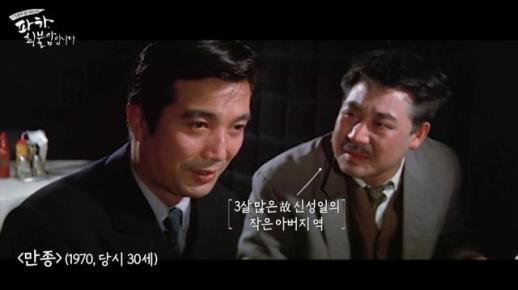 MBC Documentary Revisits Actor Choi Bul-am’s Life and Career MBC will air a two-part Family Month special documentary, 'Paha, This Is Choi Bul-am.' The first episode, airing at 9 p.m. on the 5th, is a radio-style documentary that looks back on actor Choi Bul-am’s life and acting career through music. Actor Park Sang-won, who played Choi’s eldest son in the MBC drama 'You and I,' serves as presenter. Part 1 traces the time of Choi as a person, beyond the label of “national actor.” It introduces moments in which he dreamed, loved and wrestled with concerns, before and beyond his many father roles on screen. One starting point is Myeongdong in the 1950s. As a middle school student, Choi developed artistic sensibilities under the influence of leading figures of the era, including poet Park In-hwan and painter Lee Jung-seob. Their words and lives later became an important foundation for him as an actor. The documentary also highlights Choi’s early drive to act. In one anecdote from his 20s as a stage actor, he asked a colleague with a long monologue to “share a few lines.” When the request was refused, he made his presence felt in an unexpected way during the performance, reflecting a young actor determined to prove himself even with a single line. It also examines his long-running challenge of playing characters far older than his real age. Choi took on the role of the late Shin Sung-il’s uncle even though Shin was three years older than him, and he also played the father of the late Lee Soon-jae, who was five years older. How to bridge the gap between his age and his roles remained a persistent concern, the documentary says. That 고민 continued in 'Chief Inspector.' Choi weighed how to portray a detective and, moving away from a rigid, authoritarian image, created a new kind of police character through Capt. Park — a figure with a warmer gaze. The documentary also revisits his middle-aged romance in 'You and I,' where he showed an emotional range different from his familiar father image. At the time, a middle-aged love triangle in the drama drew enough attention to prompt a public survey, the program says. Overall, it looks back at the many faces Choi showed beyond the nickname “the nation’s father.” MBC said the special was planned as an autobiographical documentary with Choi actively involved from the early stages. Since July last year, he held several long conversations with the production team to shape the stories to be included and the message to deliver to viewers. He emphasized that it should go beyond his personal life to capture the atmosphere of the times he lived through and changes in South Korean society. Producers said they coordinated filming schedules with Choi until recently, but he did not appear on camera after his family asked that he focus on rehabilitation treatment. They said the documentary still reflects the message he wanted to convey, and added that once he completes his rehabilitation process, he plans to greet viewers through MBC. Part 1 of 'Paha, This Is Choi Bul-am' airs at 9 p.m. today (the 5th).* This article has been translated by AI. 2026-05-05 00:06:20
 -
 Where to Go in May: 10 Family-Friendly Festivals Across South Korea May, widely marked in South Korea as Family Month, brings a packed calendar of festivals aimed at family visitors nationwide. Options range from nature and hands-on events during the Children’s Day holiday to culture, food, and flower festivals later in the month. In Hampyeong, South Jeolla Province, the 28th Hampyeong Butterfly Festival runs through the 5th at Hampyeong Expo Park. Under the theme “Dreaming Butterfly, the Journey Begins,” it features flower-and-butterfly exhibits, activities and performances, including butterfly releases indoors and outdoors, feeding programs, parades and shows. Admission is paid: 7,000 won for adults, 5,000 won for youths and soldiers, and 3,000 won for kindergarteners, children and seniors, based on on-site sales. In Boseong, South Jeolla Province, the Boseong Green Tea Festival continues through the 5th. Now in its 49th year, it highlights local tea culture with programs such as tea-leaf picking, tea making, tea tasting and green-tea therapy. Admission is free. In Damyang, South Jeolla Province, the Damyang Bamboo Festival runs through the 5th at Juknokwon Bamboo Garden and the nearby Dambit Music Hall area. With the slogan “Shine, Shine, Bamboo!” it offers bamboo-themed activities, performances and nighttime lighting programs. Admission is free, while Juknokwon charges 3,000 won and returns the full amount as a payback coupon. The Yeoncheon Paleolithic Festival runs through the 5th at the Jeongok-ri archaeological site in Yeoncheon. The family-oriented history festival centers on Paleolithic-era experiences. General admission is 7,000 won and youth and children’s tickets are 3,000 won. General visitors receive a 5,000 won Yeoncheon Love gift certificate, while youths and children receive a 3,000 won certificate. In Miryang, South Gyeongsang Province, the Miryang Arirang Festival is scheduled for the 7th through the 10th around Yeongnamnu Pavilion and the Miryang River. Admission is free. The festival aims to preserve and develop Miryang Arirang, which is listed by UNESCO as an Intangible Cultural Heritage of Humanity, and includes a Miryang Arirang contest, traditional culture activities and the multimedia outdoor show “Miryang River Odyssey.” The Seoul World Cities Culture Festival will be held from the 9th to the 10th at Dongdaemun Design Plaza, or DDP, from noon to 9 p.m. Participation is free. Organizers plan cultural performances, traditional costume and game experiences, and global food and dessert zones. The 2026 Busan Wheat Festival is set for the 9th to the 10th at Hwamyeong Ecological Park in Busan’s Buk District. Hosted by Busan Metropolitan City and organized by the Busan Festival Organizing Committee, it will feature wheat-themed food programs, a flea market, hands-on activities and performances. A food lounge under a large shade canopy and spaces for participatory programs will be set up on site. From the 15th to the 18th, the 2026 Haeundae Sand Festival will take place at Haeundae Beach and Haeundae Square in Busan. This year’s theme is “A Time-Travel Journey Through Busan in Sand.” The program includes an international sand sculpture exhibition, activities and performances. The sand works will remain on display through June 14. The Gokseong World Rose Festival runs from the 22nd to the 31st at Seomjingang Train Village. The site includes a rose garden covering about 75,000 square meters, with 1,004 varieties of rare European roses and other flowers. Admission is paid, but Gokseong residents, people of national merit and people with disabilities are admitted free. In Chuncheon, Gangwon Province, the Chuncheon Mime Festival is scheduled for the 24th through the 31st across the city under the theme “Body Landscape.” Events include the opening street program “Ah! Water-rang,” theater performances, “Mime You See While Walking,” “Art Madang X,” and overnight programs including “Goblin Madang.” Most events are free, but theater performances and some programs charge admission. Organizers warn that festivals can be especially crowded during the Children’s Day holiday and on weekends. Some hands-on programs require advance reservations or operate on a first-come, first-served basis, and some events charge admission or separate activity fees. Visitors are advised to check official websites for hours, ticket prices, parking and whether shuttle buses are running before traveling.* This article has been translated by AI. 2026-05-04 16:42:25
 -
 7 Free, No-Reservation Children’s Day Events in Seoul and Incheon on May 5 With Children’s Day on May 5 approaching, families are looking for outings that do not require advance reservations. This year, free viewing and walk-in events are scheduled across major central Seoul sites, including Gwanghwamun Square, Han River parks, Dongdaemun Design Plaza (DDP), the National Museum of Korea and Seoul Children’s Grand Park. Not every program is fully open-access. Some hands-on activities have already closed reservations or will be run on a first-come, first-served basis. Food trucks, flea markets and some activities may charge fees, so visitors should check details before heading out. The Seoul Metropolitan Government is running “Seoul Kids Week” across the city from May 1 to 7. On Children’s Day, Seoul-style kids cafes will open citywide, with venue-specific programs such as magic shows and classical instrument experiences. More than 60 Seoul-style kids cafes that can be used for free can be found through the “Our Neighborhood Kiwoom Portal.” In the city center, Gwanghwamun Square will host the “2026 Gwanghwamun Family Companion Festival” from May 2 to 5 under the subtitle “Let’s Play! Gwanghwamun Square!” The program includes participation and event booths, photo zones, a children’s beverage food truck, a lounge, book talks, music performances, a magic show, animation screenings, a cosplay parade and a Lego-building contest. Events will be spread across the square, including play areas, Yukjo Yard and adjacent street space. Children’s Day programs will also continue along the Han River. At Seoulham Park in Mangwon Hangang Park, the “2026 Seoulham Festival” will run May 5 from 11 a.m. to 6 p.m. It will feature a children’s military-life experience, Navy culture activities, special performances and family participation programs. Outdoor performances are free, while some activities require participation after obtaining a Seoulham Park admission ticket. Near the J-Bug (Jabeolle) complex at Ttukseom Hangang Park, “Hangang Plpl Adventure” will run May 1 to 5. Hours are 10 a.m. to 8 p.m., except May 4, when it closes at 7 p.m. Indoors, it will offer a flea market and activity programs; outdoors, it will include a carousel, air bounce attractions, a magic show, a bubble show, street performances and food trucks. Admission is free, while the flea market and food and drinks are paid. Participation is walk-in. At DDP, the “2026 DDP Children’s Design Festival” will be held May 2 to 5 in outdoor areas including Eoullim Square, Palgeori and the lawn hill. Hours are 11 a.m. to 6 p.m., and admission is free. The city said some programs took online first-come reservations, but on-site registration will be available during the festival period for those who missed reservations. The National Museum of Korea has also planned events for families over the Children’s Day holiday. From May 2 to 5, it will host “Gukjungbak Outing” around the Open Plaza, Mirror Pond Plaza and the permanent exhibition halls. The program includes photo zones, performances, activity booths, a QR stamp tour, a book market and a food zone. On Children’s Day, events include balloon art, a bubble magic show, an ensemble performance and a K-pop dance performance. Some programs at the Children’s Museum and special guided sessions, however, require reservations or will be first-come, first-served. At Seoul Children’s Grand Park, the “2026 Seoul Children’s Garden Festival” will run from May 5 to 18. It will be held across about 12,000 square meters from the park’s back gate to the Palgakdang area. This year’s theme is “Gardens Are Art Museums, Children Are Artists,” featuring a garden gallery, children’s art-creation programs, hands-on activities and stage events. Outside Seoul, Incheon Art Platform is another option. It will run a Children’s Day event, “Iyap! A Playground Together,” on May 5 from 10 a.m. to 4 p.m. around the Incheon Art Platform area. Admission is free. Most free Children’s Day events are being held in accessible locations such as downtown squares, parks and museums. Even without reservations, families can cut costs and still enjoy an outing by choosing events that allow walk-in viewing or on-site participation, including those at Gwanghwamun Square, Han River parks, DDP and the National Museum of Korea. Organizers cautioned that Children’s Day can draw heavy crowds, making it important to use public transportation, confirm operating hours and check whether on-site registration is available. Hands-on programs may close early, so visitors may want to plan around performances and exhibitions, or focus on larger outdoor venues such as Han River parks and Seoul Children’s Grand Park when mapping out routes.* This article has been translated by AI. 2026-05-04 09:18:18
 -
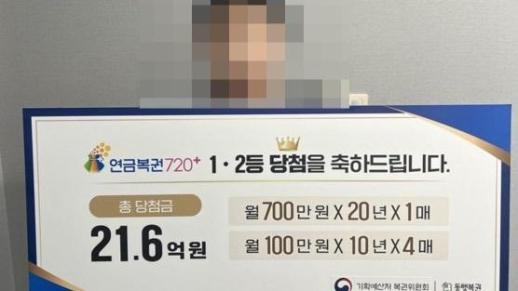 Lottery Interest Builds as Lotto 1222 Numbers Near; Pension Lottery Winner Shares Story "I had been going through a time when the tears never seemed to stop because several sad and difficult things happened at once, and this win has been a great comfort and a new turning point in my life." With interest building in Donghaeng Lottery’s Lotto draw No. 1222 on May 2, a personal account posted to the company’s winners’ bulletin board has drawn attention. The writer said they won Pension Lottery 720+ round 303 with one first-prize ticket and four second-prize tickets. The winner said they decided to buy the pension lottery after noticing cash left inside their car while parking and getting out. A few days later, the winner said they stopped by a nearby lottery retailer as usual to buy Lotto tickets and saw the shop owner hanging a banner announcing a pension lottery first-prize winner. The winner said they checked the round number and realized it matched the ticket they had bought. "I went home and checked, and the person I had dreamed of being was me," the winner said, adding that it felt unreal and they lost sleep for several nights. The winner said they bought the ticket at a lottery shop in Buk-gu, Busan, and that they sometimes buy Lotto, Pension Lottery and Speetto scratch tickets. Asked about plans for the winnings, the winner said they would first buy a car and plan to purchase a home. Donghaeng Lottery said the winning numbers for Lotto draw No. 1222 can be checked after 8:35 p.m. on May 2.* This article has been translated by AI. 2026-05-02 20:27:18