
Journalist

Kim Pil-soo
leesj@ajunews.com
-
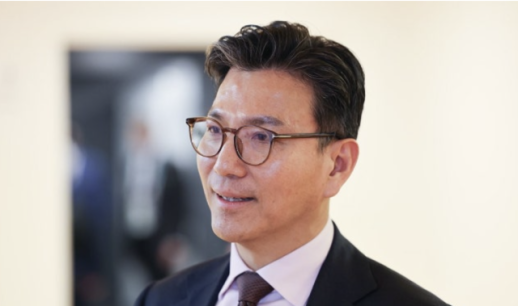 Kim Jae-youl elected to IOC executive board, second Korean to serve on the body SEOUL, February 05 (AJP) -Kim Jae-youl, president of the International Skating Union and a member of the International Olympic Committee, has been elected to the IOC Executive Board, becoming only the second South Korean to serve on the body. Kim was chosen Tuesday (Korea time) during the 145th IOC Session in Milan, host city of the 2026 Milan-Cortina Winter Olympics. He received 84 votes in favor out of 100 valid ballots, with 10 against and six abstentions. He joins the late Kim Un-yong, a former IOC vice president, as the only South Koreans to have served on the IOC’s top decision-making body. Founded in 1921, the Executive Board consists of the IOC president, four vice presidents and 10 other members. It oversees the organization’s administration and finances and manages procedures for selecting Olympic host cities. Members serve four-year terms. Four candidates competed for three open seats in the election. Along with Kim, Ingmar De Vos of Belgium and Neven Ilic of Chile were also elected. President Lee Jae Myung congratulated Kim in a Facebook post, calling the election a significant step for South Korea’s international standing in sports governance. “This great accomplishment transcends individual glory,” Lee wrote. “It carries tremendous significance in that South Korea will now take on an even greater leadership role at the center of international sports governance.” Lee added that Kim’s experience and leadership would help shape the future of the Olympic Movement. “Kim’s wealth of experience and brilliant leadership will lay a strong foundation for leading the future of the Olympic Movement,” he said, expressing hope that Kim would further expand international cooperation based on Olympic values of fairness, transparency, peace and solidarity. The president also pledged the government’s full support for sports diplomacy, vowing to strengthen South Korea’s role as “a responsible partner” in the global community. Kim became an IOC member in October 2023 in his capacity as head of an Olympic sport’s international governing body. He has served as ISU president since June 2022. He previously served as president of the Korea Skating Union from 2011 to 2016, vice president of the Korean Sport & Olympic Committee, and South Korea’s chef de mission at the 2014 Sochi Winter Olympics. He was also executive vice president of international relations for the 2018 PyeongChang Winter Olympics. Kim remains the only South Korean member of the IOC. Former Olympic bobsleigh silver medalist Won Yun-jong is seeking election this month to the IOC Athletes’ Commission. Kim, 57, is the brother-in-law of Samsung Group Chairman Lee Jae-yong. Meanwhile, former U.N. under-secretary-general Kim Won-soo was elected to the IOC’s Ethics Commission.Kim Won-soo, a career diplomat and close associate of former U.N. Secretary-General Ban Ki-moon, will serve a four-year term and may be re-elected twice. The commission is responsible for updating the IOC’s Code of Ethics, reviewing potential violations and advising on ethical governance. 2026-02-05 07:43:23
 -
Kim Jae Yeol Elected to IOC Executive Board, Second South Korean to Serve Kim Jae Yeol, president of the International Skating Union and an International Olympic Committee member, was elected to the IOC Executive Board. Kim was chosen in a vote held Tuesday (Korea time) at the 145th IOC Session at the Milano Cortina 2026 Winter Olympics Main Media Center in Milan, Italy. He received 84 votes in favor out of 100 valid ballots, with 10 against and six abstentions. He is the second South Korean to serve as an IOC executive board member, following the late Kim Un Yong, a former IOC vice president.* This article has been translated by AI. 2026-02-04 20:03:00
-
 Korean tire makers weather US tariff headwinds, turn focus to high-end segment SEOUL, February 04 (AJP) - South Korean tire manufacturers reported higher sales last year despite the impact of U.S. tariffs on auto parts, supported by solid replacement-tire demand and price increases. Hankook Tire & Technology said Wednesday its tire business recorded sales of 10.32 trillion won ($7.7 billion) last year, up 9.6 percent from a year earlier and surpassing the 10 trillion won mark for the first time. Operating profit, however, fell 4.4 percent to 1.68 trillion won. The company said it maintained steady growth in both global original-equipment (OE) and replacement markets despite economic uncertainty, supported by rising demand for larger-diameter tires. Hankook said it expanded supply partnerships with automakers including Porsche, BMW, Xiaomi, Lucid Motors, Cupra and Kia, and now provides original-equipment tires to more than 40 brands across over 300 vehicle models. Nexen Tire reported sales of 3.19 trillion won last year, up 12 percent and marking its fifth consecutive year of revenue growth. Operating profit edged down 1.07 percent to 170.2 billion won. The company attributed sales growth to stable contributions from the second phase of its European plant expansion, along with continued gains in OE supply for both electric and internal-combustion vehicles supplied to more than 30 global automakers. Replacement tire sales also grew steadily, supported by region-specific product strategies. "U.S. tariffs weighed on profitability but we mitigated the impact through diversified regional distribution and a stronger product mix driven by higher sales of larger-diameter tires," a Nexen Tire official said. "Lower raw material prices and easing ocean freight rates, together with cost-efficiency measures, also helped improve margins." Kumho Tire, which is scheduled to release earnings on Thursday, is also expected to post revenue growth. According to financial data provider FnGuide, the company’s sales last year are estimated at 4.74 trillion won, up 4.6 percent, while operating profit is projected to fall 6.8 percent to 548.2 billion won, partly reflecting the impact of a fire at its Gwangju plant in May last year. Based on these estimates, combined revenue for the three tire makers is projected to reach 18.25 trillion won, up 8.7 percent from the previous year. This year, the companies plan to sustain growth through overseas capacity expansion and a focus on premium segments. Hankook said it will continue expanding production at its Tennessee plant in the United States and its facility in Hungary, while strengthening partnerships with premium automakers. The company aims to raise the share of high-inch tires to 51 percent and increase the share of electric-vehicle tires to at least 33 percent of passenger-car and light-truck OE revenue. Nexen said it will concentrate on improving sales capabilities and growth quality through marketing efforts aimed at increasing brand exposure and strengthening customer partnerships. It also plans to leverage its premium OE track record to further expand replacement-tire sales. * This article, published by Aju Business Daily, was translated by AI and edited by AJP. 2026-02-04 16:34:41
 -
 Korea Automotive Technology Institute, AP위성 sign MOU on space-mobility technology The Korea Automotive Technology Institute said it is moving to strengthen global competitiveness in the space-mobility industry. The institute said it signed a memorandum of understanding with AP위성 on Tuesday at AP위성’s headquarters in Seoul’s Geumcheon district to cooperate on securing technological competitiveness in space mobility and building an innovation-driven industrial ecosystem. The institute said the agreement comes as major countries, including the United States with its Artemis program and “Moon to Mars architecture,” as well as China, Europe and Japan, accelerate crewed lunar and Mars exploration. It said the partnership aims to secure core next-generation space-mobility technologies and respond to fast-changing global markets. Under the MOU, the two organizations plan to pursue joint research on space-mobility development projects, along with technology development, performance verification and the creation of evaluation systems, and to expand cooperation over time. Planned areas of cooperation include developing a prototype model for lunar exploration mobility and developing artificial intelligence-integrated avionics for space mobility. Jin Jong-wook, the institute’s president, said space mobility is a key industry that will shape future national competitiveness and requires advanced technology and cross-disciplinary capabilities. “Through this cooperation, we will secure homegrown core technologies and promote the creation of an innovative ecosystem, actively contributing to the development of South Korea’s space industry and strengthening its competitiveness,” Jin said.* This article has been translated by AI. 2026-02-04 14:45:00
 -
 Hyundai Rotem to supply vehicles for light-rail lines in Edmonton, Canada SEOUL, February 04 (AJP) - South Korea's Hyundai Rotem has won a contract to supply light-rail vehicles for all light-rail transit (LRT) lines operating in Edmonton, Canada. The company said on Wednesday it signed a 320 billion won ($240 million) agreement on Monday local time with the City of Edmonton in Alberta to supply high-floor LRT vehicles. The order covers 32 trainsets, each consisting of three cars, with a maximum operating speed of 80 kilometers per hour. The trains will operate on the Capital and Metro lines, which run north–south through downtown Edmonton and connect surrounding communities. The new fleet will replace aging vehicles currently in service, with designs emphasizing safety, accessibility and operational reliability in harsh winter conditions. The trains are engineered to operate in temperatures as low as minus 40 degrees Celsius and under heavy snowfall, while lightweight structures are intended to improve energy efficiency. A forward-collision warning system will also be installed to enhance safety for both passengers and pedestrians. Hyundai Rotem said the exterior design retains the visual identity of Edmonton’s existing fleet while introducing updated styling. Interior features include upgraded passenger information systems and wheelchair-accessible signage to improve convenience for riders with disabilities. With the latest contract, Hyundai Rotem will supply vehicles for all LRT lines in Edmonton. Separately, trams ordered from the company in 2021 are being deployed on the Valley West line, which connects downtown with western districts. Deliveries for that project began in August last year, the company said. Hyundai Rotem also highlighted its track record in Canada, including a 2005 contract to supply automated people-mover trains at Vancouver International Airport, where early delivery helped advance the project schedule by three months. Canadian authorities later recognized the company’s contribution to transportation readiness ahead of the 2010 Vancouver Winter Olympics. In 2018, Hyundai Rotem secured an additional order to supply more trains for the same airport line. * This article, published by Aju Business Daily, was translated by AI and edited by AJP. 2026-02-04 13:49:28
 -
Hyundai Rotem Wins $320 Million Edmonton Light-Rail Contract Hyundai Rotem said it will supply rail cars for all light-rail transit lines operating in Edmonton, Canada. The company said it signed a 320 billion won contract on Monday (local time) with the city government of Edmonton, Alberta, to provide high-floor light-rail vehicles. Light rail generally refers to smaller rail vehicles used to ease urban congestion, and includes trams. The order covers 32 trainsets, each made up of three cars, with a top operating speed of 80 kph. They will be deployed on the Capital and Metro lines, which run north-south through the city center and connect to outlying areas. Because the vehicles will replace an aging fleet, Hyundai Rotem said the design focuses on improving passenger safety and convenience. The trains are tailored for local winters, including temperatures as low as minus 40 degrees Celsius and heavy snowfall, and include lightweight design features aimed at reducing energy use. A forward-collision warning system will be installed on the front of the vehicles to enhance safety for passengers and pedestrians. The company said the exterior uses strong color contrast and lighting to carry over the identity of existing vehicles while adding a more forward-looking design. Inside, it said, intuitive passenger information displays and wheelchair pictograms are intended to improve accessibility for riders with disabilities. Hyundai Rotem said the deal means it will supply vehicles for every LRT line in Edmonton. Trams the company won in 2021 are slated for the Valley West line, not the high-floor lines served by the new LRT vehicles, and are intended to improve travel between the city and surrounding western areas. Those trams have been delivered to the site in stages starting with the first trainset in early August last year. Hyundai Rotem also cited earlier work in Canada, including an automated people mover for Vancouver International Airport under a 2005 contract that it said was delivered early, helping move up the operating schedule by three months. The Canadian project agency later sent a letter of thanks and a plaque recognizing the company’s contribution to the successful hosting of the 2010 Vancouver Winter Olympics. In 2018, Hyundai Rotem signed an additional contract to supply automated trains for the same line. The company said it will continue expanding its lineup for future global markets, including hydrogen-powered rail vehicles such as hydrogen locomotives. A Hyundai Rotem official said the company will draw on its experience delivering light-rail projects in South Korea — including the Gimpo LRT, Incheon Line 2 and the Ui-Sinseol LRT — and its cooperation with local agencies to help Edmonton residents use public transit safely and comfortably.* This article has been translated by AI. 2026-02-04 13:36:00
-
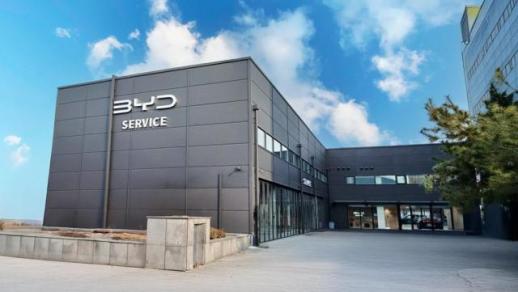 BYD Korea Opens Jeonju Service Center, Targets 26 Sites by Year-End 비야디(BYD)코리아는 4일 BYD 오토 전주 서비스센터를 열고 전북 지역 전기차 고객을 위한 전문 애프터세일즈 서비스를 강화한다고 밝혔다. BYD 승용 부문의 17번째 서비스 네트워크인 전주 서비스센터는 전주를 포함해 익산, 군산, 김제, 완주 등 전북 전역 고객이 보다 안정적이고 체계적인 전기차 정비 서비스를 받을 수 있도록 마련된 통합 거점이다. 전주 도심과 주요 간선도로에서 접근이 쉬운 점도 특징이라고 BYD코리아는 설명했다. 이 센터는 1월에 문을 연 전주 전시장과 함께 운영되는 통합형 시설로, 전시(Showroom)·서비스(Service)·부품(Spare parts)을 한 공간에서 제공하는 3S 체계로 운영된다. BYD코리아는 전시장과의 연계를 통해 이력 관리와 고객 응대의 연속성을 강화해 같은 공간에서 차량 관리 서비스를 받을 수 있다고 밝혔다. 운영은 BYD코리아 공식 딜러사 비전모빌리티가 맡는다. 전주 서비스센터는 대기 시간을 줄이기 위해 예약 기반으로 운영되며, BYD코리아의 정규 테크니컬 교육 과정을 이수한 전문 테크니션이 상주해 BYD 전기차에 맞춘 진단과 정비를 수행한다고 회사는 밝혔다. BYD코리아는 현재 17개인 서비스 네트워크를 연말까지 26개로 늘리는 것을 목표로 하고 있다. 회사는 양적 확대뿐 아니라 전국 어느 지점에서나 일관된 수준의 서비스를 제공할 수 있도록 테크니컬 인력 육성 교육 강화 등 품질 개선에도 나설 계획이라고 밝혔다.* This article has been translated by AI. 2026-02-04 09:30:18
 -
 Hyundai, Kia Post Record January U.S. Sales on Hybrid and SUV Demand Hyundai Motor and Kia said they set new January sales records in the U.S. market. Hyundai Motor’s U.S. unit said Tuesday that it sold 55,624 vehicles in January, up 2% from 54,503 a year earlier, marking its best-ever January. The automaker said results were driven by surging demand for hybrid electric vehicles, growth in electrified models and continued strength in its core SUV lineup, which accounted for 77% of total sales. A Hyundai official said the Santa Fe and the all-new Palisade stood out, helping the company strengthen its lead in the family SUV segment. Randy Parker, CEO of Hyundai Motor North America, said the company and its dealers met customer demand despite challenging weather across the United States, delivering a 2% year-over-year increase in total sales. He said hybrid demand rose more than 60% and led January performance. Kia’s U.S. unit also reported a record January, saying it sold 64,502 vehicles, up 13% from 57,007 a year earlier. Kia said the Carnival (up 60%), Sportage (up 23%), K5 (up 8%), Telluride (up 7%), Seltos (up 6%) and K4 (up 2%) each posted best-ever sales for the month. It said sales of electrified models rose 45% and SUV sales increased 14%. Eric Watson, vice president of sales for Kia America, said the record January followed three straight years of annual sales records and showed the company’s growth is continuing. He said Kia is drawing attention this year with a new Telluride and is expanding customer choice by adding hybrid models.* This article has been translated by AI. 2026-02-04 08:57:00
 -
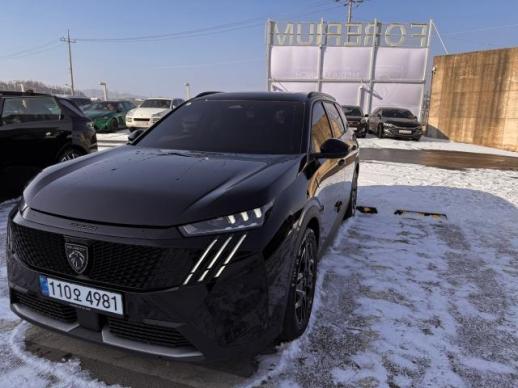 Peugeot’s All-New 5008 Smart Hybrid Targets South Korea’s Family SUV Market As SUVs continue to dominate South Korea’s auto market, Peugeot is seeking to expand sales with the “All-New 5008 Smart Hybrid,” a full redesign returning after 10 years. Planned and built in France, the third-generation 5008 combines Stellantis’ next-generation STLA electrified platform with a smart-hybrid powertrain. It is a family SUV that can seat up to seven. On Feb. 2 in Gimpo, the new 5008’s front end showcased Peugeot’s latest family design, including a floating-style emblem, a gradient front grille and pixel LED matrix headlamps, shifting the model’s look toward a more futuristic feel. From the side, a longer wheelbase and higher beltline added a planted stance. Black roof rails and matte gray DLO (day light opening) trim emphasized SUV toughness without looking overdone. At the rear, 3D LED taillamps and horizontal lettering added visual stability. Stellantis said the rear spoiler was designed with airflow in mind and helps improve high-speed stability and fuel efficiency. Inside, a 21-inch curved display stood out. Rather than two screens joined together, it is presented as a single large display. Compared with the previous generation, where the screen sat deeper in the dashboard, the new unit appears to float, reducing eye movement and helping the driver stay focused. The system supports wireless Apple CarPlay and Android Auto, but on a roughly 60-kilometer round trip from Gimpo’s Forellium to Ganghwa in Incheon, the built-in navigation was used. Peugeot has been adopting TomTom navigation since 2022. It does not reflect traffic and road conditions the way commonly used services such as Tmap do, but map updates have improved visibility compared with the previous generation. A key strength is quietness. Even above 100 kph on the highway, the vehicle accelerated smoothly with little noise. In the city, regenerative braking helped save fuel. The combined fuel economy is 13.3 kilometers per liter. The second row uses three individual seats, each supporting sliding, reclining and 40:20:40 folding, allowing three adults to adjust seating to fit their needs. It also includes heated seats, side-window sunshades and an air-quality monitoring function. The third row has two independent seats with 50:50 folding. With the third row up, cargo space is 348 liters. Folding the third row expands it to 916 liters, and folding the second row as well increases capacity to a maximum of 2,232 liters. Bang Sil, CEO of Stellantis Korea, said the company is preparing to compete in what he called South Korea’s most fiercely contested family SUV segment. “While preparing for competition in Korea’s most intense family SUV market, I want to ask whether people feel they must give up their own taste and sensibility for their family,” Bang said. “The All-New 5008 Smart Hybrid is a French family SUV that offers space and practicality for the family while letting the driver keep their sensibility and preferences.” He added that this year, 5008 sales will account for more than 30% of Peugeot’s total sales.* This article has been translated by AI. 2026-02-04 00:03:00
 -
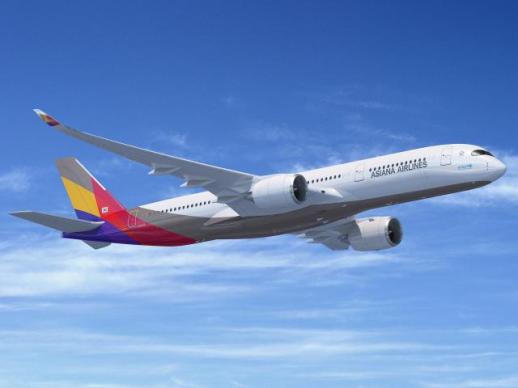 Asiana Airlines posts 342.5 billion won operating loss in 2025, first annual loss in five years Asiana Airlines said in a regulatory filing on Monday that it posted standalone revenue of 6.1969 trillion won last year and an operating loss of 342.5 billion won. Revenue fell 12.2% from a year earlier, and the company swung to an operating loss. It was Asiana’s first annual loss in five years, since 2020, when it reported a 63.1 billion won loss amid the COVID-19 pandemic. Passenger revenue fell by 76.8 billion won to 4.5696 trillion won. Asiana said tighter U.S. entry restrictions weighed on its Americas routes, but it sought to improve profitability by strengthening China routes, where demand has risen under a visa-free policy, and Japan routes, which showed steady demand. Cargo revenue dropped by 761.1 billion won to 958.4 billion won, reflecting the sale of its cargo aircraft business unit effective Aug. 1 to meet conditions tied to a corporate combination. The airline said it focused on generating revenue by using belly cargo space on passenger aircraft. Asiana said it swung to an operating loss due to one-time costs tied to integration preparations — including higher mileage liabilities and investments in IT and aircraft — as well as costs related to the cargo aircraft business sale. It also cited higher labor costs linked to ordinary wage issues and increased operating and maintenance expenses amid a persistently weak won. For this year, Asiana said it expects a solid passenger market to continue, citing the prospect of international passenger traffic surpassing 100 million for the first time. It plans to bolster profitability by entering new European markets such as Milan and Budapest in the first half, improving schedule efficiency and adjusting unprofitable routes, expanding belly cargo demand for time-sensitive shipments such as semiconductor parts and bio-health products, increasing fixed-demand contracts with major global forwarders, and pursuing cost cuts through efficiency gains. 2026-02-03 17:00:00