

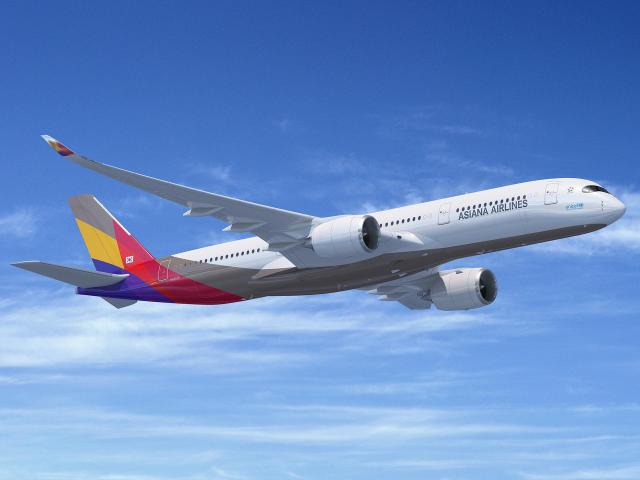
Revenue fell 12.2% from a year earlier, and the company swung to an operating loss. It was Asiana’s first annual loss in five years, since 2020, when it reported a 63.1 billion won loss amid the COVID-19 pandemic.
Passenger revenue fell by 76.8 billion won to 4.5696 trillion won. Asiana said tighter U.S. entry restrictions weighed on its Americas routes, but it sought to improve profitability by strengthening China routes, where demand has risen under a visa-free policy, and Japan routes, which showed steady demand.
Cargo revenue dropped by 761.1 billion won to 958.4 billion won, reflecting the sale of its cargo aircraft business unit effective Aug. 1 to meet conditions tied to a corporate combination. The airline said it focused on generating revenue by using belly cargo space on passenger aircraft.
Asiana said it swung to an operating loss due to one-time costs tied to integration preparations — including higher mileage liabilities and investments in IT and aircraft — as well as costs related to the cargo aircraft business sale. It also cited higher labor costs linked to ordinary wage issues and increased operating and maintenance expenses amid a persistently weak won.
For this year, Asiana said it expects a solid passenger market to continue, citing the prospect of international passenger traffic surpassing 100 million for the first time. It plans to bolster profitability by entering new European markets such as Milan and Budapest in the first half, improving schedule efficiency and adjusting unprofitable routes, expanding belly cargo demand for time-sensitive shipments such as semiconductor parts and bio-health products, increasing fixed-demand contracts with major global forwarders, and pursuing cost cuts through efficiency gains.
* This article has been translated by AI.
Copyright ⓒ Aju Press All rights reserved.