SEOUL, February 04 (AJP) -“May every household be filled with joy and good fortune throughout the year.”
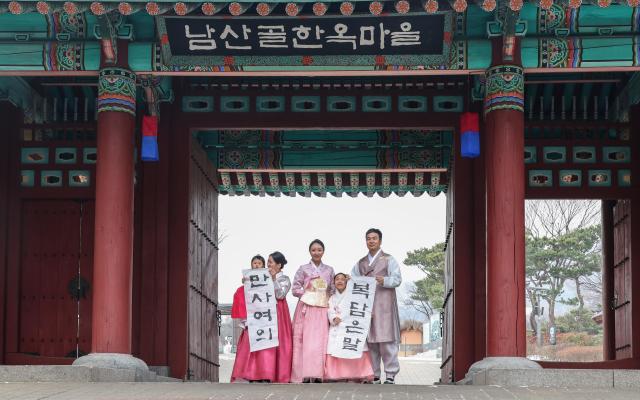
On a quiet Tuesday morning, as winter loosened its final grip, the words of blessing were once again pinned to wooden gates at Namsangol Hanok Village in central Seoul.
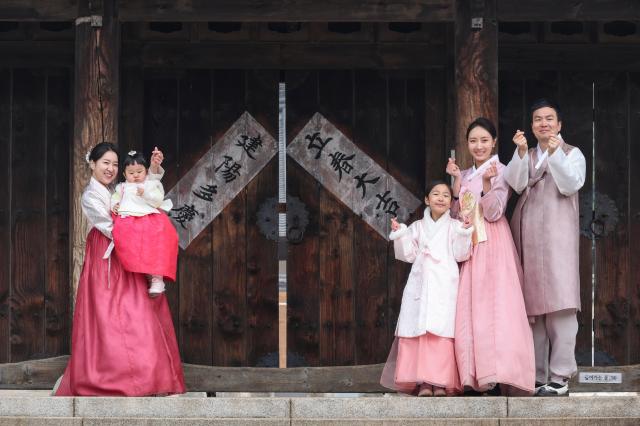
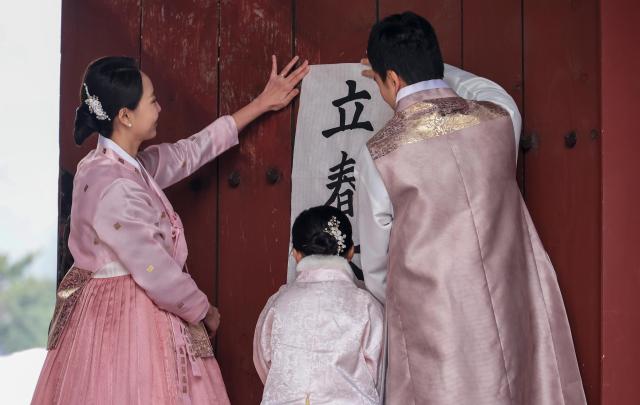
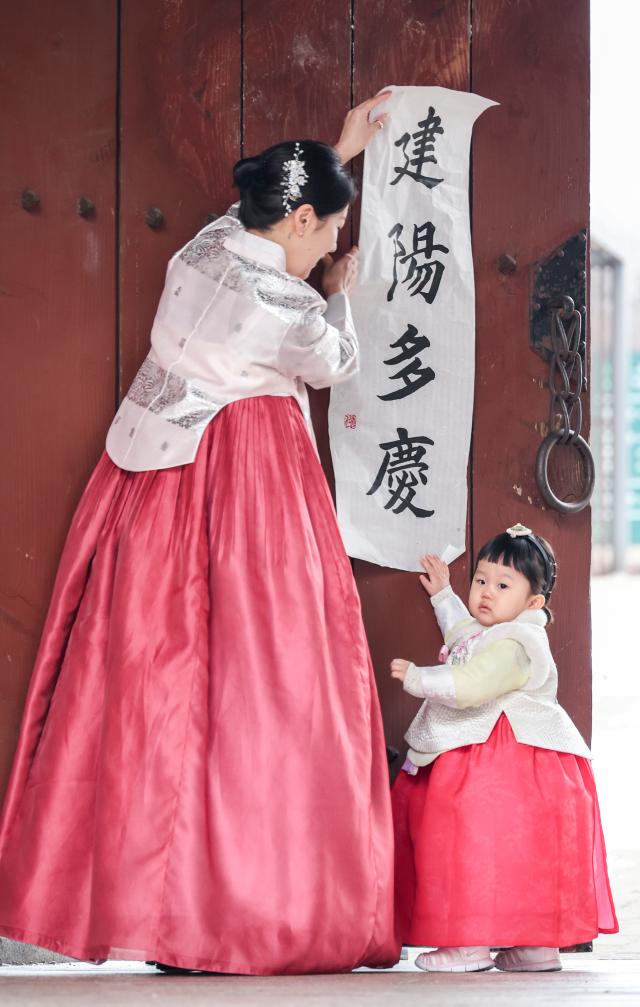
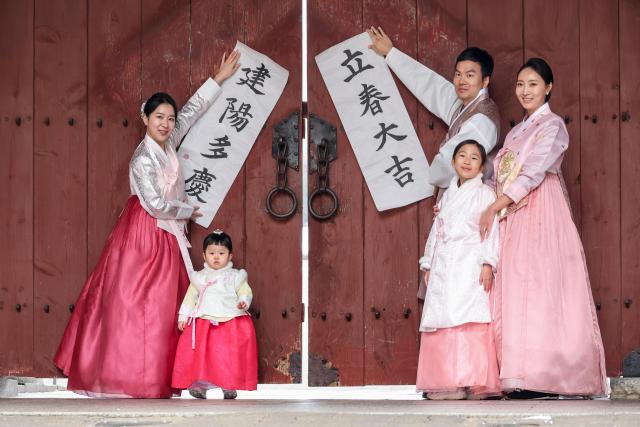
To mark Ipchun — the first seasonal division of spring — a demonstration of the traditional posting of ipchuncheop unfolded at the village’s main gate. A family born in 1990, the Year of the Horse, carefully attached the calligraphy strips, reviving a custom passed down through generations.
Ipchun, one of the 24 solar terms of the traditional East Asian calendar, usually falls around Feb. 4. It signals not only the start of spring, but the quiet return of warmth, light and renewal.
On this day, Koreans have long displayed calligraphy bearing the phrase:
“Ipchun Daegil, Geonyang Dagyeong” — With spring’s arrival comes great fortune, and as positive energy rises, countless blessings follow.
The words are often placed diagonally on doors or gates, as if inviting luck to step inside before anyone else. More than decoration, the strips serve as gentle wishes for health, prosperity and protection from misfortune in the year ahead.
The family taking part in the ceremony shared a special connection to the site. A decade ago, they had held their traditional wedding and photo shoot at the same village. Now, they returned not as newlyweds, but as a family, linking past and present through ritual.
Each year, Namsangol Hanok Village hosts the Ipchuncheop demonstration to help citizens rediscover seasonal traditions that once guided everyday life. In an age of digital calendars and hurried routines, the ceremony offers a pause — a reminder that time, too, has its own rhythm. As ink met paper and paper met wood, winter quietly stepped aside. And spring, once again, found its way to the doorstep.
Copyright ⓒ Aju Press All rights reserved.