
Journalist

Kwon,sung jin
mark1312@ajunews.com
-
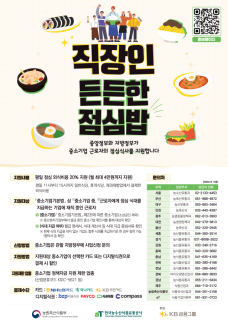 Government to Support Lunch Costs for Small Business Workers The Ministry of Agriculture, Food and Rural Affairs announced on May 19 that it will launch the "Substantial Lunch Program for Workers" starting on the 21st to alleviate the lunch cost burden for employees of small businesses and stimulate sluggish dining consumption.This initiative aims to ease the burden of "lunchflation" on small business employees by providing partial support for lunch expenses through collaboration between the government, local governments, and sponsorship from KB Financial Group. Discounts will be offered via point rewards from card companies or digital meal vouchers.The program will target 50,000 workers employed at small businesses as defined by the Small and Medium Enterprises Basic Act, provided that their companies currently subsidize lunch expenses. However, companies participating in the "1,000 Won Breakfast for Industrial Complex Workers" program will be excluded from this support.Eligible workers can receive a 20% discount on their lunch expenses, up to a maximum of 40,000 won per month, when dining out between 11 a.m. and 3 p.m. on weekdays. Discounts will not apply to meals purchased at company cafeterias, convenience stores, or through delivery apps.Jung Kyung-seok, Director of Food Industry Policy at the Ministry of Agriculture, Food and Rural Affairs, stated, "We hope the Substantial Lunch Program for Workers will reduce the financial burden on small business employees while also boosting sales for local dining establishments. We will strengthen communication with private companies and local governments to continue expanding this initiative."* This article has been translated by AI. 2026-05-19 12:15:24
 -
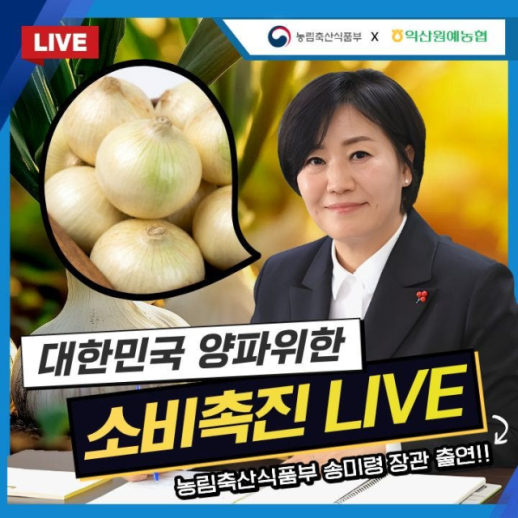 Agriculture Minister Song Mi-ryeong to Host Live Commerce Event Amid Onion Price Drop As onion prices plummet due to oversupply, Minister of Agriculture, Food and Rural Affairs Song Mi-ryeong will take to live commerce to sell fresh onions. The Ministry announced that Minister Song will participate as a "guest host" in a live commerce broadcast scheduled for 1 p.m. at the Iksan Agricultural Cooperative online studio in North Jeolla Province. The event aims to encourage onion consumption, during which Minister Song will explain the benefits and storage methods of onions. The live commerce event will be streamed for 60 minutes on Naver Shopping Live and the NH Imarket channel. The first 1,000 customers to make a purchase will receive onion pickling sauce, while 100 customers who verify their purchases will receive melons as gifts. The minister's involvement in the event is a response to a significant drop in onion prices compared to last year. According to the Korea Agro-Fisheries & Food Trade Corporation's Agricultural and Fisheries Product Distribution Information System (KAMIS), the consumer price of onions is currently 2,477 won per kilogram, a 23.2% decrease from the same period last year. The Ministry aims to stimulate market demand and stabilize the depressed onion prices through this promotional event. Minister Song stated, "I hope our farmers' delicious and nutritious produce, which they have cultivated with care, will be purchased generously. I also ask for warm support for our farmers."* This article has been translated by AI. 2026-05-19 12:15:00
 -
 Government Eases Regulations for Cafes and Wholesale Sellers in Agricultural Areas The government will allow the establishment of cafes in agricultural promotion areas and significantly ease the requirements for wholesale sellers in online markets. This move aims to expand the rural population and enhance market access for small-scale farmers. The Ministry of Agriculture, Food and Rural Affairs announced on May 18 that it has finalized 50 regulatory reform tasks during the third strategy meeting on agricultural and food regulation reform, chaired by Minister Song Mi-ryung. The meeting included 20 participants from the food industry and private experts who discussed urgent and impactful reform measures. To promote energy transition and balanced development in rural areas, the government will relax regulations on floating solar panel installations. The area requirements for these installations on reservoirs and freshwater lakes will also be eased. Additionally, in collaboration with the Ministry of the Interior and Safety, the government plans to apply separate taxation to leased reservoirs and farmland designated for the creation of 'Sunshine Income Villages,' thereby reducing property tax burdens and exempting them from comprehensive real estate tax. To encourage the revitalization of rural communities and increase the rural population, the government will permit the establishment of cafes that utilize agricultural products directly produced by farmers and agricultural corporations. This initiative is expected to generate additional income through agritourism. The government also plans to accelerate regulatory reforms aimed at improving agricultural product distribution structures and fostering future industries. To facilitate small-scale farmers' participation in online wholesale transactions, the government will allow sellers to join online wholesale markets regardless of their sales volume. Furthermore, the system will be improved to maintain organic certification in cases of unintentional pesticide residue detection. The criteria for farmers to receive direct payments will also be relaxed. Currently, farmers with annual non-farm income exceeding 37 million to 43 million won are excluded from receiving area-based direct payments. The new plan will allow the Minister of Agriculture, Food and Rural Affairs to adjust these criteria through official announcements. Additionally, the interim settlement amount for public reserve rice will be increased from 40,000 won to 60,000 won per 40 kg bag. Other initiatives include improving redundant regulations on food origin labeling for delivery services, expanding support for income stabilization costs related to highly pathogenic avian influenza (AI), and broadening the scope of agricultural product gift certificates. Minister Song stated, "Regulatory reform in agriculture and food is fundamentally about changing unreasonable and absurd regulations that do not keep pace with the field. We will not only reduce the number of regulations but also boldly improve those that are unreasonable and absurd." * This article has been translated by AI. 2026-05-18 21:43:00
 -
 Korea's Fair Trade Commission Fines Top 5 Delivery Companies $30.8 Million for Unfair Practices The top five delivery companies in South Korea have been penalized by the Fair Trade Commission (FTC) for repeatedly abusing their power over subcontractors. With these companies controlling over 90% of the domestic delivery market, the sanctions are seen as a significant step toward addressing unfair practices across the industry. On May 18, the FTC announced that it would impose a total fine of 3.08 billion won (approximately $30.8 million) on five delivery firms—Coupang Logistics Service, CJ Logistics, Lotte Global Logistics, Hanjin, and Logen—for establishing unfair contract terms and failing to issue written contracts when outsourcing services. The FTC, in collaboration with the Ministry of Employment and Labor and the Ministry of Land, Infrastructure and Transport, conducted surprise inspections last August due to concerns that unfair subcontracting practices in the delivery sector were contributing to safety incidents, including heat-related illnesses among workers. The current investigation is based on findings from those inspections. According to the FTC, the five delivery companies hold a combined market share of 90.5%. They leveraged their dominant position to impose unfair subcontracting conditions, including clauses that shifted liability for safety incidents to subcontractors, retained interest earnings during cash collateral periods, and required subcontractors to compensate for damages resulting from disputes. The number of identified unfair contract clauses included 1,155 cases for Coupang, 2,306 for CJ, 3,609 for Lotte, 1,664 for Hanjin, and 452 for Logen. The fines related to these unfair clauses were 567 million won for Coupang, 540 million won for CJ, 483 million won for Lotte, 546 million won for Hanjin, and 378 million won for Logen. Kim Dong-myung, head of the FTC's New Business Subcontracting Investigation Division, noted that Coupang's failure to adequately amend contracts after being flagged contributed to its penalty. In contrast, Lotte cooperated during the investigation and made necessary corrections, resulting in a reduction of its fine. The investigation also revealed that the five delivery companies failed to comply with the requirement to issue written contracts. The FTC explained that issuing written contracts detailing subcontracting terms is essential to prevent unnecessary disputes between contracting parties. These companies did not issue written contracts for a total of 2,055 agreements related to collection, delivery, and logistics terminal operations until the start of service. In some cases, such as Lotte, contracts were issued only after 761 days. As a result, the FTC decided to impose a fine of 600 million won for violations related to the failure to issue written contracts, excluding Logen. The fines for non-issuance of contracts were 192 million won for Coupang, 108 million won for CJ, 150 million won for Lotte, and 150 million won for Hanjin. Kim stated, "Subcontractors had no choice but to comply with unreasonable clauses to meet performance targets. This decision is expected to improve the unfair practices faced by subcontractors and alleviate their workload." 2026-05-18 13:42:28
 -
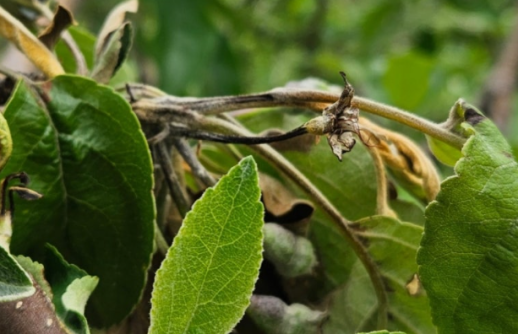 First Case of Apple Fire Blight Detected in Chungju; Alert Level Raised On May 15, the Rural Development Administration (RDA) raised the alert level to caution after the first case of fire blight was detected this year in an apple orchard in Chungju, North Chungcheong Province.According to the RDA, the disease was discovered during a routine inspection period this month, following a report from a local farm. Officials from the Chungju Agricultural Technology Center conducted a preliminary test on May 14, which returned a positive result. Subsequent detailed testing confirmed the presence of fire blight. The affected orchard will be disposed of according to guidelines.In response, the RDA has activated its emergency response team and is operating a field diagnostic lab to quickly assess suspected samples collected from the outbreak area.Currently, the North Chungcheong Agricultural Technology Institute and the Chungju Agricultural Technology Center are collaborating on urgent pest control measures. Additionally, they plan to conduct intensive inspections of all orchards within a 2-kilometer radius of the outbreak site until May 19 to prevent further spread.The RDA emphasizes the importance of preventive measures by farmers to curb the spread of fire blight. They are urging agricultural workers to complete pest prevention training and adhere to safety protocols, as well as to enhance self-monitoring for apple and pear growers.Furthermore, the RDA warns that farmers who respond passively to suspected symptoms of fire blight may face penalties, including reduced compensation for losses, and encourages immediate reporting to agricultural technology centers upon detection of any symptoms.Cha Eui-seok, head of the RDA's Disaster Response Division, stated, "Currently, fire blight is not expected to significantly impact the supply of apples and pears. However, since new cases emerge in more than two regions each year, thorough monitoring and pest control must be prioritized in areas without outbreaks."* This article has been translated by AI. 2026-05-15 11:39:10
 -
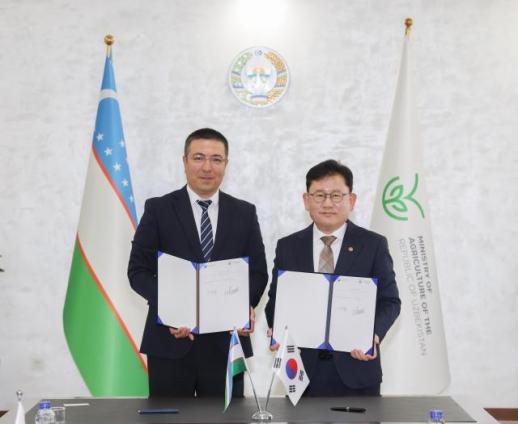 Korea's Rural Development Administration Shares Dairy and Rice Cultivation Techniques in Uzbekistan Lee Seung-don, head of South Korea's Rural Development Administration (RDA), visited Uzbekistan to promote K-dairy technology and rice cultivation techniques. According to the RDA, Lee's visit began on May 13, during which he attended field demonstrations, met with government officials, and signed a memorandum of understanding (MOU). On the first day of his visit, Lee observed a field demonstration at Sultan Farm in the Syrdarya region. During this event, a letter of intent for the export and import of Korean dairy cattle embryos was signed between a Korean embryo export company and Sultan Farm. The pregnancy success rate for implanted Korean dairy embryos is 50%, which is 20 percentage points higher than the 30% rate for foreign embryos, earning positive feedback locally. Lee also met with Shadman Ergashevich Namazov, head of the Agricultural Knowledge Innovation Agency, and Abdullo Marufovich Mansurov, director of the Rice Research Institute, where he attended the KOPIA rice mechanization demonstration. The mechanized rice planting method using Korean agricultural machinery reportedly reduces labor by 70% while increasing productivity by up to 52%. The RDA plans to expand the area for high-quality seed production to 200 hectares next year. On May 14, Lee held high-level talks with Abdujurov Jamshidjon, Uzbekistan's Deputy Minister of Agriculture, and signed an MOU to enhance the capacity of experts in artificial insemination technology. The agreement includes the exchange of livestock genetic resources, joint research on breeding and management techniques, the exchange of agricultural specialists and technical training, and the simplification of animal medicine registration. Lee stated, "This achievement goes beyond mere technology transfer; it represents a virtuous cycle that integrates into the policies of the partner country and leads to export cooperation. I will do my best to expand the overseas presence of agricultural technology and Korean agricultural equipment."* This article has been translated by AI. 2026-05-15 02:31:38
 -
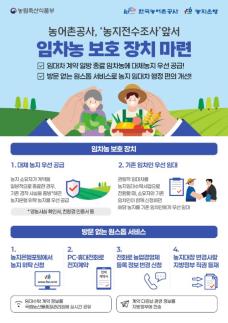 Rural Development Administration Implements Protections for Tenant Farmers Ahead of Nationwide Land Survey The Rural Development Administration announced on May 14 that it has established measures to minimize potential harm to tenant farmers ahead of the government's nationwide land survey. The agency will prioritize the supply of alternative farmland to tenant farmers whose lease agreements have been unilaterally terminated. If a landowner ends a contract without mutual agreement, tenant farmers can receive priority access to land managed by the Land Bank, provided they can prove their previous cultivation. Protections are also in place for those transitioning from traditional lease agreements to the land leasing trust program. Tenant farmers who have been farming without a contract through the agency can apply for the land leasing trust program with the landowner, ensuring that the land is leased to the existing tenant first. With an increase in landowners and tenants expected to participate in the land leasing trust program ahead of the survey, the agency is enhancing its digital services. Landowners can now apply for land leasing through the Land Bank portal without visiting their local office. Additionally, lease agreements can be executed electronically via computers or mobile devices, allowing for remote contract signing. Lee Jeong-moon, Director of Land Management at the Rural Development Administration, stated, "We will continue to actively pursue improvements to the system to protect tenant farmers. We aim to establish the land leasing trust program as a convenient system for both landowners and tenants, creating a foundation for efficient land use and a stable leasing environment." Meanwhile, the Ministry of Agriculture, Food and Rural Affairs will conduct a nationwide land survey over the next two years to eliminate land speculation and assess actual land use. A special maintenance period for normalizing land leases will also be in effect from May 18 to July 31.* This article has been translated by AI. 2026-05-14 15:48:00
 -
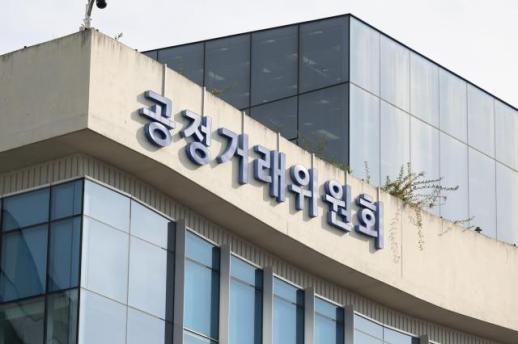 Korea's Fair Trade Commission Fines Egg Association $5.9 Million for Price Collusion The Korea Fair Trade Commission (KFTC) has determined that the Korea Egg Producers Association's establishment of standard prices for eggs constitutes collusion. On May 14, the KFTC announced it would impose a corrective order and a fine of 594 million won (approximately $5.9 million) on the association for its actions. From January 2023 to January 2026, the Egg Producers Association set standard prices for various egg sizes (large, extra-large, medium, and small) through regional committees, which were communicated to its member producers. This was intended to prevent egg farmers from being at a disadvantage in negotiations with distributors. However, the KFTC found that these standard prices effectively influenced actual transaction prices. An investigation revealed that from 2023 to June 2025, the actual prices of eggs closely mirrored the association's established standard prices. The KFTC concluded that the association's price announcements restricted price competition among its members and led to increased transaction prices. Notably, the association's members accounted for 56.4% of the total number of laying hens in the country, giving them significant market influence. The KFTC also identified that the association raised its standard prices by 9.4% from 2023 to 2025. As a result, the gap between the standard price and production costs widened from 781 won in 2023 to 1,440 won in 2025, leading to higher consumer prices and increased profits for farmers. The KFTC classified the association's price-setting activities as illegal and decided to impose a total fine of 594 million won, along with a prohibition order, notification of violations to member businesses, and mandatory training for executives and staff. Moon Jae-ho, head of the KFTC's Cartel Investigation Bureau, stated, "The fine was determined based on the association's budget of approximately 800 million won approved at this year's general meeting. This clearly establishes that the price-setting practices led by producer organizations are illegal." Moving forward, the government will take over the role of setting egg standard prices. The Ministry of Agriculture, Food and Rural Affairs announced in March that it would provide information on farm-gate egg prices through the Korea Rural Economic Institute (KREI). Additionally, a 'Egg Price Verification Committee' composed of farmers, traders, and experts will be established to ensure the appropriateness of egg prices.* This article has been translated by AI. 2026-05-14 13:12:00
 -
 Battery Cages for Egg Production to Be Phased Out as Conventional Farms Decline According to the Ministry of Agriculture, Food and Rural Affairs, the number of conventional egg production farms using so-called "battery cages" has decreased by 9% over the past 11 months. On May 14, the ministry held the third meeting of the Task Force for Improving Layer Farming Density to discuss the implementation of improved farming practices. The government is working to increase the minimum space requirement for each layer hen from 0.05 square meters to 0.075 square meters. However, due to concerns about egg supply and price stability, this change is currently left to the discretion of the private sector until September of next year. The ministry reports that the private sector is actively participating in improving farming density. The number of conventional farms decreased from 718 in August 2025 to 655 in May 2026, representing a 9% decline. The proportion of these farms within the total number of farms also fell from approximately 43% to 39%. Additionally, 521 of the remaining conventional farms, or 80%, have submitted compliance plans to improve farming density. The ministry plans to encourage farms that have not submitted compliance plans to do so. It will also listen to the concerns of farms that are reducing their livestock numbers to meet density standards and provide additional support. Lee Jae-sik, the livestock policy director at the ministry, stated at the meeting, "We will do our best to secure funding and improve regulations for farms that are working to enhance their facilities and comply with density improvements."* This article has been translated by AI. 2026-05-14 12:18:27
 -
 South Korea to Import U.S. Eggs Amid Rising Prices As egg prices continue to soar, the South Korean government has decided to officially import fresh eggs from the United States starting this week. If prices do not stabilize, the government plans to consider additional imports of fresh eggs from the U.S. and Thailand.On May 11, the Ministry of Agriculture, Food and Rural Affairs held its 17th supply and demand situation meeting, chaired by Park Jeong-hoon, head of the Food Policy Office, to discuss response measures.The government is particularly concerned about livestock products, which have seen high prices due to outbreaks of livestock diseases and decreased supply. According to the Livestock Products Quality Assessment Corporation, the price of eggs has risen to 7,380 won per carton, a 6.2% increase from a year ago, while chicken prices have increased by 16% to 6,607 won per kilogram.In response, the government is implementing discount support for eggs and chicken. To prepare for increased demand during the summer peak season, the government will also import broiler breeding eggs from Belgium in addition to Spain to ensure a swift supply.Additionally, the government is utilizing self-help funds to offer discounts on Korean beef and pork. Beef cuts and stews are discounted by up to 50% until May 10, while pork belly and neck will see similar discounts until May 31. Collaborations with producer groups will also expand the volume of pork available in wholesale markets.While there are factors contributing to price increases for processed foods due to the impact of the Middle East conflict, any additional price hikes have been limited so far. However, the government plans to continue providing financial support to alleviate the burden of raw material purchases in anticipation of potential price increases after the local elections.Park Jeong-hoon stated, "Given the recent changes in external conditions, market uncertainties are increasing. We will closely monitor the supply and demand situation of key products and respond proactively."* This article has been translated by AI. 2026-05-12 04:32:17