
Journalist

Kwon,sung jin
mark1312@ajunews.com
-
 Korea Standards Agency Launches 7th Product Safety Creators Program The Ministry of Trade, Industry and Energy's Korean Agency for Technology and Standards said Thursday that its seventh group of Product Safety Creators has officially launched. The agency held a kickoff ceremony for the 2026 Product Safety Creators at the ENA Suite Hotel in Seoul's Jung District. The participatory program, made up of high school and university students, is designed to deliver product safety information in an easy, approachable way. Participants plan and produce content and spread it through social media and other channels. The seventh cohort includes 30 students selected nationwide. They will produce promotional content on product safety, share information on hazardous products and take part in efforts to expand a safety culture in daily life. The agency said it expects the creators to help raise awareness and encourage safer consumer practices by using digital formats such as videos, card news and short-form content. The group will be active for about seven months. The government plans to honor top participants at a Product Safety Day ceremony, awarding a total of 16 prizes, including two Minister of Trade, Industry and Energy awards and four awards from the head of the Korean Agency for Technology and Standards. KATS Administrator Kim Dae-ja said he hopes trust built through the creators' content will lead to safer choices and action, adding that the agency will continue to strengthen public outreach on product safety policies. * This article has been translated by AI. 2026-04-23 11:03:53
 -
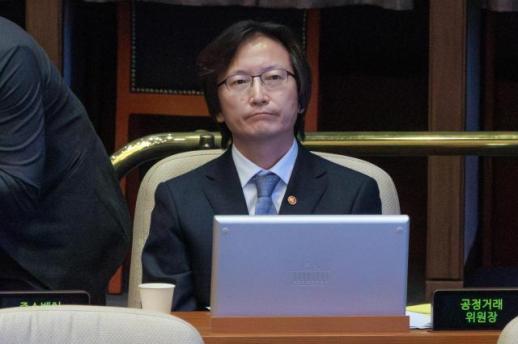 Korea Fines Six Paper Makers 338.3 Billion Won for Alleged Price-Fixing, Orders Price Reset Joo Byung-ki, chair of the Fair Trade Commission, said Wednesday the agency decided to impose a combined 338.3 billion won in administrative fines on six paper makers for collusion, file corporate complaints and order the companies to reset prices. Speaking at a meeting of ministers on special management of consumer prices at the Government Complex Seoul, Joo said leading domestic paper companies including Hansol Paper and Moorim secretly agreed on prices for printing paper used widely in education, publishing and other everyday areas. He said the conduct lasted 3 years and 10 months starting in 2021. Joo called it an unfair practice that sought to respond to industry headwinds — including a shrinking printing-paper market and low profitability — not through productive competition but by shifting harm to consumers and other market participants. He said the FTC will continue monitoring and guidance until prices distorted by collusion return to normal levels, including through the price-reset order. Joo also signaled tougher steps against repeat offenders, including sanctions severe enough to push companies out of the market. He said the government plans to revise relevant laws to strengthen penalties by expanding surcharge increases for repeat cartels and reducing leniency for voluntary reporting. He added the FTC is considering a system to order the dismissal or suspension of executives who led collusion. He said the agency is also reviewing strong structural remedies — including corporate breakups, share sales and business divestitures — to eradicate serious unfair practices such as cartels. Joo said the government will pursue legal and institutional changes, in consultation with relevant ministries, to meaningfully restrict repeat cartel participants from market activity. He added the FTC is considering expanding to other industries a system used in construction and real estate that cancels registrations or permits for repeat collusion participants.* This article has been translated by AI. 2026-04-23 10:23:47
 -
 South Korea to Double Fines for Repeat Cartels, Cut Leniency for Self-Reporters The South Korean government said it will toughen penalties for repeat price-fixing, imposing a 100% surcharge increase even for a single repeat offense within 10 years. It also plans to scale back leniency for companies that self-report when collusion recurs within 10 years. The Fair Trade Commission announced the measures on 23 at a meeting of the interagency task force on special management of consumer prices at the Government Complex Seoul. The government said repeated collusion by major businesses, including in sugar, has continued, and that stronger economic sanctions are needed to deter repeat offenders. Under the plan, the FTC will raise the surcharge add-on for repeat violations. Currently, surcharges are increased by 10% to 80% depending on the number of violations over the past five years. The new rule would apply a 100% increase for one repeat offense within 10 years. For self-reporters, the FTC plans to strip immunity or reductions when repeat collusion occurs within five years, and to cut the reduction in half when it occurs within 10 years. The government also plans corrective steps aimed at preventing recurrence, including requiring companies to build and operate internal monitoring systems such as a compliance program and to report price changes to the FTC for a set period. It said it is also considering an "executive removal order" system that would allow the FTC to demand the dismissal or suspension of executives at companies involved in collusion. To make damages claims easier, the government said it will revise litigation rules to expand the current class-action system — which now allows only requests to stop illegal conduct — to include claims for damages from major violations such as collusion. In cartel damages suits, it plans to require the FTC to submit relevant materials when a court requests documents needed to prove illegality or the amount of damages. Market access restrictions would also be tightened for repeat offenders. For industries that require registration or permits under individual laws, the government plans to introduce measures such as canceling registrations or permits or suspending business operations. It said it will expand approaches already used under laws such as the Framework Act on the Construction Industry to major sectors where collusion is frequent. Limits on participation in public procurement would be strengthened as well. The FTC plans to revise the demerit-point system so it must request that the Public Procurement Service restrict repeat offenders from bidding. It also plans to increase restriction periods by six months each for ringleaders and for other participants. An FTC official said the government concluded that sanctions for repeat collusion should be strengthened to the level of pushing offenders out of the market to "completely break the chain" of collusion. The official said the FTC plans to move ahead with the measures this year in consultation with relevant ministries. * This article has been translated by AI. 2026-04-23 09:10:27
 -
 South Korea projects 2040 peak power demand at 131.8 GW, factoring in electrification of advanced industries The government projected South Korea’s 2040 target peak electricity demand at 131.8 gigawatts, reflecting expected growth from electrification and advanced industries. That is 2.5 GW higher than the target demand through 2038 in the 11th Basic Plan for Electricity Supply and Demand, despite only a two-year extension in the horizon. The Climate, Energy and Environment Ministry presented the outlook on Tuesday at a public forum in Seoul on demand projections for the 12th power supply-and-demand plan. The ministry said it separately forecast minimum demand during spring and fall shoulder seasons to improve year-round accuracy. On the demand-management side, it said it reviewed load-shifting resources to encourage optimal electricity use in response to renewable-energy variability. For 2040 electricity consumption, the ministry put baseline-scenario “base demand” at 780.8 terawatt-hours and “target demand” at 657.6 TWh. Under an upside scenario, it projected 819.6 TWh for base demand and 694.1 TWh for target demand. For annual peak demand in 2040, the baseline scenario projected 149.9 GW for base demand and 131.8 GW for target demand. Under the upside scenario, it projected 156.8 GW for base demand and 138.2 GW for target demand. The ministry said the forecast combines “modeled demand” with “additional demand” tied to electrification, including new investment in advanced industries, data centers, and the spread of electric vehicles and heat pumps. It said rising data-center demand linked to the development of artificial intelligence was reflected in the outlook. For 2040, it projected data-center electricity consumption at 26.5 TWh and peak demand at 4.0 GW. Compared with the 11th plan’s 2038 projection of 15.5 TWh and 4.4 GW, consumption rose while peak demand edged down. The outlook for advanced industries was also sharply revised. The ministry estimated 2040 electricity consumption at 27.4 to 29.3 TWh and peak demand at 3.7 to 4.0 GW. That compares with the 11th plan’s 2038 projection of 1.1 TWh and 1.4 GW. Still, some participants said the ministry should have prepared a downside scenario, such as slower economic growth or a case in which the 2035 nationally determined contribution, or NDC, is not met. At the forum, Yu Seung-hoon, a professor at Seoul National University of Science and Technology, said Japan’s 7th Strategic Energy Plan, finalized in February, included a scenario in which NDCs are not implemented. “If there is an upside scenario, there should also be a downside scenario as an emergency plan,” he said.* This article has been translated by AI. 2026-04-22 17:16:27
 -
 Korea Fines SM Hwajin, Korea Cubic 2.6 Billion Won for Bid-Rigging Auto Interior Contracts South Korea’s Fair Trade Commission said Tuesday it issued corrective orders and fined SM Hwajin and Korea Cubic a combined 2.6 billion won ($1.9 million) for colluding in bids for surface treatment of vehicle interior materials. The two companies are suppliers to Hyundai and Kia and together hold a 100% share of the automakers’ bidding market for hydrographic transfer, a surface-treatment method used on interior materials, the commission said. The commission said the firms took part in Hyundai and Kia bids held from September 2020 to April 2023 to select contractors for interior surface-treatment work for five new models, including the Sportage, EV9, Santa Fe and EV3. According to the commission, the companies agreed in advance on the expected winners and bid prices. SM Hwajin was to win the interior surface-treatment volume for four models, including the Sportage and EV9, while Korea Cubic was to win the volume for the Palisade. The commission said the conduct violated Article 40(1) of the Monopoly Regulation and Fair Trade Act. It imposed fines totaling 2.591 billion won — 1.632 billion won on SM Hwajin and 959 million won on Korea Cubic — along with corrective orders. The commission said it will strengthen monitoring of collusion in intermediate goods and parts, citing the sector’s broad spillover effects across upstream and downstream industries, and will respond strictly when violations are confirmed.* This article has been translated by AI. 2026-04-22 12:03:27
 -
 South Korea to Subsidize Up to 2 Percentage Points of Loan Interest for Steel, Aluminum and Copper Firms South Korea’s Ministry of Trade, Industry and Energy said Tuesday it will subsidize up to 2 percentage points of loan interest through the end of next year for companies in steel, aluminum and copper, as well as related derivative products, to ease management burdens amid shifts in the global trade environment. The ministry said export conditions have worsened and financing costs have risen as major countries strengthen protectionist measures. On April 21 (local time), aluminum and copper futures on the London Metal Exchange closed at $3,532 per ton and $6.04 per ton, up 49.5% and 26.2% from a year earlier, the ministry said. To reduce financial costs and support business stability, the ministry said it signed agreements with five financial institutions, including Woori Bank, KB Kookmin Bank and Shinhan Bank, to create new loan products eligible for interest subsidies. The program targets small and midsize companies with export performance in steel, aluminum, copper and related derivatives. It will cover part of the interest on loans used for facility investment, mergers and acquisitions, research and development, or working capital. The loan limit is up to 10 billion won per company. Small businesses can receive support equal to 2 percentage points of interest, while midsize firms can receive 1.5 percentage points, through the end of next year. Applications will be accepted from Tuesday through May 21. The ministry said it will select recommended companies after evaluating submissions, followed by reviews by participating lenders before final loans are issued.* This article has been translated by AI. 2026-04-22 11:03:45
 -
 South Korea Industry Ministry Conducts Joint Safety Inspections at Mines South Korea’s Ministry of Trade, Industry and Energy said Tuesday it carried out intensive safety inspections of vulnerable facilities at mines with a joint public-private inspection team. The team, made up of private-sector mining experts and officials from the ministry and the Korea Mine Rehabilitation and Mineral Resources Corp., checked underground work sites considered vulnerable and aging mining facilities. Inspectors also reviewed drainage systems and other potential hazards, the ministry said. The annual inspections are intended to identify and remove risks in advance at facilities seen as prone to disasters or accidents. The ministry said it plans to conduct two months of joint inspections through June 19, focusing on resource facilities including national critical infrastructure with significant potential social impact. Kim Jong-cheol, the ministry’s director general for resource industry policy, said domestic mineral resources have become more important than ever as a key foundation for ensuring continuity in core national industries. He urged site managers to strengthen checks of vulnerable facilities and to communicate closely with related agencies, including mine safety offices and the Korea Mine Rehabilitation and Mineral Resources Corp., for a swift response in emergencies.* This article has been translated by AI. 2026-04-22 11:03:15
 -
 Korea FTC Warns of Rising Wedding Service Disputes as Spring Peak Season Begins South Korea’s Fair Trade Commission said on 22 it issued a consumer alert for wedding services as demand peaks during the spring wedding season. The FTC, citing data from the Korea Consumer Agency and others, said consumer dispute-relief requests tied to wedding services totaled 1,076 last year, up 171 cases, or 18.9%, from 905 a year earlier. In April and May last year, the number of cases rose 56.0% from the same period the previous year. Of the complaints received, 88.1% involved disputes over contract cancellations, penalty fees and withdrawal rights. The FTC urged couples to prioritize companies that use the standard contract terms for wedding planning agencies. It said firms using the standard terms clearly disclose base prices by service and the criteria for penalty fees. The commission also recommended comparing prices in advance through the Consumer Agency’s “Cham Price” service, which publishes regional price information for major wedding items such as meal costs, venue rental fees and studio-dress-makeup packages, along with price data for as many as 67 optional items. Looking ahead, the FTC said it will intensively inspect whether wedding service providers are properly implementing detailed service descriptions and price displays at points of sale. Providers that fail to comply with required key information disclosures may face administrative fines of up to 100 million won. The government said it will continue to monitor unfair practices in the wedding services market to prevent consumer harm in advance and support informed choices by providing information on wedding services.* This article has been translated by AI. 2026-04-22 10:05:26
 -
 Labor Ministry: Casualties at Cargo Truckers Rally Go Beyond Yellow Envelope Law South Korea’s Labor Ministry said the casualties at a Cargo Truckers Solidarity rally should not be framed as an issue limited to the so-called Yellow Envelope Law, which revises Articles 2 and 3 of the Trade Union and Labor Relations Adjustment Act. In an explanatory note released April 21 in response to reports linking the incident to the law, the ministry said it "expresses very deep regret" over the injuries and death. It said the case "goes beyond" disputes over prime contractor-subcontractor bargaining under the revised Article 2, which is based on "substantial and specific" control. The ministry said the root problem was the lack of a structure allowing people in relatively vulnerable positions — including small business owners and individual proprietors — to organize and demand dialogue. It added it was regrettable that the conflict was not resolved through talks and instead worsened. The ministry said it will work with relevant agencies to find ways for small merchants and self-employed people to communicate with stakeholders to protect their rights. The comments were seen as signaling a preference for creating a separate channel for talks rather than applying the Yellow Envelope Law by treating Cargo Truckers Solidarity members as small business owners or individual proprietors. The incident occurred about 10:32 a.m. April 20 at the CU logistics center in Jinju, South Gyeongsang Province, where a 2.5-ton delivery truck collided with members of the CU branch of the Korean Public Service and Transport Workers’ Union, an affiliate of the Korean Confederation of Trade Unions. One person was killed and two others suffered serious to moderate injuries. Cargo Truckers Solidarity has urged BGF Retail, the prime contractor, to join joint bargaining as an employer, arguing working conditions are effectively determined by the company. BGF has said it has no direct duty to bargain because convenience store logistics operate through a multilayer contract structure running from BGF Logis to logistics centers, transport firms and drivers. The government has maintained that direct mediation is difficult because Cargo Truckers Solidarity is not an officially recognized union but an extra-legal group formed by individual business operators. 2026-04-21 13:49:57
 -
 South Korea to Auction 18 Trillion Won in Treasury Bonds in February; Issue 10 Trillion Won in Fiscal Bills The Ministry of Finance and Economy said on the 29th it will issue about 18 trillion won in Treasury bonds next month through competitive auctions open to primary dealers and other participants. The February auction plan is up 2 trillion won from January’s 16 trillion won. Planned issuance by maturity is: 3.1 trillion won in 2-year notes, 3.1 trillion won in 3-year notes, 3.0 trillion won in 5-year notes, 2.6 trillion won in 10-year notes, 500 billion won in 20-year bonds, 4.7 trillion won in 30-year bonds, 900 billion won in 50-year bonds and 100 billion won in inflation-linked Treasury bonds. Primary dealers and individual investors may purchase set amounts on a noncompetitive basis at the auction’s winning yield for each maturity. To support liquidity in the Treasury market, the ministry will also conduct a swap of about 500 billion won between off-the-run 10-year, 20-year and 30-year issues and the 30-year benchmark issue. The government uses short-term fiscal bills — which must be repaid within the fiscal year — and temporary borrowing from the Bank of Korea to cover brief funding gaps caused by timing mismatches between revenue and spending. In February, it plans to issue 10 trillion won in fiscal bills to support smooth budget execution. Fiscal bills will be sold through competitive auctions to 32 institutions, including Monetary Stabilization Bond auction participants, Treasury primary dealers, preliminary primary dealers and institutions that manage Treasury funds. The ministry also plans to issue 1.2 trillion won in one-year, won-denominated foreign exchange stabilization bonds through competitive auctions involving the same 32 institutions, including primary dealers, preliminary primary dealers and eligible Monetary Stabilization Bond auction participants.* This article has been translated by AI. 2026-04-21 10:54:00