

Journalist

Lim, Kwu Jin
minjaeho58@ajunews.com
-
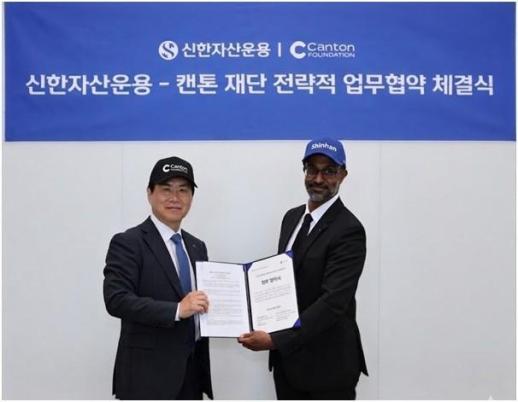 Shinhan Asset Management's Lee Seok-won: Transforming ETFs into Key Players In the financial industry, latecomers have two strategies: follow the leaders or create new markets. Lee Seok-won, CEO of Shinhan Asset Management, chose the latter. A former head of the National Pension Service's strategy division, he has rapidly transformed the organization since taking the helm this year, focusing on ETFs and Target Date Funds (TDF) as dual growth pillars. He is particularly expanding differentiated products centered around the SOL ETF, including high-dividend, covered call, AI semiconductor, and shipbuilding offerings to enhance the company's presence. Lee's entrepreneurial spirit in finance prioritizes understanding customer demand over competing on scale. He is currently experimenting with transforming Shinhan Asset Management into an "irreplaceable partner for customers." Rethinking the ETF Market: A Contrarian Approach The domestic asset management industry has long been dominated by Samsung Asset Management and Mirae Asset Management, making it challenging for latecomers to disrupt the market. Most follow the lead of top products or engage in fee competition. However, Lee's approach was different. Shortly after his appointment, he elevated the ETF business to a strategic priority, establishing a dedicated ETF business group and expanding the organization. He brought in a Chief Investment Officer (CIO) and implemented a group leader system to enhance decision-making speed. This was not merely a reorganization; it was a declaration to make ETFs a future growth driver for the company. The results have been swift. The net assets of the SOL ETF surged from approximately 12 trillion won at the end of 2024 to over 23 trillion won by the end of May 2026, marking an exceptional growth rate in the industry. Notably, products focused on AI semiconductors, covered calls, and high dividends have captured the interest of individual investors, establishing themselves as flagship offerings of Shinhan ETFs. Lee does not view ETFs as mere financial products. He sees them as financial platforms connected to investors' lives. For retirees seeking monthly dividends, he offers covered call ETFs, while growth-oriented investors can access AI semiconductor ETFs. His strategy involves designing products based on customer needs. Ultimately, his approach is straightforward: instead of following the leaders, he aims to create the markets that customers desire. This is the first hallmark of Lee's entrepreneurial spirit in finance. Connecting Pensions and ETFs: Designing a Long-Term Investment Ecosystem Viewing Lee solely as an ETF expert is only part of the picture; his true strength lies in pensions. He previously served as the head of the National Pension Service's fund management division, making him an expert in pension management and long-term asset allocation. This experience is reflected in his management of Shinhan Asset Management. Lee is optimistic about the future of the pension market, as South Korea transitions into a super-aged society, making pensions a significant growth area for the financial industry. Consequently, he is focusing on strengthening the TDF business. By establishing the Shinhan Easy TDF and Shinhan Quick Response TDF systems, he is expanding the market. As a result, the TDF management scale at Shinhan Asset Management has rapidly increased, along with its market share. What he emphasizes is not merely selling products but fostering a culture of long-term asset management. Korean investors still engage heavily in short-term trading. However, in an aging society, long-term investment and asset allocation are crucial. Lee aims to create this investment culture by linking ETFs and pensions. In fact, he stated in an interview, "Maximizing the economic benefits for customers is the reason for an asset management firm's existence," indicating a focus on viewing customer assets from a long-term performance perspective rather than short-term gains. Thus, his management philosophy leans more towards trust than growth. He believes that building trust is essential for customers to entrust their retirement assets. Pensions do not yield results overnight; they require 10 to 20 years. Lee is a CEO who invests in that time. Productive Finance and Digital Assets: A Leader Preparing for the Future Another characteristic of Lee is his interest in future markets. He does not limit himself to ETFs and pensions; he is also active in investing in innovative companies and digital assets. Shinhan Asset Management has established an Innovative Investment Finance Division and launched a Business Development Company (BDC) fund. This represents a prime example of productive finance, aimed at directing capital towards innovative companies. It signifies a commitment to not just managing money but also nurturing growth companies. Lee's interest in digital assets is also high. Recently, Shinhan Financial Group has established a cooperative framework with the Canton Network, which includes global financial institutions. This is a global project aimed at building infrastructure for tokenization and digital assets. Lee envisions enhancing the global competitiveness of Korean financial products through this initiative. This is not merely about adopting technology. He sees the future of finance shifting towards digital assets and tokenization. While it may not be a large market now, he believes it could become a crucial component of financial infrastructure in the future. Especially in the age of AI, he emphasizes to his team members, "Let’s become irreplaceable talents." In an era where AI replaces simple tasks, expertise and differentiation become increasingly important. This message applies not only to the organization but also to Shinhan Asset Management itself. In the ETF market, pension market, and digital asset market, the goal is to become an irreplaceable asset manager. Ultimately, Lee's entrepreneurial spirit in finance can be summarized in three pillars: customer-centricity, long-term investment, and future innovation. He is currently working to transform Shinhan Asset Management from a mere asset manager into a lifelong partner for investors. SWOT Analysis:Strength: Lee has extensive experience in long-term asset allocation and pension management as a former head of the National Pension Service's strategy division. He has rapidly restructured the ETF organization and led the growth of the SOL ETF while balancing the simultaneous growth of pensions and ETFs.Weakness: Compared to Samsung Asset Management and Mirae Asset Management, Shinhan Asset Management still has limited market dominance and brand power. The growth of ETFs is also concentrated in a few popular products, which poses a challenge.Opportunity: The expansion of the pension market due to aging, the increase in individual investor ETF participation, and the growth potential of digital assets and tokenization present significant opportunities for Shinhan Asset Management.Threat: Intensifying fee competition in the ETF market, polarization in the asset management industry, and increasing global market volatility remain ongoing risks. Regulatory changes related to digital assets also pose uncertainties.* This article has been translated by AI. 2026-06-07 12:39:00
 -
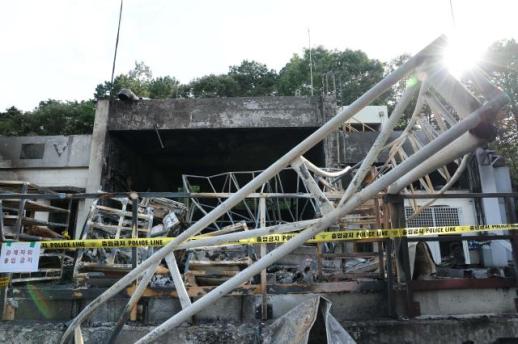 The Cost of Safety: Lessons from the Seosomun and Hanwha Aerospace Disasters The collapse of the Seosomun overpass in Seoul and the explosion at Hanwha Aerospace's Daejeon facility may appear to be unrelated incidents. One involves aging urban infrastructure, while the other concerns industrial accidents at a high-tech defense company. However, both incidents ultimately raise the same question: How seriously does South Korea take safety? The Seosomun overpass, completed in 1966, had been flagged for structural risks for several years and received a low rating in a safety inspection. During the demolition process, the structure collapsed, resulting in the tragic loss of lives. The circumstances revealed after the accident are shocking, including controversies over safety management plan approvals and repeated warnings of danger, making it difficult to avoid the label of a preventable disaster. The Hanwha Aerospace incident is similarly troubling, especially since it is not the first of its kind. In 2018, an explosion at the facility killed five people, and another explosion in 2019 claimed three more lives. Now, seven years later, another explosion has occurred, resulting in five deaths and two injuries. In total, 13 workers have lost their lives in three separate incidents. In the previous incidents in 2018 and 2019, the courts found the company guilty of negligence in oversight and inadequate safety measures. Hanwha promised to improve safety through automation and remote monitoring. Yet, the recurrence of such a major disaster suggests that these issues cannot be attributed solely to on-site errors or coincidences. Immediately following the incident, Kim Seung-yeon, chairman of Hanwha Group, expressed condolences and directed the establishment of a special response task force to support the victims' families. Son Jae-il, CEO of Hanwha Aerospace, also acknowledged the heavy responsibility and promised to investigate the cause of the accident and prevent future occurrences. Such actions are necessary and expected. It is fundamental for corporate leaders to demonstrate accountability. However, true responsibility does not end with an apology. It lies in thoroughly investigating the causes of the accident, addressing structural issues, and ensuring that similar incidents do not happen again. This incident also prompts a reevaluation of the unique characteristics of the defense industry. The defense sector is responsible for national security. Recently, South Korea's defense exports have surged, gaining global attention. While production volumes are increasing, safety must not take a backseat. If an industry responsible for national security fails to protect its workers, it undermines its sustainable competitiveness. The Ministry of Labor's directive for urgent safety inspections in the defense and semiconductor sectors following the incident underscores this point. Both sectors have emerged as key drivers of South Korea's economy. However, as growth accelerates, vigilance regarding safety must also increase. Current safety standards cannot accommodate production levels that were acceptable in times of lower demand. The Seosomun incident offers a similar lesson. Aging infrastructure is no longer just a local issue. It has shown that collapses can occur even in the heart of Seoul. Across the country, there are bridges, tunnels, and overpasses that have been in service for decades. The practice of delaying repairs and replacements due to budget constraints must come to an end. As the economy grows, society should become safer. Yet, the reality often reflects the opposite. When safety is sacrificed for growth, inspections are reduced for efficiency, and risks are taken to cut costs, accidents become a foregone conclusion. Renowned investor Warren Buffett once said, "It takes 20 years to build a reputation and five minutes to ruin it." This applies to corporations, governments, and public institutions alike. Safety is not a cost; it is an asset of trust. Investing in safety is not an expense but an insurance policy that protects lives and trust. The Seosomun and Hanwha Aerospace incidents illustrate that our society still calculates safety as a cost. The consequences have been devastating. Lives lost cannot be restored by any amount of money. Each time an accident occurs, promises of special inspections and preventive measures have become a familiar sight. However, the public demands results, not just words. The government must reassess laws and regulations, and companies must prioritize safety investments as a core value of management. Above all, executives must recognize safety not as a concept in opposition to productivity, but as a prerequisite for corporate survival. Safety is not optional. It is a fundamental duty of the state and a minimum obligation of corporations. The most significant lesson from the Seosomun and Hanwha Aerospace disasters lies here.* This article has been translated by AI. 2026-06-02 10:30:00
 -
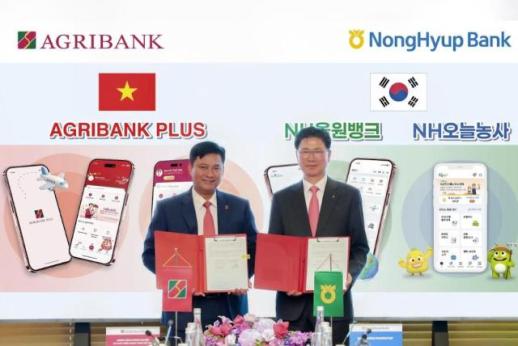 NH Nonghyup Bank's Taeyoung Kang Shifts Focus from Risk Management to Risk Prediction Taeyoung Kang's leadership at NH Nonghyup Bank stands out from the start. While most bank leaders reinterpret finance with a focus on growth and expansion, he begins by addressing the essence of 'risk.' Nonghyup Bank is structurally a blend of public service and commercial interests, deeply connected to the volatile sectors of agriculture and local economies. In this environment, entrepreneurial finance manifests not as aggressive expansion but as 'transformation within stability.'Kang approaches this challenge through technology. AI-based credit assessments, early warning systems, and data-driven risk management define his vision. He sees the future of finance not as 'lending more' but as 'making more accurate judgments.' This is not merely about efficiency; it is an attempt to redefine the direction of finance. If uncertainty cannot be eliminated, it must be transformed into a predictable domain, which is the core of Kang's leadership. Transforming Risk Perception from Avoidance to InterpretationThe essence of Kang's leadership lies in his perspective on risk. Traditional finance has focused on avoiding or controlling risks after they arise. When problems occur, the approach is to reduce them, and when risks increase, the response is to block them. However, Kang aims to fundamentally change this approach. He views risk not as something to eliminate but as data to be interpreted. Uncertainty does not disappear; instead, it can be transformed into an understandable domain.This distinction alters how finance operates. Avoidance is defensive, while prediction is strategic. Kang seeks to transition finance from an 'industry managing uncertainty' to one that 'interprets uncertainty.' This is not merely a philosophical stance but a choice rooted in the realities of Nonghyup Bank. The customer base, centered on agriculture, local economies, and small businesses, is inherently volatile, influenced by numerous variables such as climate, economic conditions, prices, and policies. In this structure, merely avoiding risk is insufficient for survival.Kang acknowledges this limitation and aims to overcome it through technology. He focuses on enhancing the ability to read risks rather than merely reducing them. This approach may appear conservative, but it is, in fact, the most proactive strategy. AI in Finance: An Experiment to Change Decision-Making StructuresIn Kang's leadership, AI is not just a tool; he defines it as a system that changes decision-making structures. Historically, financial decisions relied on experience, intuition, and limited data. The decision to approve loans was heavily influenced by the judgment of the responsible officer, and risk management was largely retrospective.However, Kang seeks to change this structure. AI-based credit assessments, early warning systems, and automated risk analysis are all interconnected in one direction: enhancing the precision of financial judgments. Data is collected more broadly, algorithms analyze it more quickly, and decisions are made more consistently.This change is different from mere digital transformation. It is an attempt to alter the decision-making process itself. This is particularly significant for organizations like Nonghyup Bank, which serve a diverse customer base with high information asymmetry. Farmers, small business owners, and local enterprises are difficult to assess accurately with standardized credit evaluations. Kang aims to address this issue through data and AI.Ultimately, his strategy is clear: it is not about making more judgments but about making more accurate ones. Balancing Public Interest and Profitability in BankingOne of the most significant characteristics of Nonghyup Bank is its simultaneous existence of public service and commercial interests. This structure creates ongoing tension. Pursuing profit can weaken public service, while strengthening public service can diminish profitability. Most financial institutions approach this as a matter of balance.However, Kang makes a different choice. He views public service not as a cost but as a market opportunity. Agricultural finance, local finance, and policy finance are not merely areas of support but sectors with emerging financial demands.This approach is crucial. It allows for the creation of a structure that can generate profits while maintaining public service. Kang combines AI and data to analyze agricultural data, local economic data, and customer behavior data to design financial products and risk management simultaneously.This goes beyond simple financial support. It is an attempt to create a new financial model that satisfies both public service and profitability. While other banks expand towards platforms and urban centers, Kang expands based on regions and industries. This strategy may be slower, but it is deeper. Overcoming Structural Limitations for Future GrowthKang's leadership has a clear direction but also faces structural limitations. Nonghyup Bank is a cooperative-based organization with a complex decision-making structure and strong public demands. This makes rapid strategic execution challenging.Additionally, it is relatively a latecomer in the digital platform competition. While internet banks and big tech companies are quickly expanding their customer touchpoints, Nonghyup Bank remains somewhat confined within traditional financial models.Nevertheless, Kang's strategy is a direct attempt to break through these limitations. He aims to change direction rather than merely keep pace with speed. The competitive standard for finance is shifting from 'expansion' to 'precision.'If this approach succeeds, Nonghyup Bank could present a new financial model beyond being just a local financial institution. Conversely, if it fails, there is a risk of being trapped by structural limitations. Ultimately, the success or failure of Kang's leadership boils down to one question: Can a finance model that predicts risk become genuinely competitive? SWOT Analysis:Kang's leadership is defined as 'AI-based risk prediction entrepreneurship.'Strengths include a strategic mindset that seeks to transform risk from mere control to a predictable domain. AI-based credit assessments and early warning systems are key tools that enhance the precision of financial decision-making, supported by Nonghyup Bank's extensive regional and agricultural data.Weaknesses involve structural constraints. The organization is required to balance public service and profitability, which limits the speed of strategic execution, and it is relatively a latecomer in the digital and platform competition.Opportunities are clear. The combination of agricultural and local finance with data-driven finance is an area that other banks may find difficult to replicate. The spread of AI in finance could strengthen Nonghyup Bank's strategy.Threats include external competition and internal structure. Big tech and internet banks are rapidly encroaching on customer touchpoints, and profitability pressures persist. Additionally, if risk prediction fails, the consequences could be significant.* This article has been translated by AI. 2026-05-23 10:14:35
 -
 Woori Bank's CEO Jeong Jin-wan Focuses on Restoring Trust in Finance Jeong Jin-wan, CEO of Woori Bank, bases his leadership on a foundation of crisis. He took charge of an organization where trust had eroded, rather than one experiencing growth. Following incidents of improper lending and embezzlement, he faces the challenge of restoring the bank's core essence. Jeong has distilled this issue into a singular task: 'trust recovery.' Instead of opting for flashy strategies, he has chosen to return to basics.Internal controls, corporate culture, and customer focus may seem like conservative approaches, but they are, in fact, the most aggressive strategies. Trust is the strongest competitive advantage in finance. At the same time, he has re-emphasized Woori Bank's roots in corporate finance. The challenge lies in balancing these two aspects: trust requires a slower pace, while corporate finance demands speed. The essence of Jeong's leadership is to unify these conflicting directions into a single strategy. He has initiated an experiment to transform the 'collapsed bank' into a 'bank that is chosen again.' Leadership Emerging from Crisis, Centering on TrustThe starting point of Jeong Jin-wan's leadership is clear: it is not growth or innovation, but trust. Upon his appointment, he prioritized internal control reform and corporate culture restructuring as essential tasks. This was not a choice but a necessity, as Woori Bank had already suffered significant losses in market trust due to major financial incidents. Jeong approached this issue as a matter of 'people' rather than 'systems.' He believes that the failure of internal controls stems from organizational overload and culture, not from the system itself. He aimed to restructure the organization to reduce employees' workload and create time for focusing on internal controls. This approach is not merely about strengthening controls but about creating an environment where controls can function effectively. At this juncture, Jeong's leadership reveals its characteristics. Instead of tightening regulations, he creates a structure that allows regulations to operate. This is a hallmark of field leadership. Returning to Corporate Finance, Reviving Woori Bank's EssenceJeong finds Woori Bank's competitiveness in 'corporate finance.' From the outset of his tenure, he emphasized that the bank's roots lie in providing financial services to Joseon merchants and declared a commitment to strengthening corporate finance. His symbolic first step was to visit small and medium-sized enterprises and small business sites directly. This was not just a simple event but a strategic message declaring a return to the real economy as the bank's focus. However, his corporate finance strategy differs from the past. He is cautious about reckless loan expansion, setting loan targets at a 'maintenance' level to manage risks effectively. Jeong views corporate finance as a matter of 'quality' rather than 'quantity.' This represents an attempt to balance financial stability with growth. Transforming the Organization with a Field-Centric ApproachAnother notable aspect of Jeong's leadership is his approach to organizational restructuring. He has reduced headquarters operations and strengthened the independence and accountability of sales organizations. The abolition of the division head system and the expansion of group leaders' authority are prime examples. This goes beyond simplifying the organization; it also clarifies responsibility. As organizations become more complex, accountability becomes blurred, and when accountability is unclear, internal controls weaken. Jeong aimed to structurally block this issue. Additionally, the shift from relative to absolute performance evaluation is noteworthy. This measure aims to reduce excessive competition and enhance organizational stability, aligning with the structural changes to strengthen internal controls. Jeong focuses on making the organization operate 'stably' rather than merely 'efficiently.' Platform Strategy: Becoming a Bank That Attracts CustomersJeong acknowledges the limitations of traditional sales methods. He believes that we are no longer in an era where customers visit banks; instead, banks must reach out to customers. Consequently, he is strengthening the platform strategy. A prime example is the collaborative platform 'To the Moon.' This is not just a ticket booking service but a platform designed to expand customer touchpoints. It combines cultural content with finance to integrate into customers' daily lives. Jeong views expanding the customer base as a 'result' rather than a 'goal.' He aims to create a structure where customers voluntarily choose the bank, rather than merely meeting sales targets. This strategy differentiates him from traditional banks. While conventional banks set targets and strive to achieve them, Jeong designs customer experiences and waits for the outcomes. Prioritizing Stability Over Speed: A Shift to Long-Term StrategyJeong's leadership does not prioritize speed. He places greater importance on improving the organization's fundamentals over short-term results. In fact, Woori Bank once endured negative growth while focusing on enhancing internal controls and asset structure. This is a significant characteristic of financial entrepreneurship. Choosing long-term competitiveness over short-term performance is not an easy decision. Jeong aims to transform the bank into a 'sustainable organization' rather than merely a 'growing organization.' While this may appear to be a conservative strategy, it is, in the long run, the most aggressive choice. SWOT Analysis:Jeong Jin-wan's financial entrepreneurship is defined as 'trust-based field-oriented reconstruction leadership.'Strengths include expertise in corporate finance and understanding of field operations. He possesses the ability to design finance connected to the real economy based on his experience in small and medium-sized enterprise sales. Additionally, his structural leadership simplifies the organization and clarifies responsibilities. Weaknesses include limitations on growth speed. The strategy focusing on internal controls and improving fundamentals may constrain short-term performance. Furthermore, the late start in platform competitiveness compared to other financial groups is also a concern. Opportunities arise from structural changes in finance. Expanding corporate finance, platform finance, and ESG finance provide Woori Bank with opportunities for resurgence. Particularly, trust recovery can serve as a strong differentiator in the market. Threats include competition and past risks. The aftereffects of financial incidents, factional conflicts within the organization, and gaps with competing banks remain burdensome. Delays in trust recovery could also jeopardize growth strategies.* This article has been translated by AI. 2026-05-21 07:31:02