
Journalist

Chang Moon-ki
mkmk@ajunews.com
-
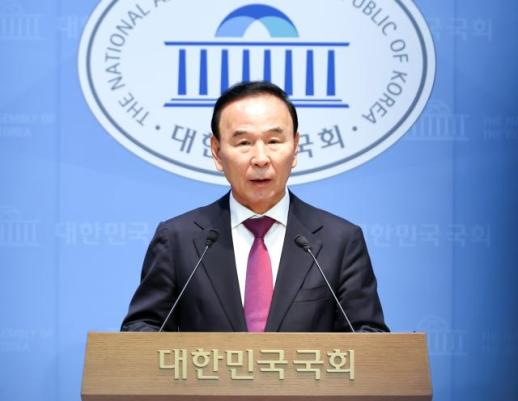 People Power Party's Jo Bae-sook and Park Deok-heum Announce Candidacy for National Assembly Vice Speaker People Power Party lawmakers Jo Bae-sook and Park Deok-heum declared their candidacies for the position of National Assembly Vice Speaker on May 8, stating, "The National Assembly must change." During a press conference at the National Assembly's communication hall, Park emphasized the importance of maintaining open dialogue, saying, "We must show the public that we will not close the door to conversation, even if there are differences between the ruling and opposition parties." He added, "Gaining the trust of the people is the only way for our National Assembly to stand tall." If elected as Vice Speaker, Park pledged to lead efforts to reach consensus through dialogue and compromise with the ruling party. He expressed his determination to restore trust between the parties and overcome political skepticism to create a National Assembly that offers hope to the public. Referencing his political philosophy of 'Ubo Cheonri' (taking steady steps), Park stated, "I will focus on the people and take one step at a time in my legislative activities." Jo also announced his candidacy for Vice Speaker at the same venue. He pointed out, "In the face of the ruling party's legislative dominance and extreme confrontations, the voices of the people have been silenced," adding, "The National Assembly should not be a place of conflict but a place for problem-solving." He pledged to utilize his experience as a five-term lawmaker as a tool for cooperation aimed at improving the lives of citizens. "As 'the daughter of Honam,' I will be a catalyst for integration across regions and generations," he said, vowing to dedicate all his political resources to regaining the trust of the people by abandoning outdated habits and vested interests. Meanwhile, the People Power Party plans to select its candidate for Vice Speaker on May 13. In addition to Park and Jo, Jo Kyung-tae, a six-term lawmaker, is also considered a potential candidate for the position. 2026-05-08 12:38:51
 -
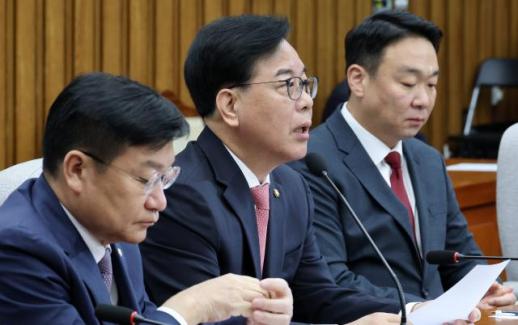 Song Eon-seok: The Democratic Party Should Change Its Name to 'Arrogant Party' Song Eon-seok, floor leader of the People Power Party, criticized the Democratic Party on May 8, suggesting it should change its name to "Arrogant Party" due to recent gaffes. He warned that the party would face public judgment in the upcoming local elections. During a meeting at the National Assembly, Song remarked, "The recent outrageous comments from the Democratic Party reveal its arrogance." He cited a statement from Democratic Party lawmaker Park Seong-jun, who claimed that most citizens do not understand the meaning of a public indictment withdrawal, which drew criticism for dismissing public opinion. Additionally, Jeong Won-o, the Democratic candidate for Seoul mayor, faced backlash for advising a struggling shop owner to seek consulting despite high tourist numbers. Lawmaker Kim Moon-soo also faced scrutiny for derogatory remarks about civil servants. Song pointed out that the party has not initiated any disciplinary actions against those making such comments, describing this inaction as a sign of arrogance, indifferent to public outrage. Party Secretary-General Jeong Hee-yong echoed these sentiments, stating that the repeated inappropriate remarks from Democratic candidates reflect their disregard for the public's concerns. He warned that their arrogance and irresponsibility would be judged at the polls. The meeting also addressed rising real estate prices and overall inflation, criticizing government policies. Consumer prices rose 2.6% year-on-year last month, marking the largest increase in 21 months, with fuel prices surging by 21.9%. Song highlighted that the KB rental supply index is at its highest since July 2020, with the proportion of monthly rentals reaching a record 68.3%. He called for increased housing supply, predictable taxation, and stability in the rental market, urging the opposition to present solutions for stabilizing the real estate market. Policy Chair Jeong Jeom-sik criticized President Lee Jae-myung for dismissing concerns about fiscal populism, labeling critics as "strange people." He condemned this attitude as arrogant and a disregard for warnings from experts about potential economic crises. 2026-05-08 12:02:51
 -
 National Assembly Passes 115 Bills Including AI Data Center and Defense Semiconductor Laws The legal framework to support the activation of artificial intelligence (AI) data centers has been established. Additionally, a law to support the development of defense semiconductors has been enacted. On May 7, the National Assembly passed 115 bills, including the 'Special Act on the Promotion of the AI Data Center Industry' and the 'Law on the Development and Support of Defense Semiconductors.' A proposed constitutional amendment was not voted on due to a lack of quorum. The AI Data Center Promotion Act focuses on easing facility regulations and introducing special zones to enhance the construction and operation of AI data centers. It also includes provisions for related infrastructure and financial support. Some lawmakers expressed concerns that the bill might prioritize industrial growth at the expense of environmental and social costs for future generations, but it passed with 176 votes in favor out of 201. The bill regarding defense semiconductors, which mandates the Minister of National Defense to establish a basic plan for their development, also passed with 201 votes from 203 present. This law establishes a Defense Semiconductor Promotion Committee to review key policies and plans related to defense semiconductors and allows the Defense Acquisition Program Administration to pursue research and development (R&D) for military semiconductors. The 'Basic Law on Life Safety,' which guarantees public safety rights and outlines the responsibilities of the government and local authorities, also cleared the Assembly. This law will establish a National Life Safety Commission under the President, requiring the government to develop a comprehensive life safety plan every five years. A National Safety Accident Investigation Committee will also be created under the Prime Minister to investigate major safety incidents. Additionally, the 'Comprehensive Amendment to the Basic Law on Low Birth Rates and an Aging Society' was processed, changing its name to the 'Basic Law on Population Strategy' and expanding the committee's scope. Bills to support the development of Arctic shipping routes and solar power generation projects were also approved. A bill amending the Foreign Exchange Transaction Act, which requires registration with the Ministry of Economy and Finance for businesses dealing in virtual asset transfers, also passed. Meanwhile, the National Assembly attempted to present a constitutional amendment, but the ruling party did not participate in the vote, preventing it from proceeding. National Assembly Speaker Woo Won-sik announced that the amendment will be reintroduced in a session on May 8.* This article has been translated by AI. 2026-05-07 23:39:12
 -
 Constitutional Amendment Vote Fails Due to Opposition Party's Absence On May 7, a proposed constitutional amendment was presented to the National Assembly, but the vote was invalidated due to the absence of the People Power Party (PPP). Assembly Speaker Woo Won-sik and the ruling Democratic Party plan to reconvene on May 8 to reintroduce the amendment. During the session, only 178 lawmakers participated in the vote, failing to meet the quorum. The amendment aims to enshrine the democratic ideals of the Busan-Masan Democratic Uprising and the May 18 Democratic Movement in the preamble of the constitution. It also stipulates that the president must obtain National Assembly approval within 48 hours of declaring martial law; otherwise, the martial law will be immediately revoked. Additionally, it seeks to clarify the government's obligation for balanced regional development and change the constitution's title from Hanja to Hangul. Woo Won-sik stated that the amendment addresses gaps in the constitution revealed during the December 3 martial law, emphasizing the need for constitutional safeguards to prevent future misfortunes. The PPP, which has opposed the amendment as a party line, chose not to participate in the vote, effectively blocking its passage. A two-thirds majority of the National Assembly is required for the amendment to pass, and with all 106 PPP members absent, the vote could not proceed. Instead of voting, all PPP lawmakers issued a statement during a party meeting outlining five principles for constitutional reform: enhancing the spirit of the constitution, a well-defined preamble, citizen participation, bipartisan cooperation, and a calm approach during non-election periods. In response, Chun Jun-ho, a senior Democratic Party official, criticized the PPP's absence as a defense of illegal martial law, calling it a betrayal of the public's will to uphold democracy. After encouraging the PPP to participate, Woo declared the vote invalid at 4:04 PM. He announced that the assembly would reconvene on May 8 at 2 PM to reintroduce the amendment. To hold a public referendum alongside the June 3 local elections, the amendment must pass by May 10.* This article has been translated by AI. 2026-05-07 21:29:58
 -
Proposal to amend constitution fails to be put to vote amid PPP boycott SEOUL, May 7 (AJP) - A proposed bill to partially amend the constitution, led by the ruling Democratic Party (DP), stalled at the National Assembly in Seoul on Thursday after the main opposition People Power Party (PPP) boycotted a parliamentary vote, leaving it short of the quorum required to proceed with only 178 lawmakers taking part. National Assembly speaker Woo Won-shik and DP lawmakers vowed to reconvene another plenary session on Friday to put the bill back to a vote. The proposed amendment seeks to include key democratic movements and struggles in South Korea's history including the May 1980 Gwangju uprising, in the constitution's preamble to reaffirm democratic values following disgraced former President Yoon Suk Yeol's botched martial law debacle in December 2024. It would also require a president to obtain National Assembly approval within 48 hours of declaring martial law. If approval is not secured within 48 hours, or if the National Assembly votes to lift martial law, the declaration would immediately lose effect, to prevent a repeat of incidents like Yoon's short-lived, overnight bid. The proposal also includes provisions to promote balanced regional development. The PPP, however, has opposed the amendment, calling for more deliberation rather than rushing it through ahead of local elections slated for early next month. To pass, it requires approval from at least two-thirds of all lawmakers. If all 106 PPP lawmakers are absent, the vote cannot be valid. To put it to a national referendum alongside the June 3 local elections, the proposal must clear the National Assembly by no later than May 10. 2026-05-07 17:48:55
-
 Ruling, opposition parties clash over constitutional amendment vote in South Korea Rival parties traded sharp words May 7 over a constitutional amendment bill set to be brought to the National Assembly floor. The Democratic Party urged the People Power Party to take part in the vote, while the PPP said it would oppose what it called a rushed, patchwork revision. At a meeting at the National Assembly ahead of the plenary session, Democratic Party floor leader Han Byeong-do said the bill would add references to the Bu-Ma Democratic Protests and the spirit of the May 18 movement to the Constitution’s preamble. He said it would also strengthen parliamentary control over emergency martial law and include the state’s duty to pursue balanced national development. Han rejected criticism that the proposal was aimed at elections, saying balanced development could not be dismissed as an election tactic. He called for lawmakers to look beyond immediate political advantage and consider the country’s long-term future, arguing the Constitution should be updated gradually as circumstances change. PPP floor leader Song Eon-seok said he believes constitutional revision is necessary, but compared the current approach to altering only a few parts of ill-fitting clothing. He said a proper revision should redesign the entire document, including the preamble, main text and supplementary provisions. Song said he would fully support talks on issues such as human dignity in the age of artificial intelligence and how to protect citizens’ rights and human rights. But he said he would firmly oppose a revision discussed to match election timing and limited to selected provisions. The Assembly is scheduled to hold a plenary session May 7 to handle the amendment bill and 115 bills related to people’s livelihoods. The PPP plans to skip the amendment vote and enter the chamber when the livelihood bills are taken up.* This article has been translated by AI. 2026-05-07 14:46:13
 -
 Jeonbuk Gov. Kim Kwan-young Announces Independent Bid for June 3 Local Election Jeonbuk Gov. Kim Kwan-young on May 7 formally declared his candidacy in the June 3 local elections, saying he will run as an independent after being expelled from the Democratic Party. At a news conference at the Jeonbuk Provincial Council in Jeonju, Kim questioned whether the party’s nomination process was fair and whether it reflected the will of Jeonbuk residents. “I will seek the judgment of the residents, not the party’s nomination certificate,” he said. Kim was expelled after it became known just before the party’s primary for governor that he had handed out cash envelopes at a dinner with local young people in November and later retrieved some of the money. He said he paid the money as a substitute-driver fee to prevent drunk driving, adding, “It was my fault,” and apologized for causing residents “hurt and concern.” In a CBS radio interview on “Park Seong-tae’s News Show,” Kim said he was expelled within 12 hours without an opportunity to explain. He also claimed party leaders treated another candidate’s alleged meal-payment scandal differently, saying only two people were interviewed and the case was dismissed. Many people, he said, view the leadership’s approach as “excessively unfair.” Kim also said the timing of the release of CCTV footage showing the cash handoff suggested it may have been “strategic” and “planned.” He said he has asked police to investigate how the footage was leaked and provided. At the news conference, Kim highlighted what he called achievements over the past four years, including attracting 27 trillion won in investment and Jeonju being selected as South Korea’s candidate city for the 2036 Summer Olympics. He said Jeonbuk’s industrial landscape is changing in areas such as physical artificial intelligence, secondary batteries, biotech, defense, renewable energy, Saemangeum and a financial hub, and pledged to be accountable for companies’ investment commitments. Democratic Party candidate Lee Won-taek criticized Kim’s decision to press ahead with an independent run, saying the day before that once a primary ends, candidates need a culture of accepting the result and reflecting.* This article has been translated by AI. 2026-05-07 11:00:14
 -
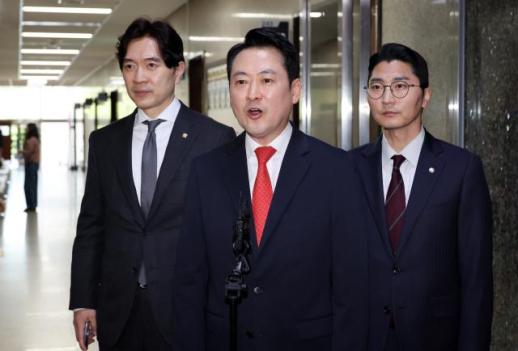 National Assembly Speaker Woo asks People Power Party leader Jang to back constitutional amendment vote National Assembly Speaker Woo Won-shik on May 6 again asked People Power Party leader Jang Dong-hyeok to cooperate on a floor vote on a constitutional amendment bill, a day before it is to be brought to the plenary session. Jang reaffirmed his opposition, saying it is not appropriate to discuss constitutional revision while the ruling party is pursuing what he called an unconstitutional special counsel probe. Woo visited the People Power Party leader’s office at the National Assembly and met with Jang. After the meeting, Woo told reporters he had asked for cooperation ahead of the May 7 vote on the amendment. Jang was reported to have reiterated that his party’s position is to oppose the amendment bill. He also cited the Democratic Party’s April 30 introduction of a special counsel bill titled the “special counsel bill to uncover the truth behind allegations of manipulated investigations and indictments by the Yoon Suk Yeol administration,” and voiced strong opposition to moving ahead with constitutional revision. Speaking to reporters, Jang criticized what he described as unconstitutional moves, including increasing the number of Supreme Court justices, adopting a four-tier court system and a “special counsel to cancel indictments.” “It is contradictory and unacceptable to even talk about constitutional revision while engaging in such unconstitutional behavior,” he said. “More important than constitutional revision is an attitude of respecting the current Constitution.” Lawmakers from six parties excluding the People Power Party — the Democratic Party, the Rebuilding Korea Party, the Progressive Party, the New Reform Party, the Social Democratic Party and the Basic Income Party — along with independents, totaling 187 lawmakers, introduced the constitutional amendment bill on April 3. The bill would add the spirit of the Bu-Ma Democratic Protests and the May 18 Democratization Movement to the Constitution’s preamble and strengthen National Assembly control over a president’s declaration of martial law. The People Power Party has opposed the bill, calling instead for a special committee on constitutional revision to be formed after the June 3 local elections to discuss the issue comprehensively. Woo and the six parties backing the bill favor a “step-by-step” approach, revising provisions that draw no disagreement first. Woo and the Democratic Party plan to submit the amendment bill to the plenary session on May 7, aiming to hold a national referendum on the amendment at the same time as the June 3 local elections. With the People Power Party opposing the bill as a party line, however, passage remains uncertain. Approval requires support from at least two-thirds of all lawmakers. The National Assembly currently has 286 members, meaning 191 votes are needed. Assuming independent lawmaker Kang Sun-woo, who is in detention, cannot vote, at least 12 People Power Party lawmakers would need to support the bill.* This article has been translated by AI. 2026-05-06 15:55:43
 -
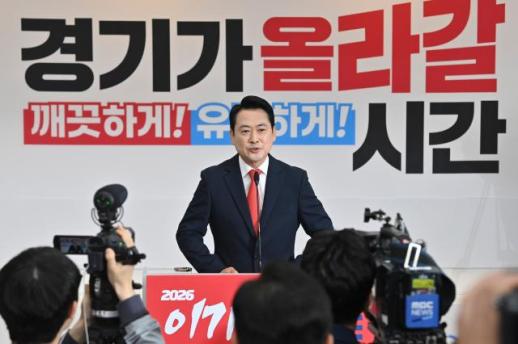 People Power Party rallies behind Yang Hyang-ja in Gyeonggi governor race South Korea’s People Power Party on May 6 pledged to unite behind its Gyeonggi Province governor candidate, Yang Hyang-ja, as it seeks victory in the June 3 local elections. Party leaders urged voters to use the election to hold the government and ruling party to account. Speaking at a “victory rally” at the party’s Gyeonggi headquarters in Suwon, party leader Jang Dong-hyuk criticized the Democratic Party for nominating Chu Mi-ae, saying the party had put forward what he called the “queen of destruction” who, he said, followed President Lee Jae-myung in dismantling the prosecution and undermining the judiciary. Jang said that if Chu wins, she would “ruin Gyeonggi Province” under pressure from Lee’s hard-line supporters, often referred to as “gae-ttal.” Jang also cited a special counsel bill introduced by the Democratic Party on April 30 — titled the “Special Counsel Act to uncover the truth behind allegations of manipulated investigations and indictments by the Yoon Suk Yeol administration.” He said that if an indictment is unfair, it should be addressed through a trial and an acquittal. He called the local elections a vote to judge what he described as the Democratic Party and its leader, Lee. Jang said Yang is the right person to lead what he called “the heart of Korea’s economy,” describing her as an “economy governor.” He said People Power Party candidates would build a Gyeonggi Province where advanced industries bring in money, keep it circulating and improve the lives of future generations. Floor leader Song Eon-seok also framed the vote as a choice between allowing “dictatorship” to stand or checking it. He said the party must stop the Lee administration in Gyeonggi Province, which he called the place where Lee’s “crimes” began. Song urged support for Yang, calling her a qualified candidate who understands the economy and can protect semiconductor plants. Gyeonggi Province is often seen as a key battleground, but the People Power Party finalized its governor nominee later than other races. Yang won the party primary on May 2, just 32 days before the local elections. Party leaders appeared to move quickly to Gyeonggi after the nomination was settled. Speakers at the rally repeatedly stressed the need for unity. Yang said voters do not care about political camps or factions, but want hope that tomorrow will be better than today. “We have no freedom to split, and no right to lose,” she said. After the event, senior spokesperson Park Sung-hoon told reporters the party’s basic duty in the local elections is to show it is not divided. He said internal conflict should not “taint” the party, and vowed to campaign as “one team” to win. The party said its central election committee lineup is expected to be finalized and announced within this week. Park said it would be organized to provide as much help as possible to candidates campaigning under difficult conditions.* This article has been translated by AI. 2026-05-06 15:07:57
 -
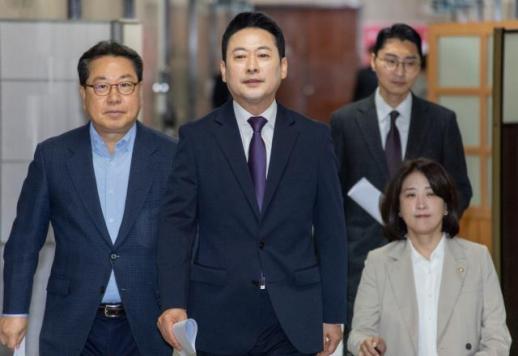 PPP leader warns lawmakers backing independent Han Dong-hoon in Busan by-election People Power Party leader Jang Dong-hyeok said May 5 that lawmakers who entered the National Assembly on a party nomination have “roles and responsibilities” that come with it, in remarks widely seen as a warning to party members backing independent candidate Han Dong-hoon in the Busan Buk-gu Gap by-election. Pro-Han lawmakers pushed back, arguing that conservatives should rally behind strong candidates beyond party lines. The public exchange has raised concerns that factional tensions could flare again ahead of the June 3 local elections and National Assembly by-elections. At a morning news conference at the National Assembly, Jang was asked about Rep. Han Ji-a’s recent actions. He said the party has “principles and standards” and must uphold them to function as a public party. He added that he would clarify the facts behind “various situations” and take necessary steps. The “situations” referred to Han Ji-a’s visit the previous day to Han Dong-hoon’s preliminary candidate registration event. Some in the PPP leadership view support for Han Dong-hoon — who is running as an independent despite the party having its own candidate — as an act of disloyalty. Jang had said on April 23 that the party would take strong action against such conduct. His comments followed remarks a day earlier by floor leader Song Eon-seok that suggested possible disciplinary steps against Han Ji-a. Han Ji-a, however, doubled down at an afternoon news conference, saying she would go to Busan “10 times, 100 times” if it helps rebuild conservatives. She urged the party leadership to stop “attacking from within” and focus on strategy. She said she believes voters will choose those within the conservative camp who “spoke up” and made “the right choice” after the imposition of emergency martial law, adding that conservatives need to unite behind good candidates across party lines. Rep. Bae Hyun-jin, also considered part of the pro-Han faction, weighed in on Facebook. She wrote that Han Dong-hoon, whom she said was pushed out through a forced expulsion, is “a People Power Party person,” and urged the leadership not to interfere with lawmakers’ personal views but to listen to them. With internal divisions deepening, prospects appear dim for a unified conservative candidacy in Busan Buk-gu Gap. Asked about possible cooperation with Han Dong-hoon, Jang drew a line, saying Han is someone the party expelled on principle. Park Min-sik, the former minister of Patriots and Veterans Affairs who was selected that day as the PPP’s candidate for Busan Buk-gu Gap, also dismissed any merger of candidacies. “The possibility is zero,” Park said, adding, “Stop running wishful thinking. If you entered the race, you should face voters’ judgment with confidence.”* This article has been translated by AI. 2026-05-05 19:06:16