
Journalist

Chang Moon-ki
mkmk@ajunews.com
-
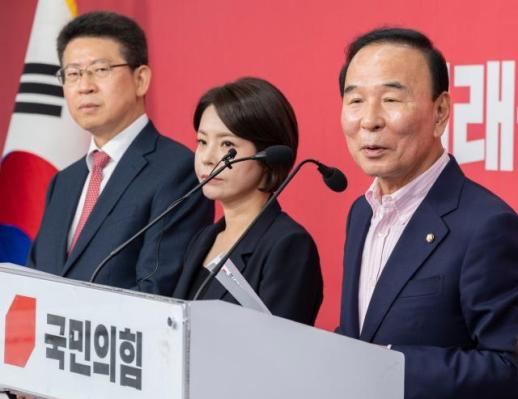 People Power Party Nominates Lee Jin-sook, Lee Yong for June 3 By-elections; Park Min-sik to Face Primary The People Power Party on April 30 finalized candidates for seven of the districts holding June 3 parliamentary by-elections, including Daegu Dalseong. Lee Jin-sook, who previously served as chair of the Korea Communications Commission, was nominated in Daegu Dalseong, and Lee Yong, a former lawmaker, was nominated in Gyeonggi Province’s Hanam Gap. The party put nominations on hold in South Chungcheong’s Gongju-Buyeo-Cheongyang, where Chung Jin-suk, who previously served as presidential chief of staff, applied. The party’s nomination committee met at headquarters in Seoul’s Yeongdeungpo district and approved screening results for eight by-election districts. It decided on single-candidate nominations for Lee in Daegu Dalseong; Park Jong-jin, head of the party’s Incheon chapter, in Incheon Yeonsu Gap; Shim Wang-seop, chairman of the Environmental Landscaping Development Foundation, in Incheon Gyeyang Eul; Ahn Tae-uk, who previously led the party’s Gwangju chapter, in Gwangju Gwangsan Eul; Kim Tae-gyu, who previously served as vice chair of the Korea Communications Commission, in Ulsan Nam Gap; Lee Yong in Hanam Gap; and Ko Gi-cheol, head of the party’s Jeju chapter, in Jeju Seogwipo. In Busan Buk Gap, where former party leader Han Dong-hoon is running as an independent, the party said its nominee will be chosen through a primary between Park Min-sik, who previously served as minister of patriots and veterans affairs, and former KBS reporter Lee Young-pung. In Gongju-Buyeo-Cheongyang, seven people applied for the nomination, including Chung. The committee said it would suspend screening after an objection was filed. Committee chair Park Deok-heum said the matter was being handled through party ethics procedures and that a final decision would be made on May 7. The party also said it would reopen applications in North Jeolla’s Gunsan-Gimje-Buan district. The party accepted applications for the by-elections on April 30 and announced single-candidate picks a day later. While it had initially emphasized primaries, only one of the eight districts will hold a primary under the plan announced Friday. The nominations also included figures some classify as aligned with former President Yoon Suk Yeol, prompting renewed debate over a so-called “Yoon again” push. Kim Hyun-jung, floor spokesperson for the Democratic Party, said in a written briefing that the People Power Party had promised to break with the Yoon Suk Yeol government but was “returning to ‘Yoon again,’” and urged the party to “clear out” those forces if it was serious about reform. Asked about the controversy, Park said he was not sure “who is ‘Yoon again,’” adding that the party selected candidates with strong overall results based on document reviews and interviews. Separately, the committee nominated incumbent Mayor Lee Beom-seok for the North Chungcheong city of Cheongju. It said it would reopen recruitment for mayoral candidates in Siheung, Gyeonggi Province, and Jeonju, North Jeolla Province. The single-candidate recommendations announced Friday will be finalized after approval by the party’s supreme council.* This article has been translated by AI. 2026-05-01 16:18:19
 -
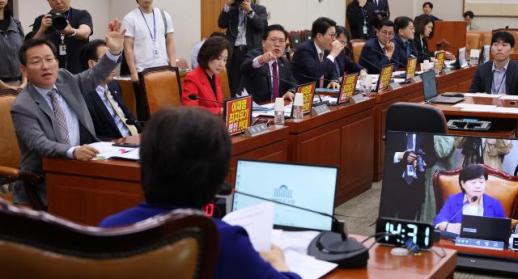 Korea parliamentary probe ends; Democrats introduce special counsel bill, PPP pushes back A National Assembly special committee investigating allegations of politically driven, fabricated indictments under the Yoon Suk Yeol administration effectively wrapped up its work on April 30, 42 days after it began, as the Democratic Party-led panel adopted its final report. The committee also voted to file complaints against 31 people on allegations including perjury. After the committee ended, the Democratic Party said it would “realize judicial justice” and introduced a special counsel bill. The People Power Party countered that “judicial justice has been damaged” and separately filed complaints against four hearing witnesses. With the ruling party planning to process the special counsel bill next month, clashes between the parties are expected ahead of the June 3 local elections. At a full meeting, the committee approved a report summarizing more than 40 days of work, including three agency briefings, two on-site inspections and four hearings. The committee ended its activities eight days earlier than the date stated in its plan (May 8). The panel approved an agenda item to file complaints against 31 people — including prosecutor Park Sang-yong, who investigated the Ssangbangwool North Korea remittance case, and former Ssangbangwool Chairman Kim Seong-tae and former Vice Chairman Bang Yong-cheol — on allegations such as perjury, refusing to take an oath or testify, and failing to appear. Complaints sought by the People Power Party against National Intelligence Service Director Lee Jong-seok and acting head of the Seoul High Prosecutors’ Office Jeong Yong-hwan were rejected. With the parties unable to narrow differences over the report and the complaint list, the People Power Party declared the meeting disrupted. It also filed perjury complaints on its own against four people it said it could report directly: KH Group Vice Chairman Cho Kyung-sik, former Gyeonggi Province Peace Vice Governor Lee Hwa-young, attorney Nam Wook, and one National Intelligence Service employee. People Power Party members of the committee criticized the ruling party at a news conference. Rep. Kim Hyeong-dong, the party’s floor spokesperson on the panel, said, “They say through this investigation that our judicial system is very solid and safe — so what is the purpose of shaking it?” Rep. Yoon Sang-hyun said the Democratic Party “failed to prove the reality of prosecutorial coercion and fabricated indictments,” adding, “Please do not turn the National Assembly into a ‘bulletproof factory’ that wipes away crimes.” The Democratic Party, citing the committee’s findings, introduced a “fabricated indictment” special counsel bill on April 30, saying it would set the justice system right. Under the bill, the special counsel would be granted authority to take follow-up steps as needed, including seeking dismissal of indictments. The special counsel could appoint up to six assistant special counsels and receive up to 30 seconded prosecutors. The initial term would be 90 days, extendable three times by 30 days each. Cheon Jun-ho, acting floor leader, said, “We intend to process the special counsel bill as quickly as possible, and within next month if we can.” People Power Party floor leader Song Eon-seok wrote on Facebook that he “strongly condemns” what he called an “Lee Jae-myung self-pardon special counsel,” alleging it would be used to eliminate trials involving “a special counsel appointed by President Lee Jae-myung.” He also criticized it as “cowardly politics” that, he said, would use the Democratic Party and a special counsel to erase the president’s own trial. In May, the Democratic Party is set to install new floor leadership, and negotiations are scheduled over the National Assembly’s second-half committee assignments. Lawmakers expect the parties to clash sharply during the special counsel bill’s handling. Some analysts also say passing the bill next month could prove difficult in practice, given concerns it could affect the June 3 local elections and by-elections for National Assembly seats.* This article has been translated by AI. 2026-04-30 18:48:21
 -
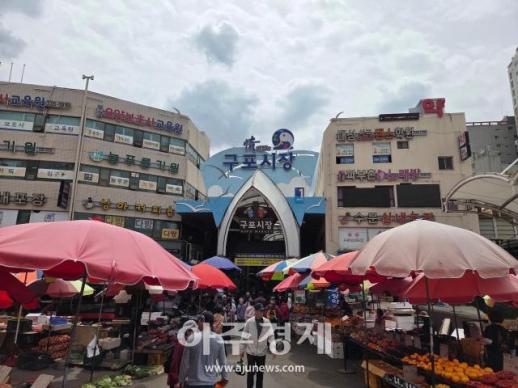 Busan Buk-gu Gap By-Election Emerges as Three-Way Fight, Poll Shows Tight Race “This time, people really want to pick someone who can get things done. If you show your face a lot and pay attention to the neighborhood, people’s hearts go to you,” a self-employed resident said in Busan’s Manduk-dong on April 29, describing sentiment ahead of the June 3 National Assembly by-election. Manduk-dong is part of Busan Buk-gu Gap, widely seen as the most competitive district among the upcoming by-elections. Han Dong-hoon, the former People Power Party leader, moved to Manduk-dong on April 14 and formally declared his candidacy. On April 30, Ha Jung-woo, former senior presidential secretary for AI Future Planning, was confirmed as the Democratic Party candidate. The People Power Party has not yet nominated a candidate, but Park Min-sik, former minister of Patriots and Veterans Affairs, has entered the race. The district has traditionally leaned conservative, but Jeon Jae-soo, the Democratic Party’s Busan mayoral candidate, won the seat three consecutive times. In the general election two years ago, it was also the only one of Busan’s 18 constituencies won by the Democratic Party. Observers attribute that to weaker partisan loyalty and a tendency to vote for individuals. Reporting across Buk-gu, Ajunews found Ha’s low name recognition in the district is viewed as a key weakness. Despite leading national AI policy at the presidential office, his name and face are not widely known locally. With the area aging rapidly, it is also unclear how much appeal an “AI expert” will have. An 80-something woman in Manduk-dong said, “I saw him on the news, but I don’t really know what he does,” adding that people around her also seem unfamiliar. Another resident, identified only as Choi, 80, said, “They say he’s impressive, but honestly I don’t know what an AI secretary is.” Han, who arrived in Buk-gu first, has built a solid base of support centered on Gupo Market. Vendors said that when he visits, supporters crowd in and sales rise, helping make him a welcome presence there. A woman in her 60s who runs a fruit shop at Gupo Market said, “Sales noticeably go up every time Han comes,” adding, “For merchants like us, it’s hard not to like someone who boosts sales.” Still, some said votes in Gupo Market alone will not decide the race and that he will need broader momentum elsewhere. Park, who served as the district’s lawmaker in the 18th and 19th National Assembly, has not secured the party nomination but has been campaigning locally since announcing his bid. Some residents, however, said they still view him negatively because he ran in Seoul’s Gangseo district, not Busan Buk-gu Gap, in the general election two years ago. A man in his 30s at Gupo Market said Park, “who went somewhere else and came back,” has no right to call Han a traitor. A woman in her 40s who said she lives in Buk-gu said leaving for another district after losing and then returning now “is a transparent move.” But one Manduk-dong resident said Park seems to be seen more often in the neighborhood than Han, expressing a favorable view. Political circles say the outcome could remain hard to predict even if the three-way race continues through Election Day without a unified candidacy. A poll commissioned by NewsTomato and conducted by MediaTomato on April 24-25 of 802 Buk-gu Gap residents age 18 and older (wireless ARS; details available on the National Election Survey Deliberation Commission website) showed Ha at 35.5%, Park at 26.0% and Han at 28.5%, a tight contest within the margin of error. The poll had a margin of error of plus or minus 3.5 percentage points at a 95% confidence level.* This article has been translated by AI. 2026-04-30 17:10:51
 -
 Jang Dong-hyeok says South Korea is becoming a monarchy under Lee Jae-myung Jang Dong-hyeok, leader of the People Power Party, stepped up his criticism of the ruling camp on April 30, saying South Korea was becoming a monarchy where “the state is me.” Speaking at a party Supreme Council meeting at the National Assembly, Jang said that with “one word from President Lee Jae-myung,” the ruling party and government were “busy pushing things through without discussion or review.” Jang said Lee’s remark that “it is fair for nonregular workers to be paid more” was followed by a rush to create a “fairness allowance” and raise pay first in the public sector. “Taxpayer money is being put in, but there was no proper review or debate,” he said. He also criticized comments about school trips, saying teachers were unfairly demonized by claims that trips were being canceled to avoid responsibility. As backlash grew, he said, the Education Ministry said it would present measures in May. “A policy produced in a month because the president ordered it can only be sloppy and rushed,” Jang said. Jang also attacked Democratic Party candidates running for mayor in major cities in the June 3 local elections, including Seoul and Busan. He said Seoul candidate Jeong Won-oh was dodging questions about raising property holding taxes and abolishing the long-term holding special deduction. He also criticized Busan candidate Jeon Jae-soo, saying he would not clearly answer a question about whether he received a Cartier item. Separately, the People Power Party used the meeting to denounce a parliamentary investigation into allegations tied to what it called a “political prosecution” under the Yoon Suk Yeol administration. Floor leader Song Eon-seok called it a “self-destructive” probe, saying it began with unconstitutional and illegal actions, proceeded with “barbarism and violence,” but ultimately proved “Lee Jae-myung is guilty.” He said introducing a special prosecutor to cancel an indictment would be an abuse of the rule of law and an act that would destroy the justice system.* This article has been translated by AI. 2026-04-30 11:12:55
 -
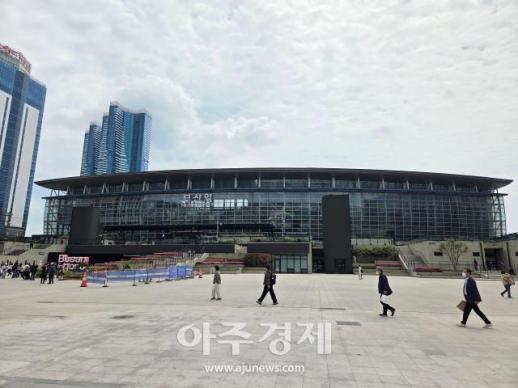 Busan mayoral race tight as voters weigh change vs conservative unity "For 75 years we’ve picked conservatives, but I think it may be time to change. The People Power Party doesn’t even seem sorry to the public. They say Jeon Jae-soo gets things done." Bae, a 75-year-old taxi driver in Busan, said he plans to vote for Jeon Jae-soo of the Democratic Party in the June 3 local elections, saying he has little expectation of the conservative bloc or incumbent Mayor Park Hyung-joon of the People Power Party. In interviews across Busanjin, Haeundae and Buk districts on April 29, many residents said they believe the city needs a change. The mood contrasted with the 66.4% support Park received four years ago. Busan also gave 51.4% support to People Power Party candidate Kim Moon-soo in the presidential election two years ago, but voters now described an unpredictable race. Kim Jun-gyu, 37, who runs a private academy in Dongnae District, said Democratic Party support appears to be rising among younger voters. He said Park’s policies seem focused on Haeundae District, home to Marine City, leaving other areas feeling overlooked. "It also feels like there isn’t enough communication in carrying out policies," he said, adding that he supports Jeon because "change is needed." Others said Busan should back Jeon to better align with the central government. Kim Jin-woo, a 37-year-old office worker who has lived in Busan since age 7, said Park’s administration "wasn’t bad" but may struggle to secure cooperation from the government. He said the next mayor should address Busan’s aging population by ensuring companies such as HMM relocate to the city without setbacks. Support for Park also remained strong, reflecting Busan’s long conservative tilt and his status as incumbent. Some supporters said they were satisfied with city administration over the past five years, while voicing sharp criticism of allegations that Jeon received money and valuables from the Unification Church. Park, a 67-year-old electrical contractor in Busan, said Park Hyung-joon "did fine" during his term. She added that Jeon "should clear up" the money-and-valuables issue before seeking office. A man in his 30s living in Nam District said he hears the race is "about half and half," but added that more people than expected say they will not vote for Jeon because of "Cartier." As the election nears, some residents said conservatives are rallying. An 80-something woman who has lived in Buk District for more than 30 years said the belief that "you should vote for the People Power Party" remains strong in Busan. She said that because the Democratic Party holds a majority in the National Assembly and is acting "recklessly," she plans to back the People Power Party for mayor. Taxi driver Kim, 70, said conservatives "need to unite," arguing that politics has become too lopsided and that voters should strengthen the opposing side. A poll showed a similar split. In a survey commissioned by KBS Busan and conducted by Hankook Research from April 17 to 19 among 1,000 Busan residents age 18 and older, Jeon had 40% support and Park 34%, within the margin of error (95% confidence level, plus or minus 3.1 percentage points). The poll used wireless phone interviews. Details are available on the website of the National Election Survey Deliberation Commission. Some analysts said a by-election in Buk-gu Gap, held alongside the local elections because of Jeon’s run, could influence the mayoral vote. A Buk District resident who described himself as a supporter of Han Dong-hoon, the former leader of the People Power Party, said he had not planned to vote but will go to the polls to cast a ballot for Han. "Once you take the (mayoral) ballot, you’re more likely to vote than leave it blank," he said, adding he expects that could benefit the conservative candidate. 2026-04-29 17:45:20
 -
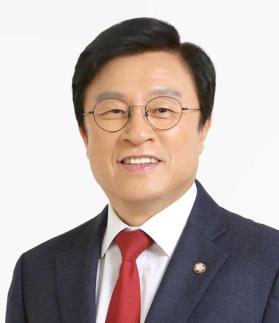 Rep. Park Hyeong-su urges balanced expansion of renewables and nuclear power Rep. Park Hyeong-su of the People Power Party said South Korea needs a major shift to an “energy mix” that can deliver both stable power supplies and carbon reductions, calling for balanced expansion of renewable energy and nuclear power. In written remarks for the “2026 Ajunews Energy Forum” held Tuesday at the Korea Press Center in central Seoul, Park said the country should not repeat “past mistakes” of concentrating national capacity on a single energy source based on ideology or bloc politics. Park, whose constituency includes Uiseong, Cheongsong, Yeongdeok and Uljin counties in North Gyeongsang Province, said Shin Hanul nuclear power plant is operating in Uljin and plans are being pursued to build a national industrial complex for nuclear hydrogen. He added that Yeongdeok is also seeking to attract a new nuclear plant, saying he feels the importance of energy policy “more keenly than anyone.” He cited a government outlook that new electricity demand from future core industries such as semiconductors, artificial intelligence data centers and electric vehicles will more than double, saying a supply environment is emerging that would be difficult to handle with a structure centered only on fossil fuels and renewables. According to demand projections released during the government’s work on the 12th Basic Plan for Long-term Electricity Supply and Demand, South Korea’s power consumption in 2040 is expected to rise to as much as 694.1 TWh, with peak demand reaching up to 128.2 GW. Compared with the previous plan, projected new demand from future core industries jumped to 173 TWh from 79 TWh. Park said choices made by the current generation should not cause future generations to lose competitiveness on the global stage, adding that he hopes the forum will help find practical solutions to protect both South Korea’s energy security and industrial competitiveness.* This article has been translated by AI. 2026-04-29 15:37:01
 -
 PPP Young Lawmakers Say Floor Leader Song Eon-seok Should Serve Full Term A group of first- and second-term People Power Party lawmakers known as Alternative and Future met for breakfast at the National Assembly on April 28, their first gathering in about two months. Participants said they broadly agreed that floor leader Song Eon-seok should serve out his guaranteed term. Rep. Lee Seong-kwon, the group’s secretary, told reporters after the meeting that with the June 3 local elections underway, “the standard for every decision is winning the election.” He said attendees concluded it was not appropriate to hold a vote to pick new floor leadership at this time. Lee said the group had not set an agenda in advance, so the view could not be described as Alternative and Future’s official position. Still, he said those present had no disagreement that it would be undesirable for Song to shorten his own term. Lee dismissed calls from some quarters for a pre-election shake-up in party 분위기, saying such discussions should come after the local election results. “I think the current floor leadership is steering the caucus through the most difficult parliamentary situation in Korean legislative history,” he said. “I understand the hardships, but I ask that they finish strong. Alternative and Future also plans to actively support them.” Lawmakers at the meeting also pledged to work aggressively for victory in the local elections and said conservatives should pool their wisdom to pursue a more inclusive, additive approach to politics. They did not, however, discuss specifics such as forming an election committee or plans for a broader conservative alliance, according to those familiar with the meeting. Twelve lawmakers attended, including Lee, Kim Seong-won, Song Seok-jun, Seo Beom-su, Park Jeong-ha, Cho Eun-hee, Choi Hyeong-du, Kim Jae-seop, Ko Dong-jin, Kim Geon, Kim Yong-tae and Woo Jae-joon. With the argument now raised publicly that Song should complete his term for the sake of election victory, calls for his early resignation are expected to ease for now. Still, Song’s future and the next floor leadership could remain a contentious issue, as the floor leader’s influence could grow depending on the election outcome. If the Jang Dong-hyeok leadership collapses and the party shifts to an emergency committee, the floor leader’s role would be significant because the floor leader would exercise the authority to name the committee chair. Song said at a press briefing last week that he would “carry out my final duties in a direction focused on winning the election.”* This article has been translated by AI. 2026-04-28 11:00:54
 -
 Busan mayoral candidate Jeong I-han hit by thrown drink during campaign; party condemns attack Jeong I-han, the Reform Party’s candidate for mayor of Busan, was struck by a drink thrown from a vehicle while campaigning on the 27th, the party said. According to the Reform Party, Jeong was greeting commuters and asking for support in Busan’s Geumjeong District when a car approached. The driver threw a drink at him and shouted an insult to the effect of, “How can a kid that young run for mayor?” Jeong was born in 1988. Startled, Jeong lost his balance and fell, hitting his head on the ground and briefly losing consciousness. He was taken to a hospital, regained consciousness and remains hospitalized with concussion symptoms. The Reform Party denounced the incident as “terror against democracy.” Party leader Lee Jun-seok told reporters after a meeting of the party’s top council at the National Assembly that people may choose not to support a candidate, but “committing terror is extremely immature behavior.” The party said attempts to resolve political differences through physical force must not be tolerated, adding it would not yield to any effort to suppress “a young candidate’s courageous challenge” through violence and hatred. It urged police to swiftly and thoroughly investigate without leaving any doubts, identify the attacker and hold the person strictly accountable, and take all necessary steps to prevent a repeat. Police are reviewing witness statements and nearby CCTV footage to determine what happened.* This article has been translated by AI. 2026-04-27 17:50:45
 -
 People Power Party Picks Kim Young-hwan as North Chungcheong Governor Candidate Kim Young-hwan, the North Chungcheong governor who was once cut from the People Power Party’s nomination race but returned after a court granted an injunction, was selected as the party’s final candidate for governor in the June 3 local elections. He will face Shin Yong-han, the Democratic Party’s candidate, in the general election. Park Deok-heum, chair of the party’s Nominations Management Committee, told reporters after a committee meeting at party headquarters in Yeongdeungpo-gu, Seoul, on Sunday that Kim was chosen based on the results of the primary held April 25-26. After his win was confirmed, Kim said, “Now we are one under the name of the People Power Party,” and urged unity “for North Chungcheong’s real development and for victory in the general election.” He said he would run “with policies and a vision to develop North Chungcheong and improve residents’ quality of life,” adding that he aims to “raise the level of politics in North Chungcheong” through a “clean and exemplary policy-focused campaign.” Kim had previously been cut from the race under the nomination committee led by then-chair Lee Jeong-hyeon. Kim filed for an injunction seeking to suspend the cut, and the court granted the request, allowing him to enter the party primary. He went on to win the final round and secure the nomination. With Kim’s selection, the People Power Party has decided its candidates for all metropolitan and provincial governor and mayor races except Gyeonggi Province. The party said its Gyeonggi governor candidate will be announced May 2. The party also said all 11 incumbent metropolitan and provincial heads affiliated with the People Power Party, including Kim, will run in the June 3 elections. That contrasts with the Democratic Party, where all five incumbent metropolitan and provincial heads elected in the local elections four years ago lost their party primaries, the party said. Separately, the party’s nominations committee said incumbent Gangneung Mayor Kim Hong-kyu won the primary for the party’s candidate in Gangneung, Gangwon Province.* This article has been translated by AI. 2026-04-27 17:09:07
 -
 South Korea’s People Power Party urges government action over Samsung Electronics union strike threat South Korea’s People Power Party on Sunday called for what it described as a responsible government response to a threatened general strike by a Samsung Electronics labor union. The party also urged the government to roll back what it called pro-union policies and to pursue a new revision of the so-called Yellow Envelope Act, an amendment to Articles 2 and 3 of the Trade Union and Labor Relations Adjustment Act. Party leader Jang Dong-hyeok said at a meeting of the party’s top leadership that “Samsung’s union is holding the South Korean economy hostage.” He said the issue had moved beyond labor-management relations to become “a national economy and livelihoods issue,” and criticized President Lee Jae-myung for offering what he called a meaningless call to “resolve it wisely through dialogue.” Jang warned that with local elections approaching, if the government pressures Samsung and sides with the union, it would be “trading the country’s future for votes.” He said the government and the president should step in to persuade the union and mediate the conflict. Floor leader Song Eon-seok cited the union’s demand for performance pay equal to 15% of operating profit and its notice of a general strike from May 21 to June 7. Industry observers have projected Samsung Electronics’ annual operating profit this year at about 45 trillion won, based on forecasts. Song said demanding 600 million won per worker for all employees, not only top performers, “is difficult to see as meeting global standards.” He added that with semiconductors accounting for 55% of economic growth, he viewed the threatened action as repeatedly “holding the national economy hostage” and damaging shareholder interests and the country’s future. Song blamed what he called one-sided, pro-union government policy for the repeated disputes and stressed the need to revise the Yellow Envelope Act again. He said the law should more clearly define employers through contractual and direct supervisory relationships and limit bargaining topics to wages and working conditions. He also called for more effective rules on liability for losses from illegal labor actions. Supreme Council member Shin Dong-wook said workers’ contributions to South Korea’s industrialization should not be underestimated, but warned that alternative legislation is needed before confusion linked to the Yellow Envelope Act grows further.* This article has been translated by AI. 2026-04-27 10:52:29