
Journalist

Lee nakyeong
nakk@ajunews.com
-
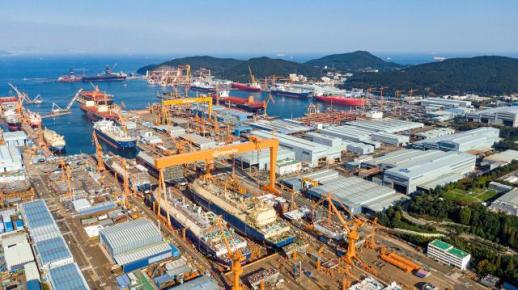 Hanwha Ocean Wins $3.7 Billion Order for Three Very Large Ammonia Carriers Hanwha Ocean said Monday it has won an order worth 507.4 billion won ($3.2 billion) from an African shipowner for three very large ammonia carriers, or VLACs. Including the latest deal, the company said it has secured orders for a total of 10 ammonia carriers so far this year, expanding its presence in the segment. Hanwha Ocean has continued to develop technology for building zero-carbon ships, including obtaining approvals in principle in 2022 from Bureau Veritas and Lloyd's Register for an ammonia carrier design. Last year, it also began work with the Korean Register on developing a 150,000-cbm very large ammonia carrier. The VLAC market has faced greater short-term uncertainty as exports have fallen amid the war in the Middle East, the company said. Still, it said overall cargo volumes have been maintained as exports from other regions, including the United States, have increased. With major importers concentrated in Asia, a shift in export weight from the Middle East to the United States and other areas is lengthening shipping distances. Against that backdrop, ammonia carriers are emerging as a new specialized ship type for South Korea's shipbuilding industry, following LNG carriers, where South Korean companies hold more than 80% of the market, the company said. Hanwha Ocean said it will continue its selective order strategy focused on high value-added and eco-friendly vessels to respond flexibly to market volatility, and will keep strengthening competitiveness in ship types tied to rising demand for vessels using cleaner fuels. The company said it has booked orders this year for 18 ships — 10 very large crude carriers, four LNG carriers, three VLACs and one wind turbine installation vessel — totaling about $3.2 billion. "As ammonia is considered a key energy source in the transition to a hydrogen economy, demand for carriers is also expected to rise steadily," an industry official said. "South Korean shipbuilders are likely to maintain market leadership based on their technology and construction experience."* This article has been translated by AI. 2026-05-04 13:12:15
 -
 Hanwha Solutions’ Rights Offering Faces Second Regulator Revision Request Hanwha Solutions’ plan for a rights offering has been halted again after South Korea’s financial regulator demanded another revision, even after the company reduced the deal size. The latest move has sharpened scrutiny on investor protection and whether the company can justify how it plans to use the funds. Industry officials said Saturday that Hanwha Solutions disclosed it was asked by the Financial Supervisory Service on April 30 to submit a revised registration statement for the rights offering it filed April 17. It was the second such request, following an initial revision demand on April 9. The filing has not been accepted, and its effectiveness has been suspended. Hanwha Solutions previously announced a 2.4 trillion won rights offering aimed at repaying debt, saying it was a step to prevent a credit-rating downgrade amid worsening business conditions. The market response was negative, with criticism that the company moved ahead with a large share issuance without sufficient communication with shareholders and that it planned to use most of the proceeds to pay down debt. The company reapplied after cutting the offering to 1.8144 trillion won, but still failed to clear the regulator’s review. The FSS said the disclosure lacked sufficient detail. It reportedly took issue in particular with about 5 trillion won in noncore assets, including real estate and stakes in other companies, held by Hanwha Solutions. During the first review, the FSS was also said to have questioned why the company pursued a rights offering despite holding a sizable amount of such noncore assets. Some in the market say Hanwha Solutions needs to redesign the offering, providing more specific explanations of how the funds will be used and how the plan would improve its finances, while also presenting steps to limit damage to shareholder value. Industry observers have raised the possibility that Hanwha Solutions could further reduce the amount and add a third-party allotment, since debt repayment still accounts for nearly half of the use of proceeds even after the cut. However, a third-party deal may be difficult because demand from outside investors may be limited and only a small number of affiliates could participate, they said. Hanwha Solutions said it would accept the FSS request and work to supplement the filing. “We take the FSS request very seriously,” the company said, adding that it would “humbly reflect once again on the criticisms and opinions raised by shareholders and the media” and prepare a revised registration statement that meets the requirements.* This article has been translated by AI. 2026-05-03 17:34:13
 -
 Battery Industry Veteran Lee Mi-yeon Pushes Hands-On Training for Technicians Lee Mi-yeon, chair of the Korea Battery Technicians Association, has spent more than 30 years in battery manufacturing and is known as a leader shaped by the factory floor. Since 2010, she has led Yujin Technology, building a reputation as a veteran with hands-on experience and a deep understanding of the industry’s structure. Born in 1976, Lee graduated from Chungcheong University with a degree in mechanical design. She later studied in the Department of Convergence Mechanical Engineering at Jungwon University and completed a bachelor’s degree in business administration at Kyung Hee University, followed by a master’s program at its graduate school of business. In 2010, she founded Yujin Technology in Cheongju, North Chungcheong Province. She has designed and operated precision presses, molds and battery process equipment, while also accumulating on-the-job experience as CEO. Yujin Technology specializes in batteries, producing parts and equipment for the notching process — the first step in battery assembly — as well as lead tabs used as materials in assembly. Its notching molds are supplied exclusively to some affiliates of South Korea’s three major battery makers, the company said, and it holds a 60% share of the domestic market. As association chair, Lee has focused on training technical workers and strengthening the industrial base for the battery and electric vehicle sectors. The association trains field-oriented specialists through education in battery performance evaluation, diagnostics, repair and fire safety. It has produced more than 1,200 battery professionals and built a cooperation network with about 50 organizations. It has also worked beyond training to develop a battery terminology dictionary and standards related to used batteries and fires, the article said. Lee, a female engineer and CEO with broad experience across the battery production floor, said securing “field-ready” talent is urgent for the industry’s continued growth. While battery technology and equipment are advancing quickly, she said, skilled workers who can understand and operate them remain in short supply. “Industrial competitiveness ultimately depends not on technology, but on people who understand the field,” Lee said. “More important than equipment are technicians who can handle it properly.” Reflecting that view, the association is focusing on developing practical technicians who can understand batteries accurately, handle them safely and make data-based judgments, the article said. “Going forward, securing talent with core capabilities such as battery safety and fire response will determine market competitiveness,” Lee said. “The association will work to build an ecosystem where technicians are properly evaluated and can play a central role in the industry.”* This article has been translated by AI. 2026-04-30 05:04:53
 -
 Battery Association Chief Warns Talent Shortage Threatens Korea’s Edge Despite a demand slowdown for electric vehicles, South Korea’s battery industry is looking for a rebound. On the factory floor, however, a shortage of job-ready workers is emerging as a new risk. Lee Mi-yeon, chair of the Korea Battery Technicians Association, said maintaining Korea’s “super-gap” advantage will depend on building a field-centered talent ecosystem. “What will determine competitiveness is how many practical technicians we can secure who can be deployed immediately, not theory-focused talent,” she said. In an interview Tuesday with Ajou Economy, Lee pointed to a workforce mismatch as the industry’s biggest problem. “The industry is growing fast, but the people needed on site are still in short supply,” she said, adding that companies repeatedly face inefficiency by hiring new workers and then retraining them because of a gap between education and workplace needs. She said the profile of in-demand workers is changing. Where the focus once was on employees who could follow fixed processes precisely, plants now need “judgment-based technicians” who can diagnose and solve problems using data. “The current education structure remains at ‘70% theory, 30% practice,’ but the field demands the opposite,” Lee said. “Without a shift to practice-centered training, the labor problem will continue.” South Korean battery companies are already facing severe shortages. The Ministry of Trade, Industry and Energy and the Korea Battery Industry Association project domestic workforce demand in the secondary battery sector will rise rapidly and exceed 110,000 by 2032, implying that about 54,000 additional specialized workers will need to enter the industry. But the number of battery-related graduates and job-ready workers produced each year remains only in the thousands, she said. Shortages extend beyond research and development to production staff who run processes and manage yield. Global conditions are similar. The International Energy Agency said global energy-sector employment totaled 76 million in 2024, up more than 5 million from 2019. Jobs tied to electric vehicles and batteries led growth, increasing by about 800,000 in a single year. Companies, however, are struggling to secure workers with practical skills. In an IEA survey of more than 400 global energy companies, more than half cited labor shortages as their biggest management risk. Firms said their biggest hiring challenges were a lack of candidates with needed technical skills and intensifying competition for talent from rivals and other industries. Lee said overseas production bases are expanding quickly, but core engineers who can set up sites and manage quality are “absolutely” in short supply. To run global production lines reliably, she said, Korean engineers who can train local workers and lead technical work are becoming more important. She said plants are no longer looking for people who simply do what they are told. “The field wants technicians who make their own judgments and take responsibility,” Lee said, calling the ability to analyze battery conditions, interpret abnormal data and connect it to process improvements a key capability. Lee said talent development is directly tied to global competitiveness. She said China is ahead in scale and growth speed, but Korea has strengths in precision processes, quality and safety standards. Korea should respond with a strategy centered on advanced engineers, not just production labor, she said. The association focuses on training “immediately deployable” practical workers in batteries and electric-vehicle charging, including programs for specialized roles such as battery performance evaluators. It has recently expanded and reorganized as the incorporated Korea Battery Technicians Association, moving to strengthen the credibility of its certification system and to build a technician career-history management system. Lee said a key goal during her term is “standardizing technicians” by integrating differing company criteria and building a national standard curriculum and qualification system focused on diagnostics, evaluation and safety. She said the association cannot solve the problem alone. “Battery diagnostic equipment and safety training facilities are too costly for the private sector to build on its own,” Lee said, calling for national-level infrastructure support. She added that qualifications such as battery performance evaluator should be institutionally linked and recognized so they can be used in actual hiring standards. Lee also cited staffing shortages at regional manufacturing sites, saying the gap between the Seoul metropolitan area and other regions is widening and making it harder to secure skilled technicians. She called for a workplace-linked education model involving regional universities, companies and the association to create a virtuous cycle from “education → employment → settlement,” alongside better treatment of technicians and a stronger career-management system. “Ultimately, trust in an industry comes from people,” Lee said. “When trained technicians are sufficiently present on site, competitiveness can be maintained.” She said this year should be a starting point for building national education standards and hands-on training infrastructure, adding that the association will take the lead in building a field-centered talent ecosystem to help sustain Korea’s battery advantage.* This article has been translated by AI. 2026-04-30 05:03:43
 -
 Indonesia’s Sinar Mas revises bid terms to buy Hyundai LNG Shipping as industry opposes sale Hyundai LNG Shipping’s long-stalled sale process has reached a turning point after Indonesia’s Sinar Mas Group presented revised terms that reflect domestic concerns, according to the investment banking industry. Still, whether a deal can be completed remains unclear as the government and the shipping industry are moving to block an overseas sale of a Korean carrier, citing energy security. On 29, the investment banking industry said Sinar Mas recently reintroduced conditions in negotiations to acquire Hyundai LNG Shipping, including employment succession and maintaining the company’s status as a Korean-flag carrier. The move was seen as an effort to address concerns raised earlier about potential damage to energy security. An IMM Private Equity consortium began the sale process in November last year, seeking to transfer Hyundai LNG Shipping to Sinar Mas for about 3.8 trillion won. Hyundai LNG Shipping traces its roots to the liquefied natural gas carrier business unit of Hyundai Merchant Marine. It is South Korea’s largest liquefied gas shipping specialist, operating 12 LNG carriers and six liquefied petroleum gas carriers. Through long-term transport contracts with Korea Gas Corp., it carries about 25% to 30% of the gas imported into South Korea. The shipping industry voiced immediate opposition after reports of an overseas sale. Industry officials have warned that a foreign sale of Hyundai LNG Shipping, which is closely tied to stable energy supply, could lead to the outflow of strategic transport assets and specialized personnel, the loss of LNG shipping know-how and other national wealth, and difficulties requisitioning ships in a national emergency. Against that backdrop, Sinar Mas has again emphasized its intent to ensure operational stability after an acquisition and to keep the existing business structure, highlighting guarantees on employment succession and maintaining Korean-flag status. Major hurdles remain. With tensions continuing in the Middle East, the need for energy-related strategic merchant shipping has again come into focus. A key variable is whether the Ministry of Trade, Industry and Energy approves the sale. The ministry is reviewing, through its Foreign Investment Review Committee, whether the transaction involves a company deemed to hold national core technology. If it is classified as such, a separate approval process by the industry minister would be required, potentially delaying the deal significantly. In 2023, European shipping companies also showed interest in Hyundai LNG Shipping, but the government blocked the sale on energy security grounds and it fell through. “Now is a time when stable energy supply and demand matters more,” a shipping industry official said. “Given the role of a Korean LNG carrier, it is preferable to find a buyer at home rather than sell overseas.”* This article has been translated by AI. 2026-04-29 18:07:33
 -
 Doosan to Invest 180 Billion Won to Build CCL Production Base in Thailand for AI Demand Doosan Corp. is setting up a new production base in Thailand to get ahead of rising demand for copper-clad laminate, or CCL, driven by the expansion of artificial intelligence data centers. The company said Tuesday it will establish a new local entity and build a CCL plant at the Araya Industrial Park in the Bang Bo area of Samut Prakan province. Total investment will be about 180 billion won. The site will cover about 73,000 square meters. Doosan plans to break ground within this year and aims to begin mass production in the second half of 2028. It said it will consider phased capacity expansions in line with demand to improve investment efficiency. The Thailand plant will mainly produce high-performance CCL for AI infrastructure and network equipment, the company said, adding it expects strong growth as global demand expands. Doosan cited logistics and operational stability as key reasons for choosing the site. The industrial park is about a 30-minute drive from Suvarnabhumi International Airport and about an hour from Laem Chabang port. The company also said the newer complex has operating infrastructure and disaster-response systems that support stable production. CCL is a sheet made by laminating copper foil onto both sides of an insulating material and is a core base material for printed circuit boards, or PCBs. Doosan said AI accelerators, which must process massive amounts of data at very high speeds, require high-performance CCL that minimizes signal loss and resists deformation in high-temperature operating environments. As investment in AI data centers grows worldwide, demand for high-performance CCL is rising rapidly, it said. Doosan said it has built competitiveness in CCL on materials technology accumulated over the past 50 years, including an edge in designing the “optimal composition ratio” among materials that determines CCL quality. “We decided to expand production capacity to respond in a timely way to growing CCL demand,” a Doosan official said. “We will monitor market conditions and flexibly review whether additional investment is needed.”* This article has been translated by AI. 2026-04-29 16:23:20
 -
 Samsung Heavy Industries Becomes First Shipbuilder to Earn Zero Waste to Landfill Certification Samsung Heavy Industries said it has strengthened its environmental, social and governance efforts by raising the recycling rate of waste generated at its shipyard. The company said it held a ceremony on the 28th at its Geoje shipyard after receiving UL Solutions’ “Zero Waste to Landfill (ZWTL)” certification. Attendees included Namgung Geum-seong, vice president and head of the shipyard, and Yoon Hye-jin, executive director of UL Solutions Korea, the company said. ZWTL is an environmental certification awarded based on the share of a site’s waste that is recycled rather than sent to landfill, and is used globally to gauge corporate efforts in resource circulation. Samsung Heavy Industries said shipbuilding has faced challenges in resource circulation because it generates a wide range of waste that can be difficult to process. It said it earned the certification after continuing to improve its waste-management system to increase recycling. The company said it overhauled its sorting system by classifying all waste by type and characteristics under its own procedures. It also linked manual sorting to mechanical sorting to raise recovery rates for recyclable materials. It said it further upgraded management by working with the environment office and the Korea Environment Corporation on technical cooperation and professional consulting, and by building a real-time monitoring system. In March, Samsung Heavy Industries said it also became the first in the industry to receive “circular resource recognition” from the Nakdong River Basin Environmental Office for four types of nationally managed waste: slag, dust, waste wood and waste expanded synthetic resin (Styrofoam). The recognition is a government system that allows waste to be treated and, if it is not harmful to health or the environment and can be traded for a fee, to be recognized as a circular resource. “ZWTL and circular resource recognition show the results of Samsung Heavy Industries’ efforts to recycle waste,” Namgung said. “We will further strengthen our resource-circulation system.”* This article has been translated by AI. 2026-04-28 14:30:50
 -
 Lotte Energy Materials to Invest 50 Billion Won to Expand Iksan Circuit Foil Plant Lotte Energy Materials said Monday it will invest about 50 billion won to expand its Iksan plant, the country’s only production base for circuit foil, as it seeks to complete its materials value chain (Elecfoil-CCL-PCB-Module). The company said it decided on the investment to secure future competitiveness even as the electric-vehicle market, including the copper-foil sector, faces headwinds due to a demand slowdown. It cited rapid growth in artificial intelligence data centers as driving a surge in customer demand for HVLP (hyper-very-low-profile) copper foil used for high-speed signal transmission. Through the Iksan plant, Lotte Energy Materials said it is providing materials solutions that meet customer requirements for performance, reliability, mass-production capability and stable supply. The company said the expansion will support customers’ efforts to build more stable supply chains. Chief Executive Officer Kim Yeon-seop said the company made the decision “carefully” to pursue two goals: securing future competitiveness and restoring performance. “We will further strengthen customer trust by securing core materials technologies for the AI and network era and by stabilizing quality and supply through expanded production capacity,” he said.* This article has been translated by AI. 2026-04-28 14:18:45
 -
 HD Hyundai Electric Q1 2026 Operating Profit Rises 18.4% to 258.3 Billion Won HD Hyundai Electric said in a regulatory filing on the 28th that it posted first-quarter 2026 revenue of 1.0365 trillion won and operating profit of 258.3 billion won. Revenue rose 2.1% from a year earlier and operating profit climbed 18.4%. The operating margin was 24.9%. By product, growth was led by the power equipment segment. Power equipment revenue rose 21.6% from a year earlier, supported by expanded performance in North American power transformers. Revenue from rotating machinery increased 10.8% on strong demand for marine products. Revenue from distribution equipment fell 24.2%, the company said, citing a base effect from large distribution-transformer deliveries a year earlier and delayed shipments of low-voltage circuit breakers due to geopolitical risks in the Middle East. By market, North America revenue increased 26.6% from a year earlier, driving overall growth. In Europe, revenue fell from the previous quarter due to a high base but rose 17.0% from a year earlier. First-quarter orders totaled $1.797 billion, up 34.6% from a year earlier, meeting 42.6% of its annual order target of $4.222 billion. The order backlog stood at $7.888 billion, up 17.2% from the end of last year. An HD Hyundai Electric official said the company is maintaining a selective order strategy focused on profitability, while orders continue to rise on demand tied to the spread of AI data centers and replacement needs for aging power grids. The official said the company will complete expansions at its Ulsan plant and its North American production subsidiary without disruption to sustain solid growth. Separately, the company said it will pay a quarterly cash dividend of 1,300 won per common share. The total dividend is 46.8 billion won. The record date is May 13 and the payment is scheduled for May 27.* This article has been translated by AI. 2026-04-28 13:55:09
 -
 Chey Tae-won urges Korea-Japan economic bloc to compete in U.S.-China AI race Chey Tae-won, chairman of the Korea Chamber of Commerce and Industry and chairman of SK Group, on April 28 urged South Korea to pursue cooperation with Japan at a level approaching economic integration as a response to U.S.-China competition for dominance in artificial intelligence. Speaking at the Korea-China Parliamentary Association’s first 2026 policy seminar at the National Assembly Members’ Office Building, Chey said South Korea “must no longer remain a country that simply follows rules between the United States and China.” He argued that keeping influence in the rivalry will require strengthening technological competitiveness while also expanding the country’s economic reach. Chey described U.S.-China tensions as structural and unlikely to end quickly. “The U.S.-China hegemonic competition is highly likely to continue for decades,” he said, adding that South Korea should “coolly” assess whether it has enough strength to defend itself. As a practical alternative, he proposed strategic cooperation with Japan. “Japan has an industrial structure similar to ours and is a country with which we can share interests,” he said. “Beyond simple cooperation, we need solidarity at a level that is recognized from the outside as a single economic bloc.” He said combining the gross domestic product of South Korea and Japan would total about $6 trillion, or roughly one-third of China’s economy. At that scale, he said, the United States and China “would have no choice but to take it seriously.” Chey said stronger Korea-Japan ties could reshape the broader Asian order. He said that if the partnership deepens, Asian countries excluding China could be drawn toward joining an economic bloc centered on the two nations. Over the long term, he said, an “Asian-style community model” similar to the European Union could also be considered. Chey also listed key competitive factors in the AI era as capital, electricity, GPUs (graphics processing units) and memory, and stressed the need for investment to secure large-scale data centers and energy infrastructure. “To do AI well, you need the ability to produce AI, but South Korea currently does not have a great AI data center,” he said. To overcome that, he said, building 1 gigawatt would require about $50 billion in investment. As a strategy for success in the AI technology supremacy era, Chey cited “speed, scale and security.” He said products should be built quickly even if imperfect to attract users, and that a minimum scale must be secured. To do that, he said, it is necessary to follow the strategy of Nvidia, which currently leads the AI industry ecosystem. The Korea-China Parliamentary Association is a bipartisan parliamentary diplomacy platform made up of 145 lawmakers from both the ruling and opposition parties. It has continued policy discussions through seminars and parliamentary diplomacy across areas including foreign affairs, the economy, advanced industries and culture.* This article has been translated by AI. 2026-04-28 13:42:18