
Journalist

김봉철
nicebong@ajunews.com
-
 Lee Says South Korea, Vietnam Aim for $150B Trade by 2030, Expand Nuclear and Infrastructure Cooperation President Lee Jae-myung said South Korea will support efforts to lift trade with Vietnam to $150 billion by 2030 and lay the groundwork to expand cooperation in nuclear power and infrastructure. Lee, on a state visit to Vietnam after traveling to India, made the remarks during a summit on April 22 (local time) with To Lam, the Communist Party’s general secretary and Vietnam’s state president. Lee said South Korea is “the best partner” for Vietnam’s vision of becoming a high-income advanced country by 2045. Vietnam is South Korea’s third-largest trading partner after China and the United States. The two countries are each other’s top-three trading partners, and South Korea is Vietnam’s largest investor. Bilateral trade totaled $94.6 billion last year, a record high. South Korean investment in Vietnam through last year reached $56.8 billion, and about 10,000 South Korean companies operate there. South Korea’s key exports, including semiconductors and home appliances, are produced through a division of labor in which parts and materials are shipped from South Korea and finished goods are made in Vietnam. Lee said the summit would help deepen strategic economic cooperation and strengthen communication on an economic and security partnership, including energy, supply-chain stability and cooperation on critical minerals. The two sides exchanged 12 memorandums of understanding and cooperation documents spanning security and protection, digital, science and technology innovation, intellectual property, power infrastructure, water security, animal health and quarantine, culture, underwater cultural heritage, safety of food, pharmaceuticals, cosmetics and medical devices, nuclear power development, and financing cooperation for nuclear projects. According to a written briefing by presidential spokesperson Lee Kyu-yeon, the countries signed an MOU on safety cooperation for food, pharmaceuticals, cosmetics and medical devices. They also concluded quarantine talks on heat-treated poultry, which the briefing said would help expand access to Vietnam’s $4.3 billion imported pharmaceuticals market and its $11 billion meat market. They also signed an MOU to review cooperation possibilities in nuclear power development, including exploring options for new nuclear plants, jointly analyzing construction risks and supporting plans to optimize construction schedules. Lee said progress was also made on major national infrastructure projects expected to play a central role in Vietnam’s development, including the Dongnam new city and the new Tra Vinh airport. He added that “a contract is expected to be signed” for South Korea to export rail cars for Ho Chi Minh City’s urban rail system, saying he hoped the deal would contribute to improving Vietnam’s rail infrastructure. The leaders also agreed to build a mutually beneficial partnership to strengthen energy security and stabilize supply chains for critical minerals amid global uncertainty. Through a framework for a South Korea-Vietnam science and technology innovation cooperation master plan, the two sides will present a mid- to long-term vision for cooperation and expand support for training Vietnam’s future talent, including efforts aimed at easing labor shortages faced by South Korean companies operating there. In health care, the South Korean government plans to expand cooperation to strengthen Vietnam’s health capacity and improve access to medical services. It also plans to 추진 a “Central Region Emergency Medical System Strengthening Project” to significantly improve emergency care in Vietnam’s central region, described as medically underserved and frequently visited by South Koreans. The government also said it would support expanded cooperation in cultural industries and broader Korean-language education in Vietnam. During the visit, it plans to hold the “2026 Korea Culture and Tourism Expo,” linking Korean pop culture content with tourism promotion, and to support a “5 million mutual visits era” by boosting people-to-people exchanges, including tourism. Lee said South Korea and Vietnam upgraded ties in 2022, the 30th anniversary of diplomatic relations, to a comprehensive strategic partnership and became key partners across all fields. He said the visit further developed the relationship in a more future-oriented and strategic direction. Spokesperson Lee said the state visit was part of “relay summit diplomacy” with ASEAN following trips this year to Singapore and the Philippines and the hosting of a state visit to South Korea by Indonesia’s president. He said the trip helped complete the best possible partnership with Vietnam across politics, the economy and culture. The summit with To Lam was the first state event hosted by Vietnam’s new leadership, which took office earlier this month, and came eight months after To Lam’s visit to South Korea in August last year. * This article has been translated by AI. 2026-04-23 01:09:19
 -
 South Korea’s Lee, Vietnam’s To Lam trade greetings at state dinner in Hanoi "Xin chao." (President Lee Jae-myung) "Thank you." (To Lam, Vietnam’s party chief and state president) President Lee Jae-myung and To Lam, Vietnam’s Communist Party chief and state president, exchanged greetings in each other’s languages at a state dinner in Hanoi, setting a cordial tone for the event. Speaking at the dinner April 22 (local time) at the Hanoi International Convention Center, Lee said the two countries would deepen cooperation as “core global partners,” including in science and technology, innovation and digital transformation — areas Vietnam has identified as key drivers of future growth. Lee recalled first visiting Vietnam after Seongnam City and Thanh Hoa Province signed a friendship and cooperation memorandum of understanding in 2013. He said he saw Vietnam’s potential then and has been struck by how those “many possibilities” have since translated into remarkable development. Lee noted that this year marks 800 years since Prince Yi Yong-sang of Vietnam’s Ly dynasty settled in Goryeo. He said ties that began with small exchanges have grown into a close relationship, with about 5 million people traveling between the two countries each year. He pointed to “more than 10,000” South Korean companies operating in Vietnam, “about 75,000” Vietnamese students studying at South Korean universities, and the lives of “100,000” South Korea-Vietnam multicultural families as evidence of deepening bonds and trust. Lee urged both sides to work together so that friendship “grown” over centuries can yield benefits for the next generation. Citing a Vietnamese proverb — “100 rivers come together to form one sea” — he said South Korea’s Han River and Vietnam’s Red River “are connected here as one.” Lee said the visions and promises shared would become streams of cooperation that ultimately meet in “a great sea of shared prosperity,” pledging South Korea would remain a steadfast partner. He ended with a Vietnamese toast, “Chuc suc khoe,” meaning “to your health.” In his welcoming remarks, To Lam said the visit came as the Vietnam-South Korea comprehensive strategic partnership strengthens, political trust grows, and cooperation expands in the economy, trade, investment and science, alongside more active people-to-people exchanges. He said Vietnam recently successfully held its 14th Party Congress, elections for the 16th National Assembly, and elections for local councils for the 2026-2031 term. He described Lee as the first state guest to visit Vietnam since the official launch of the country’s new national and government leadership. To Lam said the relationship blends deep history, cultural similarities and strategic interests in a new era, adding that in more than 30 years since diplomatic ties were established, the partnership has advanced rapidly into a comprehensive strategic partnership based on high political trust and more practical, effective cooperation. He said Vietnam is currently South Korea’s largest economic partner in Southeast Asia and its third-largest trading partner. He added that South Korea is Vietnam’s top investor, its second-largest partner in development cooperation and tourism, and its third-largest partner in trade and labor. To Lam compared the friendship to fermented soybean paste that deepens in flavor over time, and cited sayings from both countries about the value of working together. He said cultural similarities, political trust and complementary economic development would help sustain cooperation toward a future of peace, stability, development and prosperity, contributing to peace and stability in the region and the world. Attendees at the state dinner included Samsung Electronics Chairman Lee Jae-yong, SK Chairman Chey Tae-won, LG Chairman Koo Kwang-mo, Lotte Group Chairman Shin Dong-bin, POSCO Holdings Chairman Chang In-hwa, HD Hyundai Vice Chairman Chung Ki-sun, GS Chairman Huh Tae-soo, CJ Chairman Sohn Kyung-shik, Hyosung Chairman Cho Hyun-joon and Daewoo Engineering & Construction Chairman Jung Won-ju. 2026-04-23 00:06:22
 -
 South Korea presidential security service signs protection MOU with Vietnam police ministry The Presidential Security Service said it signed a memorandum of understanding with Vietnam’s Ministry of Public Security on April 22 (local time) to strengthen cooperation in protection and security, on the occasion of President Lee Jae-myung’s state visit to Vietnam. PSS chief Hwang In-kwon and Vietnamese Public Security Minister Luong Tam Quang held the signing ceremony at the Presidential Palace, with Lee and To Lam, Vietnam’s Communist Party general secretary and state president, in attendance, the service said. Under the MOU, the two agencies agreed to step up cooperation on protection support during visits by the two countries’ heads of state, expand personnel exchanges, provide commissioned training and share protection-related information. Luong said the agreement shows mutual trust in security cooperation and voiced confidence that ties between the ministry and the PSS would deepen and produce tangible results. Hwang said he hopes the MOU will make a practical contribution to bilateral friendship, noting South Korea and Vietnam are in a “comprehensive strategic partnership.” He said he expects protection cooperation between the two agencies to advance to a deeper and more effective stage.* This article has been translated by AI. 2026-04-22 23:33:17
 -
 Lee Says South Korea, Vietnam Aim for $150 Billion Trade by 2030, Expand Nuclear and Infrastructure Cooperation President Lee Jae-myung said South Korea will work with Vietnam to help reach $150 billion in bilateral trade by 2030 and to lay the groundwork for expanded cooperation in nuclear power and infrastructure. Lee, on a state visit to Vietnam after visiting India, made the remarks on April 22 during a summit with To Lam, the Communist Party general secretary and state president. “Korea is the best partner for realizing Vietnam’s vision of becoming a high-income advanced country by 2045,” Lee said. Vietnam is South Korea’s third-largest trading partner after China and the United States, and the two countries are each other’s top-three trading partners. South Korea is also Vietnam’s largest investor, the article said. Bilateral trade totaled $94.6 billion last year, a record high. Through last year, South Korean investment in Vietnam totaled $56.8 billion, and about 10,000 South Korean companies operate there. In key export sectors such as semiconductors and home appliances, South Korea ships parts and materials and Vietnam produces finished goods, making Vietnam a key link in South Korea’s manufacturing value chain. Lee said the summit would help further upgrade strategic economic cooperation and strengthen communication on an economic and security partnership, including energy, supply-chain stability and cooperation on critical minerals. The two sides signed a memorandum of understanding to review possible cooperation on nuclear power development, including support for exploring new nuclear plant construction, jointly analyzing construction risks and developing ways to optimize construction schedules. Lee also cited progress on major state-led infrastructure projects expected to play a central role in Vietnam’s development, including the Southeast New City and the Gia Binh new airport. He said a contract is expected to be signed to export South Korean railcars for Ho Chi Minh City’s urban rail system. “I hope this contract will contribute to improving Vietnam’s rail infrastructure,” Lee said. The leaders also agreed on building a mutually beneficial partnership to strengthen energy security and stabilize supply chains for critical minerals amid global uncertainty. Through a Korea-Vietnam science and technology innovation cooperation master plan framework, the two countries will present a mid- to long-term vision for cooperation and expand support for training Vietnam’s future talent, including efforts aimed at easing labor shortages faced by South Korean companies there. The government also said it will support broader cooperation in cultural industries and expand Korean-language education in Vietnam. During the visit, it plans to hold the “2026 Korea Culture and Tourism Festival,” linking Korean pop culture content with tourism promotion, and to support what it called an era of “5 million mutual visits” by boosting people-to-people exchanges, including tourism. Lee said that in 2022, marking the 30th anniversary of diplomatic ties, South Korea and Vietnam elevated relations to a comprehensive strategic partnership and became key partners with wide-ranging cooperation. He said the visit further advanced the relationship in a more future-oriented and strategic direction. The summit was the first state visit hosted by Vietnam’s new leadership, which took office earlier this month, and came eight months after Lam’s visit to South Korea in August last year. * This article has been translated by AI. 2026-04-22 23:24:18
 -
 Lee Jae-myung says South Korea, Vietnam expanding cooperation from infrastructure to future industries Lee Jae-myung said April 22 that South Korea is pursuing broad cooperation with Vietnam, ranging from “hardware” sectors such as logistics, transportation, energy and infrastructure to future industries including science and technology, intellectual property and creative industries. Lee, on a state visit to Vietnam after visiting India, made the remarks in a joint press statement after a summit with To Lam, the Communist Party general secretary and state president. Lee said South Korea is “the best partner” for Vietnam’s vision of becoming a high-income advanced country by 2045. The two leaders said the summit further strengthened cooperation under their “comprehensive strategic partnership.” They said the countries agreed to develop trade and investment ties on a more mutually beneficial basis to meet a goal of $150 billion in trade by 2030. Following is the full text of the South Korea-Vietnam joint press statement: Thank you to General Secretary To Lam and the people of Vietnam for inviting me and our delegation and for your warm welcome. After the launch of South Korea’s new government last year, the general secretary visited South Korea as the first state guest. This time, I am visiting as the first state guest following the launch of Vietnam’s new leadership. I believe this is a special scene that shows how close our relationship is. I am also very pleased to see firsthand Vietnam’s dynamic development under General Secretary To Lam’s leadership. Vietnam is South Korea’s third-largest partner for trade and investment, and South Korea is Vietnam’s largest investor. About 10,000 South Korean companies have entered Vietnam across sectors including petrochemicals, shipbuilding, steel and electronics, building a high level of economic partnership. As the best partner for Vietnam’s vision of becoming a high-income advanced country by 2045, South Korea is pursuing wide-ranging cooperation from logistics, transportation, energy and infrastructure to future industries such as science and technology, intellectual property and creative industries. At today’s talks, we agreed to further strengthen this “comprehensive strategic partnership.” I will outline the main outcomes of the summit. First, to achieve the goal of $150 billion in trade by 2030, we agreed to develop trade and investment cooperation on a more mutually beneficial basis. For the first time, the two countries agreed to mutually export heat-treated processed meat. Based on the memorandum of understanding on cooperation in animal health and quarantine signed this time, we agreed to accelerate cooperation to expand trade in agricultural and livestock products. I again thank General Secretary To Lam for highly valuing the role of our companies in Vietnam and for saying he will actively work to ensure stable and predictable business conditions for them. Second, based on firm mutual trust, we agreed to strengthen strategic cooperation in energy and infrastructure. We shared the view that cooperation is even more necessary amid supply-chain instability stemming from the recent Middle East situation. We agreed to work more closely to strengthen energy security and stabilize supply chains. Tomorrow, a contract will be signed for South Korea to export rail cars for Ho Chi Minh City’s urban railway. I hope the contract contributes to improving Vietnam’s rail infrastructure and leads to expanded cooperation on major transportation and logistics infrastructure projects Vietnam is pursuing. We also agreed to communicate closely so that projects such as new cities and new airports, which Vietnam is pursuing as part of its national development vision, can produce many model cases of bilateral infrastructure cooperation. Third, we agreed to expand cooperation in forward-looking areas including science and technology, climate change and the environment, and culture and education. I expressed support for General Secretary To Lam’s science and technology development policies and said South Korea will actively contribute. Based on the “master plan for cooperation in science, technology and innovation,” we will strengthen cooperation on joint research in semiconductors, secondary batteries and biotechnology, and on support for training research talent. The memorandum of understanding on digital cooperation signed this time will expand cooperation in digital fields such as AI and semiconductors and will also contribute significantly to the expansion of our IT companies into Vietnam. In addition, we signed a memorandum of understanding on water security cooperation to prevent flood damage linked to climate change and to secure water security. We also agreed to work together to strengthen cultural cooperation, including media, with Vietnam, where the outlook for creative industries is bright, and to strengthen Korean-language education in Vietnam. Fourth, we agreed to cooperate closely to ensure stable stays and to enhance the rights and interests of each other’s citizens and multicultural families. Vietnam is the second most visited country in the world for South Koreans, with as many as 4.5 million South Koreans visiting each year. It is also the top country for international marriages involving South Koreans, forming 100,000 multicultural families. It is also the ASEAN country with the largest population of overseas Koreans. General Secretary To Lam said he will support the safety of our citizens visiting Vietnam and help ensure convenient stays for overseas Koreans in Vietnam and second-generation South Korea-Vietnam families. I also promised to continue working to enhance the rights and interests of Vietnamese workers and marriage immigrants in South Korea. Finally, the two leaders also exchanged broad views on ways to promote peace and stability in the region, including the Korean Peninsula. I explained our vision for a Korean Peninsula where North and South coexist peacefully and grow together. General Secretary To Lam highly valued our government’s sincere will to resume dialogue and cooperation and said he will contribute to peace and stability on the Korean Peninsula. Our two countries will also communicate closely and expand cooperation on the international stage, including at the United Nations. Our government will faithfully implement the cooperation measures agreed with General Secretary To Lam today and further develop the comprehensive strategic partnership between our two countries. Once again, I express my deep gratitude for the hospitality of General Secretary To Lam and the people of Vietnam. Thank you. 2026-04-22 21:03:30
 -
 South Korea, Vietnam to Boost Strategic Cooperation; Metro Railcar Export Deal Set The South Korean government said April 22 (local time) it agreed with Vietnam to strengthen strategic cooperation, aiming to raise bilateral trade to $150 billion by 2030. To reach that goal, the two sides said they will expand cooperation across sectors, from logistics, transportation, energy and infrastructure to future industries such as science and technology, intellectual property and creative industries. President Lee Jae-myung, on a state visit to Vietnam after visiting India, made the remarks in a joint press statement after a summit with To Lam, the Communist Party general secretary and state president. “Korea is the best partner for realizing Vietnam’s vision of becoming a high-income advanced country by 2045,” Lee said. Vietnam is South Korea’s third-largest partner for trade and investment, while South Korea is Vietnam’s largest investor, the government said. About 10,000 South Korean companies operate in Vietnam across industries including petrochemicals, shipbuilding, steel and electronics. The two countries agreed for the first time to allow mutual exports of heat-treated processed meat. They also signed a memorandum of understanding on animal health and quarantine cooperation to speed efforts to expand trade in agricultural and livestock products. They also signed MOUs on safety cooperation for food, pharmaceuticals, cosmetics and medical devices, and on deeper cooperation in intellectual property. Citing strong mutual trust, the two sides agreed to strengthen strategic cooperation in energy and infrastructure. Lee said both countries shared the view that supply-chain instability linked to the recent Middle East situation has increased the need for closer cooperation, and agreed to work together to bolster energy security and stabilize supply chains. Lee said a contract is expected to be signed “tomorrow” for South Korea to export railcars for Ho Chi Minh City’s urban railway. He said he hopes the deal will help improve Vietnam’s rail infrastructure and lead to broader cooperation on major transportation and logistics projects Vietnam is pursuing. The leaders also agreed to keep communicating so they can build more model cases of infrastructure cooperation through Vietnam’s new city and new airport projects, which are part of its national development vision. In forward-looking areas such as science and technology, climate change and the environment, and culture and education, the two sides said they will strengthen cooperation based on a “master plan” for science and technology innovation. That includes joint research and support for training research talent in semiconductors, secondary batteries and biotechnology. They also signed a digital cooperation MOU to support South Korean IT companies entering Vietnam, and a water security cooperation MOU aimed at preventing flood damage linked to climate change and securing water security. The two countries said they will also work to expand cultural cooperation, including media, and strengthen Korean-language education in Vietnam. On people-to-people ties, Lee said Vietnam is the second most-visited country for South Koreans, with about 4.5 million visits a year. He also described Vietnam as the top country for international marriages involving South Koreans, with 100,000 multicultural families, and as the largest home to overseas Koreans within ASEAN. Lee pledged continued efforts to improve the rights and interests of Vietnamese workers and marriage immigrants living in South Korea. The two leaders also exchanged views on ways to promote peace and stability in the region, including on the Korean Peninsula. Lee said the two countries will communicate closely and expand cooperation on international stages such as the United Nations, and will further develop their comprehensive strategic partnership. * This article has been translated by AI. 2026-04-22 21:01:10
 -
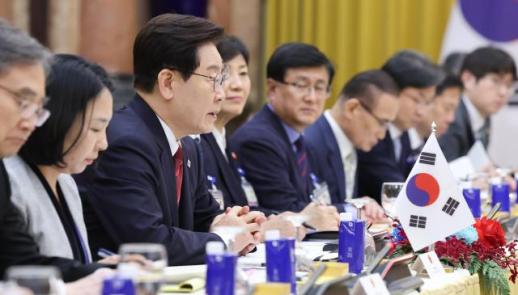 Lee urges shift to higher-quality cooperation with Vietnam; To Lam stresses trust President Lee Jae-myung said April 22 (local time) that South Korea and Vietnam should turn quantitative gains into higher-quality cooperation to build “a sustainable future of shared prosperity” as geopolitical uncertainty rises and global competition for technological leadership intensifies. Speaking at an expanded summit meeting with Vietnam’s Communist Party chief and state president, To Lam, at the Presidential Palace in Hanoi, Lee praised Vietnam for posting “one of the region’s highest economic growth rates” last year and for serving as a key economic engine in ASEAN. Lee called for mutually beneficial cooperation beyond trade and investment, including energy security, transportation and infrastructure, science and technology, and education and culture, and urged both sides to deliver tangible results that people and businesses can feel. Lee said the two countries have built a “top-level partnership” across politics, the economy and people-to-people exchanges in the 34 years since establishing diplomatic relations in 1992. He said about 5 million people travel between the two countries each year and exchanges in culture, education and other areas continue to expand. He said the two nations are among each other’s top three trading partners, and that South Korea is Vietnam’s largest investor. More than 10,000 South Korean companies operate in Vietnam, he said, contributing to both countries’ economic growth and Vietnam’s industrial development. In opening remarks, To Lam said Lee’s visit “most clearly demonstrates” the comprehensive strategic partnership based on high mutual trust, and he congratulated the South Korean government and people on their recent achievements. To Lam said he was impressed by Lee’s governing principles that prioritize coexistence and harmony, respect and trust. He said he believes South Korea will achieve further results under Lee’s leadership and strategic vision and contribute to peace and prosperity in the region and the world. He said the Vietnam-South Korea comprehensive strategic partnership has produced “remarkable achievements” across all fields over 35 years of development, and welcomed that the two sides have worked strategically as close friends who understand each other and as partners that can truly be trusted. To Lam said Vietnam’s party, state and people highly value Lee’s commitment to bilateral ties from his time as Seongnam mayor through his inauguration as president. He said Vietnam is ready for in-depth discussions on ways to strengthen strategic trust, expand practical cooperation and deepen the comprehensive strategic partnership, as well as on regional and international issues of mutual interest. 2026-04-22 21:00:15
 -
 Lee Jae-myung tells Koreans in Vietnam he aims to deepen strategic cooperation President Lee Jae-myung said April 22 (local time) that South Korea will expand cooperation with Vietnam in strategic areas including nuclear power, infrastructure and science and technology innovation, while stepping up coordination on global challenges such as supply chain stability, sustainable growth and climate change. Speaking at a luncheon meeting with Koreans in Vietnam at a hotel in Hanoi during his state visit, Lee said he wants to develop the two countries’ cooperation — already at its highest level — into a more future-oriented and strategic partnership. Lee noted that since diplomatic ties were established in 1992, the two countries have become each other’s third-largest trading partners within a generation. He said Vietnam is South Korea’s largest destination for investment, with about 10,000 South Korean companies operating there. In 2022, marking the 30th anniversary of diplomatic ties, the two countries elevated relations to a comprehensive strategic partnership. Lee said South Korea and Vietnam “have a lot in common,” pointing to bonds across history, culture and the economy. He cited shared experiences of enduring foreign domination, overcoming hardship through their own efforts, and suffering the pain of division and war, adding that both are rooted in a Confucian cultural sphere that fosters close emotional ties. Lee also singled out Kim Sang-sik, head coach of Vietnam’s national soccer team, who attended the luncheon. Noting that soccer is called the “king sport” in Vietnam, Lee joked that would make Kim the “king of kings,” calling it “something to be proud of.” Lee referred to his time as mayor of Seongnam, when he served as owner of Seongnam FC, saying he is currently on trial after being accused of what he described as a “strange” offense while trying to help the club succeed. Turning to the Korean community, Lee said the Korean population in Vietnam has grown to about 200,000, making it the largest Korean community in ASEAN and the world’s fifth-largest. He pledged active support. He said about 100,000 South Korea-Vietnam multicultural families are a valuable foundation that connects the two countries “by blood,” but face difficulties. Lee said the “people-sovereignty government” will closely examine the challenges faced by overseas multicultural families and do its best to resolve them quickly as part of building an inclusive South Korea. After Lee’s remarks, Yang Mo-se, president of the Korean Association in Hanoi, said South Korea and Vietnam are neighbors that share a resilient history of preserving their identity against outside powers and a spiritual foundation in Confucian culture. He asked for the homeland’s warm attention and support so Koreans in Vietnam can act with greater confidence and contribute to South Korea amid the deepening partnership. Three community representatives shared their experiences: Pham Thi Nua, vice chair of the legal and administrative committee of the Vietnam council of the National Unification Advisory Council; Lee Yong-deuk, vice president of the Hanoi Korea-Vietnam Family Association; and Jung Ye-won, president of the Hanoi Korean Students Association. Pham said she was born in Vietnam but has regarded South Korea as her second home since forming a family with her South Korean husband 28 years ago. She said she will continue to do her best to serve as a bridge between the two countries as a “civilian diplomat.” Lee Yong-deuk said there are about 8,000 Korea-Vietnam families in Vietnam, and that 40% of the elementary division at the Korean International School in Hanoi are children of Korea-Vietnam families. He urged support so second-generation children can grow into true leaders linking the two countries. Jung described the students association’s roles, including protecting students’ lives and rights and supporting summit interpretation and overseas voting-site operations. After listening, Lee said the South Korea-Vietnam partnership, built on shared experience of overcoming adversity, is not a coincidence but an inevitable result created by Koreans living in Vietnam. He said that although they live outside South Korea, overseas Koreans often show even greater concern for the homeland, and he pledged continued government support so they can work in a more stable environment. He also said he would consider a system to better reflect overseas Koreans’ views. A cultural performance followed, with the Hanoi Boys and Girls Choir singing the children’s song “Mungge Cloud,” and the Hanoi Traditional Korean Music Research Institute’s “Sori Dongne” presenting an “Arirang” medley.* This article has been translated by AI. 2026-04-22 20:33:22
 -
Lee Jae-myung Pledges Expanded Strategic Cooperation With Vietnam on Nuclear, Infrastructure Lee Jae-myung said April 22 (local time) that South Korea will expand cooperation with Vietnam in strategic areas including nuclear power, infrastructure and science and technology innovation, while stepping up coordination on global challenges such as supply chain stability, sustainable growth and climate change. Speaking at a luncheon meeting with Koreans in Vietnam at a hotel in Hanoi, Lee, who is on a state visit, said he aims to use the trip to develop what he called the two countries’ already top-level cooperation into a more future-oriented and strategic partnership. Lee noted that since establishing diplomatic relations in 1992, the two countries have become each other’s top three trading partners within a generation. He said Vietnam is South Korea’s largest destination for investment, with about 10,000 South Korean companies operating there. The two countries upgraded ties to a comprehensive strategic partnership in 2022, marking the 30th anniversary of diplomatic relations. Lee said South Korea and Vietnam have much in common, citing shared historical, cultural and economic bonds. He pointed to long periods of foreign domination, efforts to overcome hardship through their own strength, and the pain of division and war, adding that both societies share emotional ties rooted in the Confucian cultural sphere. Lee also encouraged athletes, singling out Kim Sang-sik, head coach of Vietnam’s national soccer team, who attended the luncheon. Noting that soccer is called the “king sport” in Vietnam, Lee joked that Kim would then be the “king of kings,” calling it “something to be truly proud of.” Lee, who said he once served as owner of Seongnam FC while he was mayor of Seongnam, added, “I also was once a soccer club owner, and while trying to make it succeed, I ended up being accused of a strange crime and am now on trial.” Turning to the Korean community in Vietnam, Lee said it has grown to about 200,000 people, making it the largest among ASEAN countries and the world’s fifth-largest Korean community. He expressed support for the community and said about 100,000 South Korea-Vietnam multicultural families are a valuable foundation linking the two countries by blood but face various difficulties. He pledged that the “people’s sovereignty government” would closely examine those challenges and do its best to resolve them quickly to build an inclusive South Korea. Lee began his state-visit schedule with the meeting and was set to hold a summit later that afternoon with To Lam, the Communist Party general secretary and state president. It will be Lee’s first meeting with Lam since August last year, eight months ago. Lam also assumed the post of Vietnam’s state president in April this year. An official welcoming ceremony was to be held beforehand in the main garden of the Presidential Palace in Hanoi. The schedule was to include a small-group summit, expanded talks, an exchange of memorandums of understanding, and a joint press statement. A state banquet was planned after the summit.* This article has been translated by AI. 2026-04-22 15:24:02
-
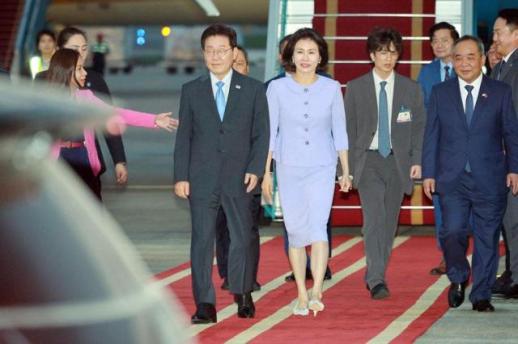 Lee set to hold talks with Vietnamese leader in Hanoi SEOUL, April 22 (AJP) - President Lee Jae Myung is set to sit down for talks with Vietnamese President Tô Lâm in Hanoi on Wednesday. Lee's meeting with Lâm, who also serves as General Secretary of the Communist Party, comes about eight months after the Vietnamese leader visited Seoul in August last year. Their meeting also comes after South Korea agreed with its third-largest trading partner to further enhance bilateral relations in 2022, when the two countries marked the 30th anniversary of diplomatic ties. During the summit, the two leaders are expected to discuss cooperation across various sectors from nuclear power and infrastructure to artificial intelligence, critical minerals, and energy. Senior officials from both sides will then join an expanded meeting, followed by a joint press statement and a state banquet to round out the day. Among key topics in their talks will be concrete steps to deepen bilateral cooperation, with both countries having already set a goal of increasing trade from the current $94.6 billion to $150 billion by 2030. With the prolonged conflict in the Middle East continuing to rattle global markets, the two sides are also expected to pursue a mutually beneficial partnership in supply chains for energy and critical minerals. 2026-04-22 10:28:21