
Journalist

김봉철
nicebong@ajunews.com
-
 Public servants required to alternate vehicle use SEOUL, March 24 (AJP) - Civil servants nationwide are required to alternate the use of their vehicles depending on the last digit of their license plates as part of measures to cope with energy shortages amid supply disruptions caused by the ongoing conflict in the Middle East. At a cabinet meeting with key aides at Cheong Wa Dae on Tuesday, President Lee Jae Myung said, "Public institutions should lead by example, and I ask civil servants to join an energy-saving campaign by reducing electricity use in their daily lives." Starting Wednesday, workers at public institutions will be required to leave their cars at home at least one day a week and use public transportation instead. Drivers of eco-friendly vehicles, such as electric and hydrogen cars, are exempt, and private-sector workers are also encouraged to participate. Such mandatory measures were last implemented in 2011, when oil prices exceeded US$100 per barrel. This would also be the first time since the 1991 Gulf War that they have been extended to the private sector. Citing increasing uncertainty over crude oil and natural gas supplies amid the prolonged conflict that began with U.S.-led airstrikes on Iran late last month, Lee said, "To respond to this serious crisis, the government should proactively move into an emergency mode." "Because petrochemical products are used everywhere, it is hard to predict when, where and what problems may arise," Lee said, urging aides to "thoroughly prepare and implement contingency plans with the worst-case scenario in mind." Referring to suspected price gouging among refiners, Lee warned that inflating prices to take advantage of rising oil prices must be "rooted out and strictly punished." He also urged officials to ensure a 25 trillion-won ($16.7 billion) supplementary budget is swiftly implemented and properly planned so the public can feel its impact. Its parliamentary approval is scheduled for early next month. 2026-03-24 17:06:38
 -
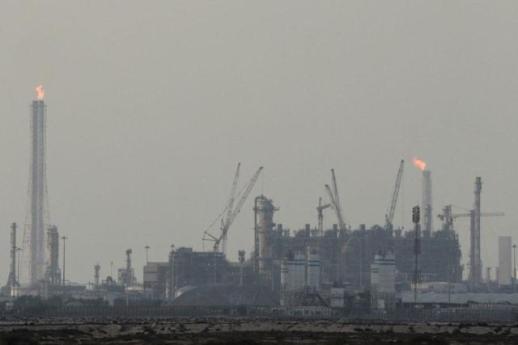 South Korea braces for supply disruptions after Iran's attack on Qatari energy complex SEOUL, March 20 (AJP) - The government is reviewing additional measures to cope with supply chain disruptions as the prolonged conflict in the Middle East affects supplies of naphtha and other petrochemical products, Cheong Wa Dae said on Friday. The remarks came after Iran's attack on Qatar's Ras Laffan Industrial City, the world's largest liquefied natural gas (LNG) complex, which accounts for about 20 percent of global supply. According to a senior Cheong Wa Dae official, South Korea is unlikely to face supply disruptions as it has alternative sources of gas. He added, "When it comes to liquefied natural gas supplies from Qatar, there is no problem with supply, as Qatar accounts for just 14 percent of imports this year and alternative sources are available." But the government is keeping a close watch on naphtha supply and prices to prepare for any potential disruptions. It also plans to implement measures to minimize overseas outflows of naphtha. QatarEnergy, Qatar's state-run petroleum company, said the previous day it may have to declare force majeure due to the attack on its LNG facilities earlier in the week, affecting long-term supply contracts with South Korea and other countries for up to five years. Force majeure is a measure taken to avoid liability when fulfilling a contract becomes difficult due to war, natural disasters, or other events. 2026-03-20 10:38:55
 -
 Cabinet approves bill to implement investment pledges under trade deal with US SEOUL, March 17 (AJP) - A special bill outlining South Korea's massive investment pledges to the U.S. was approved at a cabinet meeting chaired by President Lee Jae Myung at the government complex in the administrative city of Sejong on Tuesday. The approval comes about a week after the bill was passed at a plenary session in the National Assembly and roughly two months after U.S. President Donald Trump threatened in January to raise reciprocal tariffs on South Korea from 15 percent back to 25 percent, complaining about delays in Seoul's legislative process for the trade deal. The bill would provide a legal framework to establish a fund for implementing bilateral agreements with the U.S., along with investment pledges of US$350 billion under a broader trade deal reached between the two countries last fall that includes $150 billion for shipbuilding and $200 billion for other key strategic sectors such as semiconductors, critical minerals, energy, and artificial intelligence. The fund will be created with a capital of 2 trillion won (US$1.34 billion), fully funded by the government, with the exact timing and method of the contribution to be set by presidential decree. The fund will be used for areas of mutual interest between the two countries as well as for loans and guarantees supporting shipbuilding-related projects. The bill shall take effect three months after its promulgation. 2026-03-17 15:17:45
 -
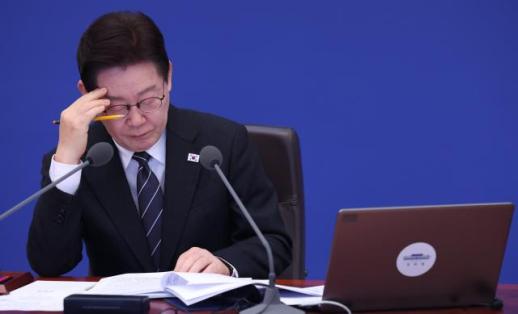 Seoul mulling supplementary budget, fuel price cap and tax cut amid oil concerns SEOUL, March 10 (AJP) -South Korean President Lee Jae Myung on Tuesday ordered a string of emergency actions — including a cap on gasoline prices, fuel tax cuts and direct consumer support — through a supplementary budget if deemed necessary to relieve household burdens from import inflation triggered by widening Middle East conflicts. “National capabilities must concentrate on minimizing the impact of external shocks on household and corporate economies,” Lee said during a cabinet meeting on Tuesday. “The most urgent matter is price stability.” Chairing the meeting at the presidential office, Lee instructed ministries to prepare measures including the enforcement of a gasoline price cap, adjustments to energy taxes and direct consumer assistance, while keeping additional fiscal and financial support ready if market conditions worsen. Lee warned that the steep rise in fuel prices is already straining sectors closely tied to daily livelihoods such as freight transport, parcel delivery and greenhouse farming. “As fuel costs rise sharply, the burden is increasing for industries directly connected to people’s everyday lives,” he said, calling for policies that can quickly and tangibly ease pressure on households and small businesses. Describing the situation as extraordinary, Lee urged officials to move beyond existing policy manuals and respond with greater speed to stabilize market sentiment. “In an emergency situation like this, we must go beyond existing manuals and act with the speed required to calm market anxiety,” he said, stressing that the government must act preemptively so that “people’s lives are not shaken under any circumstances.” Lee also addressed the safety of South Korean nationals remaining in the Middle East, instructing authorities to consider additional chartered evacuation flights and even the use of military aircraft if necessary. He also called for faster arrangements to move citizens by land to safer neighboring countries. Lee signaled that a supplementary budget may become unavoidable, if additional support is required for small businesses and financially vulnerable companies affected by rising energy costs. “If we are to provide fiscal support for small merchants, small businesses and struggling firms to overcome the crisis stemming from the Middle East situation, additional financial resources will be needed,” he said. “It appears we may have to proceed with an early supplementary budget.” Lee also noted that government tax revenues could exceed earlier forecasts this year thanks to record earnings from chipmaking and robust stock income, suggesting fiscal conditions may allow room for emergency spending. Separately, Lee welcomed the National Assembly’s bipartisan approval of a bill designed to manage strategic investment ties between South Korea and the United States, thanking opposition lawmakers for their cooperation. “Even if political issues require competition and debate, cooperation on national matters sets a good example,” he said. The emergency measures come as South Korea’s economy has been among the most sensitive to the Middle East conflict that erupted on Feb. 28, when U.S.-Israeli strikes against Iran sent global energy markets into turmoil. International oil prices have surged above $100 per barrel on Monday, raising inflation concerns for South Korea, which imports nearly all of its energy and relies heavily on crude shipments from the Gulf. The benchmark KOSPI has swung violently, around 16 percent from late February when the war began, while the Korean won has lost 3.9 percent, revisiting the lows of the wake of global financial crisis 17 years ago. Foreign investors have pulled funds from equities while bond markets also showed volatility, reflecting broader concern that a prolonged disruption to oil flows through the Strait of Hormuz — a route carrying roughly one-fifth of global oil shipments — could hit Asia’s energy-dependent economies hardest. 2026-03-10 13:32:08
 -
 Hwang You-min wins Lotte Championship and entry to LPGA Tour SEOUL, October 05 (AJP) - Hwang You-min became the sixth South Korean player to win on the LPGA Tour this year, capturing her maiden title at the Lotte Championship in Hawaii on Saturday. The 22-year-old clinched victory at the Hoakalei Country Club in Oahu with a final-round 5-under 67, finishing at 17-under 271 overall. The win immediately secures her LPGA Tour membership, though she has the option to defer it until the start of the 2026 season. Hwang earned a winner’s purse of $450,000. She joined the tournament through a sponsor’s invitation from Lotte, her main backer. Having joined the KLPGA Tour in 2023 and already won twice, Hwang had planned to enter the LPGA qualifying series later this year. However, a barrage of birdies in the final round broke her tie for second with compatriot Kim Hyo-joo and accelerated her plans for the LPGA stage. * This article, published by Aju Business Daily, was translated by AI and edited by AJP. 2025-10-05 14:43:29