

Journalist

Lee Da-hui
qhsfid70@ajunews.com
-
 Cho Eung-cheon Enters Gyeonggi Governor’s Race, Setting Up Three-Way Contest Reform Party politician Cho Eung-cheon declared his candidacy for Gyeonggi governor on April 28, a move expected to turn the race into a three-way contest with the Democratic Party and the People Power Party. With Rep. Choo Mi-ae confirmed as the Democratic Party’s candidate, a possible conservative alliance between the People Power Party and the Reform Party has emerged as a key variable. At a news conference at the National Assembly, Cho urged voters to “put down the wrong answer sheets of bad candidates and strange candidates” and choose “the good candidate, Cho Eung-cheon,” to lead the province. He accused both major parties of “bullying politics” that treats Gyeonggi as a stepping stone for political ambition, saying the two parties had “taken away” residents’ choices. Cho criticized the Democratic Party, saying it viewed Gyeonggi residents as “fish already caught.” Taking aim at Choo, he said the party’s nomination reflected arrogance — as if it could “win even by putting up a stick” — and questioned why it would field someone he said had no ties to Gyeonggi and had focused on political fights in Seoul’s National Assembly. He also faulted the People Power Party, saying it still had no candidate because no senior figure had stepped forward and even an additional recruitment effort failed to find a competitive contender. Cho pointed to the election of Rep. Lee Jun-seok in Hwaseong’s Dongtan area in the last general election, saying residents there showed that voters will choose a better option when one is available. “Now is the time to make the Dongtan miracle happen across all of Gyeonggi,” he said. The Reform Party said it aims to serve as an alternative force by challenging what it called the entrenched politics of the two major parties. Party leader Lee accompanied Cho at the news conference and said the People Power Party “no longer has the strength or ability” to stand up to the Democratic Party. He said the Reform Party has a clear purpose and that Cho decided to run because he was convinced about ending two-party politics. Cho, however, left open the possibility of a unified conservative candidacy with the People Power Party. “We have no reason to unify,” he said, adding that if the People Power Party makes a proposal, “we will listen.” The People Power Party is holding its primary for the Gyeonggi governor’s race. Supreme Council member Yang Hyang-ja, former MBC announcer Lee Seong-bae and former Korea Expressway Corp. president Ham Jin-gyu are running, with the party set to confirm its final candidate on May 2. Any talks on a conservative alliance are expected to intensify after that selection.* This article has been translated by AI. 2026-04-28 17:28:33
 -
 PPP floor leader condemns ruling party over bid to let Jeong Dong-young dismissal motion lapse Song Eon-seok, floor leader of the People Power Party, on April 28 criticized National Assembly Speaker Woo Won-shik and the Democratic Party over a recommendation to dismiss Unification Minister Jeong Dong-young that was reported to the plenary session. In a Facebook post, Song said that because April’s extraordinary session was holding its final plenary meeting that day, the motion was expected to be discarded without a vote, calling it a “procedural trick.” Citing the National Assembly Act, Song said a minister dismissal recommendation is discarded if it is not put to a vote within 72 hours after 24 hours have passed from the time it is reported. He said the PPP had strongly demanded that a plenary session be held on April 27 to report the motion and that it be voted on at the April 28 session. “What is a 60-seat ruling party afraid of that it cannot even vote on it?” Song wrote, adding that the party could simply vote it down rather than let it lapse. Song also argued that even if the motion were to pass, it has no binding force and President Lee Jae-myung could refuse to dismiss Jeong. He said it was hard to understand why the Democratic Party would still avoid a vote, and claimed that the presidential office’s national security chief had officially acknowledged that Jeong’s remarks were one factor contributing to friction between South Korea and the United States. Song said the National Assembly should hold Cabinet members accountable when they harm the national interest, and he condemned Woo and the Democratic Party for blocking a vote. He added that while they would not accept a vote on a motion proposed by a minority opposition party, they were pressing ahead with what he called a rushed, election-driven constitutional revision opposed by the minority opposition. * This article has been translated by AI. 2026-04-28 14:41:16
 -
 Cho Eung-cheon Announces Run for Gyeonggi Governor as Reform Party Candidate Cho Eung-cheon, a former Reform Party lawmaker, announced on April 28 that he will run for governor of Gyeonggi Province, urging voters to “put down the wrong answer sheets of bad and strange candidates” and choose him as a “good candidate.” Speaking at a news conference at the National Assembly, Cho said he has lived by “principles and conviction.” He criticized eight years of Democratic Party leadership in the province, from Lee Jae-myung to Kim Dong-yeon, asking what had changed for residents. Cho noted the population rose by 1 million, from 13 million to 14 million, and the province’s main budget expanded from 20 trillion won to 40 trillion won, more than doubling, but questioned how much residents’ lives improved. Cho said the Democratic Party now treats Gyeonggi residents like “fish already caught,” and took aim at Democratic Party candidate Choo Mi-ae, saying it was arrogant to nominate someone with no ties to the province who had not lived there and had focused on political fights in the National Assembly. He also criticized the People Power Party, saying its “bullying politics” of using Gyeonggi as a sacrifice for personal political advancement must end. He said the party still had the race vacant because no senior figure stepped forward despite encouragement and it failed to find a competitive candidate even after additional recruitment. “The two major parties have taken away Gyeonggi residents’ right to choose,” Cho said, adding, “Gyeonggi needs administration, not politics. What matters is competence and experience, not a party label.” Cho called the long-standing gap in living conditions between southern and northern Gyeonggi a key challenge. He said the southern belt should be further strengthened as a foundation for South Korea’s growth and innovation, and that the results should be shared more evenly with northern Gyeonggi and the country as a whole. He pledged a denser, more rational transportation network for residents who moved from Seoul to Gyeonggi, and said new momentum is needed for first-generation new towns where 300,000 households in Bundang, Ilsan, Pyeongchon, Sanbon and Jungdong are aging at the same time. Cho also said he is the only candidate who can fight “with conviction and professional capability” against the ruling party’s push to move a semiconductor industrial complex to what he called an uncompetitive, remote area. Cho pointed to Hwaseong’s Dongtan, saying residents showed in the last general election that they can make a better choice by electing Rep. Lee Jun-seok. “Now it’s time to make the Dongtan miracle happen across all of Gyeonggi,” he said, calling for a political upset. Asked about the possibility of a conservative alliance with the People Power Party, Cho said his party has no reason to unify candidacies, but added, “If a proposal comes, we’ll listen.” * This article has been translated by AI. 2026-04-28 11:54:51
 -
 PPP Floor Leader Song Eon-seok Opposes 'Hasty' Election-Driven Constitutional Revision Song Eon-seok, floor leader of the People Power Party, said April 28 that a constitutional amendment should not be rushed ahead of an election, as the National Assembly prepared to vote on a revision bill jointly introduced by National Assembly Speaker Woo Won-shik and six floor parties. Speaking at a party meeting at the National Assembly, Song said pushing a revision through in a hurry for electoral purposes would set a precedent and fuel “constitutional revision populism” every election season. “Our party is not opposing the substance of constitutional revision,” Song said. “We oppose a hasty, election-driven revision,” as he presented what he called the People Power Party’s five principles for a proper amendment. He argued against a piecemeal approach, saying, “Step-by-step revision is ultimately a patchwork revision,” and warned that repeatedly making small changes would leave the Constitution like “a patchwork garment.” Song said the Constitution’s preamble, which defines its history and spirit, requires careful and rigorous debate rather than a simple yes-or-no decision. He said some have argued the preamble should reflect the constitutional significance of liberal democracy during the Korean War, calling it an issue that should be addressed together. He also said broader public discussion is needed on whether to group the Bu-Ma Democratic Protests and the May 18 Democratization Movement with the April 19 democratic ideal in the current preamble, or treat them as separate principles. Song said revision should not be led by those in power, but should be “the people’s revision,” with the National Assembly, academia and civil society participating. He said all parties should work together under the Assembly’s leadership to gather public opinion and revise the Constitution accordingly. He added that revision should not be pushed through by pro-government parties to isolate the opposition, but should proceed through bipartisan agreement based on political balance. Song said the People Power Party again proposes that after the election, in the second half of the 22nd National Assembly, the parties form a special parliamentary committee on constitutional revision to discuss a comprehensive package, from the preamble to changes in the power structure. Song also expressed regret over Woo’s remarks on the People Power Party’s official stance opposing the revision, after Woo said lawmakers should be able to vote in the plenary session according to their conscience and convictions. Song said a party line is decided by the collective will of all its lawmakers and called Woo’s comments inappropriate, saying they distorted the situation as if party lawmakers were being forced to abandon their conscience. He demanded an apology. * This article has been translated by AI. 2026-04-28 09:54:19
 -
 Seoul Voters Split Ahead of June 3 Local Elections: Jung Won-oh vs. Oh Se-hoon 6·3 local elections are shaping up as a tight contest in Seoul, with voters voicing divided support for Democratic Party mayoral candidate Jung Won-oh and People Power Party candidate Oh Se-hoon. With President Lee Jae-myung’s job-approval rating averaging above 60%, some expected Jung — often described as Lee’s pick — to dominate. But interviews suggested a competing desire among some voters to check the government and ruling party. Aju Economy spoke on April 27 with residents in Seoul’s Jongno, Yongsan, Seongdong and Seocho districts. In Jongno, home to the presidential office complex and major government buildings, and in Yongsan, a key part of the so-called “Han River belt” of swing districts, voters offered mixed views rather than rallying behind one candidate. Some Jung supporters cited trust in the president more than the candidate himself. A 71-year-old woman selling snacks at Gwangjang Market said, “You have to pick someone who does a good job. This time, everyone says they’ll vote No. 1, the Democratic Party,” adding, “Isn’t the president doing well?” A 74-year-old taxi driver said the president’s approval “keeps going up” and that Lee “seems to work hard and pay attention even to small things.” He argued that Oh has served as mayor multiple times and said, “He hasn’t done anything, and we need to change to someone new.” Oh supporters, however, voiced skepticism about the government’s cash-aid policies. A 66-year-old who has run a wrapping-cloth shop at Gwangjang Market for 20 years criticized what she called “just handing out money,” saying it drives up prices and fabric costs and “the damage all goes to consumers.” She said politics should focus on the long term, not “momentary politics.” A 25-year-old woman working part time at a store inside Yongsan Station said she planned to vote for Oh because “there are a lot of things I don’t like about the current government’s policies.” She questioned whether handing out consumer coupons was anything more than temporary. At the Sewoon Arcade, an 80-year-old shop owner selling heating and cooling equipment said, “Everyone around here supports Oh Se-hoon,” adding that Oh’s pledge to redevelop the area should be completed with another term. Reactions were sharper in Seongdong, where Jung served three terms as district mayor, and in conservative-leaning Seocho. In Seongdong, several residents said they felt Jung’s policies delivered results. An 84-year-old woman who has lived in the district for more than 40 years said that when she called in complaints during Jung’s time as district mayor, she often saw changes “reflected the next day.” She said she had hoped he would become Seoul mayor even before he ran as a Democratic Party candidate. A 56-year-old self-employed resident of Geumho-dong said he would vote for Jung and hoped that, based on his administrative record, support for small businesses — such as Seoul Pay — would be strengthened. In Seocho, residents interviewed largely said they would back Oh. A 24-year-old who said he was born and raised in the district argued that Oh should be mayor “to check and stop the runaway” of the Democratic Party, which he described as the dominant ruling party. A 70-year-old resident who moved to Banpo-dong during a reconstruction project 10 years ago said Oh’s city administration was not perfect, but added, “No matter what, shouldn’t we vote for the People Power Party?” He said Oh’s push for development in northern Seoul appeared to be a strength. A 54-year-old resident of Bangbae-dong said she would vote for Oh but called for broader reform within the People Power Party and “new figures” to counter the Democratic Party. She also said party leader Jang Dong-hyeok should step down and take responsibility for the party’s falling approval ratings. 2026-04-27 17:43:28
 -
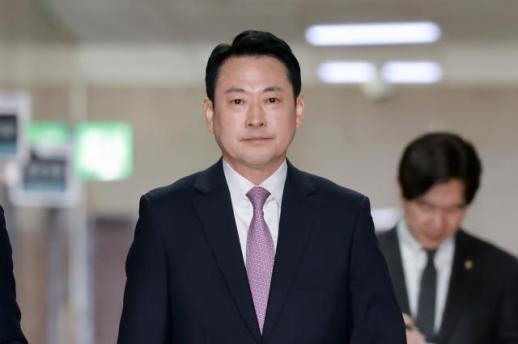 South Korea’s People Power Party Feuds Over Leader Jang Dong-hyeok With Local Vote Near 6·3 local elections and parliamentary by-elections are 40 days away, and infighting in the People Power Party is intensifying over calls for leader Jang Dong-hyeok to step down. Pressure has grown amid controversy over a U.S. trip and the party’s lowest support level since its founding, but Jang has signaled he will stay, suggesting the dispute will continue. Jang on April 24 rejected demands that he resign. In a Facebook post, he wrote, "Stepping down as party leader because the situation is not good is not what a responsible politician does." He added, "Since becoming party leader, I have run toward victory in the local elections," and said he would "finish the local elections to the best of my ability and be evaluated with confidence." He moved to tamp down speculation about his future about three hours after saying he would think about his position. Earlier that morning, Jang told reporters at the National Assembly that he would consider whether resigning 40 days before the local elections would truly fulfill his responsibility as leader and whether it would help the party win. He was responding after a poll released the previous day showed the party’s support at 15%. In the National Barometer Survey released April 23, the Democratic Party’s support stood at 48% and the People Power Party’s at 15%. The poll was conducted April 20-22 by Embrain Public, Kstat Research, Korea Research and Hankook Research through telephone interviews of 1,005 adults age 18 and older. The margin of error was plus or minus 3.1 percentage points at the 95% confidence level. (For details, see the National Election Survey Deliberation Commission website.) Calls for Jang to step aside continued within the party. Rep. Bae Hyun-jin, who chairs the party’s Seoul chapter, said Jang’s news conference was the first time he had shown a willingness to make a decision, whether by moving to a second-line role or resigning, for the sake of candidates and the party. She warned that May 14 was Jang’s final deadline, saying that after all main candidates are registered, "there will be no Jang Dong-hyeok left in the People Power Party." Seoul Mayor Oh Se-hoon, the party’s candidate for Seoul mayor, also urged Jang to pull back. In a media interview, Oh said, "The time has come when restraint or a decision is needed," adding that candidates "honestly" want Jang to be less visible because they believe that would help. Citing the party’s lowest support since its founding, Oh said the leader should feel responsible and reduce his public activities, effectively calling for Jang to move to the sidelines. Others defended Jang. Twenty-eight party committee chairs who are not lawmakers called for an end to efforts to shake him. Park Jong-jin, head of the party’s Incheon chapter, said at a National Assembly news conference that demanding the resignation of a legitimate leader elected by party members and guaranteed a term was an act that would ruin the election. He asked whether the party could win by excluding a leader who has the support of more than half of party members and running a separate campaign committee. Park said that with the local elections close, it was undesirable to undermine the leadership system regardless of who leads, and the party should unite. With the local elections nearing and Jang publicly refusing to resign, he appears unlikely to step down before voting ends. Still, some in the party say the leadership turmoil has become an election risk as the leader is distracted by questions about his future.* This article has been translated by AI. 2026-04-24 17:58:03
 -
 Rep. Kim Min-jeon Proposes Law Requiring Substitute Staff for Kindergarten Absences Kim Min-jeon, a lawmaker from the ruling People Power Party, introduced a bill on the 24th to require substitute staff at kindergartens when teachers or other employees are unexpectedly unable to work, aiming to prevent disruptions and keep schools running smoothly. The proposed revision to the Early Childhood Education Act would mandate assigning a substitute teacher when a staff member cannot perform duties due to illness, infectious disease or other unforeseen reasons, creating a gap in operating the curriculum. It also calls for the education minister and provincial education superintendents to establish and implement measures to secure, manage and support the placement of substitute personnel, with the stated goal of improving the quality of early childhood education and protecting teachers’ rights to teach and to health. The proposal follows a recent case in which a first-year teacher died after going to work despite illness because a substitute could not be found, even amid a flu situation. In a survey released on the 23rd by the Korean Teachers and Education Workers Union of 6,689 teachers nationwide across kindergarten, elementary, middle, high and special schools, 64.5% of kindergarten teachers surveyed (3,547 respondents) said they had gone to work while sick with the flu. The findings fueled calls to better protect staff health and build a substitute staffing system. Current law does not explicitly provide for assigning or supporting replacement staff when employees cannot work due to illness or leave, the lawmaker’s office said, and kindergartens have faced serious disruptions. Private kindergartens, in particular, have struggled with costs and staffing shortages, leaving teachers to keep classrooms running while ill, it said. “The tragic loss of a private kindergarten teacher exposed the harsh reality of an education system without a way to replace sick teachers,” Kim said. “This revision should address structural gaps in early childhood education and create a safe personnel management system so teachers do not have to protect classrooms at the expense of their health.”* This article has been translated by AI. 2026-04-24 14:33:17
 -
 PPP Leader Jang Dong-hyeok Rejects Calls to Step Down, Vows to Face Voters’ Verdict Jang Dong-hyeok, leader of the People Power Party, on April 24 rejected calls within his party for him to resign, saying stepping down because circumstances have worsened is not what a responsible politician does. In a Facebook post, Jang said he has focused since taking the party’s top post on winning upcoming local elections. “People are saying a lot about my future,” he wrote, referring to the resignation talk. “That kind of politics is not Jang Dong-hyeok’s politics. I will do my best to finish the local elections and accept an honest evaluation.” Jang also said he would be judged by the results of his trip to the United States, adding that as opposition leader he did everything he could and needed to do. “With time, the results will also become visible,” he said.* This article has been translated by AI. 2026-04-24 14:04:43
 -
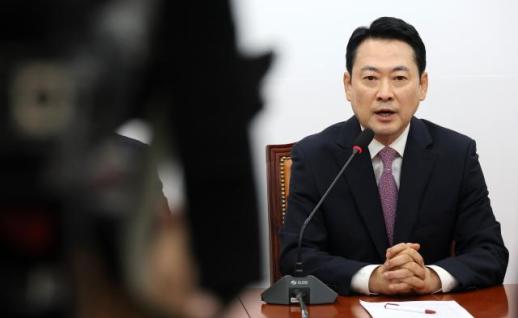 People Power Party leader Jang Dong-hyeok says he will weigh resignation amid 15% support Jang Dong-hyeok, leader of the People Power Party, said April 24 that internal divisions were a key reason the party’s support had fallen to a record low of 15%, rejecting calls for him to step down. Speaking at a news conference at the National Assembly, Jang said talk about his future and resignation had followed the polling, noting there were 40 days left until local elections. Referring to survey results released the previous day, he said one poll showed the party “stuck at 15%,” adding that the result differed somewhat from recent trends in other surveys. He said he would consider the various reasons for the party’s low support. Jang said internal conflict was among the causes, and said he would weigh whether resigning 40 days before the elections would truly fulfill his responsibility as party leader and whether it would help the party win. Jang also said the party would submit a motion urging the dismissal of Unification Minister Jeong Dong-young over allegations involving the leak of sensitive information. He said if President Lee Jae-myung continued to protect Jeong, the U.S.-South Korea alliance “cannot help but face even greater cracks.” He called for Jeong’s immediate dismissal and for the government to “reorganize” what he described as a self-reliant faction within the foreign and security policy line that he said was undermining the alliance. Jang said he met with four lawmakers the previous day with James Heller, the deputy chief of mission at the U.S. Embassy, to confirm Washington’s mood, saying the United States viewed the matter “very seriously.” He said information sharing, which he described as a measure of alliance trust, had been cut off, and argued that Jeong’s remarks had damaged the foundation of trust while Lee was accelerating its collapse. Calling it a “tragic situation” in which the president and a minister had become a security risk, Jang said the U.S. side believed that resuming information sharing would require firm assurances and promises that such an irresponsible leak would not happen again. He added that without restored trust, implementing a joint fact sheet would also be difficult, and said the U.S. side was repeatedly conveying the seriousness of the issue to Seoul, but that the Lee administration did not appear to recognize it. According to the National Barometer Survey released April 23 by Embrain Public, Kstat Research, Korea Research and Hankook Research, the People Power Party’s approval rating stood at 15%. The poll surveyed 1,005 adults age 18 and older by telephone interviews from April 20-22. The margin of error was plus or minus 3.1 percentage points at the 95% confidence level. (For details, refer to the website of the National Election Survey Deliberation Commission.)* This article has been translated by AI. 2026-04-24 14:03:20
 -
 PPP Floor Leader Song Eon-seok Slams Democrats’ Proposed Special Counsel as ‘Prejudged’ Song Eon-seok, floor leader of the People Power Party, criticized the Democratic Party on April 24 for pushing what it calls a special counsel probe into “fabricated indictments” under the Yoon Suk Yeol government, calling it “another prejudged special counsel” following what he described as a prejudged parliamentary investigation. Speaking at a party meeting at the National Assembly on Friday morning, Song said, “It looks like the next step has begun to withdraw President Lee Jae-myung’s indictments.” Song said the biggest issue was what he called a move to give the special counsel authority to withdraw indictments. He claimed it was intended to have the special counsel, not Lee and Justice Minister Jeong Seong-ho, “get blood on their hands” by carrying out the withdrawals. He also accused those who dismantled the prosecution service after warning that combining investigative and charging powers was dangerous of now seeking to give the special counsel not only both powers but also the authority to withdraw indictments. Song said the ruling party was “mobilizing all state power” to eliminate what he called Lee’s five criminal trials, and that it was also willing to nominate candidates with criminal histories. “This Democratic Party nomination is, in effect, the return of criminal old boys,” he said. He said the party again nominated Kim Kyoung-soo, who lost the governorship over the “Druking” online-comment manipulation case, as its candidate for South Gyeongsang governor. He also said Rep. Jeon Jae-soo became the party’s candidate for Busan mayor after the statute of limitations expired in a case involving alleged bribes including a Cartier watch from the Unification Church, which he blamed on what he called a lenient and delayed investigation by a special counsel and a joint probe team. Song said Song Young-gil, whom he described as having avoided punishment due to legal issues over admissibility of evidence in a party convention cash-envelope case, received a strategic nomination in Incheon’s Yeonsu A district. He also said former lawmaker Lee Kwang-jae was to receive a strategic nomination, citing a political funds law violation case in which Lee was convicted on appeal and lost the governorship about six months after taking office for receiving $95,000 from Park Yeon-cha and Jeong Dae-geun. Song said that as these figures return, Kim Yong, whom he described as having been found guilty through the second trial, was also pressing to receive a nomination. “This is not an era of popular sovereignty, but an era of criminals’ sovereignty,” he said. He added, “In the Democratic Party, are criminal records medals and criminal investigations a sin?” and asked whether the party intended to create “a paradise for crime and a hell for law-abiding citizens.” 2026-04-24 09:57:19