

Journalist

BAEK SEO HYUN
qortjgus0602@ajunews.com
-
 Hancom Partners with AirCode to Enhance AI Security Environment Hancom is collaborating with AirCode, a web isolation security firm, to enhance the security reliability of artificial intelligence (AI) work environments. On June 2, Hancom announced that it has signed a memorandum of understanding (MOU) with AirCode for the distribution of the remote web isolation security solution, AirRBI. Through this agreement, Hancom plans to accelerate its AI security business, focusing on markets with high security demands, such as public and financial sectors. The two companies will work together to reduce the risk of data leaks that can occur when businesses and government agencies utilize generative AI. As the adoption of generative AI expands, concerns have arisen about sensitive information being exposed when employees access external AI services and the web. Hancom aims to integrate its proven web isolation technology into its AI environment to establish a secure system that allows users to confidently utilize AI. AirRBI is a remote web isolation solution that executes web browsing on a remote server rather than the user's PC, effectively blocking the entry of malware and ransomware. It combines content disarm and reconstruction (CDR) technology, which eliminates threats from files accessed via the web, with data loss prevention (DLP) features to prevent the leakage of personal and sensitive data, providing a multi-layered security system. Notably, AirRBI employs a proprietary hybrid streaming technology that combines static and real-time screen methods. This approach reduces server resource and network traffic usage compared to traditional video streaming-based virtualization environments, thereby enhancing infrastructure operational efficiency. This collaboration is a continuation of Hancom's strategy announced in May regarding its Sovereign Agentic OS. Hancom is working to build an AI ecosystem that ensures data sovereignty and security by integrating security technologies into its AI operating environment. A Hancom representative stated, "For AI to be trusted, it must be predicated on the safe control of data. We will implement a reliable AI work environment by combining proven security technologies with Hancom's AI environment and realize our Sovereign Agentic OS strategy."* This article has been translated by AI. 2026-06-02 08:30:00
 -
 Self-Taught Roblox Developer Kim Tae-hoon Aims to Start His Own Game Company "I thought, if I make a game I like, maybe I can earn money from it. That simple idea is where it all began," said game developer Kim Tae-hoon, known as Lunar_Dev. Kim's journey into game development started out of curiosity. While enjoying Roblox games in fifth grade, he decided to dive into creating his own games. Over the past seven years, he has developed more than 70 games and is now a partner developer at the game company Burstwork. Meeting at the KPR office in central Seoul, Kim described himself not as a prodigy but as a developer who has steadily gained experience through his passion. He has always had a tendency to pursue his goals relentlessly. Even while playing games, he was determined to achieve objectives, a mindset that naturally transitioned into game development. However, his self-taught journey was not without challenges. With no one around to seek advice from, he often struggled to identify the causes of errors and felt lost about what to study. "Even when error codes appeared, I didn't know why the issues occurred," he recalled. "I learned coding by posting questions in developer communities and searching for resources online all night." The joy of creating games fueled his desire to improve, leading him to strive for better quality in his projects. His experiences of trial and error while developing dozens of games have shaped his current skills. "I don't think I had exceptional talent from the start. I just found game development fun, and as I kept creating, my skills improved significantly over time." This perseverance paid off with the success of his flagship title, the 'Untitled RPG Game,' which achieved a record peak of 18,000 concurrent users, placing it among the top 100 global games on the Roblox platform. It was the first game to surpass 10,000 concurrent users solely from Korean players, drawing industry attention. Regarding the game's success, Kim stated, "Ultimately, the fundamental fun of the game is the priority." While many developers begin with extensive planning, he prefers an agile approach, first creating the core gameplay structure and testing it himself. Once the fun is confirmed, he adds content and systems to enhance the game's quality. This development philosophy also influenced his marketing strategy. Rather than aggressively targeting the global market from the outset, he meticulously designed the game to cater to the preferences of Korean players, whom he understands best. By considering the unique growth structures and reward systems favored by Korean gamers, he generated community buzz. This approach not only resonated with local players but also attracted international users, with about 40% of the game's total players now coming from abroad. Kim's growth story aligns with the next-generation creator ecosystem established by Roblox. The platform significantly lowers entry barriers for aspiring developers by providing comprehensive tools like Roblox Studio, development documentation, data analytics, and a global community, enabling anyone with an idea to create and monetize games. Recently, support for development using artificial intelligence (AI) has also strengthened. The AI assistant within Roblox Studio helps with code generation and modification, automates repetitive tasks, and assists in asset creation. Future advancements are expected to include agent-based AI technology that can independently handle complex coding and various stages of development from planning to testing. AI is revolutionizing the ecosystem for individual creators. Tasks like 3D modeling and animation, which previously required significant time and manpower, are now being streamlined by AI, maximizing productivity for solo developers. Kim emphasized that game development is on a similar path of innovation. "In the past, large-scale infrastructure was essential for game development, but AI is breaking down technical barriers, allowing individual developers to take on blockbuster-level projects in the future," he said. Having already established himself as a professional developer, Kim plans to start his own company instead of pursuing a university education. He intends to launch a game company that reflects his unique vision after completing his military service. He also offered advice to those learning game development independently: execution is key. "Rather than worrying about the results and hesitating, you need to start coding and create something to discover your true potential and hidden abilities," he said. "I faced many difficulties and failures from a young age, but to turn those trials into experience, taking action is the most important thing."* This article has been translated by AI. 2026-06-01 18:06:00
 -
 Kakao Games Reveals Official Title for 'Project OQ' as 'World of Goblins' Kakao Games announced on June 1 that the official title for its upcoming multiplayer online role-playing game (MMORPG) 'Project OQ' will be 'World of Goblins.' 'World of Goblins' is a 2.5D MMORPG featuring retro-style pixel graphics. Utilizing the Unity engine and proprietary graphic technology from developer Supercat, the game aims to deliver a unique visual experience with intuitive gameplay that is accessible to all players. The game is characterized by its incorporation of traditional Korean folklore and various themes related to goblins throughout its world. Players will embark on adventures and experience growth in a distinctively atmospheric setting. A 'skill deck building system' will allow players to combine skills without job restrictions, enabling them to tailor their combat styles. The game will also offer cooperative content centered around clans (PvE) and large-scale player-versus-player (PvP) battles. Kakao Games plans to launch 'World of Goblins' in the third quarter of this year, with pre-registration starting in July. The company will gradually release more information regarding game content and service schedules in the coming months. * This article has been translated by AI. 2026-06-01 16:03:00
 -
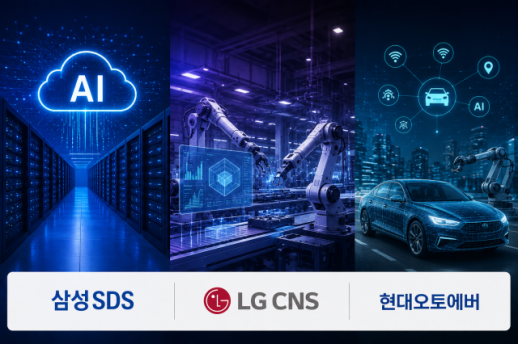 Three Major SI Companies Experience Surge Amid AI Infrastructure Boom Shares of South Korea's three major system integration (SI) companies have surged, breaking free from their previous undervaluation as they were often seen merely as internal trading firms. The shift in global artificial intelligence (AI) investment from hardware, particularly semiconductors and servers, to the software and infrastructure needed to implement AI in real-world applications has positioned Samsung SDS, LG CNS, and Hyundai AutoEver as key players in the AI transformation era. According to the Korea Exchange, as of 2 p.m. on June 1, Samsung SDS shares rose 25.8% to 376,000 won. Hyundai AutoEver saw a 4.6% increase, reaching 974,000 won, while LG CNS climbed 17.2% to 133,400 won, leading the overall strength in the SI sector. The emergence of AI has been driven by infrastructure companies focused on graphics processing units (GPUs), servers, and networking equipment, primarily led by Nvidia. However, as businesses move beyond merely considering the adoption of generative AI to actively implementing it across factories, logistics centers, and data centers, the role of SI companies in building and operating these systems is becoming increasingly significant. Analysts note that the benefits of AI investment are shifting from hardware to software and system integration. There is growing demand for AI data center construction, smart factory enhancements, and the development of robotic control platforms, all of which require the expertise of SI firms. The revenue structures of SI companies are also undergoing rapid changes. Previously, they relied heavily on maintenance-focused business models after system implementation, which limited their corporate valuation. In contrast, businesses related to AI data centers, AI transformation, and robotic operation platforms have high technological entry barriers and long-term contracts, allowing for stable revenue generation. Continuous operational and management revenue post-implementation is expected to enhance profitability and growth compared to the past. Samsung SDS is accelerating its push into the infrastructure market by expanding its AI data center business, leveraging its capabilities in enterprise cloud and high-performance computing (HPC). As the adoption of generative AI becomes more widespread among companies, the demand for data centers for AI training and inference is expected to grow significantly. LG CNS is emerging as a leader in the 'physical AI' sector, which involves AI controlling robots and equipment in real-world environments. The company is expanding its platform business that connects AI and robotics, drawing on its digital transformation experience in manufacturing and logistics. The rapid increase in the proportion of AI and cloud business indicates a shift from traditional SI services to AI service-oriented operations. Hyundai AutoEver is expected to benefit from the transition to software-defined vehicles (SDVs) and the expansion of its robotics business. As the Hyundai Motor Group increases its investments in autonomous driving and robotics, the demand for vehicle software and robotic operating systems is also rising. The market anticipates that as robotics become more prevalent, robotic control platforms will emerge as a new growth driver, generating recurring revenue. An industry insider commented, "The recent surge in stock prices signals a shift in how the market evaluates SI companies. Previously, reliance on affiliates was seen as a discount factor for corporate value, but in the AI era, the ability to implement AI in industrial settings and operational experience has become the key competitive advantage."* This article has been translated by AI. 2026-06-01 15:48:00
 -
 The Rise of Physical AI: Smart Glasses as the Competitive Edge in Industry The era of physical artificial intelligence (AI) has officially begun. At CES 2026, humanoid robots, autonomous driving, digital twins, and wearable AI emerged as key themes. In March, at NVIDIA's GTC 2026, CEO Jensen Huang declared a "big bang of physical AI," confirming the transition to real-world applications. The infrastructure is now in place for AI to move from virtual training environments to actual factories and logistics sites. Despite appearing as distinct technologies, all these advancements share a common thread: the ability to perceive and interpret the physical world. AI operating in the real world must be supported by a precise understanding of complex conditions on the ground. To effectively utilize spatial recognition technology in industrial settings, a connection point between workers and AI is essential. Smart glasses have emerged as a focal point. In 2026, major global tech companies began seriously exploring smart glasses as an AI interface for industrial applications. At CES 2026, Siemens announced a collaboration to integrate industrial AI into Meta Ray-Ban AI glasses. When factory workers wear these glasses, they receive real-time voice guidance and task feedback hands-free. Siemens and NVIDIA further declared their intention to jointly develop an "industrial AI operating system," outlining a roadmap to realize the world's first fully AI-based adaptive factory starting at the Erlangen plant in Germany. Google is also expanding its smart glasses ecosystem targeting the enterprise market through its Android XR platform. Market research firm Omdia predicts that shipments of AI glasses will surpass 15 million units this year and reach 35 million by 2030. While it may take time for robots to fully replace factories, equipping workers with AI is feasible right now. For smart glasses to function effectively on-site, simple location data is insufficient. GNSS-based location technologies, represented by GPS, can have errors of several meters in typical environments, and accuracy drops significantly indoors or in complex urban areas. To provide accurate information to workers, smart glasses must determine "which equipment they are in front of and in which direction they are looking." Visual Positioning Systems (VPS) offer a solution to this limitation. The visual sensors in smart glasses or mobile devices recognize features of the surrounding environment and compare them with pre-established spatial data to calculate location and direction with centimeter-level precision. While GNSS excels at approximate location tracking over large areas, VPS enables precise location recognition in specific spaces. The demands of the physical AI era require a comprehensive understanding of equipment, structures, work points, and pathways in three dimensions. The statement at NVIDIA's GTC 2026 that "the factory itself is now a robotic system" reflects this context. To operate an entire factory as a single intelligent system, every space within it must be digitally understood with precision. In the past, creating accurate spatial information required expensive LiDAR scanners and skilled surveyors, making it the domain of large projects. Now, real-time spatial mapping (SLAM) can be achieved with smart glasses without special equipment. Advances in computer vision and spatial computation technology have significantly lowered this barrier. NVIDIA's Physical AI Data Factory Blueprint provides an architecture that generates large-scale synthetic data from limited real-world data, accelerating the development of vision AI agents. The value of technology ultimately proves itself in the field. Smart glasses represent the final point of contact where all the technology stacks of physical AI meet people. In logistics, for instance, a worker wearing smart glasses can see picking locations, product information, and quantities displayed in real-time, while vision AI automatically recognizes barcodes and integrates with the warehouse management system (WMS) instantly. This can be implemented with software alone, without additional equipment investment. In maintenance, when the smart glasses camera recognizes equipment tags or QR codes, schematics, manuals, and inspection histories are immediately displayed in the worker's view. Tasks such as generating reports can be completed using voice commands, standardizing maintenance work that previously relied on individual skill levels. In the physical AI era, future industrial competition will hinge on how precisely the entire physical space can be digitized and how seamlessly AI can connect people, robots, and equipment. At the forefront of this connection are smart glasses that equip industrial workers with AI.* This article has been translated by AI. 2026-06-01 13:48:00
 -
 Kakao Union to Strike for Job Security and Compensation Reform The Kakao Union plans to initiate a partial strike on June 10. The union argues that ongoing sales, spin-offs, and restructuring have created job insecurity and demands improvements to the management-centered compensation system. In a statement on June 1, the Kakao branch of the Korean Confederation of Trade Unions said, "Our core demand is to stop the sales, spin-offs, and restructuring resulting from continuous management failures and to secure job stability. We also seek to reform the compensation system that allows management to monopolize excessive rewards while causing job insecurity through poor decision-making." The union explained that the partial strike is intended to address concerns from users about the potential disruption of major services like KakaoTalk. The union stated, "We plan to conduct a four-hour partial strike and a rally in Pangyo on June 10. We will start with this limited action and may escalate the strike depending on the negotiation situation." Previously, negotiations between Kakao and the union had gone through mediation by the Labor Relations Commission, but no agreement was reached, leading the union to secure the right to strike. However, according to the union, no formal negotiations have taken place since the second mediation concluded. A union representative noted, "We have not met separately with the company since the second mediation, and there are no scheduled official meetings following the strike." Regarding the expected participation in the strike, the union stated, "We will know the scale of participation only on the day of the event," and did not provide specific numbers.* This article has been translated by AI. 2026-06-01 09:48:00
 -
 Naver Invests in Drone Company UbiFly to Target Public and Smart City Markets Naver has invested in UbiFly, a company specializing in autonomous drone platforms, and established a strategic partnership. The collaboration aims to expand physical AI business by integrating artificial intelligence (AI), cloud, and digital twin technologies with autonomous drones, targeting the public and smart city markets. On June 1, Naver announced its investment in UbiFly and the formation of a cooperative framework. The two companies plan to explore new service models that combine autonomous drones with AI and work together to develop a next-generation unmanned systems ecosystem. UbiFly develops drone swarm flight technology and autonomous flight platforms. Since its inception, the company has focused on international markets and recently became the first domestic drone company to receive the "$10 Million Export Tower" award. Additionally, it is the only domestic company participating in the Dronecode Foundation's board, which leads the development of the global drone operating system PX4. Through this collaboration, Naver intends to combine its technological capabilities in AI, cloud, and digital twin with UbiFly's drone hardware and operational expertise. As physical AI, which extends AI's capabilities beyond software to control real-world objects and machines, emerges as a significant industry trend, drones are expected to be utilized in various fields, including public safety, facility management, and urban operations. UbiFly is also expected to accelerate its efforts in the public drone market based on Naver's AI technology. The companies plan to integrate AI and digital twin technology into autonomous drones to establish a more sophisticated unmanned operational system and expand business opportunities, particularly in smart cities and public sectors. Choi Soo-yeon, CEO of Naver, stated, "As the potential for physical AI, autonomous driving, and robotics continues to grow, drones are also becoming an important area of future technology. The combination of Naver's physical AI capabilities and UbiFly's drone technology can create new possibilities across various industries." Lim Hyun, CEO of UbiFly, remarked, "With this investment, we will enhance our swarm drone technology and implement physical AI solutions across various industrial sectors, including public and smart cities."* This article has been translated by AI. 2026-06-01 09:00:00
 -
 Bespin Global Wins Contract to Operate AI Research Environment for Woori Financial Bespin Global, an artificial intelligence (AI) service and solutions company, has secured a contract to operate the AI research environment for Woori Financial Group, marking a significant step in supporting AI transformation (AX) in the financial sector. This initiative expands its support beyond individual projects at financial institutions to encompass AI transformation efforts at the group level. On June 1, Bespin Global announced that it will establish an independent research environment architecture based on Amazon Web Services (AWS), enabling the testing of cutting-edge AI technologies, including generative AI and large language models (LLMs), even within the regulatory constraints of network separation in the financial sector. The project will utilize Bespin Global's AI platform, 'Help Now AI Foundry.' This platform serves as an AI orchestration tool that integrates the entire process from planning to development and operation of AI services. Through this platform, various AI models and services can be easily linked and validated, while also providing an environment for designing and operating AI agents based on natural language. Additionally, it supports the management systems and governance features necessary for operating AI agents, facilitating the rapid adoption of new AI technologies. Bespin Global anticipates that this project will serve as a foundation for financial sector organizations to apply AI in their actual operations and accumulate practical experience. The company has previously developed its capabilities through AI projects with financial institutions such as Lotte Card and KB Life. With recent moves to ease network separation regulations and expand the use of software as a service (SaaS) in the financial sector, Bespin Global plans to build a model for AI research environments that considers both regulatory compliance and AI utilization in collaboration with Woori Financial. Han Sun-ho, Chief AI Officer at Bespin Global, stated, "We will focus on providing a safe and scalable AI research environment suitable for the financial sector, ensuring compliance with financial regulations and security requirements while supporting the rapid validation and utilization of the latest AI technologies." 2026-06-01 08:30:00
 -
 Naver Cloud Targets Defense AI Market with New Task Force Naver Cloud Establishes Task Force for Defense AI Development Naver Cloud is launching a new organization dedicated to defense artificial intelligence (AI) as it seeks to penetrate the defense AI market. According to industry sources on May 31, Naver Cloud will unveil a task force focused on defense AI transformation (AX) on June 1. This team will be led by Kim Yoo-won, CEO of Naver Cloud. The Defense AX Task Force will integrate AI model development, business development, and marketing functions. Its goal is to create AI models specialized for the defense sector and promote their commercialization. Naver Cloud emphasizes its strengths, including its proprietary super-large AI model 'HyperCLOVA X,' cloud infrastructure, and data centers. The company plans to develop AI solutions tailored to defense and security environments and expand related business operations. Jung Cheong-rae: Record Early Voting Rate Favors Democratic Party Jung Cheong-rae, the head of the Democratic Party's election campaign committee, commented on the record early voting rate for the June 3 local elections, stating it is not unfavorable for the Democratic Party. According to the National Election Commission on May 31, the early voting rate for this local election reached 23.51%, the highest in history. He noted, "As early voting becomes established, people tend to perceive the voting period as effectively three days," but added that considering the active participation of voters, he believes the results do not disadvantage the Democratic Party. He further stated, "Even with a conservative analysis, the early voting rate is not unfavorable for the Democratic Party. In fact, I think it indicates a slightly more favorable trend for us." Nvidia Set to Unveil First Windows PC Targeting AI Market Nvidia, a leader in the artificial intelligence (AI) semiconductor market, is set to make a significant move into the personal computer (PC) market. The company plans to unveil its first Windows-based PC featuring Nvidia chips as the main processor, entering the competitive AI PC market. According to reports from Yonhap News and other outlets on May 31, Nvidia and Microsoft will showcase their collaborative developments and the new PC at Computex, Asia's largest IT exhibition, on June 2 in Taiwan, as well as at Microsoft's Build developer event in San Francisco. This product is expected to be the first Windows PC equipped with Nvidia chips as the primary processor. Industry experts anticipate that not only Microsoft but also major PC manufacturers like Dell may soon release Nvidia-based products. Shangri-La Dialogue Concludes with US-China Talks and NATO Discrepancies The Shangri-La Dialogue, the largest security conference in the Asia-Pacific region, concluded on May 31, with the United States and China reaffirming their commitment to dialogue and showing signs of reducing military tensions. However, discrepancies emerged between the U.S. and its European allies regarding defense spending and international order issues. The dialogue confirmed the improving atmosphere in U.S.-China relations following a recent summit. Meanwhile, differences regarding the Trump administration's alliance policies surfaced between the U.S. and European nations. Some European countries were criticized for emphasizing a rules-based international order while being passive about strengthening security capabilities, prompting calls for NATO member states to take on greater responsibilities. In response, European and Indo-Pacific allies underscored the importance of international norms and cooperative frameworks, effectively countering these criticisms. Dutch Defense Minister Kajsa Ollongren stated, "Even if international law is not perfect, abandoning it cannot be an alternative."* This article has been translated by AI. 2026-05-31 21:30:00
 -
 Shangri-La Dialogue Concludes as US-China Relations Stabilize Amid Diverging Views with Allies While the United States and China reaffirmed their dialogue and aimed to reduce military tensions, differences emerged between the U.S. and its European allies regarding defense spending and international order issues. The Shangri-La Dialogue, the largest security conference in the Asia-Pacific region, concluded in Singapore on May 31, confirming the improved atmosphere between the U.S. and China following their recent summit. However, disagreements regarding the Trump administration's alliance policies surfaced between the U.S. and European nations. This conference was notable as it was the first major multilateral security meeting since the recent U.S.-China summit. Both nations adopted a more restrained tone compared to last year, emphasizing their commitment to stabilizing relations. In his speech, Secretary of Defense Pete Hegseth maintained the U.S. stance of countering China's expanding influence but stated, "We do not seek unnecessary confrontation," highlighting the need for expanded communication channels between military authorities. This marked a significant reduction in rhetoric compared to last year's dialogue, where China was labeled a "substantial and immediate threat." China responded with conciliatory messages. Meng Xiangqing, a professor at the National Defense University leading the Chinese delegation, expressed hope that the U.S. and China would move closer together, stressing the need for stable military relations. However, both sides continued to mention their opposition to "hegemonism," maintaining a stance of mutual restraint. In contrast, the differences between the U.S. and its allies became more pronounced. Hegseth repeatedly urged European nations to increase defense spending, asserting, "Allies must fulfill their roles in collective defense." He criticized some European countries for emphasizing a rules-based international order while being passive about enhancing security capabilities, calling for greater responsibility among NATO member states. In response, European and Indo-Pacific allies underscored the importance of international norms and cooperative frameworks, effectively countering Hegseth's assertions. Dutch Defense Minister Dylan Yesilgöz-Zegerius stated, "Even if international law is not perfect, abandoning it cannot be an alternative." Australian Deputy Prime Minister and Defense Minister Richard Marles emphasized that while a rules-based international order may be subject to reform, it should not be dismantled, highlighting the importance of multilateral cooperation. Japanese Defense Minister Shinjiro Koizumi also stressed the need for solidarity among allies, stating, "Division weakens deterrence, while unity strengthens it."* This article has been translated by AI. 2026-05-31 21:21:00