
Journalist

Park Boram
ram07@ajunews.com
-
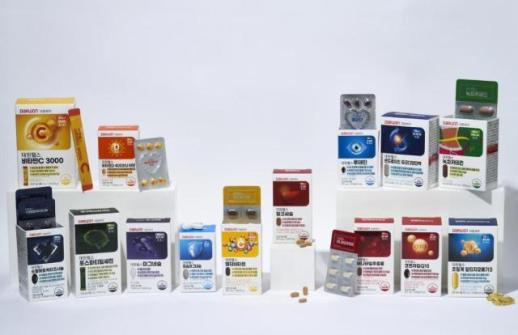 Daewon, Yuhan, Kolon and Samsung Medical Center roll out supplements, gene therapy and AI tools Daewon Pharmaceutical teams with E-Land’s Kim’s Club to launch 14 health supplements Daewon Health said Feb. 23 it will launch 14 premium health functional foods in collaboration with Kim’s Club, a supermarket brand operated by E-Land Retail. The lineup includes a multivitamin, milk thistle, lutein, calcium and coenzyme Q10. The products are designed by age, gender and health goal, and the packaging includes suggested uses tied to common health concerns to help shoppers choose. Daewon Health said all products are formulated to meet at least 100% of Korean nutrient intake standards. It said it combined key ingredients with complementary ingredients to improve nutritional balance and priced the products at 5,000 won or less for a one-month supply to reduce the burden on consumers. Yuhan launches ‘Becompl’ daily vitamin shots in three versions Yuhan said Feb. 23 it launched three products under its premium daily care brand Becompl, designed to help manage daily condition by time of day. The company said the products use a dual format that combines a tablet and liquid in one bottle, allowing consumers to take them without water and improving portability and convenience. Becompl Morning Shot is aimed at liver health. Yuhan said the 30 mL portable product contains milk thistle and Rhodiola rosea extract for easy use on the way to work. Becompl All Day Shot is a premium multivitamin that includes 20 functional ingredients in one bottle. Centered on high-dose B vitamins needed for energy metabolism, it also combines vitamins C and E with minerals and may help with antioxidant support, the company said. Becompl Good Night is designed to improve sleep quality and is intended for nighttime use. Yuhan said it contains lime peel extract, a citrus-derived ingredient that may help support sleep health. Kolon Life Science to broaden indications for next-generation gene therapy candidates Kolon Life Science said Feb. 23 it plans to add new indications for drug candidates KLS-3021 and KLS-2031 and strengthen the foundation for global commercialization. KLS-3021 is a next-generation anticancer gene therapy candidate that loads therapeutic genes (PH-20, IL-12 and sPD1-Fc) onto a recombinant vaccinia virus engineered for greater selectivity toward cancer cells. The company said it is designed to combine the virus’ direct tumor-killing mechanism with breakdown of tumor stroma to help immune cells penetrate cancer tissue, while also inducing an anticancer immune response. To diversify indications for KLS-3021, Kolon Life Science said it is expanding research to include head and neck squamous cell carcinoma and triple-negative breast cancer. Another pipeline candidate, KLS-2031, is a recombinant adeno-associated virus (rAAV)-based gene therapy designed to express the genes GAD65, GDNF and IL-10, which are involved in suppressing neuroinflammation and regulating overexcited pain signaling pathways. The company said it is continuing to submit papers on preclinical results related to diabetic peripheral neuropathy and is also pursuing additional indications. AI may enable earlier detection of Parkinson’s disease, Samsung Medical Center says Samsung Medical Center’s AI Research Center said Feb. 23 it has confirmed the potential for earlier diagnosis of neurodegenerative diseases, including Parkinson’s disease and Parkinson-plus syndromes, using multimodal AI that analyzes clinical data such as gait, voice and brain imaging together. Parkinson’s disease is often diagnosed late because early symptoms are not clear. By the time tremors or gait problems appear, the disease may already be significantly advanced. A research team led by neurologist Cho Jin-hwan and radiologist Jeong Myeong-jin collected and standardized clinical information — including gait, voice and brain imaging — from about 500 patients over four years: 363 with Parkinson’s disease, 67 with progressive supranuclear palsy and 61 with multiple system atrophy. The team built an integrated database and developed a gait-based fall-risk prediction model, a voice-test-based Parkinson’s classification system, and an MRI-based automated brain-structure analysis model. In clinical evaluations, the hospital said the voice-based severity classification model, the MRI-based disease differentiation model, and a fall prediction model that analyzes gait and brain imaging together all showed high accuracy. Samsung Medical Center added that the models can also present the basis for their decisions. Cho said, “The earlier Parkinson’s disease is detected, the better the effect of drug treatment, and rehabilitation can slow progression,” adding that AI will help early diagnosis by quickly integrating results from multiple tests.* This article has been translated by AI. 2026-02-23 17:15:00
 -
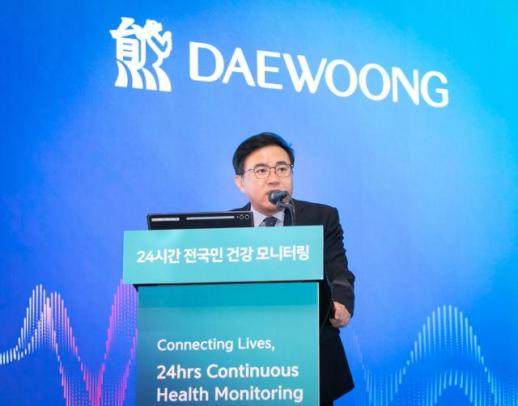 Daewoong Pharmaceutical Unveils ‘ALL New thynC’ AI Platform, Targets 300 Billion Won in Annual Digital Health Sales "We will expand adoption of the real-time inpatient monitoring system 'thynC' to more than 100,000 beds and achieve annual digital health care sales exceeding 300 billion won." Park Hyeong-cheol, head of Daewoong Pharmaceutical’s ETC marketing division, made the remarks on the 23rd at a “digital health care vision” media briefing in Seoul. He also said the company aims to establish a nationwide monitoring system that can support patients at home after discharge. On the sales target, Park said the market size can vary depending on how digital health care is defined, but added he believes the goal is achievable even when counting only products already in use by medical staff. Daewoong Pharmaceutical, which set up a dedicated digital health care organization in 2024, unveiled its upgraded next-generation artificial intelligence health care platform, “ALL New thynC,” at the event. The platform integrates patient health data by linking biometric information collected from wearable sensors — including electrocardiograms, blood pressure and oxygen saturation — with tools such as continuous glucose monitoring, ring-type continuous blood pressure monitoring and an AI voice-recognition medical record solution. Executives from partner companies, including Seers Technology, iCoop, Sky Labs and Puzzle AI, attended the briefing to share the platform’s technical value and examples of use in clinical settings. iCoop’s continuous glucose monitoring solution, CGM Live, tracks real-time blood sugar changes in hospitalized patients. Sky Labs’ ring-type continuous blood pressure monitoring solution, Cart On, automatically measures and records blood pressure. Puzzle AI’s AI voice-recognition solution, CL Note, recognizes clinicians’ speech in real time and links it to electronic medical records. Lee Young-shin, CEO of Seers Technology, said ALL New thynC is evolving into an AI-based platform that supports clinicians’ decision-making and will expand beyond in-hospital monitoring to home care to broaden full-cycle patient monitoring. The briefing also cited a case in which an early warning alert detected by thynC in a real-world medical setting helped identify a patient just before cardiac arrest. Daewoong Pharmaceutical said it plans to further advance monitoring technology so care does not stop outside the hospital. Park said the value lies in connecting technologies through an integrated platform to support clinical decisions, adding the company will continue working with partners across more medical settings.* This article has been translated by AI. 2026-02-23 15:09:00
 -
 Entertainer Park Na-rae Questioned by Police as Suspect in Special Injury Case Entertainer Park Na-rae, who has faced allegations of mistreating her managers, appeared at a police station as a suspect. Police said Feb. 20 that Seoul’s Gangnam Police Station began questioning Park at 3 p.m. on allegations including special injury and violations of the Medical Service Act. Park had been scheduled to appear for questioning on Feb. 12 on the same allegations but postponed the date. It was reported to be her first time being questioned by police as a suspect. Earlier, Park’s former managers filed a complaint with Gangnam Police Station accusing her of special injury, defamation by alleging false facts, and violations of the Information and Communications Network Act. Park has temporarily halted her activities after the manager-abuse allegations and controversy over claims she received illegal medical procedures from a so-called “injection aunt.”* This article has been translated by AI. 2026-02-20 19:42:16
 -
 Korean Pharma, Biotech Firms Adjust Treasury Stock Plans Ahead of Commercial Code Revision As a third revision to South Korea’s Commercial Code nears passage, pharmaceutical and biotech companies are moving faster to reorganize their treasury stock holdings. The proposal centers on making treasury stock cancellations mandatory, prompting companies to adjust plans for cancellations or share swaps. Industry officials said the government is pushing a bill that would require newly acquired treasury shares to be canceled within one year, and existing holdings to be canceled after a six-month grace period. Pharma and biotech firms are preparing responses. Celltrion said it plans to cancel 6.11 million shares, excluding about 3 million shares set aside for compensation such as stock options, from its 12.34 million treasury shares. It also said it aims to reach an average shareholder return rate of 40% by 2027. Yuhan Corp. last month disclosed a decision to cancel treasury shares worth 36.2 billion won, following a 25.3 billion won cancellation in May last year. Under its “Value-up” program, the company has said it will cancel 1% of its outstanding common shares by 2027 and raise dividends per share by more than 30% in total compared with 2023. Some companies have opted for swaps instead of cancellations. Treasury shares held by a company carry no voting rights, but swapping them can create friendly stakes. Many listed pharma and biotech companies have friendly stakes for their largest shareholders of around 30%. Daewoong, the holding company of Daewoong Pharmaceutical, in December swapped treasury shares worth 13.8 billion won with Kwangdong Pharmaceutical, citing cancer-drug co-promotion and joint development of new drugs. Daewoong then transferred 564,745 treasury shares to U2Bio through an in-kind contribution. Kwangdong Pharmaceutical, in addition to the swap with Daewoong, sold 3.82% of its treasury shares to business partner Dongwon Systems. Samjin Pharmaceutical carried out a treasury-share swap with Ilsung IS, and Whanin Pharmaceutical conducted swaps with Dongkook Pharmaceutical, Jinyang Pharmaceutical and Kyungdong Pharmaceutical. As such transactions have increased, some in capital markets have raised concerns. Swaps between companies with overlapping interests could be used to defend management control or avoid regulation, critics say. The industry has pushed back, saying the moves are strategic rather than an end run. An industry official said, “It’s true treasury stock transactions have increased compared with before, but it’s a strategic move for co-promotion.” Jung Yoon-taek, head of the Korea Pharmaceutical Industry Strategy Institute, said the sector is more sensitive to changes in treasury stock policy. “Pharmaceutical companies have lower controlling shareholder stakes than other manufacturers, making them more vulnerable to changes in treasury stock policy,” he said, adding that “a certain level of ownership stability is needed in an industry that must sustain long-term R&D investment and tolerate high volatility.” Kim Dae-jong, a professor of business administration at Sejong University, said canceling treasury shares can lift stock prices by reducing the number of shares, but could also threaten management control because South Korea does not have a dual-class share system. “Companies have no choice but to consider all of these structural pros and cons,” he said.* This article has been translated by AI. 2026-02-20 18:03:00
 -
 LG Chem, GC Biopharma, Cho-A Pharma and Severance Hospital report trial, webinar, product and surgery milestones LG Chem: IDMC recommends continuing Phase 3 trial of head and neck cancer drug LG Chem said Feb. 20 that an independent data monitoring committee (IDMC) recommended continuing the Phase 3 clinical trial of ficlatuzumab, a head and neck cancer drug being developed by its U.S. subsidiary, AVEO. Based on interim results, the IDMC recommended selecting the higher of two tested doses — 20 mg/kg — as the final dose and proceeding with the study. Ficlatuzumab is a monoclonal antibody targeted cancer therapy designed to inhibit the action of hepatocyte growth factor (HGF), which is involved in tumor growth and metastasis. The trial enrolls patients with HPV-negative head and neck cancer who previously received platinum-based chemotherapy and immune checkpoint inhibitors either sequentially as monotherapy or in combination. It compares ficlatuzumab plus cetuximab with placebo plus cetuximab. LG Chem plans to recruit 410 to 500 patients and assess overall survival (OS), defined as the time from treatment start to death. GC Biopharma to hold relay webinar series for clinicians GC Biopharma said Feb. 20 it will run a relay webinar series from Feb. 25 through April 29 on its drug information site, GC Connect, under the theme “Practical clinical solutions and the latest insights on five key endocrine diseases.” The company will invite 10 endocrinologists in private practice to deliver lectures tailored to primary care settings. The first session will cover the latest diabetes updates based on the 2025 Korean Diabetes Association (KDA) clinical practice guidelines and the American Diabetes Association (ADA) guidance. Subsequent webinars will address thyroid disease management, obesity drug treatment strategies, bone metabolism (osteoporosis) and metabolic syndrome (CKM syndrome), summarizing academic information on five major endocrine conditions. GC Biopharma said the series is designed to offer practical clinical approaches to real-world challenges clinicians face in patient care by featuring speakers familiar with day-to-day practice settings. Cho-A Pharma launches Hepatos Syrup using patented Sepiji ampoule Cho-A Pharma said Feb. 20 it launched Hepatos Syrup, packaged with its patented Cho-A Sepiji ampoule container. Hepatos Syrup is an over-the-counter medicine that the company said helps protect liver cells and improve liver function through the combined effects of three ingredients: arginine, betaine and citric acid. As a liquid, it is designed for rapid absorption and quick effects related to liver energy synthesis and detoxification, the company said. The main ingredient, arginine, is a precursor of urea and is essential for neutralizing toxic ammonia. Betaine, an oxidized derivative of choline, lowers cholesterol and increases bile secretion during choline metabolism, supporting fat metabolism and digestion, the company said. Citric acid is involved in amino acid and carbohydrate and lipid metabolism and promotes energy (ATP) production, which the company said can help relieve fatigue and improve endurance. Cho-A said the Sepiji ampoule uses a material certified by the U.S. Pharmacopeia as the highest safety grade, USP Plastic Class VI. The company said it has registered patents in 30 countries including South Korea, the United States, Europe, Japan and Vietnam, and received certification from the nationally accredited testing institution KOTITI that no endocrine-disrupting chemicals were detected. Severance Hospital reaches 500 robot-assisted brain surgeries Severance Hospital said Feb. 20 it recently reached 500 cases of robot-assisted precision brain surgery, 5 years and 3 months after its first procedure in 2020. The technique is used for precision procedures such as inserting electrodes into specific brain locations, collecting tissue samples and placing catheters. After a target is set on preoperative imaging, a robotic arm automatically guides the coordinates so surgeons can follow the planned path. The hospital said it uses robot-assisted brain surgery to treat a range of brain disorders. One example is inserting stereoelectroencephalography electrodes in patients with drug-resistant epilepsy to pinpoint where seizures begin. Placing one electrode typically takes 15 to 20 minutes by hand, but can be reduced to 4 to 5 minutes with a robot, the hospital said. With an average of about 15 electrodes inserted per patient, the time savings can be substantial. Severance Hospital said its 500 cases include 327 brain tissue biopsies, 107 stereoelectroencephalography electrode insertions, 57 deep brain stimulation procedures and nine catheter insertions.* This article has been translated by AI. 2026-02-20 15:48:00
 -
 Korean Pharma-Bio Brief: Yuhan Phase 2 CSU Trial, Celltrion ECCO Data, JW Award, HLB MOU Yuhan begins Phase 2 trial of allergy drug Resigercept in CSU patients Yuhan said Feb. 19 it is moving forward with a multinational Phase 2 clinical trial of its allergy-disease treatment Resigercept in patients with chronic spontaneous urticaria (CSU). The company registered key details of the Phase 2 plan on ClinicalTrials.gov, the U.S. National Institutes of Health clinical trial database. The study is designed to evaluate safety and efficacy after 12 weeks of dosing with Resigercept or placebo in 150 CSU patients. The primary endpoint is the change from baseline to week 12 in UAS7, a seven-day urticaria activity score. Resigercept previously received Phase 2 IND approval from South Korea’s Ministry of Food and Drug Safety in October 2025, followed by IND approval from Chinese regulators in February this year. The trial is expected to run in South Korea as well as Japan, China, Bulgaria and Poland. The company expects the last patient to complete the study in July 2027 and aims to produce key results in the fourth quarter of that year. JW Lee Jong Ho Foundation seeks nominees for 2026 JW Seongcheon Award JW Lee Jong Ho Foundation said Feb. 19 it is accepting nominations for the 2026 JW Seongcheon Award. The award was established in 2012 by the late honorary chairman Lee Jong Ho to carry on the “respect for life” philosophy of Seongcheon Lee Gi-seok, the founder of JW Pharmaceutical. It honors medical professionals each year for notable social contributions and service. Nominations will be accepted through March 31. Applicants can download a recommendation form from the foundation’s website and submit it by email, or apply through an online link in the website notice. The foundation said it expanded nomination channels beyond institutional recommendations, allowing patients and fellow medical workers to apply as well. Eligible nominees include licensed medical professionals authorized by the health minister — including physicians, dentists, practitioners of traditional Korean medicine, nurses and midwives — as well as medical organizations. Selection includes document screening, on-site review and a final comprehensive review, with the board making the final decision. Celltrion says post-hoc analysis supports Remsima SC in IBD patients after treatment gaps Celltrion said Feb. 19 it will participate in the 2026 European Crohn’s and Colitis Organisation (ECCO) congress to showcase its clinical experience and portfolio in autoimmune diseases. Celltrion said it will be the only South Korean company operating a standalone promotional booth at ECCO and will hold academic activities including a symposium and poster presentations related to inflammatory bowel disease (IBD) treatments. On the first day of the congress, the company plans to present new results for the first time from a post-hoc analysis of a Phase 3 study of Remsima SC (infliximab; U.S. brand name Zymfentra) in patients with Crohn’s disease or ulcerative colitis. According to the data, most patients who had stopped infliximab intravenous (IV) treatment and then received placebo for at least 16 weeks showed a rapid recovery of clinical response after receiving 240 mg of infliximab subcutaneous (SC). Efficacy and safety remained stable through the 102-week follow-up period. The symposium will focus on “Improving patient care through infliximab SC: clinical review and discussion,” including treatment-optimization strategies based on real-world clinical data. Expert sessions at the booth will cover the clinical meaning of very long-term outcomes after switching from IV to SC, the need for combination therapy with TNF inhibitors in IBD treatment, and implications of switching to infliximab SC based on real-world data from Northern Europe. HLB Life Science signs MOU with Bellabel Bio to develop ingredients from native plants HLB Life Science said Feb. 19 it signed a memorandum of understanding with Bellabel Bio, a company specializing in functional-ingredient development, to strengthen R&D and commercialization competitiveness for functional ingredients based on native plants in South Korea. The companies said the agreement aims to build an end-to-end cooperation framework — from discovering native plant-based materials and verifying efficacy to product development and industrialization — by combining their research capabilities and technical infrastructure. They plan to cooperate on joint R&D projects, academic information sharing related to functional ingredients, technical consulting and personnel exchanges. Research into functional ingredients using native plants has drawn attention as part of efforts to foster a sustainable bio and health care industry. The companies said native plants can also support differentiation strategies in global markets because they are resources adapted to local environments.* This article has been translated by AI. 2026-02-19 15:42:00
 -
 HuonsN Launches Lunar New Year Supplement Discounts on HuonsN Mall HuonsN said Monday it is running a “Lunar New Year health gift” promotion around the holiday period, offering discounts on its HuonsN Mall through Feb. 28. The company said it has prepared a limited quantity of specially packaged gift sets, including “InjiCore Stick” for cognitive function, “6-Year Real Red Ginseng Stick 57.5” made with 100% domestically produced 6-year-old red ginseng concentrate, and “Black Bellflower Pear Juice Stick” containing domestically produced black bellflower and domestic pear concentrate. Discounts also apply to products such as “Menolacto Premium” for women’s menopausal health and high-dose vitamin items including “MeritC Acid 3000mg,” “MeritC Liposome Vitamin C Triple Shot” and “MeritC Multi Vitamin Gummies,” the company said.* This article has been translated by AI. 2026-02-16 13:09:00
 -
 Korean Botulinum Toxin Makers Pivot Overseas as Domestic Prices Collapse South Korea’s botulinum toxin market has effectively hit saturation as prices have collapsed, squeezing profitability and pushing companies to focus on exports. As firms pivoted overseas, exports of Korean-made toxin reached a record high, signaling the industry’s center of gravity has shifted from domestic sales to global markets. Industry data showed that in the third quarter of 2025, exports of Korean botulinum toxin totaled $114.59 million (about 1.655 trillion won), the highest on record. With limited room for domestic growth, the sector has structurally moved toward an export-driven model. The main driver is a price structure that has become difficult to sustain. The number of sellers, including global companies, has risen to about 18, intensifying competition. Average selling prices for a 100-unit product have fallen from about 40,000 to 50,000 won to the low 10,000-won range. With more choices, repeated price cuts have entrenched a dynamic in which margins shrink as sales rise. Demand growth at home is also constrained. South Korea has one of the world’s highest procedure rates per capita, but its small population limits market expansion. With the United States, Europe and China accounting for about 80% of the global toxin market, companies see overseas share as essential for sustainable growth. The United States is viewed as the biggest battleground. The U.S. botulinum toxin market is estimated at 6 trillion to 7 trillion won, and higher prices translate directly into stronger profitability. Allergan products currently hold the largest share, benefiting from an early lead. Daewoong Pharmaceutical said it became the first company in Asia to win U.S. Food and Drug Administration approval for a botulinum toxin in 2019. It launched its product, Nabota, in the U.S. under the brand name Jeuveau and ranked No. 2 in U.S. aesthetic toxin market share in the first half of last year. Nabota has partnerships in more than 80 countries. China is also expanding quickly as middle-class purchasing power rises and demand grows for higher-quality products. China’s botulinum toxin market was about 1.9 trillion won as of 2024, about 10 times the size of South Korea’s. In the third quarter of last year, China was the top destination for Korean toxin exports. Because regulatory review is stringent, relatively few companies have approvals. In 2020, Hugel’s Letybo became the first Korean product to enter China, and in January this year, Huons’ Hutox received approval. Chong Kun Dang Bio has also completed a Phase 3 trial aimed at winning approval from Chinese health authorities. Companies are also widening pipelines in emerging markets such as the Middle East, Latin America and Southeast Asia, which are seen as having long-term growth potential as incomes rise and access to lower-priced products improves. Daewoong Pharmaceutical recently signed an export deal for Nabota with Mexican distribution partner M8. Medytox affiliate NewMeco obtained approval for “Newlux” in El Salvador. Korean companies are seen as strong at offering products that balance quality and price. “Overseas, competition is not just about price but about value based on quality,” a pharmaceutical industry official said, adding that competitiveness has been confirmed even at higher price points than in South Korea. As exports rise, manufacturers are expanding capacity. Hugel said it has built a system capable of producing more than 13 million vials a year by operating a third plant. Daewoong Pharmaceutical is also building a third plant to expand Nabota output, investing more than 100 billion won; once completed, it will be able to produce up to 18 million vials. Fortune Business Insights forecasts the global botulinum toxin market will grow to $24 billion (about 34 trillion won) by 2034. Growth is expected to continue as aesthetic procedures become more common and uses expand to areas such as migraine and pain treatment. An industry official said potential demand is still rising, citing more male patients and a broader recommended age range, and added that growth could accelerate as the global consumer base expands. 2026-02-16 13:03:00
 -
 Dong-A Pharmaceutical’s SelfRX Supplements Launch on Baemin B-Mart Dong-A Pharmaceutical said on the 16th that four products from its health supplement brand SelfRX will be newly available on Baemin B-Mart, the quick-commerce service run by Delivery Hero Korea’s Baedal Minjok. The lineup includes a multivitamin, probiotics, lutein and zeaxanthin, and supercritical rTG omega-3. Each is packaged as a one-month supply and will be sold at a flat price of 5,000 won. The company said the partnership is aimed at making health supplements easier to buy quickly when needed. The SelfRX products are designed around key functions such as basic nutrition, gut health, eye health and blood circulation, and were developed by Dong-A Pharmaceutical, which cited its pharmaceutical-grade quality control as a strength. Dong-A Pharmaceutical said it plans to keep working with everyday platforms to make health care more familiar to consumers.* This article has been translated by AI. 2026-02-16 12:57:00
 -
 Daewoong Pharmaceutical’s Enerthistle Focus Shot Tops 5 Million Sold Daewoong Pharmaceutical said Sunday that cumulative sales of its health-food division’s exam-season snack, “Enerthistle Focus Shot,” have surpassed 5 million sticks. Enerthistle Focus Shot is a stick-type jelly classified as a general food product (candy). It contains milk thistle, three B vitamins and guarana extract, a plant-based natural caffeine ingredient. The product blends theanine and guarana extract at a 2-to-1 ratio. Each stick includes 100 mg of plant-based caffeine, 2,000 mg of arginine, 1,000 mg of taurine and three B vitamins. In addition to the original orange flavor, a Shine Muscat flavor has been added. Daewoong Pharmaceutical said it collaborated in January with admissions-focused creator Mimiminu on YouTube content for “N-suiui Sin.” The video drew attention after Choi Jang-woo, a Gwangju Seoseok High School student who ranked first in total standardized score among perfect scorers on the 2026 College Scholastic Ability Test, mentioned the product. An official in Daewoong Pharmaceutical’s health functional foods division said, “We developed Enerthistle Focus Shot as an energy-boosting snack that’s easy to carry and eat.”* This article has been translated by AI. 2026-02-16 12:39:00