
Journalist

Park boram
ram07@ajunews.com
-
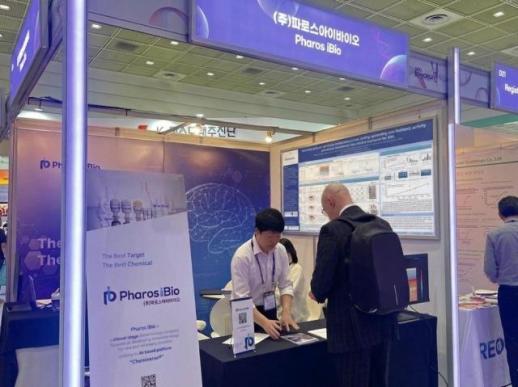 Pharos iBio to Showcase AI, Quantum Computing Drug-Discovery Strategy at BIO KOREA 2026 Pharos iBio, an artificial intelligence-based drug development company, said Tuesday it is taking part in BIO KOREA 2026 at COEX in Seoul through April 30, where it will present research technologies and key results based on AI and quantum computing. Now in its 21st year, BIO KOREA is a major South Korean health care event that shares the latest trends in the biohealth industry and promotes cooperation among global companies and research institutions. About 270 companies from 20 countries are participating, including Johnson & Johnson and Amgen. Pharos iBio said it will operate a dedicated booth to introduce its AI drug discovery platform, Chemiverse®, and its main pipeline programs, and to hold partnership talks with global counterparts. At a session titled “Paradigm shifts in drug development amid the spread of AI and quantum computing technologies” on Tuesday, Chief Scientific Officer Chae Jong-cheol will join as a panelist to discuss strategies to improve efficiency in AI-based drug development and ways to raise the success rate of identifying drug candidates, the company said. The company said Chae, a quantum computing specialist leading upgrades to Chemiverse, will also share insights on the productivity and economic value of AI-applied research and development. Pharos iBio’s key pipeline includes lasmotinib for acute myeloid leukemia, PHI-501 for hard-to-treat solid tumors, and PHI-601, a next-generation menin inhibitor. Lasmotinib targets FLT3 mutations. The company said global Phase 1 trials confirmed safety and efficacy, and it is preparing to enter global Phase 2. It added that the drug has shown potential to boost anticancer effects when combined with a menin inhibitor, drawing attention as a next-generation AML treatment approach. PHI-501 is being developed as an oral solid-tumor treatment that simultaneously inhibits BRAF and DDR1/2 signaling. PHI-601 is a next-generation menin inhibitor aimed at the high-value oncology drug market. The menin inhibitor market is a high-value area attracting global drugmakers. U.S. market research firm Strategic Market Research projects it will grow from about $500 million in 2024 to about $900 million in 2030. “BIO KOREA is a place to see global technology trends and research directions,” said Kim Gyu-tae, head of business development at Pharos iBio. “Through this participation, we will expand open innovation opportunities and strengthen global partnerships.”* This article has been translated by AI. 2026-04-29 13:58:27
 -
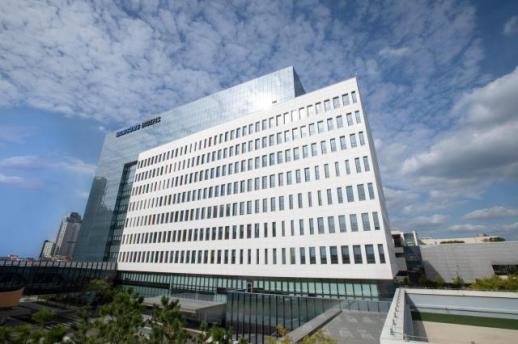 Samsung Bioepis Expands Open Innovation Partnership With China’s Atlatl Innovation Center Samsung Bioepis said on the 29th it signed a memorandum of understanding with China-based biotech R&D platform Atlatl Innovation Center to step up its global open-innovation efforts. Atlatl Innovation Center is described as Asia’s largest biotech incubation hub linking research partnerships between biotech startups and global companies. It provides shared labs and office space, as well as contract research organization services, in major biotech clusters including Beijing, Shanghai, Singapore and Australia. Under the agreement, Samsung Bioepis plans to screen promising biotech companies and support their early growth by helping them move into Atlatl’s facilities and carry out research activities. The company said the partnership is aimed at expanding beyond its biosimilar-focused business to identify and nurture early-stage new-drug technologies. Samsung Bioepis said the deal is its first open-innovation project with an overseas specialized organization. Seo Min-jeong, vice president and head of the open innovation team at Samsung Bioepis, said global cooperation is essential for biotech innovation and that the partnership will help accelerate the discovery and research of next-generation biotech technologies.* This article has been translated by AI. 2026-04-29 10:55:03
 -
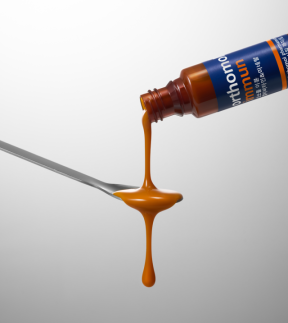 Dong-A Pharmaceutical Promotes Orthomol’s Targeted Nutrition for Seasonal Transitions As spring brings wider day-to-night temperature swings, more people report weakened immunity and accumulated fatigue. With outdoor activity increasing, attention is also growing on “precision targeted nutrition” tailored to an individual’s physical condition. German premium vitamin brand Orthomol is positioning its products around molecular orthomolecular medicine, emphasizing not just replacing missing nutrients but supplying them at concentrations designed to match what the body needs. According to Dong-A Pharmaceutical on the 29th, Orthomol Immun contains B vitamins at levels of up to 1,533% to support nutrients needed for energy metabolism during periods of heavy physical exertion. The company said it considered that while excess water-soluble B vitamins are excreted, higher activity periods may require maintaining a certain blood concentration. The formula is not built as a blanket high-dose mix of all nutrients, the company said. Instead, it is designed around levels considered appropriate for each nutrient’s function, combining vitamin C, vitamin E, selenium and zinc to address both energy metabolism and immune function. Fatigue after spring outdoor activity can be linked not only to muscle strain but also to reduced immune function from rapid energy use. As participation rises in outdoor sports such as golf, marathons and tennis, interest is also increasing in stamina management and recovery, the company said. A Dong-A Pharmaceutical official said nutrient amounts are calculated based on recommended intake levels, but “in reality, additional needs can arise when immunity drops or the body’s balance changes.” The official added that precise nutrition management tailored to physical condition is important beyond simple supplementation.* This article has been translated by AI. 2026-04-29 10:07:55
 -
 Police Dismiss Complaint Alleging COVID-19 Vaccine Mismanagement by Moon, Jeong Eun-kyeong Police said Monday they dismissed a complaint alleging mishandling of COVID-19 vaccines against Moon Jae-in and Health and Welfare Minister Jeong Eun-kyeong. Seoul’s Yeongdeungpo Police Station said it decided on April 1 to dismiss the case filed against Moon, Jeong and former Health and Welfare Minister Kwon Deok-cheol. The complaint accused them of abuse of authority, dereliction of duty, violating the Pharmaceutical Affairs Act, fraud and murder. The civic group Seomin Minseang Daechaek Committee had filed the complaint with the Seoul Metropolitan Police Agency, alleging that during the pandemic, vaccinations using doses with the same lot number were not immediately halted even after reports of foreign substances in vaccines were received. The case was assigned to Yeongdeungpo police. Gangnam Police Station is separately investigating another complaint accusing Moon and Jeong of dereliction of duty and occupational negligent homicide. Police said they completed questioning of the complainant on April 2.* This article has been translated by AI. 2026-04-28 21:57:16
 -
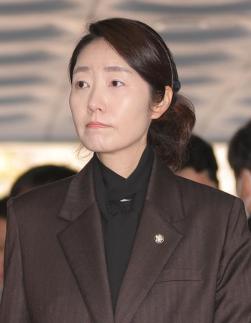 Police Clear Rep. Kang Sun-woo of Alleged Fake Address Registration Police have concluded there is no basis to pursue allegations that independent lawmaker Kang Sun-woo arranged a fake address registration for her family. The Seoul Gangseo Police Station said on the 28th it forwarded the case to prosecutors with a recommendation not to indict. The complaint alleged violations of the Resident Registration Act and the Public Official Election Act, as well as aiding and abetting under the Criminal Act. Police said there was insufficient evidence to support alleged Resident Registration Act violations by Kang’s family or allegations that Kang instigated or assisted them. They said the election law allegation was time-barred. Kang had been accused of moving her family’s registered address to Gangseo District, her constituency in Seoul, ahead of the 2024 general election to maintain eligibility to run. The controversy grew after claims that the family actually lived around Gwanghwamun in Jongno District. Police also dismissed separate allegations of obstruction of business and abuse of authority tied to a so-called “hospital power abuse” incident. Kang was accused of entering a ward at a Seoul university hospital in July 2023, when she served on the National Assembly’s Health and Welfare Committee, after taking only a rapid antigen test rather than a PCR test, despite a nurse’s attempt to stop her.* This article has been translated by AI. 2026-04-28 20:51:53
 -
 South Korea Finalizes 2027 Medical School Enrollment, Adding 490 Seats The Education Ministry said on the 28th it has finalized medical school enrollment quotas for the 2027-2031 academic years without changes from its previously announced plan. For the 2027 academic year, total medical school enrollment will be 3,548, up 490 from 3,058 in the 2024 academic year before the expansion. Kangwon National University and Chungbuk National University will see the largest increases, with 39 additional seats each. The ministry issued a preliminary notice of the quota allocations on March 13 and collected feedback from universities through March 24, then formally notified schools of the quotas on March 26. It accepted objections through April 27. "Some universities submitted opinions and filed objections regarding the preliminary notice of the quota allocations, but the allocation committee decided not to accept them after review," the ministry said. With the quotas finalized, universities will revise their school regulations by May and proceed with steps such as updating their 2027 college admissions implementation plans. 2026-04-28 20:39:19
 -
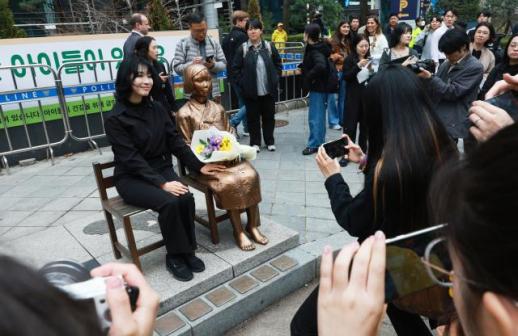 Police to Remove Barrier Around ‘Statue of Peace’ Near Former Japanese Embassy in Seoul Police will remove a barricade surrounding the “Statue of Peace,” a symbol of victims of Japan’s wartime sexual slavery, about six years after it was installed. The barricade outside the former Japanese Embassy in Seoul’s Jongno district is set to come down to coincide with the weekly Wednesday rally on May 6, according to the Jongno Police Station and other officials on April 28. The removal is seen as restoring the area so the public can again approach the statue freely. The barricade was installed in June 2020 at the request of the Korean Council for Justice and Remembrance after concerns were raised that the statue could be damaged during rallies by opposing groups. The organization owns the statue, which is designated and managed as Jongno district’s first public sculpture. The Korean Council for Justice and Remembrance plans to hold an event at the May 6 rally to mark the removal. Sculptor Kim Seo-kyung, who participated in creating the statue, is expected to attend. Police said they will continue order and safety measures after the barricade is removed, including deploying riot police at the site.* This article has been translated by AI. 2026-04-28 20:12:17
 -
 Samsung Biologics Union Begins Partial Strike After Talks Break Down Samsung Biologics’ labor union began a partial strike on the 28th after negotiations with management broke down. About 60 union members in the materials aliquoting unit joined the walkout starting that day. The partial strike is scheduled to run through the 30th. The union has demanded what it calls “setting personnel principles straight” and narrowing wage gaps within the group. Labor and management have held 13 bargaining sessions since their first meeting in December last year but failed to narrow differences. The union said it will move to a full strike next month if there is no progress in talks. The action is the company’s first strike since it was founded in 2011. About 2,000 union members have reportedly indicated they are willing to participate. A court, however, restricted strike activity in final-stage processes such as work to prevent drug deterioration and spoilage, and staff in those departments were excluded from the walkout. Industry observers are watching the dispute closely as it comes while the company is expanding production facilities. They say the outcome could be a key factor in assessing the stability of Samsung Bio’s operations and its ability to manage risk going forward. The company said it is working to minimize disruptions. “We are responding by using available personnel,” a Samsung Biologics official said, adding that the company plans to continue talks to resolve the issue.* This article has been translated by AI. 2026-04-28 19:48:25
 -
 Wednesday Forecast: Big Spring Temperature Swings, Highs Near 20 C Wednesday the 29th will bring generally mild spring weather nationwide, but temperatures will dip in the morning, making it feel chilly. Seoul’s morning low is forecast at 8 C, about 3 degrees lower than the previous day. Other areas are also expected to start in the single digits, keeping conditions cool early. Temperatures will rise sharply during the day, with most regions reaching around 20 C. Central areas will be mostly sunny, while the south and Jeju Island will be mostly cloudy. Daytime highs there are expected to be around 21 C, near seasonal norms or slightly lower. The Seoul metropolitan area and northern Chungcheong Province will see clouds give way to clearer skies, and Gangwon Province will gradually clear after a cloudy start. Inland areas will see a large day-to-night temperature swing of about 15 degrees. The Korea Meteorological Administration urged caution on fire prevention and health as dry weather advisories remain in effect for inland Chungcheong, northern Jeonbuk and inland North Gyeongsang, where conditions are expected to be very dry. Forecast highs include Seoul 20 C, Incheon 19 C, Suwon 19 C, Chuncheon 20 C, Daegu 20 C, Busan 18 C, Ulsan 18 C and Jeju 16 C. Fine dust levels are expected to range from “good” to “moderate” nationwide.* This article has been translated by AI. 2026-04-28 19:36:19
 -
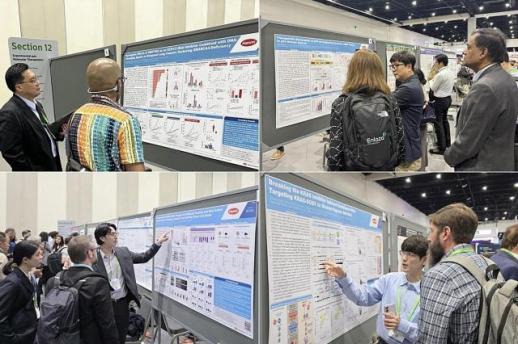 Hanmi Pharmaceutical Unveils Next-Generation Cancer Drug Pipeline at AACR 2026 Hanmi Pharmaceutical said it has unveiled a cancer drug pipeline built on a range of next-generation modalities, underscoring its growing body of oncology research. The company said on April 28 that it presented nine research findings covering eight new drug candidates at the American Association for Cancer Research meeting, AACR 2026, held April 17-22 (local time) in San Diego. Hanmi noted that recent technology-licensing deals by global drugmakers show antibody-drug conjugates and bispecific antibodies emerging as key investment targets. Hanmi said its AACR presentations were organized around three areas: targeted therapies that selectively modulate proteins highly expressed in cancer cells; targeted therapies based on next-generation modalities; and immuno-oncology candidates designed to activate immune cells and trigger antitumor responses. In targeted oncology, the company disclosed an EZH1/2 dual inhibitor (HM97662), a selective HER2 inhibitor (HM100714) and an inhibitor of SOS1-KRAS interaction (HM101207). Hanmi also highlighted an EP300 selective degrader developed using its targeted protein degradation platform. The company said the candidate showed lower toxicity and stronger anticancer efficacy than existing inhibitors, suggesting a potential new treatment approach. In immuno-oncology, Hanmi presented research on STING mRNA and p53 mRNA cancer drug candidates, as well as multispecific antibody-based programs led by Beijing Hanmi Pharmaceutical: a 4-1BB x PD-L1 bispecific antibody (BH3120) and a B7H3 x PD-L1 bispecific antibody-drug conjugate (BH4601). Hanmi said animal models showed tumor-growth suppression after intravenous and intramuscular administration. It also reported increased immune cells and anticancer activity in so-called “immune-cold” tumors that do not respond to existing immunotherapies. The company said it confirmed a dual mechanism that both activates immunity and suppresses cancer-cell proliferation while maintaining survival of normal cells. Hanmi said BH3120 uses its “Pentambody” bispecific antibody platform, enabling one antibody to bind two different targets and combine targeted anticancer treatment with immune-cell activation. The company said BH4601 is a bispecific antibody-drug conjugate that targets B7H3 and PD-L1 at the same time, and it presented a mechanism aimed at reducing resistance and activating immunity across a range of solid tumors. Choi In-young, head of Hanmi Pharmaceutical’s R&D Center, said the company’s next-generation modality-focused oncology pipeline demonstrated its research and development competitiveness. “We will continue to expand future growth engines through technology convergence and R&D,” Choi said.* This article has been translated by AI. 2026-04-28 17:46:44