
Journalist

AJP
ruizhi@ajunews.com
-
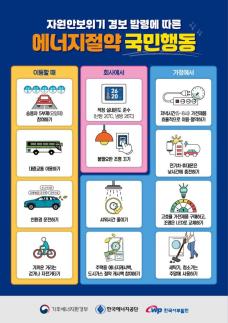 Korea Western Power Expands Campaign to Cut Evening Peak Electricity Use Korea Western Power Co. has launched an energy-saving campaign aimed at reducing electricity use during the evening hours when demand peaks, citing the need to respond to an energy security crisis linked to the Middle East. The company said on the 27th that it will continue the campaign for employees and local residents and operate a companywide task force dedicated to cutting energy use until the resource security crisis ends. The campaign is part of the Ministry of Climate, Energy and Environment and related agencies’ “Today’s Energy Saving National Action Relay” promotion. According to the Korea Energy Agency, from 5 p.m. to 8 p.m., when power demand is concentrated, higher-cost liquefied natural gas generation runs at maximum output. Simply avoiding electricity use during those hours can support the government’s energy-saving policy, the agency said. Korea Western Power is advising households to charge electric vehicles and smartphones, when possible, during daytime hours when solar power is produced, and to avoid using relatively high-consumption appliances such as electric kettles and irons between 5 p.m. and 8 p.m. The company said it has distributed promotional materials with everyday energy-saving tips around its headquarters and worksites nationwide. It also delivered reusable aprons to restaurants and other local businesses as part of efforts to encourage environmentally friendly consumption. Internally, the company has implemented stricter measures. Since March 23, it has used only half of its building lighting, turned off power-hungry electronic signboards, and tightly controlled heating and cooling settings. It is also reducing business trips, encouraging video meetings, restricting elevator use, and strengthening enforcement of an every-other-day private vehicle policy, it said. Chief Executive Officer Lee Jeong-bok said “the starting point for overcoming the energy security crisis is small actions in daily life,” adding that the company will carry out strong conservation steps and pursue a campaign that works more closely with local communities.* This article has been translated by AI. 2026-04-27 13:39:16
 -
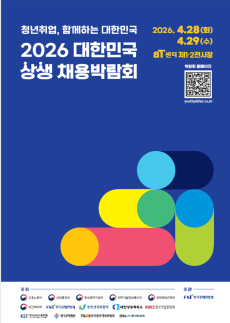 Government, Business Groups to Hold Youth Hiring Fair in Seoul The government and major business groups are joining forces to expand jobs for young people. The Ministry of Employment and Labor said Sunday it will hold the "2026 Korea Shared Growth Job Fair" on April 28-29 at the aT Center in Seoul’s Yangjae area, together with related ministries including the Ministry of Science and ICT, the Ministry of Culture, Sports and Tourism, the Ministry of Trade, Industry and Energy, the Ministry of Health and Welfare, and the Ministry of SMEs and Startups. Seven major economic organizations will jointly take part, including the Federation of Korean Industries, the Korea Chamber of Commerce and Industry, the Korea Employers Federation, the Korea International Trade Association, the Korea Federation of SMEs, and the Korea Enterprises Federation. The fair follows a December "Youth Jobs First Step" pledge by the government and business groups. About 700 companies will participate online and in person, with plans to hire more than 2,200 people. The ministry said both the number of participating firms and planned hires are sharply higher than at the Korea Job Fair held last March and the shared-growth cooperation job fair held in October. A shared-growth hiring zone will feature 169 companies, including suppliers to major conglomerates such as Samsung Electronics, SK, Hyundai Motor and LG, as well as government-recommended mid-sized and small firms, venture startups, and global companies. Participating companies will conduct on-site interviews or provide recruitment information. The event will also run promotion zones for K-Digital Training, with participants including Samsung Electronics, Hyundai Engineering & Construction and Korea Oracle, and for large-small business shared-growth programs, with participants including Samsung C&T, POSCO and Hanssem. Organizers said the zones will offer close counseling to help young job seekers better understand roles and build skills. Programs will include one-on-one coffee chats with employed young professionals who recently landed jobs, practical job-search lectures by corporate recruiters, and an intensive interview zone offering on-site interviews, personal color consultations, suit rentals, and hair and makeup support. Hands-on events will include an LED photo zone for "wishing for success" set against backdrops of well-known sites nationwide, including Yeonjudae on Gwanaksan, and a program to create self-PR business cards highlighting strengths and job skills. For young people and companies outside Seoul who cannot attend in person, an online recruitment hall has been operating since March 19. It will run through the end of July for four months, providing recruitment information and online application services. Labor Minister Kim Young-hoon called youth employment "the most urgent and serious task" facing society. "As this fair shows, solving youth employment is possible when the government and companies work together," Kim said. He added that he hopes the event will go beyond a one-off gathering and become a turning point for large companies and their partners to grow together, with the government and business moving as "one team" to create a virtuous cycle of jobs.* This article has been translated by AI. 2026-04-27 12:07:43
 -
 South Korea to Discuss Smart Monitoring to Close Gaps in Industrial Air Pollution Oversight A debate over introducing a “smart monitoring system” to more precisely track air pollutants from industrial sites will move forward at the National Assembly, amid concerns that smokestack-focused oversight misses emissions that leak during production processes. The National Institute of Environmental Research said Sunday it will hold a forum on the smart monitoring system at 10 a.m. on the 28th at the National Assembly Members’ Office Building in Yeongdeungpo District, Seoul, together with the offices of lawmakers Park Hong-bae and Woo Jae-joon of the National Assembly’s Climate, Energy, Environment and Labor Committee. South Korea’s current air pollution control system centers on measuring pollutants released from facility smokestacks. But as industrial operations have grown more complex and chemical and manufacturing sectors have diversified, more cases have been reported of hazardous substances — including volatile organic compounds, or VOCs — escaping from various points across production facilities, exposing limits in the existing approach. In industrial complexes where multiple plants are clustered, officials and experts have also repeatedly pointed to the difficulty of identifying specific sources through inspections of individual sites alone. That has fueled calls for a monitoring system that can manage emissions across an entire industrial complex, beyond a single facility. To address the gap, the institute has operated a monitoring system since 2019 that uses mobile measurement vehicles and spectroscopic remote-sensing technology to track air pollutant emissions in real time. The system is seen as allowing faster checks across wider areas than fixed monitoring methods. At the forum, Kang Dae-il, head of the institute’s Air Engineering Research Division, and Inha University professor Jeon Gi-jun are to present on current operations of the smart monitoring system and on domestic and international technology and policy trends. A panel discussion moderated by Song Ji-hyeon, president of the Korean Society for Atmospheric Environment, will bring together representatives from academia, the government and the National Assembly to discuss expanding the use of advanced monitoring equipment, ensuring the reliability of measurement data and directions for regulatory improvements. The institute said it expects the discussions to accelerate efforts to build the legal and institutional foundation needed to broaden the use of advanced monitoring equipment. “Smart monitoring is an important tool to more accurately understand actual emissions of air pollutants and strengthen on-site response,” NIER President Park Yeon-jae said. “We will actively support the stable establishment of related systems and policies based on scientific evidence and field experience.”* This article has been translated by AI. 2026-04-27 12:06:00
 -
 South Korea to Inspect 1,000 High-Risk Factories for Caught-in Machinery Hazards The government will launch intensive inspections of 1,000 ultra-high-risk manufacturing workplaces to curb a string of caught-in machinery accidents. The Ministry of Employment and Labor said on 27일 it will inspect whether key safety rules are being followed at 1,000 manufacturing sites considered at high risk for caught-in accidents from May 11 to 15. The move follows a recent series of accidents during maintenance work involving industrial robots, compressors and conveyor belts. On the 8th of last month, a worker inspecting equipment at an auto parts plant was caught in an industrial robot. On the 9th, a worker at a waste company was caught in a compressor while removing foreign material. On the 10th, a worker at a food company was caught in a conveyor belt during maintenance. The inspections are being carried out under an order from Labor Minister Kim Young-hoon to “mobilize all efforts” to prevent caught-in accidents at manufacturing sites. The ministry said the 1,000 workplaces were selected based on factors including the presence of hazardous machinery and equipment and their history of industrial accidents. Kim also instructed the heads of 48 regional labor offices to conduct unannounced on-site inspections. Inspectors plan to focus on vulnerable time windows when accidents frequently occur — 9 a.m. to 11 a.m. and 1 p.m. to 3 p.m. — and to conduct checks without prior notice to raise awareness and improve effectiveness. Ahead of the inspections, the ministry will run a self-check period from 이날 through next month 8, urging workplaces to review and improve compliance using a “manufacturing safety rules self-inspection checklist.” Violations found during inspections will be met with immediate fines and corrective orders, and workplaces that fail to carry out corrective measures will face strict action, including possible criminal proceedings. “Cutting power when maintaining or cleaning hazardous machinery and equipment is a core safety rule for protecting lives from caught-in accidents,” Kim said. He urged labor and management to work together so compliance with caught-in accident prevention rules becomes routine.* This article has been translated by AI. 2026-04-27 09:04:24
 -
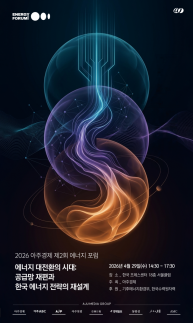 Aju Business Daily to Hold Energy Forum on Korea’s Strategy Amid Supply Chain Shifts Uncertainty is growing in the global energy market as prolonged Middle East-driven geopolitical risks continue to unsettle oil and gas supply chains, prompting countries to refocus energy security as a core national strategy. At the same time, the spread of artificial intelligence and the rise in data centers are sharply increasing electricity demand, accelerating structural change across existing energy systems. South Korea is no exception. With heavy reliance on energy imports and a manufacturing-centered industrial base, the Korean economy is particularly sensitive to shifts in global energy supply chains. That is why securing stable supplies and establishing a practical energy mix strategy spanning renewables, nuclear power and liquefied natural gas (LNG) is increasingly urgent. Aju Business Daily will hold the “2026 Aju Business Daily 2nd Energy Forum” on April 29 at the Korea Press Center in Jung-gu, Seoul. The forum’s theme is “The Era of a Major Energy Transition: Supply Chain Reshaping and Redesigning South Korea’s Energy Strategy.” Kim Hyeong-jun, a chair professor in the Department of AI Futures Studies at KAIST’s Moon Soul Graduate School of Future Strategy, is set to speak on “The Climate Crisis, Energy Security and South Korea,” outlining the importance of energy security and Korea’s response strategy amid a deepening climate crisis and expanding geopolitical risks. Next, Gwak Eun-seop, head of the Grid Planning Office at Korea Electric Power Corp., will present on “Power Demand in the AI Era and New Challenges for the Power Grid,” focusing on surging demand tied to expanding data centers, shortages in transmission networks, and solutions for stable power supply. A panel discussion will bring together experts from government, academia and industry to discuss a Korea-style energy mix strategy and approaches to energy security. ■Theme: The Era of a Major Energy Transition: Supply Chain Reshaping and Redesigning South Korea’s Energy Strategy ■Time: April 29, 2026 (Wed.) 2:30 p.m.–5:30 p.m. ■Venue: Seoul Club, 18th floor, Korea Press Center ■Host: Aju Business Daily ■Sponsors: Ministry of Climate, Energy and Environment; Korea Hydro & Nuclear Power * This article has been translated by AI. 2026-04-27 05:05:06
 -
 South Korea Diversifies Energy Imports as Hormuz Closure Risk Grows The prolonged war in the Middle East has heightened fears of a possible closure of the Strait of Hormuz, accelerating a reshaping of South Korea’s energy supply chain. Reliance on Middle Eastern crude is falling, while imports of U.S. crude and naphtha are surging as companies diversify supply sources. According to Korea International Trade Association data released Saturday, South Korea’s crude oil import bill totaled $5.95 billion last month, down 5.3% from a year earlier. Even as overall imports declined, sourcing shifted. Imports of non-Middle Eastern crude rose 30.1% to $2.2047 billion. U.S. crude jumped 75.8% to $1.37804 billion, the highest in 20 months. The article said U.S. crude, a light grade, is easier for domestic refiners to blend with the heavy Middle Eastern crude they commonly process, making it a practical substitute. Crude imports from Australia and Malaysia also increased, up 44.7% and 140.5%, respectively. By contrast, imports from major Middle Eastern suppliers fell: Saudi Arabia was down 13.4%, the United Arab Emirates 7.7%, Iraq 19.0% and Kuwait 46.4%. As a result, the Middle East share of South Korea’s crude imports dropped to 62.9% in March from 73% a year earlier, a decline of about 10 percentage points. Changes were also seen in naphtha, a key feedstock for petrochemicals. South Korea’s naphtha import bill fell 23.8% to $1.99 billion last month. Naphtha imports from the UAE dropped 57.5% and from Kuwait 48.1%. U.S. naphtha imports, however, surged 57-fold over the same period, emerging as an alternative to Middle Eastern supply. Companies have also moved quickly to adjust sourcing to places outside the Strait of Hormuz risk zone, including Oman, Greece and the United States, with import values rising 28.5%, 193.5% and 5,652.8%, respectively. Supply concerns extend beyond energy. Helium used by the semiconductor and display industries has also become less stable. South Korea’s helium import bill fell 23.5% from a year earlier to $12.98 million last month. Imports from Qatar, South Korea’s largest supplier, declined 30.1%. The article said Iran’s drone attack halted operations at Qatar’s largest helium industrial complex, and global helium prices have already jumped by nearly 50%. South Korea depends on Qatar for 64% of its helium imports, raising concerns that prolonged Middle East risks could lead to supply disruptions. The government said domestic supply remains stable for now. A Ministry of Trade, Industry and Energy official said there have been no disruptions so far in supplies of crude oil, major petrochemical feedstocks or helium, adding that authorities will move quickly to secure alternative import sources if supply chains show signs of strain.* This article has been translated by AI. 2026-04-26 14:59:38
 -
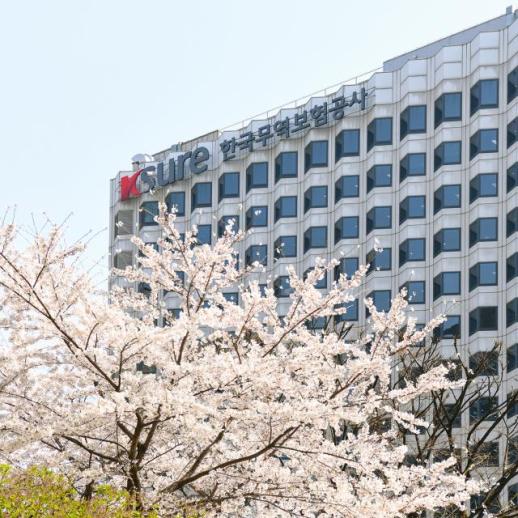 Korea Trade Insurance Corp. to Boost Liquidity Support for Small Defense Exporters Korea Trade Insurance Corp. is stepping up support for small defense firms seeking overseas orders, aiming to broaden the export base of South Korea’s defense industry beyond large prime contractors. The agency said on the 26th it will provide liquidity support to help Dasan Machining expand globally. Under the program, K-SURE will guarantee losses tied to bank guarantees that importers often require when export contracts are signed. The arrangement is intended to raise the likelihood of closing export deals while freeing up funds that had been tied up as collateral at banks. It is the first case of K-SURE directly supporting an export transaction by a small defense company since it set up a dedicated team last year to foster the defense industry. K-SURE President Jang Young-jin said the support directly backs exports of finished defense products by small firms and promotes more balanced growth for K-defense exports. He said the agency will continue to provide support so Korean companies can play a leading role in the country’s push to become one of the world’s top four defense powers. * This article has been translated by AI. 2026-04-26 13:42:52
 -
 Climate Ministry to Hold Nationwide Flood Response Training Ahead of Summer The government will launch a nationwide series of river-basin flood safety trainings for disaster management officials to help prevent summer flood damage. The Ministry of Climate, Energy and Environment said Saturday it will hold the traveling program from April 27 to 30 as part of the third week of the "Third Republic of Korea Flood Safety Emphasis Period" (April 15-May 14). The sessions will target disaster management officials at regional environment offices, flood control offices and local governments. Training will be held in sequence at the Han River Basin Environment Office on April 27, the Nakdong River Basin Environment Office on April 28, the Geum River Basin Environment Office on April 29 and the Yeongsan River Basin Environment Office on April 30. The ministry said it has reorganized the program into an integrated, headquarters-led format, replacing the previous approach of separate trainings by institution. Officials will learn the full flood response process, each agency’s role and how coordination works as a single workflow. The curriculum will focus on practical skills, including how to use flood response systems, to strengthen on-the-ground response capacity. The ministry provides flood alerts at 223 locations, water-level data at 983 locations, artificial intelligence closed-circuit television (AI CCTV) and flood risk maps. It also operates systems including the "Integrated Flood Situation Monitoring System" and the "Dam-River Digital Twin Water Management Platform." To increase local government use of these tools, the ministry said it will give step-by-step guidance, from account registration and login to hands-on use during actual flood response, for officials who are new to the systems or unfamiliar with how to operate them. The program will also cover the ministry’s flood measures for this summer, best practices in flood response and situation reporting, ways to use flood risk maps, and management of flood-vulnerable areas. The ministry said the training will be conducted in a practical format so local officials can clearly understand their roles and respond effectively when flooding occurs. "In flood response, careful and swift situation assessment from the early stage is important," said Cho Hee-song, director general of the ministry’s Water Management Policy Office. "We will prepare thoroughly for floods through substantive training that strengthens the capabilities of frontline disaster response officials."* This article has been translated by AI. 2026-04-26 12:04:48
 -
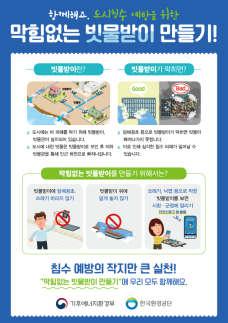 Climate Ministry to Inspect Sewer Systems Nationwide Ahead of Summer Downpours The government will begin nationwide inspections of sewer facilities to help prevent urban flooding during summer downpours. The Ministry of Climate, Energy and Environment said Saturday it will hold a series of meetings starting Sunday with officials from its regional environment offices and local governments to review sewer-facility management ahead of the summer natural-disaster response period, which runs from May 15 to Oct. 15. On Sunday afternoon, the ministry will convene sewer officials from seven regional environment offices, including the Han River Basin Environment Office, at the Government Complex Sejong. On May 7, it will hold a separate review meeting for sewer officials from 17 cities and provinces, chaired by Kim Eun-kyeong, the ministry’s director general for water environment policy, also at the Government Complex Sejong. The meetings will focus on local governments’ maintenance plans for sewer pipes, including storm-drain cleaning, and the status of installing fall-prevention devices on manholes in flood-prone areas. The ministry also plans to share best practices from local governments with strong maintenance records and discuss agency-by-agency steps to improve urban flood prevention. With storm drains clogged by cigarette butts and trash cited as a factor that can worsen flooding during heavy rain, the ministry said it will ask local governments to complete intensive inspections and cleaning before the rainy season. It also plans to strengthen on-site checks in vulnerable areas and expand installation of manhole fall-prevention devices to reduce accidents. During the summer response period, the ministry said it will continue monitoring local governments’ upkeep of storm drains and other sewer facilities and use field inspections to ensure prevention measures are being carried out. Through the end of June, regional environment offices and the Korea Environment Corporation will jointly inspect local governments’ sewer-pipe maintenance plans and performance. The ministry said it will also conduct additional spot field inspections during the summer response period to keep verifying storm-drain conditions and the installation status of manhole fall-prevention devices. It will compile and manage weekly results for storm-drain inspections and cleaning, and check monthly progress on installing manhole fall-prevention devices to help prevent safety accidents. It will also confirm whether such devices are installed in high-risk areas, including low-lying neighborhoods. “Preventing urban flooding depends on advance inspections and ongoing maintenance of sewer facilities such as storm drains,” Kim said. “We will manage sewer facilities thoroughly so the public can stay safe even during torrential rain.”* This article has been translated by AI. 2026-04-26 12:03:18
 -
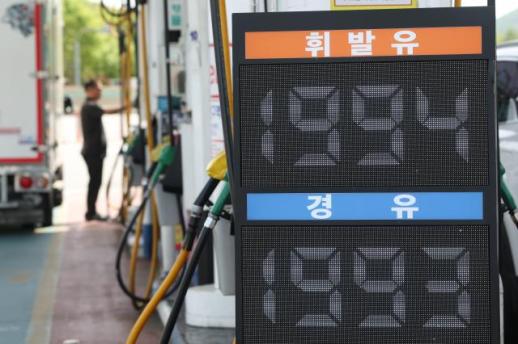 South Korea Freezes Fuel Price Caps for Fourth Round, Citing Inflation Risks The South Korean government has again frozen the maximum prices applied to petroleum products supplied to gas stations, citing lingering uncertainty from the prolonged war in the Middle East and concerns that any increase could add to inflation. The Ministry of Trade, Industry and Energy said Thursday that starting at midnight April 24, the fourth round of the price-cap system will apply for the next two weeks at the same levels as the second and third rounds: 1,934 won per liter for regular gasoline, 1,923 won for diesel and 1,530 won for kerosene. The ministry said international refined-product prices have fallen over the past two weeks, easing cost pressures, but the regional situation remains unstable and additional shocks cannot be ruled out. The ministry said that if only the recent two-week change in international prices were reflected in the formula, the fourth-round caps could have been lower than the third round by about 100 won per liter for gasoline and about 200 won for diesel. Instead, the government said it has already restrained price increases by not fully reflecting earlier international price gains in the cap, and decided to hold the levels steady after weighing Middle East uncertainty and the need to manage fuel consumption. Raising the caps was also seen as too risky for inflation. Nam Kyung-mo, policy adviser to the industry minister, said petroleum products account for 4.66% of the consumer price index and higher prices could feed broader inflation. He cited March producer prices rising at the fastest pace in more than four years due to high oil prices. The government said pump prices would be higher without the cap, estimating gasoline would be around 2,200 won per liter, diesel 2,700 to 2,800 won, and kerosene around 2,500 won. Compared with the current caps, that implies a restraining effect of about 260 won for gasoline, up to 870 won for diesel and about 970 won for kerosene. Nam said domestic pump prices are still edging up because increases in refiners’ supply prices are being reflected with a lag. He said refiners’ supply prices rose by 210 won per liter when the second-round cap was adjusted, and gas stations have been passing that on gradually. On settlement under the cap, the government reaffirmed it will reimburse refiners for losses under Article 23(3) of the Petroleum Business Act. Nam said the government has not yet produced its own estimate of losses. He said refiners will calculate losses from March 13 through the end of June, submit figures after review by an accounting firm, and the government will confirm the final reimbursement through a price-cap settlement committee. Asked about Prime Minister Kim Min-seok’s comments the previous day that the government would carefully review whether to implement a fourth round, Nam said it is not yet time to consider ending the system. He said the Middle East situation remains unstable and high oil prices persist, adding that a broader review could be possible if international prices stabilize, including through progress toward a ceasefire between the United States and Iran and the easing of disruptions tied to the Strait of Hormuz. On whether a fifth adjustment will be made, Nam said the government will operate the system flexibly after considering international oil prices, the public burden, efforts to reduce consumption, support for energy-vulnerable groups and overall inflation. * This article has been translated by AI. 2026-04-23 19:03:19