
Journalist

AJP
ruizhi@ajunews.com
-
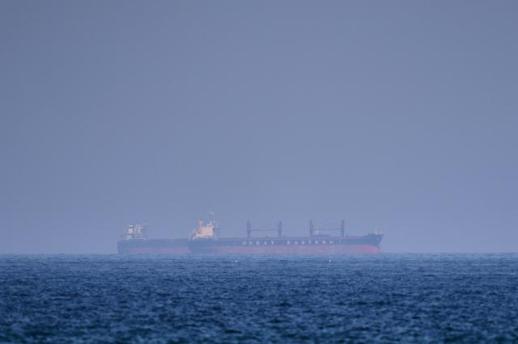 South Korea Says No Supply Disruptions Yet for Health, High-Tech Materials; Backup Imports Ready The South Korean government said key industries have not yet seen disruptions in supplies of critical raw materials despite growing concerns that a prolonged war in the Middle East could rattle global supply chains for health care, medical and advanced industries. Officials said they will move quickly to secure alternative import sources if problems emerge. The Ministry of Trade, Industry and Energy said it reviewed supply conditions by sector during a “Middle East war response headquarters briefing” held by video at the Government Complex Seoul on Wednesday. Nam Gyeong-mo, a policy adviser to the industry minister, said core materials for semiconductors, autos, batteries and shipbuilding have not faced supply disruptions so far. The ministry said it is continuing to monitor the risk of higher raw material prices and distribution instability if the conflict drags on. International oil prices remained elevated. As of 7 a.m. Wednesday, Brent crude was $101.50 a barrel and U.S. West Texas Intermediate was $92.69. That was up 40.1% and 38.3%, respectively, from March 27, just before the United States and Israel carried out airstrikes on Iran. JKM, a spot price benchmark for liquefied natural gas, rose by nearly 50% over the same period. Domestic price increases for refined petroleum products were more limited, the ministry said. Compared with March 27, gasoline prices rose 18.5% and diesel rose 25.1%. The government said it is accelerating steps to prevent supply-chain instability tied to the war. In health and medical supplies, it said inventories of IV solution packaging, syringes and medical gloves remain at normal levels and raw materials are being supplied steadily. For IV solution packaging, the government said it has taken steps to avoid supply problems through the end of June and has also been pursuing alternative supply options through prototype testing since late last month. For syringes, the Ministry of Food and Drug Safety has enforced a ban on hoarding since April 14 and is conducting on-site inspections with an enforcement team of about 70 people, the industry ministry said. The ministry said it is also monitoring key manufacturing inputs. Hydrogen bromide used in semiconductor processes is being imported normally, mainly from the United States and Japan, it said. Helium supplies are also stable after securing substitute volumes from the United States. Aluminum wheels used in auto parts have alternative supply lines in place, including Malaysia, India and China, the ministry said. Nickel sulfate, a key battery material, is expected to see limited impact because a large share is produced domestically. Ethylene gas used by shipbuilders is continuing to be supplied with government mediation, the ministry said. HD Hyundai is set to receive 2,000 tons from HD Hyundai Chemical next month, including 200 tons to be supplied first to small and midsize shipbuilders. The ministry said it will accept applications from smaller shipbuilders through the Korea Offshore & Shipbuilding Association. Officials said they are also checking supplies of consumer-related items such as paint, packaging materials, agricultural mulching film, syrup bottles and cosmetics containers. With concerns rising over higher packaging costs, the industry ministry, the food and drug safety ministry and the Ministry of SMEs and Startups have formed a separate task force to manage supply conditions for major items including ramen and infant formula. The government has asked the petrochemical industry to prioritize domestic supply. Thirty-three companies in the Korea Chemical Industry Association said they plan to supply key products — including ethylene, propylene, PE and PP — to the domestic market first. Hanwha TotalEnergies said it is working to normalize supplies of paraxylene (PX) by securing additional naphtha volumes. 2026-04-23 16:06:40
 -
 South Korea, Oman LNG Discuss LNG and Helium Cooperation as Mideast Risks Rise The South Korean government is moving to strengthen energy cooperation with Oman as geopolitical risks in the Middle East grow. The Ministry of Trade, Industry and Energy said Vice Minister Moon Shin-hak met April 23 with a delegation from Oman LNG at the Westin Josun Seoul hotel in central Seoul to discuss ways to expand cooperation. Hamed Al Namani, CEO of Oman LNG, attended. The meeting followed a visit to Oman on April 9 by a strategic economic cooperation delegation led by Kang Hoon-sik, the president’s chief of staff, serving as a special envoy. During that trip, the delegation met with Oman’s Deputy Prime Minister for Economic Affairs Theyazin bin Haitham Al Said, Energy and Minerals Minister Salim Al Aufi and others to discuss cooperation on energy resources such as crude oil and naphtha in response to deepening geopolitical risks in the region. Oman LNG also agreed at the time to hold additional talks with the ministry in April to strengthen cooperation in the gas sector. At the Seoul meeting, the two sides focused on potential liquefied natural gas cooperation, citing Oman’s geographic advantage outside the Strait of Hormuz and its relative insulation from regional geopolitical risks. They also held in-depth talks on possible cooperation tied to Oman’s new helium project, aimed at ensuring stable supplies of helium gas, a key resource for South Korea’s semiconductor industry. Moon said that as uncertainty in global energy supply chains increases, Oman’s strategic location outside the Strait of Hormuz offers a key opportunity for South Korea to diversify its energy supply lines. He said the government plans to review its energy supply chain in the wake of the current Middle East war and maintain a policy of diversifying suppliers to reduce geopolitical risks. * This article has been translated by AI. 2026-04-23 13:33:05
 -
 South Korea Labor Ministry Steps Up Regional-Industry Workforce Training Coordination The government is moving to better link regional and industry workforce training systems to respond to artificial intelligence and digital transformation, as well as regional population decline. The plan is to connect region-specific labor demand with needs from worksites to reduce mismatches and build a more effective vocational training system. The Ministry of Employment and Labor and the Human Resources Development Service of Korea said they are holding a two-day “2026 Integrated Human Resources Development Workshop” in Gyeongju starting on the 23rd to strengthen cooperation between regional and industry human resources development councils. In its third year, the event brought together about 240 staff members from 17 regional skills councils (RSCs) and 21 industry skills councils (ISCs). Participants shared best practices from last year, identified new joint projects between regions and industries, and took part in programs aimed at strengthening expertise in training and employment. With broader cooperation emphasized under the government’s “five hubs and three special zones” balanced growth drive, the workshop also discussed developing cross-regional projects that go beyond individual provinces and single industries by linking multiple related regions and sectors. The Gyeonggi regional council, for example, said it will form a working-level consultative body with the electronics, textile and materials industry councils to identify demand for AI convergence by sector. They plan a joint survey of AI technology needs and related training demand in each field. The Daejeon and North Gyeongsang regional councils will work with the environmental industry council to develop AI-use training courses for environmental industry workers. They also plan to pursue ways to reflect “environment-AI convergence” jobs in the National Competency Standards, based on skills needed at worksites. The North Chungcheong and Gangwon regional councils said they will analyze core competencies and technology demand in the bio industry with the chemical and bio industry councils and build regional training-demand data based on the findings. Pyeon Do-in, director general for vocational skills policy at the ministry, said industrial sites are changing faster than ever amid the “huge wave” of AI and digital transformation, making it necessary for RSCs and ISCs to work together to drive fundamental improvements in education and training systems. He urged participants to develop practical human resources development measures so that young people “do not lose their dreams” in a rapidly changing technology environment. * This article has been translated by AI. 2026-04-23 13:03:16
 -
 South Korea Begins Building Infrastructure for Carbon-Emissions Futures Market 정부가 온실가스 배출권 시장 고도화에 나선다. 현물 거래 중심으로 운영되며 가격 변동 대응에 한계가 있다는 지적이 이어지면서 배출권 선물시장 도입을 위한 기반시설 구축 작업에 본격 착수한 것이다. The South Korean government is moving to upgrade its greenhouse gas emissions trading market, launching work to build the infrastructure needed to introduce an emissions-permit futures market as criticism grows that the spot-focused system has limited tools to cope with price swings. The Ministry of Climate, Energy and Environment said it will hold an “advanced greenhouse gas emissions market meeting and memorandum of understanding ceremony” on the morning of April 24 at the Korea Exchange’s Seoul office in Yeongdeungpo-gu, Seoul. The ministry said it will review the outlook for the fourth phase of the emissions market and discuss future development steps, including building infrastructure for an emissions futures market. The event was arranged to discuss mid- to long-term policy directions for South Korea’s emissions trading system, known as K-ETS, and to set up a cooperation framework among related agencies in advance for building the computerized systems that would underpin a futures market. South Korea’s emissions trading market has largely operated through spot transactions, making it difficult for companies to prepare for long-term price volatility. Experts have said that introducing an emissions futures market — similar to major overseas markets such as the European Union — could provide companies with a more efficient hedging tool and improve market stability by strengthening price-discovery and forecasting functions. In the first session, experts from the financial and industrial sectors and related institutions will discuss key tasks for the market going forward. Ha Sang-seon, a division head at Ecoeye, will present on “the characteristics and outlook of the fourth phase of the emissions trading system market.” Yoo Jong-min, a professor at Hongik University, will offer recommendations on the “need for an emissions futures market and expected effects” from a long-term perspective. A subsequent discussion will address the need for a futures market to help companies manage price volatility, along with measures to ensure detailed market design and system stability. In the second session, the ministry, the Korea Exchange, the Greenhouse Gas Inventory and Research Center, and Koscom will sign an agreement to build infrastructure for an emissions futures market. The four organizations plan to cooperate on developing smooth links among their existing systems, building the human and physical foundations needed to operate futures trading, and sharing information to foster a sound emissions-related financial market. Oh Il-young, director general for climate and energy policy at the ministry, said stable introduction of an emissions futures market requires “a solid system buildout and a cooperative framework among related institutions.” He said the agreement will be used as an opportunity to lay the groundwork for upgrading the market.* This article has been translated by AI. 2026-04-23 12:03:44
 -
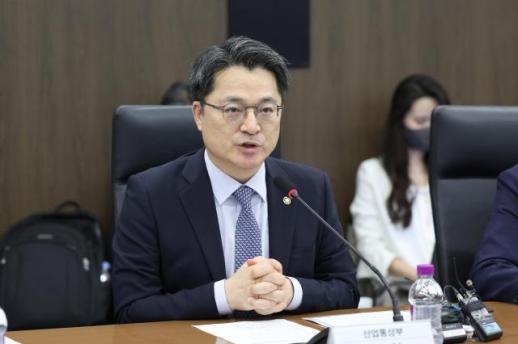 Korea Industry Vice Minister Urges Steelmakers to Keep Supplies Stable, Ease Price Pressures As the prolonged war in the Middle East adds uncertainty to raw-material supply chains, Vice Minister Moon Shin-hak met with South Korea’s steel industry and urged cooperation to ensure stable supplies of steel materials and help ease price pressures. The Ministry of Trade, Industry and Energy said Moon held a meeting with steel industry representatives in Seoul at the Korea Chamber of Commerce and Industry to review supply and demand for major steel products and measures to stabilize prices amid the extended conflict. Steel is a core industry that supplies basic materials to key sectors such as construction, automobiles and shipbuilding. The meeting was convened to check the broader steel supply chain and set up a proactive response system as Middle East-related geopolitical risks persist. At the meeting, the Korea Iron & Steel Association said the domestic steel industry has low dependence on steel products and raw materials from the Middle East, limiting direct impacts from a prolonged war. However, it said higher international oil prices could raise energy costs, and rising ocean freight rates could increase logistics expenses. The government said it will maintain close communication with the industry in case supply-chain uncertainty grows. It also said it will step up efforts to stabilize supply and manage prices, noting that higher steel prices could increase costs for downstream industries including construction and autos. “Even a small disruption in the steel supply chain can lead to a broader crisis across industry,” Moon said, calling on the sector to “actively cooperate” to keep steel materials supplied steadily and reduce the burden on prices. Moon added that the government will actively support industrial restructuring and stronger competitiveness, based on the Steel Industry Act set to take effect in June, to respond to challenges at home and abroad including global oversupply, carbon-neutrality demands and the spread of protectionism.* This article has been translated by AI. 2026-04-23 11:30:19
 -
 South Korea to Speed Development of Next-Generation Power Semiconductors as AI Drives Demand As artificial intelligence spreads and demand surges for data centers, electric vehicles and next-generation power grids, the South Korean government is accelerating efforts to foster a next-generation power semiconductor industry. The Ministry of Trade, Industry and Energy said it held a "Next-Generation Power Semiconductor Forum" on April 23 at the EL Tower in Seoul’s Seocho district, attended by officials from related ministries and experts from industry, academia and research institutes. The ministry said it presented progress on its "road map to foster the next-generation power semiconductor industry." The road map follows the "Semiconductor Industry Strategy for the AI Era" announced in December last year. The ministry said it has prepared the plan over about four months since launching a task force last year. At the forum, participants reviewed interim progress and discussed directions for large-scale research and development and plans to build a southern-region power semiconductor innovation belt. Power semiconductors convert, distribute and control supplied electricity to fit the needs of different devices. They are considered key components for electric vehicles, defense systems, high-voltage direct current transmission (HVDC) and data centers. Demand is rising quickly for products based on silicon carbide (SiC) and gallium nitride (GaN), which perform better than conventional silicon in high-temperature, high-voltage and high-frequency environments. The government said it will pursue a mid- to long-term plan spanning next-generation technology development, demonstration and mass-production infrastructure, and workforce training to secure core technologies and stabilize supply chains. The ministry said it is planning large, integrated R&D that goes beyond piecemeal support, linking demand companies in areas such as EVs, defense, power grids and data centers to full-cycle efforts from materials and devices to modules, systems and demonstration. It also plans to build regional infrastructure centered on key hubs. The ministry said it will upgrade public fab infrastructure in the power semiconductor specialized complex in Busan and support the use of demonstration data secured at existing public infrastructure in places such as Pohang and Naju so it can be applied in private companies’ mass-production processes. To train key talent within the southern-region innovation belt, the ministry said it will connect regional hub universities and develop practice-focused curricula using local demonstration infrastructure, aiming to create a foundation for regions and industry to grow together. Choi Woo-hyuk, director general for advanced industry policy, said, "As the reshaping of the global supply chain surrounding power semiconductors accelerates, we will push compound semiconductors as a key development task and, together with related ministries, build an ecosystem to foster the power semiconductor industry centered on the 'southern-region power semiconductor innovation belt.'"* This article has been translated by AI. 2026-04-23 11:05:21
 -
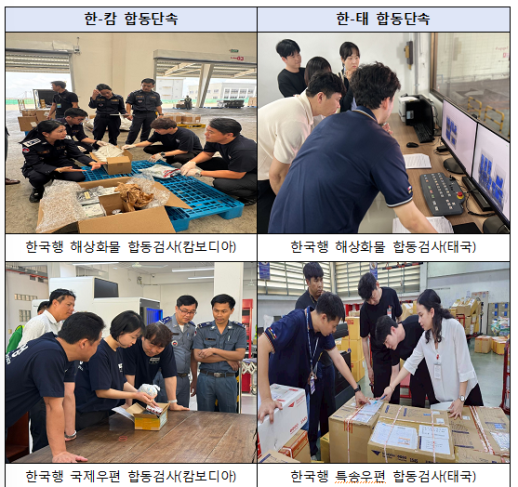 Korea Customs Seizes 657 kg of Drugs From Thailand and Cambodia, Blocking 1.81 Million Doses Customs authorities blocked an attempted smuggling of drugs into South Korea in the first quarter that they said amounted to enough for about 1.81 million people to take at once. The Korea Customs Service said April 23 that it seized a total of 657 kilograms (1,449 pounds) of narcotics from January through March through joint anti-smuggling operations with customs authorities in Thailand and Cambodia. The seizures covered 32 cases involving methamphetamine, marijuana, yaba and etomidate, among other drugs, it said. By country, the agency said its fifth joint operation with Thailand, dubbed TRIDENT, resulted in 28 cases and about 651 kilograms seized, the largest haul in the operation’s history. Since the first Thailand operation in 2022, cumulative seizures linked to Thailand have reached 184 cases totaling 1,036.9 kilograms, which the agency estimated at about 13.22 million doses. Average monthly case counts have been in double digits in every operation except the first in 2022, when the average was 8.8 cases, it said. The agency also reported results from cooperation with Cambodia, saying it had worked closely with Cambodian customs since last year to prevent traffickers from shifting routes. In the first joint operation between the two sides, called LIONSTONE, authorities blocked four cases totaling 5.7 kilograms, including methamphetamine and etomidate shipments from Cambodia. The Korea Customs Service said it will conduct coordinated investigations with partner countries to track supply chains tied to the seized cases. It also plans joint analysis of trafficking routes, concealment methods and overseas sender information obtained during the operations to strengthen border screening systems and keep year-round cooperation channels running. KCS Commissioner Lee Myeong-gu said cooperation frameworks are now in place with countries around the Golden Triangle, a major drug-producing region. “Through airtight controls, we will ensure not a single grain of drugs crosses South Korea’s border and completely eradicate drug smuggling,” he said.* This article has been translated by AI. 2026-04-23 11:03:00
 -
 South Korea Launches 19.6 Billion Won Program to Build Local Social Economy Ecosystems The government is launching a large-scale support program with local governments to foster social enterprises as key players in solving regional problems, including youth employment and gaps in care services. A total of 19.6 billion won will be invested this year. The Ministry of Employment and Labor announced the plan at a launch ceremony for the “Social Solidarity Economy Local Ecosystem Revitalization Project” held Thursday morning at COEX Magok in Seoul. The project shifts away from simple, stand-alone support for individual social enterprises. Instead, it aims to build a social solidarity economy ecosystem in which social enterprises, local governments and other regional partners work together to address local challenges. The ministry said the goal is to help communities define their own problems and create a foundation to solve them with social enterprises and other actors. This year’s program will focus on two areas: labor integration and integrated care. Local governments will identify core tasks suited to local conditions, and social solidarity economy companies will participate in building tailored solutions. The ministry said it expects the effort to help social enterprises take root more stably in their communities while advancing both problem-solving and sustainable growth. In January, the ministry opened a call for proposals for non-capital regions. It selected 11 local governments as suitable models: North Gyeongsang Province, Daegu, Gwangju, North Chungcheong Province, Ulsan, Jeju, North Jeolla Province, South Gyeongsang Province, Busan, South Chungcheong Province and South Jeolla Province. A total of 19.6 billion won will be投入 to address community problems, including 13.7 billion won in national funding and 5.9 billion won from local governments. At the ceremony, Daegu, North Gyeongsang Province and Gwangju presented representative project models. Daegu plans a model to support re-entry into the labor market for at-risk youth and young people vulnerable to unemployment, along with building a transitional home and community-based care system for patients after hospital discharge. North Gyeongsang Province will run a model offering industry-specific job adaptation and employment linkage support for young people who graduated from vocational high schools but remain unemployed, and it will operate an integrated neighborhood care program based at senior centers. Gwangju plans to support young people’s entry into society through digital job-based programs and provide tailored care services for people in care blind spots, including unregistered children. Kwon Jin-ho, director general for Integrated Employment Policy at the ministry, said social solidarity economy companies are “key players” in solving community problems based on expertise and innovation built up in the field. He said the ministry will actively support efforts to create an ecosystem in which such companies work with relevant local institutions to solve problems locally and grow together. * This article has been translated by AI. 2026-04-23 10:05:10
 -
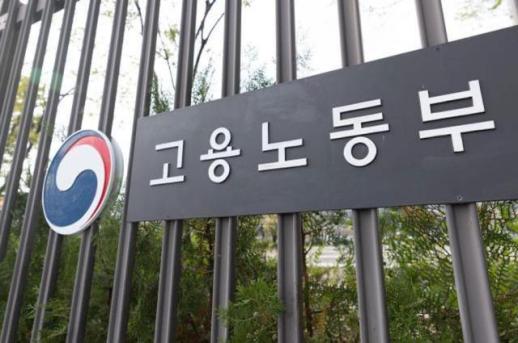 First meeting on next year's minimum wage to be held next week SEOUL, April 15 (AJP) - This year's first meeting of a committee responsible for setting next year's minimum wage is scheduled to be held next week. The committee, consisting of members from labor, employer and government representatives under the Ministry of Employment and Labor, will gather for talks at the government complex in the administrative city of Sejong on April 21. With the committee's chair remaining vacant, members in attendance are expected to elect a new chair during the meeting, which will be presided over by Labor Minister Kim Yong-hoon. They are also expected to discuss plans and schedules for subsequent sessions to continue wage deliberations. However, tough confrontations are already expected, as labor representatives are likely to propose a higher increase from this year's minimum wage of 10,320 Korean won, up just 2.9 percent, or 290 won, from a year ago, while employers are expected to push for a freeze amid the prolonged conflict in the Middle East. One of the contentious issues between the two sides will be discussions on whether to apply the minimum wage to platform workers including delivery workers and riders, a long-standing demand from labor groups. Kim earlier said such talks would be held for the first time, citing the need to consider a separate minimum wage or similar arrangements for contract-based workers and other laborers if it is deemed inappropriate to set wages on an hourly, daily, weekly, or monthly basis. The committee is required to make a final decision within 90 days from the date the Labor Minister requests a review, which falls on June 29 this year. However, this deadline is largely advisory in nature, and in practice the decision is often delayed until around mid-July due to usual differences between both sides. 2026-04-15 11:28:55
 -
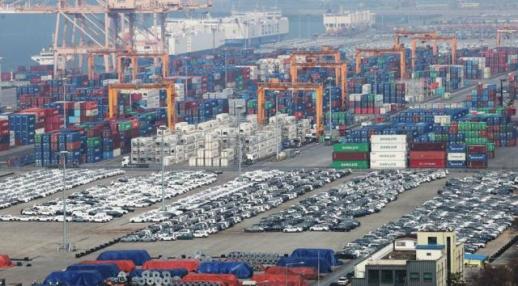 South Korea posts record early-April exports despite Middle East crisis SEOUL, April 13 (AJP) - Despite geopolitical risks amid the prolonged conflict in the Middle East, South Korea posted its highest-ever exports for the first 10 days of this month, driven by strong demand for semiconductor chips. According to data from the Korea Customs Service (KCS) released on Monday, exports during the period from the first day of April to last Friday totaled US$25.21 billion, up 36.7 percent from a year earlier, surpassing the previous record for the same period, set just a month earlier at $21.70 billion. Average daily outbound shipments rose 36.7 percent to $2.97 billion. By product, semiconductor chips surged 152.5 percent from a year earlier to $8.57 billion, the highest amount ever recorded for the period and well above last month's record of $7.6 billion, accounting for 34 percent of total exports, up 15.6 percentage points from a year earlier. Exports of computer peripherals rose 134.9 percent, petroleum products 38.6 percent, and ships 26.6 percent, while home appliances fell 26 percent and passenger cars declined 6.7 percent. By destination, exports to China climbed 63.8 percent to US$5.73 billion, while shipments to Taiwan rose 68.3 percent. Exports to the U.S. and Viet Nam also increased 24 percent and 66.6 percent, respectively. Meanwhile, imports rose 12.7 percent to $22.11 billion. Semiconductor imports increased 29.7 percent, crude oil 8.7 percent and semiconductor manufacturing equipment 77.9 percent, while machinery imports fell 7.4 percent. Total energy imports including crude oil, gas and coal rose 13.1 percent, which the KCS attributed to rising global energy prices due to the Middle East conflict. Imports increased from China by 13.6 percent, the U.S. by 39.3 percent, the European Union by 38.0 percent and Taiwan by 24.6 percent. With exports exceeding imports, the trade balance recorded a surplus of $3.10 billion. 2026-04-13 11:01:31