

Journalist

SHIN DONGKUN
sdk6425@ajunews.com
-
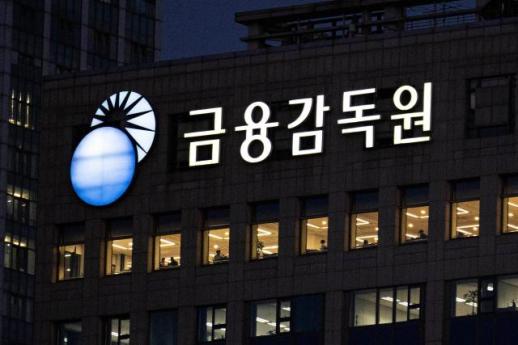 Korea's Financial Supervisory Service to Enhance Analyst Protection The Financial Supervisory Service (FSS) is considering reforms to strengthen the independence of research reports from securities firms and to establish protections for analysts. This initiative aims to address the prevalent practice of overly positive reports and the issue of external pressure on analysts. However, the effectiveness of these reforms may be challenged, as the existing reporting center has not received any complaints in its nine years of operation, rendering the current system nearly ineffective. According to the FSS, the 'Unreasonable Research Practices Reporting Center' was established in May 2017 to receive reports of coercion, threats, and undue pressure on analysts. However, since its inception, there have been no complaints filed. Despite the center being operational for nine years, the total number of reports remains at zero.Industry experts argue that the lack of reports does not indicate the absence of issues. Given the rarity of sell reports, if a report were to be filed, the author could be easily identified. Even if a report is made, there are insufficient means to resolve the issue or sanction the company involved. In light of the current ineffectiveness of the existing system, the FSS is internally reviewing measures to improve research practices at securities firms. Future discussions on reforms are expected to focus on creating an 'independent research environment' and establishing 'analyst protection mechanisms.' There is a growing need for institutional safeguards to ensure that research activities based on legitimate analysis and opinions are not stifled by external pressures or legal disputes. Recent backlash from companies and investors regarding certain stocks has also contributed to the discussions on reform. For instance, Samchundang Pharm recently initiated legal action against an analyst who presented an opinion contrary to the company's claims. In 2023, a Hana Financial Investment analyst faced conflicts with some investors after issuing a sell recommendation on EcoPro. Amid these developments, the trend of 'buy bias' in domestic securities reports remains pronounced. According to the Korea Financial Investment Association, as of the end of March last year, the proportion of 'buy' recommendations among the investment ratings of the top 10 securities firms, based on equity capital, averaged 88.5% over the past year. In contrast, the share of 'sell' recommendations was a mere 0.1%. Only Mirae Asset Securities (0.6%) and Meritz Securities (0.5%) issued sell recommendations among the top firms. The proportion of 'neutral (hold)' recommendations, which are often considered as sell signals, also remained low at an average of 11.4%. An FSS official stated, "There is a need for mechanisms to protect analysts when they produce legitimate reports," adding, "This is a matter that requires discussion with the Financial Services Commission, and we are reviewing internal measures for improving practices."* This article has been translated by AI. 2026-05-23 10:33:00
 -
 Act Calls for Strict Review of Huons Lab Merger as New Form of Backdoor Listing Act, a platform for minority shareholders, has urged financial authorities to conduct a strict review of the merger between Huons Global and its unlisted subsidiary, Huons Lab, calling it a new form of backdoor listing. On May 21, Act announced the launch of a petition drive to gather signatures for a letter to the Financial Supervisory Service and the Korea Exchange. The merger involves Huons Global, which holds a 64.1% stake in the unlisted Huons Lab, absorbing the listed company Huons. Minority shareholders argue that Huons Lab, which possesses the key growth asset of the subcutaneous injection platform technology 'High Diffuse,' is being merged in a manner that avoids scrutiny typically applied to backdoor listings. They point out that while unlisted subsidiaries are usually subject to regulations regarding 'splitting listings,' merging with an already listed affiliate may exempt the transaction from backdoor listing reviews due to the lack of a change in the largest shareholder.Minority shareholders also contend that the estimated corporate value of Huons Lab at 129 billion won, as assessed by an external agency, does not reflect its future growth potential and is undervalued. Act's representative, Lee Sang-mok, stated, "This structure effectively resembles a subsidiary listing, and the exchange should conduct a qualitative review equivalent to that of a backdoor listing." He added, "If this method is allowed, it could set a precedent for holding companies to circumvent regulations on dual listings." The absence of shareholder protection measures has also been raised as a concern. Minority shareholders of Huons Global are unable to exercise their rights, such as the right to demand stock buybacks, because the merger does not require a vote at the holding company's general meeting. Investors reacted swiftly; from May 11, when rumors of the merger began circulating, to May 18, just before the announcement, Huons Global's stock price fell by 50%, while Huons' stock rose by 18.3%. Lee Sang-mok emphasized, "The method of merging an unlisted affiliate into a listed one exploits a loophole in the system, and we will do our utmost to ensure this matter does not set a bad precedent in the capital market." Meanwhile, Huons has stated that the merger aims to expand its pipeline of biopharmaceuticals being developed by Huons Lab, in addition to its existing synthetic drug candidates, thereby securing high-value future growth drivers. * This article has been translated by AI. 2026-05-21 15:48:22
 -
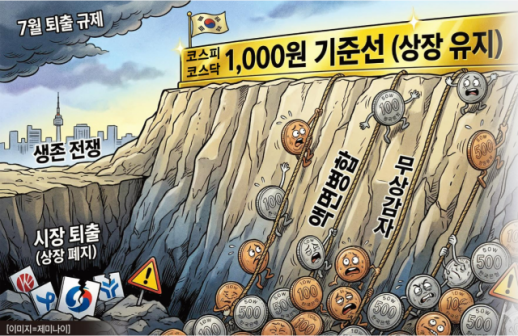 Despite Leaving Penny Stock Status, Companies Face Fresh Declines As financial authorities intensify efforts to expel poorly performing companies from the stock market, many firms are opting for stock consolidations. However, despite the numerical boost in stock prices from these consolidations, many companies are experiencing significant declines shortly after their re-listing, leading to concerns that simple consolidation is insufficient for long-term stability.According to the Korea Exchange, from May 18 to 20, ten companies listed on the KOSPI and 21 on the KOSDAQ underwent stock consolidations. All of these companies recorded declines compared to their consolidation reference prices. The average drop for KOSPI stocks was 14.7%, while KOSDAQ stocks saw an average decline of 15.86%. Most of these stocks plummeted on their first day of re-listing, with investor sentiment rapidly cooling.On the previous trading day (May 20), among the KOSPI stocks that underwent consolidation, Korea Electronics Holdings closed at 2,950 won, down 26.34% from its reference price. KEC fell by 29.92%, Bohae Brewery by 20.62%, and Enex by 14.95%. Ontide also dropped by 5.02%.Stock consolidation typically involves merging multiple shares to reduce the total number of shares and increase the price per share. Recently, companies have been using this strategy to shed their 'penny stock' image and avoid delisting requirements. For instance, consolidating five shares priced at 500 won each into one share raises the price to around 2,500 won.In February, the Financial Services Commission announced a reform plan aimed at the swift and strict delisting of underperforming companies. Starting July 1, any stock trading below 1,000 won for 30 consecutive trading days will be designated as a management stock. If it remains below that threshold for more than 45 out of the next 90 trading days, it will face delisting procedures.The recent declines in the stock prices of companies that have undergone consolidation suggest that fears of delisting persist. The Financial Services Commission is also tightening market capitalization criteria. From July, companies with a market capitalization below 30 billion won on the KOSPI and below 20 billion won on the KOSDAQ will be subject to delisting reviews. By January of next year, these thresholds will be further lowered to 50 billion won for KOSPI and 30 billion won for KOSDAQ companies. Many of the recently consolidated stocks have market capitalizations below 50 billion won.Market analysts note that stock consolidation alone does not enhance a company's value, and without improvements in performance or financial stability, regaining investor confidence will be challenging.A securities industry representative stated, "Stock consolidation is merely a technical adjustment of share quantity and price; it does not change a company's fundamentals. To alleviate delisting concerns, substantial changes such as performance improvement, financial stability, and shareholder return policies are essential."* This article has been translated by AI. 2026-05-21 15:43:14
 -
 Semtech Shares Surge 20% Amid Semiconductor Sector Optimism Semtech shares have seen a significant increase, rising nearly 20% as investor sentiment improves amid strong performances from major domestic semiconductor companies like Samsung Electronics and SK Hynix. As of 1:56 PM on May 21, Semtech's stock was trading at 124,000 won, up 24,000 won (19.69%) from the previous trading day, according to the Korea Exchange. On the same day, shares of Samsung Electronics and SK Hynix also experienced substantial gains, reflecting a broader buying trend across the semiconductor value chain. The positive sentiment followed the resolution of labor negotiations at Samsung Electronics, which improved investor confidence in the semiconductor sector. At that time, Samsung Electronics rose by 7.79%, while SK Hynix surged by 11.12%, indicating a widespread buying interest in major semiconductor stocks. Samsung Electronics and its labor union signed a tentative agreement on wage negotiations for 2026 just before a planned strike. Han Ji-young, an analyst at Kiwoom Securities, noted that "the easing of strike risks could lead to a favorable supply-demand environment centered around semiconductor stocks." Additionally, strong earnings from Nvidia have further stimulated investor interest. Nvidia reported that its revenue for the first quarter of the fiscal year (February to April) reached $81.62 billion (approximately 122 trillion won), marking a nearly 20% increase from the previous quarter and setting a record for the twelfth consecutive quarter. Analysts suggest that the growing demand for high-bandwidth memory (HBM) driven by increased investments in AI servers is positively impacting the entire domestic semiconductor sector.* This article has been translated by AI. 2026-05-21 15:40:36
 -
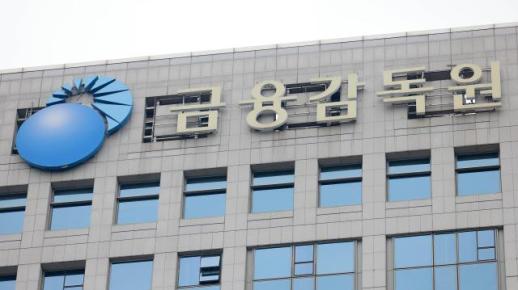 Financial Supervisory Service Warns of Fee Discrepancies When Opening Branch Accounts for ETFs Recently, the rapid growth of the exchange-traded fund (ETF) market has led to an increase in related financial complaints, prompting the Financial Supervisory Service (FSS) to issue a warning to investors. On May 21, the FSS shared key consumer warnings based on major complaint cases arising from ETF investments through specific money trusts, individual savings accounts (ISA), and pension savings accounts. According to the FSS, complaints related to ETF investments have consistently been raised regarding fees, available investment options, trading timing, and automatic sell services. The FSS noted that when investing in ETFs through pension savings accounts, significant differences in trading fees can occur depending on how the account is opened. Complaints have been received indicating that fees for trading ETFs can be up to ten times higher when accounts are opened at brokerage branches compared to those opened online. Typically, trading fees for ETFs in online accounts range from 0.01% to 0.015%, while fees for branch-opened accounts can reach 0.10% to 0.20%, with some even as high as 0.4% to 0.5%. Additionally, there have been complaints that bank branch employees did not adequately explain the potential for additional costs beyond trading fees. The FSS explained that when investing in ETFs through specific money trusts, in addition to trading fees (around 0.1%), trust fees (ranging from 0.03% to 2.0%) and early redemption fees (from 0.00% to 1.0%) may also apply. Another consumer warning highlighted the limitations on available ETF options during the transfer process of ISA accounts. The FSS stated that bank ISAs have a more restricted selection of ETFs compared to those at brokerage firms, and the available options may vary by bank. Therefore, investors should verify the availability of their desired ETFs before transferring their ISAs. Complaints have also arisen regarding the timing of ETF trades. Unlike brokerage firms, banks do not allow real-time trading of ETFs, which can lead to discrepancies between the estimated value confirmed by investors and the actual execution price. The FSS urged investors to confirm the timing of actual transactions when entering into buy or sell agreements for ETFs. Regarding automatic sell services, complaints have been reported about target profit rates being set without the investor's input and actual returns being lower than the target rates. The FSS emphasized the need for investors to verify their participation in automatic sell services and the settings for target profit rates when investing in ETFs through specific money trusts. Investors should be aware that when investing in ETFs through specific money trusts, additional trust fees and early redemption fees may apply, in addition to trading fees.* This article has been translated by AI. 2026-05-21 13:34:19
 -
 Samsung Life Shares Surge 10% Following Samsung Electronics Labor Agreement Samsung Life's stock price is experiencing a significant rise in early trading. This surge is attributed to the resolution of labor negotiations at Samsung Electronics, which has boosted the company's stock value due to Samsung Life's holdings in Samsung Electronics. According to the Korea Exchange, as of 9:55 a.m. on May 21, Samsung Life shares were trading at 345,500 won, up 33,500 won (10.74%) from the previous trading day. Market analysts cite the strong performance of Samsung Electronics' stock, which rose 6.7% to 295,400 won, as a key factor behind Samsung Life's price increase. Samsung Life is classified as a stock that is sensitive to changes in the stock price and dividends of Samsung Electronics, given its substantial ownership stake. Recently, Samsung Life reported strong first-quarter results, with a consolidated net profit of 1.2036 trillion won, marking an 89.5% increase compared to the same period last year, exceeding market expectations. The improvement was significantly aided by a reversal of provisions amounting to approximately 425.7 billion won from a victory in an immediate annuity lawsuit and the impact of a special dividend from Samsung Electronics. Analysts believe that Samsung Life's stock price is likely to continue to be linked to the value of its Samsung Electronics holdings. Seol Yong-jin, a researcher at iM Securities, stated, "In the future, Samsung Life's stock price movements will be more closely tied to the value of its Samsung Electronics shares rather than its core business competitiveness or dividend expectations."* This article has been translated by AI. 2026-05-21 10:54:00
 -
 Financial Authorities File Criminal Charges Against NH Investment & Securities for Insider Trading Financial authorities have imposed sanctions on executives and associates of NH Investment & Securities for alleged insider trading related to tender offers. The Securities and Futures Commission (SFC), under the Financial Services Commission, has filed criminal charges and imposed the maximum administrative fines as part of a strong response to actions that undermine the capital market order. On May 21, the SFC announced that during its 10th regular meeting on May 20, it reported eight individuals, including executives and their spouses and acquaintances, to prosecutors for violating the Capital Markets Act by using undisclosed important information. Additionally, it decided to impose fines on eight others who received and traded on this information for violating market disruption regulations. This action follows a joint investigation by the Financial Services Commission, the Financial Supervisory Service, and the Korea Exchange. Authorities believe that undisclosed information obtained during the tender offer process was leaked and used for stock trading. According to the SFC, the suspects allegedly used undisclosed information acquired while conducting tender offer-related work from May 2023 to September 2025 to make concentrated purchases of stocks from 15 listed companies. They are accused of selling their shares for illicit profits after the stock prices rose following the announcement of the tender offers. Authorities view the use of proxy accounts by executives and their spouses to conceal trades as a serious matter. Investigations revealed that spouses mimicked their husbands' trading methods by using accounts in the names of other acquaintances. The joint response team confirmed the actual ownership of multiple accounts and collusion through fund tracking and searches. In addition to the criminal charges, authorities stated that the eight individuals who traded based on insider information would face the highest possible fines under the law to raise market awareness. Furthermore, depending on the results of the prosecutors' investigation, authorities plan to impose additional fines of up to twice the amount of illicit profits on those accused of using insider information. Previously, NH Investment & Securities established a task force to strengthen internal controls immediately after becoming aware of the situation in October of last year. The company has implemented comprehensive measures, including requiring all executives to submit compliance pledges, banning new stock purchases, introducing a registration management system for employees handling undisclosed important information, expanding monitoring of accounts held in family members' names, and formalizing a 'one-strike-out' principle.* This article has been translated by AI. 2026-05-21 08:34:39
 -
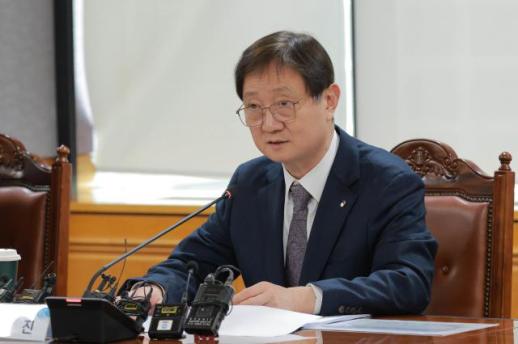 Upcoming Launch of Samsung and Nix Leverage ETFs Raises Consumer Concerns The Financial Supervisory Service (FSS) has issued a warning about potential consumer risks ahead of the launch of single-stock leverage exchange-traded funds (ETFs) next week. The FSS announced plans to enhance monitoring and internal controls related to these products.On May 19, the FSS held its second Consumer Risk Response Council, chaired by Lee Chan-jin, to discuss recent risk factors affecting financial consumers and corresponding countermeasures.The FSS identified the significant influx of retail investor funds into leverage ETFs during recent fluctuations in the domestic stock market as a major risk factor. With the launch of single-stock leverage ETFs scheduled for May 27, concerns have been raised about increased volatility due to concentration in specific stocks.Market observers have noted a surge in trading of related leverage ETFs, particularly as retail investors have focused on large tech stocks like Samsung Electronics. The trading turnover of major leverage and inverse ETFs has been significantly higher than that of regular stocks.During the council meeting, the FSS reviewed the negative compounding effects and the importance of rebalancing associated with leverage and inverse ETFs, as well as international examples. It was highlighted that even if short-term trends align, increased volatility could lead to long-term returns deviating from expectations.In response, the FSS will closely monitor the operational status of leverage and inverse ETFs, including discrepancies and trading trends, and will distribute investor warnings while checking marketing practices in the industry.The FSS also emphasized that investors in single-stock leverage and inverse ETFs must deposit a minimum of 10 million won and complete one hour each of basic and advanced training through the Financial Investment Association's education system. Financial companies have been instructed to clearly disclose the risks associated with 'single-stock' and 'leverage and inverse' products in their product names and advertising.Warnings have also been issued regarding the competitive marketing of overseas stocks by securities firms. The FSS pointed out that some firms have aggressively promoted overseas stock events and advertisements without adequate consumer protection measures and prior impact analysis. The agency plans to expand consumer protection indicators in key performance indicators and strengthen internal controls and pre-monitoring related to events and advertisements.Additionally, the FSS announced a firm response to illegal activities by financial influencers and similar investment advisory firms that exploit stock market volatility. The agency is currently using an AI-based monitoring system that operates 24/7 to detect unfair trading and illegal financial advertising in real time.In light of growing concerns about consumer harm in the marketing of ETFs and overseas stocks, financial authorities are increasing scrutiny of advertising and sales practices. Under the FSS's initiative to improve ETF advertising regulations, the Financial Investment Association will begin continuous monitoring of YouTube ETF advertisements from major asset management firms starting in July. This move follows a surge in controversies over exaggerated and misleading advertisements centered around YouTube and financial influencers in the rapidly expanding ETF market.Lee stated, "In a situation where stock market volatility persists, we will maintain a high level of vigilance against actions by financial companies that encourage excessive borrowing and leverage investments, as well as disruptions in the capital markets by certain financial influencers."* This article has been translated by AI. 2026-05-19 16:15:00
 -
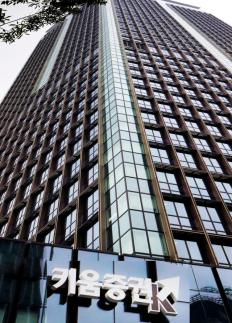 Kiwoom Securities Establishes Emergency Succession Procedures Kiwoom Securities has introduced a new regulation for emergency management succession procedures to ensure immediate action in the event that the Chief Executive Officer (CEO) is unable to perform their duties unexpectedly. This move aims to minimize the risk of management gaps and formalize succession processes amid recent changes in corporate governance laws aimed at enhancing transparency.According to the financial investment industry on May 19, Kiwoom Securities has amended its internal governance norms to include a separate clause for emergency succession procedures. Previously, general and emergency succession provisions were combined in one clause, but the recent revision clarifies the initiation point for succession, the acting management system, and the deadline for appointing a new CEO in distinct terms.Under the new regulations, if the CEO resigns unexpectedly, faces regulatory sanctions, is convicted in a criminal case, or is otherwise unable to fulfill their duties due to market conditions or company management issues, the board of directors must immediately initiate the succession process. Additionally, the regulations stipulate that in the event of an emergency, an acting management system must be activated, and the appointment of a new CEO should be completed within 90 days from the occurrence of the issue to minimize management gaps.In the financial sector, there is a growing emphasis on strengthening internal controls and responsible management, prompting firms to establish emergency succession plans. Given the nature of financial companies, a prolonged absence of a CEO can lead to decision-making confusion and management gaps, which may impact market confidence and internal control systems.A Kiwoom Securities official stated, "We have specified the emergency succession regulations in line with ESG evaluation criteria."Some view this amendment as part of a broader effort to institutionalize long-term succession systems beyond just enhancing internal controls. Recent amendments to corporate laws have emphasized governance transparency, including the strengthening of the '3% rule' that limits voting rights for major shareholders and related parties. This has led to speculation that traditional management defense strategies centered on major shareholder stakes may face increasing limitations. Consequently, companies are moving towards more institutionalized and transparent succession and governance systems while accelerating their succession efforts.The current CEO, Eom Joo-sung, is set to serve until March 2027. Regardless of whether Eom is reappointed or a different professional management team takes over, the recent amendment establishes a foundation for Kim Dong-jun to proceed with the management succession process when the time is right.Since the founder, Kim Ik-rae, stepped down from active management, a gradual generational transition is underway at the group level. Industry insiders consider Kim Dong-jun a strong candidate for the next CEO of Kiwoom Securities, as his role and influence within the group have been rapidly expanding.Born in 1984, Kim began participating in group management as a director at Daou Technology in 2014. He has since served as an executive at Daou Data and currently holds positions as the CEO of Kiwoom Investment and Kiwoom PE. According to data from the Fair Trade Commission at the end of last year, Kim holds a 33.13% stake in E-Money, the largest shareholder of Daou Data, which serves as the holding company. Last year, he was appointed as an inside director at Kiwoom Securities and, alongside Vice Chairman Lee Hyun, became co-chair of the board, marking his formal involvement in managing the key affiliate of the group.* This article has been translated by AI. 2026-05-19 16:12:25
 -
 Hyundai Engineering & Construction Shares Plummet for Third Consecutive Day Amid Rebar Shortage Hyundai Engineering & Construction is experiencing a decline in stock prices for the third consecutive trading day due to the fallout from a rebar shortage in the GTX-A Samsung Station construction project. Concerns over the financial burden of reinforcement costs and potential administrative penalties are weighing heavily on investor sentiment. As of 2:20 PM on May 19, the Korea Exchange reported that Hyundai Engineering & Construction shares were trading at 139,700 won, down 5,200 won (3.59%) from the previous trading day. The stock had already dropped 8.45% on May 15 and fell another 6.52% on May 18, totaling a decline of over 14% in just two days. This marks three consecutive days of falling prices. The recent drop is attributed to the confirmation of a significant rebar shortage at the GTX-A Samsung Station construction site. According to the Ministry of Land, Infrastructure and Transport, 50 out of 80 columns in the underground fifth-floor platform failed to meet load-bearing standards, with approximately 178 tons of main rebar missing. Hyundai Engineering & Construction stated that it discovered the issue during an internal quality inspection last year and reported it to the Seoul city government. The company is currently undertaking safety reinforcement work using steel plate reinforcement methods. However, market sentiment is more concerned about the potential for penalties and restrictions on future bidding rather than the reinforcement costs themselves. In fact, the Seoul city government has reportedly initiated procedures to impose penalties on Hyundai Engineering & Construction. Industry analysts suggest that if penalties are enforced, they could negatively impact the company's ability to bid on public projects and its construction capability assessments.* This article has been translated by AI. 2026-05-19 15:15:00