
Journalist

Seon Jae kwan
seon@economidaily.com
-
 CJ vice chair among Forbes list of world's influential women over 50 SEOUL, January 22 (AJP) - Miky Lee, vice chair of South Korea’s CJ Group, has been named to Forbes’ “50 Over 50 Global 2026” list, becoming the only South Korean included this year. Forbes cited Lee’s role in helping propel Korean films and content onto the global stage, highlighting her long-standing influence on the international expansion of K-content. In its profile of Lee, Forbes described her as a central figure behind South Korea’s rise as a global content powerhouse. It noted her early investment in DreamWorks and her role as an executive producer of “Parasite,” the first non-English-language film to win the Academy Award for best picture. Launched in 2021, the “50 Over 50” list recognizes women aged 50 and older whose achievements have broken barriers across industries. This year’s honorees come from 36 countries and fields ranging from aviation and architecture to finance and entertainment. Other figures named on the list include Japan’s first female Prime Minister Sanae Takaichi, Oscar-winning actor Penelope Cruz, and Rei Kawakubo, founder of fashion label Comme des Garçons. * This article, published by Aju Business Daily, was translated by AI and edited by AJP. 2026-01-22 16:28:23
 -
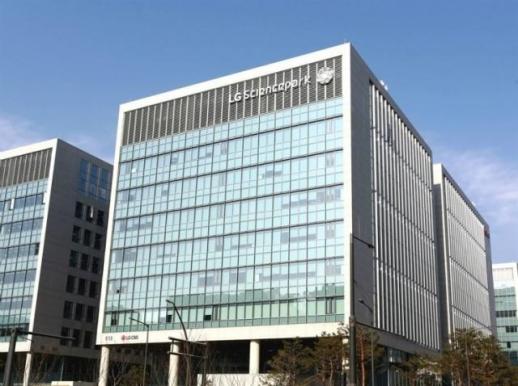 AI that can shop and pay on its own successfully tested in South Korea SEOUL, January 22 (AJP) - South Korean IT services firm LG CNS has completed what it says is the country’s first demonstration of an automatic payment system in which artificial intelligence not only chooses what to buy but also pays for it, using a blockchain-based digital currency platform overseen by the central bank. The test, conducted with the Bank of Korea, linked so-called “agentic AI” — software designed to act autonomously once given a goal — with digital deposit tokens as part of Project Hangang, the central bank’s pilot program for a potential BOK digital currency. The goal, according to LG CNS on Thursday, was to explore whether autonomous AI agents could safely and efficiently handle real-world payments, a step toward a future in which machines increasingly transact with one another with little or no human involvement. To illustrate the concept, the company used a scenario familiar to many freelancers: a digital content creator searching for images or audio clips for a project. Typically, that process involves navigating multiple platforms, comparing prices and quality, and repeatedly logging in to complete payments. In the demonstration, those tasks were handled by two AI programs — a “buyer agent” and a “seller agent.” After a user delegated authority, the buyer agent searched for suitable content, compared options, selected a product and completed payment by transferring digital deposit tokens to the seller’s electronic wallet on the blockchain platform, LG CNS said. Industry officials are watching such experiments closely as interest grows in “agentic commerce,” a model in which AI agents act on behalf of users or companies and increasingly transact directly with each other. Proponents argue that as AI-driven transactions multiply, demand will rise for small-value, high-frequency payments that are inefficient for humans to manage manually. LG CNS said blockchain-based digital currencies could provide an alternative to traditional card payments or bank transfers in such settings, offering lower fees and near-instant settlement. The company serves as the Bank of Korea’s main contractor for Project Hangang, leading blockchain technology development and platform construction. As part of the initiative, LG CNS previously conducted a real-transaction test of deposit tokens from April to June last year involving about 80,000 customers at seven commercial banks. The company said it is preparing a follow-up pilot to distribute government subsidies through a digital-currency platform and is expanding into other blockchain-based finance businesses, including tokenized securities. “We have confirmed the technical feasibility of an automatic payment structure using agentic AI,” said Kim Hong-geun, vice president and head of LG CNS’s digital business division. “We will continue to support the Bank of Korea as a technology partner as it prepares future payment infrastructure.” 2026-01-22 10:40:27
 -
 Samsung, LG set for showdown in booming data center cooling market SEOUL, January 19 (AJP) - Samsung Electronics and LG Electronics are set to compete head-to-head in North America as they seek a larger share of the heating, ventilation and air conditioning (HVAC) market, which is gaining momentum amid rapid growth in artificial intelligence infrastructure. With demand for home appliances slowing and competition from low-priced Chinese products intensifying, both South Korean companies are increasingly targeting data center heat-management solutions as a key business-to-business growth engine. Samsung and LG will take part in AHR Expo 2026, North America’s largest HVAC trade show, which runs for three days starting Feb. 2 in Las Vegas. This year’s exhibition is expected to focus on power efficiency and advanced cooling technologies as AI-driven data centers proliferate. The push reflects what industry executives describe as an “AI supercycle.” High-performance graphics processing units used for generative AI consume vast amounts of electricity and generate intense heat. Cooling accounts for roughly 40 percent of data center operating costs, making thermal management a critical issue for major technology companies. As a result, the HVAC market is expanding beyond residential air conditioners to include systems designed for large buildings and data centers. Market researchers estimate the North American HVAC market will grow from $51.61 billion last year to $75.75 billion by 2032. Samsung and LG are competing with established global players such as Trane and Carrier. Samsung has pursued rapid expansion through mergers, acquisitions and partnerships. It formed a joint venture with U.S.-based HVAC company Lennox to secure a North American distribution network, and late last year completed the acquisition of Flakt, described as Europe’s largest HVAC company, to strengthen its global presence. At AHR Expo, Samsung is expected to highlight high-efficiency hybrid products and energy-saving solutions linked to its SmartThings AI platform. LG, by contrast, is emphasizing what it calls its technological edge in core components such as motors and compressors. The company has established heat-pump research centers in Alaska and Norway to develop high-efficiency systems capable of operating in extreme climates. LG is also regarded as particularly competitive in chillers, a key technology for data center thermal management. LG has recently held talks with major technology companies, including Microsoft, on supplying cooling solutions for data centers, while expanding its reach beyond North America into markets such as the Middle East and the Global South, industry sources said. Analysts said 2026 could mark a turning point as Samsung and LG accelerate their shift from being primarily consumer appliance makers to positioning themselves as broader energy-solution providers. 2026-01-19 16:13:16
 -
 South Korea's 'sovereign AI' push stumbles as Naver, Kakao step aside SEOUL, January 16 (AJP) - Naver Cloud and Kakao, South Korea’s two largest internet platform operators, have decided not to take part in an additional round of bidding for the government’s flagship artificial intelligence project, dealing an early setback to Seoul’s push to build a “sovereign AI” foundation model. The withdrawal by the two companies — long seen as natural contenders given their vast user data, cloud infrastructure and AI research capabilities — comes after the first-round evaluation of the Ministry of Science and ICT’s state-led project. Their absence has raised concerns that the so-called “K-AI” initiative could lose momentum at an early stage. Naver Cloud, after being eliminated in the first evaluation round on Thursday, said it “respects the government’s decision,” but added it is “not considering” participating in the additional call. Kakao, which failed to advance in an earlier selection stage, also confirmed it has “no plan to try again,” according to a senior company official. The decisions reflect doubts about the benefits of the program and disagreements over the government’s evaluation standards, industry officials said. The ministry has emphasized building an AI model “from scratch,” limiting reliance on external open-source code and retaining full control over data and the model itself. Naver Cloud was cut after falling short of those criteria, officials said. An industry source said major platform companies, which have actively adopted open-source technologies in line with global AI development trends, likely concluded their chances were slim unless the government’s strict interpretation of “independence” changes. Companies may also have weighed the reputational risks of failing again after an initial loss, the source added. Other eliminated bidders, including NC AI and KT, have said they are still considering whether to apply for the additional round. The government plans to add one more participant to form a four-way competition, but the process already faces uncertainty. If major players stay out and the field narrows to smaller firms, the symbolic value of naming a “national representative” AI model could be diluted, industry watchers said. The three teams that advanced from the first round struck a confident tone. LG AI Research, which posted the highest overall score, said its efforts reflect Chairman Koo Kwang-mo’s AI-focused strategy and pledged to pursue global leadership through its “K-EXAONE” model. SK Telecom said it will work with partners, including game developer Krafton, to scale its model to trillions of parameters. Upstage, the only startup to advance, said it plans to collaborate with Stanford University and other institutions to build a model competitive with global big-tech offerings. Experts said the controversy highlights a widening gap between the government and the private sector over the definition of “sovereign AI.” Kim Yoo-seok, head of the Chey Institute for Advanced Studies, wrote in a recent report that South Korea needs a balance between technological self-reliance and global linkage, rather than unconditional localization. The ministry said it plans to proceed with the additional call for bids in the first half of the year. But with Naver Cloud and Kakao opting out, attention is now focused on whether the government can adjust incentives or criteria to lure them back — or whether the project will effectively consolidate around LG AI Research, SK Telecom and Upstage. 2026-01-16 13:45:34
 -
 Esports gears up for biggest year with major global events SEOUL, January 13 (AJP) - The booming esports industry is poised for its biggest year yet, fueled by its recognition as an official discipline at major global sporting events and international tournaments. Major events are scheduled throughout the year including the quadrennial Asian Games in Aichi and Nagoya, Japan in September, the annual Esports World Cup in Riyadh, Saudi Arabia in July and the inaugural Esports Nations Cup, also in Riyadh, in November. The upcoming Asian Games will be the major highlight, as e-sports returns with 11 events, up from seven, following its official debut at the 2023 Asian Games in Hangzhou, where South Korea proved itself an e-sports powerhouse by winning four medals including two gold, one silver, and one bronze. Several Japanese games including "Gran Turismo 7" will be featured to reflect the host country, while Krafton's "Battlegrounds Mobile" has been selected again. But Nexon's "FC Online" will be replaced by Konami's "eFootball." Meanwhile, the Esports World Cup in the oil-rich country, which drew great attention last year with a total prize money of $70 million, is expected to be even bigger this year, with the number of events expanding to 24. The Esports Nations Cup, a country-based tournament in which players compete under their national flags, will be held every two years, with the inaugural event taking place in Riyadh. 2026-01-13 09:17:40
 -
 Lee begins four-day trip to China SEOUL, January 4 (AJP) - President Lee Jae Myung arrived in Beijing on Sunday for a summit with Chinese President Xi Jinping. His four-day trip marks Lee's first visit to China since taking office in June last year. It is also the first visit to China by a South Korean president since former President Moon Jae-in traveled there in December 2019, and the first state visit in about nine years. Lee is set to start his itinerary with a dinner with South Korean expats there. After attending a business forum on Tuesday, he will hold a summit with Xi later in the day, which will include a welcoming ceremony and a banquet. The two leaders are expected to discuss ways to strengthen bilateral relations and economic cooperation, as well as various issues including China's veiled restrictions on South Korean films and dramas, and the installation of dubious structures on the submerged shelf of Ieodo in the West Sea, which overlaps with maritime zones of both South Korea and China. Attention is now focused on whether Lee's first overseas trip of the new year would bring momentum in efforts to further ease strained ties with China, after the two leaders met about two months ago on the sidelines of the Asia-Pacific Economic Cooperation (APEC) summit in the southeastern city of Gyeongju in November last year. On Tuesday, he is also scheduled to have lunch with Premier Li Qiang before traveling to Shanghai. Lee will return home on Wednesday. 2026-01-04 14:11:31
 -
 Faker becomes first esports player decorated with highest athletic honor SEOUL, January 2 (AJP) - Lee Sang-hyeok, better known as Faker, has become the first esports player to receive the highest honor awarded to athletes who have made outstanding sporting achievements while promoting national reputation. The iconic player of multiplayer online battle arena game League of Legends (LoL) was awarded the Blue Dragon Medal by President Lee Jae-myung at a New Year's event at Cheong Wa Dae on Friday. Accepting the medal, Lee said, "I'm deeply honored to receive this medal. I could not have achieved this without the teammates who have journeyed with me." Previous recipients include football player Son Heung-min, figure skating star Kim Yu-na and baseball pitcher Park Chan-ho, making Faker the first esports player to receive the honor. Faker, who turned pro with his team T1 at the age of 17 in 2013, continues to be a pivotal figure in the sport, winning ten domestic LoL championships and claiming his sixth career trophy at the LoL World Championship, the sport's biggest event, in November last year. Known for his strict self-discipline, he enjoys immense popularity among fans, becoming a sought-after model for advertisers as well. 2026-01-02 17:05:40
 -
 Samsung Electronics taps AI startup Nota for next Exynos mobile chip SEOUL, December 30 (AJP) - South Korean artificial intelligence software firm Nota has signed a contract with Samsung Electronics to embed its AI model optimization technology in the latter's next mobile application processor, the Exynos 2600. The deal, announced Tuesday, follows an earlier agreement covering the Exynos 2500, extending a partnership aimed at boosting on-device AI performance in Samsung’s flagship chipsets. Nota, led by Chief Executive Chae Myung-soo, said its AI optimization platform, NetsPresso, can shrink AI model sizes by more than 90 percent while preserving accuracy. Samsung selected Nota again to help maximize performance and efficiency in its next strategic mobile processor, the company said. As part of the collaboration, Nota will participate in developing the next version of Samsung’s in-house toolchain, Exynos AI Studio. The company said it will focus on maintaining precision so that large generative AI models can run smoothly on smartphones and other devices without relying on cloud connectivity. Nota also plans to further automate the optimization pipeline, allowing developers to deploy the latest AI models more quickly within the Exynos ecosystem. Devices powered by the Exynos 2600, including upcoming Galaxy smartphones, are expected to offer faster and more powerful on-device AI capabilities. “This collaboration, which has continued since the Exynos 2400, demonstrates that Nota’s technology delivers tangible value when combined with Samsung’s hardware,” Chae said in a press release. Nota said it is expanding its business beyond mobile chips into areas such as robotics, home appliances and autonomous driving, leveraging lightweight AI model technology developed over the past decade. 2025-12-30 09:10:49
 -
 Coupang falls under pan-government scrutiny in Seoul despite remedy program SEOUL, December 30 (AJP) -The South Korean government maintained that it will press ahead with a sweeping investigation into Coupang despite the e-commerce giant’s announcement of a large-scale compensation plan, vowing to leave “not a single suspicion” unresolved over a massive data breach affecting nearly all of its 34 million users. Deputy Prime Minister and Minister of Science and ICT Bae Kyung-hoon, who chairs a pan-government task force on the case, on Monday said the incident would be treated not only as a cybersecurity failure but also as a potential case of serious legal violations and corporate irresponsibility. “A company that has grown on the public’s trust cannot justify behavior that evades responsibility,” Bae said at a task force meeting. He said the leak of personal information involving “more than 30 million” domestic users constitutes a clear violation of the Korean law, adding that authorities will act “strictly and without exception” if wrongdoing is confirmed, applying the same standards used for all companies. The stern stance was reaffirmed after Coupang announced a 1.7 trillion won compensation plan that drew more backlash than sympathy. Coupang offered to compensate users affected by the breach with vouchers worth 50,000 won ($35) each, following mounting criticism over its handling of the incident. The total compensation package amounts to 1.685 trillion won ($1.17 billion) to cover paid subscribers as well as non-subscribers and those who closed their accounts, according to Coupang. The vouchers will be split across multiple services on the platform: 5,000 won usable for Rocket Delivery, Rocket Direct Purchase, Seller Rocket and Marketplace purchases, 5,000 won for Coupang Eats, 20,000 won for Coupang Travel, and 20,000 won for R.LUX, the company’s luxury goods platform. The compensation plan, however, has drawn mixed reactions, with consumers questioning whether vouchers — rather than cash — adequately address potential harm from a breach involving sensitive personal data. The move also comes amid mounting scrutiny over the company’s broader governance and compliance practices. The government has formed an unusually large interagency task force involving 11 bodies: the Personal Information Protection Commission, National Police Agency, Fair Trade Commission, Financial Services Commission, National Intelligence Service, Korea Communications Commission, Ministry of Employment and Labor, Ministry of Land, Infrastructure and Transport, National Tax Service, Ministry of Foreign Affairs, and the Ministry of SMEs and Startups. Officials said such a broad joint response for a single company is rare, describing the case as a test of Korea’s ability to protect personal data in the platform economy while ensuring worker safety and fair market order. Under the coordinated probe, authorities plan to apply pressure through investigations, penalties and possible policy reforms. The science ministry will analyze the technical causes of the breach and vulnerabilities in Coupang’s security systems. The Personal Information Protection Commission will determine the precise scope of leaked data and whether the company violated the Personal Information Protection Act. Police will analyze seized materials and work with overseas agencies to identify suspects. The Financial Services Commission will review risks of fraudulent transactions stemming from the leak, including whether consumers were steered toward high-interest financial products. The Fair Trade Commission said it is considering sanctions — including possible business suspension — while assessing risks of identity theft and broader consumer harm. The Fair Trade Commission and the Korea Communications Commission are also investigating whether Coupang’s membership cancellation process violates the E-Commerce Act or the Telecommunications Business Act, including the possible use of so-called “dark patterns” that make it difficult for users to cancel subscriptions. Labor authorities will conduct on-site inspections into overnight work conditions and whether adequate measures were in place to protect workers’ health. The transport ministry said it will work with the National Assembly’s Euljiro Committee to prepare institutional measures to improve conditions for Coupang delivery workers. “This case goes beyond personal data,” Bae said. “It concerns public safety, fundamental rights and corporate responsibility.” He added that the government will respond “as one team” and pursue the investigation through to the end so the public can feel safe. * This article, published by Aju Business Daily, was translated by AI and edited by AJP. 2025-12-30 08:02:57
 -
 Korea's first private rocket crashes after liftoff, Innospace shares nosedive SEOUL, December 23 (AJP) -South Korean space startup Innospace said Tuesday that its Hanbit-Nano rocket lifted off normally from Brazil but crashed about 30 seconds later after an in-flight anomaly, ending the country’s first attempt by a private firm to place customer satellites into orbit. The two-stage Hanbit-Nano vehicle launched at 10:13 p.m. Monday local time (10:13 a.m. Tuesday in Korea) from Alcantara Space Center, the company said. The first-stage engine ignited as planned and the rocket initially gained altitude, but telemetry detected an abnormal signal roughly half a minute after liftoff, prompting mission termination. The vehicle fell within a designated ground safety zone, Innospace said, adding that there were no casualties or secondary damage. A fireball was visible after impact on a YouTube livestream, which was cut shortly afterward. The mission was ended under internationally compliant safety procedures coordinated with the Brazilian Air Force, the company said. The launch had been billed as South Korea’s first contracted satellite launch by a private operator. Hanbit-Nano was carrying eight payloads weighing about 18 kilograms in total—five small satellites for customers in Brazil and India, and three experimental devices—bound for a 300-kilometer low-Earth orbit. Hanbit-Nano uses a hybrid engine delivering about 25 tons of thrust on the first stage, while the second stage is powered by a liquid methane-oxygen engine, a technology Innospace is developing with an eye toward reusability. The launch had been postponed three times from its original Nov. 22 date. Innospace said it is reviewing flight data to determine the precise cause of the failure and will disclose findings after analysis. The company said it plans to attempt another launch after identifying the issue and implementing technical improvements. Shares of KOSDAQ-listed Innospace also crashed to close at 10,710 won ($7.2) after losing 28 percent. * This article, published by Aju Business Daily, was translated by AI and edited by AJP. 2025-12-23 15:30:32