
Journalist

Yoo Na-hyun · Han Jun-gu
shooting@ajupress.com
-
 TWICE Nayeon sports new identity in "Wear Yourself" campaign with GROVE SEOUL, April 21 (AJP) - Nayeon of South Korean girl group TWICE under JYP Entertainment joined fashion brand GROVE in its third campaign. The “Wear Yourself” campaign is built around the idea of dressing in a way that reflects one’s true self, offering a message of personal expression through fashion. The brand presented styles completed in individual ways by combining timeless basics with statement pieces. Nayeon, who serves as Grove’s ambassador for Korea and China, visited the newly renovated GROVE Apgujeong Store to mark the opening of the refreshed space and the launch of the third season. Visitors can also see Nayeon’s own interpretation of the “Wear Yourself” style at the store. 2026-04-21 14:53:15
 -
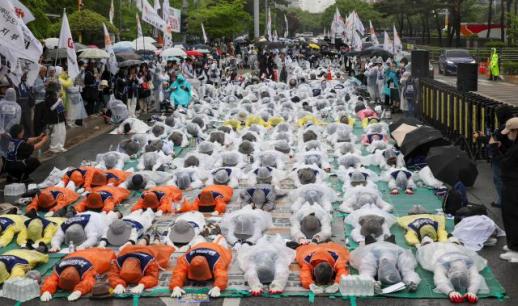 Rally in Seoul raises awareness for people with disabilities SEOUL, April 20 (AJP) - A nationwide association of parents of children with disabilities held a rally in front of the National Assembly in Yeouido, Seoul on Monday. The rally was held to mark the day for the physically challenged, observed annually on April 20 since 1981, to raise awareness of people with disabilities and better protect their rights. At the rally, participants held a procession that included taking three steps and one bow, a Buddhist practice of prostration that is also considered a form of peaceful protest. Monday's rally follows similar processions held in about 17 provincial cities since late last month, which led to meaningful outcomes including government pledges to take full responsibility for people with disabilities through increased state support and to investigate care facilities for any cases of abuse and harassment. 2026-04-20 17:48:04
 -
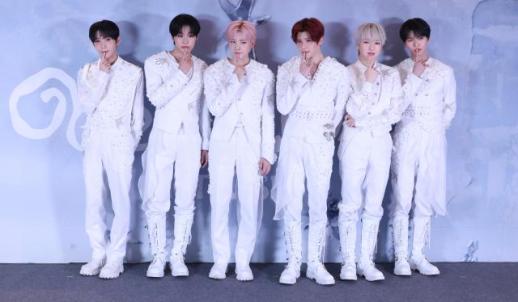 NCT WISH drops its first studio album SEOUL, April 20 (AJP) - K-pop boy group NCT WISH has dropped its first full-length album on Sunday after successfully wrapping up an encore concert in Seoul. According to SM Entertainment, NCT WISH releases its first studio album, Ode to Love, at 6 p.m. The 10-track album, featuring the lead single of the same name, brings together the group’s signature “fresh and neo” sound that it has built since debut. Ahead of the release, the group held its first solo concert encore show, NCT WISH 1st CONCERT TOUR INTO THE WISH : Our WISH ENCORE IN SEOUL, from April 17 to 19 at KSPO DOME. The concerts sold out all seats and drew enthusiastic responses from fans after premiering performances of the title track Ode to Love and B-side song Sticky. Having shown steady growth with each release since debut, NCT WISH is expected to showcase expanded capabilities in music, performance and teamwork through the new album. The group will also open a large-scale pop-up store at The Hyundai Seoul from April 21 to May 3 following the album launch. 2026-04-20 16:22:41
 -
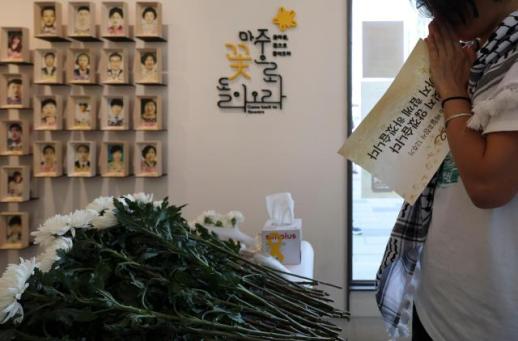 Nation honors Sewol victims as 12th anniversary deepens calls for accountability SEOUL, April 16 (AJP) - A synchronized silence descended upon the plaza fronting the Seoul City Council building at precisely 4:16 p.m. on Tuesday, as hundreds of citizens bowed their heads to mark twelve years since the Sewol ferry disaster. The gathering was held at the "Memory and Light," a civic space that served as a solemn anchor for a nation still grappling with the loss of 304 lives. The vast majority of victims were Danwon High School students from the city of Ansan, southwest of Seoul, on a seasonal field trip. This 12th anniversary underscores the enduring trauma of April 16, 2014, when a vessel bound for Jeju Island capsized off the coast of Jindo. The catastrophic event shattered public trust and remains a defining catalyst for safety reform in Seoul. While over a decade has passed, these dual ceremonies in the capital and Ansan demonstrate that the demand for collective memory has not faded, but rather evolved into a permanent fixture of the civic landscape. The proceedings in central Seoul were meticulously timed to allow participation from those unable to travel to the primary memorial held at 3:00 p.m. at the Hwarang Recreation Area in Ansan. 2026-04-16 18:01:35
 -
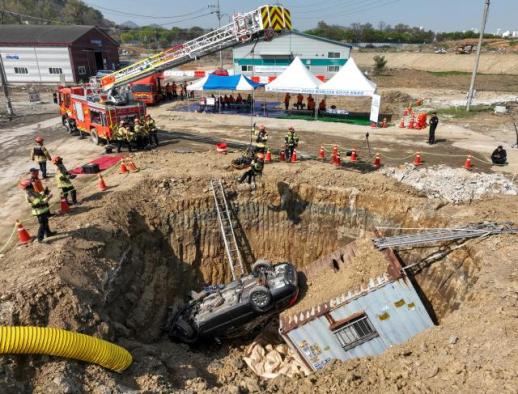 Into the void: sinkhole response drill Gyeonggi, April 16 (AJP) -The ground opens without warning. Asphalt fractures, steel buckles, and in seconds, what was solid becomes void. On Wednesday, fire authorities staged that moment. At the Gyosan public housing development site in Hanam, 77 rescue personnel moved through a carefully choreographed collapse — a large-scale sinkhole scenario designed to mirror one of the most unpredictable urban hazards. The three-day drill, running from April 15 to 17, brought together teams from the Gyeonggi Fire Services, Hanam Fire Station and the elite 119 Special Rescue Team. The scenario was stark. A sudden ground subsidence swallows vehicles and destabilizes nearby structures. Victims are trapped below — unseen, unreachable, and running out of time. Rescue teams worked vertically and blindly. Ladders dropped into the void. Ropes tightened against unstable edges. Aerial ladder trucks hovered overhead, lowering rescuers into fractured terrain where every step risked further collapse. Above ground, crews sealed off the perimeter, scanning for cracks that could widen without notice. Underground rupture can release toxic gases from damaged sewage lines. Crews rehearsed ventilation protocols, deploying detection equipment before entering confined spaces — a reminder that in sinkhole disasters, what cannot be seen can be just as lethal. South Korea’s sinkholes are not rare anomalies. They are a recurring risk, often tied to rapid urban development and aging subterranean infrastructure. In Gyeonggi Province alone, such incidents have accounted for roughly a fifth of the national total over the past decade, according to rescue officials. Seasonality compounds the threat. The spring thaw loosens soil. Summer monsoon rains saturate it. What appears stable can, under pressure, simply give way. For the rescuers, the drill is repetition under controlled conditions. Because when the ground collapses, response is measured not in plans — but in seconds. 2026-04-16 15:52:26
 -
 When K-fandom meets baseball, it's no longer just a game Fans cheer during the LG Twins–SSG Landers game at Jamsil Baseball Stadium in Seoul on April 11, 20 SEOUL, April 16 (AJP) - Fanchant, glow sticks, choreographed dancing and a brisk run on merchandise stands — the ritual of K-pop no longer ends at the arena gates. In South Korea, it now spills into the ballpark. Spring, for a growing legion of fans, is no longer about cherry blossoms. It’s about the first flash of team colors under stadium lights, the hum of a crowd finding its rhythm again. Baseball season, like a long-awaited comeback tour, has its own opening night energy. “Ballparks aren’t old men’s turf anymore,” one fan said with a grin, half-shouting to be heard over the music blaring between innings. And she’s right. The Korea Baseball Organization (KBO), founded 45 years ago, is in the middle of a transformation that veteran observers say they’ve never quite seen before. Last year, the league drew a record 12.31 million fans and generated more than 1 trillion won ($740 million) in economic impact. This season, the KBO League is already rewriting its own playbook. It surpassed 1 million spectators in just 55 games over 14 days — the fastest and fewest games on record — breaking last year’s pace only one year later. With 440,000 fans pouring into preseason games, the league is now swinging for 13 million. At this trajectory, another record year no longer looks like a stretch. “It’s not just a game anymore” On a mild weekend afternoon around Jamsil Sports Complex, the air carries a familiar refrain: “Seoul LG, run toward your dreams!” The chant rolls out of the subway exits before fans even glimpse the field. Streams of supporters in red jerseys move like a tide toward the stadium, phones already out, voices already warming up. Among them, the new face of Korean baseball is impossible to miss — women in their 20s and 30s, many in character —collaboration uniforms, some clutching light sticks, others filming snippets for social media before first pitch. “It’s not just about watching the game anymore,” said 23-year-old LG Twins fan Yoo Eun-seo, pausing between takes of a cheer she was recording with friends. “It feels like a full day out — like a festival.” That shift — from spectator sport to immersive experience — is reshaping everything. A fan in her 20s or 30s wearing a Hello Kitty collaboration uniform watches the LG Twins–SSG Landers game at Jamsil Baseball Stadium in Seoul on April 11, 2026. AJP Yoo Na-hyun The new economy of fandom Start with the concessions. Gone are the days when boiled silkworm pupae and draft beer defined the ballpark palate. In their place: mala skewers, fruit ades, designer desserts — food that looks as good on camera as it tastes. Then there’s the merchandise. At team stores, jerseys no longer dominate alone. Key rings, photo cards, and character collaborations fill the shelves. At kiosks, lines stretch long for collectible cards — fans chasing their favorite players like rare pulls in a trading pack. “I keep buying until I get the player I want,” said 26-year-old LG Twins fan Park si-hyun, laughing as she flipped through a fresh stack. “There’s just so much variety now — it makes you want more.” The numbers back it up. According to ticketing platforms, women in their 20s and 30s accounted for 36.6 percent of ticket purchases last year — surpassing their male counterparts in the same age group. The stadium naturally has to change to meet the new demand. “The KBO League is no longer just about watching games. It has evolved into an experience-driven leisure culture that combines food, entertainment and social engagement,” a KBO spokesman said. “Regardless of the outcome, there are now far more elements that encourage fans to stay longer and spend.” The spokesman added that improvements in facilities — including restroom cleanliness and nursing rooms — are helping create an environment tailored to women and family audiences. Efforts are also focused on ensuring a safe viewing experience, expanding amenities, and strengthening merchandise and content offerings. “Under a ‘fan-first’ approach, clubs are enhancing fan services, which has significantly narrowed the distance between players and supporters,” he added. Fans line up at a kiosk to print custom photo cards at the LG Twins goods shop inside Jamsil Baseball Stadium in Seoul on April 11, 2026. A stadium that sings Inside a packed 23,000-seat stadium, the noise is constant — not just cheers, but synchronized singing, a rolling chorus that rises and falls with each at-bat. Phones are always up. Moments are captured in real time — a home run swing, a pitcher’s stare, a perfectly timed dance break between innings. And when the final out is recorded, no one rushes for the exits. Fans linger. They pose with slogans, trade photos, relive the game in curated snapshots for their feeds. The experience doesn’t end with the scoreboard; it extends into the afterglow. Baseball here is no longer just watched. It’s performed, shared, and archived. Fans receive autographs from players after the LG Twins–SSG Landers game at Jamsil Baseball Stadium in Seoul on April 11, 2026. AJP Yoo Na-hyun From players to personas The way fans connect with players is evolving, too. Performance still matters — but so do personality, storytelling, and fan service. Players are no longer just athletes; they’re characters in an unfolding narrative, each with their own following. Clusters of fans wait after games along the players’ exit routes, hoping for a glimpse, a signature, a fleeting interaction. “Once you see a game live, you start to have a favorite player,” Yoo said. “Then you keep coming back.” It’s the logic of fandom — familiar to K-pop, now fully embedded in baseball. Fans take photos with team merchandise during the LG Twins–SSG Landers game at Jamsil Baseball Stadium in Seoul on April 11, 2026. AJP Yoo Na-hyun A customer looks at KBO League collaboration merchandise at a Starbucks store on March 30, 2026. AJP Yoo Na-hyun Beyond the Diamond The ripple effects are spreading far beyond the stadium walls. Major brands — from coffee chains to convenience stores — are rolling out collaborations with teams, extending the fan experience into everyday life. According to the Hyundai Research Institute, professional baseball now generates more than 1.1 trillion won in annual consumption spending, while combined ticket revenues for the league’s 10 clubs have topped 200 billion won for the first time. A spectator watches the LG Twins–SSG Landers game at Jamsil Baseball Stadium in Seoul on April 11, 2026. AJP Yoo Na-hyun On game days, nearby businesses report sales surging by over 90 percent. This is no longer just a sport. It’s an ecosystem. What’s unfolding in Korean baseball isn’t a fleeting trend. It’s a structural shift — driven by a new audience that consumes differently, participates actively and expects more than just nine innings. Fans wait for players after the LG Twins–SSG Landers game at Jamsil Baseball Stadium in Seoul on April 11, 2026. AJP Yoo Na-hyun Like any great season, the game builds inning by inning. And if the early crowds are any indication, this one is headed for a record finish — with a soundtrack, a light show and a fan base that knows every word by heart. Park Eun-seo (30, left) and Lee Na-young (30, right) pose for a photo after the LG Twins–SSG Landers game at Jamsil Baseball Stadium in Seoul on April 11, 2026. AJP Yoo Na-hyun 2026-04-16 13:34:28
 -
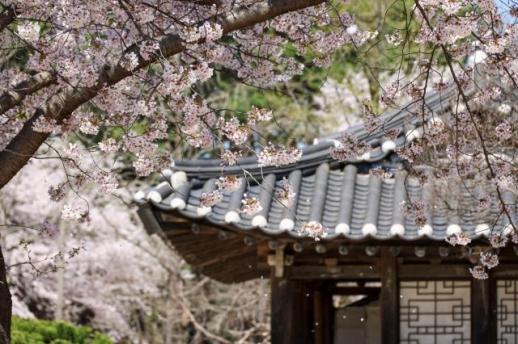 Following the tracks, following the taste (Gangneung) -2 In quiet courtyards once lived Heo Gyun and Heo Nanseolheon, siblings whose words outlived their time. His Hong Gildong — often called Korea's first novel written in Hangul— still echoes in the air. Here, Gangneung reveals another layer: not just a place to visit, but a place that remembers. The past does not interrupt the present; it settles into it, like a quiet undertone. By the time you reach Gangneung Jungang Market, the journey finds its flavor. Crisp dakgangjeong (sweet fried chicken), soft gamja ongshimi (potato-paste noodle soup), ojingeo sundae (stuffed squid), and the delicate warmth of Chodang tofu — these are not just foods, but continuations of place. Here, visitors and residents move through the same narrow lanes, sharing space, sharing appetite. Nothing feels staged. The market does not perform for tourists; it simply continues. And in that continuity, the boundary between travel and daily life dissolves. Gangneung stays with you in quiet ways. It is there in the moment the sea opens before you, and something within you loosens. Not dramatically, not all at once—but enough to notice. This is why people return. From 2026 to 2027, the city will mark its "Visit Gangneung" years, expanding what it offers. But the essence may remain unchanged: a place where movement leads to stillness, where arrival feels less like an end than a continuation. 2026-04-15 17:20:04
 -
 Young Women Are Transforming South Korea’s Pro Baseball Fan Culture Spring brings a familiar excitement in South Korea — not for cherry blossoms, but for baseball. Cheering sticks, coordinated chants, team merchandise and even dance routines once associated with K-pop fandom have moved into ballparks, reshaping the 45-year-old Korea Baseball Organization league in both scale and style. Last year, pro baseball drew a record 12.31 million spectators and generated more than 1 trillion won in annual economic impact. The KBO is aiming for 13 million fans this year. About 440,000 people attended exhibition games, and the league topped 1 million spectators in a record-low 55 games over 14 days, surpassing last year’s pace and raising expectations of another attendance record (12,312,519). With a surge of women entering the stands, pro baseball has further cemented itself as a national pastime. Women in their 20s and 30s accounted for 38.3% of ticket buyers last year, a shift analysts say is changing how fans watch, spend and participate. The change is visible before fans even reach the gates. On a mild weekend afternoon near Jamsil Sports Complex Station, a team chant echoed through the streets: “Seoul LG, let’s run toward our dream!” Fans streaming out of the subway moved in a steady flow toward the stadium, as if following a set route. Among the red jerseys, women in their 20s and 30s wearing character-collaboration uniforms stood out. Yoo Eun-seo, 23, an LG fan, filmed the chants and took photos with friends for social media. “It feels more like I came to hang out than to watch baseball,” she said. “Cheering, taking pictures — it’s a full-day course.” Ballparks are no longer just places to sit and watch. They have become venues built around experiences — and spending. The fastest changes have come in food and merchandise. Where boiled silkworm pupae and beer once dominated, fans now line up for mala skewers, fruit drinks and desserts. Team stores put key rings, photo cards and character goods front and center. Kiosks draw crowds of fans trying to print photo cards of specific players. Park Si-hyeon, 26, and Yoo Jeong-min, 24, both LG fans, said they buy multiple cards “until the player we want comes out,” adding that “the goods themselves are part of the fun.” A KBO official said the league has become “an experience-based leisure culture combining games with food and entertainment,” with more ways for fans to stay and spend regardless of the result. The official said teams and stadiums have also improved facilities such as restroom cleanliness and nursing rooms, focusing service on safer viewing environments, expanded amenities, and stronger merchandise and content. Under a “fan first” approach, the official added, clubs have stepped up fan service, narrowing the distance between players and supporters. Inside the stands, the new habits are already routine. In a packed stadium with 23,750 seats filled, fans sing along while recording video on their phones. Many stay after the final out to take photos with slogans and post them online. Baseball, for many, has shifted from a sport to watch into content to join and document. How fans follow players is changing, too. Interest now extends beyond performance to appearance, personal narratives and fan service, fueling player-centered fandoms. Waiting for players after games has become a common scene. A club official said players are “being consumed much like idols,” and that individual fandoms can translate into broader team popularity. Teams are responding with more aggressive marketing. Clubs have expanded “special days” and “players days” centered on specific athletes, while limited-edition goods often sell out immediately. KIA collaborated with fashion brand IAB Studio, and the LG Twins released an apparel collection with the YouTube-based brand “Bbodoners.” Kiwoom has sought to attract more women fans through special lectures at women’s universities and campus-linked events. The KBO has also strengthened strategies aimed at younger generations, including student marketer programs, pop-up stores and expanded social media content. The shift is spreading beyond the stadium. Coffee chains, convenience stores and food companies are releasing KBO collaboration products, extending the fan experience into daily life. The economic impact is also clear. Hyundai Research Institute estimated that, based on 2024 pro baseball consumer spending, nationwide production inducement totaled 1.1121 trillion won and employment inducement reached 9,569 people. Clubs’ gate receipts topped 200 billion won. Card company analysis found sales in major business categories near ballparks rose about 90% on game days compared with non-game days. By region, postgame dining sales increased 46% in Daejeon and 42% in Daegu. The league is evolving beyond a corporate-dependent model into a more self-sustaining industry, with some clubs posting profits and demonstrating new revenue streams. This season, games are also expected to feel faster and more immersive as stricter pitch clock rules speed up the pace of play. At the center of the changes are fans — especially women in their 20s and 30s. Their arrival is not only boosting attendance but also reshaping how pro baseball is packaged: viewing is more participatory, spending is more experience-driven, and the industry is leaning into partnerships and expansion. A second KBO official said, “The ballpark is not just a stadium now — it’s a platform,” adding that the experiences fans create have become core content. In that sense, the future of pro baseball is being built as much in the stands as on the field — in the chants, the photos and the merchandise purchases that now help drive the business. 2026-04-15 17:15:32
 -
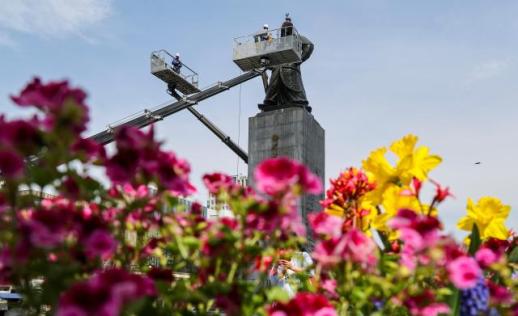 Statue of Joseon-era war hero gets bathed SEOUL, April 14 (AJP) - The landmark statue of Admiral Yi Sun-shin, one of the key attractions in central Seoul, was washed down on Tuesday. The cleaning work on the statue of the naval commander who repelled Japanese invaders in a famous 16th-century maritime battle during the Joseon Dynasty came a day after the nearby statue of King Sejong the Great in Gwanghwamun was also cleaned, as part of regular maintenance and preservation efforts with the arrival of spring. Dust and other stains that had accumulated on these statues over the long winter months were washed away. The Seoul Metropolitan Government said it will keep maintaining key landmarks to ensure a pleasant urban environment for citizens. 2026-04-14 17:36:01
 -
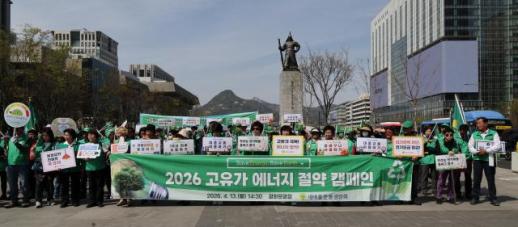 Civilians switch off in energy-saving drive amid prolonged Gulf crisis SEOUL, April 13 (AJP) - As the Gulf crisis drags on and energy costs bite deeper, a familiar Korean instinct is quietly resurfacing — collective action in everyday life. Saemaul Undong Central Council on Monday kicked off a nationwide energy-saving campaign at Gwanghwamun Square, drawing participants who gathered not for protest, but for small, practical change. The message was simple: switch off what you don’t need, unplug what you’re not using, and think twice before turning the key in your car. Participants highlighted everyday habits — turning off unnecessary lights, cutting standby power, opting for public transport and keeping indoor temperatures in check — small steps that, multiplied across millions, could ease the strain of soaring oil prices. The campaign, organizers said, is as much about mindset as it is about savings — an effort to revive a culture of shared responsibility at a time when households and local businesses are feeling the pinch. Nearly 2 million members from Saemaul chapters nationwide are expected to take part, with no fixed end date. The campaign will continue, organizers said, for as long as the energy crunch lasts. For now, the movement begins not with sweeping policy, but with a flick of a switch. 2026-04-14 15:56:53