

Journalist

Eun-mi. Won
silverbeauty@ajunews.com
-
 Attorney Won Chang-yeon Chosen as New Managing Partner of Law Firm Dongin Attorney Won Chang-yeon, a member of the Judicial Research and Training Institute’s 28th class, has been selected as the new managing partner of Law Firm (LLC) Dongin, according to reporting by Ajunews on Monday. Dongin recently chose Won through an internal election, the report said. An official announcement is expected soon. Won, born in November 1963, graduated from Yonsei University with a degree in political science and diplomacy and earned a master’s in law from Yonsei University’s Graduate School of Legal Studies. He also completed Seoul National University’s specialized legal program covering mergers and acquisitions theory and practice. He passed the 38th bar exam in 1996 and completed the Judicial Research and Training Institute. After working at law firms Aram and Human, he joined Dongin in 2006. He served as a representative attorney from 2018 to 2022 and has again been listed as a representative attorney since last year. Won’s practice has focused on M&A, corporate restructuring, management control disputes, finance and securities, and real estate project financing. His work has included advising Korea Asset Management Corp. on the sale of special nonperforming loans worth 1 trillion won, as well as advising and litigating on M&A deals and control disputes involving multiple listed companies. In management control disputes, he has handled cases tied to corporate governance, including injunctions to block new share issuances, injunctions related to placing items on meeting agendas, injunctions to inspect and copy shareholder registers, and court petitions to convene extraordinary shareholders’ meetings. In finance and securities, he has worked on asset-backed securities, acquisition financing and cases involving the Capital Markets Act. The selection comes ahead of the end of Managing Representative Attorney Hwang Yun-gu’s term, which runs through the end of this month. Dongin is expected to shift to the new managing-partner structure starting next month. A Dongin official said observers expect Won’s prior experience leading the firm could put the focus on organizational stability and strengthening corporate advisory work, though the specific management direction is expected to be clarified after the official announcement. Dongin is regarded as a law firm with strength in criminal litigation. It has also been working to bolster its advisory capabilities in areas including M&A, fair trade, tax, intellectual property, and environment and energy. * This article has been translated by AI. 2026-04-27 16:19:46
 -
 Daeryuk & Aju, Lin Begin Merger Process, Signaling Shake-Up in Midtier Law Firms Daeryuk & Aju and Lin have begun formal steps toward a merger, a move that could accelerate a reshuffle among South Korea’s midtier law firms. If completed, the combined firm would jump into the top tier by both revenue and headcount. According to the legal community on the 27th, the firms plan to sign a memorandum of understanding on the 29th at Daeryuk & Aju’s main conference room in Donghun Tower in Yeoksam-dong, Seoul’s Gangnam district. The agreement would bring into the open merger talks that have been underway behind the scenes and start full integration procedures. The MOU follows more than a month of working-level discussions. The firms have been in talks since last month, and an MOU had initially been expected by late March before the schedule was adjusted. By scale, the merger would be significant. Based on National Tax Service value-added tax filings, Daeryuk & Aju reported 102.7 billion won in revenue last year and Lin reported 41.0 billion won. Combined, that would total 143.7 billion won, exceeding Jipyong, which ranks eighth by revenue. Headcount would also rise. As of last year, Daeryuk & Aju had 247 lawyers and Lin had 137, for a combined 384 — more than HwaWoo’s 369. Industry observers describe the deal as largely complementary. Daeryuk & Aju is known for litigation and overseas work, while Lin has grown quickly in corporate advisory services and mergers and acquisitions. The combination is widely seen as likely to strengthen competitiveness. Lin’s role has drawn attention because it recently reset its merger strategy. Lin previously pursued a merger with Barun and reached detailed negotiations, but the deal fell through over issues including organizational culture and conflicts of interest. Lin then sought a new partner, and talks with Daeryuk & Aju gained momentum. A Lin official said trust remains central in the legal market and added, “As a midtier firm, we judged there are limits to survival and growth, so we decided to pursue a merger.” Daeryuk & Aju has expanded through mergers before. After the 2009 integration of “Daeryuk” and “Aju,” it settled into the top 10 and has recently broadened into growth areas such as international work and major industrial-accident cases. Lin, founded in 2017 by lawyers largely from Kim & Chang, has rapidly built its presence in the corporate advisory market. Analysts said the push could signal broader consolidation among midtier firms as competition with large firms intensifies and as firms seek scale and combined expertise. If the merger is finalized, it could alter competition not only among midtier firms such as Jipyong and Barun but also with higher-ranked firms, with the possibility of additional mergers or strategic alliances. * This article has been translated by AI. 2026-04-27 16:09:30
 -
 Jipyeong to Hold Seminar on Building Sales Act Risks After Supreme Court Ruling Jipyeong LLC said Sunday it will hold a seminar at 2 p.m. on May 11 titled “Building Sales Act A to Z Every Developer Must Know.” The firm said the event will examine the practical impact of a Supreme Court ruling issued Dec. 24, 2025 (2025Da215248) and outline ways to identify and respond to legal risks that can arise throughout the sales process. The ruling clarified that when a corrective order is issued under the Act on the Sale of Buildings, buyers are entitled to cancel their contracts regardless of how serious the violation is. The decision is viewed as a precedent that could significantly affect industry practice, as even relatively minor violations — such as missing information in sales advertising — may lead to contract cancellation and refunds. As a result, developers face increased pressure to strictly comply with legal obligations at every stage, before and after contracts are signed. Jipyeong said the seminar will cover key issues and response strategies from the pre-sale stage through contract signing and post-sale management. It also plans to introduce recent issues, including the main points of a proposed enforcement decree revision and the potential use of constitutional complaints. The seminar will open with remarks by partner attorney Song Han-sa and feature three presentations. Partner attorney Kang Min-je will speak on the pre-sale stage, focusing on the Act’s regulatory framework and practical precautions. Attorney Kim Min-ju will address legal duties and risk management at the contract-signing stage. Partner attorney Baek Jong-hyeon will discuss major post-sale issues and response strategies. Song, head of Jipyeong’s Construction and Real Estate Group, said the ruling made clear that even minor procedural flaws can lead to contract cancellations, requiring close legal review across the entire project. He said he hopes the seminar will help developers assess risks in advance and prepare response plans. * This article has been translated by AI. 2026-04-27 15:33:16
 -
 Appeals court sentences Unification Church official to 18 months over gifts to Kim Keon Hee, Rep. Kwon An appeals court on Sunday sentenced Yoon Young-ho, former head of the Family Federation for World Peace and Unification’s global headquarters, to prison for using church funds to provide money and valuables to first lady Kim Keon Hee and ruling party lawmaker Kwon Seong-dong. The Seoul High Court’s Criminal Division 6-1 sentenced Yoon to 18 months in prison for violating the anti-graft law, the Political Funds Act and for occupational embezzlement. The term was increased from the 14 months ordered at trial. Prosecutors said Yoon gave Kwon 100 million won in illegal political funds. They also said that from April to August 2022, Yoon used Jeon Seong-bae — known as “Geonjin Beopsa” — to deliver about 60 million won worth of items to Kim, including a Graff necklace, a Chanel bag and a concentrated ginseng product. Investigators said the money and items came from Unification Church funds. The court said Yoon’s provision of valuables to Kim constituted occupational embezzlement. “Providing valuables to the spouse of a president-elect to seek favors cannot be tolerated under the overall legal order,” the panel said, adding that because church funds were used, an intent to unlawfully appropriate was recognized. The court said the special prosecutor’s appeal had merit and rejected the defense’s arguments. The panel said it applied a mandatory reduction provision under the special counsel law related to Kim. It cited Yoon’s cooperation during the investigation, including statements that helped open leads into the probe involving Jeon, and his admissions about providing funds to Kwon and delivering the bag and necklace to Kim. The court called them “key statements that contributed to identifying other people’s crimes” and treated them as grounds for a reduced sentence. As in the first trial, the court dismissed the indictment on an evidence-destruction charge. It said the alleged act was difficult to view as falling within the special counsel law’s investigative scope and rejected the special prosecutor’s appeal on that point. In explaining the sentence, the court described the crimes as an effort by the Unification Church to expand political influence. It said the acts were carried out to support a presidential candidate and to broaden policy influence after the launch of a new administration, undermining the purposes of the Political Funds Act and the anti-graft law and violating the constitutional principle of separating religion and politics. The panel said the case was serious because it damaged public trust in the fair execution of national policy. The court said it also considered Yoon’s cooperation, his general acceptance of key facts, his contribution to clarifying other suspects’ crimes and his lack of a criminal record. It imposed six months for the Political Funds Act violation and one year for the anti-graft and embezzlement charges, and denied his request for bail, citing a risk of flight. After the ruling, Yoon left the courtroom with a tense expression and a flushed face.* This article has been translated by AI. 2026-04-27 15:11:48
 -
 Korean Bar Association to Discuss Carbon Neutrality Law Revisions Reflecting U.N. Rights Advice The Korean Bar Association will hold a forum to discuss building a greenhouse gas reduction framework that aligns with U.N. human rights standards. The association said Sunday it will host a discussion at 2 p.m. Monday in Meeting Room 10 at the National Assembly Members’ Office Building titled, “Setting a Long-Term Emissions Reduction Pathway and Directions for Revising the Framework Act on Carbon Neutrality in Line With U.N. Human Rights Council Recommendations (UPR).” The event is being organized with Democratic Party lawmakers Lee So-young and Park Ji-hye, Rebuilding Korea Party lawmaker Seo Wang-jin, and the National Human Rights Commission of Korea. It follows the government’s acceptance, through the 2023 Universal Periodic Review, of a recommendation to align emissions reduction targets with the “1.5 degrees” standard. The need to reflect a long-term reduction pathway for 2031 to 2049 in law has also grown after the Constitutional Court last year issued a ruling of constitutional nonconformity in a climate lawsuit case. The National Assembly is proceeding with legislation and public discussion on the issue. The forum will review advisory opinions from the International Court of Justice and broader international climate policy trends, and discuss how to set a reduction pathway consistent with human rights obligations and the 1.5-degree goal. Two presentations are scheduled. Kyung Hee University law professor Baek Beom-seok will propose ways to codify a long-term reduction pathway in legislation based on the UPR recommendations and the Constitutional Court ruling. Attorney Choi Chang-min will present proposed revisions to the Framework Act on Carbon Neutrality, including resetting the pathway to meet human rights standards and establishing an implementation monitoring system. A panel discussion will include participants from climate science, human rights, youth groups, academia and government to consider improvements from multiple perspectives. A bar association official said, “We hope this forum will serve as an opportunity to reexamine the long-term reduction pathway from the perspective of responding to the climate crisis and protecting human rights, and to develop directions for effective revisions to the Framework Act on Carbon Neutrality.”* This article has been translated by AI. 2026-04-27 10:25:20
 -
 Prosecutors Reject Police Request for Arrest Warrant for HYBE Chairman Bang Si-hyuk Prosecutors have rejected police requests for an arrest warrant for HYBE Chairman Bang Si-hyuk, who is accused of misleading investors during the company's listing process and reaping large illicit gains. Prosecutors said they did not see sufficient grounds at this stage to justify detention. The Seoul Southern District Prosecutors Office's Financial and Securities Crime Joint Investigation Division said Thursday it returned the warrant request to police and asked for additional investigation. Bang is suspected of fraudulent unfair trading under the Capital Markets Act. Prosecutors said there was "insufficient explanation" for why an arrest was necessary at this point. The Seoul Metropolitan Police Agency's Financial Crimes Investigation Division had sought the warrant on April 21, after about 16 months of investigation since launching an internal probe in December 2024. Police suspect that in 2019, ahead of HYBE's IPO, then known as Big Hit Entertainment, Bang told existing investors that there were no plans to go public or that the IPO would be delayed, inducing them to sell their stakes. Police believe the shares were steered to a special-purpose company set up by a private equity fund involving former HYBE executives. After HYBE listed on the Kospi in October 2020, the private equity fund sold the shares. Investigators say Bang received a portion of the profits under a prearranged shareholder agreement. Police estimate the alleged illicit gains at about 190 billion won, and as much as 260 billion won. Under the Capital Markets Act, using false information or improper schemes to gain from trading financial investment products is prohibited. If the illicit gain exceeds 5 billion won, the penalty can be life imprisonment or at least five years in prison. Police said they searched the Korea Exchange and HYBE headquarters, questioned Bang five times, imposed a travel ban and sought asset preservation measures for some shares. They also cited concerns about possible evidence destruction, including circumstances such as a phone replacement, according to reports. With prosecutors returning the warrant request, the case moves into a supplementary phase. Police are expected to decide whether to seek the warrant again after further legal review and additional evidence collection. Bang's side has denied all allegations, saying the IPO was not finalized at the time and that the share sales were made at investors' request. It also says the profit-sharing arrangement was proposed by the investor side. The case has drawn attention as an alleged capital markets crime tied to the listing of a major entertainment company. Investigators are expected to focus on whether fraudulent unfair trading can be established and on the scope of any illicit gains. * This article has been translated by AI. 2026-04-24 18:42:24
 -
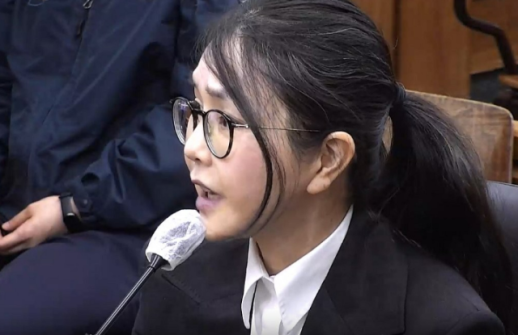 Kim Keon Hee Denies Knowing Robot Dog Project, Rejects Watch Bribery Claim in Court Kim Keon Hee, accused of receiving a Vacheron wristwatch worth 39.9 million won along with an alleged request to support a robot dog business, testified in court that she had never even heard of such a project. Kim appeared April 24 as a witness at the Seoul Central District Court in the continued trial of robot dog entrepreneur Seo Seong-bin, who is charged with violating South Korea’s anti-graft law. The case was heard by the court’s Criminal Division 21, presided over by Judge Jo Soon-pyo. Kim is also on trial in a separate proceeding on charges of receiving a bribe in return for influence under the Act on the Aggravated Punishment of Specific Crimes, but the hearings were separated for her testimony that day. As in previous appearances, Kim entered the courtroom in a black suit and white mask, supported by a corrections officer. During questioning by Special Prosecutor Min Jung-gi’s team, Kim invoked her right to refuse to testify more than 50 times. Asked whether she told Seo she needed a watch to wear on overseas trips, and how the watch box and warranty card were found at the home of her brother Kim Jin-woo’s mother-in-law, Kim repeatedly said, “I refuse to testify.” She also declined to answer more than 10 times during cross-examination. But when Seo’s attorney pressed her to address whether the watch was given in exchange for anything, she responded, at times hesitating and looking toward her lawyer in the gallery. “I did not receive any request from Seo Seong-bin,” Kim said. “He has a great sense of fashion, so I asked him about that a lot. I have never even heard of a robot dog or anything like that.” When Seo’s attorney said the special prosecutor saw it differently, Kim replied, “I don’t understand it either. I know nothing about any request. It’s absurd.” She added that she treated Seo “like a neighborhood uncle” and talked about fashion, saying she did not know what business he was in. After those answers, Kim again invoked her right to refuse to testify, and questioning ended after about 50 minutes.* This article has been translated by AI. 2026-04-24 17:38:53
 -
 Justice Minister Jung Sung-ho Calls for Rights and Rule of Law in Law Day Speech Justice Minister Jung Sung-ho said April 24 that he will work to build a South Korea where “justice and human rights” are part of everyday life and where people respect and embrace one another “within the framework of the rule of law.” In remarks at the 63rd Law Day ceremony, Jung said it is the Ministry of Justice’s “solemn mandate” to help the constitutional values “protected by the sovereign people” take root through human rights and the rule of law. He said the spirit of the law includes restraining abuses by the strong and helping the weak, as well as correcting past wrongs. Law Day is a national observance established to reaffirm the dignity of the law and promote public respect for legal compliance. The Ministry of Justice held this year’s event under the theme “Constitutional order protected by the people, achieving human rights and the rule of law,” to commemorate what it called a historic episode in which South Korea’s constitutional order was defended against the Dec. 3 emergency martial law. Attendees included Supreme Court Chief Justice Cho Hee-dae, Constitutional Court Chief Justice Kim Sang-hwan, National Assembly Legislation and Judiciary Committee Chair Seo Young-kyo of the Democratic Party, and Korea Bar Association President Kim Jung-wook, among other legal leaders.* This article has been translated by AI. 2026-04-24 17:30:15
 -
 Justice Ministry Wins First Pro-Japan Assets Recovery Suit, Court Rejects Statute of Limitations Claim South Korea’s Justice Ministry has won a lawsuit seeking to recover assets linked to a descendant of a pro-Japanese collaborator, in what it called the first such victory since a Supreme Court ruling that treated heirs’ statute-of-limitations defenses as an abuse of rights. The ministry said Thursday it won in full in a suit filed against the descendants of Lim Seon-jun, seeking the return of about 53 million won in unjust enrichment tied to proceeds from land sales. The Seoul Western District Court accepted all of the state’s claims, the ministry said, calling the ruling an important precedent for future recovery efforts. Lim was a figure who cooperated in the forced abdication of King Gojong and the signing of the Japan-Korea Agreement, and received a noble title from Japan. He was designated a pro-Japanese collaborator by the Presidential Committee for the Inspection of Collaborations for Japanese Imperialism. The ministry said it confirmed that Lim’s descendants sold eight inherited parcels of land in Yeoju, Gyeonggi province, between 1993 and 2000, and filed the lawsuit in January. The ministry said it will continue pursuing other pending cases to secure state victories in efforts to recover such assets. Justice Minister Jeong Seong-ho said, “Through thorough litigation, we will recover even a single won of pro-Japan assets to the very end. For a complete reckoning, we will also do our utmost to support legislation so the bill to re-enact the pro-Japan assets vesting law, now pending in the National Assembly, can pass swiftly.”* This article has been translated by AI. 2026-04-24 17:18:08
 -
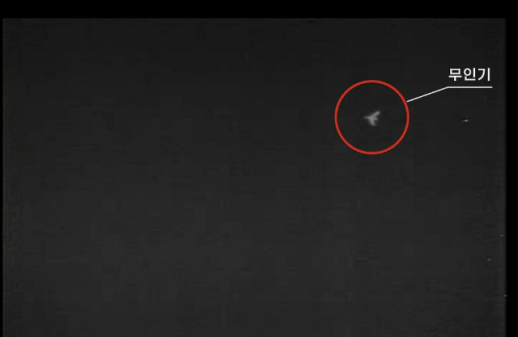 Prosecutors Seek 30 Years for Yoon Suk Yeol Over Alleged Pyongyang Drone Operation A special prosecutor on Thursday sought a 30-year prison term for Yoon Suk Yeol, accused of ordering drones sent into Pyongyang to create a pretext for declaring martial law on Dec. 3. Prosecutors argued the operation aimed to manufacture wartime conditions and was linked to the broader martial law case. The special counsel team investigating the alleged insurrection, led by Special Prosecutor Cho Eun-seok, asked the Seoul Central District Court to sentence Yoon to 30 years and former Defense Minister Kim Yong-hyeon to 25 years. The request came during closing arguments before the court’s Criminal Division 36, presided over by Judge Lee Jeong-yeop. Prosecutors described the case as an “anti-state, anti-people crime” in which the commander in chief and the defense minister allegedly tried to create wartime conditions on the Korean Peninsula to meet the requirements for declaring martial law. They said the actions caused real harm to national security, severely undermined military interests, and led to national confusion and a breakdown in discipline. They said Yoon’s role as commander in chief and alleged leadership of the acts was reflected in the sentencing request, while Kim’s involvement from planning through execution was also considered. Prosecutors said they also weighed the defendants’ conduct during the investigation and trial. A central issue is whether the “Pyongyang drone deployment” went beyond a military operation and amounted to an attempt to provoke a “North wind” incident to justify martial law. Prosecutors allege Yoon and others ordered multiple drone flights into Pyongyang around October 2024 to raise military tensions. They also argued that a drone crash led to the disclosure of operational and force-related military secrets, supporting an “aiding the enemy” charge. Under that offense, prosecutors said, a crime can be established even without collusion with an adversary if military interests are harmed or benefits are provided to an enemy state. Prosecutors said the case was a “preliminary-stage” offense connected to the martial law declaration. They said they set the requested terms in light of earlier sentencing requests in related cases, including the death penalty sought for Yoon on charges of leading an insurrection and life imprisonment sought for Kim on charges of playing a key role in an insurrection. In related cases, prosecutors have also sought heavy sentences, including 20 years for former Defense Security Command chief Yeo In-hyeong and five years for former Drone Operations Command chief Kim Yong-dae, requested on April 10. Thursday’s hearing was closed to the public due to military secrets, but the sentencing hearing is expected to be open under the Constitution. With closing arguments complete, attention is turning to the court’s judgment on whether the alleged pretext-building for martial law is established and whether the “aiding the enemy” charge applies.* This article has been translated by AI. 2026-04-24 15:36:21