
Journalist

Won Eun-mi
silverbeauty@ajunews.com
-
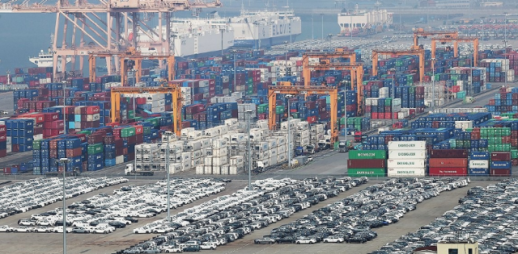 South Korea Exports Top $80B for Second Straight Month on AI Chip Surge South Korea’s exports stayed above $80 billion for a second straight month in April, extending the momentum after first crossing the threshold in March, led by a sharp rise in semiconductor shipments tied to the global boom in artificial intelligence. With the Middle East war sending shock waves across industries, exports are being seen as a key support for the economy. According to Yonhap, the Ministry of Trade, Industry and Energy released April trade figures on Thursday. Exports rose 48.0% from a year earlier to $85.89 billion despite the war in the Middle East. After never having posted a $70 billion month, South Korea exceeded $80 billion in March for the first time and remained above that level in April. April’s total was the second-highest monthly export figure on record, following March’s $86.6 billion. Average daily exports, adjusted for working days, also rose 48.0% to $3.58 billion, topping $3 billion for a third consecutive month. Semiconductors drove the gains. Chip exports surged 173.5% to $31.9 billion, the second-highest monthly total on record after $32.8 billion in March. Semiconductors exceeded $30 billion for a second straight month and posted a record for the month for the 13th consecutive month. Auto exports fell 5.5% to $6.17 billion, as logistics disruptions from the Middle East war and increased local production in the United States following U.S. tariffs weighed on shipments. Exports of eco-friendly vehicles, including electric and hybrid models, increased. Petroleum product exports rose 39.9% to $5.11 billion on higher oil prices, but export volumes fell 36.0%. The ministry said exports of gasoline (down 43.0%), diesel (down 23.2%) and kerosene (down 99.9%) dropped sharply from a year earlier after export control measures were introduced for petroleum products. Petrochemical exports increased 7.8% to $4.09 billion, though export volumes fell 20.9% as domestic supply rose. Among 15 major export items, eight posted gains, including computers ($4.08 billion, up 515.8%) and wireless communications equipment ($1.62 billion, up 11.6%). Exports to China climbed 62.5% to $17.7 billion, extending gains for a sixth straight month on stronger shipments of semiconductors and other IT products such as computers and wireless communications equipment. Exports to the United States rose 54.0% to $16.33 billion, led by items such as semiconductors and computers that were described as exempt from tariffs. Shipments to ASEAN rose 64.0% to $15.41 billion, and exports to the European Union increased 8.5% to $7.19 billion, also supported by semiconductors. Exports to the Middle East, however, fell 25.1% to $1.27 billion due to factors including logistics disruptions. Imports increased 16.7% to $62.11 billion. Energy imports rose 7.5% to $10.61 billion, while non-energy imports climbed 18.8% to $51.51 billion. The trade balance posted a $23.77 billion surplus in April, extending the surplus streak to 15 months. Industry Minister Kim Jeong-gwan said April marked the first time the country recorded exports of more than $80 billion and a trade surplus of more than $20 billion for two consecutive months while the Middle East war continued for more than two months. He attributed the results to expanding global AI investment, higher unit prices for petroleum products amid rising oil prices, and companies securing supply chains in advance. Kim warned that export volatility could increase due to intensifying competition in key products and difficulties in securing raw materials linked to the Middle East war. He said the government would seek to reduce burdens on companies through marketing, financing and insurance support and policies to diversify export markets, while actively using trade networks to secure additional alternative supplies of crude oil and naphtha. * This article has been translated by AI. 2026-05-01 10:18:18
 -
 Holiday Weekend Forecast: Cool Mornings, Highs Up to 26C; Dry Air and Poor Dust in Seoul Area Saturday, the second day of the holiday weekend, is expected to bring chilly mornings and evenings but warmer conditions during the day. Yonhap News Agency reported Friday that morning lows are forecast at 8C to 16C, with daytime highs of 19C to 26C. Temperatures are expected to vary by about 15C between day and night, and starting on the 3rd, readings are forecast to fall below seasonal averages. With dry weather alerts in effect, the air will be very dry in Seoul, inland parts of the Chungcheong region, northeastern inland North Jeolla Province and inland North Gyeongsang Province. Authorities urged caution against wildfires and other fire risks. Skies will be mostly cloudy nationwide. Fine dust levels are expected to be "bad" in the greater Seoul area and "moderate" elsewhere, due to inflow of dust from overseas. Concentrations are forecast to ease gradually from the south. Waves are expected at 0.5 to 2.0 meters in the East Sea, 0.5 to 1.0 meters in the Yellow Sea and 0.5 to 1.5 meters in the South Sea. In offshore waters about 200 kilometers from the coast, wave heights are forecast at 0.5 to 2.0 meters in the East Sea and 0.5 to 1.5 meters in the Yellow Sea and South Sea.* This article has been translated by AI. 2026-05-01 09:42:17
 -
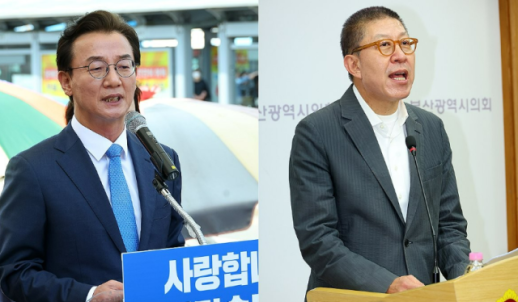 Busan mayoral race tight as voters split between change and conservative unity With the June 3 Busan mayoral election approaching, voter sentiment appears split with no clear direction, clouding the outlook. The contest is taking shape as a clash between calls for a change in government and appeals for conservatives to unite, with televised debates and the Buk-gu Gap by-election emerging as key variables. Democratic Party candidate Jeon Jae-su and People Power Party candidate Park Hyung-joon plan to face off in at least three TV debates before Election Day: May 12 on Busan MBC, May 19 on KNN and May 27 on Busan KBS. The only official debate hosted by the election commission is the KBS event. Both camps say additional debates remain possible if requested. With both sides already trading sharp attacks over pledges and Park’s record at City Hall, the debate performances are seen as a potential late decider. On the ground, views are sharply divided. In a recent field report by Aju Business Daily in parts of Haeundae and Buk districts, some residents argued it is time for change, saying, “I’ve voted conservative for 75 years, but now feels like the time to change,” and “The People Power Party doesn’t seem sorry to the public.” Some voters also voiced expectations for Jeon, saying they had heard “Jeon Jae-su gets things done.” Others cited uneven policy focus and weak communication. A self-employed man in his 30s who runs a private academy in Dongnae District said, “With policies centered on Haeundae, other areas feel left out,” explaining his support for Jeon. Another office worker said a ruling-party candidate could have an advantage “considering cooperation with the central government,” pointing to the value of alignment. At the same time, calls for conservative unity remain strong. Some residents said Park “ran city administration smoothly” during his term, backing a stability argument. Many also raised allegations that Jeon accepted money, with comments such as, “He should have cleared that up before running,” and “Because of that, it’s hard to support him.” Among older voters, the view that “Busan should vote for the People Power Party” was still evident. The split is reflected in polling. In a survey commissioned by KBS Busan, Jeon had 40% support and Park 34%, a tight race within the margin of error, making the outcome difficult to predict. The Buk-gu Gap by-election is also drawing attention. High-profile politicians, including Han Dong-hoon, the former People Power Party leader, have joined campaign stops, potentially boosting turnout and influencing the mayoral race. One voter said the by-election would bring them to the polls and that they would vote in the mayoral contest as well, adding, “I think I’ll end up voting for the conservative candidate.” Visits by senior figures from both parties are also intensifying the campaign, as they fan out across Busan to rally support and frame local issues in national political terms. With debates, possible spillover from the by-election and an all-out push by national party leaders, the Busan mayoral race is expected to remain a close contest through the final days.* This article has been translated by AI. 2026-05-01 08:48:21
 -
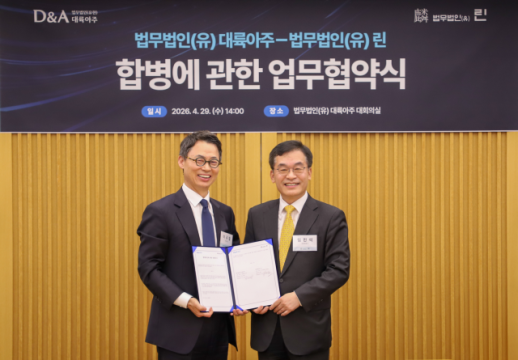 Daeryuk & Aju and Lin Launch Merger Committee to Pursue Combined Law Firm Daeryuk & Aju Law Firm and Lin Law Firm have launched a consultative body to pursue a merger, formally beginning integration talks. The firms on April 29 held a signing ceremony for a business agreement in a conference room at Daeryuk & Aju’s offices in Seoul’s Gangnam district and agreed to form a merger promotion committee. About 50 people, including partner attorneys from both sides and journalists, attended. The committee will oversee merger discussions from April 29 until the merger is registered, including the merger structure, decision-making system and the name of the combined firm. Under an equal-merger principle, each firm will appoint one overall co-managing representative and the committee will have the same number of members from each side. Decisions will be made unanimously. If completed, the deal would be the largest combination in South Korea’s law-firm history, the firms said. The two firms have a combined 393 lawyers in South Korea — 260 at Daeryuk & Aju and 133 at Lin. Their 2025 revenue totaled 143.7 billion won, including 102.7 billion won for Daeryuk & Aju and 41.0 billion won for Lin. Based on those figures, the merged firm would rank sixth domestically by number of lawyers and in the eighth tier by revenue. The firms said they expect synergies by combining Daeryuk & Aju’s strengths in litigation, advisory work and new-industry sectors with Lin’s corporate advisory capabilities. Lee Gyu-cheol, managing partner at Daeryuk & Aju, said the integration is a strategic decision aimed at building “a new model of a comprehensive law firm” able to respond to rapidly changing industrial structures and the global environment, rather than simply expanding in size. Lim Jin-seok, managing partner at Lin, said the firms will combine their “innovation DNA” with professional expertise and organizational capabilities to provide more advanced legal services to clients at home and abroad, adding that the goal is to become a market-leading firm.* This article has been translated by AI. 2026-04-29 17:02:57
 -
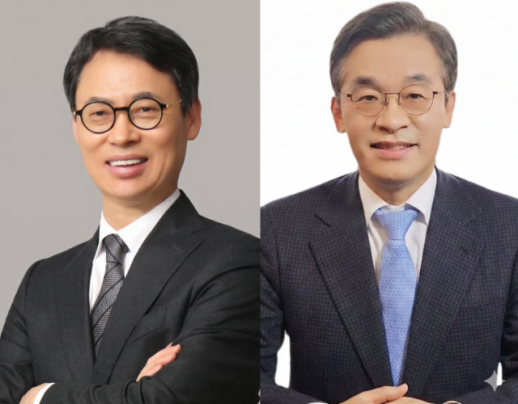 Daeryuk & Aju and Lin to Merge, Citing Limits for Mid-Sized Law Firms Daeryuk & Aju and Lin said they will merge, saying mid-sized firms face structural limits in moving into the top ranks of South Korea’s legal market. Lee Gyu-cheol, managing partner at Daeryuk & Aju, said in an interview after the firms signed a merger memorandum of understanding on the 29th that “in the current law firm market structure, it is virtually impossible for a mid-sized firm to rise into the top tier through organic growth alone.” He described the gap in scale: “If a top firm grows 10%, that’s an additional 10 billion won, but for a mid-sized firm it’s only 1 billion won,” he said, adding that “under this structure, it’s hard to narrow the gap.” Lee said Daeryuk & Aju, which he described as remaining in “Tier 2,” saw a risk of stagnating or falling behind. That assessment led to the merger push. “There are limits to recruiting individual talent, so we had no choice but to choose a merger,” Lee said. “I think this decision is our last big bet.” Lim Jin-seok, managing partner at Lin, voiced a similar view, focusing on practical constraints. “At the level of a mid-tier firm, there are clear limits to the size of cases and deals you can handle,” he said, adding that “for some large matters, the structure makes it difficult even to apply.” Lim said Lin concluded it had reached a “ceiling” at its current size. He pointed to barriers to entry. “First-tier financial institutions such as banks, and major fair-trade cases, move around the Big 6 firms,” Lim said. “Even with capability, if you’re small, you often aren’t included among the options.” Lim said Lin pursued a merger not for simple expansion but for a “tier jump.” He said Daeryuk & Aju was “the most proactive” and best-aligned partner among firms Lin contacted. Both firms said the post-merger strategy will focus on “synergy.” “A merger matters only if 1 plus 1 becomes 3, not 2,” Lim said. “If we secure scale and a brand, we can compete 충분히 with top firms.” Lee said the next task will be improving revenue per lawyer. He said the merger should broaden the range of matters the combined firm can take on. The firms plan to combine Daeryuk & Aju’s strengths in litigation and criminal matters with Lin’s strengths in corporate advisory work and mergers and acquisitions, aiming to build a “one-stop service” system. Lim said Lin has been relatively weaker in criminal work, sometimes leaving it unable to handle related matters for corporate clients in-house. After the merger, he said, the firm expects to respond to clients’ criminal, litigation and advisory needs under one roof. Lee said the firms will also prepare for risks that can come with a large merger. “Conflicts of interest can inevitably arise during the merger process, but we can minimize them through 충분한 discussion,” he said. “What matters is that the number of matters we can handle increases.” On differences in organizational culture, Lee said Lin has many lawyers who previously worked at large firms, adding that there is “a lot to learn.” He said the firms plan to integrate through collaboration and personnel exchanges. Lim said “the most important thing in a merger is will,” adding that the goal is to grow the firm and have its members prosper together. Both also addressed artificial intelligence. Lee said it would be difficult to generate direct revenue from AI and that it would mainly be used to improve efficiency. He said reducing costs and raising productivity will shape competitiveness. Lim said AI is a variable affecting the entire legal industry and warned that firms that fail to prepare could be left behind. The merger process is at an early stage. The firms said they have formed a merger promotion committee to discuss the combined firm’s name and decision-making structure, with a goal of filing merger registration in October. “Today’s agreement is only a starting point,” Lee said, stressing the need to create synergy by combining strengths. He said the long-term goal is to reach more than 200 billion won in revenue. Lim said the merger would create a foundation to compete with top firms, adding that the combined firm would now have the conditions to compete head-on on the same stage.* This article has been translated by AI. 2026-04-29 16:53:51
 -
 Rep. Kang Sun-woo Says She’s Wrongly Accused in 100 Million Won Nomination Bribery Trial In the first trial of a case alleging a 100 million won cash payment in exchange for a city council nomination, a former Seoul city council member and an aide to independent lawmaker Kang Sun-woo admitted the charges. Kang’s side said she is being treated unfairly and postponed a detailed response. Judge Lee Chun-geun of the Seoul Central District Court’s Criminal Division 1 held the first hearing Tuesday for Kang, former Seoul city council member Kim Kyung and Kang’s aide, identified only by the surname Nam, who are charged with violating the Political Funds Act and other offenses. Kim and Nam accepted all allegations in the indictment. Kim’s attorney said, however, that there is room for legal interpretation regarding the breach-of-trust bribery charge and that the defense will submit a written opinion. Kang’s attorney said the defense was recently retained and has not yet fully reviewed records or met with Kang, asking to state a specific position at the next hearing. The lawyer added that, unlike the other defendants, Kang “is appealing her unfairness,” indicating she denies the allegations. Prosecutors allege that ahead of the 2022 local elections, Kang accepted 100 million won in cash from Kim in return for securing a nomination for a Seoul Gangseo District city council seat. Investigators say Kim proposed providing the money through Nam, coordinated the handoff with him and had Nam report the plan to Kang. Prosecutors say Kang agreed, and the three met at a hotel in Seoul’s Yongsan District, where Kang received a shopping bag containing cash. Prosecutors say the defendants conspired to exchange money tied to an improper request related to candidate recommendations and to give and receive funds exceeding legal limits under the Political Funds Act. Kang is charged with violating the Political Funds Act, breach-of-trust bribery and violating the anti-graft law. Kim faces charges including breach-of-trust bribery for providing the money. Kang has said during the investigation that she returned the money and has denied it was tied to any favor. Kim has been reported to have admitted wrongdoing, including by submitting a self-report. Both were indicted last month while in custody. The court issued arrest warrants citing concerns about destruction of evidence and also rejected Kang’s request for a custody review. The court set the next hearing for 5 p.m. on May 29, saying it will move quickly given the case involves detained defendants.* This article has been translated by AI. 2026-04-29 14:19:37
 -
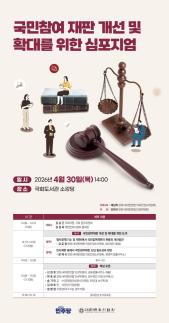 Korean Bar Association to Discuss Expanding Jury Trials, Including to Civil Cases The Korean Bar Association will hold a symposium to discuss ways to improve and expand the jury trial system, including whether to extend it beyond criminal cases to civil litigation to bolster public trust in the courts. The association said April 29 it will co-host the “Symposium on Improving and Expanding Jury Trials” with Democratic Party lawmaker Kim Nam-geun at 2 p.m. April 30 at the small auditorium of the National Assembly Library. Organizers said the event reflects concerns that a court system centered on career judges can diverge from the public’s common perspective. They cited a rise in dismissals without full review, allegations of preferential treatment for former officials, and insufficient checks on judges as factors undermining confidence in the judiciary. The symposium will review the performance and limits of jury trials now used in criminal cases and discuss how to improve the system at the prosecution and trial stages. It will also examine the need for, and specific ways to, expand the system to other areas such as civil trials. Attorney Kim Yu-jeong, a member of the association’s medical human rights subcommittee, will deliver the first presentation on the current status of jury trials in criminal prosecutions and trials and possible improvements. She is expected to point to structural limits including low application rates, broad court discretion to exclude cases, and the advisory nature of jury verdicts. Attorney Moon Jae-sik, also of the subcommittee, will present on the need for and approaches to introducing jury trials in civil cases and other proceedings. He plans to propose changes aimed at reflecting public views in collective disputes, punitive damages cases and lawsuits requiring specialized expertise. A panel discussion will include attorneys Shin Hyun-ho and Park Ho-gyun, Hanyang University professor Song Ki-min, Incheon Family Court Judge Kim Jae-ho, and Jeong Myeong-won, chief prosecutor of the Gyeongju branch of the Daegu District Prosecutors Office. The bar association said it expects the symposium to help build a framework for better incorporating public common sense into court procedures and to strengthen the judiciary’s democratic legitimacy and trust. * This article has been translated by AI. 2026-04-29 10:12:26
 -
 Appeals court convicts Kim Keon Hee in stock manipulation case, doubles prison term Kim Keon Hee, who was indicted on charges including manipulating Deutsch Motors stock and receiving valuables tied to the Unification Church, was sentenced on appeal to four years in prison. The term more than doubled from the first trial’s 20 months after the court reversed part of the stock-manipulation finding and expanded the scope of guilt on brokerage bribery charges. The Seoul High Court’s Criminal Division 15-2 (Judges Shin Jong-oh, Seong Eon-ju and Won Ik-seon) on April 28 sentenced Kim, who was detained and indicted, to four years in prison and a 50 million won fine for violations of the Capital Markets Act and the Political Funds Act, and for brokerage bribery under the Act on the Aggravated Punishment of Specific Crimes. The court also ordered the forfeiture of one Graff necklace and about 20.94 million won in additional collection. "She recognized her account could be used to manipulate prices" The appeals court, unlike the trial court, found part of the stock-manipulation charge proved. It cited that in October and November 2010 Kim provided Black Pearl Invest with an account holding 2 billion won and left trading to the firm, and that during that period 180,000 shares were sold at specific times and prices. Calling it a prearranged trade, the court said she "recognized and accepted that her account could be used to manipulate prices," and held her liable as a joint offender. The court also strengthened its ruling on the Unification Church-related brokerage bribery charge. While the trial court found guilt only in part, the appeals court found implied solicitation across the broader set of items, including a Chanel bag, and convicted her on all counts. It said there was a quid pro quo between the church’s requests for government cooperation and the provision of valuables, calling it a crime that "used the status of the president’s spouse." The court, however, upheld an acquittal on allegations involving free polling services linked to Myung Tae-kyun. It said the polls were provided to multiple people, not only Kim and her husband, making it difficult to treat them as a benefit attributable to a specific individual. It also found insufficient evidence to conclude that a nomination was promised in return for the polling. Court cites harm to "market fairness" and investor trust Explaining the heavier sentence, the court cited the seriousness of the crimes and Kim’s attitude. It said she provided large sums and an account and took part in price manipulation while refusing to acknowledge wrongdoing, adding that she "undermined the fairness of the stock market and investor trust." On brokerage bribery, it said her conduct "betrayed the public’s expectations." The court said mitigating factors included that she did not lead the price manipulation, her involvement was not lengthy, and she did not first demand the valuables. The ruling also tracked a shift in the special counsel’s approach on appeal. Prosecutors argued Kim was not a mere investor but a joint participant in the scheme, and emphasized implied quid pro quo rather than an explicit request in the brokerage bribery case. The court accepted those arguments, expanding the convictions and increasing the sentence. Kim’s side said immediately after sentencing that it would appeal to the Supreme Court. The case will now move to a final review, with key issues including whether she conspired in the stock manipulation and how broadly quid pro quo can be recognized in the brokerage bribery charge.* This article has been translated by AI. 2026-04-28 17:54:48
 -
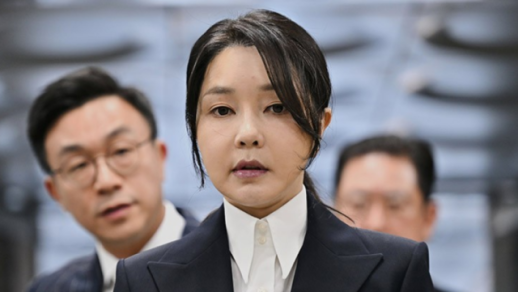 Appeals court sentences Kim Keon Hee to 4 years in prison in stock manipulation, graft case Kim Keon Hee, who was indicted over alleged Deutsche Motors stock manipulation and receiving valuables tied to the Unification Church, was sentenced on appeal to four years in prison. The Seoul High Court’s Criminal Division 15-2 on Monday sentenced Kim, who was indicted in custody, to four years in prison and a 50 million won fine for violations of the Capital Markets Act and the Political Funds Act, and for bribery for influence-peddling under the Act on the Aggravated Punishment of Specific Crimes. The court also ordered the forfeiture of one Graff necklace and about 20.94 million won in additional collection. The panel said the crimes were serious, citing damage to “fairness in the stock market and investor trust.” Unlike the first trial, the court found part of the Deutsche Motors stock manipulation charge proven. It said Kim provided a securities account containing 2 billion won and entrusted trading, and that she sold 180,000 shares at a specific time and price, recognizing her participation in price manipulation. On the Unification Church-related allegations, the court found the influence-peddling charge fully proven, going beyond the first trial’s partial guilty finding. It said Kim accepted money and valuables while recognizing an implicit request. However, as in the first trial, the court acquitted Kim of allegations tied to Myung Tae-kyun involving free polling services. The panel said the polls were provided to multiple people, making it difficult to view them as a property benefit. Kim’s lawyers said after the ruling that they intend to appeal to the Supreme Court. * This article has been translated by AI. 2026-04-28 17:45:58
 -
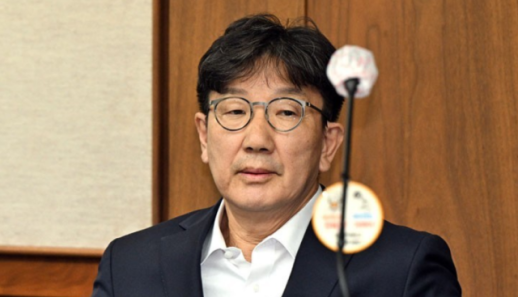 Court Upholds Rep. Kwon Seong-dong’s 2-Year Sentence for Illegal Political Funds A South Korean appeals court on Monday upheld a two-year prison sentence for People Power Party lawmaker Kwon Seong-dong for taking illegal political funds from figures linked to the Unification Church. The court rejected appeals by both Kwon and the special prosecutor, leaving the lower court ruling intact. The Seoul High Court’s Criminal Division 2-1 maintained the original sentence of two years in prison and forfeiture of 100 million won for violating the Political Funds Act. Kwon was indicted and detained on charges that in January 2022, ahead of the 20th presidential election, he received 100 million won from Yoon Young-ho, a former global headquarters chief of the Unification Church, along with requests for support for the group. The trial court found all charges proven and imposed the two-year term and forfeiture. In the appeal, the special prosecutor sought a four-year sentence. On the key dispute over admissibility, the appeals court said it was difficult to view the collection and use of evidence as illegal, rejecting the defense claim. It also dismissed the argument that derivative evidence based on illegally obtained material should be excluded, saying it could be used to prove the charges. The court also agreed with the first ruling on the credibility of Yoon’s statements, saying it was hard to conclude he made false claims to frame Kwon. Citing KakaoTalk messages and the political circumstances at the time, the court said Kwon’s influence continued. Even if he resigned from an election committee post, the court said it was a temporary step to ease internal party conflict and that the church side still approached him on the premise of his political clout. The court interpreted references in the chats to “Yongsan” as pointing to Yoon Suk Yeol, considering the situation surrounding the relocation of the presidential office at the time. In sentencing, the court strongly criticized the nature of the offense. It said receiving political funds can go beyond support for political activity and become a means for a specific religious group to gain access to state power, adding that entanglement between politics and religion can threaten the principle of separation of church and state and undermine core democratic values. The court said Kwon, a five-term lawmaker and prominent politician with constitutional responsibilities, accepted illegal funds, making the crime serious. It noted mitigating factors, including his long public service and lack of a criminal record, but concluded the original sentence was appropriate within the court’s discretion. Kwon has denied the allegations, saying he met for a meal but did not take money. He also argued key evidence was illegally obtained and that the case was not within the special prosecutor’s mandate, but the appeals court did not accept those claims. Yoon, who was also tried in the case, was sentenced the previous day in his own appeal to 18 months in prison. * This article has been translated by AI. 2026-04-28 13:18:23