
Journalist

Won Eun-mi
silverbeauty@ajunews.com
-
 Justice Ministry Wins First Pro-Japan Assets Recovery Suit, Court Rejects Statute of Limitations Claim South Korea’s Justice Ministry has won a lawsuit seeking to recover assets linked to a descendant of a pro-Japanese collaborator, in what it called the first such victory since a Supreme Court ruling that treated heirs’ statute-of-limitations defenses as an abuse of rights. The ministry said Thursday it won in full in a suit filed against the descendants of Lim Seon-jun, seeking the return of about 53 million won in unjust enrichment tied to proceeds from land sales. The Seoul Western District Court accepted all of the state’s claims, the ministry said, calling the ruling an important precedent for future recovery efforts. Lim was a figure who cooperated in the forced abdication of King Gojong and the signing of the Japan-Korea Agreement, and received a noble title from Japan. He was designated a pro-Japanese collaborator by the Presidential Committee for the Inspection of Collaborations for Japanese Imperialism. The ministry said it confirmed that Lim’s descendants sold eight inherited parcels of land in Yeoju, Gyeonggi province, between 1993 and 2000, and filed the lawsuit in January. The ministry said it will continue pursuing other pending cases to secure state victories in efforts to recover such assets. Justice Minister Jeong Seong-ho said, “Through thorough litigation, we will recover even a single won of pro-Japan assets to the very end. For a complete reckoning, we will also do our utmost to support legislation so the bill to re-enact the pro-Japan assets vesting law, now pending in the National Assembly, can pass swiftly.”* This article has been translated by AI. 2026-04-24 17:18:08
 -
 Prosecutors Seek 30 Years for Yoon Suk Yeol Over Alleged Pyongyang Drone Operation A special prosecutor on Thursday sought a 30-year prison term for Yoon Suk Yeol, accused of ordering drones sent into Pyongyang to create a pretext for declaring martial law on Dec. 3. Prosecutors argued the operation aimed to manufacture wartime conditions and was linked to the broader martial law case. The special counsel team investigating the alleged insurrection, led by Special Prosecutor Cho Eun-seok, asked the Seoul Central District Court to sentence Yoon to 30 years and former Defense Minister Kim Yong-hyeon to 25 years. The request came during closing arguments before the court’s Criminal Division 36, presided over by Judge Lee Jeong-yeop. Prosecutors described the case as an “anti-state, anti-people crime” in which the commander in chief and the defense minister allegedly tried to create wartime conditions on the Korean Peninsula to meet the requirements for declaring martial law. They said the actions caused real harm to national security, severely undermined military interests, and led to national confusion and a breakdown in discipline. They said Yoon’s role as commander in chief and alleged leadership of the acts was reflected in the sentencing request, while Kim’s involvement from planning through execution was also considered. Prosecutors said they also weighed the defendants’ conduct during the investigation and trial. A central issue is whether the “Pyongyang drone deployment” went beyond a military operation and amounted to an attempt to provoke a “North wind” incident to justify martial law. Prosecutors allege Yoon and others ordered multiple drone flights into Pyongyang around October 2024 to raise military tensions. They also argued that a drone crash led to the disclosure of operational and force-related military secrets, supporting an “aiding the enemy” charge. Under that offense, prosecutors said, a crime can be established even without collusion with an adversary if military interests are harmed or benefits are provided to an enemy state. Prosecutors said the case was a “preliminary-stage” offense connected to the martial law declaration. They said they set the requested terms in light of earlier sentencing requests in related cases, including the death penalty sought for Yoon on charges of leading an insurrection and life imprisonment sought for Kim on charges of playing a key role in an insurrection. In related cases, prosecutors have also sought heavy sentences, including 20 years for former Defense Security Command chief Yeo In-hyeong and five years for former Drone Operations Command chief Kim Yong-dae, requested on April 10. Thursday’s hearing was closed to the public due to military secrets, but the sentencing hearing is expected to be open under the Constitution. With closing arguments complete, attention is turning to the court’s judgment on whether the alleged pretext-building for martial law is established and whether the “aiding the enemy” charge applies.* This article has been translated by AI. 2026-04-24 15:36:21
 -
 South Korea Sets 1,714 Passers for 15th Bar Exam, Urges Absolute Grading for Electives South Korea’s Justice Ministry has finalized 1,714 successful candidates for the 15th bar exam and issued recommendations to overhaul how lawyers are selected and trained, including adopting absolute grading for elective subjects. The ministry said April 24 it set the pass list after deliberations by the bar exam management committee on April 23 and after reflecting opinions from the Supreme Court, the Korean Bar Association and the council representing law schools. Those who scored at least 889.11 points passed, for a total of 1,714. The number of passers was down 30 from a year earlier, when 1,744 passed. Of 3,364 test-takers, the pass rate was 50.95%. Measured against the law school admissions quota of 2,000, the pass rate was 85.70%. The first-time pass rate was 70.04%. Among examinees who used all five attempts allowed over five years, the cumulative pass rate was 88.43%. The ministry said detailed grading results and statistics will be posted on its website next month. The ministry said it also provided accommodations for 26 examinees with disabilities, including five with severe disabilities such as total blindness. Support included extended testing time, computers with voice assistance and dedicated proctors. The bar exam management committee also adopted broader reform recommendations as the law school system marks its 15th year, citing ongoing debate over the supply and demand of legal services and concerns about normalizing law school operations. The ministry said it will improve the selection and training system by considering changes in economic growth, population decline, shifts in legal demand and environmental changes such as artificial intelligence. On elective subjects, it recommended moving toward absolute grading, provided that a credit-completion system and achievement-based evaluation indicators are put in place, to address weaker links between education and testing and heavy concentration in certain subjects. The ministry said the recommendations aim to normalize law school education and build a training system that can respond to a changing legal environment.* This article has been translated by AI. 2026-04-24 14:48:20
 -
 Special counsel raids Joint Chiefs over alleged bid for second martial law deployment A special counsel team led by Kwon Chang-young, investigating unresolved questions after the 12·3 insurrection incident, launched its first compulsory investigation of the Joint Chiefs of Staff on Thursday, focusing on allegations of an attempted “second martial law.” The probe has gained urgency after new testimony suggested the military considered additional troop deployments even after the National Assembly passed a resolution demanding martial law be lifted. The team sent prosecutors and investigators to the Joint Chiefs headquarters in Seoul’s Yongsan district and to the homes of key suspects to conduct searches and seizures. Investigators are seeking to reconstruct command and reporting lines and how troops were managed before and after the martial law declaration. According to reports, the warrant lists four Joint Chiefs figures as suspects on charges of being key participants in an insurrection: former chairman Kim Myung-soo, former vice chairman Jeong Jin-pal, former Military Support Command chief Kang Dong-gil, and former operations chief Lee Seung-oh. The case is the special counsel’s “Case No. 1” opened by recognition. At the center of the investigation is whether additional forces were pursued after the Assembly approved the resolution. The special counsel said it recently obtained statements from current and former Joint Chiefs officials that “after the resolution passed, and before a Cabinet meeting voted to lift martial law, there was a request to the Joint Chiefs for additional troop deployments.” Investigators also reportedly detected signs that some units were asked to check whether deployments were possible. If confirmed, the findings could support allegations that Yoon Suk Yeol and others sought to keep martial law in place after the Assembly vote or to attempt a “second martial law.” A first-instance court previously recognized that Yoon instructed former Capital Defense Command chief Lee Jin-woo to the effect that “even if the resolution passes, you can declare martial law two or three times.” The special counsel is also focusing on the Joint Chiefs leadership’s role, which earlier investigators did not pursue in depth. A previous special counsel on the insurrection did not find concrete evidence of the Joint Chiefs’ involvement and effectively removed Kim and others from the investigative focus. The new testimony and indications of troop-deployment reviews could change that assessment. Investigators also reportedly obtained a statement that Kim, at a Cabinet meeting, asked whether a conclusion different from the Assembly’s could be reached. Kim is also accused of issuing a fragmentary order to the Special Warfare Command and the Capital Defense Command to “prioritize martial law duties.” At the same time, statements have also surfaced that Kim refused an actual request for additional troop deployments. The special counsel said it needs to determine whether orders were given and who bears responsibility, citing indications the Joint Chiefs checked troop availability, including rear-area units. After analyzing seized materials, the special counsel plans to summon Kim and other related figures for questioning in sequence. The raids are expected to sharpen scrutiny of the military leadership’s actions during martial law and whether a “second martial law” was attempted.* This article has been translated by AI. 2026-04-24 14:06:23
 -
 Justice Ministry Releases Official Stats on Foreign Residents’ Moves and Inflows The Justice Ministry on Thursday released new official statistics that track where foreign residents in South Korea move and how many newly enter or leave the country. The ministry said two datasets — “foreign residents’ domestic movement statistics” and “foreign residents’ new inflow and outflow statistics” — were newly designated as nationally approved statistics after review by the National Data Policy Committee. Nationally approved statistics are government-certified data intended to ensure credibility and to serve as basic material for policy planning, the ministry said. The domestic movement statistics compile quarterly figures on interregional moves, such as move-ins and move-outs, using address-change reports filed by foreign residents, including ethnic Koreans. The inflow and outflow statistics compile monthly totals of new foreign registrations and departures after registration cancellations, allowing officials to track changes in the foreign resident population and the scale of inflows. “The new statistics were prepared to reflect the growing number of foreign residents in South Korea and rising interest in immigration policy,” the ministry said. As of last year, about 2.78 million foreign residents lived in South Korea, accounting for 5.4% of the total population. The ministry said the data will be used as baseline material to estimate an appropriate level of foreign inflows, advance region-based immigration and border policies, and help local governments analyze demand related to foreign residents. Justice Minister Jeong Seong-ho said, “To make immigration administration more transparent, we will actively develop and open new statistics and continue to pursue immigration policy based on data.”* This article has been translated by AI. 2026-04-24 10:36:18
 -
 Jeonju Prosecutors Office Chief Lee Jeong-ryeol Tops New Asset Disclosures at 8.77 Billion Won Three senior prosecutors ranked first through third in assets among 92 newly disclosed senior public officials this year. According to the Government Public Officials Ethics Committee’s ad hoc asset disclosure released on the 23rd, Jeonju District Prosecutors Office Chief Lee Jeong-ryeol reported the largest total, 8.773 billion won, among incumbents newly subject to disclosure due to status changes in January and February. Lee reported 4.46 billion won in land owned by him and his spouse, 2.331 billion won in buildings including an apartment and an officetel in Seoul’s Seocho District, and 2.007 billion won in deposits. Daegu High Prosecutors Office Deputy Chief Prosecutor Cho Ara, a prosecutor general-level official, ranked second with 7.095 billion won. Cho reported 2.033 billion won in real estate including an apartment jointly owned with her spouse, 4.479 billion won in deposits, and 508 million won in stocks. Supreme Prosecutors’ Office Director of Trial and Litigation Ahn Seong-hui, also a prosecutor general-level official, ranked third with 6.642 billion won. Ahn reported 4.895 billion won in real estate, including a factory and an apartment owned by his spouse, and 2.405 billion won in private loans receivable. Other disclosures included 5.002 billion won reported by Jang Hye-young, director of the Supreme Prosecutors’ Office’s Scientific Investigation Division, and 1.648 billion won reported by Jeong Gwang-su, deputy chief prosecutor at the Daejeon High Prosecutors Office. Separately, Hong Ik-pyo, senior presidential secretary for political affairs at Cheong Wa Dae, reported total assets of 6.07835 billion won, including about 3.3 billion won in unlisted shares held in his spouse’s name. Hong’s assets were disclosed for the first time after his appointment in January. Much of Hong’s reported wealth was in securities, including 3.32251 billion won in unlisted shares of an interior design company run by his spouse and 752.93 million won in family-held deposits. He jointly owns an apartment in Seoul’s Seongdong District valued at 985 million won with his spouse. The total value of building-related rights, including a jeonse deposit right for an apartment in Anyang, Gyeonggi Province, and jeonse deposit rights for an officetel and an apartment in Seoul’s Seocho District, was reported at 2.9305 billion won. 2026-04-24 10:21:18
 -
 South Korea Passes Bills to Tighten Oversight of High-Risk Sex Offenders, Aid Illegal Lending Victims South Korea’s National Assembly passed revisions aimed at tightening oversight of high-risk sex offenders and strengthening protections for victims of illegal private lending, the Justice Ministry said. According to the ministry on the 23rd, amendments to the law governing electronic monitoring cleared the Assembly’s plenary session that day. The changes expand the scope of cases eligible for one-on-one supervision by a dedicated probation officer for high-risk sexual violence offenders. Previously, such dedicated supervision was allowed only when the victim was under 19 and the offender was deemed at high risk of reoffending. Under the revision, the measure will apply to high-risk sexual violence offenders subject to electronic monitoring regardless of the victim’s age, enabling closer oversight, the ministry said. The ministry said it expects the change to improve prevention by building a system that selects and intensively manages those at highest risk of reoffending. Lawmakers also passed amendments to the Act on Confiscation of Criminal Proceeds from Corruption Crimes. The revision adds illegal private lending offenses to the list of crimes for which illicit profits can be recovered and returned to victims. Current law allows confiscation or collection of criminal proceeds and their return to victims only for certain fraud-related crimes — including criminal organizations, illegal fundraising schemes, pyramid schemes and voice phishing — as well as embezzlement and breach of trust. Under the revision, proceeds from violations of the Money Lending Business Act, including charging interest above the legal limit or profits obtained by illegal private lenders, will also be eligible for return. The revision also creates a legal basis for the state to confiscate or collect criminal proceeds and return them to victims when victims have difficulty seeking repayment on their own, the ministry said, adding it expects the change to make recovery more effective. Justice Minister Jeong Seong-ho said the ministry will "continue to improve the system so that management and supervision of violent crime are strengthened, and recovery of criminal proceeds and victim restitution are carried out effectively."* This article has been translated by AI. 2026-04-23 17:10:31
 -
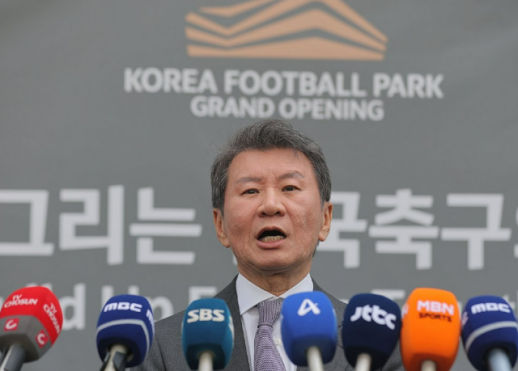 Court Upholds Culture Ministry’s Call for Heavy Sanctions Against KFA Chief Chung Mong-gyu A South Korean court ruled that the Ministry of Culture, Sports and Tourism acted lawfully in ordering the Korea Football Association to seek heavy disciplinary action against its president, Chung Mong-gyu. The Seoul Administrative Court’s Administrative Division 5, led by Presiding Judge Lee Jeong-won, ruled Thursday against the association in its lawsuit seeking to overturn the ministry’s notice of special-audit results and related corrective demands. The court said that while some findings may have been inappropriate, that alone did not make the ministry’s corrective demands unjust or illegal. It added that the level of disciplinary action requested fell within the ministry’s discretionary authority. The court also said the association is not unconditionally required under the Public Audit Act to comply with the ministry’s demands. If the association does not comply, the ministry may conduct another audit, but it has no direct means to impose discipline or force implementation, the court said. In November 2024, the ministry announced the results of a special audit of the association and demanded disciplinary action of at least a suspension of qualifications against Chung and other key figures. The audit said it confirmed 27 cases of illegal or improper handling of 업무, including problems in the process of appointing the national team’s coaching staff. The ministry launched the special audit in July that year after controversy over alleged unfairness surrounding the appointment of Hong Myung-bo as head coach of the national team. At the time, the ministry demanded disciplinary action of at least a suspension of qualifications against Chung, then full-time vice president Kim Jeong-bae and Technical Director Lee Im-saeng, citing responsibility for poor institutional management. It also ordered the association to report back within one month. The association sought reconsideration, but the ministry rejected the request. The association then filed suit to cancel the ministry’s action and also sought a suspension of enforcement. An association official said the ministry sought disciplinary action against nearly 20 staff members and executives at the roughly 100-person organization, and that it would be difficult to accept all of the demands. In February last year, the court granted the request to suspend enforcement, allowing Chung to run in the next association presidential election and win. The court said then there was an urgent need to prevent irreparable harm to the association from enforcement of the ministry’s action, and that a suspension was unlikely to significantly harm the public interest. That decision was upheld in September last year by the Supreme Court on a re-appeal. The ministry appealed, but the Seoul High Court reached the same conclusion in May that year, and the Supreme Court later finalized it. With the association losing the main lawsuit, the ministry’s disciplinary-action demand against Chung has regained effect. Chung won a fourth consecutive term in February last year, receiving 156 of 182 valid votes in the election for the 55th KFA president.* This article has been translated by AI. 2026-04-23 15:57:47
 -
 Prosecutors Indict 4 Corn Syrup Makers, 25 Employees in $10B Price-Fixing Case Prosecutors said they uncovered long-running price-fixing in South Korea’s corn syrup industry, a market they said generates sales in the tens of trillions of won, and indicted dozens of company officials. Investigators said the alleged collusion extended beyond the main product to byproducts, forming what they described as an organized scheme. The Seoul Central District Prosecutors Office Fair Trade Investigation Division, led by Chief Prosecutor Na Hui-seok, said on the 23rd it indicted four manufacturers and 25 executives and employees without detention for alleged violations of the Fair Trade Act. Prosecutors said the defendants are accused of agreeing in advance on when and how much to raise prices for corn syrup and related byproducts from July 2017 through October last year, restricting competition. The suspected collusion involved about 10.152 trillion won in transactions, prosecutors said. The case is notable, prosecutors said, because the companies allegedly aligned prices not only for corn syrup but also for byproducts. They said they view it as “structural collusion,” alleging that firms shared information and reached prior agreements across the process, from buying corn to setting product prices. Prosecutors said the companies moved quickly to raise prices when raw material costs rose, but limited price cuts when costs fell, repeatedly coordinating the timing and level of increases in advance. They said consumers bore higher costs: During the alleged collusion period, prices of major corn syrup items rose by as much as 73.4% compared with before the scheme, exceeding the consumer inflation rate. Prosecutors also said the four companies’ sales increased by an average of about 24.5% during the period, indicating that the price hikes were reflected in business results. Investigators said they identified how the alleged scheme operated: Sales departments shared pricing information, coordinated responses by customer, and effectively ran a joint pricing policy. They added that byproduct prices generated during corn syrup production also appeared to have been fixed in tandem with corn syrup prices, limiting price competition across the market for years. “Through this investigation, we identified the reality of collusion across the corn syrup industry,” prosecutors said, adding they will continue to respond strictly to price-fixing in everyday goods that affect household finances.* This article has been translated by AI. 2026-04-23 14:30:27
 -
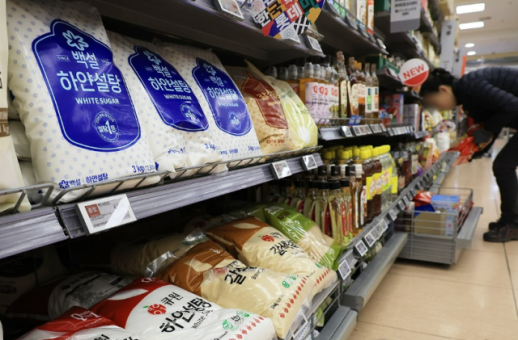 CJ CheilJedang, Samyang executives get suspended prison terms in $3B sugar price-fixing case A Seoul court on Wednesday convicted current and former executives and employees of CJ CheilJedang and Samyang of fixing sugar prices in a case prosecutors valued at about 3 trillion won. A judge handed suspended prison terms to top executives and fined each company 200 million won. Judge Ryu Ji-mi of the Seoul Central District Court sentenced Kim, a former CJ CheilJedang Food Korea chief, and Choi, a former Samyang CEO, to 2 1/2 years in prison, suspended for three years, and fined each 100 million won for violating the Fair Trade Act. Nine other employees from the two companies also received suspended prison terms and fines. Under joint-penalty provisions, the court fined CJ CheilJedang and Samyang 200 million won each. "Based on the defendants’ confessions and corroborating evidence, guilt is recognized," the court said, adding that the conduct "undermined the basic purpose of the law and distorted market order." The judge said that even when collusion occurs in business-to-business transactions, "the ultimate harm can be passed on to consumers" and should not be treated lightly. The court also noted that the companies had previously been investigated by the Fair Trade Commission in a flour price-fixing case and had received relief or reduced penalties through a leniency program, yet similar conduct was repeated. Still, the judge said it was difficult to conclude the companies reaped excessive profits, citing the public nature of international raw sugar prices, the bargaining power of large buyers and price trends for raw sugar. The court also considered that the defendants admitted wrongdoing and expressed remorse, and that some responsible parties had been detained for more than five months. Prosecutors said the defendants agreed in advance on the timing and size of sugar price increases from February 2021 to April last year, limiting competition. Prosecutors put the value of the collusion at about 3.2715 trillion won. Investigators said the companies quickly reflected increases in raw sugar costs in product prices, but limited price cuts when raw sugar prices fell. During the period, sugar prices rose as much as 66.7%, and even after raw sugar prices declined, prices remained about 55.6% higher than before the collusion. At closing arguments, prosecutors sought three years in prison and a 100 million won fine for Kim, and 2 1/2 years in prison and a 70 million won fine for Choi. * This article has been translated by AI. 2026-04-23 11:19:23