

Journalist

SONG SEUNG HYUN
songsh@ajunews.com
-
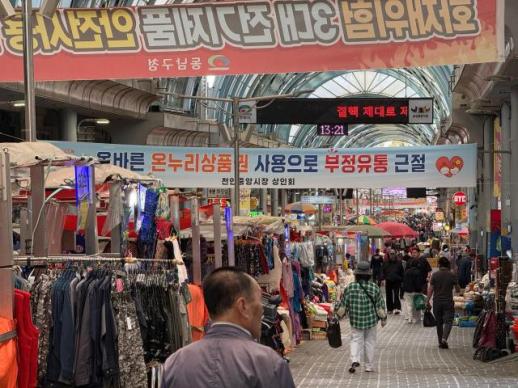 South Chungcheong Governor’s Race Tightens as Voters Split Between Kim Tae-heum and Park Soo-hyun "They’re both about the same, but we should still pick Kim Tae-heum for what he’s done for the province." "Park Soo-hyun is different from other lawmakers. I’m voting for him no matter what." In the Chungcheong region, long seen as a swing area in national elections, voters in South Chungcheong Province were split when Aju News spoke with residents on May 6 in places including Gongju and Cheonan. In Cheonan, more residents interviewed said they planned to vote for Gov. Kim Tae-heum, who is seeking re-election in the June 3 local elections. A 69-year-old taxi operator surnamed Choi praised Kim’s performance over the past four years but said he worried the Democratic Party could become too dominant nationwide. "Gov. Kim did a good job," he said. "I think I’m leaning toward him again." He added, "It feels like the whole country is turning blue. I hope the Democratic Party won’t conduct legislative activities too unilaterally." At Cheonan Central Market, Choi Seung-il, 87, said the two candidates were similar but gave Kim a slight edge. "Kim is ahead by one point," he said, adding he would back Kim again as he did in the previous election. Another market shopper, Kim Dong-wook, 73, said he opposed fiscal support policies such as livelihood support payments and fuel-linked subsidies being pursued by the Democratic Party government. "The Democratic Party has handed out too much money this time," he said. "If this continues, young people will have a hard time living." He said that led him to decide to vote for Kim. In Gongju, which was also Park Soo-hyun’s constituency, support among those interviewed leaned heavily toward Park, the Democratic Party’s candidate for governor. A worker in his 50s, surnamed Ko, said he planned to support Park and described it as a punitive vote against the People Power Party, which he accused of "insurrection" and wrongdoing. A voter in his 30s, surnamed Jang, said he would vote for Park because he supports the Democratic Party. In Gongju, some residents cited calls to punish the People Power Party over former President Yoon Suk Yeol’s martial law declaration, along with strong support for the Lee Jae-myung government. Ko said he voted for the People Power Party in the last local elections but would back the Democratic Party this time. "If the People Power Party, which shows no reflection over acts of insurrection, loses overwhelmingly, they’ll learn the people can be frightening," he said. He also praised the Lee government, citing what he called bold diplomacy with the United States, practical diplomacy including North Korea policy, and a third round of commercial law revisions that he said helped normalize the stock market. Jang also criticized what he called acts of insurrection that caused national turmoil. He said he liked the government’s "practical diplomacy" toward the United States and North Korea and said he expected reforms, including strong punishment for elites such as politicians and the media. Some residents also voiced doubts about Park’s prospects because of anti-Democratic Party sentiment. A 69-year-old taxi driver, Park Jong-young, said Gongju’s mood favored Park but added, "There’s a lot of backlash against the Democratic Party itself, so we don’t know what will happen." Still, he said, "Park is different from other lawmakers. I’m voting for him no matter what." Others said they would not support either candidate and might skip voting. A woman in her 60s who works at Cheonan’s Yeokjeon Market, surnamed Kim, said she had supported the People Power Party but was put off by what she called the recent conduct of party leader Jang Dong-hyeok. "This year I won’t vote," she said. She added that merchants want redevelopment and said she hoped any candidate would pledge it as a campaign promise. Across the province, residents commonly called for stronger industrial infrastructure, better jobs and expanded transportation networks. Ko said he hoped South Chungcheong would become more prosperous by attracting industries that fit local characteristics and by improving construction and transportation infrastructure. Jang said he wanted industrial investment and quality jobs for residents. Park said that, as someone in the transportation business, he hoped for expanded transport infrastructure. Park campaigned in person at Gongju Sanseong Market starting in the morning. Accompanied by Democratic Party candidates for mayor, provincial council and city council, he greeted merchants and shoppers one by one, shaking hands and saying, "I will definitely come back as governor." Some merchants and visitors responded, "Of course we’ll elect Park Soo-hyun as governor. Go, Park Soo-hyun!" Park said he visited the market because he plans to tour all cities in South Chungcheong as he begins full-scale campaigning, and he wanted his first stop to be Gongju because of his close ties to the city. He said he would work to address hardships raised by residents and merchants. * This article has been translated by AI. 2026-05-06 16:21:22
 -
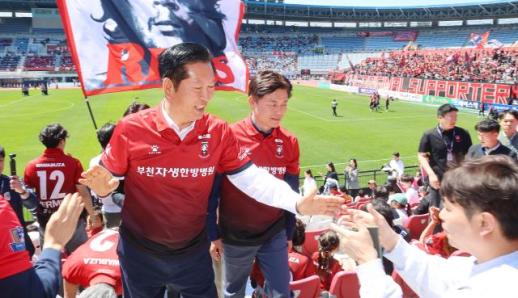 Jung Cheong-rae says timing of special counsel bill will follow public, party input Jung Cheong-rae, leader of the Democratic Party, said Monday the party will decide when to move a bill calling for a special counsel to probe alleged manipulated investigations and indictments under the Yoon Suk Yeol government after gathering views from the public, party members and lawmakers. Jung spoke to reporters after a visit to Dongducheon Big Market in Dongducheon, Gyeonggi Province. He said the party should coordinate with the presidential office, noting that on May 4 President Lee Jae-myung asked the party to determine the timing after collecting public opinion and holding deliberations. “Since the presidential office has stated its position, the party will also decide what to do by collecting lawmakers’ views through a caucus meeting and asking party members,” Jung said. At the same time, Jung reiterated his push to hold what he called “political prosecutors” accountable for actions taken under the Yoon administration and said Lee should be relieved through a special counsel probe. “If, under the Yoon Suk Yeol government, they were obsessed with taking down political opponents and suppressing the opposition and tried to indict and punish people with falsehoods or fabrication, that itself is a crime,” Jung said. He added that the Ssangbangwool remittances-to-North-Korea case and the Daejang-dong case involving Lee were “clearly” fabricated indictments and said “the victim should, of course, be given relief.”* This article has been translated by AI. 2026-05-05 16:00:13
 -
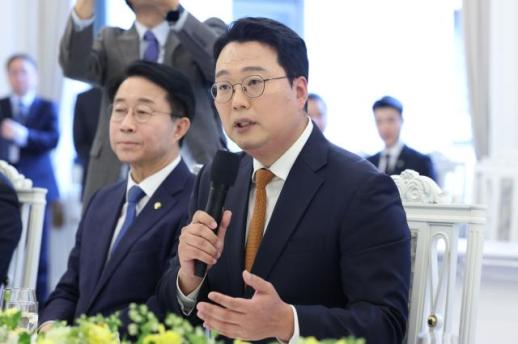 Reform Party floor leader proposes bill to exempt children's play noise from regulation Cheon Ha-ram, floor leader of the Reform Party, said Monday he has introduced amendments to the Noise and Vibration Control Act and the Minor Offenses Act that would, in principle, exclude sounds generated during child care, education and play from being treated as regulated noise. Cheon said the bills would exempt sounds from activities at day care centers, kindergartens, schools and children’s playgrounds from the scope of noise under the current Noise and Vibration Control Act and from “nearby disturbance” provisions under the Minor Offenses Act. “Children’s voices are not noise,” Cheon said. “Schools should not repeatedly end up closing their playgrounds because they feel pressured by complaints and reports.” He said lawmakers from five parties agreed to pursue legal safeguards so children can “run and laugh freely” on Children’s Day. Cheon previously released analysis saying there were 350 reports to the 112 emergency line related to school sports days in 2025, and that 345 of those led to police being dispatched. He also raised the issue during a National Assembly question-and-answer session last month on education, social and cultural affairs, pressing Prime Minister Kim Min-seok, Interior and Safety Minister Yoon Ho-jung and Education Minister Choi Gyo-jin about noise complaints at schools and the need for outdoor activities for children and teenagers. At the time, Cheon said a small number of people who file excessive complaints were depriving children of the right to play. He questioned whether it was appropriate for police patrol cars to be sent to schools when noise-related reports are filed during sports days.* This article has been translated by AI. 2026-05-05 12:00:16
 -
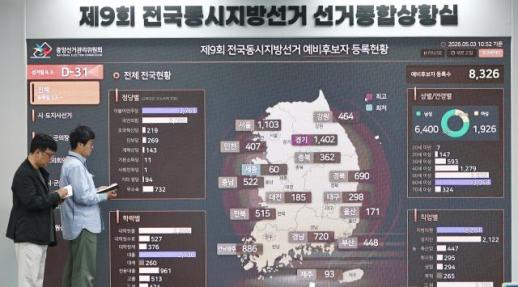 South Korea’s June 3 Local Elections Set as Major Parties Finalize Governor Matchups With about a month left until the June 3 local elections, the People Power Party completed the lineup for all 16 metropolitan mayors and governors after selecting Supreme Council member Yang Hyang-ja on May 2 as its candidate for Gyeonggi governor. With both major parties focused on winning, an all-out campaign is expected in the remaining weeks. Seoul, often seen as the marquee race, will pit Democratic Party candidate Jeong Won-oh against People Power Party candidate Oh Se-hoon. Jeong is highlighting his administrative experience as a three-term district chief, while Oh is emphasizing stability as a four-term mayor. Kim Jeong-cheol of the Reform Party and Kwon Young-kuk of the Justice Party are also running for Seoul mayor. Gyeonggi, another top battleground where a first female metropolitan leader is considered likely, will feature Democratic Party candidate Choo Mi-ae against People Power Party candidate Yang. Choo is a six-term lawmaker and chair of the National Assembly Legislation and Judiciary Committee. Yang is known as Samsung Electronics’ first female executive who rose from a high school graduate track. Attention is also on whether conservatives can unify behind a single candidate in Gyeonggi. Jo Eung-cheon, who initially mentioned unity soon after entering the race as a Reform Party candidate, appeared to shift his stance at an emergency news conference on May 3, saying, “We must not take the tiresome cartel structure of the two major parties for granted.” Whether a unity deal happens remains uncertain. Other races drawing focus include Daegu and Busan. In Daegu, Democratic Party candidate Kim Boo-kyum, who has served as a Cabinet member, will face People Power Party candidate Choo Kyung-ho. Kim, who has served as prime minister and as a four-term lawmaker, also won a seat in Daegu’s Suseong-gap district in the 20th general election. Choo has served as deputy prime minister for economic affairs, as a three-term lawmaker and as People Power Party floor leader. In Busan, Democratic Party candidate Jeon Jae-soo, who served as the first oceans and fisheries minister in the Lee Jae-myung government, will run against People Power Party candidate Park Hyung-joon, who served as senior presidential secretary for political affairs in the Lee Myung-bak government and won reelection as Busan mayor. Reform Party candidate Jeong I-han is also in the race, seeking to become the youngest mayor. In Incheon, Democratic Party candidate Park Chan-dae will face People Power Party candidate Yoo Jeong-bok. Park is considered a leading pro-Lee Jae-myung figure after serving as Democratic Party floor leader when Lee was party leader. Yoo won the Incheon mayoral race in the 2014 and 2022 local elections. In Daejeon, Democratic Party candidate Heo Tae-jeong and People Power Party candidate Lee Jang-woo, both current or former Daejeon mayors, will square off. Heo previously served as Yuseong district chief and became Daejeon mayor in 2018. Lee is the incumbent mayor and previously served two terms as a lawmaker representing Daejeon’s Dong district. In Sejong, Democratic Party candidate Cho Sang-ho, a former deputy director of the Democratic Research Institute, will face incumbent Sejong Mayor Choi Min-ho of the People Power Party. In South Chungcheong and North Chungcheong provinces, Democratic Party candidates Park Soo-hyun and Shin Yong-han will run against People Power Party candidates Kim Tae-heum and Kim Young-hwan, respectively. In Gangwon Province, the Democratic Party nominated Woo Sang-ho, its first nominee in the party and a former senior presidential secretary for political affairs in the Lee Jae-myung government. The People Power Party nominated two-term lawmaker and incumbent Gangwon Gov. Kim Jin-tae. In the Yeongnam region, often viewed as a conservative stronghold, North Gyeongsang Province will see Democratic Party candidate Oh Jung-gi, who ran in the 2018 gubernatorial race, face People Power Party candidate Lee Cheol-woo, a two-term governor and three-term lawmaker. In South Gyeongsang Province, Democratic Party candidate Kim Kyung-soo, elected in the 2018 local elections, will run against incumbent People Power Party Gov. Park Wan-soo, elected in 2022. In Ulsan, Democratic Party candidate Kim Sang-wook, who moved from the People Power Party to the Democratic Party, will face People Power Party candidate Kim Doo-gyeom, who is seeking reelection. Kim Sang-wook, along with Jinbo Party candidate Kim Jong-hoon and Cho Kuk Innovation Party candidate Hwang Myung-pil, has agreed in principle to pursue a unified candidacy by May 13 and is discussing details. For the first-ever elected integrated mayor of the Jeonnam-Gwangju merged city, the Democratic Party nominated Min Hyung-bae, a former Gwangsan district chief and a two-term lawmaker. The People Power Party nominated Lee Jeong-hyun, a three-term lawmaker from a Honam constituency and chair of the party’s nomination committee for this local election. In North Jeolla and Jeju, Democratic Party candidates Lee Won-taek, a two-term lawmaker previously linked to allegations of paying for others’ meal expenses, and Wi Seong-gon, a three-term lawmaker, will face People Power Party candidates Yang Jeong-moo and Moon Seong-yoo, who previously led the Korea Asset Management Corp., respectively. 2026-05-03 15:18:28
 -
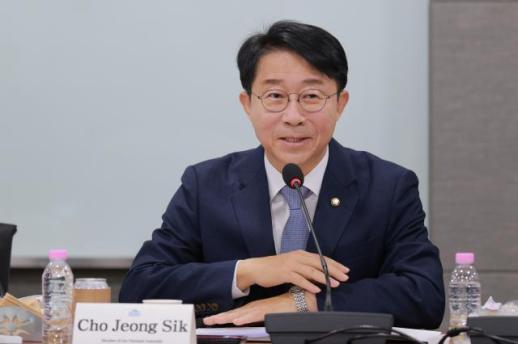 Democratic Party lawmaker Cho Jung-sik resigns as presidential aide to seek National Assembly speaker post Cho Jung-sik, a Democratic Party lawmaker running in the race for speaker of the National Assembly in the second half of the 22nd Assembly, said Saturday he will resign as presidential special adviser for political affairs. In a Facebook post, Cho said he was stepping down from the post under President Lee Jae-myung to pursue what he called a “bolder path,” pledging to move toward a “people’s sovereignty National Assembly” and a “livelihood-focused National Assembly.” Cho said that since being appointed in December, he worked to strengthen communication and serve as a bridge linking the party, government and presidential office. “Over the past four months since my appointment, I worked with a heavy sense of responsibility as a ‘bridge of communication’ connecting the party, government and presidential office as one,” Cho wrote. He said he coordinated key state affairs so the ruling party could move “in one breath” for the success of the Lee administration. Cho added that he would devote himself to his public duty with the “proven stability” of a six-term lawmaker. Lee responded in a comment, saying, “You worked very hard. You were always with us, and I sincerely thank you.” Cho, a six-term lawmaker, is expected to register Sunday as a candidate in the Democratic Party’s primary for National Assembly speaker. The party plans to pick its speaker nominee through a two-day vote of dues-paying party members starting May 11 and an in-person vote by lawmakers on May 13.* This article has been translated by AI. 2026-05-03 11:35:41
 -
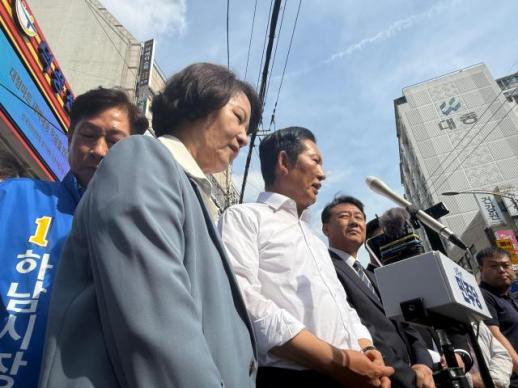 Democratic Party leader Jeong Cheong-rae campaigns in Hanam for Choo Mi-ae and Lee Kwang-jae Jeong Cheong-rae, leader of the Democratic Party, visited Hanam in Gyeonggi Province on April 29 to rally support for Choo Mi-ae, the party’s candidate for Gyeonggi governor, and Lee Kwang-jae, who is running in the Hanam-gap by-election. Jeong joined Choo and Lee that afternoon at Hanam’s Deokpung traditional market to begin campaign activities. Their first stop was a rice-cake shop, where Jeong fed rice cakes to Choo, Lee, Rep. Kim Yong-man, and Kang Byeong-deok, the Democratic Party’s Hanam mayoral candidate, among others. They then visited dried-goods and produce shops. Introducing Choo, Lee and Kang, Jeong said, “I will work for Hanam. Choo has come back bigger, and Lee has come to become bigger.” Jeong also highlighted the achievements of President Lee Jae-myung. When a produce-shop owner thanked him, saying, “Thank you for doing well. You’ve worked hard,” Jeong replied, “The president is working hard.” Some market users objected to the visit. A male vendor complained to security guards protecting Jeong, saying, “What are you doing in someone else’s market? The guards are pushing people.” A middle-aged woman, upset by the congestion caused by the Democratic Party group, scolded Jeong, saying, “Why are you doing this here? Let me shop.”* This article has been translated by AI. 2026-04-29 16:43:35
 -
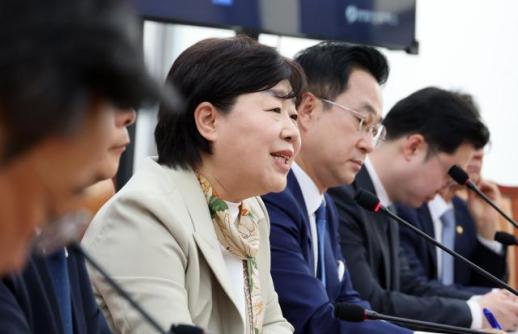 Ruling Party Panel Says Probe Found Prosecutorial Misconduct in Alleged Fabricated Indictments Democratic Party lawmakers serving on a National Assembly special committee investigating allegations of politically motivated, fabricated indictments under the Yoon Suk Yeol administration reported on their work April 29, a day before the panel is set to end its activities. They also said they would push for a special prosecutor to pursue accountability. At a morning news briefing at the National Assembly, the committee said its probe had brought to light what it described as prosecutorial fabrication and other illegal conduct, and it outlined what it called key findings so far. Committee Chair Seo Young-kyo said a review of investigative processes in the Ssangbangwool North Korea remittance case and the Daejang-dong case showed “fabrication” and “illegal acts.” She said the highlight of the April 28 hearing was testimony from former Ssangbangwool Chairman Kim Seong-tae, who appeared and said, “I have never met or even seen Lee Jae-myung.” Seo said the Yoon Suk Yeol administration had mobilized state power to try to remove the organizations of President Lee Jae-myung and former President Moon Jae-in. She said matters that had proceeded secretly within the prosecution were revealed through the parliamentary probe, and pledged to keep working to uncover remaining facts. Rep. Lee Ju-hee described what she said the committee confirmed through its work, including what she called a pattern of “fabricated indictments” in which investigators select targets and use coercion and inducements to produce false statements. She added that cases examined by the committee showed alleged fabrication and concealment of evidence, contamination and bargaining over testimony, and clear violations of constitutional basic rights. Lee said the probe showed the prosecution’s ability to police itself had reached its limits, arguing that a special prosecutor is needed. She said the Democratic Party would use a special prosecutor to determine the full scope of alleged fabricated indictments and bring those responsible before a court of judgment. The committee also said it plans to file complaints against witnesses and participants it says committed perjury during hearings and the investigation. Rep. Lee Geon-tae, the committee’s secretary, said he plans to hold a briefing at 11 a.m. April 30 to explain planned perjury complaints. He said committee members are still sorting the cases and that details would be provided April 30.* This article has been translated by AI. 2026-04-29 11:54:21
 -
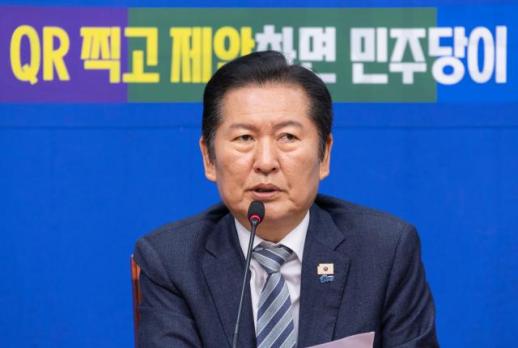 Jung Cheong-rae says Democrats will push special prosecutor after probe panel ends Jung Cheong-rae, leader of the Democratic Party, said a National Assembly fact-finding panel is exposing what he called prosecutors’ fabricated indictments tied to the Yoon Suk Yeol administration, and vowed to seek a special prosecutor as soon as the panel’s work ends. Speaking at a party leadership meeting at the Assembly on Tuesday, Jung said hearings by the special committee had “opened wide the door to the truth” that the Ssangbangwool North Korea remittance case was manipulated. He said the panel has issued three reports and held four hearings that revealed patterns of what he described as fabricated prosecutions. Jung said evidence including recordings, Excel files and alleged manipulation of statements has emerged, and that the committee confirmed “clear” signs of direction or involvement at the administration level across the cases it reviewed. He said he was “shaking with anger” at what he called state violence aimed at a single person and actions that trampled democracy, the rule of law and the constitutional order. Saying the committee’s work has brought the public closer to the truth, Jung said the full scope of the allegations must be uncovered and those responsible punished. He said the party would, as promised, move quickly to launch a special prosecutor immediately after the committee wraps up to “reveal all the truth” and bring those responsible before the courts. Jung also criticized the outcome of an appeals court ruling involving first lady Kim Keon Hee, who on April 28 was sentenced to four years in prison and fined 50 million won. He said the long-running Deutsche Motors case had resulted in a guilty verdict, but called the decision “far removed” from public sentiment. He said allegations that Kim improperly intervened in the People Power Party’s nomination process were not recognized as any offense. He also said he could not accept the appeals court’s decision to consider sentencing factors such as a first offense, age and health. Jung noted that a second-instance verdict was scheduled Tuesday in Yoon’s case on charges of obstructing the execution of official duties. Calling it the first ruling since a special court division focused on insurrection cases was formed, he said he hoped for a decision that would restore the rule of law. He added that he would seek to fully uncover what he called the truth about “insurrection, foreign collusion and state-affairs meddling” by Yoon and Kim and ensure accountability in court.* This article has been translated by AI. 2026-04-29 10:08:41
 -
 South Korea Assembly Passes Election Law to Add 3 Incheon District Council Seats Ruling and opposition parties on the 28th approved revisions to the Public Official Election Act to adjust the number of basic local council members in Incheon ahead of an administrative system overhaul. Under the bill, Incheon’s total will increase by three seats, to 128 from 125. The National Assembly passed the measure at an afternoon plenary session, revising the number of basic local council seats for the June 3 local elections. Of 246 lawmakers present, 234 voted in favor and 12 abstained. Rep. Bae Jun-young of the People Power Party, explaining the proposal, said the administrative overhaul set to take effect in July revealed that some districts would lose seats under current constituency lines. He said the outcome failed to reflect population growth and changes from the reorganization. Bae said the Assembly’s special committee on political reform concluded additional seats were needed to ensure resident representation and equal voting value. He said the plan would also raise the nationwide total number of district and county council members from 3,003 to 3,006. The bill is a follow-up to a version introduced and processed at a plenary session on the 18th, after lawmakers argued the earlier draft did not fully reflect the administrative overhaul that adds Yeongjong-gu in Incheon and that the council-seat count needed adjustment. Also at the plenary session, the People Power Party delivered a floor statement on a motion recommending the dismissal of Unification Minister Jeong Dong-young, after controversy over his remarks mentioning a uranium enrichment facility in North Korea’s Kangsong city. Rep. Kim Geon said Jeong, since those remarks, had continued to make what he called uncoordinated, unilateral statements on diplomacy and security policy, creating discord with the president, the Foreign Ministry and the Defense Ministry and causing friction with ally the United States. Kim criticized Jeong for not issuing an official apology or presenting steps to prevent a recurrence despite what he described as diplomatic risks between South Korea and the United States. Kim said Jeong had publicly referred in the Assembly to a South Korea-U.S. intelligence matter, creating diplomatic and security risks, and that afterward even information sharing on North Korea had been halted, raising concerns about alliance trust and security coordination. He said Jeong was shifting blame outward rather than offering an apology and prevention measures. Kim urged that the dismissal motion not be treated lightly and called for a plenary session vote, saying, “There is no ruling or opposition party when it comes to national security.”* This article has been translated by AI. 2026-04-28 15:06:07
 -
 Kim Yong Accepts Democratic Party’s Decision to Drop Strategic Nomination Bid Kim Yong, former deputy director of the Democratic Research Institute, said on the 28th that he “accepts the party’s decision with a heavy heart” after the Democratic Party’s strategic nomination for the upcoming by-election was scrapped, but urged supporters to back the party and “declare a firm resolve to end the aftermath of an insurrection” through the vote. Speaking at a news conference at the National Assembly that afternoon, Kim said he would respect the party’s deliberations and “strategic judgment” and would “serve without rank.” “If my sacrifice becomes a foundation for the success of the Lee Jae-myung government and the Democratic Party’s victory, I will step aside gladly,” he said. Kim again claimed prosecutors had brought a fabricated case against him and said he would fight it to the end. “The indictment against me is clearly a fabrication by political prosecutors and a petty political retaliation,” Kim said. “If I collapse here, it will set a precedent that a manipulated investigation can win.” He added, “I will not stop, and I will prove it to the end. I will break the prosecution’s fabricated indictment and devote myself from the lowest place for the success of the Lee Jae-myung government.” Kim also thanked his supporters and asked for backing for the June 3 local elections and the by-elections. “Because there are party members who believe in my innocence, I am not alone,” he said. “As a comrade standing by your side, I will start again.” He again called on voters to “declare a firm resolve to end the aftermath of an insurrection” and to “declare a great leap forward for South Korea.” Kim had signaled his intention to run in the Gyeonggi Province area starting with a media briefing on the 13th. About 60 lawmakers within the party were reported to have urged Kim’s nomination, and the leadership was said to be weighing whether to nominate him. But on the 27th, the party’s strategic nomination committee decided not to nominate him, citing concerns it could affect the by-election, leaving Kim unable to run.* This article has been translated by AI. 2026-04-28 13:50:38