

Journalist

Chang Seong-won
sotg813@ajunews.com
-
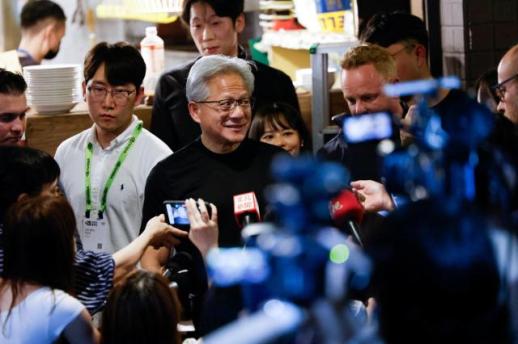 NVIDIA CEO Jensen Huang's Visit Sparks Excitement in South Korea Jensen Huang, CEO of NVIDIA, is generating excitement in South Korea with his visit this week. News of his arrival or even a ceremonial first pitch at a baseball game has led to a surge in stock prices for companies associated with him over the past two days. Huang's previous visit to South Korea last year demonstrated his significant influence. Following what was dubbed the "gangbu meeting," shares of companies like Samsung Electronics and Hyundai Motor soared. Notably, Samsung Electronics saw a more than 3% increase on June 2, even amid a broader market decline, ultimately surpassing Meta to become the 10th largest company globally by market capitalization. This achievement underscores the competitive strength of South Korean firms within the global AI supply chain and highlights Huang's impact as a leading figure in the graphics processing unit (GPU) market. This situation emphasizes that talent remains the most critical factor in the ongoing AI industrial revolution. A fierce global competition for AI talent is underway, with major U.S. tech companies offering substantial financial incentives to attract top researchers. Meanwhile, China is preparing to implement restrictions on outbound personnel and foreign investments to prevent the loss of key talent and technology. As the era of AI reshapes national competitiveness, securing talent has become a matter of survival for countries, not just corporations. The ability to acquire semiconductor and AI technologies will determine the industrial landscape and survival prospects for decades to come. However, the reality in South Korea suggests that the rising stock market is not the only indicator of success. While the government is promoting policies to attract foreign talent, such as expanding the "top-tier visa" program, it still lags behind other advanced AI nations. According to a February report from the Software Policy Research Institute, South Korea ranks between 30th and 40th globally in terms of attractiveness for talent acquisition. Additionally, the Stanford AI Index report from last year indicated that South Korea ranks 35th among OECD countries for net outflow of AI talent, with 0.36 individuals leaving per 10,000 people. In this context, recent developments following the resolution of wage negotiations at Samsung Electronics are significant. After the agreement, applications to semiconductor-related programs surged, and reports suggest that Samsung employees are now as desirable in the marriage market as professionals like lawyers. While salary alone does not drive talent decisions, competitive compensation is essential for attracting skilled individuals. Huang also addressed questions about Samsung's bonuses, stating, "Employees should receive as much compensation as possible." His perspective is informed by his own experiences in Silicon Valley, where he built NVIDIA into a leading company after graduating from engineering school. Last week, the South Korean team achieved a record performance at the Asia Physics Olympiad, winning eight gold medals. This success highlights the presence of exceptional scientific talent in the country. However, it has been noted that many students who excel in math and science competitions often choose to pursue medical degrees for economic reasons. If South Korea fails to connect its top scientific talent to the domestic AI and semiconductor industries, it could result in a national loss. Of course, from a corporate perspective, increasing wages and bonuses can be burdensome and may negatively impact short-term profitability. However, in the long run, securing top talent is more of an investment than a cost, as the competitiveness of the AI era ultimately hinges on people. To attract AI talent, it is crucial to foster an environment conducive to talent development. Therefore, the resolution of Samsung's wage negotiations should serve as a catalyst for the emergence of South Korea's own "Jensen Huang" and potentially the world's leading company by market capitalization. The government must also work on improving the overall system to support this goal. 2026-06-02 15:57:00
 -
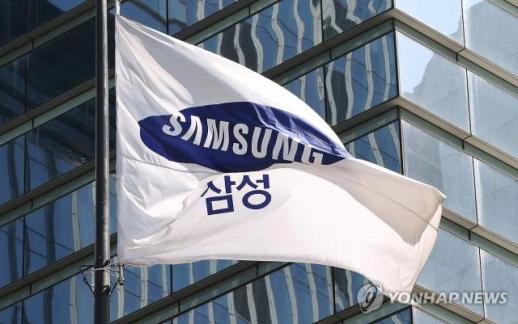 Samsung Electronics Surpasses Meta and Tesla in Market Value, Rises to 9th Globally On June 2, Samsung Electronics' market capitalization surged past that of major U.S. tech companies Meta and Tesla, elevating it to the 9th largest company in the world. According to the global market capitalization comparison site CompaniesMarketCap, Samsung's market value reached $1.581 trillion (approximately 239 trillion won) as of 9:53 AM, reflecting a 4.29% increase from the previous day. This rise allowed Samsung to surpass Meta, which was valued at $1.524 trillion, and Tesla, valued at $1.561 trillion, during trading on June 1 (local time). However, Samsung's stock initially jumped nearly 6% to 370,000 won before the gains moderated, indicating that the market capitalization rankings could shift again depending on the closing prices. Despite this, Samsung's stock price increase has positioned it within striking distance of the 8th largest company, Saudi Arabia's state-owned Aramco, which has a market cap of $1.763 trillion. The top seven companies by market capitalization are currently Nvidia, Alphabet (Google), Apple, Microsoft, Amazon, TSMC, and Broadcom. Samsung's recent stock performance has been bolstered by a surge in demand for memory semiconductors driven by the artificial intelligence (AI) boom. The momentum was further fueled by news this week that Nvidia CEO Jensen Huang announced the next-generation AI chip, Vera Rubin, will feature HBM4 memory from Samsung and SK Hynix. In contrast, Meta has invested heavily in AI development but has yet to achieve significant results, leading to a 5.04% drop in its stock price on June 1 (local time). Tesla also faced challenges, with CEO Sam Altman of OpenAI announcing an accelerated push for talent in robotics, raising concerns about competition in that sector and resulting in a 4.57% decline in its stock price. 2026-06-02 10:00:00
 -
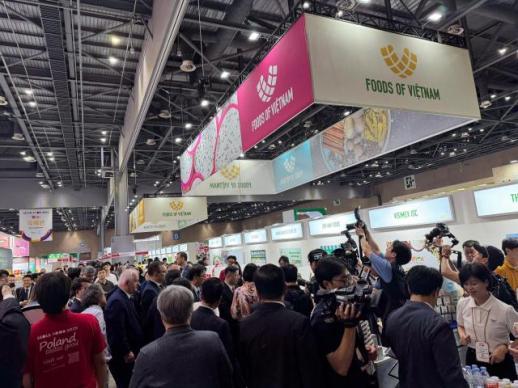 Vietnam to Participate in Seoul Food 2026 to Expand Exports to South Korea Vietnam's major food and beverage companies, including Vinamilk, the country's largest dairy firm, will participate in the Seoul International Food Industry Exhibition (SEOUL FOOD 2026) from June 9 to 12 at KINTEX in Goyang, South Korea. This event comes as both countries aim to expand economic cooperation, targeting a trade volume of $150 billion by 2030. The exhibition is expected to serve as a platform for collaboration in the food and beverage sector between Vietnam and South Korea. On June 1, the Vietnam Trade Promotion Agency (VIETRADE) announced that it would send a delegation of Vietnamese companies to the SEOUL FOOD 2026 as part of its 2026 National Trade Promotion Program. The Seoul International Food Industry Exhibition, organized by the Korea Trade-Investment Promotion Agency (KOTRA), is one of Asia's leading food exhibitions and has been held annually since 1983. Last year, Vietnam showcased its culinary offerings under the theme "Food of VIỆTNAM" at the exhibition, introducing various Vietnamese dishes to South Korean consumers. This year, 28 Vietnamese food and beverage companies will participate, with a dedicated pavilion covering over 180 square meters. This initiative is part of Vietnam's key trade promotion efforts with South Korea, aimed at enhancing brand visibility, expanding export opportunities, and strengthening business collaborations with international buyers and global distribution networks. The pavilion will highlight the diversity and competitiveness of Vietnam's food and beverage industry while showcasing the achievements in high-value food development and processed food sectors to international buyers. Additionally, the Vietnamese delegation will include various agricultural and food processing export companies, such as Vinamilk, Westfood, Napuz, Big C Food, DH Food, WANA, and DACE. These companies will showcase a range of products, including dairy, processed fruits, health foods, spices, beverages, and agricultural products. They plan to highlight their product competitiveness in line with global trends in ESG (Environmental, Social, and Governance) management and sustainable consumption through eco-friendly production processes, sustainable raw material usage, and environmentally friendly packaging. A representative from VIETRADE stated, "We expect that participation in SEOUL FOOD 2026 will actively promote the excellence of Vietnam's food industry and create new business opportunities in the South Korean and global markets." The exhibition is anticipated to provide Vietnamese companies with opportunities to expand their distribution networks in South Korea and discover new trading partners, thereby strengthening their presence in the South Korean and global markets. It is also expected to play a positive role in expanding food trade between the two countries, leveraging the Korea-Vietnam Free Trade Agreement (VKFTA). Meanwhile, economic exchanges between South Korea and Vietnam have become closer following President Lee Jae-myung's visit to Vietnam in April, with both countries aiming to achieve a trade volume of $150 billion by 2030. As a result, the significant participation of major Vietnamese food and beverage companies in this exhibition is expected to further enhance economic cooperation in the food and beverage sector between the two countries. 2026-06-01 17:30:00
 -
 Industrialization and Democratization Must Continue Last week, a significant event took place in the National Assembly. The French Chamber of Commerce in Korea hosted a forum to commemorate the 140th anniversary of diplomatic relations between Korea and France, as well as the 40th anniversary of the chamber's establishment. The organizers chose the National Assembly as the venue to symbolize democracy and the shared values of both nations. While economic exchanges between the two countries are robust, they emphasized the importance of liberal democracy as the foundation of their relationship. Korea's rising status in the international community is partly due to this emphasis. The country boasts world-class competitiveness in advanced industries such as semiconductors, batteries, shipbuilding, and defense, while also maintaining a liberal democratic system. Amid increasing uncertainty in the international order due to U.S.-China competition and conflicts in the Middle East, democratic nations are seeking reliable partners rather than merely low-cost production bases. Korea stands out as a nation that is both trustworthy and capable. The era when industrial competitiveness alone earned respect in the international community is fading. As authoritarian regimes weaponize technology and resources, the importance of solidarity among nations that share democracy, rule of law, and market order is growing. Conversely, nations that merely proclaim liberal democratic values without industrial competitiveness struggle to be seen as practical partners during supply chain crises. In this context, Korea is recognized as a rare example of achieving both democratization and industrialization. However, the phrase "crisis of democracy" is being discussed globally. Political polarization, populism, and distrust in representative systems have led some to argue that authoritarian regimes are more efficient. Yet, history shows that societies lacking freedom of expression, rule of law, and checks on power ultimately collapse due to internal corruption, violence, and economic distortion. While liberal democracy is not perfect, it is difficult to deny that it is the best system for both individuals and groups among the political systems humanity has created. Korea has demonstrated this truth through its own history. The nation has achieved both industrialization and democratization, maintaining its democratic system even amid economic crises and political upheaval. Thus, liberal democracy is not just a political slogan; it is the foundation of today's Korean economy and international trust. Nevertheless, industrialization and democratization are ongoing processes, not completed tasks. In the context of a global AI revolution, Korea must continue its efforts toward new industrialization while also safeguarding and advancing democracy. The existence of movements that advocate for armed insurrection against the people indicates that the authoritarian legacies threatening democratic order have not been entirely eradicated. The ongoing discussions about enshrining the spirit of the May 18 Democratic Movement in the constitution also face significant obstacles. The most fundamental mechanism for protecting liberal democracy is elections. Therefore, the upcoming local elections will serve not only to select local leaders but also as a test of the health of Korean democracy. The importance of local elections is often overshadowed by major national political issues, but democracy ultimately strengthens through participation at the local and everyday levels. Democracy does not collapse suddenly; it weakens gradually amid indifference and resignation. Conversely, democracy grows stronger when citizens remain engaged and involved. The reason the world is paying attention to Korea is not solely due to its economic power. After countless sacrifices beginning with the Korean War, Korea has preserved its liberal democracy and continues to strive for its advancement, which is as significant an asset as its semiconductor industry.* This article has been translated by AI. 2026-05-28 16:54:00
 -
 KITA and KEY Host Forum on EU Environmental Regulations As the European Union's (EU) environmental regulations, including the Carbon Border Adjustment Mechanism (CBAM), intensify, the Korea International Trade Association (KITA), led by President Yoon Jin-sik, and the private non-profit think tank KEY (Korea Europe & You), headed by Lee Jun, co-hosted the "2026 EU New Trade Partnership Forum: Korea-EU New Trade Partnership and Sustainability Innovation" on May 21 to discuss response strategies in depth. The event, held at the Trade Tower in Samseong-dong, gathered EU Ambassador to South Korea Hugo Astuto, Philip Van Hoof, President of the European Chamber of Commerce in Korea (ECCK), along with government officials from Europe and Korea and key environmental experts from both domestic and international backgrounds. They engaged in extensive discussions regarding the EU's environmental policy direction and Korea's response challenges. President Yoon emphasized, "The EU is establishing new systems and norms in line with the changing international landscape and industrial environment," explaining the significance of the forum. Lee Jun highlighted that the current energy crisis is causing a ripple effect across the economy and society, stating, "This forum will serve as a meaningful milestone for Korean and European companies to transform the challenges they face into new drivers of innovation." The forum was divided into two parts. The first part, titled "EU Sustainability Trends and Policy Regulation Outlook," featured a presentation by Walter Van Hatum, Trade and Economic Counselor at the EU Delegation to Korea, moderated by KEY Director Yoo Jae-hoon. The discussion included insights from Maeng Hak-kyun, a senior official at the Ministry of Climate, Energy, and Environment, lawyer Kim Hye-sung from Kim & Chang, and Lee Jung-woo, a director at Centennial Partners. Van Hatum noted that the EU has reduced greenhouse gas emissions by approximately 37% since 1990, while the gross domestic product (GDP) has increased by about 60% during the same period. He emphasized that contrary to popular belief, it is possible to achieve both environmental sustainability and economic growth. However, he added, "The EU is fighting a lonely battle in the environmental sector," stressing the need for participation from major countries like Korea. He pointed out that the total economic cooperation scale, encompassing bilateral trade and investment between Korea and the EU, amounts to approximately 450 trillion won, indicating the necessity for Korea to strengthen economic cooperation with the EU through environmental policies. Van Hatum specifically highlighted the EU's goal to reduce greenhouse gas emissions in the transportation sector by 90%, emphasizing the increasing importance of collaboration with Korea, a country strong in semiconductors, batteries, and hydrogen, and one that shares similar values. In response, Maeng referenced President Lee Jae-myung's statement last year that "the transition to a carbon-neutral society is an unavoidable path for sustainable growth and a leap to becoming a global economic powerhouse, even if it entails some pain," indicating that the current government plans to take a more proactive approach to environmental policies. The EU implemented the CBAM on January 1 of this year, requiring carbon emission certificates for six major industrial products produced outside the EU, including steel, aluminum, fertilizers, cement, hydrogen, and electricity. Starting in January 2028, the scope of CBAM will expand to include 180 final goods, such as refrigerators and washing machines. This has put Korean industries, which rely heavily on Europe as a major export market, in a precarious position. In this context, lawyer Kim suggested that while the EU's environmental regulations offer a high degree of predictability, the diversity and complexity of supply chains necessitate the development of response strategies regarding regulatory interpretation and application standards. The second part, titled "Exemplary Cases of Sustainability Technology Innovation Companies," was moderated by Kim Yong-jae, an adjunct professor at Hanyang University. It included a presentation by Nicola Lejeune, Chief Technology Officer of Veolia Korea, along with discussions featuring Herve Pino, CEO of Veolia Korea, Kim Young-seok, CEO of Endress+Hauser Korea, Jang Han-young, team leader of the European and Climate Policy Team at LG Energy Solution, and Jang Hyun-sook, head of the New Trade Strategy Division at KITA. Lejeune explained that since entering Korea in 1999, Veolia, a global environmental services company based in France, has provided carbon reduction and eco-friendly technology services to various sectors, including semiconductors, steel, petrochemicals, food and beverage, and pharmaceuticals. He introduced the company's key AI-based eco-friendly technology services, including digital cooling towers, real-time vibration monitoring, and biological wastewater treatment control. Jang, the team leader at LG Energy Solution, discussed the preparations made to respond to the "battery passport" system, which the EU plans to implement in 2027. He noted that since this passport system involves information storage and sharing that extends beyond a single company, it is essential for the industry to review and establish a system collectively.* This article has been translated by AI. 2026-05-21 23:43:38
 -
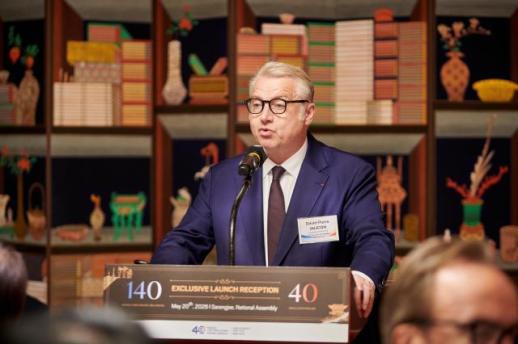 French-Korean Chamber of Commerce Celebrates 140 Years of Diplomatic Relations The French-Korean Chamber of Commerce (FKCCI) held a celebration on May 20 at the National Assembly to mark the 140th anniversary of diplomatic relations between Korea and France, as well as the 40th anniversary of FKCCI. The event highlighted the history of cooperation between the two nations from the Joseon Dynasty to the present day. Following French President Emmanuel Macron's visit to Korea last month, the event featured remarks from FKCCI President David Pierre Jalicon, French Ambassador Philippe Berthe, People Power Party lawmaker Na Kyung-won, and former Minister of SMEs and Startups Park Young-sun, among over 80 distinguished guests, emphasizing the significance of friendly cooperation between the two countries. In his speech, Jalicon stated, "The Korean National Assembly symbolizes the shared values of democracy and freedom between our two countries and is a true testament to our friendship." He added, "Today, the Korea-France relationship has evolved into a genuine 'strategic partnership' encompassing key areas, becoming more integrative in our economies." He expressed optimism for the year ahead, noting that FKCCI will open its own independent building, 'Maison France,' in Gangnam this September, which he hopes will serve as a multipurpose space for the Korea-France business community. Ambassador Philippe Berthe, in his address, remarked, "In two weeks, on June 4, we will officially celebrate the 140th anniversary of our diplomatic relations. Through a century and a half of friendship, trust, and cooperation, France and Korea have forged closer ties than ever before." He expressed pride in gathering at the National Assembly, a place rich in history and symbolic of the republican values both nations have fought for, and emphasized that France and Korea are called to play increasingly important roles on the international stage based on their shared history, economic dynamism, and rich cultures. Na Kyung-won, president of the Korea-France Parliamentary Friendship Association, quoted a French proverb, "Little streams gather to form a mighty river," stating, "Based on the trust built over the past 140 years, we must now move together toward a larger sea. The synergy of Korea's dynamism and France's creativity, along with Korea's technological prowess and France's cultural depth, presents us with limitless possibilities." Park Young-sun shared a personal anecdote from her time as a journalist in the 1980s and 1990s, covering the competition between France's high-speed rail (TGV) and Germany for Korea's high-speed rail project, reflecting on how rapidly cooperation between the two countries has developed since then. On this day, FKCCI also officially unveiled a commemorative publication marking the 140th anniversary of Korea-France diplomatic relations and the 40th anniversary of FKCCI, with Jalicon presenting copies to key guests. He expressed gratitude, stating, "This book would not have come to fruition without your dedication and participation. In that sense, this book is truly yours." The publication includes historical photographs and narratives, starting from the 1886 Korea-France Treaty of Friendship and Commerce, through the activities of French missionaries in Korea in the 19th century, to the French battalion led by General Ralph Monclar, known as the 'hero of the Battle of Jipyeongri' during the Korean War, and the recent summit between President Lee Jae-myung and President Macron last month. Additionally, to commemorate FKCCI's 40th anniversary, the publication details key milestones in economic cooperation between the two countries, from the introduction of TGV in Korea in the 1990s to the Korea-European Union Free Trade Agreement in the 2010s, and the current strategic partnerships in various fields such as innovation, mobility, energy, artificial intelligence, biotechnology, luxury, and cultural industries. Following the ceremony, a special performance by musicians from the Orchestre national Auvergne-Rhône-Alpes was held as part of cultural cooperation between Korea and France. Founded in 1986 with 20 member companies, FKCCI has grown to include over 475 members, making it the third-largest foreign chamber of commerce in Korea and the sixth-largest among 125 French chambers worldwide. 2026-05-21 22:21:00
 -
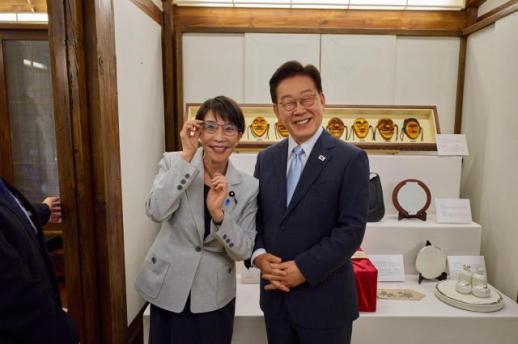 The Strategic Importance of South Korea-Japan Cooperation Amid Global Tensions "If you don’t have teeth, you have to rely on your gums." This saying aptly describes the current situation for South Korea and Japan in light of international dynamics. While the North Korea-China-Russia coalition is solidifying, the once-stable U.S.-led alliance is showing signs of strain. Chinese President Xi Jinping and Russian President Vladimir Putin reaffirmed their commitment to strengthening strategic cooperation against the U.S. during a summit in Beijing this week. The two countries have already been closely aligned in military, economic, and diplomatic matters, and recent developments suggest an even deeper bond. Speculation about Xi's potential visit to North Korea further indicates that the North Korea-China-Russia alliance is gaining strength. The challenge lies in the fact that the trilateral cooperation among South Korea, the U.S., and Japan does not appear as stable as before. The most significant variable is undoubtedly the United States. Since taking office, the Trump administration has prioritized "America First," adopting a harsh diplomatic stance that has affected both allies and adversaries alike. Pressures for increased defense spending, tariff threats, and unpredictable foreign policy have created unease not only for South Korea and Japan but also for European allies. Furthermore, as the U.S. becomes embroiled in conflicts in the Middle East, concerns about its diminishing power are being raised. Amidst joint criticism of the U.S. and Japan by Xi and Putin, South Korea cannot afford to feel complacent. Of course, the U.S. power is not going to vanish overnight. Its military strength, dollar dominance, and advanced technological capabilities remain formidable. However, the core issue is trust. The essence of an alliance is not merely military might but the ability to rely on each other. With President Trump frequently calling for U.S. troop withdrawals, allies are finding it increasingly difficult to place their trust in the United States. In this context, the strategic importance of South Korea-Japan cooperation has never been greater. This week’s visit by Japanese Prime Minister Sanae Takaichi to South Korea underscores this significance. It represents a foundation for both countries to create a safety net for their survival, independent of reliance on the U.S. However, deep historical wounds and emotional rifts still exist in South Korea-Japan relations. Issues such as forced labor and comfort women cannot be easily dismissed. Yet, the international landscape is unforgiving. If South Korea and Japan remain mired in past grievances while North Korea, China, and Russia rapidly align under shared strategic interests, they risk suffering the consequences. Moreover, cooperation between South Korea and Japan is essential for future industrial competition. In key sectors like semiconductors, batteries, artificial intelligence, supply chains, and energy security, the two nations are both competitors and collaborators. As China seeks to expand its dominance over global supply chains through technological advancements, South Korea and Japan must work together to effectively respond. History repeatedly shows that nations that unite in times of crisis survive. The world is moving toward a new era of bloc formation. As North Korea, China, and Russia strengthen their alliances, a time is emerging when the U.S. can no longer be taken for granted. Consequently, South Korea and Japan can no longer afford to dwell solely on emotions and the past. As uncertainties surrounding the U.S. grow, cooperation between South Korea and Japan is evolving from an option to a survival strategy.* This article has been translated by AI. 2026-05-21 17:46:06
 -
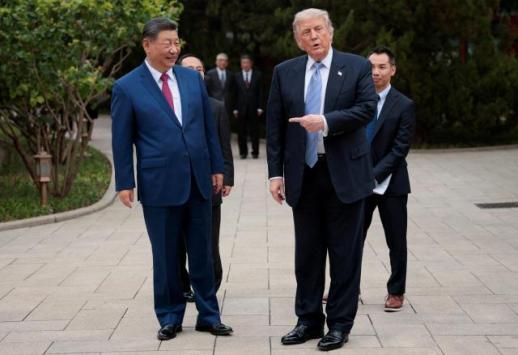 Xi Jinping Suggests Putin May Regret Ukraine Invasion During Trump Meeting Chinese President Xi Jinping reportedly suggested during a meeting with U.S. President Donald Trump last week that Russian President Vladimir Putin might regret his invasion of Ukraine. The Financial Times, citing sources, reported this on May 18, drawing attention as it comes ahead of Putin's visit to China. According to the report, Xi made the comments while discussing various issues with Trump, including the ongoing war in Ukraine. The remarks are notable given that the conflict has now surpassed four years, with Ukraine's effective counterattacks prolonging the war, as noted by the FT. The tone of Xi's comments regarding the Ukraine war appears to have escalated compared to previous discussions. A source indicated that during a meeting with former President Joe Biden, Xi had engaged in "frank and direct" conversations about the war but did not assess Putin's actions. The Biden administration has criticized China for allegedly supplying dual-use goods to Russia. While the Trump administration also expressed similar concerns, the frequency of such criticisms has decreased, according to the FT. Xi's remarks are particularly significant as they come just before Putin's scheduled visit to China, where he is expected to meet with Xi on May 20. In a video address on May 18, Putin expressed optimism about the visit, stating, "Russia and China are ready to support each other on a wide range of issues, including national unity and sovereignty protection." Notably, Putin had visited China three weeks before the 2022 invasion of Ukraine, where he and Xi announced a "no-limits friendship" between their countries. Meanwhile, Trump reportedly argued during his meeting with Xi that the leaders of the U.S., China, and Russia should collaborate against the International Criminal Court (ICC). Trump has long criticized the ICC for allegedly disregarding U.S. sovereignty and judicial authority. Currently, Putin is subject to an arrest warrant issued by the ICC.* This article has been translated by AI. 2026-05-19 16:28:19
 -
 China's Industrial Production, Retail Sales, and Investment Decline Amid Ongoing Middle East Conflict China continues to experience sluggish economic performance amid the ongoing conflict in the Middle East. According to the National Bureau of Statistics of China, industrial production in April rose by 4.1% compared to the same month last year, falling short of expectations for a 6.0% increase and the previous month's 5.7% rise. This marks the lowest growth rate since July 2023. Additionally, retail sales in April increased by only 0.2% year-on-year, significantly below the forecast of a 2.0% rise and the previous month's 1.7% increase. This is the lowest figure since December 2022, when consumer spending last showed a decline. Fixed asset investment from January to April also saw a decline of 1.6% compared to the same period last year, reversing the previous month's cumulative increase of 1.7%. These trends reflect the broader economic impact of rising prices due to the Middle East conflict, affecting production, consumption, and investment. Earlier reports released on May 11 indicated that China's consumer price index (CPI) and producer price index (PPI) rose by 1.2% and 2.8%, respectively, compared to the same month last year, significantly exceeding expectations. However, the urban unemployment rate in April improved slightly to 5.2%, better than the anticipated 5.3% and the previous month's 5.4%.* This article has been translated by AI. 2026-05-18 13:16:14
 -
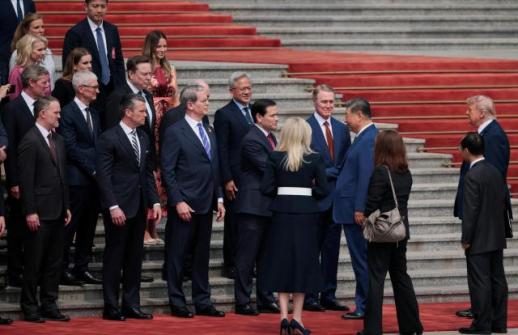 Xi Jinping Tells U.S. Business Leaders China Will Further Open Its Market Chinese President Xi Jinping expressed his commitment to further opening China's market during a meeting with prominent U.S. business leaders accompanying President Donald Trump on May 14, according to state-run People's Daily. During a summit at the Great Hall of the People, Trump introduced each of the American business leaders present, stating, "I have brought with me outstanding representatives of the U.S. business community. They all respect and value China, and I encourage them to expand cooperation with China." The U.S. business leaders emphasized their strong interest in the Chinese market and expressed a desire to deepen their operations in China and enhance cooperation. In response, Xi noted, "U.S. companies are currently deeply involved in China's reform and opening up, and both sides benefit from this engagement. China's opening will only expand further." He added, "China welcomes the U.S. to strengthen mutually beneficial cooperation, and I believe U.S. companies will have broader development prospects in China." The U.S. business leaders who attended the summit reportedly left with a sense of satisfaction. According to The Wall Street Journal, Jensen Huang, CEO of NVIDIA, remarked to reporters as he exited the Great Hall, "President Xi and President Trump were fantastic." Elon Musk, CEO of Tesla, also responded positively when asked about the summit's outcomes, stating, "There were many good things." Trump's delegation included nearly 20 key American business leaders, including Jensen Huang, Elon Musk, and Tim Cook, CEO of Apple.* This article has been translated by AI. 2026-05-14 15:59:44