

Journalist

KWONKYUHONG
spikekwon@ajunews.com
-
 Court Recognizes Workplace Dispute as Cause of Employee's Death from Brain Hemorrhage A South Korean court has recognized the death of a factory manager from a brain hemorrhage, which occurred shortly after a heated argument with a colleague, as a work-related injury. The ruling emphasized that even with pre-existing conditions, significant stress experienced during work can establish a causal link to such medical events. On May 31, legal sources reported that the Seoul Administrative Court's 13th Division, led by Judge Jin Hyun-seob, ruled in favor of the family of the deceased manager, identified as A, in a lawsuit against the Korea Workers' Compensation and Welfare Service. The family sought compensation for bereavement and funeral expenses, which had been denied by the agency. In March 2024, A, who was overseeing production, engaged in a fierce argument with a colleague over the receipt of work orders. The dispute continued for about ten minutes even after they moved to the break room. Shortly after the argument, A complained of sudden fatigue and lay down, only to be found unconscious by factory staff. He was later diagnosed with a brain hemorrhage and died a month later. The family claimed that A's death was a work-related injury and requested compensation, but the Korea Workers' Compensation and Welfare Service rejected their claim. The agency argued that the argument did not constitute acute stress severe enough to cause a brain hemorrhage and attributed the cause of death to A's personal health factors, including hypertension and a history of smoking. Consequently, the family filed a lawsuit against the agency. After the trial, the court ruled in favor of the family. The judges noted, "Given that A collapsed immediately after the argument, there is a significant causal relationship between his work and his death," and overturned the agency's decision. They determined that A was in an unusually agitated state during the dispute, which could not be dismissed as a mere disagreement. The court also highlighted that A had no prior history of cerebrovascular disease, suggesting that the mental stress from the conflict with his colleague could have interacted with any underlying conditions to trigger a sudden change in his vascular health.* This article has been translated by AI. 2026-05-31 12:00:00
 -
 Supreme Court Recognizes Illegal Data Acquirers as Data Processors The Supreme Court has ruled that individuals who illegally acquire personal data for their own business purposes can still be classified as data processors under the data protection law, even if the acquisition process was unlawful. This decision aims to prevent gaps in victim protection that could arise if illegal acquirers were excluded from liability. According to legal sources on May 31, the Supreme Court's first division, led by Justice Seo Kyung-hwan, upheld a lower court's one-year prison sentence for a 40-year-old man identified only as Lee, who was charged with operating a gambling site and violating the data protection law. Prosecutors found that Lee illegally obtained the names, account numbers, and phone numbers of over 790 members from another site while establishing his gambling platform in 2024. He used this information to register unauthorized members to ensure the site's deposit and gaming functions operated correctly. Additionally, it was revealed that Lee's accomplice intended to create a site where numerous users could deposit betting money, recharge game currency, and withdraw winnings based on betting outcomes. Ultimately, prosecutors brought Lee to trial for operating a gambling site and violating the data protection law. The key issue during the trial was whether Lee could be considered a 'data processor' under the data protection law despite obtaining the information illegally. Lee's defense argued that since the data was acquired unlawfully, he did not qualify as an official data processor as defined by law. The first trial court found Lee guilty and sentenced him to one year in prison. However, it classified him as a handler rather than a processor, applying only the charge of 'unauthorized use.' The second trial maintained the one-year sentence but, unlike the first trial, recognized Lee as a 'data processor' who directly handled personal data, applying the violation of unauthorized use under Article 71, Item 10 of the data protection law. The Supreme Court affirmed the second trial's ruling, stating, "Even if personal data is acquired illegally, if it is used for business purposes, it should be regarded as being processed by a data processor." The court emphasized, "Excluding illegal acquirers from being classified as data processors would not only contradict the intent of the data protection law but could also create significant gaps in victim protection."* This article has been translated by AI. 2026-05-31 10:39:00
 -
 Justice Ministry Reports Passage of 38 Livelihood and Safety Bills in One Year The Justice Ministry reported significant achievements, noting that 38 livelihood and safety bills have passed the National Assembly in the year since the launch of the Lee Jae-myung administration (the People’s Sovereignty Government). According to data released by the Justice Ministry on May 28, a total of 79 bills under its jurisdiction have passed the National Assembly in the last three years (from June 2023 to May 2026). Notably, nearly half of these bills, 38 (48.1%), were passed in the past year (from June 2025 to May 2026). This marks a 65% increase compared to the same period last year (23 bills) and over a 111% increase from two years ago (18 bills). A Justice Ministry official explained that this success is the result of the ministry's operational mobilization under the directive of Minister Jeong Seong-ho to prioritize legislation directly affecting people's livelihoods, as well as effective persuasion of both ruling and opposition parties. The legislative focus has been sharply aimed at protecting vulnerable populations. One of the most notable achievements is the 'Stalking Victim Protection Order System,' passed in March. Previously, victims had to go through investigative agencies to receive protection, but now they can directly request restraining orders from the court. Additionally, a system providing real-time location information of offenders (passed in December 2025) has been established, creating a practical safety net for victims against retaliatory crimes. Management of high-risk sexual violence offenders has also been significantly strengthened. Under a bill passed in April, offenders deemed at high risk of reoffending will be assigned a dedicated probation officer, regardless of the victim's age. Furthermore, support for victims of serious crimes such as murder and robbery has been expanded to include public defenders, and minors or disabled victims can receive assistance without a separate application, reinforcing the state’s protective responsibility. The Justice Ministry has also updated outdated legal frameworks that failed to reflect societal changes. The provision that exempted family crimes from punishment has been revised to align with contemporary realities, and the qualifications of immoral heirs have been revoked, leading to a comprehensive revision of civil law for the first time in 67 years (passed in February 2026). This is seen as a historic decision to address criticisms that the law has not kept pace with modern family dynamics. Additionally, amendments to commercial law have expanded the duty of loyalty for corporate directors to shareholders and mandated the buyback of treasury shares, enhancing transparency in capital markets. Revisions to the lease protection law have also made it mandatory for landlords to disclose details of opaque management fees for small business owners. In response to organized fraud that drives ordinary citizens to the brink, the ministry has focused not only on judicial punishment but also on economic sanctions. Legal grounds have been established for the state to confiscate and recover profits from specific fraud crimes, such as voice phishing, multi-level marketing, and rental fraud, returning them to victims. The pinnacle of these legislative achievements is the enactment of the Anti-Japanese Property Recovery Act, passed in May. This law revives the Anti-Japanese Property Investigation Committee after 16 years, initiating a systematic recovery process. Notably, the scope of recoverable assets has been expanded to include not only properties obtained through pro-Japanese activities but also profits gained by descendants from disposing of these assets, enabling substantial restitution. Recovered assets will be prioritized for the welfare of independence activists and their families. Minister Jeong Seong-ho emphasized, "The results reflect the core keywords of the Lee Jae-myung administration: public safety, livelihood, and reform. We will ensure that the passage of these bills leads to swift implementation and system establishment so that citizens can feel the changes in their daily lives."* This article has been translated by AI. 2026-05-28 16:58:00
 -
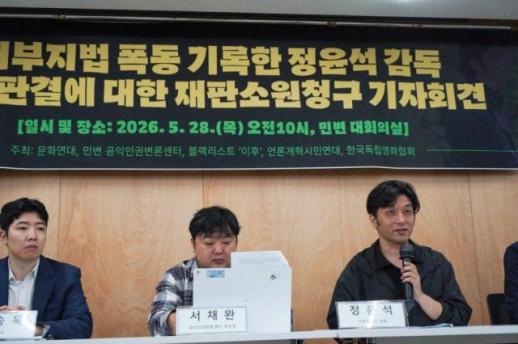 Director Jeong Yoon-seok Appeals to Constitutional Court After Conviction Documentary director Jeong Yoon-seok, who was convicted for filming a disturbance at the Seoul Western District Court, has filed a constitutional appeal against the court's ruling. On May 28, Jeong held a press conference at the Minbyun office in Seocho-gu, Seoul, alongside several organizations including the Cultural Solidarity, Minbyun Public Interest Human Rights Litigation Center, After the Blacklist, Citizens' Coalition for Media Reform, and the Korean Independent Film Association to explain the background of his appeal. Jeong named the presiding judges of the Seoul Western District Court, the Seoul High Court, and the Supreme Court as respondents in his appeal. He stated, "As I observed the actions of the investigative agencies and judges, I experienced significant confusion regarding my identity as an artist. Despite respecting the court's procedures, I felt compelled to file this appeal because the Supreme Court did not uphold the spirit of the rule of law." He added, "Freedom of expression is essential for artists. If this case is dismissed by the Constitutional Court, I will respect that decision, but I will accept it as an objective truth. There is a need for legislative and executive improvements to enhance the treatment of cultural and artistic professionals." Seo Chae-wan, deputy director of the Minbyun Public Interest Human Rights Litigation Center, argued, "The Supreme Court's ruling contradicts previous decisions made by the Constitutional Court. Despite Jeong explicitly asserting the illegality of his arrest during the appeals process, the court did not consider this, and the Supreme Court deemed it acceptable not to review this issue. This indicates a failure to follow the legal procedures mandated by the Constitution and laws." Seo further claimed, "Not separating the arguments is an abuse of litigation authority and violates Article 22 of the Constitution, which protects artistic rights, as well as Article 68, Section 3. It also violates Articles 19 and 21 of the International Covenant on Civil and Political Rights, which have domestic legal effect under Article 6, Section 1 of the Constitution, and infringes on the principles of proportionality and the essence of rights, as well as equality rights." Previously, Jeong was charged with trespassing and other offenses after entering the Seoul Western District Court with supporters of former President Yoon Suk Yeol shortly after a warrant for Yoon's arrest was issued in January of last year. In court, Jeong defended his actions by stating he entered the premises with a camera for public interest purposes. However, both the first and second trial courts found him guilty and imposed a fine of 2 million won. Unlike the first trial, the second trial court acknowledged that Jeong was focused on filming separately from other protesters. However, it concluded that court staff would have difficulty distinguishing between Jeong and those involved in the disturbance, leading to the guilty verdict. The Supreme Court upheld the lower court's ruling last month, finalizing Jeong's conviction.* This article has been translated by AI. 2026-05-28 15:18:00
 -
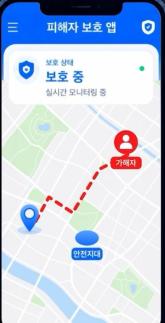 South Korea Unveils Real-Time Stalker Tracking App The Ministry of Justice has successfully developed a mobile app that tracks the movements of stalking offenders in real time, marking its first demonstration. On May 27, the ministry held a media event at the central monitoring center, unveiling the app that allows victims to directly monitor the location and movements of their stalkers. Named the "Stalker Location Notification" app, it is set to officially launch on June 24. During the demonstration, the app displayed a clear map on the victim's smartphone showing the real-time movement of a stalking offender wearing an electronic monitoring device as they approached within a certain distance. At the same time, the app enabled the probation officer to inform the victim of the situation, while police on-site could swiftly apprehend the offender. The key feature of this service is that it shares the location information of offenders, previously only accessible to the monitoring center, directly with victims in real time. Previously, victims were notified via phone through the monitoring center when an offender approached. Now, victims can visually confirm the offender's location through the app on their smartphones. Actor Yoon Park, an honorary probation officer who participated in the event, shared his experience with the app, stating, "While the immediate response from government agencies is reassuring, being able to see where the offender is coming from transforms a vague sense of anxiety into a manageable situation." The attending journalists discussed the app's user-friendliness and information security, while also experiencing the process of electronic monitoring and alert handling to assess the effectiveness of the electronic supervision system. The Ministry of Justice plans to conduct final checks on system stability before the launch and will begin utilizing the app to protect stalking victims at the end of next month. Justice Minister Jeong Seong-ho emphasized, "Since the government's inception, we have worked to create a society where citizens feel safe through the expansion of one-on-one electronic monitoring and the introduction of location notification services. We will actively incorporate the feedback from today's demonstration to establish a comprehensive system for crime prevention and victim protection."* This article has been translated by AI. 2026-05-28 13:52:00
 -
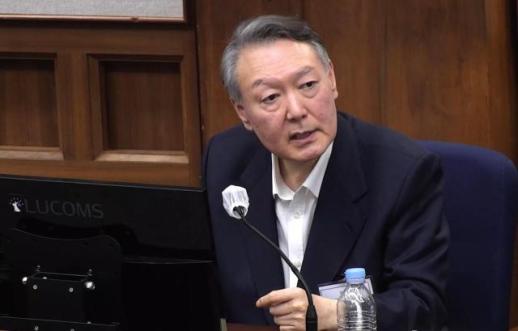 Yoon Suk Yeol Acquitted of Perjury in Han Duck-soo Trial Yoon Suk Yeol, the former president, was acquitted of perjury charges related to his testimony in the trial of former Prime Minister Han Duck-soo concerning the declaration of martial law on December 3. On May 28, the Seoul Central District Court's Criminal Division 32, presided over by Judge Ryu Kyung-jin, ruled Yoon not guilty of perjury and dismissed the request for compensation related to the case. The court also provided guidance on the criminal compensation process for Yoon following the verdict. Previously, the special prosecution team led by Jo Eun-seok had sought a two-year prison sentence for Yoon. The court stated, "Considering that Yoon directed the additional gathering of six cabinet members just two minutes after a meeting in his office at 9:09 PM on December 3, 2024, and that the documents related to the martial law had already been prepared for Deputy Prime Minister Choi Sang-mok, it appears that the defendant (Yoon) had a plan to convene the cabinet regardless of Han's suggestion." The court concluded, "It is difficult to view the defendant's testimony as contradictory to his memory." Furthermore, the court noted that the testimony of former Defense Minister Kim Yong-hyun, who reported to Yoon before the martial law declaration that it was necessary to present agenda items to the cabinet meeting, supported this conclusion, indicating that the prosecution had not sufficiently proven the charges. The court emphasized the legal criteria for establishing perjury, stating that perjury occurs when a witness makes statements that contradict their experienced facts, while subjective evaluations or opinions regarding legal effects are not subject to punishment. The court remarked, "Whether the meeting of the convened cabinet members actually met the legal quorum for a cabinet meeting or had legal effect is a separate issue," adding that Yoon's assertion that he intended to convene the cabinet from the outset is merely a subjective evaluation of the nature of that meeting, making it difficult to classify as perjury regarding factual matters. This implies that even if Han and other cabinet members did not fully recognize Yoon's directive for an additional gathering and claimed they intended to persuade the president to hold a cabinet meeting, it does not negate Yoon's original plan. This trial stemmed from Yoon's testimony as a witness in Han's trial last November. At that time, when asked by the special prosecution team whether Han suggested convening the cabinet meeting to maintain a legal appearance, Yoon responded, "Cabinet members are not puppets here to maintain an appearance; isn't that a question reflecting too much opinion?" The special prosecution team deemed this a false testimony implying that Yoon intended to hold the cabinet meeting from the beginning, leading to the perjury charges filed against him a month later in December. This ruling marks the first acquittal for Yoon in a trial related to the December 3 martial law. However, while Yoon has been cleared of perjury charges, he still faces multiple ongoing trials related to insurrection charges. Yoon was sentenced to life imprisonment in the first trial for his role as the "mastermind" behind the martial law declaration and is currently undergoing an appeals process. Additionally, he received a seven-year prison sentence in the second trial for obstructing the execution of an arrest warrant by mobilizing the presidential security service, with a first trial ruling regarding his directive for a drone operation in Pyongyang also scheduled for June 21. Meanwhile, the special prosecution team plans to review the ruling in detail before deciding whether to appeal. 2026-05-28 10:57:00
 -
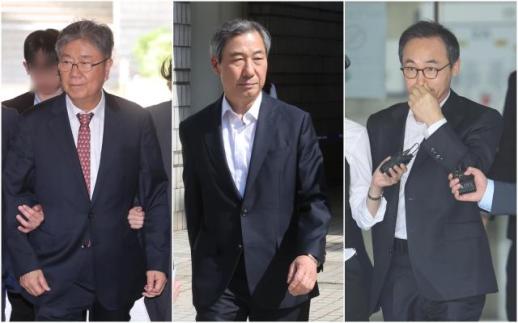 Court Issues Arrest Warrants for Kim Dae-ki and Yoon Jae-soon in Budget Misuse Case The Seoul Central District Court has issued arrest warrants for Kim Dae-ki, former chief of staff, and Yoon Jae-soon, former secretary for general affairs, in connection with allegations of illegal budget reallocations during the relocation of the presidential residence from Cheong Wa Dae to Hannam-dong. This marks the first arrest since the special prosecutor's team, led by Kwon Chang-young, was established in February. The court conducted a pre-arrest hearing for Kim Dae-ki, Yoon Jae-soon, and Kim O-jin, former secretary for management, on May 22, starting at 4 p.m. and concluding with the issuance of warrants for Kim and Yoon around 11:30 p.m. However, Kim O-jin's warrant was denied. The court determined that Kim Dae-ki and Yoon Jae-soon posed risks of flight and evidence destruction, warranting their arrest. In contrast, it found that Kim O-jin had acknowledged key facts and complied with bail conditions, thus posing no flight risk. The three officials are accused of illegally reallocating approximately 2.8 billion won (about $2.1 million) from the Ministry of the Interior and Safety's budget, which was unrelated to the relocation, to pay an unqualified contractor, 21Gram, for renovation work. The special prosecutor's team filed for arrest warrants on May 19, citing abuse of power. They revealed that despite objections from relevant departments, the officials illegally diverted funds from the Ministry of the Interior and Safety's budget for the management of government buildings, which was unrelated to the presidential residence. When the relocation was announced, former President Yoon Suk Yeol stated that the total cost for moving the presidential office and residence was estimated at about 49.6 billion won, with the relocation itself costing around 2.5 billion won. Of that, approximately 1.44 billion won was allocated for interior work. However, the special prosecutor's investigation found that the estimate provided by 21Gram for the renovation was about 4.12 billion won, but the presidential office proceeded with the work without verifying or adjusting the estimate. It was also revealed that necessary documents, such as contracts and blueprints, were not submitted at the time. The special prosecutor's team believes that the presidential office pressured the Ministry of the Interior and Safety to illegally reallocate 2.8 billion won in contingency funds to secure the increased construction costs. Reports obtained during the investigation indicated that the Ministry expressed difficulties in creating additional contingency funds. With the arrests of Kim Dae-ki and Yoon Jae-soon, the special prosecutor's team plans to investigate whether higher-ups in the presidential office, including Kim Geon-hee, were involved in the budget execution and contractor selection processes. A spokesperson for the special prosecutor's team stated, "We will adhere to legal procedures while striving to clarify the points of profit arising from illegal activities during the relocation process to address public concerns."* This article has been translated by AI. 2026-05-23 20:08:44
 -
 Justice Ministry Orders Review of Starbucks 'Tank Day' Controversy The Justice Ministry has instructed the Supreme Prosecutors' Office to review the status of events related to Starbucks' 'Tank Day' promotion amid ongoing controversy. On May 22, the ministry announced in a press release that it had directed the Supreme Prosecutors' Office to assess the status of surveys, contests, and events utilizing the promotional items. However, in response to reports from multiple media outlets suggesting potential disciplinary actions against purchasers of the promotional items, the ministry stated, "This is completely untrue." A ministry official added, "We have never conducted an event using Starbucks products before, so disciplinary actions are out of the question." Earlier, several media outlets, including TV Chosun, reported that the Justice Ministry had instructed the Supreme Prosecutors' Office to report on the purchase records of Starbucks products. The reports indicated that the ministry requested details specifically for items such as Starbucks tumblers, gift cards, and e-gift certificates, excluding simple coffee purchases. The controversy surrounding Starbucks' 'Tank Day' promotion erupted on May 18, prompting strong criticism from government officials, including President Lee Jae-myung, Justice Minister Jeong Sung-ho, and Minister of the Interior and Safety Yoon Ho-jung. This has led to a widespread boycott of Starbucks within government circles. Minister Yoon declared a de facto boycott of Starbucks on social media the day before, stating, "We will not provide products from companies that trivialize the history and values of democracy or exploit them for commercial purposes." Minister Jeong also expressed on social media on May 20, "If the ruling and opposition parties had agreed to include the spirit of May 18 in the constitutional preamble just 13 days ago, and if it had passed through the National Assembly, such an outrageous act as Starbucks' 'Tank Day' would not have even been conceivable. The path to restoring justice and common sense is long and arduous, but the Justice Ministry will fulfill its responsibilities."* This article has been translated by AI. 2026-05-23 18:58:11
 -
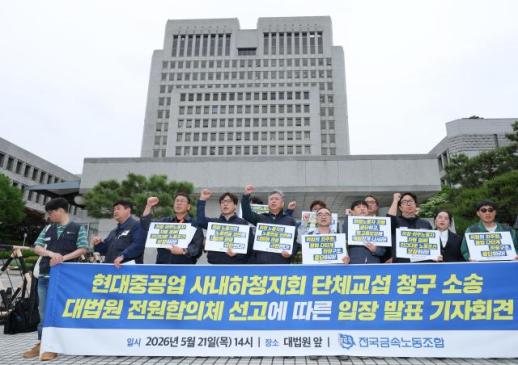 Lawyers Group Condemns Supreme Court Ruling on Hyundai Heavy Industries Union Negotiations The Lawyers for a Democratic Society (Minbyeon) has strongly condemned the Supreme Court's ruling that dismissed a collective bargaining request by the subcontracted workers' union at Hyundai Heavy Industries, calling it unconstitutional and outdated. On May 22, Minbyeon stated in a commentary that "the three rights of labor are specific rights that directly take effect under constitutional provisions, with the right to collective bargaining being the most fundamental." They emphasized that for this right to be guaranteed, it must be exercised against employers who effectively determine labor conditions. This criticism arises from the fact that subcontractors have historically avoided negotiations by claiming they lack authority without the approval of the primary contractor. The Supreme Court's ruling, which absolves the primary contractor of responsibility, is seen as contrary to the spirit of the constitution. Minbyeon particularly criticized Hyundai Heavy Industries for pursuing profits by employing subcontracted workers instead of regular employees while evading the responsibilities and risks that come with being an employer. They asserted, "It is a basic legal principle that where there is profit, there is responsibility," arguing that the primary contractor, which benefits from the use of subcontracted workers, has an obligation to respond to the inevitable demands for collective bargaining. Furthermore, Minbyeon stated that this ruling undermines the significance of the Supreme Court as the highest judicial body responsible for realizing constitutional values. They also claimed that the Supreme Court distorted the intent of the amended labor law. The amended law recognizes those who exercise substantial and concrete control as employers, confirming previous rulings and decisions by the Central Labor Relations Commission, yet the majority opinion of the Supreme Court treated this as a new creation of rights. Minbyeon concluded, "Strengthening the responsibilities of primary employers and recognizing their employer status is an irreversible trend of the times," pledging to stand in solidarity with subcontracted workers fighting for their labor rights and to monitor closely to prevent the recurrence of such regressive rulings. The day before, the Supreme Court's full bench, led by Justice Oh Kyung-mi, ruled in favor of Hyundai Heavy Industries, stating that there is no obligation to engage in collective bargaining in the case brought by the subcontracted workers' union in 2017.* This article has been translated by AI. 2026-05-23 18:27:26
 -
 Police Accelerate Investigation into Starbucks 'Tank Day' Controversy Involving Shinsegae Chairman Police are intensifying their investigation into Shinsegae Group Chairman Jeong Yong-jin, who has been accused of mocking the May 18 Democratic Movement through Starbucks' 'Tank Day' promotion. According to police on May 22, the Seoul Metropolitan Police Agency's Public Crime Investigation Unit summoned Kim Soon-hwan, Secretary General of the Citizens' Committee for the Protection of the People’s Livelihood, to the Mapo Police Station to investigate the circumstances surrounding the complaint. On May 20, the Citizens' Committee filed a complaint against Jeong and former Starbucks Korea CEO Son Jong-hyun for defamation and insult. The committee alleged that Starbucks Korea used promotional phrases like 'Tank Day' and 'On the Desk' while marketing its 'Tank Tumbler Series' on May 18, the 46th anniversary of the democratic movement, thereby insulting the families of the victims and the citizens of Gwangju. They filed the complaint against Son, Starbucks Korea employees, and Jeong, the company's largest shareholder. Initially, the case was assigned to the Gangnam Police Station, but due to the seriousness of the matter, it was reassigned to the Seoul Metropolitan Police Agency's Public Crime Investigation Unit. The Gangnam Police were scheduled to conduct a witness investigation on May 29, but the Seoul police expedited the process and questioned Kim just one day after the case was reassigned. Meanwhile, Jeong was reportedly on a business trip abroad but returned to South Korea shortly after the incident. However, after issuing a public apology, he has not made any further statements, leading to ongoing protests from civic groups related to the May 18 movement.* This article has been translated by AI. 2026-05-23 18:03:23