
Journalist

Kwon Kyu-hong
spikekwon@ajunews.com
-
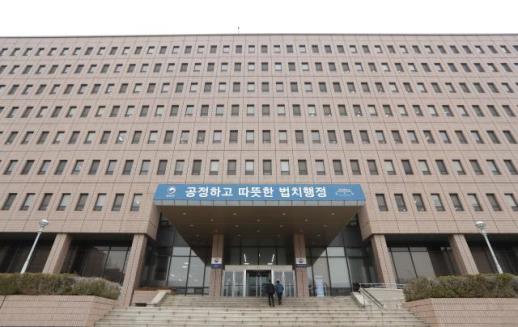 Legal Risks for Companies Expanding Abroad: Solutions Sought at Joint Seminar As uncertainties in the global trade order deepen, a joint legal seminar was held to assist South Korean companies expanding abroad and to enhance their legal risk management capabilities. On May 14, the Ministry of Justice, in collaboration with the Korea Chamber of Commerce and Industry and the World Bank, hosted a seminar aimed at presenting the latest international regulatory trends and practical strategies for companies venturing overseas. This seminar was organized to explore effective legal solutions that businesses face on the ground due to geopolitical conflicts and increased regulations in various countries. Approximately 120 attendees, including Kang Jun-ha, Director of the International Legal Affairs Bureau at the Ministry of Justice; Lee Hyung-hee, Vice Chairman of the Seoul Chamber of Commerce and Industry; and Lisa Miller, Director of the Integrity Vice Presidency at the World Bank, showed significant interest in the event. The seminar consisted of four specialized sessions focused on practical information sharing. Key topics included: global compliance standards, recent enforcement trends of the U.S. Foreign Corrupt Practices Act (FCPA), critical points regarding changes in U.S. customs and trade policies, and legal risks and response strategies related to the situation in the Middle East, covering the latest international legal issues faced by South Korean companies. In his welcoming remarks, Director Kang stated, "Today, our companies are facing unprecedented uncertainty and crises, but if the government and businesses work closely together, 2026 will be recorded not as an economic crisis but as a new opportunity for South Korea." He emphasized that the Ministry of Justice will be a strong supporter to help South Korean companies thrive on the global stage. The Ministry of Justice plans to strengthen its collaboration with the Korea Chamber of Commerce and Industry to provide multifaceted support, enabling more companies to adapt flexibly to changes in the Middle East and establish compliance management systems. Through these efforts, the Ministry aims to serve as a practical legal ally for South Korean companies, helping them overcome uncertainties in the international trade order and secure competitiveness in the global market.* This article has been translated by AI. 2026-05-14 18:36:33
 -
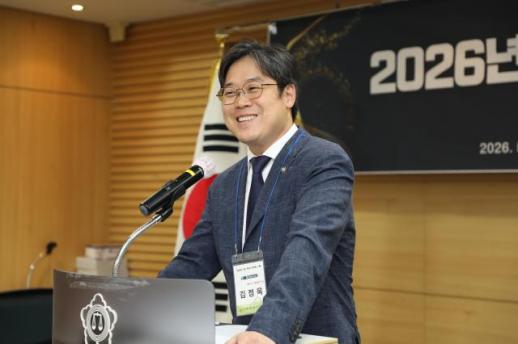 Korean Bar Association Hosts Mentoring Event for New Lawyers Senior lawyers stepped in as guides for new attorneys who recently passed the 15th Bar Exam and are beginning their legal careers. On May 13, the Korean Bar Association's Young Lawyers Committee successfully held the "2026 New Lawyer Mentoring" event at the seminar room of the Korean Bar Association headquarters in Seocho-dong, Seoul. The event was designed for 120 new lawyers to provide practical strategies for adapting to the rapidly changing legal environment and enhancing their professional skills. The atmosphere was serious yet vibrant, filled with the enthusiasm of new lawyers and heartfelt advice from their seniors. In his opening remarks, Kim Jung-wook, President of the Korean Bar Association, assessed the current legal market as challenging due to the surge in the number of lawyers and the rise of legal tech and AI. He encouraged the new lawyers to boldly challenge new areas of work based on their accumulated passion, stating, "If you do so, you will surely achieve meaningful success." He also expressed hope that the connections between seniors and juniors would provide significant support in their long journey ahead. Jo Soon-yeol, President of the Seoul Bar Association, also urged the new lawyers in his remarks to explore various paths in public service, corporate law, litigation, and international law, while emphasizing the importance of integrity and commitment to the right path. Kim Ji-soo, Chair of the Young Lawyers Committee, welcomed the attendees by acknowledging the mixed feelings of excitement and uncertainty that come with starting a new career, hoping that the event would help alleviate those feelings. The highlight of the event was a special lecture titled "Career Seminar for New Lawyers," conducted by Kim Seung-hyun, Vice President of the Korean Bar Association. He shared specific strategies for becoming a "chosen lawyer" in the job market. He emphasized that when writing a resume, it is crucial to connect work-related strengths with specific examples, rather than relying on common background stories, to create a "unique small difference." He also provided practical tips on interview attitudes, timing for job transitions, and preparation tailored to various institutions such as law firms, in-house counsel, and public agencies, which received a positive response. Following the lecture, 36 senior lawyers from diverse fields, including employment, private practice, courts, prosecution, startups, and in-house counsel, participated as mentors in group mentoring sessions. New lawyers openly shared their practical challenges and career concerns, while mentors responded with vivid experiences and insights from the field. One new lawyer expressed satisfaction, saying, "I had many concerns about my career after passing the exam, but hearing specific advice from current seniors has clarified my direction moving forward." A representative from the Korean Bar Association stated, "We plan to continue providing various support programs and networking opportunities to help new lawyers develop their expertise with pride." 2026-05-14 16:37:09
 -
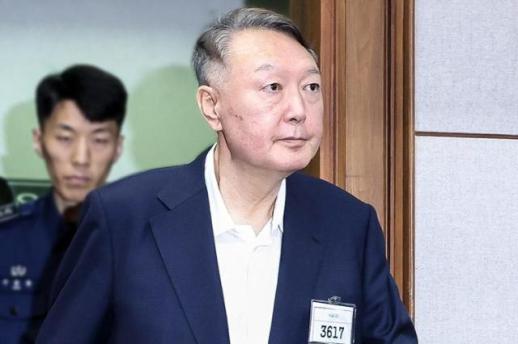 Yoon Suk Yeol and Co-Defendants Request Recusal of Judges in Insurrection Case Yoon Suk Yeol's insurrection case faced disruptions on its first day as he and other key defendants filed for the recusal of the judges, leading to a temporary halt in proceedings. On May 14, the Seoul High Court's Criminal Division 12-1, presided over by judges Lee Seung-cheol, Jo Jin-goo, and Kim Min-ah, announced that it would separate the arguments and schedule future hearings after acknowledging the recusal request from Yoon's legal team. Yoon, who submitted a notice of absence the previous day, did not attend court. Before the trial commenced, lawyers for former Defense Minister Kim Yong-hyun expressed their discontent after the court dismissed their request for a constitutional review of the insurrection court law. Attorney Lee Ha-sang argued, "It is inappropriate for the insurrection court to judge the constitutionality of its own law," and requested time to consider the recusal application. The court agreed to a five-minute recess, after which Lee submitted the recusal request. Following Kim, former Intelligence Chief Noh Sang-won and former Military Police Commander Kim Yong-gun joined the recusal motion for similar reasons. As the key defendants continued to file for recusal, the special prosecution team argued that the requests were clearly intended to delay the proceedings and urged the court to issue a summary dismissal. A summary dismissal allows judges to reject frivolous recusal requests that aim to stall the trial. However, the court stated, "At this stage, it is difficult to conclude that the requests are clearly intended to delay the proceedings," emphasizing the need for procedural clarity. Consequently, the arguments were separated, and the trial for Kim Yong-hyun, Noh Sang-won, and Kim Yong-gun was paused, with all four defendants exiting the courtroom. After separating the arguments, the special prosecution team read the appeal summary for the remaining defendants. They asserted that the case was not a spontaneous insurrection but rather a calculated conspiracy, claiming that the lower court had misinterpreted facts and legal principles. They highlighted that crucial evidence, including Noh's notebook and memos from Lee Jin-woo and Yeo In-hyung, had not been properly acknowledged by the lower court. The prosecution noted, "Specific preparations for a state of emergency were confirmed starting around October 2024," stating that the notebook contained over 70 pages of detailed discussions on the arrest and detention of politicians and judges, as well as the selection of personnel for explosive operations. They also pointed out that Yoon had made threatening remarks about shooting anyone who brought him in after mentioning key politicians during a meeting at his residence, indicating the defendants' intent to disrupt the constitutional order. The prosecution further claimed that evidence from Lee Jin-woo's phone notes clearly indicated attempts to co-opt military commanders through clandestine meetings and provoke North Korean military provocations to create conditions for a state of emergency. They argued that the lower court had excessively strict interpretations regarding the admissibility of evidence and called for severe sentences for the defendants. In the afternoon session, arguments were presented regarding the high-ranking police defendants, including former Police Chief Jo Ji-ho. Jo's attorney contended, "The prosecution's account of the insurrection preparations does not mention police involvement even once," asserting that the police were only passively deployed to maintain order on the day of the events and were not part of the insurrection leadership. The defense further claimed that the police's role in the insurrection process was minimal and that Jo only became aware of the situation on that day. They urged the court to consider Jo's serious health condition, as he is currently suffering from advanced blood cancer, and to acquit him. In contrast, the prosecution pointed to former Police Investigation Planning Coordinator Yoon Seung-young, stating, "Police officials who have held key investigative positions for years would not have been unaware of the unconstitutional nature of the proclamation," arguing that executing orders for arrests without warrants constituted clear abuse of power and involvement in the insurrection. Meanwhile, the court allowed live broadcasting of the proceedings, considering the case's significance and public interest. Although there were some objections from the defense, the presiding judge stated that the trial would be broadcasted to balance public interest with the defendants' right to counter-argument, with the condition that filming could be halted if there were concerns about national security or public morals. With the key defendants filing for recusal, the trial will proceed for now only against Jo Ji-ho, former Seoul Police Chief Kim Bong-sik, former National Assembly Security Chief Mok Hyun-tae, and former Investigation Planning Coordinator Yoon Seung-young. 2026-05-14 16:18:07
 -
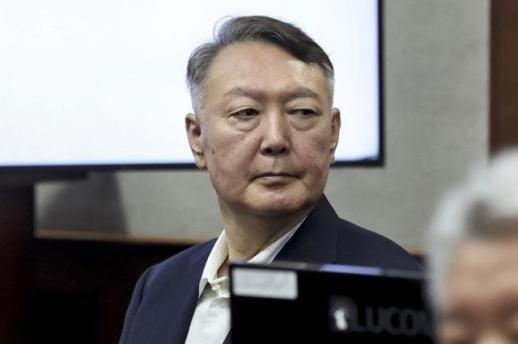 Yoon Suk Yeol Requests Recusal of Judges in Rebellion Case Yoon Suk Yeol, who was sentenced to life in prison for his role in a rebellion during the December 3 emergency martial law, has filed a request for the recusal of judges ahead of his appeal hearing. On May 13, Yoon's legal team announced in a statement to reporters that they had submitted a recusal request to the Seoul High Court concerning the three judges of the 12-1 Criminal Division. The panel includes judges Lee Seung-cheol, Jo Jin-goo, and Kim Min-ah, who are set to preside over Yoon's appeal regarding charges of being a rebellion leader. A recusal request is a legal procedure under criminal law that allows either the prosecution or the defense to seek the exclusion of a judge if there is a concern about unfairness in the trial. Yoon's team argued that they cannot expect a fair trial from judges who have publicly expressed a presumption of guilt. Previously, on May 7, the 12-1 Criminal Division sentenced former Prime Minister Han Duck-soo to 15 years in prison for his involvement in rebellion-related duties. Yoon's lawyers claimed that during Han's appeal, the judges revealed a presumption of guilt regarding Yoon's charges, which they argue constitutes grounds for recusal due to the potential for an unfair trial. They specifically noted that the judges used concrete expressions acknowledging Yoon's alleged involvement in Han's case, which they believe prejudiced the outcome of the trial. Furthermore, they pointed out that some media outlets reported after Han's sentencing that a guilty verdict for Yoon's rebellion charges was likely, stating that concerns about an unfair trial are reasonable from an average person's perspective. Yoon is scheduled for the first hearing in his appeal on May 14. He was convicted of inciting a rebellion aimed at undermining the constitution by conspiring with former Defense Minister Kim Yong-hyun to declare a state of emergency on December 3. The trial will also include seven military and police leaders charged with involvement in the rebellion alongside Yoon and Kim.* This article has been translated by AI. 2026-05-13 18:36:51
 -
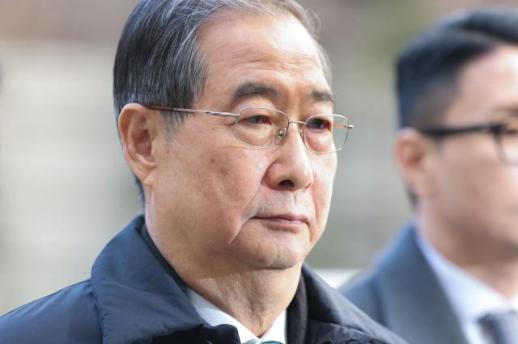 Han Deok-soo Appeals 15-Year Sentence for Role in Coup-Related Charges Han Deok-soo, sentenced to 15 years in prison for his involvement in the December 3 martial law declaration and related coup duties, has filed an appeal against the ruling. According to legal sources on May 11, Han's legal team submitted the appeal to the Seoul High Court's Criminal Division 12-1, which presided over his case. On May 7, the appellate court sentenced Han to 15 years, reducing his initial 23-year sentence by eight years; however, it maintained guilty verdicts on most of the key charges. The court determined that Han had suggested holding a cabinet meeting to create the appearance of proper procedure during the martial law declaration and led the signing of related documents afterward, which constituted significant involvement in the coup. Additionally, the court found him guilty of concealing legal flaws by signing and then discarding the declaration document, as well as perjury for claiming during the Constitutional Court impeachment trial that he had not seen the martial law declaration. Following the appellate ruling, Han's legal team stated that they found the verdict "unacceptable in terms of factual and legal aspects" and indicated they would consider appealing. As a result, the Supreme Court is expected to engage in a rigorous legal debate over whether Han's actions during the martial law period constituted essential participation in the coup or merely complicity.* This article has been translated by AI. 2026-05-12 04:23:09
 -
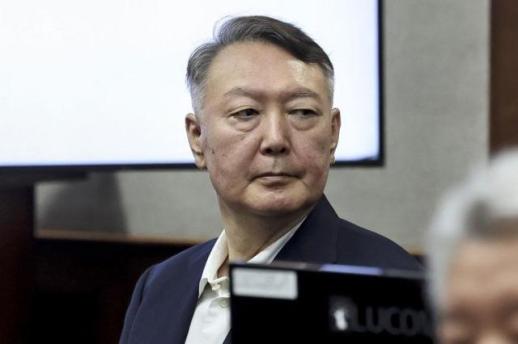 Court Fines Yoon Woo-jin 3 Million Won for Failing to Appear as Witness in Yoon Suk Yeol Case In a trial concerning allegations of disseminating false information during the 20th presidential election, former President Yoon Suk Yeol's witness, former tax office chief Yoon Woo-jin, failed to appear. As a result, the court imposed a fine on Yoon Woo-jin and issued an arrest warrant. On May 11, the Seoul Central District Court's Criminal Division 21, presided over by Judge Cho Soon-pyo, fined Yoon Woo-jin 3 million won for his absence from the trial related to the violation of the Public Election Act. The court noted that Yoon Woo-jin submitted a notice of absence citing panic disorder and lung disease. In response, the special prosecutor's team, led by Min Jung-ki, expressed their intention to execute the arrest warrant for Yoon Woo-jin, which the court accepted. The next hearing is scheduled for June 8, and the court decided to conclude arguments and deliver a ruling on July 10 at 2 p.m., regardless of Yoon Woo-jin's attendance. During the court proceedings, there was a heated debate regarding the special prosecutor's investigation procedures. The defense for Yoon Suk Yeol argued that the special prosecutor filed charges without investigating key witnesses, including attorney Lee Nam-seok and Yoon Woo-jin, claiming it was a politically motivated indictment. Specifically, Yoon Suk Yeol stated, "It is common sense to investigate witnesses before calling in suspects. They seem to have aimed to sensationalize the issue by indicting without any investigation. If they had questioned this attorney, they could not have possibly filed charges against me." Yoon's attorney also added that the indictment was politically motivated, considering the context of a specific party's election funding return. In response, the special prosecutor's team countered that delays in summoning the defendant until December made the timeline very tight, stating, "The submission of supplementary evidence occurred after the indictment due to the delay in investigating key defendants." Additionally, Yoon Suk Yeol firmly denied allegations of disseminating false information regarding the presence of Jeon Seong-bae, a shaman, and First Lady Kim Geon-hee. He claimed, "I understand Jeon to be a Buddhist, not a shaman. Meeting a Buddhist during the election should not be an issue, as it was merely a response to attempts to separate a leading candidate from the religious community." Conversely, the special prosecutor's team presented media reports, asserting that there was clear evidence and testimonies indicating that Jeon and Kim had met in a three-person gathering, accusing the defendant of spreading false information to deny the connection with his spouse. Furthermore, the special prosecutor's team submitted a text message from 2012 in which attorney Lee Nam-seok stated, "I texted after hearing from Yoon Suk Yeol," to pressure the former president. After hearing arguments from both sides, the court requested additional relevant press materials from both parties.* This article has been translated by AI. 2026-05-12 03:35:26
 -
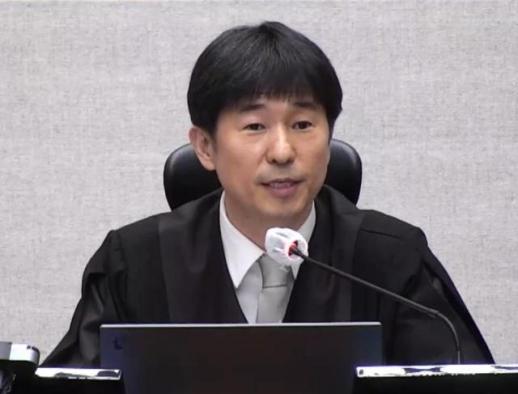 Judge Ji Gwi-yeon Questioned by Anti-Corruption Agency Over Room Salon Allegations Yoon Suk Yeol's former chief judge in the insurrection case, Ji Gwi-yeon of the Seoul Northern District Court, has been summoned for questioning by the Anti-Corruption and Civil Rights Commission (ACRC) over allegations related to a room salon. According to legal sources on May 11, the ACRC questioned Judge Ji as a suspect on May 7 regarding charges of bribery and violations of anti-corruption laws. This marks the first time Judge Ji has faced questioning since the ACRC initiated a forced investigation six months ago in November of last year. Judge Ji made headlines in March 2023 when he ruled that the detention period for former President Yoon Suk Yeol, who was arrested on charges of insurrection and abuse of authority, should be calculated based on time rather than date, leading to significant criticism from opposition parties. In May of the same year, the Democratic Party released a photo allegedly showing Judge Ji seated with two companions at a bar in Gangnam, which was said to be a room salon where female employees provide entertainment. This revelation sparked controversy. During the trial of former President Yoon for insurrection, Judge Ji denied all allegations, stating, "The claims made are not true, and I have never considered being entertained. Above all, that era is over. No one even buys you pork belly and soju anymore." However, civic groups, including Candlelight Action, filed complaints against Judge Ji for bribery and violations of anti-corruption laws. The ACRC assigned the case to its investigation division, led by Chief Prosecutor Lee Dae-hwan, and obtained a search warrant from the court in November to seize Judge Ji's taxi app usage records, initiating a forced investigation. The Supreme Court's Ethics Office also began an investigation into the allegations but concluded in September that "it is difficult to recognize a connection to his duties." Judge Ji, who presided over the first trial of former President Yoon's insurrection case and sentenced him to life imprisonment in February, has since been reassigned to the civil division at the Seoul Northern District Court.* This article has been translated by AI. 2026-05-11 13:39:23
 -
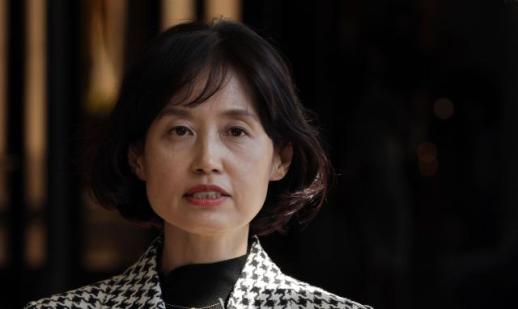 Park Eun-jung Wins Lawsuit Against Dismissal from Justice Ministry Park Eun-jung, a member of the Justice Innovation Party, has won a court ruling declaring her dismissal from the Justice Ministry during her tenure as unjust. On May 8, the Seoul Administrative Court's Administrative Division 4, led by Judge Kim Young-min, ruled in favor of Park in her lawsuit against the Justice Minister seeking to overturn her disciplinary action. In 2020, while serving as a disciplinary officer at the Justice Ministry, Park was accused of improperly using materials obtained during an investigation of Han Dong-hoon, then the Deputy Chief Prosecutor of the Busan High Prosecutors' Office, in the investigation of Yoon Suk Yeol, who was then the Prosecutor General. Following this, the Ministry's Disciplinary Committee imposed the highest level of disciplinary action, dismissal, on Park in February 2024, after the Yoon administration took office. Park contested the dismissal, claiming it was unjust, and filed a lawsuit against the Ministry. However, she did not wait for the court's decision and joined the Justice Innovation Party, subsequently running for the 22nd National Assembly elections, where she was elected as a proportional representative. The court stated, "The meetings of the Justice Ministry's Disciplinary Committee are part of the internal decision-making process, which is conducted in private," and concluded that there were no grounds to consider this as a public disclosure or leak. Additionally, the court clarified that Park's actions did not indicate an intent to gain personal benefit or undermine the fairness of her duties. The ruling emphasized that the dismissal appeared to stem from errors in judgment or procedural mistakes during the execution of her disciplinary duties, and that the dismissal was excessively harsh compared to the recognized reasons for it. In related news, the prosecution concluded in October of the previous year that there was no evidence to support allegations against Park regarding violations of the Communications Privacy Protection Act and the Personal Information Protection Act, as well as the leaking of official secrets.* This article has been translated by AI. 2026-05-08 17:35:58
 -
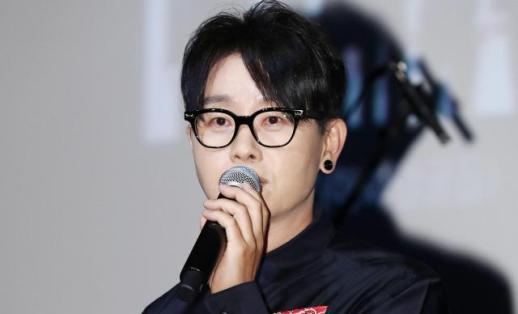 Lee Seung-hwan Wins Partial Victory in Lawsuit Over Concert Cancellation The Seoul Central District Court has ruled that the city of Gumi unlawfully canceled singer Lee Seung-hwan's concert venue reservation and ordered the city to pay damages. On May 8, Judge Park Nam-jun of the court's civil division ruled in favor of Lee, his agency Dream Factory, and ticket purchasers in a lawsuit against Gumi City and Mayor Kim Jang-ho. The court ordered Gumi City to pay 35 million won to Lee, 75 million won to his agency, and 1.5 million won to each of the 100 ticket buyers, totaling 125 million won. Lee's team initially sought 250 million won in damages, but the court recognized only about half of that amount. However, the court acknowledged Gumi City's legal responsibility while not holding Mayor Kim personally liable for damages. In December 2024, Lee planned to hold his 35th anniversary concert, titled 'Heaven,' at the Gumi Cultural and Arts Center. However, just two days before the event, on December 23, Gumi City unilaterally canceled the venue reservation, citing public safety concerns. During this process, Mayor Kim's office reportedly demanded that Lee submit a pledge not to engage in political speech. When Lee's team refused, Gumi City decided to cancel the reservation. Subsequently, Lee's team filed a lawsuit against Mayor Kim and Gumi City in January of the following year, claiming that the demand and the cancellation were illegal actions. After the ruling, Lee expressed his disappointment on Facebook, stating, "They said they could not hold Mayor Kim accountable. I am still unsatisfied with the ruling," and he announced his intention to appeal for justice. In relation to this case, Lee's team also filed a constitutional complaint with the Constitutional Court, arguing that the city's demand for a pledge infringed on freedom of expression. However, the court dismissed the complaint in March of last year, stating that it did not meet the necessary requirements. 2026-05-08 16:45:53
 -
 Special Prosecutors Clear Kim Kwan-young of Charges Related to Insurrection Special prosecutors have cleared Kim Kwan-young, the governor of Jeonbuk Special Self-Governing Province, of charges related to insurrection assistance during the martial law declared on December 3, 2024. On May 8, Kwon Chang-young, head of the second special prosecution team, announced in a press release that the investigation into the allegations against Kim had concluded with no charges filed. The team reportedly delivered a notice of non-prosecution to the Jeonbuk Provincial Office around 6 p.m. the previous day. The allegations stemmed from claims that during the martial law declared by former President Yoon Suk Yeol, Jeonbuk Province complied with directives from the Ministry of the Interior and Safety, including closing the provincial office and cooperating with the regional martial law command. The issue gained traction recently as Lee Won-taek, a fellow party candidate for governor, raised concerns during the election campaign. However, the special prosecutors' findings contradicted the allegations. The team confirmed that Kim publicly expressed the unconstitutionality of the martial law just 29 minutes after it was declared in a media interview. They stated, "It cannot be concluded that the governor acted with the intent to undermine the constitution by supporting the martial law." The investigation also found that key allegations, including the closure of the provincial office, the preparation of a provisional budget, and maintaining a cooperative system with the 35th Division's regional martial law command, were not substantiated. The case against the governor of Jeju Special Self-Governing Province, which was also under investigation for similar allegations related to the closure of the provincial office, was dismissed as well. The special prosecution team explained that this case was merely a re-filing of an already dismissed matter from a previous insurrection investigation, with no new evidence discovered. Upon receiving the notice of non-prosecution, Kim expressed his approval and strongly criticized Lee. During a press conference at the Jeonbuk Provincial Assembly, he stated, "I cooperated sincerely with the investigation according to the law and procedures, and the truth has been confirmed. I will not let Lee's political deception and insult to the citizens go unchallenged," indicating that he would consider legal actions in response. 2026-05-08 16:05:24