
Journalist

Lee Eun-byeon
star@ajunews.com
-
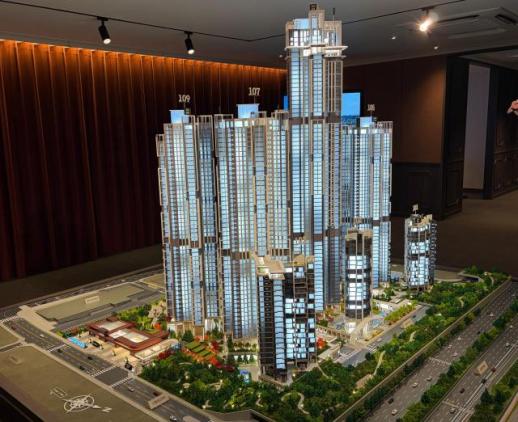 DL E&C Proposes 'Acro Apgujeong' in Competitive Apgujeong 5 District Reconstruction DL E&C has launched a comprehensive campaign in the competitive bidding for the reconstruction of Apgujeong 5 District, emphasizing a construction period of 57 months, a 244-pyeong super penthouse, and attractive financial conditions. The atmosphere is heating up as they openly challenge Hyundai Engineering for the support of district members. On May 19, DL E&C held a presentation at the promotional center for Apgujeong 5 District (Apgujeong Hanyang 1st and 2nd phases) located in the Taeseung Building in Sinsa-dong, Gangnam, Seoul, where they unveiled their proposal, 'Acro Apgujeong.' During the presentation, Shim Jae-seok, head of the urban redevelopment project team at DL E&C, stated, "'Acro Apgujeong' will achieve first place in relocation, first place in occupancy, and first place in market value," adding that the focus is on the structural quality and essence of the apartments rather than just their appearance. Following the 30-minute presentation, attendees gathered around a large model of the complex displayed in the center of the promotional center. The model depicted the future of Apgujeong 5 District, which will be reconstructed into a 6-story underground and 68-story above-ground complex with a total of 1,397 units. DL E&C emphasized that all units will be oriented southward, facing the Han River. Throughout the presentation, DL E&C highlighted 'specialized design' as a key competitive advantage. Of the 1,397 units, 1,293 will be designed as specialized units, ensuring that all 1,232 members can occupy at least one unit with specialized features. A notable differentiator is the '244-pyeong super penthouse,' which will occupy the top three floors of the building, making it the largest in the entire Apgujeong 2nd, 3rd, and 4th districts, according to DL E&C. A DL E&C representative remarked, "The existence of the super penthouse itself elevates the overall value of the complex," asserting their intention to secure the top-tier complex in Apgujeong, similar to the Acro River Park in Banpo. The interior of the units will feature a maximum ceiling height of 3 meters and a 5-bay structure that maximizes views of the Han River. Twelve sky community spaces, including a sky library and sky lounge, as well as parking spaces averaging 3.2 per household, were also presented as differentiating factors. Throughout the presentation, DL E&C continued to challenge Hyundai Engineering's proposal. They claimed that Hyundai's assertion of "100% Han River views for all units" is misleading, stating, "Only 67 units will have curved specialized designs," and emphasized the need to evaluate the actual views. DL E&C also criticized Hyundai's proposed aluminum sheet exterior finishing as a "cheap material," asserting that they will use high-quality ceramic panels that are 30-60% more expensive, enhancing durability and resistance to pollution. They noted that Hyundai had previously proposed ceramic panels for the Apgujeong 3 District. They released comparative data on the performance requirements for multi-family housing, claiming that they received higher ratings than Hyundai in most categories, including physical lifespan, concrete design strength, fire resistance, and sound insulation. They also highlighted that, according to statistics from the Ministry of Land, Infrastructure and Transport's Dispute Mediation Committee, they have had zero official defect cases since 2023. Financial conditions were also a key focus. DL E&C proposed a loan-to-value ratio of 150% for relocation funds, a 0% interest rate on mandatory project costs, a maximum 7-year deferral on contribution payments after occupancy, and full funding for the cooperative's project costs. They specifically proposed a construction period of 57 months, shorter than the original plan of 63 months and Hyundai's proposal of 67 months. DL E&C explained that this 10-month reduction could save approximately 1 billion won per unit, totaling 1.232 trillion won in financial costs. DL E&C emphasized that "Apgujeong 5 District is the only project the company is focusing on," allowing them to offer competitive conditions with minimal margins. They argued that Hyundai's financial conditions from previous projects in Apgujeong 2 and 3 districts would limit their ability to offer better terms for the 5th district. They added, "There are no hidden numbers as criticized by Hyundai. Please look at the numbers as they are. DL E&C is essentially all-in on Apgujeong 5 District." Exiting the promotional center, banners announcing the upcoming contractor selection meeting were visible throughout the Apgujeong 5 District, with activity from members and stakeholders continuing. On the same day, a site briefing was actively taking place in the nearby Apgujeong 3 District, and Hyundai's promotional vehicles were seen circulating the area. The entire Apgujeong area appeared to be in a competitive atmosphere for reconstruction bids. The Apgujeong 5 District boasts a strong location advantage, with the nearest Dongin 3 building just a 10-minute walk from the Apgujeong Rodeo Station on the Bundang Line. During the weekday afternoon visit, residents were spotted using umbrellas while heading towards the Galleria Department Store. The Apgujeong 5 District is indeed adjacent to a vibrant shopping area. The area is also home to numerous popular restaurants, boutiques, and cafes around Apgujeong Rodeo Street and Dosan Park. With the potential for Han River views, competition for high-end residential properties in the Gangnam area is expected to intensify. The contractor selection meeting for Apgujeong 5 District is scheduled for May 30, where the final contractor will be chosen between Hyundai Engineering and DL E&C. The construction cost is estimated at approximately 1.5 trillion won.* This article has been translated by AI. 2026-05-19 15:22:21
 -
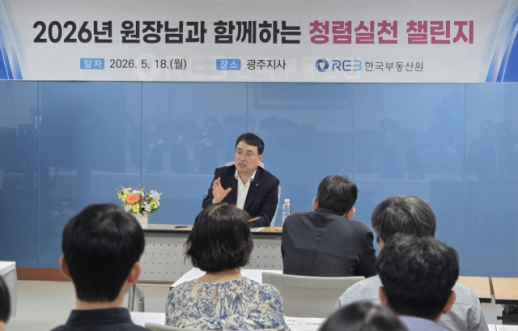 Corruption in Passive Administration: Lee Heon-wook Launches Nationwide Integrity Campaign The Korea Real Estate Agency has launched an "Integrity Campaign" led by Lee Heon-wook, who will visit various locations across the country to share a culture of integrity with employees. He emphasized the importance of consumer protection in real estate and balanced national development as new values of integrity, advocating for proactive administration focused on fieldwork. On May 19, the Korea Real Estate Agency reported that Lee Heon-wook held the first event of the "Integrity Campaign" at the Honam Regional Headquarters on May 18, where he discussed strategies for promoting a culture of integrity among employees. The "Integrity Campaign" is a program initiated by Lee, involving visits to regional headquarters and branches to communicate with staff. The agency plans to spread the values of "New Integrity" starting from the Honam Regional Headquarters and continuing to major regional offices and branches nationwide. During the event, Lee encouraged field staff and highlighted the significance of enhancing measures for balanced national development and consumer protection in real estate, which are key anti-corruption initiatives for the agency this year. He defined not only traditional corruption, such as bribery and illicit solicitation, but also passive administration—administrative errors and neglect of practices—as a form of corruption, urging a proactive work attitude. Lee stated, "Branch staff are the face of our agency, proving our level of integrity at the closest point to the public. We will do our best to create an environment where employees can work with conviction to achieve the goals of housing stability for the public and consumer protection in real estate." Lee Heon-wook was appointed as the 17th president of the Korea Real Estate Agency on February 25. He graduated from Seoul National University’s College of Engineering and passed the 40th National Bar Examination. He has worked as a public interest lawyer and served as the president of the Gyeonggi Housing and Urban Corporation (GH). His term lasts for three years from the date of appointment.* This article has been translated by AI. 2026-05-19 15:06:54
 -
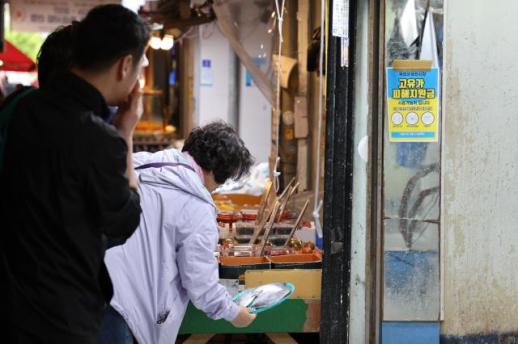 Senior Consumers Drive Growth in Seoul's Traditional Markets Seoul's commercial landscape is undergoing a transformation. While the growth of areas once dominated by young consumers, such as Hongdae and Sinchon, has slowed, traditional markets like Cheongnyangni, Jongno 3-ga, and Suyu are rapidly expanding, driven by a significant increase in spending from consumers aged 60 and older. Analysts suggest that the era of youth-driven consumer trends is giving way to a renewed focus on senior consumers and the rediscovery of established commercial districts. An analysis of data from the Seoul City Commercial Analysis Service on May 18 revealed a notable increase in sales in areas with a high proportion of consumers aged 60 and above. Traditional markets, long-established businesses, and sectors such as healthcare, jewelry, and essential services are experiencing growth based on senior consumer spending. A prime example is the area around Cheongnyangni Station, where the proportion of consumers aged 60 and older is 34.1%, one of the highest among major commercial districts analyzed. During the same period, sales in the Cheongnyangni area surged by 228%. Historically recognized for its significant middle-aged and elderly consumer base, Cheongnyangni is now emerging as a key commercial hub in northeastern Seoul, bolstered by mixed-use developments and improved transportation networks. Suyu Traditional Market has also shown impressive growth, with sales increasing by 302% over the past five years. Similarly, the Jongno 3-ga area experienced a 71% increase during the same timeframe. These regions share a commonality in their strong demand for sectors catering to middle-aged and elderly consumers, including jewelry, traditional medicine, and dining options. In contrast, the growth of areas traditionally favored by younger consumers has stagnated. The Hongdae area saw a mere 16% increase in sales, while Sinchon experienced an 8% decline. Although both areas still attract a significant number of visitors in their 20s and 30s, they are no longer driving explosive growth in consumer spending as they once did. This shift is attributed to changes in demographics and consumer behavior. Over the past five years, the population of individuals in their 20s in Seoul has decreased from 1.63 million to 1.49 million, a decline of 8.6%. Additionally, the movement of consumer spending from offline to online platforms has contributed to the slowdown in growth for youth-oriented commercial areas. Conversely, the consumer base aged 60 and older is expanding rapidly. As the baby boomer generation enters retirement, the phenomenon of "active seniors" is becoming more pronounced. This demographic is increasingly engaged in dining out, health management, and leisure activities, demonstrating strong loyalty to the offline markets they have frequented for years. Particularly in areas like Cheongnyangni, Jongno 3-ga, and Suyu Traditional Market, these long-established districts serve as vital consumer hubs, offering not just retail options but also healthcare, pharmacies, traditional markets, restaurants, and essential services. This aligns well with the senior consumer pattern of wanting to see, buy, and enjoy their purchases while addressing healthcare, food, and dining needs all in one visit. Moreover, the trend of "retro consumption" among younger consumers is contributing to a reevaluation of these older commercial areas. Once considered outdated, traditional markets and long-standing businesses are being reinterpreted as "hip" spaces among younger crowds. The stable consumer base of seniors, combined with the influx of younger visitors, is broadening the appeal of these districts. However, not all older commercial areas are thriving. For senior consumer spending to translate into growth, factors such as transportation accessibility, diversity of businesses, density of essential services, and residential demand must be present. Cheongnyangni benefits from integrated transport development, while Jongno 3-ga maintains specialized sectors like jewelry, healthcare, and dining. Suyu Traditional Market plays a strong role in capturing local consumer spending. Song Seung-hyun, CEO of Urban and Economy, noted, "Consumers aged 60 and older have accumulated extensive experience using traditional offline markets, which influences their preference for direct purchasing, dining, and enjoyment." He added, "Old commercial areas like Cheongnyangni and Jongno are not just retail spaces; they also evoke nostalgia for seniors through offerings like fresh produce, seafood, and traditional medicine. Markets like Cheongnyangni and Gwangjang are regaining competitiveness by maintaining structures that allow for both wholesale and retail activities."* This article has been translated by AI. 2026-05-18 20:05:05
 -
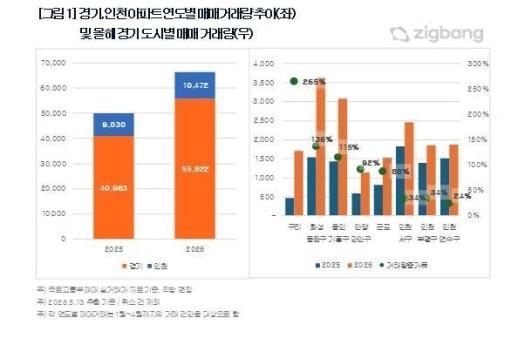 Apartment Transactions Surge 265% in Guri as Buyers Shift from Seoul As regulations in Seoul tightened this year, demand has shifted to the Gyeonggi and Incheon apartment markets, resulting in a more than 30% increase in transaction volume compared to last year. According to Zigbang, from January to April 2026, the number of apartment transactions in Gyeonggi and Incheon reached 66,294, a 33% increase from 50,013 during the same period last year. This surge is attributed to buyers dispersing to areas with relatively fewer regulations as land transaction permission zones were expanded across Seoul. In Gyeonggi Province, apartment transactions rose from 40,983 in the first four months of 2025 to 55,822 in the same period this year, marking a 36% increase. Notably, Guri City saw the largest increase, with transactions soaring 265% from 486 last year to 1,708 this year. Industry experts believe that the anticipated GTX-B line and the extension of Subway Line 6, along with expectations for redevelopment, have driven this increase. The exclusion of certain areas from land transaction permission zones and regulatory regions has also played a role. In particular, transaction volume in Inchang-dong, Guri City, jumped more than fourfold from 186 last year to 778 this year. The Inchang Jugong Complex 2 and Inchang Jugong Complex 6, both with redevelopment potential, recorded 64 transactions each, reflecting the most active trading. Other areas also showed significant increases, including Dongtan in Hwaseong (136%), Giheung in Yongin (115%), and Manan in Anyang (92%). Analysts suggest that the expansion of transportation networks, the establishment of semiconductor industrial complexes, and ongoing redevelopment projects have stimulated buyer interest. This trend indicates a clear movement toward areas like Guri and Anyang, which offer improved living conditions and proximity to workplaces. According to the real estate platform Asil, the Inchang 4 Complex in Guri City recorded a new high of 678 million won last month. Additionally, the Daelim Hansup in Su-taek-dong, Guri City, also set a new record at 694 million won in April. In contrast, the transaction volumes in Bundang, Seongnam, and Gwacheon, both designated as land transaction permission zones and regulatory areas, decreased by 30% and 77%, respectively, during the same period. Incheon also experienced an increase in transactions. From January to April 2026, the number of apartment transactions in Incheon reached 10,472, up 16% from 9,030 last year. Seo-gu and Bupyeong-gu saw increases of 34% each, while Yeonsu-gu rose by 24%, leading the transaction growth. Kim Eun-sun, head of Zigbang's Big Data Lab, stated, "Amid recent instability in the rental market, some demand for leases is shifting toward purchases. With relatively lower loan thresholds and the ability to buy with jeonse (key money), demand is dispersing to Gyeonggi areas. Transactions are notably increasing in complexes with development prospects, such as improved transportation and redevelopment projects."* This article has been translated by AI. 2026-05-18 13:32:29
 -
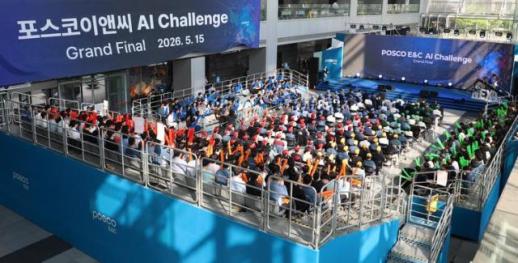 POSCO E&C Unveils AI Innovations at Company-Wide Challenge POSCO E&C has launched a company-wide AI challenge aimed at discovering innovative applications of artificial intelligence (AI) to transform construction site operations. Notably, an AI model for automating work report creation has been highlighted for its potential to save hundreds of hours of labor annually. On May 17, POSCO E&C announced the conclusion of its "Company-Wide AI Challenge," which began on March 24. The competition involved all employees, including field staff, who engaged in learning and applying AI technologies directly to their work. The challenge featured four categories: video, reports, AI agents, and a golden bell quiz, with nearly half of the workforce, totaling 1,887 participants. The standout achievement was the top entry in the AI agent category, the "Work Report Automation AI Agent." Previously, employees from partner companies communicated work details via social media, requiring site managers to manually compile these into daily reports. This AI agent automates that process, reducing repetitive tasks that previously took over 90 minutes each day. POSCO E&C estimates that this translates to approximately 375 hours of labor saved per site manager annually. In the report category finals, participants were tasked with using AI in real-time to produce executive-level reports without prior topic disclosure. POSCO E&C stated this approach validated practical AI application skills among employees. A company representative noted, "The greatest achievement of this competition is that employees have begun to see AI not as a technology unrelated to them, but as a 'colleague that changes their work.' We have laid the groundwork for a smart work culture that reduces repetitive tasks and allows for a focus on more essential duties through AI-driven innovation." However, challenges remain in training AI due to the prevalence of informal language, jargon, and typographical errors in the unstructured data typical of construction sites. To improve the quality of AI training data, efforts are needed to standardize scattered site data, along with the establishment of government guidelines.* This article has been translated by AI. 2026-05-17 17:54:09
 -
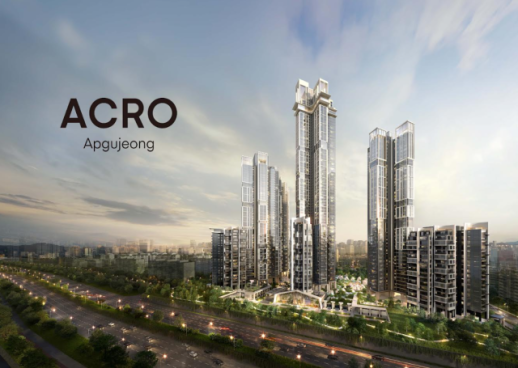 DL E&C Proposes 10-Month Construction Timeline Reduction for Apgujeong 5 District As the selection of a construction company for the highly competitive Apgujeong 5 District reconstruction project approaches, DL E&C is intensifying its efforts to win over union members by emphasizing a shortened construction timeline and financial benefits, leading to a fierce bidding war with Hyundai Construction. According to Yonhap News on May 17, DL E&C announced on May 16 during a briefing at the joint promotional center for the Apgujeong 5 District reconstruction project in Gangnam, Seoul, that it proposed a construction period of 57 months, reduced from the previous timeline. A DL E&C representative stated at the briefing, "By shortening the construction period by 10 months, we aim to lower financial costs and project expenses, resulting in savings of approximately 100 million won per household for union members." The Apgujeong 5 District is a key redevelopment project along the Han River, transforming the area into a large complex with 1,397 units across eight buildings, ranging from five underground floors to 68 above ground. It is considered one of the most significant projects in this year's reconstruction market due to its excellent educational district and river views. Union members attending the briefing reportedly expressed high interest in the potential for improved project viability and the maintenance of construction quality due to the shortened timeline while examining the model of the complex. DL E&C also unveiled project conditions and financial support options during the event. They highlighted a 0% interest rate on project financing, a 150% loan-to-value ratio for relocation loans, and a maximum seven-year deferral for payment of contributions to alleviate financial burdens. The company also presented its design and view specialization strategy. The 'Acro Apgujeong' project is planned with a three-row structure for each building. Buildings 101-103 in the first row will feature low-rise designs to maximize Han River views, while the second row will consist of the high-rise 'Regent Triple Tower' to enhance symbolism and openness. The third row will include south-facing residential spaces and a central garden. In competition, Hyundai Construction is proposing the name 'Apgujeong Hyundai Galleria' to emphasize brand significance. Their strategy aims to build a large 'Hyundai brand town' by inheriting the historical and identity aspects of the existing Apgujeong Hyundai Apartments, following their previous contracts for the Apgujeong 2 District and selection as the preferred bidder for the 3 District. The final decision on the construction company for the Apgujeong 5 District will be made at the union's general meeting scheduled for May 30.* This article has been translated by AI. 2026-05-17 17:48:24
 -
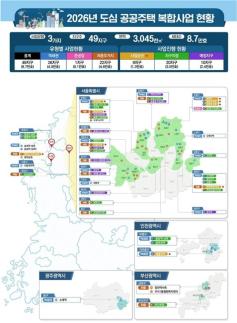 Gangnam Among 44 Areas Applying for Urban Public Housing Project, Expecting 60,000 Units Seoul's urban public housing complex project, aimed at redeveloping aging residential areas through public-led high-density development, has attracted participation from 44 locations, including the three districts of Gangnam, with expectations of supplying approximately 60,000 new housing units. According to the Ministry of Land, Infrastructure and Transport on May 17, proposals from residents were submitted from 44 locations across 16 districts in Seoul by the application deadline on May 8. The urban public housing complex project is designed to facilitate development in aging urban areas where private redevelopment and reconstruction efforts are challenging. It is characterized by the ability to expedite the process by omitting steps such as establishing associations or management plans. This application process allowed residents to propose projects directly. After review by the districts, recommended sites will be evaluated by a selection committee involving the Ministry and the Seoul city government, with final candidate sites expected to be announced in July. Notably, projects with a participation rate exceeding 30% will receive maximum evaluation points, and approximately 61% of the proposals, or 27 locations, met this criterion. By type, there are 16 residential-commercial high-density zones centered around transit stations (covering 674,000 square meters), 25 housing supply activation zones in low-rise residential areas (covering 1,983,000 square meters), and 3 residential-industrial convergence zones in semi-industrial areas (covering 159,000 square meters). The government plans to temporarily relax the floor area ratio for transit-oriented and low-rise residential types to a maximum of 1.4 times the legal limit until April 2029. This is intended to enhance project viability and encourage increased supply in urban areas. Currently, among 49 urban public housing complex sites nationwide, 29 (approximately 48,000 units) have already been designated as complex zones, with 9 (about 13,000 units) having received project approval. The Ministry anticipates that the urban public housing complex project in the northern area of Jemulpo Station in Incheon’s Michuhol District will begin construction five years after its selection as a candidate site. This project, which will feature up to 49 floors and approximately 3,500 units, is noted as the first successful case of public-led development utilizing a REITs (Real Estate Investment Trust) model. Additionally, significant construction projects in Seoul are expected to commence next year, with notable sites including Eunpyeong District's Jeungsan 4 District and Yeonsinnae Station, as well as Shin-gil 2 District in Yeongdeungpo and Banghak Station and Ssangmun Station in Dobong District. Lee Jae-pyeong, Director of Housing Supply Policy at the Ministry, stated, "The high interest and participation from residents in this application process reflect the community's expectations for the urban public housing project. We will actively support the swift and smooth advancement of projects following the selection of candidate sites based on improved systems."* This article has been translated by AI. 2026-05-17 16:03:57
 -
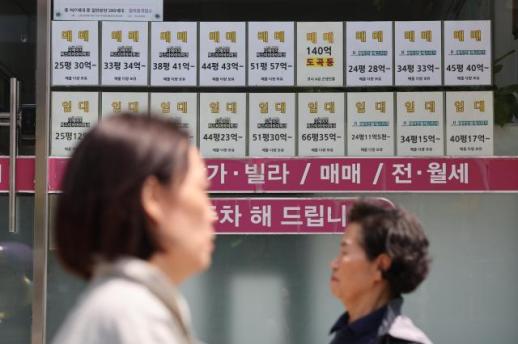 Transactions in Nowon and Dobong Surpass Gangnam as 80% of Seoul Deals Are Below 1.5 Billion Won In the Seoul apartment market, transactions for properties priced below 1.5 billion won now account for over 80% of sales, with rapid increases in transactions in outer districts such as Nowon, Dobong, and Gangbuk. This shift is attributed to the tightening of loan regulations and the designation of the entire city as a regulated area following the government's October 15 measures last year, which lowered the entry barrier for mid-priced apartments. Additionally, the end of the capital gains tax exemption for multiple homeowners has led to an increase in listings outside of Gangnam, further boosting transactions in these areas. According to the Ministry of Land, Infrastructure and Transport's real transaction disclosure system, from February to May 16 of this year, 81.6% of reported apartment sales in Seoul were for properties priced below 1.5 billion won. This marks a 3 percentage point increase from the previous three months, where the figure stood at 78.2% from November to January. The increase in demand for mid-priced apartments, which can secure loans of up to 600 million won, is seen as a response to the significant reduction in actual borrowing capacity for high-priced homes following the October 15 measures. Furthermore, the announcement by President Lee Jae-myung on January 23 regarding the end of the capital gains tax exemption for multiple homeowners has also influenced the market. Following this announcement, listings on the real estate platform Asil surged from 56,219 at the end of January to 80,080 by March 21, a jump of approximately 42.4%. It appears that multiple homeowners are increasingly selling their mid-priced properties outside of Gangnam, where the burden of disposal is relatively lower, contributing to the rise in transactions in these outer districts. In terms of price brackets, the proportion of transactions below 600 million won increased from 20.7% between November and January to 23.6% from February to May. Similarly, the share of transactions between 600 million and 900 million won rose from 26.3% to 28.7% during the same period. Conversely, the share of transactions priced between 900 million and 1.5 billion won decreased from 31.2% to 29.2%. The proportion of transactions between 1.5 billion and 2.5 billion won also fell from 15.1% to 13.2%, while those exceeding 2.5 billion won dropped from 6.0% to 4.7%. As the share of mid-priced apartment transactions increases, the average transaction price for apartments in Seoul has also declined. From February to May, the average transaction price was 1.09846 billion won, down approximately 80 million won from the previous three-month average of 1.18834 billion won. This suggests that while the market is not necessarily reviving as a whole, the focus of transactions is shifting toward outer districts and mid-priced properties. The increase in transactions in outer districts, particularly Nowon, Dobong, and Gangbuk, is notable. According to the real estate platform Asil, from February to May 17, the top-selling apartment complex in Seoul was 'SK Bukhan Mountain City' in Mia-dong, Gangbuk District, with a total of 115 transactions. Following closely was 'Hanshin-Hanjin Apartments' in Donam-dong, Seongbuk District, with 90 transactions, and 'Sangye Jugong Complex 6' in Sangye-dong, Nowon District, also ranked among the top sellers.* This article has been translated by AI. 2026-05-17 14:30:57
 -
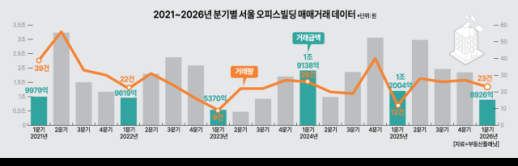 Seoul Office Transactions Plummet as Q1 Sales Halve In the first quarter of 2026, the Seoul office sales market experienced a significant contraction, with transaction amounts dropping by more than 50% compared to the previous quarter, alongside a decline in office sales. According to a report released on May 12 by Real Estate Planet, a commercial real estate platform, based on data from the Ministry of Land, Infrastructure and Transport, the volume of office building transactions in Seoul totaled 23 cases, with a transaction amount of 892.6 billion won in the first quarter of this year. This represents a 14.8% decrease in transaction volume and a 51.6% decrease in transaction amount compared to the previous quarter (27 cases, 1.8435 trillion won). However, compared to the same period last year (12 cases, 1.2004 trillion won), transaction volume increased by 91.7%, while transaction amount decreased by 25.6%. Regionally, the Gangnam and Seocho areas (GBD) maintained the same transaction volume as the previous quarter with 8 cases, while other regions recorded 12 cases. In contrast, the Yeongdeungpo and Mapo areas (YBD) dropped from 3 cases to 1, and the Jongno and Jung-gu areas (CBD) decreased from 4 cases to 2. Transaction amounts fell across all regions, with the CBD experiencing a dramatic decline from 942 billion won in the previous quarter to 64.5 billion won, a drop of 93.2%. The YBD saw a decrease to 16.5 billion won (down 62.2%), the GBD recorded 386.8 billion won (down 8.5%), and other regions totaled 424.8 billion won (down 2.4%). The office market also showed weakness, with the volume of office transactions in Seoul reaching 271 cases and a transaction amount of 499.2 billion won. This reflects a 20.3% decrease in transaction volume and a 25.8% decrease in transaction amount compared to the previous quarter (340 cases, 673.2 billion won). Compared to the same period last year, transaction volume increased by 0.4%, but transaction amount decreased by 11.6%. Corporations dominated both office building and office transactions. In the office building market, 15 out of 23 transactions were corporate purchases, accounting for 65.2%. In terms of transaction amount, corporate transactions totaled 766.4 billion won, representing 85.9% of the total. In the office market, corporate purchases were also the most prevalent, with 142 cases, while individual purchases were active with 126 cases, making up about 46.5% of the total. In terms of transaction amount, corporate transactions reached 421.9 billion won, accounting for 84.5% of the total. However, the REIT market continued to expand its office assets. As of March 2026, the total assets of REITs in the Seoul area amounted to 123.24 trillion won, a 4.2% increase from the previous month. Among these, office assets reached 43.45 trillion won, up 5.1% from the previous month and 32.8% from the same period last year. The supply of office facilities also showed an upward trend. According to building permit data from the Ministry of Land, Infrastructure and Transport, the total floor area of office facilities approved for use in the first quarter of this year was 221,476 square meters, a 159.3% increase from the previous quarter. The planned new supply of office facilities is also set to expand by 15.0% to 452,303 square meters compared to the previous quarter, particularly concentrated in Yeongdeungpo, Jongno, and Seongdong districts. The market contraction is also reflected in investment yield indicators. An additional review of the Real Estate Planet report revealed that the average investment yield for Seoul offices in the first quarter of this year was 2.35%, up from 1.84% in the previous quarter, although there were notable regional disparities. The investment yield in the CBD was 2.45%, in the GBD it was 2.65%, and in the YBD it was 2.20%, while other regions remained at 1.78%. In specific commercial areas, Gwanghwamun recorded a relatively high yield of 3.27%, and Gangnam-daero followed with 3.21%, while most other areas reported yields in the 1-2% range. Jung Soo-min, CEO of Real Estate Planet, stated, “In the first quarter of this year, the Seoul office sales market saw a decrease in large asset transactions, causing the transaction amount for office buildings to fall below 1 trillion won on a quarterly basis. As the expansion of office assets within REITs continues, along with an increase in the area of approved office facilities and a corporate-driven purchasing trend, the adjustment of price expectations between buyers and sellers and the resumption of large transactions in key regions will influence market trends in the second quarter.”* This article has been translated by AI. 2026-05-14 20:23:10
 -
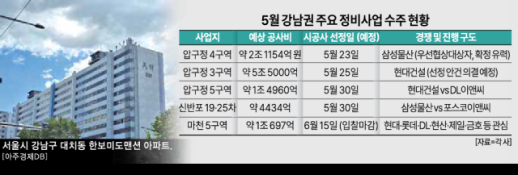 Major Reconstruction Projects in Gangnam Set to Begin in May The reconstruction market in Seoul's Gangnam district is entering a competitive phase this May. With the selection meetings for construction companies for Apgujeong districts 3, 4, and 5 scheduled throughout the month, major reconstruction projects in Shinbanpo and Songpa are also gaining momentum. Industry experts are viewing this month as a critical turning point for Gangnam reconstruction. According to the construction industry on May 12, selection meetings for construction companies are set to take place in Apgujeong and Shinbanpo, the two main battlegrounds for reconstruction in Gangnam. Specifically, districts 3 to 5 of the Apgujeong reconstruction project will finalize their construction companies this month. The six districts in Apgujeong are expected to accommodate between 11,000 and 12,000 households, with the construction costs for the three districts currently in the selection process exceeding 10 trillion won. The symbolic significance of the prime riverside location has intensified brand competition among construction firms. The first meeting will be held for Apgujeong district 4 on May 23, where Samsung C&T, selected as the preferred bidder last month, is likely to be confirmed as the construction company. On May 25, Apgujeong district 3 will hold a meeting to vote on selecting Hyundai Engineering & Construction as its contractor. This district, with a planned 4,121 units, is considered the largest single reconstruction site in Gangnam, with construction costs estimated at approximately 5.5 trillion won. The most intense competition is expected in Apgujeong district 5, where construction costs are around 1.496 trillion won. A meeting will take place on May 30 to decide between Hyundai Engineering & Construction and DL E&C. Both companies will hold a joint briefing on May 16, followed by a second briefing on the day of the meeting to sway the opinions of the members. Recently, competition has intensified over high-end brands, community features, and specialized designs, leading to rapidly increasing bidding conditions. According to the Gangnam District Office's housing construction project status, as of January, districts 2 to 5 in Apgujeong have all completed the establishment of their associations. Notably, Apgujeong district 3, which has faced delays since receiving its establishment approval in 2021, is expected to gain momentum with the upcoming selection process. There are expectations that the projects in the Apgujeong area, which have been stalled due to changes in maintenance plans and regulatory issues, will finally move forward following this bidding war. The selection meetings for the Shinbanpo districts 19 and 25 will also take place on May 30. Although this project involves a smaller scale of 614 units and construction costs of about 443.4 billion won compared to Apgujeong, its riverside location allows for a potential 49-story design, making it likely to become a landmark in the Seocho area. In this project, Samsung C&T and POSCO E&C will compete against each other. This marks the first time since January 2024 that the two companies have faced off at the same site, where POSCO E&C previously won a bid. The reconstruction fervor is also rapidly spreading to Songpa District. The redevelopment of the Machon 5 area has received its association establishment approval in January after 19 years of efforts. The association announced a bidding notice last month, with six construction firms, including Hyundai Engineering & Construction, Lotte Engineering & Construction, DL E&C, IPARK Hyundai Industrial Development, Jeil Construction, and Kumho Construction, attending the site briefing. The estimated construction cost is around 1.069 trillion won, with the bidding deadline set for June 15. This area is expected to emerge as a significant battleground following the major bids in Gangnam. In the Seongsu Strategic Maintenance Zone, Daewoo Construction and Lotte Construction have resumed their bidding processes, and the selection of a construction company for the Mokdong reconstruction site is also expected to gain traction in the second half of the year. Ko Jun-seok, a professor at Yonsei University's Sangnam Business School, stated, "The project conditions and design standards presented in the Apgujeong bidding war are likely to set benchmarks for future maintenance project bids."* This article has been translated by AI. 2026-05-14 20:20:14