
Journalist

Lee Eun-byeon
star@ajunews.com
-
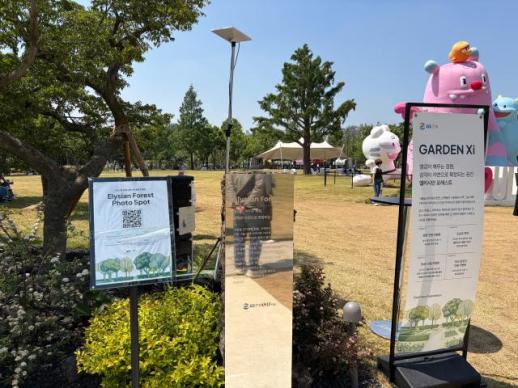 Seoul Forest Hosts 'Garden' While Seongsu Features 'Popup' as Construction Firms Revamp Marketing The Seoul International Garden Expo has been underway since May 1 at Seoul Forest in Seongdong District, attracting visitors to the newly created 'K-Construction Zone' where construction companies showcase their brand gardens. This marks a shift in construction marketing from traditional model homes to gardens, popups, and lifestyle spaces. Upon entering the grassy area of Seoul Forest on May 13, visitors were greeted by a red gate, a circular garden, and lush green pathways. Many strolled through the space, capturing photos, particularly among visitors in their 20s and 30s. The 'K-Construction Zone' featured participation from GS Construction, IPARK Hyundai Industrial Development, Gyeryong Construction, Daewoo Construction, and Hoban Construction. Gyeryong Construction drew attention with its red gate and stone wall garden, while Daewoo Construction presented a 'Silo' garden centered around a circular structure. IPARK Hyundai Industrial Development showcased landscaping with hydrangeas and a sign reading, "Imagine Before You Build," along with seating and lounge areas for visitors to relax. This strategy aims to expand the construction brand's reach by transforming simple promotional efforts into 'experiential content' for younger consumers. Notably, GS Construction's corporate garden 'Garden Xi' stood out. Inspired by the Jeju Gotjawal forest, GS Construction preserved as many existing trees as possible while densely planting elm and fern species to create a sense of depth in the forest. The company installed a 'UFB Cooling Mist System' that sprays fine mist in shaded areas, allowing visitors to experience a refreshing atmosphere reminiscent of a deep forest. Staff members were present to curate the space and provide merchandise. Visitors commented, "While walking in Seoul Forest, it doesn't feel like a construction company space," and "There are many photo spots, and the atmosphere is trendy." Families with strollers and visitors of various ages filled the area. Ryu Hye-bin, head of the new product strategy team at GS Construction, stated, "We designed this space so that visitors to Seoul Forest can naturally encounter the Xi brand," adding, "We focused on creating a space where people can linger without disrupting the existing grassy area." According to GS Construction, approximately 86,000 visitors have visited 'Elysian Forest' from May 1 to 12. After the garden's operation ends, the space will be donated to the city of Seoul, ensuring continued public access even after the popup concludes. About a 15-minute walk from Seoul Forest, another experiential space called 'House Xi' is operating in Seongsu-dong. GS Construction has rebranded a space previously used as a promotional center for the Seongsu Strategic Redevelopment Zone 1 to create a popup store. The interior of the popup differs from typical apartment promotional centers. Open from 10 a.m. to 6 p.m., the space accommodates about 20 to 30 visitors every 30 minutes. Many visitors arrived after hearing about it through word of mouth. Upon entering, visitors first encounter the 'Diorama Zone,' where they can closely examine a large model of 'Rivenique Xi,' set to be sold in 2031. The subsequent 'Amenity Zone' is designed like a small cinema, while the 'Unit Zone' replicates part of a living room, allowing visitors to indirectly experience views of the Han River from a height of up to 64 floors. The technology used to create a panoramic view through an open window structure is currently under patent application. Throughout the space, elements that stimulate the senses are incorporated. The interior features curated music from Xi, and the lighting and diffuser create an engaging atmosphere. Collaborative content with Kyobo Bookstore and CGV, as well as high-end community services such as a sky lounge wine bar party, kids' zone, and non-face-to-face medical services from Cha Hospital, are also introduced. Jung Yu-jin, a senior member of the brand strategy team at GS Construction, expressed, "We hope this becomes an opportunity for people to experience life at Xi in advance," adding, "We aim to expand the concept of home from a product to an experiential domain." She continued, "Unlike the past, where promotional centers felt like a relic of previous generations, construction companies now want to operate popup stores with content that younger generations want to share on social media. As a result, we are seeing a significant number of visitors in their 20s and 30s eager to experience the Xi brand." A visitor in their 30s remarked, "This is my first time at a construction company popup, and it's much more stylish than I expected, with plenty of photo spots for Instagram. It felt like experiencing future living rather than just a simple promotional effort." 2026-05-13 21:25:43
 -
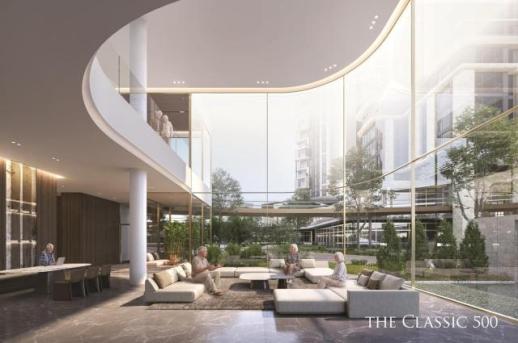 Hyundai Engineering to Introduce High-End Senior Services in Apgujeong Redevelopment Hyundai Engineering has announced plans to introduce high-end senior services in the Apgujeong 3rd and 5th districts, where it has been selected as the construction company for the redevelopment project. This marks the first time such services will be integrated into multi-family housing in the area. On May 13, Hyundai Engineering signed a partnership agreement with The Classic 500, an operator of private senior towns, to develop and operate a senior life care service model. The initiative will target residents in the Apgujeong 3rd district, where Hyundai has been appointed as the construction contractor, as well as the 5th district, which is currently in the bidding process. Through this agreement, Hyundai Engineering plans to provide medical, health management, and cultural programs for senior residents in both districts. Medical services will be managed by Konkuk University Hospital. The health management services will include fall prevention, cognitive function management, and dementia prevention, along with wellness care that encompasses sleep, nutrition, and exercise. Community programs such as art classes, classical performances, dance sports, and Go will also be offered. The Classic 500 is a premium senior residence brand that combines hotel-style living services with medical care. Hyundai Engineering aims to expand this collaboration to include age-friendly housing services in its THE H brand complexes and new projects. A Hyundai Engineering representative stated, "This differentiated strategy aims to comprehensively support the health management, leisure, social interaction, and convenience of senior residents. We will proactively respond to the aging-friendly housing trend and set new standards for living spaces." Meanwhile, the bidding for the redevelopment of the Apgujeong 5th district is a competitive race between Hyundai Engineering and DL E&C, with the construction contractor to be selected at a general meeting of members on May 30. Previously, Hyundai Engineering unveiled plans for future-oriented residential technologies and large-scale community facilities at the Apgujeong 3rd district promotional center, including unmanned shuttles and patrol robots. The company plans to enhance luxury living services by creating a circular community space connecting key facilities within the complex, along with a spa, swimming pool, fitness center, and private areas.* This article has been translated by AI. 2026-05-13 19:20:01
 -
 DL E&C Achieves Construction Technology Certification for Dry Bathroom Wall System DL E&C is accelerating innovation in bathroom construction quality and productivity with its newly certified dry wall waterproofing system. On May 13, DL E&C announced that its 'Dry Wall Waterproofing System for Bathrooms,' developed in collaboration with Hansol Home Deco, has received certification from the Ministry of Land, Infrastructure and Transport. This certification is awarded to new or improved technologies that demonstrate novelty, advancement, and applicability in the field. The new technology has been highly praised for addressing the limitations of traditional wet construction methods. Typically, bathroom construction involves stacking bricks with cement and then attaching tiles, a process that requires additional waterproofing and curing, resulting in longer construction times and the need for skilled labor. In contrast, DL E&C's dry construction method utilizes 16 large waterproof panels (2440×590mm) for a lightweight wall in a bathroom measuring approximately 16.3 square meters. This approach eliminates the need for a curing process, thereby shortening construction time and enhancing efficiency. Notably, this technology is similar to the box-type modular construction methods that are gaining traction in the industry. Bathrooms, traditionally seen as wet spaces requiring waterproofing and tiling, can now benefit from standardized construction and simplified processes through the introduction of the dry system. DL E&C has previously secured foundational technologies related to box-type modular methods, including the 'post-tension coupling method.' A key differentiator of this technology is the 'reverse slope clip' structure, designed to prevent water penetration at the joints between materials. This innovation reduces the risk of cracks, mold, and contamination that can occur with traditional silicone or grout methods, while also improving maintenance convenience. According to DL E&C, this new technology combines its construction expertise with Hansol Home Deco's finishing material technology. It is currently being applied in housing brands such as Acro and e-Pyeonhansesang. This development has reportedly increased productivity by about three times compared to previous methods and reduced defect rates on-site by over 60%. Labor input has also been cut by approximately 18%. A DL E&C representative stated, "This new technology revolutionizes bathroom construction productivity and fundamentally addresses chronic issues such as tile detachment and cracking. We will continue to lead the industry by overcoming the limitations and challenges of existing methods." Meanwhile, industry experts anticipate that demand for dry bathroom systems, which can shorten construction periods, will grow alongside the expansion of the remodeling market for aging apartments.* This article has been translated by AI. 2026-05-13 19:18:00
 -
 What’s Next for Seoul Housing Prices After May 9? On May 4, the head of the Presidential Policy Office held a briefing on the real estate market, stating that there would be no surge in housing prices after May 9, but rather a gradual increase. While this was meant to emphasize that a price spike was unlikely, some critics argued that the use of the term "increase" was premature. President Yoon Suk Yeol expressed a strong commitment to normalizing housing prices in Seoul through social media, hinting at a reversal in housing price forecasts and the emergence of bearish sentiment after three months. Following the pivotal date of May 9, it is essential to analyze the direction of the real estate market. The President's mention of a reversal in housing price forecasts aligns with findings from the 2026 KB Real Estate Report released on May 5. Earlier this year, both experts and real estate agents anticipated price increases, but as the likelihood of tax hikes in the second half of the year grew, a majority of agents shifted their outlook to predict declines. When examining the survey results, it is crucial to consider the timing and scope of the survey. The survey was conducted from March 31 to April 3 and included agents from across the country. In early April, the Gangnam area continued to experience a downward trend, and the panic that had gripped the market in February had not yet dissipated. However, signs of a rebound began to emerge in Gangnam after mid-April as the number of urgent sales decreased. Had the survey been conducted in early May, the outlook might have been significantly different. The demographics of the survey participants also varied. Most experts were based in the Seoul metropolitan area, while agents were spread nationwide, reflecting the stagnant real estate conditions in other regions. Narrowing the focus to the metropolitan area, the percentage of experts predicting an increase in housing prices dropped from 93% in January to 72% in April, while agents' predictions fell from 84% to 66%. Despite the decline in optimistic forecasts, both groups still leaned towards an increase in the metropolitan area. What will happen to housing prices in Seoul after the implementation of the increased capital gains tax on multiple homeowners starting May 10? From that date, homeowners with two properties in regulated areas will face a maximum tax rate of 71.5%, while those with three or more properties will be subject to a staggering 82.5% rate. For a homeowner with three properties and a market gain of approximately 1 billion won, the capital gains tax could amount to around 750 million won, leaving little profit after accounting for mortgage interest and holding costs. I have yet to see anyone willing to sell while incurring such high taxes. Homeowners who must sell have already listed their properties as urgent sales before mid-March. After May 10, it is likely that these homeowners will withdraw their listings or even raise their asking prices. No one would be foolish enough to sell at a loss while facing increased taxes, and those unwilling to sell will likely increase their asking prices even if transactions slow. Properties that were left vacant for sale may be filled with tenants again, potentially increasing rental inventory. However, considering the ongoing rental crisis and the likelihood of rising holding costs, rental prices may increase further. Some speculate that the market could see a surge in prices due to a lack of available properties, but until August, intense negotiations will likely lead to a stagnation in transactions, making a price surge unlikely. Potential buyers, having experienced the urgency of sales in February and March, are unlikely to jump back into the market, especially with lending conditions remaining tight. However, if no effective policies emerge to shift the housing market before the Chuseok holiday in September, the fear of missing out (FOMO) could lead to renewed volatility. So far, the discussion has focused on the high-end apartment market, which is feeling the pressure of increased capital gains taxes. The mid-priced apartment market, particularly those valued under 1.5 billion won, is unlikely to see a quick resolution to the severe rental crisis, and a shortage of new units could lead to price increases spreading beyond Seoul to Gyeonggi and Incheon. The government is expected to implement further demand suppression strategies through tax regulations before the Chuseok holiday in September. Hints from the Presidential Policy Office briefing suggest that multiple homeowners, non-resident single homeowners, and high-value properties will be targeted. The government plans to raise tax rates for multiple homeowners and properties valued over 5 billion won, increasing the fair market value ratio from 60% to 80% to heighten the burden of comprehensive real estate taxes. Additionally, non-resident single homeowners may see reductions in long-term holding tax benefits. The government's intention is to pressure multiple homeowners and non-resident single homeowners to curb investment demand and encourage property listings. However, the likelihood of the real estate market responding as the government intends seems low. The high-end apartment market in areas like Gangnam has only resilient sellers remaining, and reducing long-term holding tax benefits for non-resident homeowners may lead them to choose to occupy their properties, further destabilizing the rental market. The reason for targeting high-value properties for increased holding taxes is that raising the tax burden on properties valued under 3 billion won could be politically risky for the ruling party ahead of the 2028 general elections. The apparent lack of an exit strategy for stabilizing housing prices in Seoul stems from the government's approach of applying standards of unearned income and fairness to real estate, which has narrowed the scope of its policies. Instead of a punitive strategy of raising both capital gains and holding taxes, a more effective approach could involve increasing holding taxes while lowering capital gains taxes to facilitate property listings. If the issue of unearned income is a concern, the government could consider allowing the sale of Seoul apartments to purchase unsold properties in other regions or offer capital gains tax reductions for sales below market value. Creating an environment that encourages a desire to study, rather than using punitive measures, is key to addressing these challenges.* This article has been translated by AI. 2026-05-12 05:45:42
 -
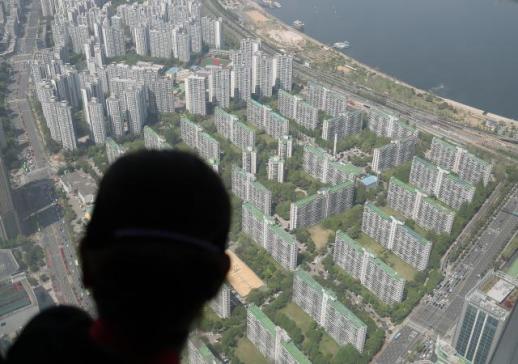 Jeonse Prices Surpass Sale Prices in Seoul, Raising Concerns of Rental Crisis This year, the nationwide increase in apartment jeonse prices has outpaced the rise in sale prices, signaling renewed instability in the rental market. Both metropolitan and non-metropolitan areas have experienced a surge in jeonse prices, with Seoul also nearing a point where jeonse prices could surpass sale prices. According to the Korea Real Estate Agency on May 11, the cumulative increase in nationwide apartment jeonse prices reached 1.56% as of the first week of May. In comparison, the increase in sale prices was 0.98%, indicating that jeonse prices are 0.58 percentage points higher. In the metropolitan area, jeonse prices rose by 2.20% this year, exceeding the sale price increase of 1.79% by 0.41 percentage points. Non-metropolitan areas also saw jeonse prices rise by 0.94%, which is 0.74 percentage points higher than the sale price increase of 0.20%. In Seoul, while the sale price increase of 2.81% still exceeds the jeonse price increase of 2.61%, the gap has narrowed to just 0.20 percentage points. Notably, in the first week of May, jeonse prices in Seoul rose by 0.23%, marking the highest increase since the third week of November 2015, when it was 0.26%. Regions with the highest cumulative increases in jeonse prices include Suwon Yeongtong-gu (4.57%), Anyang Dongan-gu (4.53%), Muan-gun in Jeollanam-do (4.39%), Seongbuk-gu in Seoul (4.20%), Giheung-gu in Yongin (4.16%), Gwangmyeong City (4.08%), and Nowon-gu in Seoul (4.06%). The trend of jeonse prices surpassing sale prices is attributed to changes in the supply structure. With stricter lending regulations and increased taxation on multiple homeowners, the number of landlords holding properties with jeonse has decreased, while actual demand has shifted towards jeonse rather than sales, leading to a widening supply-demand imbalance. In the Gangnam area of Seoul, the sales market has slowed due to the expiration of the tax exemption for multiple homeowners, while the jeonse market has remained relatively strong. In Seocho-gu, sale prices increased by 1.00% this year, while jeonse prices surged by 3.65%, creating a gap of 2.65 percentage points. In Gangnam-gu, sale prices fell by 0.38%, but jeonse prices rose by 0.84%, and in Songpa-gu, sale prices increased by 1.37% while jeonse prices rose by 2.09%, indicating a larger increase in jeonse. In Yongsan-gu, the increase in jeonse prices (2.36%) also outpaced the sale price increase (1.13%), while in Nowon-gu, jeonse prices rose by 4.06% amid a strong sale price increase of 3.48%. Experts warn that if the trend of rising jeonse prices continues, it could trigger a 'price transfer' effect that stimulates sale prices again. There are concerns that the rising jeonse rates could reignite a rental crisis similar to past situations, where increased jeonse prices led to higher sale prices. Seojin Hyung, a professor at Kwangwoon University’s Department of Real Estate, stated, "The government's one-household, one-home policy, supply shortages, and a lack of non-apartment housing are major causes of the rental crisis. The ongoing reduction in rental supply will inevitably exacerbate the rental crisis." He added, "As tenants unable to cope with rising jeonse prices move to the monthly rental market, the trend towards monthly rentals will accelerate. Policy responses, such as expanding public rental supply, are necessary." 2026-05-11 09:43:44
 -
 Demand for 'Mirinae House' Grows Amid Housing Challenges for Newlyweds As high prices and rental shortages strain newlyweds, demand for Seoul's long-term rental housing program, 'Mirinae House,' is surging. The initiative allows for partial deposit payments, easing financial burdens and increasing accessibility to private brand apartments. From May 6 to 8, the Seoul Metropolitan Government and the Seoul Housing and Communities Corporation (SH) are recruiting residents for the seventh round of 'Mirinae House' (Long-term Rental Housing II), offering 441 units. This program targets newlyweds planning to have children, providing extended residency and home purchase opportunities for families that give birth after moving in. A notable feature of this recruitment is the 'deposit installment payment system.' Tenants can move in by paying only 70% of the rental deposit, deferring the remaining 30% until they vacate. For instance, in the Dongjak District's Hillstate Dongjak Signature, a 45-square-meter unit with a rental price of 469.56 million won requires an initial payment of 328.69 million won, with the remaining 140.86 million won deferred until departure. This translates to an annual interest burden of about 5.63 million won, or approximately 470,000 won monthly, based on a 4.0% interest rate. A Seoul official stated, "Due to loan restrictions and rising rental prices, many newlyweds have faced increased initial costs, leading to canceled applications or contracts. We introduced the deposit installment system to alleviate this burden." Previously, Seoul Mayor Oh Se-hoon noted that competition for 'Mirinae House' had decreased due to lending restrictions and suggested easing these regulations for young people. This supply focuses on popular private brand apartments, including Hillstate Dongjak Signature, Boramae Station Precinct, and nearby complexes in Gangbuk District. Major brands like Raemian and Xi are also included, with most located within a five-minute walk from subway stations and rental prices set at about 80% of the market rate. Eligible applicants are households residing in Seoul without property as of the announcement date. Newlyweds must be within seven years of marriage, while prospective couples must provide proof of marriage before moving in. The income limit for dual-income households has been raised to 200% of the average monthly income for urban workers, and asset limits for families with children have also been increased. Benefits for families with children remain intact. Households with one child can reside for up to 20 years, while those with two or more children will have the right of first refusal to purchase the unit at the end of their residency. A Seoul official explained, "The right of first refusal will be based on approximately 80-90% of the market price after 20 years." These conditions align with current rental market trends, driving demand amid limited supply. Competition remains high, with application ratios for the first three rounds of 2024 at 59.8 to 1, 50.0 to 1, and 38.0 to 1, respectively. Last year's rounds recorded ratios of 64.8 to 1, 39.7 to 1, and 69.7 to 1, with the highest competition reaching 759 to 1 for a 59-square-meter unit in Guro District during the fourth round. Seoul plans to expand the annual supply of 'Mirinae House' to 4,000 units this year. Following this offering of over 440 units, an additional 1,000 units will be announced in July, along with approximately 300 general housing units in villa and officetel formats later in the year.* This article has been translated by AI. 2026-05-07 21:38:07
 -
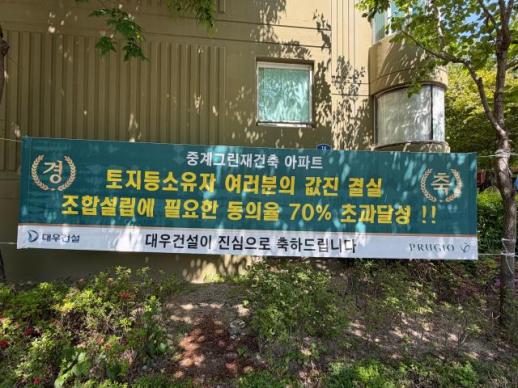 Seoul’s Nowon District Heats Up on Redevelopment Hopes as Rules Ease Seoul’s redevelopment market in the northern districts is heating up, led by Nowon-gu. The so-called “Nodogang” area — Nowon, Dobong and Gangbuk — has been posting a string of record-high apartment prices, driven by the Seoul city government’s push to allow higher-density development and by demand concentrating in large complexes. We visited two key redevelopment sites in Nowon: Junggye Green and Hagye Jangmi apartments. According to the Korea Real Estate Board on the 4th, apartment sale prices in Nowon-gu have risen 3.38% so far this year, outpacing Seoul’s overall increase of 2.65%. In the last week of April, Nowon-gu’s weekly gain was 0.18%, higher than Gangbuk-gu (0.14%) and Dobong-gu (0.13%). Weekly increases in March and April held in the 0.18% to 0.32% range, ranking among the highest in Seoul. That contrasts with a sharp slowdown in the southern districts, including Gangnam-gu (-0.02%) and Seocho-gu (0.01%). The shift is attributed to buyers priced out of Gangnam amid lending curbs and peak-price concerns, along with reduced jeonse supply pushing more renters to buy. At Junggye Green and Hagye Jangmi, redevelopment expectations were visible throughout the complexes. Construction company banners congratulated residents on reaching the consent threshold to form a promotion committee. Both complexes sit about a 30-second walk from Line 7 stations — Junggye Station and Hagye Station — and are also favored by end-users because an elementary school is reachable by crossing a single street. Junggye Green is a large complex of 25 buildings and 3,481 households, and transactions continued as moves took place. The real estate platform Asil reported three sales and seven jeonse deals last month. A 59-square-meter unit sold in March for 720 million won, a record high, up about 140 million won from 577 million won in July last year. Hagye Jangmi, a 15-building complex with 1,880 households, also showed a clear price rise. A 59-square-meter unit traded last month for 780 million won, the highest price on record. That was about 175 million won higher than 605 million won in July last year. Policy changes by the Seoul city government also appear to be supporting Nowon-gu’s rise. Seoul is pursuing a plan that introduces a mixed-use redevelopment model around transit hubs and allows high-density projects of up to 60 stories. Under the plan, Hagye Jangmi is expected to pursue redevelopment up to 59 stories, while Junggye Green is expected to pursue a plan up to 49 stories and 4,360 households. Expectations have also been lifted by the use of a public support system to shorten administrative procedures and speed up projects. A Seoul city official said the city applied a “high-density, mixed-use development centered on transit hubs” concept while revising district unit plans for parts of Sanggye, Junggye and Hagye neighborhoods in Nowon-gu. The official said some transit-area complexes can now apply a floor area ratio of up to about 400% through measures such as zoning upgrades. The official added that while Junggye Green is near a station, it differs from complexes that qualify for the high-density mixed-use standard because there are no nearby semi-residential or commercial zones. Seo Jin-hyeong, a professor in the Department of Real Estate and Law at Kwangwoon University, said Nowon-gu had lagged in redevelopment because existing floor area ratios were already high, limiting additional capacity and weakening project feasibility. He said the latest easing of floor area ratio rules could become a catalyst for revitalizing redevelopment. 2026-05-04 17:04:35
 -
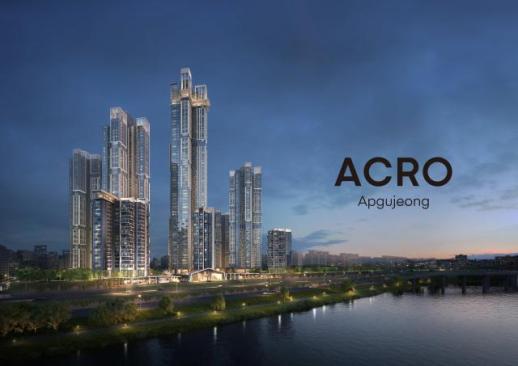 Hyundai E&C, DL E&C Face Off for Apgujeong District 5 Reconstruction Contract Competition is intensifying between Hyundai Engineering & Construction and DL E&C as the selection of a builder for Apgujeong District 5, one of Seoul’s biggest redevelopment battlegrounds, nears. Industry officials said Monday the contractor will be chosen at a homeowners association general meeting on May 30. The project will rebuild the Hanyang 1st and 2nd apartment complexes near 490 Apgujeong-dong in Seoul’s Gangnam district into eight buildings ranging from five basement levels to as high as 60 stories, with 1,397 households. Total project costs are estimated at about 1.5 trillion won. While some observers say Hyundai E&C has an edge on the strength of the “Apgujeong Hyundai” brand, DL E&C is countering with financing terms and changes to the project structure aimed at improving profitability. DL E&C said Monday its bid proposal is designed to reduce members’ financial burden by basing construction costs on project feasibility, cutting financing expenses and optimizing technology. The company proposed a construction cost of 11.39 million won per 3.3 square meters, more than 1 million won below the association’s planned estimate. DL E&C said it is focusing not only on price but also on structurally limiting the risk of cost increases. DL E&C also proposed differentiating the 29 units slated for general sale with high-end designs such as penthouses to maximize revenue. It said it would seek to raise the sale price of about 5,060 pyeong of commercial space through cooperation with a global specialist firm, and included a plan for the builder to bear construction costs. To reduce risk, DL E&C proposed directly purchasing unsold units on favorable terms if they occur. “In a situation where external factors are driving large swings in project costs, we designed a structure that considers both members’ burden and project feasibility,” a DL E&C official said. “It is a proposal that reflects revenue expansion, cost reduction and risk defense.” Earlier, DL E&C proposed setting the interest rate on required project financing at a “zero added spread” level, and shortening the construction period to 57 months to reduce interest costs. It also proposed relocation loans with a loan-to-value ratio of 150% to ease funding pressure. Hyundai E&C is emphasizing advanced technology and premium housing features. It proposed 100% Han River views for all households, a panoramic “zero-wall” design offering up to 240-degree views, and ceiling heights of up to 3 meters to enhance openness. It also plans to introduce robotics-based residential services, including a demand-responsive transport unmanned shuttle developed with Hyundai Motor Group, along with delivery, parking and charging robots. Hyundai E&C said it will build large community facilities and loop-style community spaces, and offer membership-based services linked to luxury retail.* This article has been translated by AI. 2026-05-04 10:49:33
 -
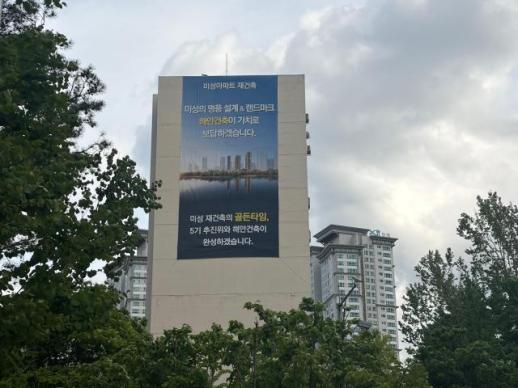 Builders Jockey for Contracts as Yeouido’s Transit-Linked Rebuilds Gain Speed Yeouido’s long-discussed apartment rebuilds are moving into a more active phase, and competition among major builders is intensifying around complexes with the shortest walks to subway stations. Industry officials said Sunday that key redevelopment sites across Yeouido are speeding up steps such as winning approval for maintenance plans and moving toward selecting contractors. At the redevelopment area visited April 29, the shift was visible on the ground. Miseong Apartments sits so close to Exit 6 of Yeouido Station that the entrance is within about a one-minute walk. Miseong began occupancy in 1978 and consists of five buildings, A through E, up to 12 stories (13 stories for Building A), with 577 households. It also includes one commercial building. After reconstruction, it is expected to become a complex of about 1,000 households. Expectations for improved transit access are also high, with the Sinansan Line and GTX-B line planned for the area. Around the complex, banners from major builders including Samsung C&T, Hyundai Engineering & Construction, DL E&C and GS Engineering & Construction were posted, signaling that bidding competition is already underway. The education environment is also cited as a strength. Seoul Yoonjung Elementary School and Yoonjung Middle School sit next to the complex, allowing students to commute by crossing a single signal. However, the close proximity to schools could make issues such as sunlight access a variable during the rebuilding process. Project preparations are also becoming more concrete. Miseong collected opinions from land and property owners late last year and selected Haean Architecture as its designer. A real estate agent near the site said Sunday, “Until recently, consent among owners in the five residential buildings exceeded 50%, and the commercial building has secured consent forms at about 22%.” The agent added, “Once consent reaches 70%, it can move to a general meeting to form an association and then apply for approval.” The agent said Samsung C&T was believed to be the contractor showing the most interest. Next door, Gwangjang Apartments is also undergoing redevelopment. From the complex, crossing a single road leads directly to Yeouido Hangang Park, and residents were seen walking dogs nearby. Gwangjang Apartments is an aging complex, 48 years after completion, located between Yeouido Station and Saetgang. Its combination of access to both the station and the Han River has made it a closely watched redevelopment site. The project is moving quickly. Seoul city on March 11 approved, with revisions, a decision plan for the redevelopment of Yeouido Gwangjang Apartments 38-1. With that, Gwangjang became the ninth Yeouido redevelopment site to finalize its maintenance plan. A central element of the plan is an upgrade in zoning. The site will be rezoned from a third-class general residential area to a general commercial area, applying a floor area ratio of 597%. It is slated to be rebuilt into a complex of 414 households, including 154 public housing units, in towers up to 52 stories. Yeouido’s redevelopment push is spreading beyond individual complexes. Of 15 complexes pursuing reconstruction in Yeouido, nine have passed maintenance plans, putting projects on a firmer track. Hanyang Apartments and Daegyo Apartments are moving fastest after completing approvals for project implementation. Gongjak Apartments has also stepped up activity after selecting a contractor. Sibom Apartments is pursuing a rebuild of up to 65 stories and is aiming to break ground in 2029. Contractor selections are expected to continue for some time. Gongjak Apartments selected Daewoo Engineering & Construction in December 2023, and Hyundai Engineering & Construction was finally chosen as Hanyang Apartments’ contractor in March 2024. Once all projects are completed, Yeouido is expected to be reshaped into a high-rise residential area of about 13,000 households. 2026-05-03 16:15:20
 -
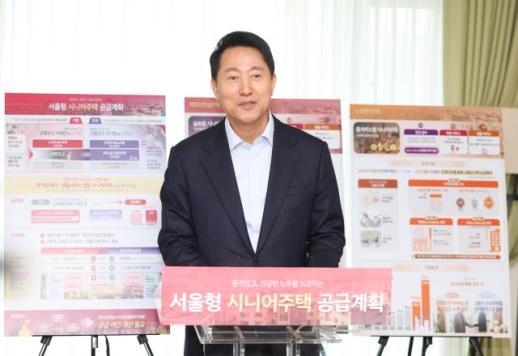 Seoul Pushes Public Senior Housing at About 2 Million Won a Month, Targeting Middle Market As South Korea moves deeper into a super-aged society, senior housing is shifting away from care-focused facilities toward residential models that combine housing, support services and leisure. With the emergence of public-type senior housing priced at about 2 million won a month, an underserved “middle market” is beginning to take shape. Industry officials said May 3 that the senior housing market is showing signs of moving beyond a split structure dominated by high-end “silver towns” and public rental housing, as providers develop a wider range of prices and service models aimed at middle-income older adults. Demand is also changing. Many older residents want more than a place to live, seeking arrangements that help maintain quality of life — including meals, cleaning, health management and leisure programs — while allowing independent living in a hotel-like managed setting. According to the Seoul Metropolitan Government, the city has 1.93 million residents age 65 and older, and 77% of them live in homes that are more than 20 years old. But the existing market has been built largely around expensive senior communities, leaving about 490,000 middle-income older adults with few realistic options and a housing gap, the industry said. Seoul’s newly announced public-type senior housing model would provide services such as meals, cleaning and health management for around 2 million won per month. If supply expands as planned, it is expected to absorb demand among middle-income seniors. Until now, the market has been led by luxury developments. “The Classic 500” in Jayang-dong, Gwangjin-gu, Seoul, has remained popular despite a 1 billion won deposit and monthly costs of about 5 million won, with waiting lists stretching for years. “VL Le West” in Magok, Gangseo-gu, has also drawn attention as a high-end model with deposits ranging from 1.2 billion won to 2.3 billion won. Seoul has announced a plan to supply 12,000 units of “Seoul-type senior housing” by 2035 and is seeking to attract private participation through construction financing support, floor-area-ratio incentives and eased public-contribution requirements. Support measures include up to 60 million won in interest-free deposit assistance, zoning upgrades near transit hubs and floor-area-ratio incentives of up to 10%. A report published April 29 in Construction Policy Journal No. 61 by the Korea Research Institute for Construction Policy said senior housing could move beyond a welfare facility model and become a new pillar of demand for the construction and housing markets. Challenges remain even as the market grows. In the report, Lee Ji-a, a deputy research fellow at the institute’s Industrial Policy Research Office, said senior housing policy needs structural change, not just more supply. She called for redefining senior housing as an independent housing type rather than a welfare facility, and for building a dual supply system that combines new construction with age-friendly remodeling of existing homes. She also said incentives such as floor-area-ratio benefits and financial support are needed to ensure project viability. In February, the National Assembly passed a special law on the creation and operation of retirement communities, providing an institutional foundation for developing the senior housing market. The market is expected to further segment into “active senior” housing for healthy people in their 60s and 70s, care-focused models with stronger support functions, and medical-linked “medical residences.”* This article has been translated by AI. 2026-05-03 14:54:17