

Journalist

Kim Su-ji
sujiq@ajunews.com
-
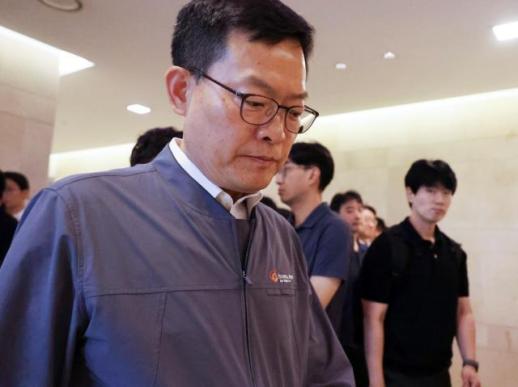 Hanwha Aerospace's Safety Management System Under Scrutiny After Explosion Concerns are growing regarding Hanwha Aerospace's safety management system, which has been structured to report key safety issues to the CEO only twice a year. Additionally, there is no dedicated executive overseeing safety operations. This raises the likelihood of ongoing debates about accountability as investigations into the cause of a recent explosion at the Daejeon facility continue. According to industry sources, Hanwha Aerospace has confirmed that it operates a system where key safety and health issues are reported to the CEO. The core content of these reports includes key performance indicators (KPIs) related to safety and health. The company has managed KPIs to enhance safety management and prevent serious accidents, regularly reporting on safety personnel, budget execution for accident prevention, and the identification of hazardous factors at the workplace. In its 'Sustainability Management Report 2025' released in June last year, Hanwha Aerospace stated that it reports key safety and health issues to the CEO biannually. However, some critics argue that given the nature of defense operations, which involve numerous hazardous processes, biannual reporting may not be sufficient for timely management of safety risks. The recent fatal incident at the Daejeon facility has intensified scrutiny over the effectiveness of this safety management system. On June 1, an explosion occurred in a cleaning room at Building 56 of the Daejeon facility, resulting in seven casualties. In response, the Ministry of Employment and Labor has formed a dedicated investigation team of about 20 members to determine the cause of the incident. The absence of a dedicated executive responsible for safety at Hanwha Aerospace has also sparked controversy. Currently, the highest safety-related position in the company is held by the head of the Environment, Safety, and Health (ESH) department, which is managed by a mid-level manager. This individual also serves as the head of the safety management team and the Chief Safety Officer (CSO). In contrast, smaller domestic defense companies like LIG Defense & Aerospace (D&A) and Hyundai Rotem have already established dedicated safety executive systems. LIG D&A has an executive in charge of the safety and environment department, while Hyundai Rotem's executive director, Kim Ik-soo, serves as the CSO, with a separate safety management support team led by Park Young-soon. Concerns have been raised that Hanwha Aerospace may have been neglecting its overall safety management system. The company's industrial accident rate has risen for two consecutive years since 2022. After a slight decrease from 0.15% in 2021 to 0.11% in 2022, the rate increased to 0.13% in 2023 and 0.14% in 2024. The company had initially set a target of 0.10% for 2026 but raised it to 0.11% starting in 2024. However, a Hanwha Aerospace representative noted that the current head of the ESH department has over 20 years of experience in safety-related positions and holds a doctorate in safety engineering, making him the company's top safety expert. An industry insider stated, "We will need to wait for the results of the accident investigation to determine exact accountability, but we should also scrutinize how the safety management system has been operated thus far."* This article has been translated by AI. 2026-06-03 18:03:00
 -
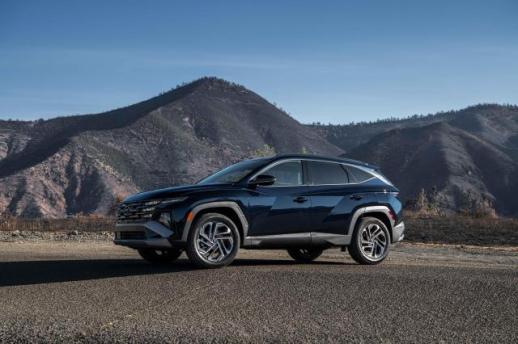 Hyundai and Kia Achieve Record Hybrid Sales in U.S. Market in May Hyundai Motor and Kia achieved their highest-ever monthly sales of hybrid electric vehicles (HEVs) in the U.S. market in May.Hyundai Motor America announced on June 2 that it sold a total of 87,468 vehicles in May, marking a 3% increase compared to the same month last year.Notably, HEV sales surged by 90% year-over-year, reaching a record high. Sales of specific models included a 10% increase for the Tucson, 30% for the Santa Fe, 29% for the Elantra, and a remarkable 250% increase for the Sonata, all contributing significantly to overall performance.Electric vehicle sales also rose by 10%, setting a new record for May. The Ioniq 5 saw an increase from 3,898 units to 5,002 units, a 28% rise, achieving its highest May sales ever. The Tucson and Palisade also reached their highest sales records for May.Randy Parker, CEO of Hyundai Motor North America, stated, "In May, we saw growth across nearly all models in our lineup, including sedans and SUVs, featuring hybrid and electric vehicles. The visibility gained from our sponsorship of the 2026 FIFA World Cup has positioned us favorably for sustained growth throughout the summer."Kia America also reported that its retail sales in May surpassed the previous record set in August 2025. Total sales reached 80,502 units, a 2% increase from 79,007 units in the same month last year. Cumulative sales for May also hit a record of 360,220 units, up 2% from the same period last year.The hybrid models experienced a dramatic growth of 179%. All models saw significant increases, with the Sportage up 171%, the Sorento up 101%, and the Carnival up 32%, achieving record sales for May. The Carnival also reached its highest monthly sales ever.Eric Watson, Vice President of Sales at Kia America, emphasized, "Despite ongoing shifts in consumer preferences, Kia continues to break retail sales and monthly cumulative sales records thanks to our diverse lineup that includes internal combustion, hybrid, and electrified models. We expect this upward trend to continue into the second half of the year, even amid recent economic challenges."Meanwhile, Hyundai and Kia are maintaining their sales growth in the U.S. market with a focus on HEV-centered eco-friendly vehicle strategies. The ongoing trend of high fuel prices has increased consumer preference for fuel-efficient HEVs.* This article has been translated by AI. 2026-06-03 09:33:00
 -
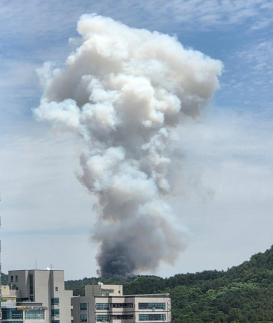 Explosion at Hanwha Aerospace in Daejeon Leaves 7 Dead or Injured An explosion occurred at Hanwha Aerospace's Daejeon facility, marking the third such incident in seven years. The explosion resulted in a total of seven casualties, prompting Hanwha Group and Hanwha Aerospace to commit to thorough recovery efforts. In an official statement, the company expressed condolences and vowed to investigate the cause to prevent future incidents.According to fire authorities, the explosion took place at 10:59 a.m. on June 1, resulting in five fatalities and two injuries.The Daejeon facility is a key research and development site for Hanwha Aerospace, focusing on large propulsion systems, propellant mixing and charging, and tactical ground-to-ground weapon systems.The incident reportedly occurred during a cleaning operation involving explosive residue on propellant equipment in the facility's cleaning area.Hanwha Aerospace has experienced two previous explosions: one in 2018 that killed two workers and injured three others, who later died from their injuries, and another in 2019 that resulted in the deaths of three employees in a different section of the facility.The recurrence of such incidents has raised concerns about safety inspections and management practices at the defense contractor's facilities.In response to the explosion, Hanwha Group and Hanwha Aerospace pledged to prioritize recovery efforts. A crisis meeting was held immediately at the company's headquarters in Seoul, and CEO Son Jae-il traveled to the site shortly after. A command center has been established at the scene, where the company is collaborating with fire and police authorities to manage the situation. Key executives from the group also rushed to the site to assess the situation.In their statement, Hanwha Group and Hanwha Aerospace expressed deep sorrow over the loss of five valued employees, offering heartfelt condolences to the families of the deceased. They also apologized to the public, promising to thoroughly investigate the cause of the explosion to prevent such tragic incidents from happening again.* This article has been translated by AI. 2026-06-01 17:03:00
 -
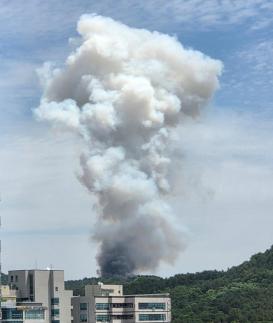 Hanwha Group Apologizes for Daejeon Explosion, Vows to Support Victims Hanwha Group issued a public apology regarding the explosion at its Daejeon facility. In an official statement on June 1, Hanwha Group expressed deep sorrow over the loss of five employees, stating, "We are heartbroken and deeply saddened. We extend our heartfelt condolences and offer sincere comfort to the families of the deceased." The company also wished for the swift recovery of the injured employees, pledging full support for their treatment, and added, "We bow our heads in apology to the public." The explosion occurred at 10:59 AM at the Hanwha Aerospace facility in Yuseong District, Daejeon, resulting in five fatalities and two injuries, totaling seven casualties. The facility is involved in the development of large propulsion systems, propellant mixing and charging, and tactical ground-to-ground weapon systems. Hanwha Group and Hanwha Aerospace are committed to managing the aftermath of the incident. Immediately following the explosion, Hanwha Aerospace held an emergency meeting at its headquarters in Seoul, and CEO Son Jae-il went directly to the site. A command center has been established at the location, where they are collaborating with fire and police authorities to manage the situation effectively. A Hanwha Group official stated, "We are currently verifying the specific circumstances and extent of the damage from the incident, and we will thoroughly investigate the cause to ensure that such a tragic accident does not happen again." * This article has been translated by AI. 2026-06-01 14:12:00
 -
 Kia and Hyundai Face Tensions as Wage Negotiations Begin As Hyundai Motor Group enters the wage and collective bargaining phase this year, tensions are rising in the automotive industry. While Hyundai has already accelerated negotiations, Kia has shown differences even before scheduling its initial meeting, increasing pressure on the group.According to industry sources on May 29, Kia plans to hold its first meeting between labor and management as early as next week to kick off this year's negotiations. The Kia union had initially proposed to meet on this day, but the meeting did not take place.The management sent a formal notice to the Kia union two days earlier, on May 27, suggesting a postponement of the schedule. The management cited that the overall timeline for this year's negotiations was progressing faster than expected as the reason for the delay. Consequently, Kia's negotiations will be slightly delayed.Recently, the Kia union finalized its demands for this year's negotiations during a delegate meeting. Key demands include a basic salary increase of 149,600 won, a bonus equal to 30% of operating profit, inclusion of average wages in the bonus calculation, increases in production line and service allowances, hiring new employees to match the number of retirees this year (1,830), and the abolition of the dual wage system.Regarding the revision of the collective agreement, the union's core demands include hiring new employees through domestic factory investments, increasing bonuses from 750% to 800%, reducing weekly working hours to 4.5 days, introducing new models at domestic factories, and extending retirement age linked to national pension eligibility.The management's attempt to delay the negotiation schedule is interpreted as a strategy to minimize group-level pressure, especially with ongoing negotiations at Hyundai. Recently, labor disputes over issues like the so-called 'N% bonuses' have spread among companies like Samsung Electronics and SK Hynix, raising expectations for increased tensions over bonuses and wage structures in the automotive sector during this year's negotiations.Hyundai has already shown significant differences in positions during its negotiations this year. The eighth round of negotiations is scheduled for next week, and the union continues to present its demands to the management. However, the management reportedly finds it challenging to realistically accept the major demands. The Hyundai union is demanding that 30% of last year's net profit be distributed as bonuses to union members and employees of partner companies.During the seventh round of negotiations held on May 27, substantial differences in views between labor and management were noted regarding these demands. Industry insiders predict that as Kia enters the negotiation phase, the intensity of labor disputes in the automotive sector this year could be higher than in previous years, with the possibility of both Hyundai and Kia resorting to strikes.An industry source stated, "While Hyundai's negotiations are ongoing, we are still in the explanation phase, and there are significant differences in opinions between labor and management."* This article has been translated by AI. 2026-05-29 16:24:00
 -
 KAI Strengthens Partnership with Strategic Command to Enhance Future Battlefield Response Korea Aerospace Industries (KAI) is enhancing its cooperation framework to respond to changes in future battlefield environments and advance cutting-edge defense capabilities.On May 29, KAI announced that it has signed a memorandum of understanding (MOU) with the Strategic Command to establish a strategic partnership and strengthen operational collaboration.The agreement aims to jointly explore the development direction of future military capabilities based on advanced technologies such as artificial intelligence (AI), space, and unmanned systems in the rapidly changing security landscape.The two organizations plan to expand cooperation in various areas, including sharing information and policies of mutual interest, holding regular expert seminars and discussions, increasing personnel exchanges, and jointly identifying advanced military needs for future battlefield environments.This collaboration with the Strategic Command is expected to be a significant opportunity for expanding civil-military technological cooperation and advancing future advanced weapon systems.Choi Jong-won, KAI's Strategic Headquarters Chief, stated, "This is a meaningful starting point for the development of South Korea's future strategic capabilities. We will actively share the aerospace technology and battlefield response experience that KAI has accumulated to support our military in swiftly acquiring the capabilities needed to succeed in future battlefields."Meanwhile, KAI is accelerating its efforts to enhance future battlefield response capabilities by increasing investments in manned-unmanned teaming (MUM-T), AI-based combat systems, and next-generation aerial power.* This article has been translated by AI. 2026-05-29 11:00:00
 -
 Korean Air and Asiana Conduct Joint Emergency Evacuation Drill Korean Air is verifying the safety response capabilities of its cabin crew ahead of the launch of the integrated airline. On May 29, Korean Air announced that it successfully completed a joint emergency evacuation drill with Asiana Airlines the previous day.This drill is part of the implementation plan for the integrated Air Operator Certificate (AOC) that both airlines have been collaborating on under the supervision of the Ministry of Land, Infrastructure and Transport for the past two years. It aimed to comprehensively assess whether cabin crew from both airlines can perform safety duties at the same level.The drill involved two aircraft types: the Boeing 787-9 and the Boeing 737-900. This marked the first instance of conducting a drill with two different aircraft types simultaneously. A total of 28 cabin crew members, 14 from each airline, participated, with eight operational crew members from Korean Air providing support.The drill consisted of four main components. First, at the Korean Air cabin training center, crew members underwent verbal assessments on emergency landing and flotation devices, followed by a lifeboat boarding drill. Under the supervision of Ministry officials, the cabin and operational crew demonstrated their ability to use emergency equipment and perform procedures for boarding lifeboats and requesting rescue after an emergency landing.Next, at Korean Air's headquarters hangar, the crew conducted aircraft-specific emergency evacuation drills using actual aircraft. For the Boeing 737-900, they simulated an aborted takeoff due to an engine fire, testing the procedures for opening doors and guiding passengers to evacuate. Additionally, they performed an evacuation drill simulating an emergency water landing with the Boeing 787-9.A Korean Air official stated, "This drill confirmed that the crew from both airlines can respond reliably in an integrated operational environment. We plan to continue systematic training and verification, prioritizing safety as our utmost value after the launch of the integrated airline."Meanwhile, Korean Air is accelerating its final preparations for the integrated airline set to launch in December.* This article has been translated by AI. 2026-05-29 09:00:00
 -
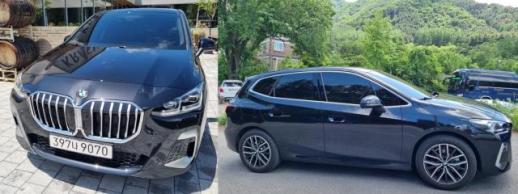 BMW 220i Active Tourer Offers Sedan-Like Driving with SUV Versatility The BMW 2 Series '220i Active Tourer (M Sport Design Trim)' resembles a sports utility vehicle (SUV) but delivers a sedan-like driving experience. Positioned as a niche model, it aims to balance practicality and driving performance in a market dominated by SUVs.Upon first encountering the vehicle, which was tested on May 28, it gave an impression closer to a small SUV. Although classified as a hatchback, its height and width felt substantial. However, it is not overly large for beginner drivers, consistent with BMW's compact segment models. The exterior features sharp LED headlights and a low roofline, contributing to a sporty aesthetic.Driving from Jung-gu, Seoul, to Gapyeong, a distance of about 70 kilometers, the route combined urban and national roads. The first noticeable aspect during the drive was the expansive visibility. The elevated body provided a sense of openness in the front, and the side mirrors offered a relatively wide field of view.The smooth ride throughout the journey evoked the feel of a sedan. Even on sections with numerous speed bumps, the vehicle absorbed shocks effectively, and at high speeds, it maintained stability on the road. Notably, during cornering, the body control was firmer than expected, likely due to the 'Adaptive M Suspension' feature included in the M Sport Design Trim. The vehicle did not sway excessively on winding roads near Gapyeong.In areas without traffic, the vehicle accelerated quickly with just a light press on the gas pedal, allowing for a lively driving experience. The 220i Active Tourer can go from a standstill to 100 km/h in just 7.5 seconds. However, it is more about smoothly increasing speed rather than explosive performance.The spacious interior is another appealing feature. The second row offers ample space, even for adult males, with enough legroom and headroom. A center armrest with cup holders is integrated for convenience, making it suitable as a family vehicle.For long trips, the infotainment options can keep children entertained. By connecting a smartphone using a QR code displayed on the 10.7-inch screen, the smartphone can function as a console for gaming within the vehicle. This is made possible by the standard BMW Operating System 9.Additionally, the generous trunk capacity further supports its viability as a family car. With a base capacity of 470 liters, it expands to a maximum of 1,455 liters when the rear seats are folded down, making it suitable for camping or outdoor activities. Ultimately, the 220i Active Tourer appears to be an ideal choice for consumers seeking both the practicality of an SUV and the driving feel of a sedan.* This article has been translated by AI. 2026-05-28 18:02:00
 -
 Korean Air to Build Family Shelter for Critically Ill Children Next to Inha University Hospital Korean Air is taking the lead in improving the treatment environment for critically ill children. On May 27, Korean Air announced that it has signed a memorandum of understanding (MOU) with the Korean Ronald McDonald House (RMHC Korea) and Inha University Hospital to establish and operate a Ronald McDonald House. The RMHC will be built next to Inha University Hospital, providing a place for critically ill children undergoing treatment to stay with their guardians and families. This free facility will support families of children who require long-term hospitalization or outpatient treatment, offering more than just accommodation; it will serve as a space for children receiving treatment at Inha University Hospital to be with their families. Under the agreement, Korean Air will provide the land for the RMHC, while RMHC Korea will be responsible for its construction and operation. Inha University Hospital will manage medical connections and facility maintenance. Cho Won-tae, Chairman of Korean Air's parent company Hanjin Group, stated, "Inha University Hospital was established by our founder Cho Jung-hoon to promote local medical development and return corporate profits to society. I hope that the establishment of the RMHC will help Inha University Hospital become the best hospital in South Korea, equipped with a top-tier integrated treatment system and support facilities for patient families." Meanwhile, Korean Air has recently been expanding its social contribution activities, focusing on healthcare, disaster response, and environmental issues.* This article has been translated by AI. 2026-05-28 10:01:51
 -
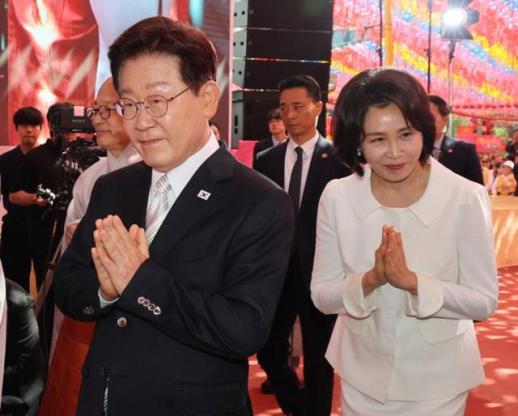 Lee calls for national unity on Buddha's Birthday SEOUL, May 24 (AJP) - President Lee Jae Myung pledged to build a government that "saves people's lives" in remarks at a Buddha's Birthday ceremony at Jogyesa Temple in central Seoul on Sunday. Lee said he would "do my utmost to build a government that saves people's lives" and put into practice Buddha's teaching that "everyone is noble and equal." "The government will take Buddha's precious words as a lamp," he added, vowing to pay closer attention to each person's life and to build a country that listens to "voices from the lowest places." Lee also highlighted Buddhism's enduring presence in South Korean society, saying temple lights never went out even in the darkest times such as war, poverty and disaster, offering people a place to pause and find solace. He also pledged to carry forward the religion's spirit of harmonizing differences into one and to overcome crises facing the country and its people through unity. Earlier in the day, Lee also wrote on Facebook a similar message on Buddha's teachings, calling for national unity. 2026-05-24 15:01:38