

Journalist

Kim Su-ji
sujiq@ajunews.com
-
 Hyundai Glovis Partners with Ocean Cleanup to Tackle Marine Plastic Waste Hyundai Glovis continues its efforts to support the removal of marine plastic waste. On May 21, Hyundai Glovis announced the extension of its partnership with the global nonprofit Ocean Cleanup until 2030. The partnership, which began in 2023, has recently been expanded to include a broader scope of collaboration. As of March this year, over 50,000 tons of plastic waste have already been collected. Hyundai Glovis is utilizing the Automated Debris Imaging System (ADIS) developed by Ocean Cleanup to assist in collecting data on marine plastic. ADIS automatically detects and photographs floating plastic waste using cameras installed on ships, recording their location. Currently, Hyundai Glovis has installed and operates a total of 20 ADIS cameras on 10 of its Pure Car and Truck Carriers (PCTCs), providing the collected data to Ocean Cleanup. This initiative contributes to identifying the locations and sizes of plastic accumulation areas in major shipping routes, including the Pacific Ocean. Additionally, Hyundai Glovis plans to expand the number of vessels equipped with ADIS and is exploring various collaborative options leveraging its global logistics and transportation network. A Hyundai Glovis representative stated, "Over the past three years, we have achieved significant results in addressing the marine plastic issue through our collaboration with Ocean Cleanup. We will continue to leverage our global maritime network and logistics capabilities to make a tangible contribution to environmental protection." Meanwhile, Hyundai Glovis is gradually expanding its eco-friendly collaborations utilizing its global fleet and logistics network.* This article has been translated by AI. 2026-05-21 09:43:43
 -
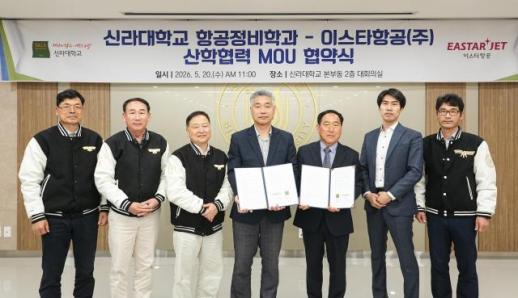 Eastar Jet Partners with Silla University to Train Aviation Maintenance Personnel Eastar Jet is taking the lead in training talent for aviation maintenance, repair, and overhaul (MRO).On May 21, Eastar Jet announced that it has signed a strategic memorandum of understanding (MOU) with the Aviation Maintenance Department at Silla University to foster talent in aviation MRO.The agreement aims to systematically develop aviation maintenance personnel and establish a foundation for early and stable workforce recruitment.The two parties will collaborate in various areas, including the joint development of aviation maintenance training programs, sharing educational infrastructure such as training facilities and equipment, exchanging information on aviation maintenance technology and regulations, and providing guest lectures and mentoring from industry professionals.Notably, during the summer and winter breaks, Silla University will offer an internship program for fourth-year students at Eastar Jet's maintenance center at Gimhae Airport.During the internship, Eastar Jet will provide high-quality curriculum support, including tours of B737-8 aircraft maintenance sites, hands-on training in the use of the maintenance history computerized system (ERP), and practical education on the maintenance quality management system (SMS), helping students grow into aviation maintenance experts.An Eastar Jet official stated, "We plan to expand opportunities for hands-on aviation maintenance education to support the development of skilled personnel. We will continue to nurture aviation maintenance talent across various regions, contributing to the competitiveness of the domestic aviation maintenance industry."Meanwhile, Eastar Jet has been expanding its foundation for training maintenance personnel through industry-academia cooperation since establishing a consolidated maintenance center at Gimpo Airport last October.* This article has been translated by AI. 2026-05-21 09:09:33
 -
 Kia to provide vehicles for FIFA World Cup athletes and officials SEOUL, May 20 (AJP) - Kia will provide more than 600 vehicles for this summer's FIFA World Cup, the automaker said on Wednesday. At an event in Los Angeles the previous day, Kia pledged to supply over 660 vehicles ahead of the quadrennial sporting event, which kicks off in June, as one of the tournament's official sponsors, aiming to broaden its brand exposure in the global market. The vehicles, which included Kia's key models such as the Carnival, K4, Niro, Sorento, Sonet, Sportage and Telluride, will transport sports officials, athletes and others throughout the tournament. This year's World Cup, which runs from June 11 to July 19, will be the first to feature 48 teams and three host countries - Canada, Mexico, and the U.S. "The sponsorship reflects Kia's commitment to providing innovative and sustainable mobility solutions on the global stage," said Kia CEO Song Ho-sung. 2026-05-20 10:54:28
 -
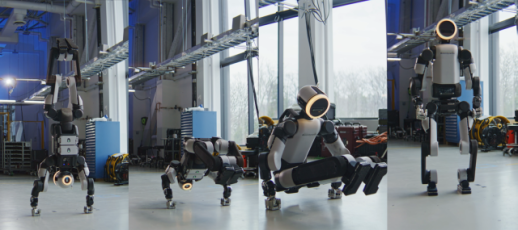 Hyundai and Kia to Deploy 25,000 Atlas Robots in Factories Hyundai Motor Group's robotics subsidiary, Boston Dynamics, is advancing its production plans for the humanoid robot Atlas.On May 18, the group held an investor relations meeting in the United States focused on its robotics strategy, where it announced plans for the mass production of Atlas.The key objective is to introduce over 25,000 Atlas robots into Hyundai and Kia production facilities. The group aims to establish an annual production system for 30,000 robots by 2028, with 83% of these allocated to Hyundai and Kia.In the initial phase of Atlas production, the costs are expected to be high, so the strategy is to leverage Hyundai and Kia's purchasing power to achieve economies of scale.Recently, Kia President Song Ho-sung stated at another investor meeting, "In the first one to two years, we will deploy a large number of robots in U.S. factories to accumulate data and ensure safety. Once the effectiveness of Atlas in specific processes is proven, we can easily expand to other factories due to the similar layouts of global automotive plants."The key component, the actuator, will be produced locally in the U.S. at a rate of 350,000 units per year. A production facility for humanoid actuators, with an annual capacity exceeding 350,000 units, will be established and operational by 2028.Actuators serve as the driving mechanism for robot joints and account for 60% of the total manufacturing cost of the humanoid. Hyundai Mobis is expected to manage the operation of the production facility for Atlas actuators.* This article has been translated by AI. 2026-05-19 14:18:32
 -
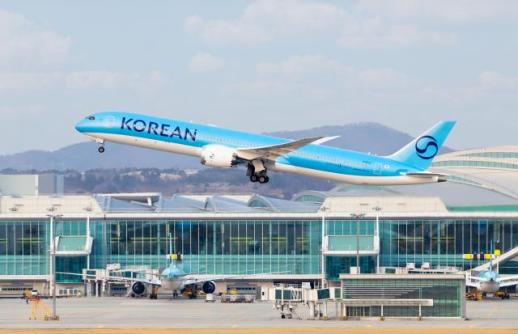 Airfare Prices Drop Ahead of Vacation Season as Fuel Surcharge Decreases As fuel surcharges decrease, international airfare prices are expected to drop slightly next month. According to industry sources on May 18, tickets issued for June will apply a fuel surcharge of 27 stages (ranging from 410 to 419 cents per gallon). This marks a reduction from the 33 stages (over 470 cents per gallon) applied this month. The fuel surcharge is an additional fee airlines impose to offset losses incurred from rising oil prices. The reduction in surcharge stages is due to the average price of Singapore jet fuel (MOPS) falling to 410.02 cents per gallon, based on data from April 16 to May 15. Domestic airlines plan to sequentially adjust fuel surcharges by route in accordance with this change. Korean Air, for instance, charged a minimum of 75,000 won to a maximum of 564,000 won for one-way flights this month, but will reduce these charges to a minimum of 61,500 won and a maximum of 451,500 won in June, resulting in a potential decrease of up to 112,500 won. Asiana Airlines will set its international fuel surcharge for next month at a minimum of 68,000 won and a maximum of 382,800 won for one-way flights, reflecting a decrease of up to 93,400 won compared to May's rates of 85,400 won to 476,200 won. * This article has been translated by AI. 2026-05-18 22:52:59
 -
 Mercedes-Benz Korea Opens Fifth Global Studio in Seongsu-dong, Plans to Launch 11 New Models Mercedes-Benz Korea is set to open its fifth global brand lifestyle experience space in Seoul. This initiative aims to enhance customer engagement while moving away from traditional brand images, coinciding with a series of new vehicle launches planned for the near future.On May 19, Mercedes-Benz Korea will officially open the 'Mercedes-Benz Studio Seoul' and announced that studios will be established in 18 major cities worldwide.The Mercedes-Benz Studio serves as a space for connecting with customers and sharing brand values and lifestyle experiences. Seoul will be the fifth location, following Copenhagen, Stockholm, Tokyo, and Prague.Matthias Baitel, CEO of Mercedes-Benz Korea, stated, "Korea is one of the most important markets for Mercedes-Benz globally, which is why we are opening this studio. We will also unveil new vehicles here, allowing customers to experience our brand's future direction and vision firsthand." Mercedes-Benz Korea plans to introduce 11 new models to the Korean market in the second half of this year.The first models to be officially launched in the third quarter are the updated 'The New Mercedes-Benz S-Class' and 'The New Mercedes-Maybach S-Class.' Both models will feature the Mercedes-Benz Operating System (MB-OS), with pre-orders starting today. The New Mercedes-Benz S-Class will be displayed at the Seongsu-dong studio for customers to view.Additionally, the 'Mercedes-Benz The All-New CLA,' which will be the first model equipped with MB-OS, is expected to launch in Korea in the second half of this year. It will be available in hybrid and fully electric versions, having already received positive feedback after its European market debut last year.As a result, Mercedes-Benz Korea's strategy for Software Defined Vehicles (SDV) is expected to begin with the S-Class and Maybach S-Class. With these models leading the way, the introduction of The All-New CLA featuring MB-OS will significantly expand Mercedes-Benz's lineup of vehicles based on its proprietary operating system in Korea.Furthermore, Baitel commented on the 'Retail of the Future (RoF)' initiative, which began on April 13, stating that over time, it will prove to be a change suited to Korean customers. He noted, "A single price and a unified inventory system represent a significant change for us, and customer satisfaction has greatly improved in all countries where RoF has been implemented." RoF is a direct sales model that consolidates vehicle pricing and inventory management, which previously varied by dealer, allowing Mercedes-Benz Korea to manage it directly.* This article has been translated by AI. 2026-05-18 19:21:29
 -
 Hyundai Motor Group to Establish Hydrogen Ecosystem in Hong Kong, Expanding to Asia-Pacific Market Hyundai Motor Group is set to establish a comprehensive hydrogen value chain in Hong Kong, encompassing hydrogen production, refueling, and utilization. On May 18, the company announced the signing of a multilateral memorandum of understanding (MOU) at the Hong Kong Convention Center during the 'International Hydrogen Development Symposium 2026' to create a hydrogen ecosystem in the region. The MOU aims to build a 'resource-circulating hydrogen production model (W2H)' facility utilizing landfill gas, establish liquefied hydrogen refueling stations, and introduce hydrogen mobility to promote and activate the hydrogen ecosystem. The initiative involves three South Korean companies, including Hyundai Motor, Hyundai Engineering & Construction, and JN Group, along with seven other firms: China Gas Hong Kong, Veolia, China Certification & Inspection Group, Guofu Hydrogen Energy, Temple Water, Chunwo Construction, and Chunwo Bus. These companies will collaborate to produce eco-friendly hydrogen energy locally and develop infrastructure that connects hydrogen production with refueling and hydrogen mobility distribution, supporting Hong Kong's energy independence. Specifically, the project will implement the W2H model to produce low-carbon hydrogen energy from landfill gas. Additionally, liquefied hydrogen refueling stations will be established in key areas with high transportation demand. These stations are more suitable for Hong Kong's limited space as they can store more hydrogen per unit volume compared to gaseous hydrogen stations. Throughout the project, Hyundai Motor will oversee all aspects of the hydrogen ecosystem in Hong Kong, including hydrogen production, utilization, and refueling station construction, while promoting hydrogen mobility. The company plans to expand its hydrogen market into the Asia-Pacific region in the future. Shin Seung-kyu, Vice President of Hyundai Motor Group's Energy and Hydrogen Policy Division, stated, "In line with Hong Kong's proactive hydrogen policies, we aim to leverage Hyundai Motor Group's capabilities and experience in hydrogen business to foster a local hydrogen ecosystem. Starting in Hong Kong, we will expand our cooperation and business across the Asia-Pacific hydrogen market." Meanwhile, Hyundai Motor Group is expanding its hydrogen value chain business, centered around its hydrogen brand 'HTWO,' which encompasses production, storage, transportation, and utilization.* This article has been translated by AI. 2026-05-18 14:57:00
 -
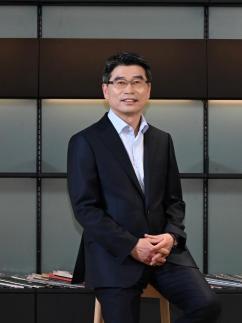 Kia's Song Ho-sung Discusses Atlas Robot Deployment and IPO Plans Song Ho-sung, president of Kia, outlined plans for the deployment of Boston Dynamics' humanoid robot, Atlas. In a recent investor presentation in Hong Kong and Singapore, he stated that the initial focus for Atlas will be on mass deployment in U.S. factories over the first one to two years to gather data and ensure stability. He emphasized that Atlas will first be used in processes that are particularly strenuous and challenging for workers.Once the effectiveness of Atlas is demonstrated in specific processes, Song noted that the similar layouts of automobile assembly plants worldwide would allow for easy expansion to other facilities.Regarding the anticipated initial public offering (IPO) of Boston Dynamics, Song remained noncommittal. He said, "Internally, we have not yet decided on the timing of the IPO or whether to pursue external funding," adding that it is still too early to provide specific details.In June 2021, Hyundai Motor Group established a put option clause when acquiring Boston Dynamics from SoftBank. This clause stipulates that if Boston Dynamics does not go public within four or five years of the acquisition, Hyundai will buy back the 20% stake held by SoftBank at a pre-agreed price. The deadline for this is next month on June 20, leading to speculation that Boston Dynamics may list on the Nasdaq.Additionally, regarding investment ratios in robotics production entities, Song stated, "Investment decisions will be based on the expected benefits for both Hyundai and Kia." He emphasized that while Kia's participation in humanoid production has not yet been determined, the investment ratios will likely be based on the anticipated benefits for each party involved. 2026-05-18 14:18:00
 -
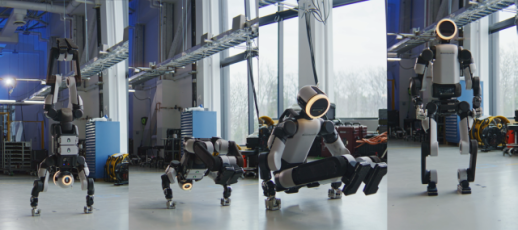 Boston Dynamics Accelerates Industrial Robot Market with Atlas Hyundai Motor Group's robotics subsidiary, Boston Dynamics (BD), is ramping up its efforts to penetrate the industrial robot market with its humanoid robot, Atlas. The company has already established a strong foothold in the industry with its quadrupedal robot Spot and logistics robot Stretch, leveraging decades of operational experience and a vast testing ground within the group. However, building a production system for Atlas and improving profitability remain significant challenges.According to industry sources, BD is focusing on advancing the technology needed to deploy the prototype of the bipedal robot Atlas, which garnered attention at CES 2026 in January, into manufacturing settings.The foundation of BD's commercialization strategy lies in the robot hardware and motion control technologies it has developed over decades, along with operational experience gained in industrial environments. While Chinese startups excel in cost and production speed, and U.S. AI companies have strengths in software capabilities, BD's competitive edge is its ability to commercialize various technologies and demonstrate their effectiveness in real production processes. Notably, Spot and Stretch have already been supplied to several companies, proving their utility in the field.Another advantage is BD's high accessibility to manufacturing sites. The company plans to utilize major production hubs, such as Hyundai Motor Group's Meta Plant America in Georgia in 2028 and the Kia plant in Georgia in the second half of 2029, as initial testing grounds for Atlas. This could establish a trust base for expanding its external client base.However, there are considerable hurdles to overcome before Atlas can be commercialized. BD aims to establish a production system capable of manufacturing 30,000 units annually by 2028, but it has yet to create a stable profit structure. Last year, BD's revenue reached 150.1 billion won, a 30% increase from the previous year, but it recorded a net loss of 528.4 billion won, widening the loss by about 20% compared to 2024 (440.5 billion won).Additionally, the possibility of an initial public offering (IPO) next month has increased management uncertainty. The plan is to secure investment funds for establishing the Atlas production system through the IPO, but if the company fails to enter a profit-making phase post-listing, its corporate value could plummet.When Hyundai Motor Group acquired BD from SoftBank in June 2021, a put option clause was established. If BD does not go public within four or five years after the acquisition, Hyundai Motor Group is obligated to buy back the 20% stake held by SoftBank at a pre-agreed price. The deadline for this option is next month, and if exercised, it could increase Hyundai Motor Group's burden of additional share purchases.Ultimately, for BD to dominate the humanoid market, it must translate its strong brand recognition and technological prowess into actual profits. Securing external clients quickly will also be crucial for successfully integrating Atlas into manufacturing environments. An industry insider stated, "Stably deploying Atlas in the field and converting that into recurring revenue is essential. The results from testing at Hyundai Motor Group's production sites will be a turning point for securing external clients." 2026-05-17 18:13:15
 -
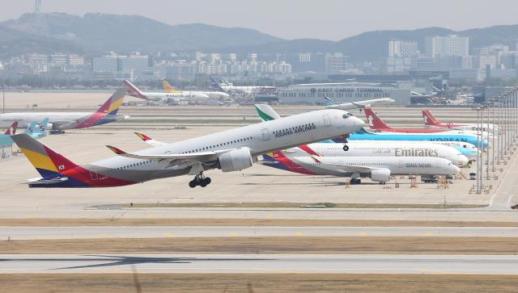 Korean Air and Asiana Airlines Finalize Merger Agreement Ahead of December Launch Korean Air has officially confirmed its merger with Asiana Airlines, setting the launch date for the new integrated airline for December 17. While the framework for the merger is in place, significant challenges remain, including the integration of mileage programs, adjustments to seniority, and internal organizational restructuring. With approximately seven months until the launch, last-minute complications related to stakeholder interests are expected.According to industry sources, Korean Air and Asiana Airlines signed the merger agreement on May 14, marking the conclusion of a process that began with the resolution to acquire Asiana Airlines on November 16, 2020.Korean Air has been progressing through the absorption merger process, including a 300 billion won investment in new shares of Asiana Airlines. The merger has received approval from the Korean Fair Trade Commission and 13 foreign competition authorities over a three-year period. In December 2024, Korean Air acquired a 63.88% stake in Asiana Airlines.This merger agreement represents the final stage of the integration process. As the year-end launch approaches, Korean Air has submitted a request for merger approval to the Ministry of Land, Infrastructure and Transport immediately following the signing. In June, the airline plans to apply for approval of changes to operational standards that include safety compliance conditions and restrictions.Asiana Airlines is scheduled to hold an extraordinary shareholders' meeting on August 12 to vote on the merger proposal. An industry insider stated, "Given the lengthy integration process, the merger proposal is expected to pass without issues at the shareholders' meeting, marking the final hurdle for the launch of the integrated full-service carrier (FSC)."However, even if these legal procedures are completed, substantial challenges remain before achieving a true integration. Notably, the interests of employees from both airlines are intricately linked and are seen as key variables surrounding the launch of the new airline.One significant issue is the integration of seniority. Pilots, due to the nature of their roles, are particularly sensitive to changes in seniority, which can affect promotion timelines, flight schedules, aircraft types, and work location choices.Regarding seniority adjustments, it has been reported that Korean Air is not currently engaging in separate discussions with the union. No further four-party meetings involving both airlines and the pilots' union have occurred since March. Instead, Korean Air has been conducting HR integration briefings since last month, leading to tensions with the union. Consequently, it is anticipated that achieving harmony among employees and stabilizing the organization will take considerable time even after the physical merger.The integration of mileage programs also remains an outstanding issue. The Fair Trade Commission is currently reviewing the third mileage integration proposal submitted by Korean Air. Previously, the commission rejected two proposals, citing insufficient consumer benefits.An industry insider noted, "Once the FSC integration is completed, the three low-cost carriers (LCCs) will likely begin their integration efforts in the first quarter of next year, with the Korean Air-Asiana Airlines merger process potentially serving as a benchmark for future integrations."* This article has been translated by AI. 2026-05-15 03:06:06