


Latest by
-
 Convenience Over Cost: SC Formulations Become Key in Biosimilar Market The biosimilar market is shifting its focus from price to formulation. As subcutaneous (SC) formulations gain traction in the previously intravenous (IV)-dominated biopharmaceutical sector, domestic companies are actively developing related products and securing technology. According to market research firm Mordor Intelligence, the global SC biopharmaceutical market grew from $257.5 billion last year to $286.3 billion this year, and is projected to reach $498.9 billion by 2031. The rising popularity of SC formulations is attributed to their convenience. Unlike IV formulations that require lengthy hospital visits for administration, SC formulations allow for shorter administration times and self-administration, significantly reducing the burden on patients. For healthcare providers, this also lowers the operational burden of managing infusion rooms, enhancing their utility. Patient preference for SC administration is evident. In a study of Roche's Tecentriq SC formulation, 70.7% of respondents preferred the SC method due to reduced administration time and the avoidance of discomfort associated with intravenous catheter insertion. Some U.S. insurers have begun covering 90-95% of IV costs for home administration, further promoting the adoption of SC formulations. Domestic companies are also working to enhance their competitiveness in SC formulations. Celltrion is pursuing approval for its Herjuma SC formulation following the world’s first commercialization of Remsima SC. Herjuma is a biosimilar of Roche's breast cancer treatment Herceptin (trastuzumab), competing with Roche's original Herceptin and Celltrion's IV biosimilar Herjuma in the domestic trastuzumab market. Herjuma SC is the first SC biosimilar to utilize Celltrion's hyaluronidase platform. While the existing IV formulation requires approximately 90 minutes for administration, the SC version can be administered in under five minutes. As there are currently no approved trastuzumab SC biosimilars, Herjuma SC could gain a first-mover advantage if approved. A Celltrion representative stated, "Based on our in-house SC formulation transition technology, we will secure new pipelines and strengthen our global competitiveness, including growth in contract development and manufacturing organization (CDMO) services for formulation changes." Alteogen is also targeting the global market with its SC conversion platform. ALT-B4 is the key substance in Alteogen's SC formulation change platform. The company revealed on June 18 that Sanofi was the first licensing partner for SC formulation conversion using ALT-B4, based on the Hybrozyme platform agreement signed in 2019. This marks the first public disclosure of a global technology export partner after years of confidentiality. The potential for additional commercialization is expanding. Sanofi is currently conducting a Phase 1 clinical trial for a high-dose SC formulation of Dupixent using ALT-B4. Alteogen demonstrated the competitiveness of its platform when Merck's (MSD) Keytruda SC, utilizing its technology, was commercialized last year. Keytruda SC received a permanent J-code in the U.S. in April. The J-code simplifies the billing process for hospitals and insurers, enhancing prescription accessibility. In South Korea, it received approval from the Ministry of Food and Drug Safety last month and is expected to launch in the fourth quarter of this year. Hong Ga-hye, a researcher at Daishin Securities, projected that the Keytruda SC-related milestones could generate approximately 300 billion won this year, 400 billion won in 2027, and 500 billion won in 2028, adding that the revenue structure will likely shift from milestone and royalty-based to a focus on ongoing royalties.* This article has been translated by AI. 2026-06-25 18:12:00
 -
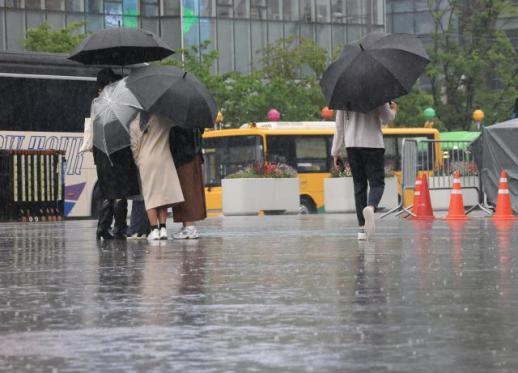 Weather Forecast: Strong Showers Expected Across Inland Regions On Friday, June 26, the weather is expected to be mostly cloudy nationwide, with persistent showers primarily affecting the central and southern inland regions. As temperatures rise during the day, the atmosphere will become increasingly unstable, leading to the possibility of heavy rain accompanied by thunder, lightning, and hail in some areas.According to the Korea Meteorological Administration, heavy showers of around 30 mm per hour are anticipated until the morning of June 26, particularly in Gangwon Province, northern Chungbuk, and northern Gyeongbuk. Strong rain of about 20 mm per hour is also expected in parts of Chungnam, Jeonbuk, and Gyeongsang provinces. Areas experiencing showers may see gusty winds and frequent thunderstorms, with a risk of hail in the central region and Gyeongbuk, necessitating caution against property damage and safety incidents.The expected rainfall amounts are as follows: 50-60 mm in eastern Gyeonggi, Chungbuk, and northern Gyeongbuk; 10-80 mm in the inland and mountainous areas of Gangwon; 10-50 mm along the eastern coast of Gangwon; and 5-40 mm in Daejeon, Sejong, Chungnam, Jeonbuk, and parts of Daegu and Gyeongbuk (excluding northern areas). Showers are forecasted to continue into the afternoon, bringing an additional 5-20 mm of rain to the southern inland and mountainous regions of Gangwon, northern Chungbuk, and the Yeongnam inland area. Ulleungdo and Dokdo are expected to receive 5-40 mm, while Jeju Island is predicted to see less than 5 mm of precipitation.Tomorrow morning's low temperatures are expected to range from 15 to 20 degrees Celsius, with daytime highs reaching between 23 and 30 degrees Celsius. In the western regions, the heat will persist, with temperatures in Seoul and Gwangju expected to reach 29 degrees Celsius, and Suwon and Cheongju also hitting 29 degrees. In contrast, coastal areas like Gangneung and Pohang will be cooler, with temperatures of 23 and 25 degrees, respectively, falling below the seasonal average.Meanwhile, improved atmospheric dispersion is expected to maintain fine dust levels at 'good' across all regions, resulting in clean air conditions.* This article has been translated by AI. 2026-06-25 18:12:00
 -
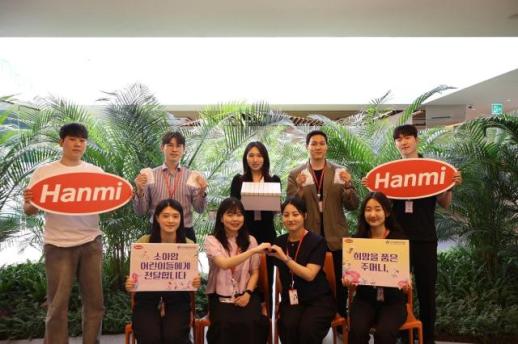 Hanmi Group Recognized by Korean Red Cross for 46 Years of Blood Donation Efforts Hanmi Group has been awarded a commendation from the Korean Red Cross for its 46 years of dedication to the "Love Blood Donation Campaign." Through voluntary participation from its employees, the company has donated a total of 3.79 million cc of blood, establishing itself as a leader in social contribution within the pharmaceutical industry. On June 12, Hanmi Science, the holding company of Hanmi Group, received the commendation during the "2026 Blood Donor Day Ceremony" held at the Sky Art Hall in Gangseo-gu, Seoul. The event was attended by Jeong Gyeong-sil, Director of Health and Medical Policy at the Ministry of Health and Welfare, and Kim Hong-guk, Acting President of the Korean Red Cross, among other officials. The Love Blood Donation Campaign began in November 1980 when Im Sung-ki, the founder of Hanmi Pharmaceutical, participated in the opening of a blood donation center at City Hall Station in Seoul. Since then, 11,857 employees have participated, contributing to a cumulative blood donation of 3.79 million cc. After donating blood, employees provide certificates that are then given to colleagues in need of emergency transfusions and to patient organizations such as the Korean Blood Cancer Association. The total number of donated blood donation certificates has reached 6,247. Hanmi Group continues to engage in various social contribution activities based on its management philosophy of "respect for human beings" and "value creation." Shim Byeong-hwa, Vice President in charge of CSR at Hanmi Group, stated, "We will fulfill our mission as a pharmaceutical company by continuing our social contribution activities to create a healthy and warm society."* This article has been translated by AI. 2026-06-25 18:12:00
 -
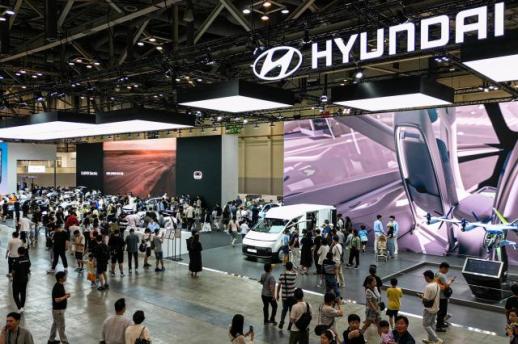 2026 Busan Mobility Show: New Avante, IX7, and Sea Lion 6 Set to Debut The 2026 Busan Mobility Show, a key event for the domestic automotive market, will kick off on June 26 after a two-year hiatus. This biennial event will see major automakers unveil new vehicles and future technologies as they compete for consumer attention. This year, Hyundai Motor Group will debut the eighth-generation Avante, aiming to maintain its status as the "people's car." Chinese electric vehicle brand BYD, making its first appearance at the show, will showcase its plug-in hybrid electric vehicle (PHEV) strategy model. According to industry sources, the most anticipated model at the Busan Mobility Show will be Hyundai's new Avante. The automaker will unveil the fully redesigned "The All-New Avante" during the opening ceremony, prominently displaying it in the largest exhibition area to attract visitors' attention. The new Avante will feature the next-generation infotainment system, "Pleos Connect," following its flagship sedan, the New Grandeur. It will also include a generative artificial intelligence (AI) agent, "Gleo AI," which communicates with drivers in real time. Hyundai aims to evolve vehicles into "moving smart devices" that provide a user experience similar to smartphones in the long term. Kia will introduce its next-generation mobility strategy centered around the purpose-built vehicle (PBV) PV5. It will unveil three new PV5-based models, including a seven-passenger version and a high-roof cargo variant, ahead of their launch in the second half of the year. The company aims to showcase the versatility and scalability of PBVs, including applications for children's school buses. Genesis will also contribute by presenting the high-performance Magma GT concept and the GMR-001 hypercar design, which was revealed at the 24 Hours of Le Mans, for the first time in Asia. BYD, which is gradually establishing itself in the Korean market, will also participate in the event for the first time. The company plans to introduce its next-generation plug-in hybrid technology, DM-i (Dual Mode-intelligent), in Korea for the first time. This technology is expected to be featured in the upcoming mid-size SUV, Sea Lion 6, which is preparing for its domestic launch. This move aims to expand BYD's reach into the growing plug-in hybrid market following its success with electric vehicles. The traditional powerhouse BMW Group will showcase six models across its brands, including BMW, MINI, and BMW Motorrad, featuring the i7 among others. The company will also display electric models like the new all-electric MINI JCW Aceman, emphasizing the transition from internal combustion engines to electric vehicles. The British off-road brand Ineos Grenadier will make its debut at the show, while American pickup truck brand Ram will unveil the latest model of the "2026 Ram 1500" in Busan for the first time. Industry experts predict that the Busan Mobility Show will highlight the competitive landscape between Hyundai Motor Group, which aims to defend its domestic market share, and BYD, which is looking to expand its presence. Moon Hak-hoon, a professor at Osan University’s Department of Future Electric Vehicles, stated, "The Busan Mobility Show will serve as a platform to observe Hyundai Motor Group's market defense strategies alongside the domestic market approaches of foreign brands like BYD."* This article has been translated by AI. 2026-06-25 18:12:00
 -
 South Korean Ships Face Dilemma Over Re-entering Hormuz Strait With the limited reopening of the Hormuz Strait following a U.S.-Iran ceasefire agreement, South Korean vessels are increasingly able to exit the strait. As expectations for normalized navigation grow, many ships may soon re-enter the strait for oil transportation. However, the government maintains that it cannot permit national vessels to re-enter due to the incomplete nature of the ceasefire discussions. According to the Ministry of Oceans and Fisheries and the shipping industry, five South Korean vessels, including HMM's bulk carrier Narae, received navigation permits from the Persian Gulf Shipping Authority (PGSA) and successfully passed through the Hormuz Strait on June 23. The Narae, which transports advanced materials needed for transformers and plant construction, had been stranded in the strait for about four months due to the outbreak of war between the U.S. and Iran. The previous day, four South Korean vessels, including HMM's large container ship Daon and the very large crude carrier (VLCC) Universal Glory, also received PGSA navigation permits and exited the strait. Daon is set to dock at the Port of Sohar in Oman to load and unload cargo before making its way to several ports in East Asia, ultimately arriving at Busan. The Universal Glory, carrying 2 million barrels of crude oil from Saudi Arabia, is expected to arrive at Yeosu Port in mid-July to deliver oil to GS Caltex. The government prioritizes the safety of national vessels and plans to focus on removing all 13 South Korean ships remaining in the strait this week, except for the Namu, which is undergoing repairs in Dubai. Conversely, the shipping industry is discussing the potential re-entry of South Korean VLCCs, tankers, and chemical carriers into the strait. This is due to the increasing need for Middle Eastern oil-producing countries, such as Saudi Arabia, the United Arab Emirates, and Kuwait, to expedite the restoration of oil fields and transport crude oil and petroleum products quickly out of the strait. In fact, dozens of VLCCs and tankers are waiting outside the strait in the Gulf of Oman for PGSA navigation permits, with at least five South Korean vessels reported to be among them. The Ministry of Oceans and Fisheries strongly opposes the re-entry of national vessels into the strait, citing unresolved ceasefire discussions and safety issues, including the removal of mines deployed during the war. However, as South Korea needs to increase oil and petroleum product transportation through the strait to normalize oil prices, a decision on the timing of national vessels' re-entry is expected to be made soon through consultations among relevant ministries, including the Ministry of Oceans and Fisheries, the Ministry of Foreign Affairs, and the Ministry of Trade, Industry and Energy. A shipping industry official stated, "Currently, the Hormuz Strait is experiencing bottlenecks due to PGSA navigation procedures, affecting both exits and re-entries. For the next three months, it is likely that vessels waiting at the strait's entrance will either receive government approval to enter or head to alternative ports such as Yanbu in Saudi Arabia or Fujairah in the UAE."* This article has been translated by AI. 2026-06-25 18:08:00
 -
 Korea's Chances of Advancing to Round of 32 Remain High Despite Loss 2026 FIFA North and Central America World Cup: Despite a shocking defeat in their final group stage match, the South Korean national team, led by coach Hong Myung-bo, still has a strong chance of advancing to the Round of 32. On June 25, at 10 a.m. KST, South Korea lost 1-0 to South Africa in their final Group A match at the Estadio de Monterrey in Mexico. With this loss, South Korea finished the group stage with a record of one win and two losses, earning three points. Meanwhile, Mexico secured the top spot in the group with a decisive 3-0 victory over the Czech Republic, finishing with nine points, while South Africa moved into second place with four points (one win, one draw, one loss). As a result, South Korea dropped to third place in the group, failing to secure direct advancement to the Round of 32. However, they avoided automatic elimination thanks to Mexico's win over the Czech Republic. This leaves South Korea's chances of advancing to the Round of 32 uncertain. In this tournament, which features 48 teams, the top two teams from each group, along with the eight best third-placed teams, will qualify for the knockout stage. South Korea will need to monitor the results of other groups to determine their fate. If two or more teams finish with the same points in the third-place standings, rankings will be determined by goal difference, total goals scored, fair play points, and FIFA rankings. Currently, South Korea has three points, a goal difference of -1, and two goals scored. To advance, at least three other third-placed teams from groups D to L must have lower performance than South Korea. This means that either these teams must have fewer than three points, or if they have three points, they must have a goal difference of less than -1, or if their goal difference is the same, they must have scored fewer than two goals. Statistical forecasts remain relatively optimistic. According to sports analytics firm Opta, South Korea's probability of advancing to the Round of 32 stands at 87.6%. Despite the shocking defeat, this figure has not dropped significantly from the 90% range prior to the match. Additionally, Opta predicts that if South Korea qualifies as a third-placed team, they will likely face Egypt in the Round of 32. Currently leading Group G, Egypt will secure the top spot if they win their final match against Iran on June 27. However, predictions for the subsequent knockout stage are less favorable. Opta estimates Egypt's chances of winning at 48%, while South Korea's probability of advancing to the Round of 16 is only 38.96%.* This article has been translated by AI. 2026-06-25 18:08:00
 -
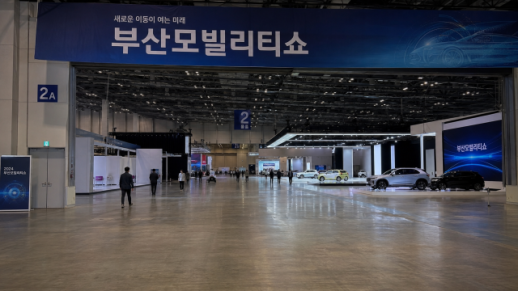 2026 Busan Mobility Show Faces Challenges as Major Automakers Withdraw The Busan Mobility Show, a prominent regional auto exhibition in South Korea, is facing significant challenges as its scale diminishes and the automotive industry's focus shifts towards software and technology. According to industry sources, many major automakers will not participate in the upcoming 2026 Busan Mobility Show, which opens on June 27. Renault Korea, based in Busan, along with Mercedes-Benz and KG Mobility (KGM), have decided not to set up booths at the event.Participation has plummeted from 25 brands in 2016 to just 8 this year, a reduction to one-third of its previous size over the past decade. This decline raises concerns about the show's viability. Traditional auto shows are increasingly being avoided by manufacturers, who prefer to hold their own events aligned with new vehicle launches or engage in online and experiential marketing.The perspective of automakers towards auto shows has changed significantly since the COVID-19 pandemic. It has been demonstrated that online promotions and independent test drive events can provide sufficient marketing impact. The number of participating brands dropped sharply from 19 in 2018 to just 6 in 2022, the first show held after the pandemic.The automotive industry's shift from hardware to software and artificial intelligence is also exacerbating the crisis facing traditional auto shows. In the past, auto shows were key platforms for showcasing new vehicle designs, performance, and manufacturing technologies. Now, as competition increasingly centers around connected cars and vehicle operating systems, merely displaying vehicles is no longer sufficient to convey innovation. This has weakened the incentive for manufacturers to invest heavily in auto show participation.Global auto shows are experiencing similar trends. The Geneva International Motor Show, which has a history of over 100 years, will cease operations after its 2024 event. The IAA, formerly known as the Frankfurt Motor Show, relocated to Munich in 2021 and rebranded to encompass broader mobility themes. The Paris Motor Show has also lost its former prominence.Some industry observers believe that the success of this year's event will be a critical turning point for the future of the Busan Mobility Show. With fewer automakers participating, the show must attract visitors through engaging content, exhibitions on future mobility, and differentiated strategies linked to local industries. Failing to do so could further undermine the justification for holding the event.An official from an automaker stated, "The timing of auto shows no longer aligns with new vehicle release schedules, diminishing their significance. There is a strong perception that online or independent events are more effective. Meanwhile, interest in the Beijing Motor Show is rising as Chinese electric vehicle brands gain prominence."* This article has been translated by AI. 2026-06-25 18:08:00
 -
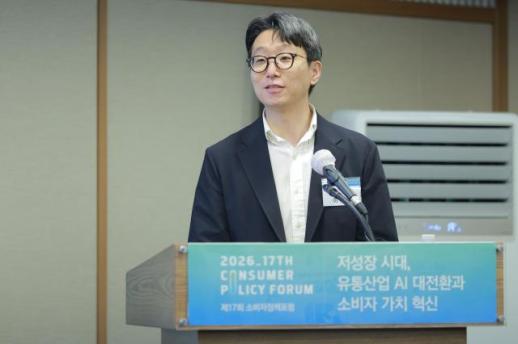 AI Agents Transforming Shopping Experience, Says Shinsegae I&C Executive "The retail market is shifting to a structure where AI agents explore, compare, and purchase on behalf of consumers," said Lee Seung-jun, head of the AX Promotion Team at Shinsegae I&C. During the 17th Consumer Policy Forum held on June 25, Lee outlined the changes in the retail industry and consumer policy direction in the era of agentic commerce. In his keynote speech titled "Corporate and Consumer Policy Directions in the Era of Agentic Commerce," Lee diagnosed that the advancement of generative AI is fundamentally changing how consumers make purchases and the competitive landscape of the retail industry. He explained that since the emergence of generative AI, the development and utilization of technology have become commonplace, completely transforming everyday planning and design processes. "AI is changing not just technology but the very decision-making processes of consumers," he emphasized, adding that AI commerce will become a new normal in the future. Lee specifically warned about the changing shopping structure. He stated, "If AI agents take the lead in purchasing, retailers and e-commerce could be reduced to mere execution infrastructures. While the transition to the internet and mobile created revenue gaps in the past, failure to adopt AI could threaten the very survival of companies." He predicted that future competition in the retail sector will center more on what AI recommends rather than where customers choose to shop. In response to these changes in the retail environment, companies are adopting various strategies. Efforts are underway to convert existing human-centered data into formats recognizable by AI. Additionally, there is a clear trend of linking products to global AI platform algorithms and integrating AI into existing systems to reduce costs. Lee also shared specific examples of applying AI technology in practice. The self-checkout solution, which refines Shinsegae I&C's unmanned store technology, uses AI to analyze CCTV footage to detect "missed scans" where barcodes are not scanned intentionally or accidentally. Furthermore, a next-generation checkout technology recognizes items placed in a basket using computer vision technology, allowing for automatic payment without scanning each product's barcode. This technology is already being utilized in corporate settings. AI is also learning from weather and sales data to suggest optimal discount rates for perishable goods, reducing waste that previously relied on experience or intuition. However, Lee pointed out that technological advancement alone is not sufficient. Given AI's deep involvement in the consumer purchasing process, he stressed the need for trust-based policies and infrastructure to mitigate social costs. "In the era of agentic commerce, transparency of platform algorithms, reliability of supplier data, and consumer control over delegation will be key challenges," he stated. He urged platforms to clearly disclose their recommendation criteria and advertising status, while suppliers must ensure the accuracy and timeliness of the data used for AI learning. In conclusion, he emphasized, "Companies that build strong consumer trust alongside technological innovation will seize the future market leadership."* This article has been translated by AI. 2026-06-25 18:04:00
 -
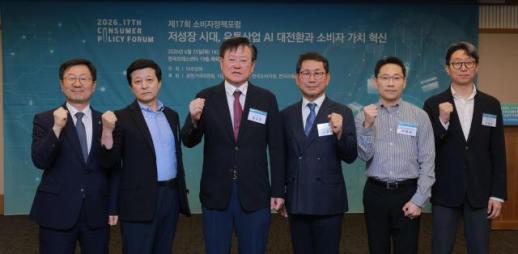 AI Transforming Retail: Beyond Efficiency to Consumer Trust As the competitive landscape of the retail industry shifts from physical stores and products to artificial intelligence (AI) and data, experts emphasize the need to connect innovation with consumer value. Aju Economic Daily hosted the 17th Consumer Policy Forum on June 25 at the Korea Press Center in Jung-gu, Seoul, under the theme "AI Transformation in the Retail Industry and Innovation of Consumer Value in an Era of Low Growth." The forum provided an in-depth look at the current state and future directions of the retail industry, which is undergoing a paradigm shift due to prolonged domestic economic stagnation. Kim In-ho, chairman of the Korea Retail Forum, predicted that the next generation of retail competitiveness will shift from location and store expansion to understanding customers and leveraging data assets. He noted that agentic commerce, where consumers delegate purchasing decisions to AI agents, is expected to become mainstream. He highlighted the importance of enhancing information delivery and recommendation functions as essential for the survival of retail businesses. Kim also observed that consumer spending is expanding from basic needs to areas of self-expression, such as hobbies, relaxation, and experiences. Consequently, he stressed that retailers must move away from traditional growth strategies focused on store expansion and instead offer personalized products to enhance customer lifetime value and frequency of use. Examples of AI innovation in retail and corresponding strategies were also shared. Lee Tae-hee, head of operations strategy at Kurly, presented AI as a solution to rising costs, including logistics and labor. He emphasized that the goal of innovation is not merely cost reduction but creating new customer value through AI. Kurly is applying AI not only for product descriptions, searches, and recommendations but also for order management, agricultural product sorting, and logistics center operations. This approach aims to reduce stockouts and waste while also enhancing logistics productivity through the use of autonomous robots. Lee Seung-jun, team leader at Shinsegae I&C AX Center, stated that the competitive landscape will increasingly depend on "what AI recommends" rather than "where customers visit." He stressed the urgent need to establish a reliable infrastructure that ensures transparency in platform algorithms and data trustworthiness. Shinsegae I&C is using AI to detect product mis-scans at self-checkout counters and to analyze sales, inventory, and waste history to suggest optimal discount rates for fresh products. Legislative and administrative challenges to ensure that technological advancements translate into tangible consumer benefits were also discussed. Lee Joo-hee, a member of the Democratic Party, promised in her address that sustainable innovation can only occur when algorithm transparency, data reliability, and consumer choice are guaranteed. Yoon Soo-hyun, head of the Korea Consumer Agency, emphasized that the ultimate goal of the AI transformation should be the happiness of consumers and the safety of everyday life for all. He pledged efforts to ensure that the benefits of increased productivity translate into tangible advantages for consumers.* This article has been translated by AI. 2026-06-25 18:04:00
 -
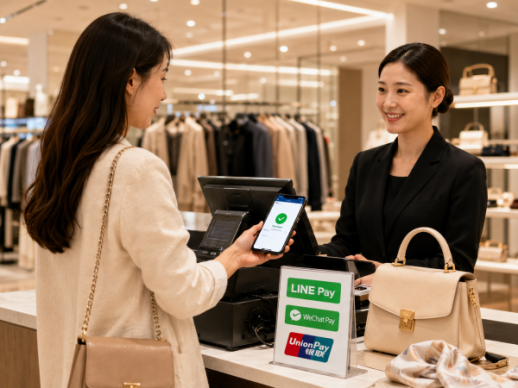 Retailers Expand Mobile Payment Options for Chinese Tourists in South Korea As the number of Chinese tourists visiting South Korea increases, the retail sector is accelerating the introduction of local mobile payment methods. With payment convenience directly linked to sales, retailers aim to enhance conversion rates by allowing tourists to pay using familiar apps.According to the retail industry on June 25, major offline retail channels, including duty-free shops, convenience stores, and department stores, are increasingly adopting local-friendly payment options like Line Pay and UnionPay to improve payment convenience for Chinese tourists.Notably, as the proportion of Taiwanese tourists among visitors to South Korea rises, more retailers are proactively introducing Line Pay, which is used by over half of Taiwan's population. After Shinsegae Duty Free adopted Line Pay in March, Seven-Eleven followed in April, and E-Mart 24 launched the service last month. By adding Line Pay to existing options like Alipay, WeChat Pay, and UnionPay, retailers are expanding payment choices for Chinese tourists. In fact, Seven-Eleven reported a 12% increase in Line Pay sales last month compared to the previous month.Lotte Duty Free also introduced Line Pay for online payments last month. A Lotte Duty Free official stated, "In the first quarter of this year, sales from individual Taiwanese tourists increased by about 38% compared to the same period last year," describing the move as a strategy to capture the rapidly growing Taiwanese tourist market.Department stores are also expanding their payment infrastructure. In September, Lotte Department Store plans to implement UnionPay QR and NFC payments across all its locations. The flagship store, located in the Myeongdong area, expects enhanced shopping convenience following the introduction of UnionPay, given the high volume of Chinese customers visiting the area.The push for expanded payment options comes amid a surge in foreign tourists visiting South Korea. According to the Ministry of Culture, Sports and Tourism, the number of foreign tourists reached 10 million in the first half of this year for the first time. This milestone was achieved about a month earlier than last year, when the 10 million mark was crossed in mid-July. Chinese tourists accounted for the largest share at 560,000, followed by Taiwan with 190,000, Japan with 360,000, and visitors from the Americas totaling 210,000.Foreign tourists are also spending more. In May, the total card spending by foreign tourists in South Korea, including online purchases, reached 2.1 trillion won, surpassing 2 trillion won for the first time since statistics began in January 2018.As spending shifts from group tours to individual travelers, the importance of payment convenience is increasing. Individual tourists tend to spend directly at offline stores like duty-free shops, department stores, and convenience stores.Retailers believe that simply offering familiar payment methods can significantly enhance the likelihood of purchases among tourists. A retail industry official noted, "For foreign customers, the ability to pay with the apps they usually use is crucial for shopping convenience. Reducing inconvenience at the payment stage is essential for converting visitor traffic into actual sales, which is why we are expanding local payment options."* This article has been translated by AI. 2026-06-25 18:04:00