
Journalist

KimSuJi
sujiq@ajunews.com
-
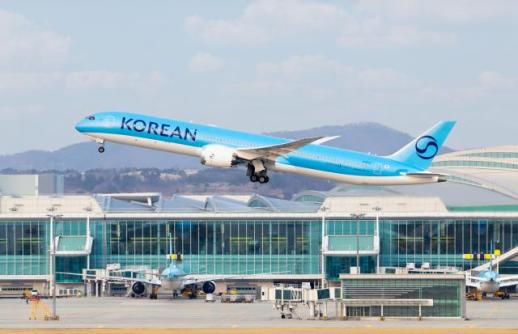 Korean Air Weighs Cutting Captain Promotions by About 17% Amid First Officer Shortage Korean Air is moving to reduce the number of first officers promoted to captain, a step the airline says is aimed at smoother crew operations but one that has drawn growing pushback from pilots who are nearing eligibility. Some in the industry also see it as an effort to adjust cockpit staffing ahead of the planned year-end integration with Asiana Airlines. According to industry officials on Tuesday, Korean Air is reviewing a plan to cut annual captain promotions to 120 from 144, a reduction of about 17%. Under the current system, 12 first officers can be promoted each month; the plan would lower that to 10. The move is tied to a shortage of first officers, according to people familiar with the matter. Airlines typically schedule captains and first officers in equal numbers for flights, and as more first officers move up, gaps in the first-officer pool widen. The airline’s difficulty in securing new first officers has also influenced the decision, the officials said. One key variable has been a decline in the number of military pilots able to move to civilian airlines. For fixed-wing pilot officers who did not graduate from the Air Force Academy — including ROTC and officer-candidate programs — the mandatory service period for those commissioned after July 1, 2015, was extended to 13 years from 10. Starting in the second half of last year, their discharge dates began shifting to the second half of 2028 or later. Airlines say that has tightened the supply of military-experienced pilots this year. An industry official said, “I understand the number of first officers coming in with military experience this year has fallen to about one-third of the usual level.” With a major pipeline for new first officers constrained, Korean Air’s staffing burden has increased. Korean Air pilots have strongly objected to the plan. They say that even if they meet the requirements for promotion, fewer slots would keep them in first-officer roles longer and could worsen a promotion backlog. Asiana has not discussed cutting captain promotions, but adjustments are expected as an integrated airline takes shape. Some observers argue Korean Air is moving early to reorganize cockpit staffing ahead of the integration. They say aircraft and personnel redeployments will be unavoidable before the year-end launch of the combined carrier, and that managing the scale of captain promotions is intended to reduce operational strain after integration. Korean Air has recently been holding job-specific briefings on post-merger human resources integration. For pilots, a central issue is how seniority will be combined and whether that could delay captain upgrades. “Even as more pilots continue to meet the time requirements for captain promotion, the time spent as a first officer can only get longer,” an industry official said. “Combined with the seniority issue ahead of integration, internal dissatisfaction could grow further.”* This article has been translated by AI. 2026-05-07 05:03:00
 -
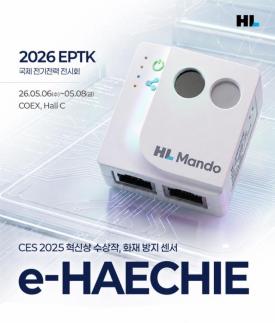 HL Mando to Supply AI Electrical Fire-Prevention System to Hyundai Motor’s U.S. Plant Software-defined vehicle (SDV) company HL Mando is pushing a new business line as it seeks to extend its earnings growth. HL Mando said Tuesday it is moving ahead with commercialization of e-HAECHIE, an artificial intelligence-based solution designed to prevent electrical fires. The company said it secured stability and reliability through proof-of-concept tests at 17 plants in South Korea. Mass production is set to begin next month. The first customer will be Hyundai Motor Group, which plans to apply the system at its key North American production base, Hyundai Motor Group Metaplant America (HMGMA). HL Mando said the production version has evolved into a “smart disaster-prevention consultant.” While the initial model focused on detecting arc events, the production model analyzes arc characteristics and patterns and assesses risk, reflecting the use of AI. Depending on the risk level, the system is designed to prompt preventive steps such as inspections, equipment replacement and changes in operating conditions. It also adds infrared sensors and thermal imaging cameras to detect subtle temperature changes, aiming to block scenarios that could lead to a fire. The company said it expects the new business to support continued strong results. HL Mando posted first-quarter revenue of 2.3117 trillion won and operating profit of 93.6 billion won, up 1.8% and 18.2% from a year earlier. Despite softer demand, it also set record quarterly revenue in some regions, including India. The production version of e-HAECHIE will be unveiled publicly for the first time at the 2026 International Electric Power Industry Expo, running for three days starting Tuesday at COEX in Seoul.* This article has been translated by AI. 2026-05-06 09:33:15
 -
 GM Korea bets on small SUVs while dismissing withdrawal rumors SEOUL, April 30 (AJP) - GM Korea has pledged to reinforce its Changwon plant as a global export hub, dismissing persistent rumors of a possible withdrawal from the South Korean market. The automaker has invested heavily in the plant, which has an annual capacity of up to 280,000 vehicles, betting on small SUVs as a core business to cement its position within GM and sustain its Korean operations over the long term. Vice president Asif Khatri, who oversees manufacturing across GM's global operations, said at a press briefing at the plant earlier this week that the automaker will continue improving its facilities to "keep up with strong demand," adding that combined cumulative production of its Trax and Trailblazer small SUVs has recently surpassed 2 million units. Both models were fully developed and produced in South Korea from initial design through manufacturing. The Trax has been built at the Changwon plant since 2023, while the Trailblazer has been produced at its Bupyeong plant in Incheon since 2020. When asked about speculation that GM could leave the South Korean market amid weak domestic sales, Khatri said he would respond with actions rather than words, saying that the plant is running "at full capacity to maximize output." GM Korea currently operates three production plants along with several facilities for engines, transmissions, and other components. Vice President Lee Dong-woo, who is in charge of the South Korean manufacturing operation, said, "Small SUVs could be among the last internal-combustion segments to remain in demand," keeping its plants busy to "keep up with demand." 2026-04-30 09:24:18
 -
GM Korea Runs Changwon Plant at 95% Capacity, Expands Role as Export Hub GM Korea is running its Changwon plant near full capacity as it strengthens its role as a global export base. After facing recurring speculation about a possible exit from the Korean market, the company has sought to counter that narrative with large-scale investment and by repositioning Changwon as a key hub for small sport utility vehicles. Strong exports, it says, are helping demonstrate its competitiveness within GM and support the sustainability of its Korea operations. Asif Khatri, GM vice president of manufacturing for international operations, said at an April 28 media briefing at the Changwon plant that it is “our benchmark facility.” He said combined cumulative production of the Chevrolet Trax Crossover and Trailblazer has surpassed 2 million units. The Trax Crossover and Trailblazer are small SUVs developed and produced in Korea, from planning and design to performance development and manufacturing, the company said. The Trax Crossover has been produced at the Changwon plant since 2023, while the Trailblazer has been produced in earnest at the Bupyeong plant since 2020. Asked about persistent rumors that GM could withdraw from Korea, Khatri said the company aims to dispel the claims through actions rather than words. “The rumors related to withdrawal are not true,” he said, adding that Korean plants are operating at maximum levels and “we need to build more.” He said the focus is on keeping plants running and working with the union to maximize output. GM Korea operates three production plants. It also has domestic facilities that produce engines and a six-speed automatic transmission (GF6), and the company said its bases are running near maximum capacity. The Changwon plant’s utilization rate is 95%, and it can produce up to 280,000 vehicles a year. Lee Dong-woo, vice president of manufacturing at GM Korea, said the company believes the small SUV segment could be among the last internal-combustion categories to remain viable and that customers continue to demand it. “We are in a situation where we are concerned because we cannot meet demand,” he said. Bang Seon-il, vice president of purchasing at GM Korea, said the vehicles are popular enough that they are exported worldwide in less than two to three days after production. On the fact that Korean plants currently produce only internal-combustion vehicles, the company said it is prioritizing output of small SUVs already proven in global markets rather than rushing electrification. Khatri said demand for vehicles produced in Korea is strong enough that the company cannot meet it, and that a dedicated team for new-energy vehicles — including hybrids (HEV), plug-in hybrids (PHEV) and electric vehicles (EV) — is reviewing potential opportunities. * This article has been translated by AI. 2026-04-30 06:06:15
-
 Report: GM Korea-Built Chevrolet Trax Crossovers Ship From Changwon to North America Masan Gapo New Port on April 29 was packed with finished vehicles lined up for export, with a large car carrier preparing to load. The cars had been built at a domestic plant and were awaiting shipment overseas. Most of the vehicles carried the Chevrolet badge. They were largely the Chevrolet Trax Crossover, a small SUV produced at GM Korea’s Changwon plant. Since its 2023 launch, the model has sold about 1 million units cumulatively and ranked No. 1 in South Korea’s passenger-car exports for three consecutive years from 2023 through last year, filling the port’s staging area. Standing near a Hyundai Glovis vessel, Kim Hyeon-uk, deputy head of the logistics team at GM Korea, said he takes pride in “vehicles made in Changwon meeting global customers.” He described the loading as “the final step” in a long value chain linking the Changwon plant, Masan Gapo New Port and overseas markets. At the port, the ship GLOVIS CAPTAIN was preparing to depart with 350 Trax Crossovers bound for the port of Benicia near San Francisco. The vessel can carry up to 4,700 passenger vehicles, and the day’s loading took about two hours. The cars are expected to reach the west coast of North America after a 15-day voyage. Son Yong-jun, North America team leader for Hyundai Glovis’ car-carrier business, said GLOVIS CAPTAIN was deployed on short notice after delays to a scheduled vessel. He added that a significant portion of passenger vehicles loaded are exclusively GM vehicles, contributing to South Korea’s auto exports. Cho Heung-je, head of operations at Masan Gapo New Port, said the port expects a record 300,000 vehicles shipped this year, with GM Korea accounting for about 55% of total cargo volume. Nearby, GM Korea’s Changwon plant was running at a brisk pace, with workers and robots producing finished vehicles. The facility includes stamping, body, assembly and paint shops. A banner at the assembly shop entrance read, “We will achieve our business plan,” underscoring the company’s focus on exports. Inside, a height-adjustment system moved vehicle bodies up and down to fit workers’ average height. In the body shop, welding is fully automated, with large arm-like robots moving continuously as sparks flew. The body shop has 627 industrial robots. Bok Im-seong, who oversees the assembly shop at GM Korea, said robots identify and follow four types of tires — including alloy and steel wheels — and install them on vehicles. He said GM is reviewing the approach for possible benchmarking globally after seeing GM Korea’s application. 2026-04-30 06:03:18
 -
 Honda Korea’s Auto Sales Exit Raises Used-Car, Service Concerns for Owners Honda Korea’s decision to end its auto sales business is fueling anxiety among current owners, from fears of falling used-car prices to concerns about gaps in after-sales service. Industry watchers say the pressure on resale values could intensify if the company discounts remaining inventory ahead of its exit and if cancellations of existing contracts increase. According to the industry on the 27th, Honda Korea has begun follow-up procedures to close the auto sales business by the end of this year. Starting this week, it plans talks with its seven dealers on how to handle inventory and respond to customers with contracts, before setting a specific end date for sales. Honda Korea announced the move at an emergency news conference on the 23rd, about 23 years after it began its auto business in South Korea in 2004. The company said it will stop selling cars around year’s end and focus on its motorcycle business going forward. Concerns spread quickly online. Posts in owner communities asked, “Will used-car prices drop a lot?” “How will we get service eight years from now?” and “What happens to the lifetime engine-oil coupon?” Owners are particularly sensitive to resale values. When an automaker exits a market, uncertainty about long-term service can deter buyers, weakening demand for used vehicles and pushing prices down. If Honda Korea moves to clear inventory before it exits, promotions could make it harder to support prices for existing vehicles. Added discounts could also widen if canceled orders rise after the announcement. The industry said inquiries from customers who already signed new-car contracts have been pouring in. Another point of dispute is whether buyers can still use the “lifetime engine-oil coupon” Honda Korea offered to new-car customers to mark the launch of the 2025 New Odyssey last year. The company promoted the coupon as providing free engine oil for life, but the exit announcement has raised questions about whether that period can be guaranteed just one year later. Under the Automobile Management Act, Honda Korea must maintain after-sales service for at least eight years. However, because service centers are operated through contracts with dealers, some observers say the network could still be reduced depending on the outcome of future talks.* This article has been translated by AI. 2026-04-27 18:16:43
 -
 Hyundai Motor Group to Build AI, Software R&D Hub in Wirye With 8 Trillion Won Investment Hyundai Motor Group is moving to create a new research hub after acquiring a site tied to a mixed-use development project near Bokjeong Station in Seoul’s Songpa district. The group is expected to relocate existing research staff from its Namyang Research Center to the new hub once it is built. Hyundai Motor, Kia, Hyundai Mobis, Hyundai Steel and Hyundai Rotem said in regulatory filings on Thursday that they will acquire equity securities in a new corporation tentatively named HMG Future Complex, which will operate a real estate leasing business. The filings said the affiliates will make new capital contributions to secure a combined research and office base for the group’s future businesses. The total contribution will be 7.3281 trillion won. By company, Hyundai Motor will invest 2.8886 trillion won for 2,888,550 shares; Kia 2.3635 trillion won for 2,363,450 shares; Hyundai Mobis 1.0988 trillion won for 1,098,800 shares; Hyundai Steel 516.4 billion won for 516,400 shares; and Hyundai Rotem 460.8 billion won for 460,800 shares. Hyundai Motor Group said total investment will reach 8 trillion won when additional affiliate stakes to be invested later are included. The facility will be used as a research hub focused on artificial intelligence and software. Construction is scheduled to begin in the first half of this year, with completion planned for the end of 2030. The group said it decided on the project after weighing rising demand for office space due to business expansion and organizational upgrades, aging and overcrowded existing research facilities, instability in leased offices for affiliates, and inefficiencies from having operations spread across multiple sites. * This article has been translated by AI. 2026-04-24 18:09:18
 -
 Kia Profit Falls as U.S. Tariffs and Incentives Rise; Hybrid and PBV Push Planned Kia posted its highest-ever quarterly revenue but saw profitability slide as external costs piled up, including more than 700 billion won in U.S. tariff-related expenses. The automaker said it will lean more heavily on hybrids and expand into purpose-built vehicles to seek a rebound. Kia said in a regulatory filing on Thursday that first-quarter revenue rose 5.3% from a year earlier to 29.5019 trillion won, a record for any quarter. Operating profit fell 26.7% to 2.2051 trillion won. The profit decline came despite higher sales as the impact of U.S. tariffs took hold and other factors added pressure, including higher incentives amid tougher competition in North America and Europe and an increase in foreign-currency warranty provisions tied to a late-quarter rise in the won-dollar exchange rate. Kia said its first-quarter U.S. tariff cost totaled 755 billion won. Kia said profitability worsened due to "external factors," including the full impact of U.S. tariffs on imported finished vehicles and higher incentives driven by intensified competition in North America and Europe. It added that it maintained "solid fundamentals" by improving its mix toward higher-margin models and lifting average selling prices, helping it achieve record revenue. Kim Seung-jun, Kia’s head of finance, said on an earnings conference call that oil prices could remain around $100 this year even if the war ends, posing a clear cost risk. Still, he said Kia ships about 260,000 vehicles a year to the Asia-Middle East region and believes it has enough capacity to make up the difference in other regions such as the domestic market, Europe and India. Looking ahead, Kia said it will strengthen its electrification strategy centered on higher-value hybrids. It plans to roll out models including the Telluride HEV and Seltos HEV this year, followed by the K4 HEV, aiming to meet demand for eco-friendly vehicles. Kia set a 2026 target of 690,000 hybrid sales and said it will secure an additional 400,000 units of production capacity over the mid-to-long term while reinforcing its global production system. Kia also plans to expand into purpose-built vehicles, or PBVs. It said it launched its first PBV model, the PV5, last year and sold about 8,500 units by year-end. For this year, it aims to sell 54,000 units as it begins a full global rollout. The PV5 base model and conversion models will be introduced sequentially in Europe, Asia-Pacific and the Asia-Middle East markets this year. Kim said Kia expects demand in India, Latin America and the Asia-Pacific region to grow by more than 10% in the second quarter. He said Kia plans to raise production this year by 5% at its plants in South Korea and by more than 10% at its China plant, which he described as key facilities for meeting emerging-market demand.* This article has been translated by AI. 2026-04-24 16:40:10
 -
 Kia Says Robotics America Investment Under Review; SDV Test Car on Track Kim Seung-jun, Kia’s head of finance (executive director), said during the company’s first-quarter earnings conference call on April 24 that Kia has previously indicated it intends to take part in an investment in Robotics America. “However, details such as the size, the method of contribution and the investing entity are under review,” Kim said. “If we are ready in the second half of this year, we will be able to share more.” Kim said the SDV “pace car,” or test vehicle, is expected to be ready near the end of this year, with development to be completed in 2027 and a possible launch around early 2028. He said there is no major change to the overall schedule to mass-produce SDVs at an L2++ level that can gradually expand to autonomous driving in urban areas. * This article has been translated by AI. 2026-04-24 15:39:13
 -
 Kia Says Raw Material Costs Rose From March, Keeps 10.2 Trillion Won Operating Profit Target Kim Seung-jun, an executive vice president and head of Kia’s finance division, said on an earnings conference call for the company’s first-quarter results that rising raw material prices, including aluminum, began affecting costs in March. He said oil prices could stay around $100 this year even if the war ends, adding that the company faces a clear risk of higher costs. Kim said Kia ships about 260,000 vehicles a year to the Asia and Middle East region, but he believes the company has enough capacity to offset that volume in other markets such as South Korea, Europe and India. He said Kia expects to maintain its annual targets of 3.35 million vehicles sold and 10.2 trillion won in operating profit.* This article has been translated by AI. 2026-04-24 15:24:14