
Journalist

KimSuJi
sujiq@ajunews.com
-
 Korean Air delivers 5,000th wingtip device for Airbus' A320 SEOUL, April 24 (AJP) - Korean Air has delivered its 5,000th "Sharklet," a wingtip device fitted to Airbus' A320 aircraft, the South Korean flagship carrier said on Friday. The upward-curving Sharklet is attached to the tip of the narrow-body airliner, helping improve aerodynamic efficiency and reduce fuel consumption. After winning a bid from Airbus in 2010 to manufacture Sharklets, Korean Air produced its first unit in July 2012 and has since built an automated assembly line capable of producing more than 50 units per month. "Reaching 5,000 units is more than a figure. It is a proud symbol of our capabilities as a key partner in the global aerospace industry," said Yoo Jong-seok, a Korean Air executive, at a ceremony marking the milestone in the southern port city of Busan the previous day. 2026-04-24 10:26:31
 -
 Honda Korea to Exit Auto Sales in South Korea by Year-End, Focus on Motorcycles Honda Korea will end its automobile business in South Korea about 23 years after entering the market, shifting its focus to motorcycles. The company plans to stop car sales by the end of 2026. CEO Lee Ji-hong announced the plan at a news conference on the 23rd at COEX in Seoul’s Gangnam district. “It was decided yesterday,” Lee said, adding that the company “will end its automobile sales business in Korea as of the end of 2026.” Honda Korea entered South Korea with its motorcycle business in 2001 and began selling cars in 2004. It later became the first brand in the imported-car market to join the “10,000-unit club,” but has struggled in recent years. The company said it made the decision to reflect changes in the local market and to maintain mid- to long-term competitiveness by concentrating management support on more core areas. Honda Korea said it will continue to strengthen motorcycles as its key business. From April last year through March this year, it sold about 43,000 motorcycles, accounting for about 40% of the market. The company also said it will continue after-sales operations, including maintenance service, parts supply and warranty support. Unwinding ties with local dealers remains a key task. Lee said he had just held a briefing that included discussions with dealers for an hour before the news conference. “With trust, we want to work to part on good terms,” he said, adding that the company will begin addressing issues that need to be resolved starting next week. * This article has been translated by AI. 2026-04-23 16:46:07
 -
 Kia to Start EV3 Production in Mexico in June to Ease U.S. Tariff Impact Kia is expected to begin full-scale production of its small electric SUV, the EV3, at its Mexico plant as early as June as it seeks to reduce the burden of U.S. tariffs, industry sources said. The company is expected to start with a limited allocation to support launches in North and Central America in the second half of the year, with the possibility of gradually increasing local output. According to the auto industry on Tuesday, Kia plans to ramp up EV3 production in Mexico as early as June. The company is reported to have shared the plan in its annual business roadmap presented at a labor-management production briefing last month. The EV3, launched in July 2024, has been popular in South Korea and Europe. It is considered one of the most accessible models in Kia’s EV lineup, offering advanced features at a competitive price point. Data from the Korea Automobile & Mobility Association showed the EV3 sold 21,254 units in South Korea last year, ranking second among passenger EVs. In Europe, about 65,200 units were sold last year, placing it ninth in the region’s EV market. Kia’s push to strengthen local production comes as U.S. tariff costs rise. Since April last year, the United States has imposed a 15% tariff on imported vehicles, increasing cost pressure. As a result, Hyundai Motor Group’s tariff costs for the first quarter this year alone are estimated at about 2 trillion won. With the EV3 set for its first entry into the U.S. market, Kia is moving to cut tariff exposure through production closer to the market. Kia plans to launch the “The all-new 2027 Kia EV3” in the United States in five trims in the second half of this year. It will offer two battery options: a long-range model with an 81.4-kWh battery and a standard model with a 58.3-kWh battery. Labor opposition to shifting production is a key hurdle. Until now, all EV3 units have been built at Kia’s Gwangmyeong plant in South Korea. The decision would make the EV3 a dual-production model, built both at home and overseas. It would also be the first EV produced at Kia’s Mexico plant, which has previously made only internal-combustion models such as the K3 and K4. Kia’s labor union is opposing the shift, citing concerns including job security. A union official said, “The company is pushing it through unilaterally.” The initial volume to be moved to Mexico is said to be relatively small at 10,000 units, but as U.S. sales grow, further expansion of local production would be a natural next step. * This article has been translated by AI. 2026-04-22 18:07:59
 -
 Mercedes-Benz Unveils Updated S-Class in South Korea, Focuses on Gas Models Mercedes-Benz, marking the 140th anniversary of its brand, unveiled the updated “The New Mercedes-Benz S-Class” and “The New Mercedes-Maybach S-Class” in South Korea for the first time. The company said it plans to accelerate its push in the market with a broader rollout of new vehicles and changes to its sales system. Mercedes-Benz presented the models and its strategy at a media briefing on April 21 at the Maybach Brand Center Seoul in Seoul’s Gangnam district. The vehicles shown were the refreshed S-Class and Maybach S-Class that debuted globally in January and March, respectively. Both are facelift models and have begun sales in Germany and some other European countries. Mercedes-Benz plans to launch both in South Korea in the second half of this year, with specifications expected to differ slightly from global versions. While the global lineup includes both internal-combustion and plug-in hybrid (PHEV) variants, the company said it will focus on selling internal-combustion models in South Korea. Park Yang-won, an executive director in Mercedes-Benz Korea’s product strategy planning team, said the Maybach is “the first PHEV-applied model at the headquarters level,” but added, “Korean customers seem to want the pure performance of internal-combustion engines, so we are not considering the PHEV.” Vaitl said the new launches are the start of a faster product push in South Korea. “Over the next two years, we will launch more than 40 new models (including global models),” he said. “Not only the S-Class, but across various model lineups, we want to show innovation in every segment through these new product launches.” He also pointed to a revised sales system introduced this month. Mercedes-Benz Korea adopted a new vehicle sales method, “Retail of the Future (ROF),” starting April 13. Under ROF, Mercedes-Benz Korea centrally manages inventory and pricing structures that previously varied by dealer, aiming to let customers buy vehicles on the same terms at any store. Vaitl said the “newly digitized” ROF system allows customers to reserve and purchase online and was introduced to expand digital interaction with customers. He added that customers can also use Mercedes Pay as part of financial services, describing the move as a policy aimed at offering the best pricing. Mercedes-Benz also introduced its global 140th anniversary campaign, “140 Years of Innovation.” The campaign is a tour tied to the new S-Class that will visit six continents and 140 cities, and the Seoul event was held as part of that effort.* This article has been translated by AI. 2026-04-21 17:55:02
 -
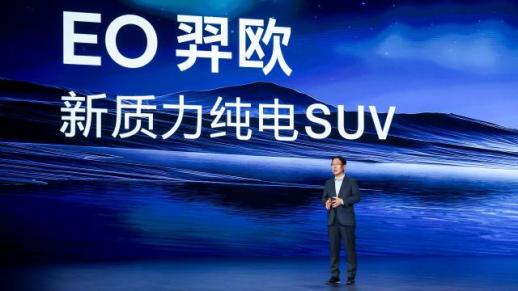 Hyundai Targets China and India Rebound With 46 New Models, Aiming for 1.28 Million Sales by 2030 Hyundai Motor is seeking a rebound in China and India, the world's No. 1 and No. 3 auto markets, by sharply expanding new-model launches. The push signals the company does not intend to abandon key markets, though intensifying competition from fast-growing local brands makes success uncertain. Hyundai said March 22 that CEO Jose Munoz, in a recent shareholder letter, set a goal of lifting combined annual sales in China and India to 1,276,500 vehicles by 2030. The targets are 832,500 in India and 444,000 in China. Based on last year's global sales of 7.27 million vehicles, the 2030 goal would represent about 23% of Hyundai's total, meaning roughly one in four vehicles would be sold in China or India. With sales in the two markets totaling 702,000 last year, the plan implies growth of about 82%. Both markets are considered essential, but Hyundai has struggled amid tougher competition. In China, Hyundai sales fell to 130,005 last year from 181,993 in 2024. In India, sales slipped to 571,878 from 607,934. Hyundai plans to launch 46 new models in China and India over the next five years, about 2.6 times the 18 introduced over the past five years. By year, new-model launches were 6 in 2021, 3 in 2022, 6 in 2023, 1 in 2024 and 2 in 2025. Munoz said Hyundai will introduce 20 new models in China over five years under a strategy of "in China, for China, to the world." For India, he said the company plans to roll out 26 new models backed by $5 billion in investment through 2030. Hyundai is also emphasizing localization. In India, it plans an electric SUV that will be planned, designed and produced locally, and it is considering bringing its premium Genesis brand to the market. In China, Hyundai last year launched its first strategic model there, the electric SUV Elexio. An auto industry official said local EV brands already dominate China, making a new approach urgent.* This article has been translated by AI. 2026-03-22 15:12:16
 -
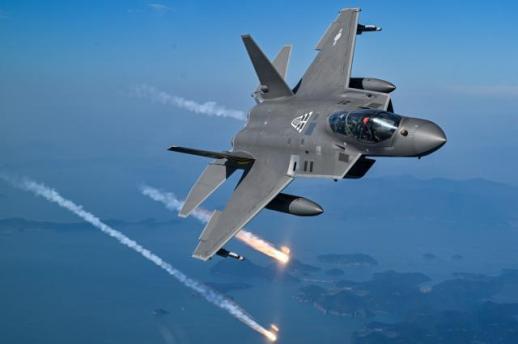 South Korea’s KF-21 Fighter Jet Set for First Export to Indonesia South Korea’s homegrown Boramae (KF-21) fighter jet, slated to enter mass production this year, is set for its first export — to Indonesia, a co-developer of the program. Government and defense industry officials said Thursday that an export agreement for Indonesia to acquire 16 KF-21s is expected to be signed during Indonesian President Prabowo Subianto’s state visit to South Korea planned for later this month, at Korea Aerospace Industries (KAI). Officials said the two sides are expected to fine-tune the final amount afterward and hold a separate contract-signing ceremony in the first half of the year. The deal would mark the first export of a fighter jet developed with South Korean technology. The KF-21 system development program dates to November 2000, when former President Kim Dae-jung declared South Korea would become an advanced aviation nation by developing an advanced fighter jet by no later than 2015. The project is a key national defense program aimed at replacing the Air Force’s aging F-4 and F-5 aircraft with a domestically developed 4.5-generation fighter suited to future battlefields. The program initially struggled to gain traction over feasibility questions and securing advanced technologies, but accelerated after the Defense Acquisition Program Administration signed a main system development contract with KAI in December 2015. A total of 8.1 trillion won was invested in system development with Indonesia from 2015 through this year, and 8.4 trillion won has been set aside for mass production costs from 2026 to 2028. The overall project cost totals 16.5 trillion won, and has been described as the largest defense capability buildup project since the founding of the nation. In January, the KF-21 completed a test flight successfully. DAPA plans to finalize system development in the first half of this year and begin delivering the first mass-produced aircraft to the Air Force in the second half. * This article has been translated by AI. 2026-03-19 19:36:18
 -
 Hyundai Struggles in China as Chinese Automakers Step Up Push Into South Korea Hyundai Motor Co. is again struggling to gain traction in China, with local sales slipping and the company leaning more heavily on exports from its China operations. Chinese automakers, meanwhile, are accelerating efforts to expand sales in South Korea by rolling out new models. According to industry data released Thursday, Beijing Hyundai Motor Co. (BHMC), Hyundai’s China unit, sold 16,535 vehicles in China’s domestic market in January and February, down about 500 from 17,021 a year earlier. The figure is about half the 26,163 vehicles sold in the same period in 2024. Hyundai’s annual sales in China have been falling for years. Sales dropped about 71% to 128,008 last year from 440,177 in 2020. Annual totals were 350,277 in 2021, 250,423 in 2022, 242,000 in 2023 and 125,127 in 2024, continuing a downward trend. Against that backdrop, Hyundai has shifted its China strategy from domestic sales to exports. Exports of vehicles produced in China rose to 66,214 last year from 5,905 in 2020. Of last year’s exports, 16,492 vehicles were shipped to South Korea. With China’s economy slowing and consumer demand weakening, BHMC’s export-focused approach is expected to remain in place for now. As weaker demand is anticipated in China, Chinese automakers are moving in the opposite direction by stepping up their push into South Korea. BYD, marking its 10th year in the Korean market, is preparing to launch its first hybrid model in Korea within the year. Its current lineup in Korea — ATTO 3, SEAL, SEALION 7 and DOLPHIN — consists entirely of battery-electric vehicles. BYD’s sales target for this year is 10,000 vehicles. Polestar, an electric-vehicle brand under China’s Geely Automobile Group, set a target of 4,000 vehicles, up more than 30% from last year. To support that goal, it plans to launch the performance SUV Polestar 3 in the second quarter and the flagship SUV Polestar 5 in the third quarter. It also plans to build 400 chargers at 40 sites nationwide by 2030. Geely’s Zeekr is also making final preparations to enter South Korea, aiming as early as the third quarter with the SUV 7X as its first model. BYD sold 2,304 vehicles in South Korea through February, putting it on pace to surpass its 10,000-unit goal. Polestar, which sold 27 vehicles in January, increased sales to 243 in February. An auto industry official said Chinese companies have strengthened their technological competitiveness after building from their home market.* This article has been translated by AI. 2026-03-19 18:03:20
 -
 Hyundai Motor Boosts R&D to 5.5 Trillion Won Despite Headwinds, Stays Focused on Future Tech Hyundai Motor Co. increased research and development spending last year despite external uncertainty, including U.S. tariff measures, as it sought to secure future competitiveness. The company is expected to continue investing this year in key technologies such as electrification and software-defined vehicles, or SDVs, to strengthen its response to global markets. According to its annual business report filed March 18 with South Korea’s Financial Supervisory Service, Hyundai spent 5.5354 trillion won on R&D last year, accounting for 3.0% of revenue. The spending came even as uncertainty weighed on the industry, including an electric-vehicle demand slowdown and higher U.S. export tariffs. Hyundai’s R&D outlays have risen for several years. The total increased by nearly 1 trillion won from the previous year’s 4.5894 trillion won, and the share of revenue rose 0.4 percentage points to 3.0% from 2.6%. Hyundai reported weaker results last year. Operating profit fell 19.5% from a year earlier to 11.4679 trillion won. Still, the company said expanded local production and adjustments to sales strategy helped it rank second in annual operating profit in the global auto market, surpassing Germany’s Volkswagen Group for the first time. To reduce cost burdens such as tariffs, Hyundai raised utilization at overseas plants, aiming to boost price competitiveness by producing more locally rather than exporting from South Korea. By region, plant utilization was highest in South Korea at 102.1% and lowest in Vietnam at 37.6%. Other figures were Brazil 102.0%, the United States 65.3% to 100.6%, Turkey 98.5%, India 94.2%, the Czech Republic 83.7% and Indonesia 47.3%. South Korea remained Hyundai’s largest production base, with 1.808 million vehicles produced last year. It was followed by India with 820,000, the United States with 460,000, the Czech Republic with 330,000, Brazil with 210,000, Turkey with 200,000, Indonesia with 150,000 and Vietnam with 113,000. Despite the localization strategy, vehicle prices edged up, influenced by higher parts costs. The average overseas selling price for passenger cars last year was 75.91 million won, up 6.91 million won from 69.00 million won a year earlier. In South Korea, the average was 56.17 million won, up 2.20 million won from 53.97 million won. Average selling prices for recreational vehicles were 80.44 million won overseas and 55.81 million won in South Korea. Overseas RV prices rose 16.57 million won from a year earlier, while domestic RV prices increased by about 2.38 million won. Separately, Hyundai Motor Group Executive Chair Euisun Chung received a record-high annual pay package last year. His total compensation from three group companies — Hyundai Motor, Kia and Hyundai Mobis — totaled 17.461 billion won. His annual compensation from the three companies was 5.98 billion won in 2020, 8.776 billion won in 2021, 10.626 billion won in 2022, 12.201 billion won in 2023 and 11.518 billion won in 2024. * This article has been translated by AI. 2026-03-18 17:48:45
 -
 Hyundai Mobis Lowers Board Entry Bar Under Revised Commercial Act, Raising Governance Risks Hyundai Mobis has amended its articles of incorporation in line with South Korea’s revised Commercial Act, a move expected to lower barriers for activist funds and minority shareholders seeking seats on the board. As a key affiliate in Hyundai Motor Group’s governance structure, the changes are fueling concerns that risks could grow during any future groupwide governance overhaul. At its 49th annual shareholders meeting held March 17 at GS Tower in Seoul’s Gangnam district, Hyundai Mobis approved multiple charter revisions, including deleting a clause that excluded cumulative voting, clarifying directors’ duty of loyalty, renaming outside directors and strengthening audit committee composition requirements. Most agenda items were tied to the revised Commercial Act, which is set to take effect this year. A central change is the so-called “3% rule,” under which voting rights of the largest shareholder and related parties will be capped at 3% when electing audit committee members starting July 23. Additional provisions scheduled for Sept. 10 include mandatory cumulative voting and expanded separate elections for audit committee members. The revisions aim to strengthen minority shareholder rights and board oversight, but companies view them as a new burden. Hyundai Mobis is seen as central to any Hyundai Motor Group governance restructuring, and critics say the new rules could become a risk factor. With the removal of the cumulative-voting exclusion, the likelihood has increased that directors representing minority shareholders could be elected. Under cumulative voting, shareholders can cast all votes they hold — equal to the number of director candidates — for a single nominee. If more directors aligned with minority shareholders join the board, differing views could complicate efforts to push ahead with governance changes. Hyundai Motor Group previously attempted a governance overhaul in 2018, but the plan was scrapped after opposition from activist hedge fund Elliott. The group is now the only one among South Korea’s top 10 conglomerates that still maintains a circular shareholding structure. In such a structure — for example, “Hyundai Mobis-Hyundai Motor-Kia-Hyundai Mobis” — a group can control the broader conglomerate with relatively small stakes. Converting that into a simpler, linear structure remains a long-standing goal for the group. * This article has been translated by AI. 2026-03-17 17:11:06
 -
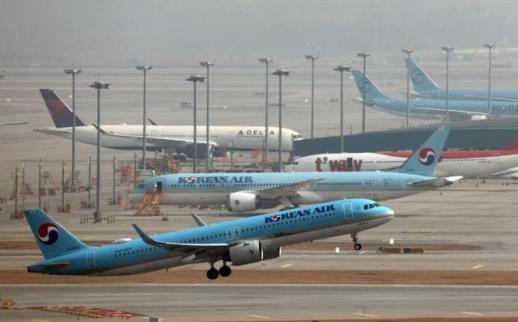 Airlines set to hike fuel surcharges amid rising oil prices SEOUL, March 16 (AJP) - Airlines are raising their fuel surcharges due to soaring oil prices amid the escalating conflict in the Middle East. Fuel surcharges are applied on both international and domestic flight routes based on changes in the average price of fuel traded on Singapore's spot market. According to aviation industry data released on Monday, the average price of Singapore jet fuel, known as MOPS, is projected to reach at least 300 cents per gallon for the period from Feb. 16 to March 15, up from 204 cents the previous month. It falls into level 18 on the 33-tier fuel surcharge scale, a jump of 12 levels from the current level of 6, the biggest jump since this scale was first implemented in 2016 and also the highest level since October 2022, when it reached level 17 at the height of Russia's war in Ukraine. Fuel surcharges imposed by airlines are expected to soar by more than threefold. For one-way tickets on Asiana Airlines, surcharges that ranged from 14,600 (US$9.93) to 78,600 Korean won this month, depending on flight routes, are set to jump to between 43,900 and 251,900 won next month. Flagship carrier Korean Air is expected to adjust its fuel surcharges for April next week, with a sharp increase likely unavoidable. 2026-03-16 15:02:22