
Journalist

Jang Suna and Kim Yeon-jae
sunrise@ajunews.com
-
 Korea Highlights FX and Capital Market Reforms at OECD, Aiming to Build 'Korea Premium' The Ministry of Finance and Economy told an OECD meeting it has strengthened access to Korea’s financial markets by improving foreign exchange and capital market rules, highlighting steps it said support market modernization. The ministry said on April 22 it attended the OECD Advisory Task Force on the Codes of Liberalisation, held April 20-21 at the OECD headquarters in Paris, and presented updates on Korea’s FX market operations and efforts to overhaul capital market systems. The OECD advisory meeting is a forum that shares trends related to the codes on capital movement liberalization and, through peer reviews among member countries, discusses the degree of capital market opening and access to financial markets. At the meeting, the ministry outlined recent changes in FX and capital market conditions and the results of institutional reforms. In the FX market, it said it expanded the FX forward position limit for foreign bank subsidiaries to 200% from 75% and rationalized regulations on FX lending, steps aimed at improving market access for foreign investors. In capital markets, it cited reforms including allowing integrated foreign accounts to make it easier for foreign investors to trade domestic stocks, and a temporary suspension of FX stability-related levies. The government also shared plans to advance FX and capital markets with the goal of inclusion in MSCI’s developed market index. It said it aims to improve conditions for foreign participation through measures such as 24-hour FX market operations, better infrastructure for offshore won settlement, streamlined investment procedures and greater regulatory consistency. The ministry said it also shared its experience responding to market stability challenges amid increased exchange-rate volatility tied to a prolonged Middle East situation and growing uncertainty in the global trade environment. It said it found common ground with OECD members on approaches to stabilizing FX and financial markets and agreed on the need for policy coordination. A ministry official said the steps are expected to help ease the “Korea discount” linked to constraints on FX market access and to strengthen the foundation for a “Korea premium” by boosting the structural appeal of Korea’s capital markets.* This article has been translated by AI. 2026-04-22 10:08:53
 -
 Korea Faces Record 91 Trillion Won Corporate Bond Maturities as Rates Rise Corporate bond maturities due this year are expected to exceed 91 trillion won, a record that is pushing companies to prioritize refinancing over new investment. If the policy rate rises in the second half of the year, interest costs could jump further, raising concerns about weaker investment and hiring and broader financial-market stress. The Korea Financial Investment Association said that as of Monday, corporate bonds maturing this year totaled 91.2262 trillion won. That is the highest level since the data series began, up 12.3295 trillion won from last year’s 78.8967 trillion won. Maturities in the first half amount to 57.8962 trillion won, or 63.4% of the total, concentrating repayment pressure early in the year. Much of the debt was issued in 2020 and 2021, when ultra-low rates of about 1% to 2% enabled companies to raise large sums to secure liquidity. Since then, the market backdrop has shifted with policy-rate increases and Middle East-driven geopolitical risks, leaving firms to refinance those bonds at far higher rates. With the Bank of Korea’s rate-cutting stance effectively over, upward pressure on rates has returned amid external factors including the possibility of a supplementary budget and a sharp rise in Japanese government bond yields. As of March 23, yields on three-year AA- rated corporate bonds rose to 4.197%, while BBB- rated bonds climbed to 9.979%. Markets increasingly expect the central bank could raise the policy rate once or twice in the second half of the year. That would likely push refinancing rates higher and add to companies’ interest burdens. As funding conditions tighten, companies are focusing on short-term liquidity rather than expansion. Rising demand for working capital suggests firms are emphasizing survival over growth. Higher interest costs are likely to squeeze research and development and capital spending, undermining competitiveness over the medium to long term. If that is compounded by reduced hiring and smaller performance bonuses, household income and consumption could also weaken, raising the risk of a negative cycle. The strain is expected to be heavier for mid-sized and small businesses. Large companies may refinance more steadily thanks to cash holdings and stronger credit, but lower-rated firms, including those rated BBB or below, and many mid-sized and small companies could face a credit crunch that makes funding difficult. If refinancing fails or borrowing costs surge, some companies could face liquidity crises. Policy factors are adding to the pressure. As the government encourages greater shareholder returns, companies face interest-payment burdens alongside demands for dividends and share buybacks, highlighting a dilemma between financial soundness and shareholder payouts. Analysts say the path of interest rates could turn corporate debt into a broader drag on the economy. If rate hikes materialize in the second half, higher interest costs could deliver a combined shock that restrains investment, employment and consumption. Jung Hwa-young, a research fellow at the Korea Capital Market Institute, said, “For lower-credit companies, interest expenses can rise quickly when profitability and financial soundness deteriorate.” She added, “Authorities need to closely monitor funding conditions for vulnerable firms and respond in a timely way to market instability.” * This article has been translated by AI. 2026-04-22 06:04:31
 -
 Finance chief to attend series of key financial meetings in US this week SEOUL, April 13 (AJP) - Finance Minister Koo Yun-cheol is set to depart for the U.S. on Monday to attend a series of international meetings and other events, the Ministry of Finance and Economy said on Monday. Koo is scheduled to host an investor blitz in New York on Tuesday for major global investment banks, outlining South Korea's economic fundamentals and key policy priorities to attract investment in the country. He will also meet top executives of global asset managers to discuss global economic and financial market trends and seek support for the government's efforts to reform foreign exchange and capital markets. Koo will then travel to Washington, D.C. later in the week to attend the G20 Finance Ministers and Central Bank Governors Meeting, which coincides with the annual gatherings of the International Monetary Fund (IMF) and the World Bank. Participants are expected to discuss constraints on global economic growth and imbalances among countries, as well as ways to boost investment. During the trip, Koo is also scheduled to meet the heads of international financial institutions including the IMF, World Bank, Inter-American Development Bank, and Asian Infrastructure Investment Bank, as well as finance ministers from major countries including Australia, France and Uzbekistan. 2026-04-13 17:32:48
 -
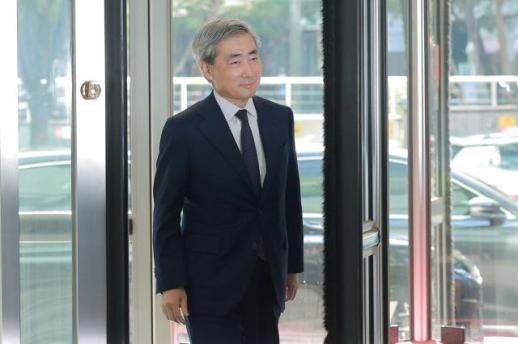 BOK nominee holds half of assets in foreign currency, raising concerns ahead of hearing SEOUL, April 5 (AJP) - Shin Hyun‑song, a nominee to lead the Bank of Korea, holds more than half of his assets in foreign currencies, raising concerns over potential conflicts of interest. According to a financial disclosure submitted to the National Assembly on Sunday ahead of his confirmation hearing slated for later this month, Shin and his family including his spouse and eldest son hold total assets of 8.24 billion Korean won (approximately US$5.49 million). Of that, roughly 4.57 billion won or about 55 percent is held in overseas financial assets and real estate, excluding an apartment in the affluent Gangnam district of southern Seoul valued at 1.51 billion won, and a loft residence in Jongno, central Seoul valued at 1.8 billion won. Shin reported deposits totaling 2.04 billion won at U.S. securities firms, asset managers, and investment banks in Switzerland and Spain. These assets are held in foreign currencies including U.S. dollars, British pounds, euros, and Swiss francs. He also invested in British government bonds worth 150,000 pounds or roughly 320 million won. His spouse, identified by her surname Han, owns an apartment near Northwestern University in Illinois valued at 284.94 million won, which she shares equally with their daughter. Of Han's deposits totaling 1.86 billion won, most are foreign-currency holdings at overseas financial firms. Their eldest son, a British national, reported foreign-currency deposits worth 82.39 million won and overseas stocks valued at 28.61 million won. Shin's wealth is estimated to have grown in recent months, as the weakening won has inflated the value of his foreign-currency holdings when converted into Korean won. Shin has lived abroad for more than 40 years since completing his mandatory military service in 1982, including his university years in the U.K., which likely explains his substantial foreign-currency holdings. However, critics warn that retaining such assets while leading the Bank of Korea could pose a serious conflict of interest. No previous BOK governor has held such a large share of foreign-currency assets. The outgoing Governor Rhee Chang-yong, who also lived abroad for many years, reported foreign-currency holdings of about 300 million won, just 5.5 percent of his total assets of 5.45 billion won. Shin's assets are likely to be one of the most contentious issues at his confirmation hearing, expected to be held in mid-April, along with other concerns such as foreign exchange volatility amid the weakening won. Arriving at his office to prepare for the hearing late last month, Shin said he is not overly concerned about the current exchange rate, but is instead focused on how much risk it can absorb. 2026-04-05 17:07:59
 -
 Korea's 20-something employment slumps to 9- year low in Feb SEOUL, March 22 (AJP) -Employment of South Koreans in their late 20s has hit the lowest in nearly a decade as rapid engagement of artificial intelligence worsens job prospects for entry level amid economic slowdown. According to the National Statistical Portal (KOSIS) and job data from the Ministry of Data and Statistics, 2.346 million people ages 25-29 were employed in February, down 62,000 from a year earlier. It was the lowest February figure since 2017. The employment rate for the age group stood at 70.4 percent, down 0.5 percentage points on-year and the lowest for the month since 2022. The decline was broad-based across key industries. Losses were notable in manufacturing, as well as in information and communications and professional, scientific and technical services — sectors traditionally favored by younger workers seeking stable, high-quality jobs. Employment in information and communications for those in their late 20s fell by 52,000 from a year earlier, the steepest drop since 2014. The sector had recorded steady gains in recent years before turning negative in 2025 and declining for a second consecutive year. In professional, scientific and technical services, employment fell by 29,000, also the largest decrease since 2014, following a drop of 20,000 last year. The ministry said part of the decline may reflect a base effect after strong growth in those sectors in recent years. However, it also pointed to structural changes, including the spread of artificial intelligence, which may be reducing demand for entry-level roles in professions such as accounting and legal services. The sector includes research and development, architecture and engineering, as well as professional services such as lawyers, patent attorneys, accountants and tax specialists. Analysts say changes in corporate hiring are reinforcing the trend. Companies are increasingly favoring experienced workers who can contribute immediately, while entry-level recruitment has shrunk — delaying young people’s entry into the labor market. The impact is visible in rising unemployment. The number of unemployed people aged 25 to 29 rose to 179,000 in February, up 16,000 from a year earlier, pushing the unemployment rate up 0.8 percentage points to 7.1 percent. Broader youth indicators suggest even greater strain. The supplementary employment indicator No. 3, an expanded measure that includes underemployed and discouraged workers, rose to 17.4 percent for those aged 15 to 29, the highest February level since 2023. The indicator captures perceived joblessness beyond the official unemployment rate, including those seeking additional hours or marginally attached to the labor force. The government said it is closely monitoring youth employment conditions, with expectations that a forthcoming supplementary budget could include targeted job-support measures. By contrast, employment conditions for people in their 30s have remained relatively stable, supported by population growth and a rising employment rate. The divergence underscores a widening gap within the labor market, where entry-level opportunities are shrinking even as overall employment trends appear relatively steady. 2026-03-22 11:04:50
 -
 South Korea launches committee tasked with implementing US investment pledges SEOUL, March 18 (AJP) - A committee tasked with setting up a fund to implement massive investment pledges to the U.S. was launched with its first meeting in Seoul, the Ministry of Finance and Economy said on Wednesday. The committee, consisting of seven officials from government agencies and financial institutions, was formed as a follow-up step just a day after a special bill outlining bilateral agreements with the U.S. including investment pledges of US$350 billion under a broader trade deal reached last fall, was approved at a cabinet meeting the previous day. The committee, led by First Vice Finance Minister Lee Hyoung-il, will oversee overall preparations including establishing and managing the fund, as well as fundraising. Lee said the committee will thoroughly prepare all necessary procedures to launch the fund by June, when the bill takes effect three months after its promulgation. He added that the committee will ensure investment projects are carried out in ways that serve both countries' economic and security interests, emphasizing the need for professional staff with strategic expertise. 2026-03-18 17:07:42
 -
 South Korea, Switzerland extend currency swap deal by another five years SEOUL, March 9 (AJP) - South Korea has agreed with Switzerland to extend their currency swap deal by five years, financial authorities here said on Monday. According to the Bank of Korea (BOK), the bilateral currency swap deal will now run until March 1, 2031, allowing the two countries to swap up to 10 billion Swiss francs or about 18.5 trillion won (US$12.4 billion). A currency swap allows one country to deposit its own currency in another country's reserves in return for the other country's currency in case of a liquidity shortage. South Korea and Switzerland first signed the deal in 2018 and extended it in 2021, with the latest renewal expected to further strengthen financial cooperation and support market stability. South Korea has similar deals with about 10 countries including Australia, Canada, China, Indonesia, Japan and Malaysia. "The renewal will bolster South Korea's foreign exchange reserves, given Switzerland's status as a key reserve-currency country, providing an additional safety net against potential financial crises," a BOK official said. 2026-03-09 14:36:54
 -
 Middle East Crisis: BOK to maintain 24/7 monitoring SEOUL, March 3 (AJP) - The Bank of Korea said on Tuesday it will maintain around‑the‑clock monitoring with its overseas offices and discuss potential fallout from the U.S. and Israeli airstrikes on Iran dubbed "Operation Epic Fury." In a meeting chaired by its chief Rhee Chang‑yong, officials discussed global developments since last Saturday's airstrikes, as well as potential volatility in financial markets. With the country's financial and foreign exchange markets resuming trading after a makeup holiday for March 1 Independence Movement Day, the central bank said it will closely monitor the situation and prepare for any possible scenarios including the potential spillover of the conflict into South Korean stock and foreign exchange markets, even though the country is not directly involved in the crisis. It plans to keep a task force in place for the time being to respond promptly as needed. 2026-03-03 10:45:13
 -
 Norway Clinches Top Spot in Milan-Cortina Winter Olympics; South Korea 13th Norway locked up first place in the overall standings at the 2026 Milan-Cortina d’Ampezzo Winter Olympics with one day remaining. South Korea stayed 13th with 10 medals (three gold, four silver, three bronze). As of Feb. 21 local time, Norway led with 18 gold, 11 silver and 11 bronze medals. With only five gold medals left on the final day, the United States in second (11 gold, 12 silver, nine bronze) cannot catch Norway even if it wins all remaining events. The result gives Norway a fourth straight Winter Games overall title, after Sochi 2014, PyeongChang 2018 and Beijing 2022. Norway’s dominance was most evident in cross-country skiing. Johannes Klaebo swept all six men’s gold medals — the 10km+10km skiathlon, sprint classic, 10km interval start free, 4x7.5km relay, team sprint and 50km mass start — to set a new record for most golds by one athlete at a single Winter Olympics. He also raised his career Olympic gold total to 11, breaking the previous record held by American Eric Heiden, who won five golds at Lake Placid 1980. South Korea, which collected one gold and two silvers in short track the previous day, added no medals on Feb. 21 and remained 13th overall. Jeong Jae-won finished fifth in the men’s speedskating mass start, and Park Ji-woo (both Gangwon Provincial Government) placed 14th in the women’s mass start. South Korean speedskating ended the Olympics without a medal for the first time in 24 years.* This article has been translated by AI. 2026-02-22 07:36:00
 -
 Kim Yu-ran, Jeon Eun-ji Place 16th in Women’s Two-Woman Bobsled at Milan-Cortina Olympics Kim Yu-ran of Gangwon Provincial Office and Jeon Eun-ji of the Gyeonggi federation finished 16th in the women’s two-woman bobsled at the Milan-Cortina Winter Olympics. Racing at the Cortina Sliding Center in Cortina d’Ampezzo, Italy, the pair posted a four-heat total of 3 minutes, 52.04 seconds after completing heats three and four on Feb. 22 (Korea time). They were 15th among 25 teams after the first two heats in 1:55.79. In the third heat, they clocked 58.15 seconds to stay 15th at 2:53.94 overall and secure a spot in the fourth heat, reserved for the top 20 teams. They trimmed their time slightly to 58.10 in the final run but slipped one place to 16th in the final standings. South Korea last competed in the event at the 2018 Pyeongchang Games, when Kim teamed with Kim Min-seong and placed 15th. The country did not qualify for the 2022 Beijing Olympics, making this its first women’s two-woman entry in eight years. Germany’s Laura Nolte and Deborah Levi won gold in 3:48.46 to repeat as Olympic champions. Teammates Lisa Buckwitz and Nelle Schuten took silver in 3:48.99. The United States’ Kaillie Humphries and Jasmine Jones earned bronze in 3:49.21. Humphries added her second bronze medal of these Games after also taking bronze in monobob.* This article has been translated by AI. 2026-02-22 06:15:00