
Journalist

Burhanettin Duran
swatchsjp@ajunews.com
-
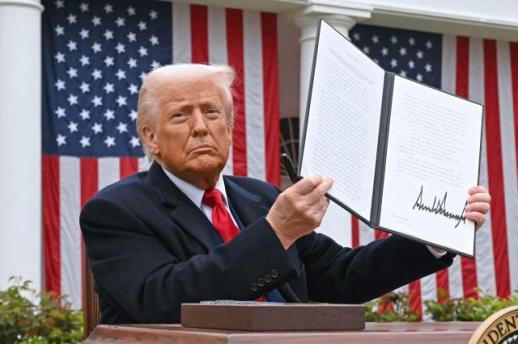 Washington expands metal tariffs as weight thresholds trigger new duties SEOUL, April 03 (AJP) - Washington upended the global household appliance market Thursday (local time) by imposing a flat 25 percent tariff on metal-intensive goods, a move that places South Korea’s leading exporters in a defensive crouch just as a separate pharmaceutical trade wall begins to rise. The new policy, anchored in a Section 232 national security justification, targets any finished product where steel, aluminum, or copper accounts for more than 15 percent of the total weight, a threshold that effectively encompasses the vast majority of premium refrigerators and washing machines exported from Seoul. The fallout is immediate for South Korean brands, which currently command a combined 35 percent share of the American home appliance market. By replacing a fragmented system of duties based on raw material value with a blunt 25 percent tax on the final retail price, the White House has fundamentally altered the math for high-end manufacturing. A flagship French-door refrigerator with a $3,000 price tag now faces a $750 import penalty, a cost that threatens to erase the competitive margins Samsung Electronics and LG Electronics have spent a decade securing. According to data from market research firm Trackline, LG Electronics currently holds a 24.3 percent share of the American refrigerator sector, a position now vulnerable to this sudden shift in trade costs. This pressure on consumer goods arrives alongside a parallel shock in the biotechnology sector. While the United States has moved to impose a 100 percent default tariff on patented pharmaceuticals to dismantle foreign medical dependencies, South Korea has managed to secure a preferential 15 percent rate. This narrow reprieve is the result of the bilateral trade agreement reached in July 2025, which designated South Korea as a trade deal country. However, the path to a zero percent tariff is strictly conditional; Seoul must agree to onshore production facilities and adopt Most Favored Nation pricing to fully escape the duty. For manufacturers in South Korea, the 15 percent weight threshold on appliances creates a technical dilemma that cannot be solved through simple logistics. Most modern laundry and kitchen units rely on steel chassis for durability, meaning that to avoid the 25 percent metal derivative tariff, companies would have to fundamentally redesign their product lines or move their entire assembly operations to American soil. While Samsung Electronics and LG Electronics already operate significant manufacturing plants in South Carolina and Tennessee, those facilities do not yet have the capacity to replace the high-volume imports arriving from overseas hubs. The 180-day grace period offered to smaller firms provides little comfort to these conglomerates, which must reconcile their global production schedules with a July 31 compliance deadline. The White House maintains that these measures are necessary to prevent what it describes as gamesmanship by foreign exporters who have historically underreported the value of metal components. By shifting to a weight-based calculation, Washington is attempting to close loopholes that allowed finished goods to bypass the broader steel and aluminum tariffs of previous years. This effectively forces South Korea to choose between maintaining its domestic industrial base and keeping its share of the American consumer market. The new tariff regime on metal derivatives and pharmaceutical products is scheduled to take official effect on April 6, 2026. 2026-04-03 15:03:50
 -
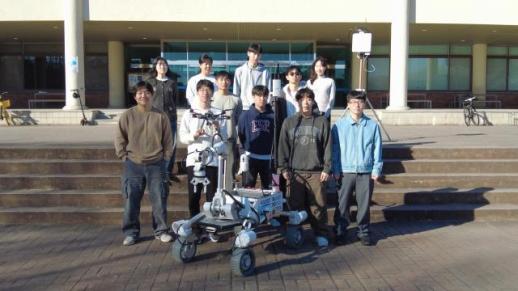 KAIST's student team qualifies for global Mars rover finals in Utah SEOUL, April 03 (AJP) - A team of undergraduate students from the Korea Advanced Institute of Science and Technology (in South Korea has reached the final stage of the world's largest Mars rover competition. This is the first time a team from the university has qualified for the final round of the international event that is designed to spotlight rovers capable of carrying out missions in environments that are similar to Mars. The Korea Advanced Institute of Science and Technology (KAIST) said Friday that team MR2, part of the student robotics club Microrobot Research (MR), secured a spot in the 2026 University Rover Challenge (URC). The team is advised by KAIST's Department of Mechanical Engineering Professor Park Yong-hwa. The URC is an international engineering contest organized by the Mars Society. It takes place at the Mars Desert Research Station (MDRS) in Utah, where the desert environment closely resembles the surface of Mars. Participating students must design and build rovers to complete tasks involving life detection, equipment maintenance, and autonomous driving. A total of 116 university teams from 18 countries entered the preliminary rounds of the competition this year. KAIST MR2 earned 95.38 percent on their evaluation, placing them among the top 38 teams invited to the finals. The result highlights the design and control capabilities of the South Korean undergraduate researchers. The team's rover, named GAP-1000, is a modular vehicle built to operate in extreme conditions. It features a robotic arm with six joints, which allows it to move with a level of flexibility similar to a human arm. This design enables the rover to lift objects weighing more than 5 kilograms and perform delicate repairs on machinery. The vehicle also features an advanced navigation system that combines high-precision satellite positioning with sensors that track the rover's movement and wheel rotation. This allows the GAP-1000 to find the most efficient paths through rocky and difficult terrain without human intervention. A drone relay system ensures the team can maintain a communication link with the rover even when it travels behind obstacles. For its scientific mission, the rover uses a drill to collect soil samples from 10 centimeters below the surface. An onboard laboratory uses chemical tests and light analysis to check for proteins and other biological signs of life in real time. The system is designed to provide immediate feedback on whether a sample contains traces of living organisms. "We handled everything from the initial design to the final production ourselves, and though we faced many challenges, we are happy to be the first team from our school to make it to the finals," said student leader Jeong Myeong-woo. He added that the team will focus on final preparations to ensure a strong performance in the United States. Professor Park Yong-hwa said it was impressive to see the students independently develop a rover for such a harsh environment. He noted that the competition serves as an opportunity to showcase South Korean technical expertise to a global audience. President Lee Kwang-hyung said that having undergraduate students design and build a rover that can compete on the world stage is a significant achievement. He stated that he expects the experience to help the students grow through international competition. The MR2 team consists of 13 students from several departments, including mechanical engineering, electrical engineering, and industrial design. The group has finished long-distance testing in outdoor environments and is currently performing final system checks. The finals are scheduled to take place at the MDRS in Utah from May 27 to May 30, 2026. 2026-04-03 09:54:44
 -
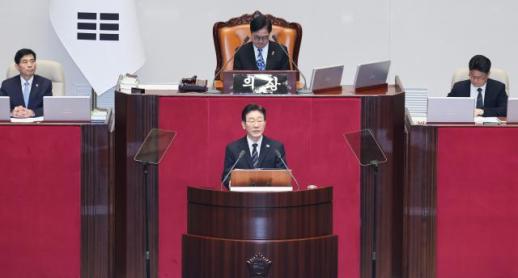 South Korea seeks emergency funds as war in Middle East threatens economy SEOUL, April 02 (AJP) - South Korea's President Lee Jae Myung called for the immediate passage of a massive supplementary budget on Thursday, characterizing the current economic climate as a wartime state. Addressing the National Assembly, the president argued that the 34-day conflict in the Middle East necessitated a total mobilization of government resources. During his speech at the National Assembly, Lee called for a 26.2 trillion-won ($17.2 billion) supplementary budget, warning that any delay in fiscal intervention would cause economic damage to grow exponentially. The president urged lawmakers not to miss the golden time for recovery, emphasizing that taxpayer money must be deployed at the most critical juncture to protect the people's livelihoods. The escalating war in Iran has cornered South Korea, forcing Seoul into a defensive crouch as global energy supply chains fracture. South Korea remains precariously dependent on the Middle East for more than 70 percent of its crude oil imports. This reliance makes the domestic industrial base uniquely vulnerable to disruptions in the Strait of Hormuz, which has now become a no-trespassing zone for cargo and oil carriers. According to data from the Korea Energy Economics Institute, any prolonged instability in the Persian Gulf creates a direct threat to the price of daily essentials. With the conflict showing no signs of abatement, the administration has moved to prioritize energy sovereignty over standard fiscal restraint. This crisis interrupts a period of record-breaking growth for the South Korean industry. The KOSPI index recently breached the 5,000-point threshold on the back of strong semiconductor and shipbuilding exports. However, a sudden lack of raw materials now threatens to stifle that momentum and extinguish the hard-won sparks of national growth. Shortages of naphtha and urea have already begun to impact the production of plastics and fertilizers. This creates a ripple effect touching everything from heavy manufacturing to local agriculture. The president noted that these shortages represent an unexpected, complex crisis that requires an immediate and coordinated response. Seoul has responded by transitioning the entire government apparatus into an emergency economic response system. This includes the implementation of a maximum oil price cap for the first time in 29 years. The move is designed to shield consumers from the surging costs of gasoline and diesel. To mitigate the loss of Iranian supply, the administration has secured 24 million barrels of crude oil through a strategic partnership with the United Arab Emirates. These multi-faceted policies, including financial support for affected businesses, are part of a proactive strategy to guard against the worst-case scenario. "In a state of emergency, literally extraordinary measures are needed," Lee said, adding: "Our government is putting all its effort into overcoming the current crisis with a solemn perception that the livelihood economy is in a wartime situation." The 26.2 trillion won budget is notable for being a debt-free proposal. The government plans to utilize 25.2 trillion won in excess tax revenue—largely generated by the recent boom in the stock and semiconductor markets—alongside 1 trillion won from existing funds. The National Assembly is scheduled to begin its review of the supplementary budget proposal immediately following the presidential address. 2026-04-02 14:38:45
 -
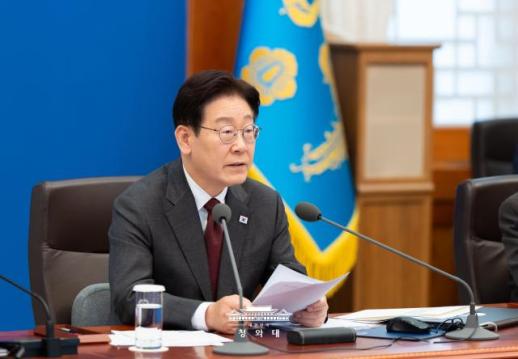 President Lee Jae Myung readies transit relief as Iranian conflict squeezes oil lanes SEOUL, April 02 (AJP) - In a bid to draft immediate measures to ease public transport crowding, South Korean President Lee Jae Myung has directed the Ministry of Land, Infrastructure and Transport on Thursday. The order follows an elevation of the national resource security alert to its second-highest level. Officials have already implemented a mandatory two-day vehicle rotation for public offices, which is expected to push a surge of commuters onto the transit grid. The war in Iran has left South Korea in a strategic bind. Seoul imports more than 70 percent of its crude oil from the Middle East, with the vast majority passing through the Strait of Hormuz. According to the Korea Energy Economics Institute, this heavy reliance makes the domestic economy uniquely vulnerable to supply shocks in the Persian Gulf. This dependency has cornered the administration into aggressive energy conservation, including the restriction of private vehicle use. According to the presidential office, expanding free transit benefits to include city buses for citizens aged 65 and older could be considered as part of Lee's initiative to ease crowding on public transport during commuting hours. While the subway system has long been free for this demographic, bus fares have remained a significant out-of-pocket expense for senior residents. By subsidizing bus travel, The president aims to provide a comprehensive safety net for the elderly while incentivizing a shift away from private vehicle use during the height of the fuel shortage. This directive ends a period of bureaucratic inertia where the transport, health, and environment ministries were engaged in a 'ping-pong' dispute over which department would oversee the new transit policy. By centralizing authority under the transport ministry, the president is framing the expansion of senior benefits as a logistical necessity of the energy crisis rather than a standard welfare debate. The move allows the government to manage the influx of passengers through a unified system that can adjust service frequency in real time. "The Ministry of Land, Infrastructure and Transport should take charge and prepare measures to alleviate public transport congestion during commuting hours," Lee said. The ministry is now working to define specific operational hours for the expanded bus benefits and identifying high-density routes that require immediate reinforcement. 2026-04-02 14:08:47
 -
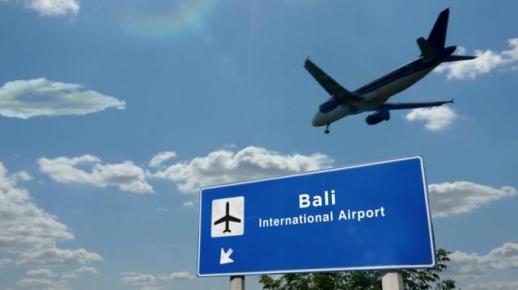 South Korea warns Bali travelers as gruesome violence rattles island SEOUL, April 02 (AJP) - The South Korean embassy in Jakarta has shattered standard diplomatic norms by issuing an unusually blunt safety warning that details a series of horrific crimes targeting foreign nationals in Bali. The notice, released on Wednesday, bypasses the vague language typically found in consular advisories to itemize specific accounts of kidnapping, dismemberment, and sexual assault. This move signals that Seoul now views the security environment in Indonesia's most famous resort province as a high-stakes threat to its citizens. The safety warning arrives as Bali continues to see a record number of international visitors. According to data from the Bali Tourism Board, the island welcomed over seven million foreign tourists in 2025, marking an 11 percent increase from the previous year. While the province remains a premier global destination, the rapid growth in tourism has been accompanied by a shift in the local criminal landscape. Official figures from the Bali Police indicate that crimes involving foreign nationals rose by 47 percent in 2025 compared to 2024. Authorities have linked this trend to the emergence of international criminal syndicates operating in tourism corridors. In response, local law enforcement launched "Operasi Sikat Agung 2026" earlier this year, a high-intensity police operation specifically designed to curb theft and violent offenses in areas frequented by international travelers. The embassy's notice highlights five specific cases that occurred between February and late March 2026. On February 15, a Ukrainian national, later identified by local media as Ihor Komarov, was kidnapped in Jimbaran while riding a motorcycle. His remains were discovered by local residents on February 26. According to the Indonesian National Police, the suspects in this case are believed to be part of a transnational criminal group. Additional incidents listed include the fatal stabbing of a Dutch national on March 23. The victim was attacked by two unidentified men on a motorcycle while returning to a villa in North Kuta. On the same night, a Chinese national reported being abducted and sexually assaulted by a motorbike taxi driver. Two further sexual assaults were reported on March 24 and 25 involving hotel staff and security personnel in Seminyak and Canggu, leading to the arrest of the suspects involved. South Korean officials have advised travelers to remain vigilant, particularly during late-night hours, and to utilize official transportation services. The notice also instructs individuals to report any criminal activity to the Indonesian police. 2026-04-02 11:22:11
 -
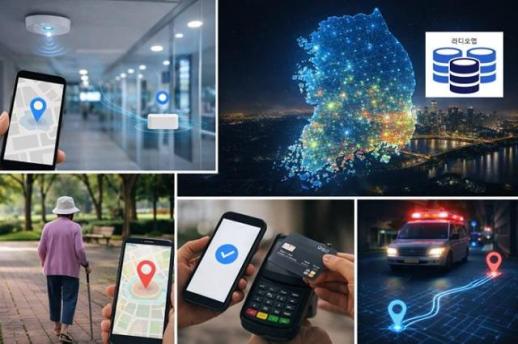 KAIST researchers develop automation technology for national Wi-Fi radio map SEOUL, April 02 (AJP) - Researchers at the Korea Advanced Institute of Science and Technology have developed a foundational technology to build a nationwide Wi-Fi radio map, the prominent research institute said Thursday. The development could lay a stepping stone for a move expected to secure South Korea's "location sovereignty" and reduce reliance on global tech giants. A radio map acts as a database linking Wi-Fi signals, which are wireless internet signals, to specific physical coordinates. By identifying unique signal patterns, mobile devices can pinpoint their location indoors or in dense urban areas where Global Positioning System (GPS) signals are often blocked by skyscrapers or thick walls. For South Korea, establishing an independent national radio map is a critical step toward ensuring that essential location data remains a domestic asset rather than depending on proprietary databases managed by foreign entities like Google or Apple. Korea Advanced Institute of Science and Technology (KAIST) said that a research team led by School of Computing Professor Han Dong-su has spent eight years perfecting this technology. The method automates the creation of these maps by pairing Wi-Fi signals collected by smartphones with existing address information. The core innovation lies in its efficiency. Traditional methods of building radio maps require manual data collection, which is often too expensive and time-consuming to execute at a national scale. The new technique utilizes signals gathered through everyday smartphone app usage—such as during online shopping or making payments—and links them to merchant or delivery addresses. This allows for the rapid construction of a comprehensive database at a low cost. This infrastructure has significant implications for public safety. During emergency calls to police or fire departments, the technology can drastically reduce the search radius for missing persons, such as elderly citizens with dementia, helping responders secure the "golden time" necessary to save lives. It can also prevent financial fraud by ensuring that digital payments only occur at verified physical locations, making remote hacking or identity theft much harder to execute. The technology was recently validated in Daejeon, where researchers used a gas meter reading app to test the system. The demonstration confirmed that an average of 30 Wi-Fi signals could be detected in a single apartment unit, proving that a city-wide radio map could be built quickly using existing mobile traffic. Beyond safety, the research team noted that precise location data is essential for the future of artificial intelligence (AI), including autonomous driving, robotics, and logistics. It also enables advanced services like GeoLLM, which integrates location data with large language models to provide contextual information about a user's environment and activities. "Building a national-scale radio map is a task too large for any single company," Professor Han Dong-su said. "It requires a public-private partnership involving the government, telecommunications companies, and platform providers. Location infrastructure is a core asset directly linked to national data sovereignty." 2026-04-02 08:41:52
 -
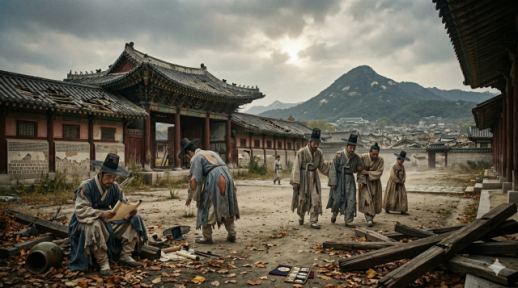 Data science reveals how a 500-year Joseon Dynasty was brought to knees by own elites SEOUL, April 01 (AJP) - After surviving five centuries of invasions and internal coups, the Joseon Dynasty’s ultimate undoing was a systemic collapse of fairness that data scientists have now mapped for the first time. By analyzing 14,600 officials across the "Lee" regime's 500-year history, a joint research team from the Korea Advanced Institute of Science and Technology (KAIST) and Hong Kong universities has pinpointed exactly how power hoarding by a few elite families broke the state's back. The study, led by Professor Park Ju-yong of the KAIST Graduate School of Culture Technology, used complex systems science to track the Total Success Index (TSI). This metric measured an official’s achievement by combining their rank with their length of service. The data shows that for 400 years, the dynasty remained remarkably resilient because its civil service system maintained a level of merit-based social mobility. Even the bloody 1453 Gyeyu Jeongnan coup—which saw Grand Prince Su-yang seize the throne from his nephew, King Dan-jong—appears in the data as a localized shock rather than a systemic failure. The researchers' network analysis shows power shifting between royal factions, such as those surrounding Prince An-pyeong, but the broader bureaucratic machinery remained functional. The secret to the dynasty's final collapse was found in the data from the 19th century. The maps show a sudden, sharp stratification where a handful of clans, such as the Andong Kim and Pungyang Cho, effectively hijacked the state. By monopolizing the civil service exams and high-ranking offices through influence rather than talent, these families destroyed the meritocracy that had sustained the Lee family's rule for half a millennium. "The data proves that the fall of Joseon wasn't just a series of unfortunate events, but a structural death spiral," said Professor Park Ju-yong. "When the mechanism for fair recruitment broke, the foundation of the entire nation gave way." The research team, which included first author Dr. Choi Dong-hyuk, plans to use these digital humanities tools to compare South Korea's historical bureaucracy with other global empires to see if similar patterns of elite capture predicted their downfall as well. (Reference Information) Journal/Source: Physica A: Statistical Mechanics and Its Applications Title: Total Success Index and the Longitudinal Dynamics of Bureaucratic Stratification in Joseon Korea Link/DOI: https://doi.org/10.1016/j.physa.2026.131353 2026-04-01 16:22:44
 -
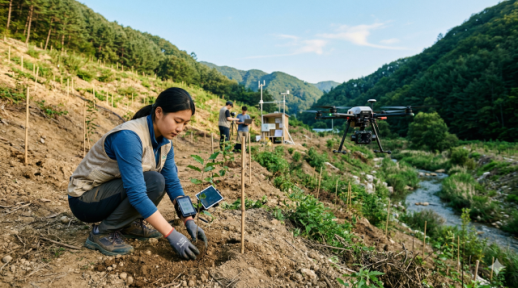 Kookmin University researchers to develop carbon absorption ecosystem restoration technology SEOUL, April 01 (AJP) - Researchers at Kookmin University have launched a new project to develop ecosystem restoration and management technologies designed to mitigate climate change and increase carbon sinks, the university said Monday. The new project is part of South Korea's government initiative designed to strengthen the country's natural environment restoration capability. The research team, led by Professor Im Chol-hee and Professor Lee Chang-bae from the Department of Forest Environmental Systems, was selected for a new initiative under the South Korean Ministry of Environment’s environmental technology development program. KMU will specifically focus on the carbon sink enhancement category of the project. Following recent amendments to the Natural Environment Conservation Act, South Korea has introduced new systems for the natural environment restoration industry. The government plans to invest in the development of restoration technologies over the next five years to help the industry expand and stabilize. KMU will receive approximately 3.5 billion won in funding over the five-year period. The research team aims to integrate artificial intelligence, drones, and advanced sensing technologies with soil and biotechnology. The project will move through several stages, from initial technical development to practical on-site demonstrations. The Korea Adaptation Center for Climate Change, various universities, registered restoration companies, and AI specialists will collaborate on the study to ensure the practical application of the new technologies. "It is highly significant that we are developing ecosystem restoration technology centered on carbon sinks, which is one of our university's primary strengths," said Professor Im Chol-hee. "We intend to take the lead in developing world-class technology by cooperating with both domestic industries and leading global institutions." The initiative aligns with the university's KMU VISION 2035: EDGE strategy, which focuses on environmental, social, and governance (ESG) values. Kookmin University is currently home to approximately 23,000 students across its undergraduate and graduate programs (Source: Kookmin University official website). 2026-04-01 15:57:12
 -
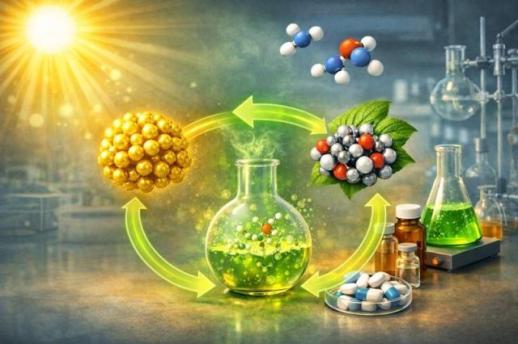 South Korean researchers use light and air to make medicine ingredients SEOUL, March 30 (AJP) - A research team in South Korea has developed a way to produce essential pharmaceutical raw materials using only sunlight and ambient air, potentially slashing carbon emissions in the chemical industry. This breakthrough simplifies the manufacturing of complex drugs by replacing traditional, waste-heavy chemical processes with a sustainable loop that relies on natural elements. The Korea Advanced Institute of Science and Technology (KAIST) announced on March 30, 2026, that a team led by Professor Han Sang-woo of the Department of Chemistry successfully combined two different types of catalysts into a single system. The method integrates a solid silver-based catalyst with a liquid organic photocatalyst known as DDQ. In traditional chemical manufacturing, companies often have to choose between catalysts that are precise but disposable and those that are reusable but less efficient. The KAIST team bypassed this trade-off by creating a system where the two catalysts work together to drive reactions that were previously difficult to sustain. The researchers used this hybrid platform to create amines, which serve as the primary building blocks for various medicines. By relying on sunlight and air rather than harsh chemical additives or high-pressure environments, the process produces almost no waste other than water. Existing organic photocatalytic methods often require additional chemicals to reset the catalyst after each use, or they suffer from slow reaction speeds when exposed to oxygen. To solve this, the team designed a circular loop where the byproducts of the reaction naturally reactivate the catalysts. Sunlight provides the energy to start the reaction, while oxygen from the air acts as the agent that "recharges" the catalysts for the next cycle. This allows the system to run continuously without the need for constant chemical intervention. To prevent the two different catalyst types from interfering with each other, the researchers added lithium perchlorate (LiClO4). This additive stabilizes the silver particles and the organic molecules, ensuring the system remains active for longer periods. "This study is the first case of successfully applying inorganic photochemical loop technology to precision organic synthesis," Professor Han Sang-woo said. "By merging the advantages of different catalytic systems, we have made a significant step toward reducing the carbon footprint of the chemical industry." Professor Han Sang-woo noted that the breakthrough provides a new way to manufacture high-value compounds like pharmaceutical ingredients through more sustainable methods. The study, with KAIST researcher Baek Jin-uk as the lead author, appeared in the Journal of the American Chemical Society (JACS) on March 18, 2026. (Reference Information) Journal/Source: Journal of the American Chemical Society Title: Merger of heterogeneous and homogeneous photocatalysis for arene C–H Amination Link/DOI: https://doi.org/10.1021/jacs.5c20824 2026-03-30 16:56:43
 -
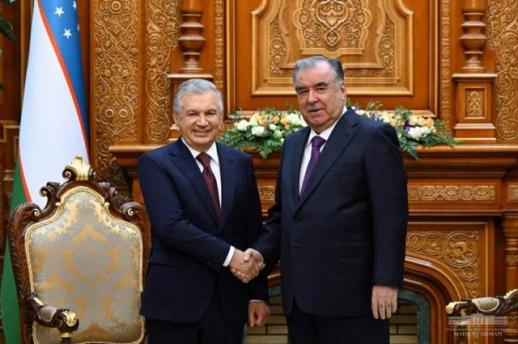 Uzbekistan and Tajikistan cement alliance during presidential summit SEOUL, March 27 (AJP) - The President of Uzbekistan, Shavkat Mirziyoyev, hosted President Emomali Rahmon of Tajikistan for a landmark state visit on March 26 and 27, 2026, marking a significant transition in regional diplomacy, the Embassy of Uzbekistan in Seoul said Friday. The visit featured the first meeting of the Supreme Interstate Council, a new high-level body designed to move the relationship beyond occasional cooperation and into a permanent, systemic alliance. During the talks, President Mirziyoyev and President Rahmon signed a Joint Statement on Deepening Strategic Partnership and Allied Relations. This agreement builds on the 2024 Treaty on Allied Relations and effectively signals that the two nations have moved past previous regional friction to focus on full-scale integration. The economic goals set during the summit are centered on doubling bilateral trade. After trade reached nearly 912 million dollars by the end of 2025, the leaders officially endorsed a roadmap to reach 2 billion dollars by 2030. To hit this target, the governments are fast-tracking the Oybek-Fotekhobod border trade zone and introducing digital "E-Permit" systems to reduce the bureaucracy that often slows down regional cargo transport. A highlight of the visit was a ceremony to launch 10 major joint projects. These include new textile plants in Tajikistan, furniture and leather factories, and expanded household appliance production. Within Uzbekistan, new facilities for dairy, fruit juice, and metal briquettes are being established in the Andijan, Fergana, and Surkhandarya regions. The visit also featured several cultural and symbolic milestones, including the opening of a new building for the Tajikistan Embassy in Tashkent and the naming of a street in the New Tashkent district after the city of Dushanbe. The leaders also attended a joint concert at the International Forums Palace, emphasizing the shared heritage of the two peoples. The two presidents discussed a five-year program to support the large diaspora communities living in both countries, focusing on education and scientific exchanges. A comprehensive roadmap has been commissioned to ensure that the industrial, energy, and security agreements reached this week are implemented over the next three years. 2026-03-27 22:46:40